Tag: Black grapes

Black grape varieties, a broad group of dark-skinned grapes used for red, rosé, and sometimes sparkling wines across many wine regions.

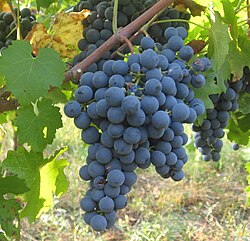
  • PRUNELARD

    Ampelique Grape Profile

    Prunelard

    Origin, viticulture, morphology, wine styles, and place.

    Prunelard is an old black grape from southwest France, most closely linked to Gaillac and the Tarn. It is rare today, but historically important far beyond its small modern footprint. The grape belongs to the old Cotoïdes world of southwestern varieties and is best known as one of the parents of Malbec, also known as Côt. That alone gives Prunelard a quiet authority: it may not be famous in itself, but it stands behind one of the world’s great red grapes.

    There is something deeply Ampelique about Prunelard. It is not a grape of easy fame. It almost disappeared, remained in the margins, and returned through the patience of growers who cared about local identity. Its name suggests plum, and its fruit can indeed be dark, rounded and deep. But the real beauty of Prunelard lies in its survival: a small old vine carrying a large genetic memory.

    Grape personality

    The quiet ancestor.
    Prunelard is rare, dark and historically deep: a southwest French grape of plum fruit, old vines, genetic memory and understated strength.

    Best moment

    Gaillac, after the heat of the day.
    Old vines, dark berries, red earth, a quiet cellar, and the feeling of a grape returning from the edge of forgetting.


    Prunelard does not ask to be famous.
    It stands behind other names, carrying plum-dark fruit, old southwest memory and the quiet dignity of survival.


    Origin & history

    An old Gaillac grape with a hidden family role

    Prunelard is generally associated with the Gaillac region in the Tarn, one of the oldest and most individual wine landscapes of southwest France. It belongs to a local grape culture where varieties such as Duras, Braucol, Mauzac, Ondenc and Len de l’El created a distinctive identity long before modern international grapes became dominant. Prunelard’s history is part of that world: regional, old, agricultural and easily overlooked from a distance.

    Read more →

    Its name is usually connected to the Occitan word for plum, suggesting the colour or shape of its berries. That small linguistic detail gives the grape a rooted quality. It is not a technical name imposed from outside, but a local word shaped by people looking at the fruit in the vineyard. Prunelard is a grape of observation, not marketing.

    Its genetic importance is striking. Prunelard is one of the parents of Malbec, together with Magdeleine Noire des Charentes. This means that a rare Gaillac-linked grape helped shape one of the most internationally famous red varieties of modern wine. That contrast is beautiful: Prunelard remains small, but its descendant became global.

    For a long time, Prunelard was close to disappearing. Its modern revival is modest, but meaningful. It represents a wider return to forgotten local grapes and a growing desire to understand wine regions through their own old plant material rather than only through international varieties.


    Ampelography

    Small bunches, dark berries and old-vine concentration

    Prunelard is usually described as a black grape with relatively small, compact bunches and dark berries. The fruit can give colour, density and a firm red-wine structure. It is not a light or decorative grape. Its natural register is darker, more concentrated and slightly rustic, with the kind of compact presence often found in old southwestern varieties.

    Read more →

    The name’s association with plum makes sense in the imagination of the vineyard. Prunelard suggests dark fruit, rounded berries and deep colour. In the field, its identity is not flamboyant but concentrated. It feels like a grape made for local knowledge: a vine that rewards people who understand the site, the pruning and the moment of harvest rather than those looking for easy abundance.

    • Leaf: typical of an old southwest French black variety, with details varying by clone and site
    • Bunch: often small to medium, compact and suited to controlled yields
    • Berry: black, plum-like in name and impression, giving colour and structure
    • Impression: rare, dark, concentrated, old-fashioned and deeply regional

    Viticulture

    A rare vine that asks for careful preservation

    Because Prunelard is rare, its viticulture is not as widely documented or standardized as that of major international varieties. That makes the grape more dependent on local experience. In Gaillac, growers who work with it tend to treat it as a heritage variety: something to understand patiently rather than force into a generic production model.

    Read more →

    The grape is often valued for its colour and body, but those qualities are only useful when the vine is balanced. Compact bunches need healthy airflow, especially in humid seasons. Yield control matters because too much crop can reduce the depth that makes Prunelard interesting. In a rare variety, every vineyard decision also has a preservation aspect: the goal is not only to produce fruit, but to keep a fragile genetic line alive.

    Prunelard’s best role may be in vineyards where growers value identity over volume. It suits a slower kind of viticulture: old parcels, selected material, thoughtful pruning and an acceptance that a rare grape should not always behave like a modern workhorse. Its scarcity is part of its character.


    Wine styles

    Dark, plummy and quietly structured

    Prunelard can produce deeply coloured red wines with plum, black cherry, dark berries, spice and a firm but not necessarily brutal structure. It is not widely known enough to have one fixed global style, and that is part of its appeal. The wines tend to feel local: dark-fruited, slightly rustic, grounded and more interesting for their individuality than for polish.

    Read more →

    Compared with Malbec, its famous descendant, Prunelard can seem more compact, less internationally rounded and more directly tied to the old southwest. It does not need to imitate Malbec to be important. Its value lies in showing part of the older genetic and regional story behind Malbec’s later global success.

    Used as a varietal wine, Prunelard can feel like a quiet rediscovery. Used in blends, it can bring colour, depth and regional accent. In both forms, it belongs best to drinkers who enjoy grapes with history, texture and a little roughness at the edges.


    Terroir

    A grape of Gaillac, limestone, clay and memory

    Prunelard’s terroir story is inseparable from Gaillac and the Tarn. This is a region of varied soils, old grape traditions and a long history of viticulture. Clay-limestone, gravelly terraces, slopes and mixed exposures can all shape the vine. Prunelard does not express terroir through global fame or a familiar tasting template. It expresses it by remaining stubbornly local.

    Read more →

    The grape seems most meaningful when grown as part of this regional mosaic, not as a transplanted curiosity. In Gaillac, old varieties speak to each other. Prunelard gains context beside Duras, Braucol and the wider Cotoïdes family. Its place is not only geological but cultural: a vineyard memory kept alive by growers who choose not to simplify the region’s identity.


    History

    From near disappearance to careful revival

    The modern history of Prunelard is a survival story. Like many old local grapes, it lost ground as vineyard systems changed, varieties were simplified and more productive or better-known grapes became dominant. For a time, Prunelard seemed destined to become a historical reference rather than a living vine. Its revival has been small, but symbolically powerful.

    Read more →

    Its return reflects a broader movement in southwest France: the rediscovery of old grapes not because they are easy, but because they are meaningful. Prunelard reminds us that genetic history can hide in small vineyards. It is the kind of grape that makes ampelography feel alive: one small name opening a door to Malbec, Gaillac, local language and centuries of farming.


    Pairing

    Best with dark, rustic food

    Prunelard works best with food that can meet its dark fruit and regional firmness. Think duck, pork, lentils, mushrooms, grilled sausages, black pudding, roast vegetables, hard cheeses and slow-cooked dishes with herbs. It is not a grape for overly delicate food. It wants texture, warmth and a little rusticity.

    Read more →

    Aromas and flavors: plum, black cherry, blackberry, dark spice, earth, herbs and sometimes a slightly rustic savoury note. Food pairings: duck confit, pork shoulder, lentils with sausage, mushroom dishes, grilled beef, hard sheep’s cheese and herb-led stews.


    Where it grows

    Mostly Gaillac and the Tarn

    Prunelard remains a very local grape. Its main home is Gaillac and the Tarn in southwest France, with historical associations that may reach toward the Garonne valley and the wider Cotoïdes family of grapes. Modern plantings are small, but its symbolic value is much larger than its vineyard area. It is a grape of preservation rather than expansion.

    Read more →
    • France: Gaillac, Tarn, wider southwest France and occasional neighbouring plantings
    • Regional family context: associated with the Cotoïdes grape family and the old red-grape landscape of the southwest
    • Historical importance: parent of Malbec / Côt, together with Magdeleine Noire des Charentes
    • Modern role: rare varietal wines, local blends and heritage plantings focused on preservation

    Why it matters

    Why Prunelard matters on Ampelique

    Prunelard matters because it changes the way we look at famous grapes. Malbec did not appear from nowhere. Behind it stands a small, rare, old grape from southwest France. That is exactly why Prunelard belongs on Ampelique. It shows that grape history is not only made by celebrities, but by quiet ancestors, local survivors and varieties almost lost from view.

    Read more →

    For a grape library, Prunelard is more than a rare profile. It is a connecting point: Gaillac, Malbec, the Cotoïdes family, regional preservation and the fragile beauty of biodiversity. It reminds us that every famous grape has a deeper story, and that some of the most important vines are the ones that nearly disappeared.


    Quick facts

    • Color: red / black grape
    • Main names: Prunelard, Prunelart
    • Parentage: deeper parentage not firmly established; Prunelard is a parent of Malbec / Côt, together with Magdeleine Noire des Charentes
    • Origin: southwest France, especially Gaillac and the Tarn
    • Most common regions: France: Gaillac, Tarn and small heritage plantings in the wider southwest
    • Climate: temperate to warm southwest French conditions; benefits from balanced ripening and healthy airflow
    • Viticulture: rare, compact-bunched, dark-fruited, best with yield control and careful preservation
    • Soils: clay-limestone, gravel, slopes and mixed Gaillac soils
    • Styles: deeply coloured reds, local varietal wines, heritage blends and small-production regional bottlings
    • Signature: plum, black cherry, dark berries, spice, colour, structure and old southwest French identity

    Closing note

    Prunelard is a small grape with a long shadow. It carries the memory of Gaillac, the parentage of Malbec and the fragile beauty of vines almost lost. Its value is not in fame, but in continuity. It reminds us that grape history often survives quietly, in old rows, local names and the hands of growers who choose to remember.

    If you like this grape

    If you appreciate Prunelard’s rare southwest French identity, dark plum fruit and historical depth, you might also enjoy Malbec for its famous descendant story, Duras for another Gaillac red grape, or Fer Servadou for peppery regional character.

    A rare Gaillac grape of plum-dark fruit, old genetic memory and quiet ancestral importance.
  • TRIBIDRAG

    Ampelique Grape Profile

    Tribidrag

    Origin, viticulture, morphology, wine styles, and place.

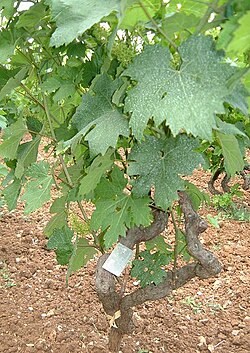
    Tribidrag is the older Adriatic name behind the grape known today as Primitivo in Puglia and Zinfandel in California. It is one black grape variety with several cultural lives: Croatian by deep historical memory, southern Italian by one of its strongest European homes, and Californian by modern fame. In the vineyard, Tribidrag is generous, vigorous and sun-loving, with dark berries, compact clusters and a famous tendency toward uneven ripening. It is a grape of warmth, old vines, dry hillsides and careful harvest decisions.

    For Ampelique, Tribidrag is a perfect example of why grape identity is more than a name. Primitivo points toward Puglia, Zinfandel toward California, and Crljenak Kaštelanski toward the rediscovery of the grape on the Dalmatian coast. Tribidrag gives the variety an older centre. It allows the grape to be seen not as three separate stories, but as one vine moving through geography, language and time.

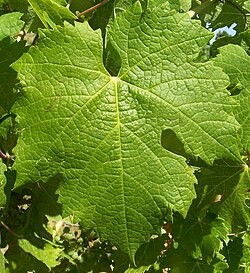
    Tribidrag, Zinfandel, Primitivo grape leaf on the vine.
    Zinfandel vineyard in Calfiornia
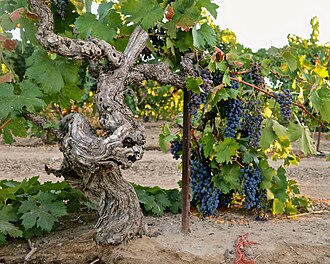
    Tribidrage, Primitivo, Zinfandel grape clusters on the vine
    Grape personality

    The Adriatic shapeshifter.
    Tribidrag is old, vigorous and many-named: a dark-fruited grape that became Primitivo in Puglia and Zinfandel in California.

    Best moment

    Dalmatian heat, old stone, dark fruit.
    A dry coastal slope, compact uneven clusters, warm Adriatic air, and the feeling of a grape rediscovering its own name.


    Tribidrag carries more than one passport.
    It remembers Dalmatian stone, ripens into Puglian warmth, and finds old-vine confidence under the Californian sun.


    Origin & history

    The old Adriatic name behind Primitivo and Zinfandel

    Tribidrag is the historic Croatian name for the grape better known internationally as Primitivo and Zinfandel. Modern genetic work has shown that these names refer to the same variety, with Crljenak Kaštelanski also part of the same identity. That discovery changed the meaning of the grape. What once looked like separate American and Italian stories became part of a much older Adriatic vine lineage.

    Read more →

    The different names matter because they describe different historical landscapes. Tribidrag points toward the eastern Adriatic and the deeper origin of the grape. Crljenak Kaštelanski points toward the Dalmatian rediscovery of the variety near Kaštela. Primitivo points toward Puglia, where the grape became a southern Italian classic. Zinfandel points toward California, where it became one of the great old-vine grapes of American wine.

    Ampelographically, it is best to understand these names as cultural expressions of one grape. The differences between Primitivo and Zinfandel are not differences of species or variety, but differences of place, vine material, climate, vineyard age and wine style. A Puglian Primitivo and a Californian Zinfandel may taste different, but the vine identity behind them is shared.

    That makes Tribidrag a strong main name for Ampelique. It restores historical depth while still allowing readers to find the better-known names. Under Tribidrag, Primitivo and Zinfandel become chapters in one longer story, rather than separate entries competing for attention.


    Ampelography

    A vigorous vine with uneven clusters

    Tribidrag is a black grape with a generous physical character. The leaves are usually medium to large, often rounded to pentagonal, with three to five lobes and a fairly open outline. The bunches are medium to large, conical to cylindrical-conical, and often compact. The berries are dark blue-black, capable of strong colour and expressive fruit, but the most important feature of the grape is not simply darkness. It is uneven ripening.

    Read more →

    Within the same bunch, some berries may reach high sugar while others remain less ripe. This is one of the defining viticultural challenges of Tribidrag. It gives the grape a restless, uneven energy. In the best vineyards, that irregularity can create complexity: ripe dark fruit alongside fresher, spicier notes. In weaker conditions, it can create imbalance, with raisined berries, green berries, or both in the same harvest window.

    The compactness of the bunches also matters. In dry regions, compact clusters can remain healthy and concentrated. In humid or rainy conditions, they may be vulnerable to rot and mildew. This helps explain why the grape feels most secure in warm, dry climates with enough air movement and sunlight. It is not a cool-climate grape of slow restraint. It is a grape that wants heat, but needs the grower to manage that heat carefully.

    • Leaf: medium to large, rounded to pentagonal, often three to five lobes
    • Bunch: medium to large, conical to cylindrical-conical, often compact
    • Berry: dark blue-black, medium-sized, sugar-accumulating and fruit-rich
    • Impression: vigorous, sun-loving, productive, compact-clustered and marked by uneven ripening

    Viticulture

    Warmth, vigour and careful timing

    Tribidrag is a grape of warm to hot climates, but it rewards discipline more than excess. It can grow vigorously, carry generous crops and accumulate sugar quickly. This makes it attractive in dry, sunny regions, but also risky if yield, canopy and harvest timing are not controlled. The vine naturally offers abundance. The viticultural task is to turn abundance into balance.

    Read more →

    Old vines are especially important in the story of Tribidrag under the name Zinfandel. In California, many old head-trained vines survive in dry-farmed vineyards. These vines are often low-yielding, deeply rooted and naturally self-regulating. Their old trunks and open goblet-like forms can help the grape cope with dry conditions while keeping fruit concentration high and vigour under control.

    In Puglia, where the grape is known as Primitivo, the challenge is similar but expressed through a different landscape. Warm southern conditions help the vine ripen fully, while limestone, red soils, coastal influence and careful vineyard management can help preserve enough freshness. In Croatia, especially in Dalmatian contexts, the grape’s heritage identity connects it to dry coastal slopes, stone, sun and maritime air.

    Because bunches may be compact and ripening uneven, careful crop thinning and canopy work can be important. Too much fruit increases inconsistency. Too little shade can encourage sunburn or dehydration. Too much shade can slow the least ripe berries and increase disease risk. Tribidrag asks for balance in the vineyard before it can show balance in the glass.

    The key decision is often harvest. Sugar may be high before all berries feel evenly mature. If picked late, the fruit can become raisined or heavy. If picked too early, the uneven berries may show green or angular notes. The best growers read the bunch carefully. Tribidrag is not a grape that should be harvested by numbers alone.


    Wine styles

    Dark fruit, spice and warmth, shaped by place

    Although this profile is mainly about the grape, Tribidrag’s wine styles help reveal its vineyard behaviour. Under the names Primitivo and Zinfandel, the grape often gives dark berry fruit, plum, black cherry, pepper, spice and generous texture. Alcohol can be relatively high, tannins are usually moderate rather than severe, and the best wines keep a line of freshness beneath the fruit.

    Read more →

    In California, Zinfandel can range from bright and peppery to rich and powerful. Old-vine examples often show more savoury depth, mixed berry complexity and texture. In Puglia, Primitivo often leans toward ripe plum, dark cherry, warmth and soft generosity. Croatian examples are less globally visible, but they are important because they reconnect the grape to its older Adriatic identity.

    The grape has also produced rosé, including the famous White Zinfandel style in the United States. That style became commercially important, but it is only one small part of the grape’s story. For Ampelique, the main point is that Tribidrag is naturally versatile because its fruit carries colour, sugar, aroma and generosity with ease.

    The danger is excess. Too much ripeness can turn the grape heavy; too much oak can flatten its fruit; too much extraction is rarely needed. The best wines are those that respect the grape’s natural abundance while keeping it clear, lively and shaped.


    Terroir

    Heat needs a boundary

    Tribidrag is strongly shaped by warmth, but its best sites are not simply the hottest ones. The grape needs enough heat to ripen fully, yet it benefits from some form of restraint: old vines, poor soils, maritime air, altitude, diurnal shift or careful dry farming. Without restraint, it can become too broad. With restraint, it can turn heat into depth, spice and vineyard character.

    Read more →

    In Dalmatia, the grape’s older identity belongs to a coastal, stony, sunlit environment. In Puglia, Primitivo grows in a southern Italian landscape of heat, limestone, red earth and dry summers. In California, Zinfandel has adapted to a wide range of sites, from sandy old-vine vineyards to rocky hillsides and warmer inland valleys. These places are different, but they share a need to manage the grape’s natural energy.

    Soil is important mainly because it influences vigour and water. Sandy loams can give perfume and softness. Gravel and rocky soils support drainage and limit growth. Limestone can help structure and freshness. Volcanic or iron-rich soils may bring darker, more savoury tones. Tribidrag does not need luxurious soil. It often performs best where the vine must work.

    Old vines are perhaps the grape’s most powerful terroir amplifier. They reduce excess, deepen root systems and slow the rush toward simple fruit. For a variety so naturally generous, old vines act like memory and discipline at once. They help Tribidrag become more than ripeness.


    History

    Migration, confusion and rediscovery

    The history of Tribidrag is a story of migration and mistaken separation. For many years, Zinfandel was seen as California’s own mystery grape, while Primitivo belonged to southern Italy. Only later did genetic identification bring the pieces together and connect both names to Croatian material. That rediscovery gave the grape a deeper and more coherent history.

    Read more →

    In California, Zinfandel became deeply tied to nineteenth-century planting, immigrant farming, field blends and old head-trained vines. In Puglia, Primitivo became one of the leading grapes of the south, connected to ripeness, warmth and Mediterranean abundance. In Croatia, Crljenak Kaštelanski and Tribidrag became part of a rediscovery narrative: a reminder that famous grapes can sometimes survive quietly in their older homelands while becoming famous elsewhere under different names.

    This is why Tribidrag is such a valuable main name. It prevents the Californian and Italian stories from becoming isolated from the grape’s older identity. It also respects the fact that grape names are not just labels. They carry geography, memory, farming traditions and cultural pride.

    Today, the grape continues to evolve in all its homes. In California, old-vine Zinfandel is increasingly treated with site sensitivity. In Puglia, Primitivo producers often seek more freshness and nuance. In Croatia, the grape carries heritage value. One vine, several futures.


    Pairing

    A grape for smoke, spice and generous food

    Tribidrag’s natural fruit, spice and warmth make it a strong match for food with smoke, char, tomato, pepper and savoury sweetness. It is not a grape for delicate cuisine. It prefers generous flavours: grilled meats, tomato-based dishes, roasted vegetables, sausages, barbecue, hard cheeses and dishes with black pepper, paprika or herbs.

    Read more →

    Aromas and flavors: blackberry, raspberry, plum, black cherry, pepper, warm spice, dried herbs, cocoa, licorice and sometimes raisined or jammy notes in very ripe examples. Structure: usually medium to full-bodied, often generous in alcohol, with moderate acidity and soft to moderate tannin.

    Food pairings: barbecue ribs, burgers, grilled sausages, pepperoni pizza, tomato pasta, roast pork, smoked brisket, meatballs, spicy aubergine, grilled peppers, aged cheddar, pecorino and dishes with sweet-spicy sauces. Fresher styles work well with tomato and herbs; richer styles prefer smoke, char and protein.


    Where it grows

    Croatia, Puglia and California

    Tribidrag’s most important identities are spread across three regions. Croatia provides the older Adriatic origin and the names Tribidrag and Crljenak Kaštelanski. Puglia gives the grape its Primitivo identity, especially around Manduria and Gioia del Colle. California gives it its Zinfandel identity, especially through old vineyards in Sonoma, Napa, Lodi, Paso Robles, Mendocino, Amador and Contra Costa.

    Read more →
    • Croatia: Dalmatia, Kaštela area and the eastern Adriatic heritage context under Tribidrag and Crljenak Kaštelanski
    • Italy: Puglia, especially Primitivo di Manduria and Gioia del Colle
    • United States: California, especially Sonoma, Napa, Lodi, Paso Robles, Mendocino, Amador and Contra Costa
    • Elsewhere: smaller plantings in Australia, South Africa, Mexico and other warm-climate regions

    Why it matters

    Why Tribidrag matters on Ampelique

    Tribidrag matters because it proves that a grape variety can travel so far that its own identity becomes divided across names. Under Primitivo, it belongs to Puglia. Under Zinfandel, it belongs to California. Under Crljenak Kaštelanski, it belongs to modern Croatian rediscovery. Under Tribidrag, the story gathers itself again.

    Read more →

    For Ampelique, this is exactly the kind of grape that deserves careful treatment. It is not only important because it is widely planted or well known. It is important because it shows how grape varieties move through migration, trade, naming, farming and rediscovery. Tribidrag is a botanical identity, but it is also a cultural map.

    Viticulturally, it is also a useful teaching grape. Its uneven ripening, compact clusters, vigorous growth, affinity for dry warmth and dependence on careful harvest timing make it a vivid example of how vine behaviour shapes everything that follows. It is not a passive grape. It demands choices.

    By placing Tribidrag at the centre, Ampelique can offer something richer than a simple Zinfandel or Primitivo page. It can show the whole vine: Adriatic memory, Puglian heat, Californian old vines and the living complexity of a grape with many names.


    Quick facts

    • Color: red / black grape
    • Main names: Tribidrag, Crljenak Kaštelanski, Primitivo, Zinfandel, Kratošija
    • Parentage: deeper parentage not firmly established; Tribidrag, Crljenak Kaštelanski, Primitivo and Zinfandel are genetically the same variety
    • Origin: Croatia / eastern Adriatic, with major later identities in Puglia and California
    • Most common regions: Croatia: Dalmatia and Kaštela area; Italy: Puglia, especially Manduria and Gioia del Colle; United States: California, especially Sonoma, Napa, Lodi, Paso Robles, Mendocino, Amador and Contra Costa
    • Climate: warm to hot, dry climates; best with old vines, airflow, cooling influence or good diurnal shift
    • Viticulture: vigorous, generous, compact-clustered, uneven ripening, careful harvest timing needed
    • Soils: sandy loam, gravel, limestone, rocky slopes, volcanic soils and well-drained alluvial sites
    • Styles: dark-fruited reds, old-vine reds, field blends, dry rosé and White Zinfandel
    • Signature: dark berries, plum, pepper, warm spice, generous texture, old-vine depth and sunlit energy

    Closing note

    Tribidrag is one grape with several lives. It carries an old Adriatic memory, southern Italian warmth and Californian old-vine confidence. Its beauty lies in generosity, but also in the discipline required to shape that generosity. Under the names Primitivo and Zinfandel it became famous; under the name Tribidrag it becomes whole again.

    If you like this grape

    If you appreciate Tribidrag’s dark fruit, warmth and old-vine generosity, you might also enjoy Grenache Noir for Mediterranean softness and spice, Syrah for darker peppery depth, or Aglianico for a more structured southern grape with tannin and age-worthy force.

    An old Adriatic grape with many names — Croatian in memory, Italian in warmth, Californian in old-vine soul.

  • ABRUSCO

    Ampelique Grape Profile

    Abrusco

    Origin, viticulture, morphology, wine styles, and place.

    Abrusco is a rare black grape from Tuscany, once valued less for fame than for function. It belongs to the old world of local Italian varieties that helped shape regional blends quietly, often by adding deeper colour and darker structure to wines built around Sangiovese. Today, Abrusco is almost a whisper in the vineyard: ancient, scarce, easily confused with other colour grapes, and important precisely because it reminds us how many varieties once lived in the margins of Italian viticulture.

    For Ampelique, Abrusco is not interesting because it is famous. It is interesting because it is nearly hidden. It is a grape of small surviving traces, dark berries, Tuscan memory and agricultural fragility. In studying Abrusco, we are not only studying flavour. We are studying disappearance, preservation and the quiet diversity that once made vineyards more mixed, more local and more complex than modern labels often suggest.

    Grape personality

    The hidden colour-bearer.
    Abrusco is rare, dark and quietly useful: an old Tuscan grape remembered for depth, colour and its small surviving place among local vines.

    Best moment

    Old Tuscan row, late season.
    A few dark bunches among Sangiovese vines, autumn dust underfoot, and the feeling of a grape almost forgotten.


    Abrusco does not stand in the centre of the vineyard.
    It waits at the edge of memory, darkening the story of Tuscany one small berry at a time.


    Origin & history

    An old Tuscan grape from the margins

    Abrusco is an old black grape associated with Tuscany, especially the world of local red varieties around Chianti and central Italian blending traditions. Its name is often linked to the idea of a “wild vine,” which fits the grape’s half-hidden character. Abrusco does not belong to the polished canon of famous Italian grapes. It belongs to the older, rougher, more mixed vineyard culture in which many local varieties had specific practical roles.

    Read more →

    Historically, Abrusco was known under several related names, including Abrostino, Abrostine and Abrusco Nero di Toscana. It has also been entangled with names such as Colorino or Lambrusco in older usage, which makes its identity more difficult to follow. This is common with rare local grapes. Before genetic identification and modern catalogues, vines were often named by appearance, function, place or grower memory rather than by strict botanical precision.

    Abrusco’s old role seems to have been strongly connected to colour. Like other Tuscan “colour grapes,” it could deepen wines that might otherwise appear lighter. In a Sangiovese landscape, that mattered. Sangiovese can be fragrant, acidic and transparent, but not always deeply coloured. Abrusco offered darkness. Its historical importance lies not in being the star of the blend, but in changing the visual and structural impression of the whole wine.


    Ampelography

    Dark berries with pale flesh

    Abrusco is a black grape, producing dark blue-black berries. One of its notable features is the contrast between the dark skin and the paler flesh inside. That distinction matters because the grape’s value is strongly connected to skin-derived colour. Its identity is therefore not built around aromatic flamboyance, but around pigment, structure and the quiet visual depth it can contribute.

    Read more →

    Because Abrusco is rare, detailed ampelographic descriptions are harder to find than for major varieties. That scarcity is part of the grape’s story. Famous grapes are photographed, measured, compared and repeated; endangered grapes often survive in fragments. Even so, Abrusco’s field identity can be understood through its role as a dark-skinned Tuscan variety, usually discussed in relation to deep colour, mid-season ripening and local blending value.

    • Leaf: rarely documented in popular sources; best treated as a specialist ampelographic subject
    • Bunch: associated with small-scale Tuscan plantings and low modern visibility
    • Berry: dark blue-black skin with pale flesh
    • Impression: rare, dark, colour-giving, local and easily overshadowed by better-known Tuscan grapes

    Viticulture

    A mid-ripening survivor of mixed vineyards

    Abrusco is generally described as a mid-season ripening grape, positioned between earlier and later Tuscan varieties. That timing helps explain its practical historical role. It could be harvested within the broader rhythm of Tuscan red-wine production, adding colour and local complexity without demanding a completely separate viticultural calendar. In older vineyards, that kind of compatibility mattered.

    Read more →

    The greatest challenge for Abrusco today is not simply disease, yield or ripening. It is survival. Rare grapes become vulnerable when they are no longer economically necessary. If a variety is used only in small proportions, if it has confusing synonyms, if it is hard to market and if only a few growers preserve it, then the biological risk becomes cultural as well as agricultural. A grape disappears when people stop needing it.

    For that reason, Abrusco should be understood as a conservation grape as much as a production grape. Its viticultural importance lies in what it preserves: an older Tuscan palette of varieties beyond the dominant names. Each surviving vine is a small archive of regional farming, local selection and biodiversity.


    Wine styles

    More important as a grape than as a label

    Abrusco has rarely been famous as a varietal wine grape. Its traditional importance lies in blending, especially where depth of colour was useful. For Ampelique, that makes it more interesting rather than less. Not every grape needs to stand alone in a bottle to matter. Some grapes shaped regional wine culture by supporting, darkening, structuring or balancing other varieties.

    Read more →

    As a single variety, Abrusco can produce deeply coloured wines with structure and spicy notes, but examples are rare. Its more meaningful role is historical and viticultural: a dark grape that could strengthen the appearance and presence of paler blends. In this sense, Abrusco belongs to the same broader family of practical vineyard intelligence as other local support grapes. It helped complete a wine without necessarily claiming attention for itself.


    Where it grows

    Tuscany, especially in traces

    Abrusco is primarily associated with Tuscany. It appears in discussions of Chianti and other Tuscan appellations, but in practice it is extremely rare. Rather than imagining broad fields of Abrusco, it is better to imagine small plots, old vines, rescued material and occasional experimental bottlings. Its geography is therefore both regional and fragile: Tuscany is the centre, but the actual presence is limited.

    Read more →
    • Tuscany: historic centre of the variety, especially around Chianti and old local blending traditions
    • Chianti DOCG: permitted as a minor local red grape, though uncommon in practice
    • Capalbio and other Tuscan zones: sometimes mentioned among permitted local blending varieties
    • Modern presence: very rare, usually preserved through small plantings, recovery projects or specialist producers

    Why it matters

    Why Abrusco matters on Ampelique

    Abrusco matters because a grape library should not only celebrate the famous varieties. It should also make room for grapes that almost disappeared, grapes that worked quietly, grapes that were used for colour, balance or local identity rather than prestige. Abrusco shows how much vineyard history can be hidden behind a minor blending role.

    Read more →

    For Ampelique, Abrusco is a reminder that biodiversity is not abstract. It lives in names, synonyms, old rows, small plantings and fragile memories. A grape does not need global fame to deserve attention. Sometimes the most meaningful varieties are the ones that show us what could be lost. Abrusco is one of those grapes: dark, local, scarce and quietly important.


    Quick facts

    • Color: red / black grape
    • Main names: Abrusco, Abrusco Nero, Abrusco Nero di Toscana, Abrostino, Abrostine, Abrostolo
    • Parentage: unknown / not firmly established
    • Origin: Italy, especially Tuscany
    • Most common regions: Tuscany, especially historic Chianti-related and local blending contexts; also mentioned in Tuscan appellations such as Capalbio and Orcia
    • Climate: Tuscan Mediterranean climate; suited to warm, dry growing conditions with mid-season ripening
    • Viticulture: rare, mid-ripening, historically used in mixed vineyards and local blends
    • Berry: dark blue-black skin with pale flesh
    • Traditional role: colour-giving grape, often used to deepen Sangiovese-based wines
    • Signature: rarity, dark colour, Tuscan heritage, local identity and conservation value

    Closing note

    Abrusco is not a grape of fame. It is a grape of traces: old Tuscan names, dark berries, blending memory and fragile survival. Its beauty lies in what it represents. Every rare variety keeps a door open to a more complex vineyard past. Abrusco keeps one of those doors open, quietly, in the shadows of Tuscany.

    If you like this grape

    If you are interested in Abrusco’s rare Tuscan identity and colour-giving role, you might also explore Sangiovese for the central red grape of Tuscany, Colorino for another traditional colour grape, or Canaiolo Nero for its historic place in Tuscan blends.

    A rare Tuscan colour grape — modest in fame, but rich in vineyard memory.

  • CARMENÈRE

    Ampelique Grape Profile

    Carménère

    Origin, viticulture, morphology, wine styles, and place.

    Carménère is one of the old red grapes of Bordeaux, but its modern life belongs most clearly to Chile. It is a late-ripening, dark-skinned variety from the Cabernet family, known for its deep colour, soft tannins, leafy spice and need for a long, warm season. Once nearly lost in France and long mistaken for Merlot in Chile, Carménère is now one of the great rediscovery stories of modern viticulture.

    For growers, Carménère is not an easy grape. It asks for patience, dry weather, good flowering, careful canopy work and real maturity. Picked too soon, it can become sharply green. Given enough time, it turns its herbal edge into something darker, warmer and more graceful. It is a vine of crimson leaves, late harvests, hidden identity and deep-rooted character.

    Carmenere grape leaf in close up
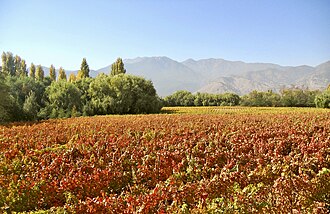
    Vineyard Carmenere grape in Chili
    Carmenere grape cluster on vine.
    Grape personality

    The hidden survivor.
    Carménère is late, dark, patient and a little mysterious: a Bordeaux grape that found its truest modern voice in Chile’s dry valleys.

    Best moment

    Late harvest, warm dusk.
    Dry autumn air, crimson leaves, smoky herbs, grilled peppers, soft light and a vineyard that finally had enough time.


    Carménère does not hurry into ripeness.
    It waits for dry air, long autumn light and the slow turning of green spice into depth.


    Origin & history

    A Bordeaux grape with a hidden Chilean afterlife

    Carménère comes from Bordeaux, where it once belonged to the wider family of red grapes that shaped the region’s blends. It stood alongside Cabernet Sauvignon, Cabernet Franc, Merlot, Malbec and Petit Verdot, though it never became as reliable as those companions. Its old French name is often linked to crimson colour, and that feels fitting. Carménère can show reddish young growth, autumn leaves that burn with copper and ruby tones, and deeply coloured fruit when the season allows full maturity.

    Read more →

    The variety’s parentage places it firmly inside the old Cabernet world. Carménère is understood as a natural crossing of Gros Cabernet and Cabernet Franc. This matters because the plant carries clear family signs: dark berries, leafy aromatics, a tendency toward green spice, and a need for real phenolic maturity before its character becomes balanced. It is not simply “like Merlot,” even though it was confused with Merlot for many years. It is a more restless and demanding vine, closer in spirit to the leafy, late-ripening side of the Cabernet family.

    In Bordeaux, Carménère was never easy. The Atlantic climate could be too cool, too damp or too uncertain for a grape that ripens late and flowers imperfectly in poor conditions. After phylloxera changed the vineyard landscape of France, growers often preferred more dependable varieties. Carménère survived, but only barely, and for a long time it seemed more like a historic memory than a practical modern grape. Its difficulty nearly erased it from the place where it began.

    Chile changed that story. Nineteenth-century cuttings from Bordeaux reached Chile before phylloxera devastated Europe, and among them were vines that growers later believed to be Merlot. For decades, this “Chilean Merlot” ripened later, tasted darker and greener, and behaved differently in the vineyard. In 1994, French ampelographer Jean-Michel Boursiquot identified these vines as Carménère. The grape had not disappeared. It had been hiding in plain sight, waiting for a country whose long, dry autumns suited it far better than Bordeaux ever had.


    Ampelography

    Broad leaves, dark berries, and a crimson field signature

    Carménère is not a delicate-looking vine, but its identity is subtle. The leaves are generally medium to large, often broad, sometimes with rounded lobes and a rather full surface. Young shoot tips can show reddish or bronze tones, and the mature canopy may take on striking red colour in autumn. That seasonal colouring gives the vine a visual drama that fits its name: a grape marked by crimson not only in the glass, but in the vineyard itself.

    Read more →

    Its clusters are usually medium-sized, sometimes loose to moderately compact, and the berries are dark blue to black at maturity. The grape’s skins give colour and aromatic intensity, yet the tannins can be softer and less severe than Cabernet Sauvignon. This combination is one reason Carménère often feels generous rather than hard when fully ripe. The vine can carry depth without needing the same firm structural frame as its more famous Cabernet relatives.

    In the field, Carménère can be difficult to distinguish from related varieties without close observation. Its historical confusion with Merlot in Chile and with Cabernet Franc in parts of Italy shows how easily the vine can hide among its family members. Yet its behaviour gives clues. It ripens late. It often keeps a leafy, peppery aromatic trace longer into the season. Its fruit may lag behind neighbouring Merlot, and its canopy can hold a distinctive reddish cast as the year turns.

    • Leaf: medium to large, broad, sometimes rounded, with reddish young growth and crimson autumn tones
    • Bunch: medium-sized, loose to moderately compact, depending on clone, flowering and site
    • Berry: dark blue-black, capable of deep colour and strong savoury aroma
    • Impression: late, dark, leafy, warm-climate sensitive and quietly dramatic

    Viticulture

    Late ripening, uneven flowering, and the need for patience

    Carménère is above all a late-ripening grape. This single fact explains much of its history, its decline in Bordeaux and its success in Chile. It needs a long season not only to accumulate sugar, but to soften its tannins and reduce the more aggressive side of its green, peppery character. In a short or cool season, Carménère may remain tense, vegetal and unfinished. In a long, dry autumn, it can become supple, dark and complete.

    Read more →

    The vine is also known for problems with fruit set. Coulure can reduce yields when flowering weather is poor, especially in cool, wet or unsettled conditions. This makes Carménère less dependable than Merlot and one reason it became unattractive to growers who needed consistent production. A vine that flowers irregularly and ripens late asks more from both climate and grower. It is not a practical grape for every vineyard, however romantic its story may be.

    Canopy management is central. Too much shade can preserve methoxypyrazine-driven green notes, making fruit smell strongly of bell pepper, raw herbs or jalapeño. Too much sun, however, can stress the fruit, reduce freshness or push ripeness toward heaviness. Carménère needs a careful balance: enough exposure for maturity, enough leaf cover for protection, enough airflow for health, and enough patience to avoid harvesting before the variety has settled into itself.

    Warm, dry sites with moderate vigour suit the grape best. Fertile soils can produce leafy growth and dilute fruit, while overly hot conditions can turn softness into heaviness. The best vineyards tend to let Carménère ripen slowly under generous light, often with cool nights or mountain influence to preserve shape. The grower is always trying to guide the vine from green to ripe without losing its savoury nerve. That is the viticultural heart of Carménère.


    Wine styles

    A grape whose flavour begins in the vineyard

    Although Carménère is usually discussed through wine, its flavour identity begins very clearly in the plant. The grape is naturally rich in leafy, peppery compounds that can be beautiful when ripe and severe when immature. Its best-known markers — black fruit, roasted pepper, tobacco leaf, green peppercorn, cocoa and smoke — are not simply winemaking choices. They are the sensory result of a late-ripening vine finally reaching balance.

    Read more →

    In fully ripe fruit, Carménère tends toward dark plum, blackberry, black cherry, blueberry skin and savoury spice. Its tannins are often rounder and less forceful than Cabernet Sauvignon, while its colour can be deep and staining. The grape rarely feels as bright as Cabernet Franc or as immediately plush as Merlot. It sits somewhere between: darker than Merlot, softer than Cabernet Sauvignon, greener and more aromatic than many warm-climate red grapes.

    This makes harvest timing crucial. If picked too early, the wine can taste dominated by raw capsicum, grass, stems or sharp herbal notes. If picked too late, the fruit may become heavy and the natural freshness may fade. The most successful Carménère often keeps a savoury green line, but surrounds it with ripe black fruit and calm texture. The aim is not to erase the green note entirely. The aim is to let it become seasoning rather than the main dish.

    As a varietal wine, Carménère often shows its most recognizable personality. In blends, especially with Cabernet Sauvignon or Merlot, it can add colour, softness, mid-palate richness and aromatic spice. Yet even then, the grape’s vineyard nature remains visible. Carménère is never a neutral supporting actor. It brings a warm, dark, leafy signature that marks the wine with the memory of its long season.


    Terroir

    Long autumns, dry valleys, and slow maturity

    Carménère’s ideal terroir is warm, dry and patient. It does not simply need heat; it needs a season long enough for the grape to move from green structure to ripe savoury depth. Chile’s central valleys offer this with unusual clarity: bright days, low disease pressure, dry autumns, mountain influence and many sites where ripening can continue late without the constant danger of rain. This is why the grape found such a persuasive second home there.

    Read more →

    In Colchagua, Carménère can become broad, dark and generous, especially where sun and drainage are well balanced. Cachapoal and Peumo are often associated with some of the grape’s most polished Chilean expressions, combining ripeness with savoury detail. Maipo can bring firmer structure and a more Cabernet-like frame, while Maule and Curicó add further variation, from warmer valley-floor expressions to older, more rustic vineyard material.

    Soil and water matter greatly. Carménère benefits from well-drained soils that reduce excessive vigour and help berries ripen evenly. Alluvial soils, gravel, clay-loam and colluvial slopes can all work when the balance is right. Too much fertility creates shade and leafy growth. Too little water in a hot site can stress the vine and make ripening uneven. The most successful vineyards allow the vine to struggle just enough to concentrate its fruit, but not so much that maturity becomes blocked.

    Outside Chile, Carménère remains more selective. It can be found in Italy, especially in the northeast, where some plantings were historically confused with Cabernet Franc. In China, the name Cabernet Gernischt is often discussed in relation to Carménère, though identification and local usage can be complex. Smaller plantings also exist in Argentina, California, Washington and elsewhere. Yet the pattern is clear: the grape travels, but it only truly opens where warmth, dryness and time come together.


    History

    From near-oblivion to national signature

    The history of Carménère is one of the most memorable stories in grape culture. It was not simply exported, planted and celebrated. It was misread, almost lost, preserved under another name and later recovered. That makes it different from many famous varieties. Carménère’s identity had to be found again. Its modern importance begins not with fame, but with confusion.

    Read more →

    In Chile, the grape was long part of vineyards labelled or understood as Merlot. Growers noticed that some vines behaved differently, ripened later and gave wines with a darker, more herbal profile. But without modern identification, these differences were often accepted as local variation. When the true identity was recognized in the 1990s, Carménère gave Chile something rare: not merely another international grape, but a variety with a dramatic story and a strong sense of national belonging.

    At first, the rediscovery story may have been more famous than the viticulture. “The lost grape of Bordeaux” is an irresistible phrase. But the real work came afterwards. Chilean growers had to understand which sites suited Carménère, how much leaf exposure it needed, when to harvest, how to manage its green character and how to avoid both underripeness and heaviness. The grape became a national signature only through decades of observation and correction.

    This is why Carménère is so valuable for a grape library. It shows that a variety is not fixed in one place or one era. A grape can fail in its homeland, survive abroad, be misunderstood for generations and then return to the world with new meaning. Its history is not tidy, but it is alive. Carménère reminds us that viticulture is full of hidden identities, old migrations and second chances.


    Pairing

    A natural match for smoke, herbs and warmth

    Carménère’s table personality follows the grape’s vineyard personality. It is soft enough for generous food, dark enough for grilled meat, and savoury enough for herbs, peppers, mushrooms and smoke. Because the variety often carries green peppercorn, roasted capsicum, tobacco leaf and cocoa-like depth, it works beautifully with dishes that have char, warmth or earthy sweetness.

    Read more →

    Aromas and flavors: blackberry, plum, black cherry, blueberry skin, green peppercorn, roasted red pepper, tobacco leaf, bay leaf, cocoa, smoke, cedar and warm earth. Structure: usually medium to full-bodied, often deep in colour, with rounded tannins and moderate freshness when grown in balanced sites.

    Food pairings: grilled beef, lamb, pork shoulder, empanadas, roasted peppers, mushrooms, black beans, lentils, smoky aubergine, hard cheeses, mild chilli, barbecue, paprika-led dishes and herb-roasted vegetables. It is especially good where sweetness from roasting or grilling meets savoury spice.

    The pairing logic is simple: echo the grape’s dark fruit with caramelized food, and echo its herbal edge with peppers, rosemary, bay, cumin, smoked paprika or char. Carménère rarely asks for very delicate cuisine. It prefers food with texture, warmth and a little rustic generosity. That makes it one of the more relaxed and useful red grapes at the table.


    Where it grows

    Chile at the centre, Bordeaux in the background

    Carménère now grows most importantly in Chile. The central valleys are its modern heart, especially Colchagua, Cachapoal, Peumo, Rapel, Maipo, Maule and Curicó. These areas give the vine what it struggled to find in Bordeaux: a long growing season, warm days, dry autumn weather and enough time for late maturity. France remains the origin, but Chile is the country that turned Carménère into a living modern grape again.

    Read more →

    Chile’s relationship with Carménère is not one-dimensional. Colchagua often gives richness and broad dark fruit. Cachapoal and Peumo are prized for depth, polish and fine savoury detail. Maipo can contribute structure and a more classical Bordeaux-family feel. Maule and Curicó broaden the range, especially where older vineyards or warmer inland conditions shape the grape differently. Even within Chile, Carménère is not one thing; it is a vine that changes with valley, soil, exposure and harvest date.

    • Chile: Colchagua, Cachapoal, Peumo, Rapel, Maipo, Maule, Curicó, Aconcagua and other Central Valley sites
    • France: Bordeaux origin; now rare but historically important
    • Italy: Veneto and Friuli-Venezia Giulia, including plantings once confused with Cabernet Franc
    • China: often linked with Cabernet Gernischt, though local naming and identification can be complex
    • Elsewhere: Argentina, California, Washington and other small experimental plantings

    Why it matters

    Why Carménère matters on Ampelique

    Carménère matters on Ampelique because it shows how much story can live inside one grape variety. It is a plant with parentage, migration, confusion, near-loss, rediscovery and national identity written into its vineyard life. It teaches that grape varieties are not only flavour categories. They are biological histories moving through place and time.

    Read more →

    It is also a superb grape for explaining viticulture. With Carménère, almost everything comes back to the vineyard: late ripening, fruit set, canopy shade, pyrazines, harvest timing, soil vigour and site warmth. The difference between raw greenness and beautiful savoury depth is not abstract. It is created in the field, week by week, through the slow negotiation between vine, weather and grower.

    For readers, Carménère is immediately memorable. It has a dramatic biography and a clear sensory profile. But beneath that accessibility lies real complexity. It connects Bordeaux and Chile, old genetics and modern identity, ampelography and marketing, vineyard difficulty and national pride. Few varieties make the link between plant science and wine culture so visible.

    For Ampelique, Carménère is therefore essential. It reminds us that some grapes are not famous because they were always dominant, but because they survived. It is a variety with scars, disguise and return. A grape that almost vanished from its origin, only to become a signature somewhere else, deserves a place in any serious map of the world’s vines.


    Quick facts

    • Color: red
    • Main names: Carménère, Carmenere, Grande Vidure; sometimes linked with Cabernet Gernischt in China
    • Parentage: Gros Cabernet × Cabernet Franc
    • Origin: Bordeaux, France
    • Modern home: Chile, especially the Central Valley and its warmer, dry subregions
    • Most common regions: Chile: Colchagua, Cachapoal, Peumo, Rapel, Maipo, Maule, Curicó and Aconcagua; also smaller or complex plantings in France, Italy, China, Argentina and the United States
    • Climate: warm, dry, long-season sites; needs extended autumn ripening
    • Viticulture: late ripening, sensitive to coulure, prone to green flavours if harvested too early
    • Soils: well-drained alluvial, gravelly, clay-loam and colluvial soils that moderate vigour
    • Signature: dark fruit, deep colour, soft tannin, leafy spice and a remarkable rediscovery story

    Closing note

    A great Carménère is never only dark and smooth. It is the result of a vine that needed time, a season that stayed dry, a canopy that let in just enough light, and a grower who knew not to hurry. Its beauty lies in that slow transformation: from green edge to savoury depth, from mistaken identity to unmistakable character.

    If you like this grape

    If you appreciate Carménère’s dark fruit, soft tannins and savoury green spice, you might also enjoy Merlot for its plushness, Cabernet Franc for its leafy perfume, or Malbec for another dark red grape with South American strength and generous texture.

    A lost Bordeaux grape, found again in Chile — late, dark, leafy and full of second life.

  • LUCIE KUHLMAN

    Understanding Lucie Kuhlmann: Origin, Viticulture, Styles, and Tasting Profile

    A historic French hybrid grape, valued for early ripening, deep colour, and its role in the first generation of disease-resistant vineyard varieties: Lucie Kuhlmann is a dark-skinned interspecific grape created in France by Eugène Kuhlmann, known for early maturity, strong pigmentation, cold tolerance, and its importance as both a wine grape and a breeding parent in the development of modern hybrid varieties.

    Lucie Kuhlmann belongs to a turning point in wine history. It comes from a time when growers searched for resilience as much as beauty, and where new grapes were created to survive, adapt, and open new possibilities for vineyards.

    Origin & history

    Lucie Kuhlmann is a French hybrid grape created by the breeder Eugène Kuhlmann in Alsace. It belongs to the early generation of interspecific crosses developed in response to the viticultural crises of the late 19th and early 20th centuries.

    The variety is the result of a cross between Goldriesling (Vitis vinifera) and a hybrid parent (Millardet et Grasset 101-14), which itself contains American vine ancestry. This places Lucie Kuhlmann firmly within the historical effort to combine European wine quality with American disease resistance.

    It later became particularly important as a breeding parent. One of its most famous descendants is Maréchal Foch, a widely planted hybrid in cooler wine regions.

    Although Lucie Kuhlmann itself is now less widely planted, its historical influence on modern hybrid viticulture remains significant.

    Ampelography: leaf & cluster

    Leaf

    Descriptions of Lucie Kuhlmann tend to focus more on its breeding history, ripening behaviour, and practical vineyard traits than on widely repeated leaf markers. This is typical for early hybrid varieties whose identity is tied closely to their function.

    Its recognition therefore comes primarily through its name, pedigree, and role in hybrid breeding rather than through one easily recognized ampelographic feature.

    Cluster & berry

    Lucie Kuhlmann is a red grape with dark berries. It is known for producing wines with deep colour, often more intense than might be expected from its relatively early ripening cycle.

    The grape’s visual impact in wine is one of its defining characteristics, reinforcing its suitability for structured red wine production in cooler regions.

    Leaf ID notes

    • Status: historic French interspecific hybrid.
    • Berry color: red / dark-skinned.
    • General aspect: early hybrid variety known for colour, resilience, and breeding importance.
    • Style clue: deeply coloured wines with firm structure in cooler climates.
    • Identification note: key parent of Maréchal Foch and part of early European hybrid breeding.

    Viticulture notes

    Growth & training

    Lucie Kuhlmann is valued for its early ripening, which allows it to reach maturity in cooler climates where many traditional Vitis vinifera varieties struggle.

    This trait made it especially attractive in northern Europe and later in North America, where shorter growing seasons require reliable early maturity.

    Its hybrid background also contributes to a degree of hardiness and practical vineyard resilience.

    Climate & site

    Best fit: cooler and marginal wine-growing regions where early ripening is essential.

    Climate profile: Lucie Kuhlmann performs well in climates with shorter growing seasons and moderate summer warmth, making it suitable for northern Europe and parts of North America.

    Its success in such areas reflects its breeding purpose: adaptation rather than luxury.

    Diseases & pests

    As an early hybrid, Lucie Kuhlmann shows improved disease resistance compared with purely vinifera varieties. This includes greater tolerance to fungal pressures common in cooler, wetter climates.

    Wine styles & vinification

    Lucie Kuhlmann produces deeply coloured red wines, often with a firm structure that reflects both its pigmentation and its hybrid character.

    The wines are typically described as having dark fruit, sometimes slightly rustic elements, and a solid, practical profile rather than delicate finesse.

    In many cases, the grape has been used as a blending component or as a stepping stone in hybrid wine development rather than as a flagship varietal.

    Its importance lies as much in what it enabled as in the wines it produces directly.

    Terroir & microclimate

    Lucie Kuhlmann expresses terroir primarily through adaptation rather than nuance. It reflects the conditions of cooler climates where survival and ripening reliability define wine style.

    This makes it less about subtle soil expression and more about climate suitability and structural reliability.

    Its sense of place is therefore practical, historical, and tied to the early development of modern viticulture.

    Historical spread & modern experiments

    Lucie Kuhlmann is no longer widely planted, but its legacy remains strong through its descendants and its place in the history of hybrid grape breeding.

    It played a key role in opening the door to modern cold-climate viticulture and influenced generations of later hybrid varieties.

    Today, it is best understood as a historical foundation grape rather than a modern flagship.

    Tasting profile & food pairing

    Aromas: dark berries, subtle earthy tones, and a straightforward fruit profile. Palate: structured, deeply coloured, and firm rather than delicate.

    Food pairing: grilled meats, stews, rustic dishes, and hearty fare. Lucie Kuhlmann suits robust flavours that match its solid structure.

    Where it grows

    • France (historical origin)
    • Alsace
    • Limited plantings in cooler regions of Europe and North America

    Quick facts for grape geeks

    FieldDetails
    ColorRed
    Pronunciationloo-SEE kool-MAHN
    Parentage / FamilyGoldriesling × Millardet et Grasset 101-14 (interspecific hybrid)
    Primary regionsFrance (Alsace origin); limited modern plantings elsewhere
    Ripening & climateEarly ripening; suited to cooler climates and shorter growing seasons
    Vigor & yieldModerate vigour; practical vineyard performance
    Disease sensitivityImproved resistance compared to vinifera due to hybrid background
    Leaf ID notesHistoric hybrid grape known for deep colour, early ripening, and role in breeding (parent of Maréchal Foch)
    SynonymsKuhlmann 194-2