Tag: Black grapes

  • CABERNET SAUVIGNON

    Ampelique Grape Profile

    Cabernet Sauvignon

    Origin, viticulture, morphology, wine styles, and place.

    Cabernet Sauvignon is a black grape from Bordeaux, France, and one of the world’s most influential red wine varieties. It is a grape of small dark berries, thick skins, firm tannin, cassis, cedar, graphite and the rare ability to turn structure into elegance over time.

    Cabernet Sauvignon sits at the meeting point of viticultural discipline and cultural myth. Its fame can make it seem almost too familiar, yet the vine itself remains precise and demanding: small berries, compact clusters, firm skins, late ripening, clear parentage and a strong relationship with site. Born from Cabernet Franc and Sauvignon Blanc, it carries aromatic lift, herbal nuance, acidity and structure in a darker, more age-worthy form. In Bordeaux, especially on the Left Bank, it became the backbone of wines built for patience. Across the world, it became a language of serious red wine, from Napa Valley and Chile to Coonawarra, Margaret River, Tuscany and South Africa. It became famous because it travels, but it remains interesting because it changes voice without losing its spine.
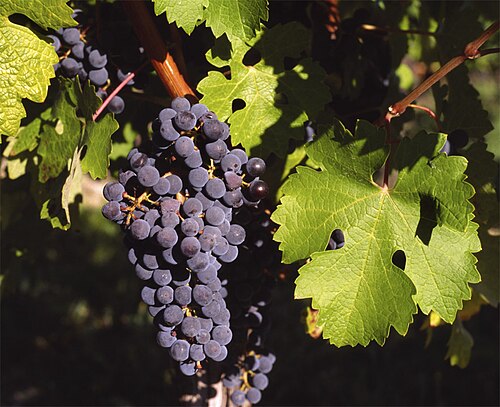
    Cabernet Sauvignon grape cluster on the vine
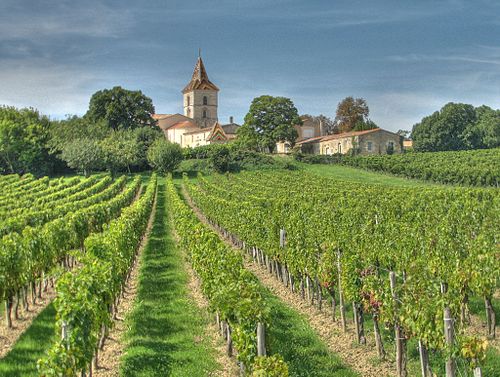
    Bordeaux vineyard in France with rows of vines
    Cabernet Sauvignon grape cluster on the vine

    Grape personality

    Structured, dark-skinned, late-ripening, and deeply site-sensitive. Cabernet Sauvignon is a black grape with small berries, compact bunches, thick skins and firm tannin. Its personality is disciplined, reserved, architectural, age-worthy, aromatic in a dark way and best when ripeness is balanced by freshness.

    Best moment

    Roast lamb, ribeye, cedar, herbs and a slow-opening bottle. Cabernet Sauvignon suits grilled beef, venison, mushroom ragù, hard cheese, pepper, rosemary and charred vegetables. Its best moment is patient, savoury, generous and serious, when tannin meets food and the wine slowly becomes more human.


    Cabernet Sauvignon does not hurry to reveal itself: dark berries, gravel warmth, blackcurrant, cedar and tannin gathering slowly into shape. With time, the grape softens without losing its spine.


    Contents

    Origin & history

    A Bordeaux crossing that reshaped red wine

    Cabernet Sauvignon emerged in Bordeaux and has come to stand for seriousness in red wine perhaps more than any other grape. Its identity is specific, not vague. It is the natural offspring of Cabernet Franc and Sauvignon Blanc, a parentage that explains much of its behaviour: Cabernet Franc’s dark herbal lift and Sauvignon Blanc’s freshness and aromatic edge, joined in a grape with deeper colour, thicker skins and firmer tannic architecture. This makes Cabernet Sauvignon unusually educational. It shows how genetics can become flavour, how morphology can become texture, and how a crossing from one region can become a global reference.

    Read more

    Its rise to prominence is closely tied to the Left Bank of Bordeaux, where gravel soils, maritime moderation and a blending culture helped define the classic image. In Médoc communes such as Pauillac, Saint-Julien, Saint-Estèphe and Margaux, as well as in Graves and Pessac-Léognan, Cabernet Sauvignon became the structural backbone of wines valued for blackcurrant fruit, cedar, graphite, tannin and long evolution. Gravel is important not because it is romantic, but because it warms, drains and helps a late-ripening grape reach maturity in a marginal maritime year.

    The grape rarely stood alone in traditional Bordeaux. Merlot often supplied flesh, Cabernet Franc perfume, Petit Verdot colour and spice, and Malbec or Carmenère played smaller historical roles. Yet Cabernet Sauvignon gave the frame: the dark spine, the grip and the long future. That is why it became so strongly associated with the idea of a cellar-worthy red wine. Even when present as only part of a blend, it can define the architecture, much like beams inside an old house.

    From Bordeaux it travelled with remarkable success. In California it became a prestige grape of immense cultural influence, especially in Napa Valley. In Chile it found a cool confidence in Maipo and other valleys. In Australia it took on distinctive eucalyptus, cassis and structured forms. Its accent changes, but its grammar remains recognisable. That grammar is built from small berries, firm skins, dark fruit, pyrazine nuance, tannin and a need for time. This is why Cabernet Sauvignon can feel international without becoming anonymous when grown with care.


    Ampelography

    Small berries, compact clusters and a structured leaf outline

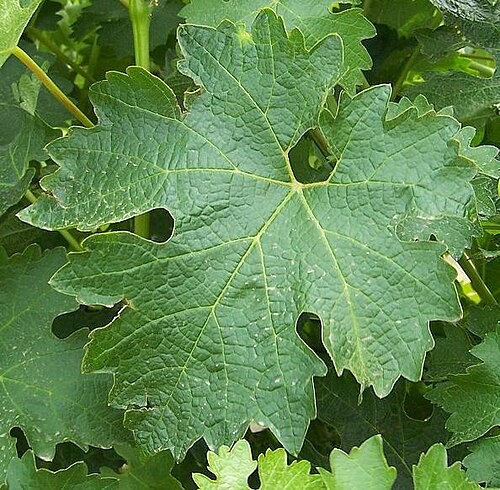
    Cabernet Sauvignon’s morphology mirrors its temperament. Adult leaves are usually medium-sized, rounded to pentagonal, often five-lobed, with a structured outline and fairly marked sinuses. The leaf is not the softest visual feature in the vineyard; it looks purposeful, with a defined shape that suits a grape built on line, tannin and proportion. In many vineyards the canopy has a composed, upright feeling, though growth depends strongly on rootstock, soil, climate and training.

    Read more

    The bunches are generally small to medium-sized, conical or cylindrical-conical, and often compact. This compactness is important. It concentrates fruit, but also means that airflow, canopy openness and disease awareness matter. Cabernet Sauvignon is not a grape that can simply be left to abundance if the goal is fine wine. Compact bunches and thick skins help create intensity, yet they also ask for attention when humidity, shade or uneven ripening threaten fruit quality.

    The berries are usually small, round, blue-black to black, and thick-skinned. That skin-to-juice ratio explains much of the variety’s power: colour, tannin, black-fruited density, ageing potential and the ability to hold structure through time. The wine’s architecture begins in the physical architecture of the fruit itself. This is why Cabernet Sauvignon can be deeply coloured even without excessive winemaking, and why harsh extraction is often unnecessary when the fruit has ripened well. The berry is small, but the information it carries is dense: tannin, aroma precursors, anthocyanins, acidity and the tactile promise of a wine that may need years before it becomes generous.

    • Leaf: medium-sized, rounded to pentagonal, usually five-lobed with a structured outline.
    • Bunch: small to medium, conical or cylindrical-conical, often compact.
    • Berry: small, round, blue-black to black, thick-skinned and pigment-rich.
    • Impression: concentrated, contained, late-ripening, tannic and built for age.

    Viticulture notes

    Late ripening, disciplined farming and site selection

    Cabernet Sauvignon ripens relatively late, and that one fact explains much of both its greatness and its limits. It needs enough warmth to mature tannins and reduce green pyrazine notes, but too much heat can flatten freshness and push the wine toward jam, weight and alcohol. The best sites provide a long, balanced season rather than simple heat. Proper ripeness is not only sugar ripeness; it is seed, skin, tannin and flavour ripeness arriving together.

    Read more

    This is why gravel and well-drained soils have been so historically favourable in Bordeaux. On the Left Bank, gravel retains warmth, drains water and helps the late-ripening vine reach maturity in a maritime climate. The grape can also thrive on other soils, but drainage, exposure and season length remain essential. Cabernet Sauvignon is rarely at its best in cold, wet, shaded places. If the season is too short, bell pepper and hard tannin can dominate; if it is too hot, the wine may lose its edge.

    Canopy management matters intensely. Too much shade can preserve green notes to the point of rigidity; too much exposure can burn aromatic detail and reduce elegance. Compact bunches need airflow, and small berries need time. Crop level must be controlled so that the vine ripens skins, seeds and pulp together rather than simply accumulating sugar. In dry warm regions, water stress must also be watched carefully: enough stress can concentrate fruit, but too much can shut the vine down.

    In the best hands, Cabernet Sauvignon rewards patience and rigor. It is not a grape that flatters indifference. But where farming is precise, it can give fruit with cassis purity, tannic depth, aromatic lift and a line that carries through fermentation, ageing and bottle development. The vineyard challenge is to avoid both extremes: green austerity on one side and heavy over-ripeness on the other. The finest Cabernet often feels controlled, not forced. Good farming lets the grape remain recognisably firm while avoiding bitterness, heat or greenness. This is why Cabernet Sauvignon is so revealing: weak decisions in pruning, canopy, crop load or picking date are rarely hidden for long.


    Wine styles & vinification

    From graphite and cassis to plush black fruit and cedar

    Cabernet Sauvignon’s classic vocabulary is among the most recognisable in red wine: blackcurrant, cassis, black cherry, cedar, graphite, tobacco, mint, dried herbs, cigar box and firm tannin. These notes vary by climate, soil, picking time and ageing, but the variety’s structural identity usually remains visible. It is not only a flavour profile; it is a feeling in the mouth. Cabernet Sauvignon grips, lengthens, straightens and asks the drinker to slow down.

    Read more

    In cooler or more restrained climates, it may show firmer herbal notes, red-black fruit definition, cedar, graphite and a more linear tannic frame. In warmer regions, it can become richer and broader, with blackberry, plum, chocolate, sweet spice and polished oak. Both directions can be excellent when balance is preserved. The danger is not ripeness; the danger is losing proportion. A great warm-climate Cabernet still needs freshness, and a great cool-climate Cabernet still needs ripe tannin.

    Blending remains central to its history. In Bordeaux, Cabernet Sauvignon rarely worked alone. Merlot, Cabernet Franc, Petit Verdot and other grapes help shape texture, perfume and completeness. Outside Bordeaux, varietal Cabernet Sauvignon became a powerful international category, especially in California, Chile, Australia and South Africa, but even there blending often supports balance. A small amount of another grape can soften the centre, lift the aroma or deepen the finish without hiding Cabernet’s identity.

    Time changes the wine profoundly. In youth it may seem stern, dark and withholding. With maturity, tannin softens and the aroma can move toward cedar, leather, tobacco, dried herbs, forest floor and warm graphite. Cabernet Sauvignon’s greatness is not only that it can be powerful; it is that power can become articulate. The best bottles do not merely survive time. They use time to become calmer, more detailed and more complete. This ageing capacity is one reason Cabernet Sauvignon became a benchmark for collectors, but it should not be reduced to status. Ageing works because the grape begins with real structure.


    Terroir & microclimate

    A grape that records climate with unusual honesty

    Cabernet Sauvignon may be famous for power, but its real subtlety lies in the way it records temperature and site. In cooler climates, the grape can show blackcurrant leaf, cedar, graphite and firm tannin. In warmer climates, it can show riper cassis, blackberry, plum, chocolate and a broader texture. The same variety can feel stern or plush depending on its growing season, yet its small-berry structure keeps a recognisable core.

    Read more

    The Left Bank of Bordeaux remains the historic benchmark because it demonstrates what the grape can do in a climate that is never entirely secure. Maritime weather, gravel soils and blending traditions all work together. The best wines feel shaped by restraint: ripe enough to last, but not so ripe that they lose tension. That slight tension is part of the beauty. Cabernet Sauvignon often becomes most interesting when it has had to work for ripeness.

    In Napa Valley, Cabernet Sauvignon can become more generous and polished, yet the best examples still keep structure and freshness. In Chile, especially Maipo, the grape can show cassis, mint, graphite and a cool herbal clarity. In Coonawarra and Margaret River, Australian Cabernet may show blackcurrant, bay leaf, eucalyptus or fine-grained tannin. Tuscany gives another story, where Cabernet Sauvignon can sit beside Sangiovese or Merlot in wines that changed Italian expectations.

    Because the grape has such a strong structural identity, terroir does not erase it. Instead, terroir bends its voice. The most successful sites allow Cabernet Sauvignon to remain Cabernet Sauvignon while adding their own accent: gravel, mountain, valley, ocean breeze, red soil, limestone, clay or warm afternoon sun. Poor site selection is visible because the grape is honest. Too cool and it becomes severe; too hot and it loses articulation. The most convincing sites give the grape enough warmth for tannin maturity, enough drainage for concentration and enough freshness for the finish to stay alive.


    Historical spread & modern experiments

    Prestige, expansion and the making of an icon

    Cabernet Sauvignon became an icon partly because it fit a modern desire for wines that looked serious, tasted serious and aged seriously. Its dark colour, firm tannin, compatibility with oak and capacity for cellar development aligned perfectly with twentieth-century ideas of fine red wine. It became not just a grape, but a signal of ambition. That signal helped sell wines, shape reputations and define what many consumers expected from expensive red bottles.

    Read more

    This prestige intensified during the late twentieth century, when varietal labelling, international critics and luxury wine markets helped Cabernet Sauvignon become a global reference point. Napa Valley turned it into a symbol of New World excellence. Super Tuscan producers used it to challenge Italian rules and expectations. Chile, Australia, South Africa and Washington State all developed their own versions of Cabernet confidence. Few varieties have influenced wine culture so broadly.

    Success also produced excess. In some periods and regions, Cabernet Sauvignon was pushed toward sheer size: high ripeness, heavy oak, high alcohol and dense extraction. Those wines may impress quickly, but they can blur the grape’s finer qualities. The most interesting modern work often returns to freshness, tannin quality, site detail and drinkability. This does not mean weak wine; it means power with shape, not power as decoration.

    That is part of its durability. Cabernet Sauvignon can support grandeur, but it can also learn modesty. It can appear in château cellars, mountain vineyards, coastal sites and carefully farmed smaller estates. Its future will not depend on size alone, but on whether growers and winemakers keep structure, aroma and place in balance. The grape has already proven it can conquer markets; the more interesting question is how well it can continue to express truth. As climates warm and drinkers ask for more freshness, Cabernet Sauvignon’s future may depend less on bigger wines and more on better farming, earlier balance and thoughtful site choice.


    Tasting profile & food pairing

    Cassis, cedar, graphite and food with substance

    Cabernet Sauvignon is one of the table’s great structured reds. It rarely asks for delicate food. It asks for dishes that can absorb tannin, echo dark fruit and meet savoury depth with fat, smoke, herbs or protein. Beef, lamb, venison, mushrooms and hard cheeses all make sense because they give the tannins something to hold. The grape is not unfriendly; it simply prefers food with enough presence.

    Read more

    Aromas and flavors: blackcurrant, cassis, black cherry, plum skin, cedar, graphite, cigar box, tobacco, mint, eucalyptus, dried herbs, cocoa, leather and sometimes bell pepper or blackcurrant leaf. Structure: deep colour, firm tannin, moderate to full body, fresh to moderate acidity and serious ageing capacity.

    Food pairings: grilled ribeye, roast lamb, venison, beef Wellington, mushroom ragù, charred eggplant, lentils, rosemary potatoes, hard cheeses, pepper-crusted steak and slow-cooked dishes with herbs. The best pairings respect the wine’s tannin rather than fighting it.

    One of the pleasures of Cabernet Sauvignon is that it teaches timing not only in the vineyard and cellar, but also at the table. Open too young, it can be closed and firm. With air, age or the right food, the same wine can become generous, aromatic and deeply satisfying. Aged bottles can move beyond fruit into cedar, leather, tobacco and autumnal depth, while young bottles often want protein, fat and patience.


    Where it grows

    Bordeaux first, then the world

    Cabernet Sauvignon now grows across the wine world, but its historical and cultural centre remains Bordeaux. It is especially linked to the Left Bank, where Médoc, Graves and Pessac-Léognan built the classical image of structured, age-worthy Cabernet-based blends. Outside France, it became one of the most planted and most recognised black grapes on earth, adapting to many climates while keeping its core identity.

    Read more
    • France: Bordeaux above all, especially Médoc, Graves and Pessac-Léognan.
    • United States: Napa Valley, Sonoma, Washington State and other premium regions.
    • Chile and Argentina: Maipo, Colchagua, Mendoza and mountain or valley sites with strong Cabernet identity.
    • Australia, South Africa, Tuscany and beyond: Coonawarra, Margaret River, Stellenbosch, Bolgheri and many other important contexts.

    Its reach is not accidental. Cabernet Sauvignon combines recognisable flavour, strong vine identity, market prestige and a capacity for regional expression. It became global because it travels well, but it remains meaningful because it can still show difference. A Bordeaux Cabernet, a Napa Cabernet and a Maipo Cabernet should not taste the same. The best examples prove that fame does not have to erase place. This is the difference between a global grape and a generic grape: Cabernet Sauvignon can travel widely while still allowing local climate, soil and culture to speak.


    Why it matters

    Why Cabernet Sauvignon matters on Ampelique

    Cabernet Sauvignon matters on Ampelique because it helps explain the relationship between grape fame and grape truth. Many people know the name before they know the vine. A good profile must bring the grape back to its physical reality: small berries, thick skins, compact bunches, late ripening, tannin and parentage. Without those facts, Cabernet Sauvignon becomes only an image of prestige; with them, it becomes a living plant again.

    Read more

    It is also a useful educational grape because it makes structure visible. Chardonnay may teach site through line and brightness; Pinot Noir may teach delicacy and transparency; Cabernet Sauvignon teaches architecture. It shows how tannin, acidity, colour, flavour and ageing can form a building rather than just a flavour. In a grape library, that makes it essential. It gives readers a way to understand why some wines need time, food and careful farming.

    The grape also anchors cultural understanding. To understand Bordeaux, Napa, Chile, Coonawarra, Super Tuscans and much of the modern premium red-wine market, one must understand Cabernet Sauvignon. Its story reaches from vineyards into economics, criticism, collecting and the language of prestige. But the best way to understand it remains simple: look at the vine, the berry, the bunch and the long season it needs.

    For Ampelique, then, Cabernet Sauvignon is essential not simply because it is famous, but because it clarifies so many other things: parentage, morphology, blending, climate, tannin, ageing and the difference between true seriousness and mere heaviness. It is a world classic, yes, but the most useful profile treats it not as a monument. It treats it as a grape.

    Keep exploring

    Continue through the ABC grape group to discover more varieties that shape Bordeaux families, world classics, and the living architecture of wine.

    Quick facts

    Identity

    • Color: black
    • Main names / synonyms: Cabernet Sauvignon; Bidure; Bouchet; Petit Cabernet; Petit Vidure; Sauvignon Rouge
    • Parentage: Cabernet Franc × Sauvignon Blanc
    • Origin: Bordeaux, France
    • Common regions: Bordeaux, Napa Valley, Chile, Coonawarra, Margaret River, Tuscany, South Africa, Washington State and many premium red-wine regions

    Vineyard & wine

    • Leaf: medium-sized, rounded to pentagonal, usually five-lobed with a structured outline
    • Cluster: small to medium, conical or cylindrical-conical, often compact
    • Berry: small, round, blue-black to black, thick-skinned and pigment-rich
    • Growth habit: moderate to vigorous; needs canopy balance, airflow and yield control
    • Ripening: late, requiring a long season for full tannin and flavour maturity
    • Styles: Bordeaux blends, varietal Cabernet, structured dry reds, mountain wines and long-ageing cellar wines
    • Signature: cassis, blackcurrant, cedar, graphite, tobacco, firm tannin and longevity
    • Viticultural note: ripeness must include tannin maturity; too cool becomes green, too hot can become heavy

    If you like this grape

    If Cabernet Sauvignon appeals to you, explore Cabernet Franc for the parent with herbal lift, Merlot for Bordeaux softness and blend balance, and Sauvignon Blanc for the surprising white-grape side of its family story. Together they show how Bordeaux varieties connect structure, aroma and place.

    Closing note

    Cabernet Sauvignon is a Bordeaux black grape of tannin, cassis and patience. Its finest role is not simply to make powerful wine, but to turn thick skins, small berries and careful farming into structure that can age with dignity.

    Continue exploring Ampelique

    Cabernet Sauvignon reminds us that fame can still have a vine beneath it: compact bunches, dark berries, gravel warmth and a long line of tannin moving slowly through time.
  • GARNACHA TINTA

    Ampelique Grape Profile

    Grenache / Garnacha

    Origin, viticulture, morphology, wine styles, and place.

    Grenache, known as Garnacha in Spain, is one of the great warm-climate red grapes of the world. It is generous, sun-loving and deeply Mediterranean, capable of producing wines that are pale or powerful, fragrant or muscular, youthful or age-worthy. Its natural warmth gives it charm, but its best examples are never merely ripe. They carry spice, red fruit, earth, herbs, and a kind of luminous softness that makes the variety both approachable and profound.

    Few grapes understand sun as beautifully as Grenache. It does not turn warmth into heaviness by necessity. In the right hands, and on the right soils, it can transform heat into perfume, old vines into tenderness, and rocky slopes into wines of startling grace. From Aragón to the southern Rhône, from Priorat to Sardinia and beyond, Grenache is a grape of light, drought, wind, resilience and quiet strength.

    Dummy image of a Grenache grape leaf
    Dummy image of a Grenache vineyard in a warm Mediterranean landscape
    Dummy image of a Grenache grape cluster

    Grenache does not fear the sun.
    It gathers heat, wind, dust and wild herbs, then turns them into something generous, fragrant and quietly human.


    Origin & history

    A Spanish beginning with Mediterranean reach

    Grenache is generally associated with northeastern Spain, where it is known as Garnacha and where its historical roots feel especially convincing. From Aragón and Catalonia it moved across the Mediterranean world, becoming central to the southern Rhône, Sardinia, Roussillon, Navarra, Priorat, Rioja, and many warm, dry landscapes beyond. Few grapes have travelled so widely while keeping such a strong sense of sunlit origin.

    Read more →

    Its journey is one of adaptation rather than conquest. Grenache did not need cool, protected valleys or deep, fertile soils to prove itself. It became valuable because it could thrive where summers are long, rainfall is limited, and the vine must learn restraint from stone, wind and scarcity. In that sense, it belongs to the practical intelligence of Mediterranean farming. It is a grape shaped by drought, sunlight, patience, and old bush vines.

    In France, Grenache became one of the great pillars of the southern Rhône, especially in Châteauneuf-du-Pape, Gigondas, Vacqueyras and surrounding appellations. In Spain, Garnacha has undergone a remarkable modern reappraisal, especially from old vines grown at altitude or on poor, stony soils. Once treated mainly as a generous blending grape, it is now increasingly understood as a variety capable of perfume, transparency and serious vineyard expression.

    That shift matters. Grenache has always been important, but importance is not the same as respect. Today the grape is being read more carefully: not only as a source of warmth and alcohol, but as a translator of old vines, granite, schist, limestone, sand and mountain light.


    Ampelography

    A vigorous vine with sunlit restraint

    Grenache is usually a vigorous vine, with upright growth that can be productive if not carefully managed. Its leaves are often medium to large, generally rounded and sometimes three-lobed, while the bunches are medium to large and can be relatively compact. The berries are thin-skinned for a red grape, which helps explain both the pale color of some wines and the delicacy of its perfume.

    Read more →

    The vine’s physical character helps define its wine identity. Thin skins mean that Grenache often gives more warmth, fruit and texture than deep color or hard tannin. It can produce wines that look almost transparent in the glass yet carry surprising alcohol, body and aromatic force. This contrast is part of its charm: Grenache can appear gentle while carrying considerable inner heat.

    Because it is naturally vigorous, Grenache often performs best in poor soils that limit excessive growth. Old bush vines are especially important, not only because they reduce yield naturally, but because they allow the plant to regulate itself in difficult climates. The visual language of old Garnacha — gnarled trunks, low heads, sparse leaves and small parcels of rocky ground — is one of the great vineyard images of Mediterranean wine.

    • Leaf: medium to large, rounded, sometimes three-lobed
    • Bunch: medium to large, often conical and relatively compact
    • Berry: thin-skinned, blue-black, often modest in color intensity
    • Impression: vigorous, sun-loving, generous, resilient

    Viticulture

    Late ripening, drought tolerant, and demanding of balance

    Grenache buds relatively early and ripens late, which means it needs a long, warm growing season to reach full maturity. It is highly tolerant of drought and wind, and this explains its success in dry Mediterranean regions. Yet it is not a grape that rewards excess. If yields are too high or soils too fertile, the wines can become loose, alcoholic and simple rather than fragrant and complete.

    Read more →

    Its natural drought resistance is one of the reasons Grenache is often discussed in the context of climate change. The vine can survive where more delicate varieties struggle, and old vines can reach deeply into poor soils for water and minerals. However, drought tolerance should not be confused with invulnerability. Extreme heat can push sugars too high before flavor, tannin and aromatic complexity are fully balanced.

    Canopy management is crucial. Grenache needs enough leaf cover to protect fruit from sunburn, but enough openness to avoid disease in the bunch zone. Its compact clusters can be vulnerable to botrytis and rot when autumn rain arrives, while its tendency toward high sugar means harvest timing is one of the grower’s most important decisions. Pick too early and the wine can feel hard and herbal; pick too late and it can lose freshness and shape.

    The finest Grenache often comes from a paradox: difficult conditions handled with sensitivity. Poor soils, wind, old vines, altitude, low rainfall and careful picking can turn a potentially heavy grape into something lifted and graceful. Grenache is generous by nature, but great Grenache is generosity disciplined by place.


    Wine styles

    From pale perfume to powerful warmth

    Grenache can make bright rosé, soft everyday red, serious old-vine wine, fortified sweet wine and some of the most complex Mediterranean blends. Its signature is usually red fruit rather than black: strawberry, raspberry, red cherry and pomegranate, often lifted by white pepper, dried herbs, orange peel, anise, warm earth and sun-baked stone. It tends toward softness rather than sharpness, breadth rather than austerity.

    Read more →

    In the southern Rhône, Grenache is often blended with Syrah, Mourvèdre, Cinsault and other varieties. In such blends it contributes warmth, alcohol, red fruit, roundness and aromatic generosity. Syrah can add color and pepper; Mourvèdre can add structure and darker depth. Grenache is frequently the heart of the wine, the part that gives glow and movement.

    In Spain, old-vine Garnacha can be remarkably expressive as a single-varietal wine. In Sierra de Gredos, Campo de Borja, Calatayud, Navarra, Terra Alta and parts of Priorat, the grape can show very different faces: floral and pale on granite, darker and more mineral on schist, broader and richer from warmer plains. The modern rediscovery of Garnacha has made many drinkers rethink the grape entirely.

    Grenache also plays a major role in rosé, especially in southern France and Spain, where its pale color, soft fruit and gentle spice are highly useful. In fortified wines, particularly in Roussillon and parts of Spain, it can produce sweet, warming wines with notes of dried fruit, cocoa, fig and spice. Few red grapes move so naturally between freshness, warmth, perfume and sweetness.


    Terroir

    A grape that turns heat into place

    Grenache is sometimes misunderstood as a grape of climate more than terroir, as though warmth alone explains it. The best wines prove otherwise. On sand, it can be soft, pale and fragrant. On granite, it can be lifted, floral and fine-boned. On schist, it can become darker, denser and more mineral. On limestone, it may gain line, freshness and aromatic clarity. Heat is only the beginning of the story.

    Read more →

    In Châteauneuf-du-Pape, the famous galets roulés store daytime heat and radiate it back toward the vine, helping Grenache ripen fully. Yet not all great Grenache comes from heat-retentive stones. In the Sierra de Gredos, old Garnacha vines on granitic mountain soils can produce wines that are almost Pinot-like in color and fragrance, yet still unmistakably Mediterranean in their warmth and spice.

    Altitude is especially important. Higher sites slow ripening, preserve acidity and allow fragrance to develop without excessive heaviness. This is one reason modern Garnacha from upland Spain has become so exciting. It shows that the grape does not have to be broad and alcoholic by default. When protected from excess and allowed to ripen slowly, it can become delicate, translucent and deeply expressive.

    This terroir sensitivity is one of the reasons Grenache deserves a central place in any grape library. It teaches that Mediterranean wine does not have to be heavy to be serious. It can be fragrant, textural, age-worthy and full of geographical nuance.


    History

    From blending workhorse to old-vine classic

    For much of its modern life, Grenache was valued more for usefulness than elegance. It ripened reliably, gave alcohol and fruit, and blended well with other grapes. That usefulness made it widespread, but it also hid its finer qualities. Only in recent decades has the wine world begun to look more carefully at old vines, single sites and gentler winemaking, revealing Grenache as one of the great red varieties of warmth and transparency.

    Read more →

    In the southern Rhône, the grape has long formed the foundation of some of France’s most beloved wines. Châteauneuf-du-Pape, in particular, helped establish Grenache as capable of richness, perfume and longevity. But the regional culture of blending meant that Grenache was often understood as part of a chorus rather than as a solo voice. Its strength was obvious; its delicacy was easier to miss.

    Spain’s Garnacha revival changed the conversation. Growers began returning to neglected parcels, especially old bush vines in high, poor, stony sites. Instead of forcing extraction, they allowed perfume and texture to lead. Whole-bunch fermentation, larger old vessels, gentle maceration and earlier picking all helped reveal another side of the grape: less jam, more lift; less weight, more voice.

    This modern reappraisal has made Grenache feel newly alive. It is ancient and contemporary at the same time: rooted in old Mediterranean agriculture, yet perfectly suited to current conversations about old vines, dry farming, lower intervention, climate resilience and site expression.


    Pairing

    A generous companion for rustic and fragrant food

    Grenache is wonderfully useful at the table because it combines warmth with softness. It loves grilled vegetables, lamb, chicken, sausages, tomato-based dishes, paprika, rosemary, thyme, garlic, olives and slow-cooked Mediterranean food. Lighter styles can be served slightly cool and work beautifully with charcuterie, roast peppers and informal meals. Fuller styles welcome richer, more deeply seasoned dishes.

    Read more →

    Aromas and flavors: strawberry, raspberry, red cherry, pomegranate, orange peel, white pepper, dried herbs, lavender, anise, warm stone, leather, spice and sometimes a gentle earthy sweetness. Structure: usually medium to full-bodied, often high in alcohol, with moderate acidity, soft tannins and a broad, warming finish.

    Food pairings: lamb with rosemary, grilled aubergine, ratatouille, roast chicken, chorizo, paella, mushroom dishes, pork with fennel, tomato stews, grilled tuna, hard cheeses and herb-led vegetable dishes. Its softness makes it forgiving, while its spice gives it enough interest to handle bold flavors.

    The key is to avoid making the food too delicate. Grenache wants warmth, herbs, smoke, oil, salt and generosity. It is less suited to very sharp or very light dishes, but it shines with food that feels sunlit, earthy and shared. It is a grape for tables where people stay longer than planned.


    Where it grows

    A Mediterranean grape with global echoes

    Grenache grows most naturally in warm, dry regions, especially around the Mediterranean. Spain and France remain its great reference points, but it is also important in Sardinia, where it is known as Cannonau, and in many New World regions that value drought tolerance, ripeness and blending flexibility. Australia, California, South Africa and parts of South America have all explored its potential in different ways.

    Read more →

    Its distribution tells a story about climate and culture. Grenache belongs where growers understand dry summers, wind exposure and old vines. In Spain, the name Garnacha connects it to Aragón, Catalonia, Navarra, Rioja and many upland regions. In France, Grenache is almost inseparable from the southern Rhône, Roussillon and Provence. In Sardinia, Cannonau has become part of the island’s wine identity.

    • Spain: Aragón, Catalonia, Navarra, Rioja, Priorat, Terra Alta, Sierra de Gredos, Campo de Borja, Calatayud
    • France: Southern Rhône, Châteauneuf-du-Pape, Gigondas, Vacqueyras, Roussillon, Provence, Languedoc
    • Italy: Sardinia, where the grape is usually known as Cannonau
    • Elsewhere: Australia, California, South Africa, Chile, Argentina and other warm-climate regions

    Why it matters

    Why Grenache matters on Ampelique

    Grenache matters on Ampelique because it expands the idea of what a world-class grape can be. It is not built on the severe structure of Cabernet Sauvignon, the noble tension of Riesling or the aristocratic delicacy of Pinot Noir. Its greatness is warmer, looser, more Mediterranean. It shows that beauty can come from generosity, fragrance, old vines, dry soils and the patient intelligence of growers working with difficult light.

    Read more →

    It is also a perfect grape for understanding synonyms, migration and regional identity. Grenache, Garnacha and Cannonau are not merely different labels. They point to different cultural homes, different landscapes and different expectations of flavor and style. This is exactly the kind of grape that makes a grape library richer than a list of names. It invites the reader to follow movement across borders.

    Grenache also belongs to the future. Its drought tolerance, old-vine heritage and ability to succeed in dry climates make it increasingly relevant as growers reconsider which varieties can endure heat without losing beauty. But the answer is not simply to plant Grenache everywhere. The lesson is more subtle: the right grape, in the right place, farmed with restraint, can turn climate pressure into expression rather than excess.

    For Ampelique, Grenache is therefore essential. It connects Spain, France, Italy and the wider world. It connects blending traditions with single-vineyard precision. It connects rustic food culture with fine wine seriousness. Above all, it proves that warmth can be intelligent, and that generosity can have depth.


    Quick facts

    • Color: red
    • Main names: Grenache, Garnacha, Cannonau
    • Origin: probably northeastern Spain
    • Climate: warm, dry, Mediterranean
    • Soils: sand, granite, schist, limestone, clay-limestone, stony alluvial soils
    • Styles: red, rosé, blended, single-varietal, fortified sweet wine
    • Signature: red fruit, warmth, soft tannin, spice, old-vine depth
    • Classic markers: strawberry, raspberry, white pepper, dried herbs, orange peel, warm stone

    Closing note

    A great Grenache is never only about ripeness. It is about how warmth becomes perfume, how old vines turn scarcity into depth, and how dry landscapes can produce wines of softness, spice and quiet emotional generosity. It is one of the clearest proofs that Mediterranean grapes can be both open-hearted and profoundly serious.

    A grape of warmth, wind and old vines — generous on the surface, deeply expressive underneath.

  • PINOT NOIR

    Ampelique Grape Profile

    Pinot Noir

    Origin, viticulture, morphology, wine styles, and place.

    Pinot Noir is an ancient black grape from Burgundy: thin-skinned, compact-clustered, genetically restless, and one of the clearest vineyard translators in wine.
    It is a grape of small berries, fragile skins, autumn light, and the strange power of delicacy when everything in the vineyard is exactly right.
    Pinot Noir does not grow with the confidence of a robust, easy variety.
    It asks for cool air, careful hands, restrained soils, and patience from the grower.
    Its strength is not weight, but precision: the ability to turn site, season, clone, and touch into visible character.
    On Ampelique, Pinot Noir belongs among the great foundation grapes because it shows how fragile a vine can be, and how profound that fragility can become.

    Pinot Noir inspires devotion because it rarely hides anything. In the vineyard, it reacts quickly to heat, disease, soil, water, clone, and canopy. In the cellar, it shows extraction, stems, oak, and ripeness with almost uncomfortable honesty. That sensitivity can make it difficult, but it is also the source of its greatness.

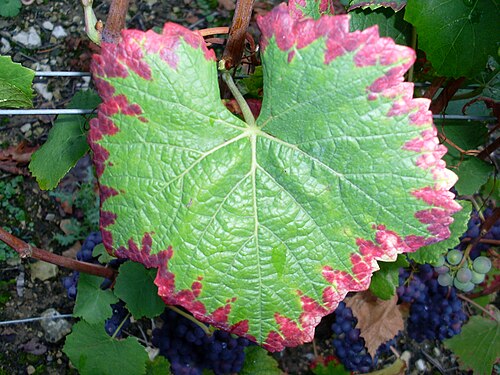
    Autumn Pinot Noir grape leaf showing seasonal colour.
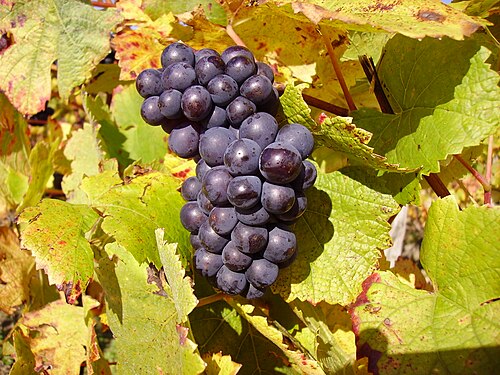
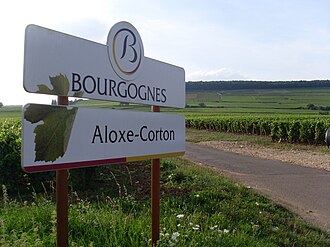
    Vineyard Pinot Noir Grape in Aloxe-Corton, Burgundy.
    Pinot Noir grape cluster.

    Grape personality

    Sensitive, precise, and quietly demanding. Pinot Noir is a thin-skinned, compact-clustered black grape that reacts sharply to place, weather, canopy, clone, and timing. It is not naturally easy or rugged; it is observant, fragile, early budding, disease-prone, and capable of turning careful vineyard work into extraordinary detail.

    Best moment

    A cool evening with earthy food. Pinot Noir feels most complete with roast poultry, duck, mushrooms, lentils, salmon, soft autumn vegetables, or a quiet table where perfume matters more than power. Its best moment is intimate, restrained, slightly earthy, and full of red-fruited brightness.


    Pinot Noir is silk with a shadow: delicate, restless, and haunting, carrying red fruit, earth, and fragility into quiet, luminous depth.


    Contents

    Origin & history

    A Burgundian original with ancient European roots

    Pinot Noir is most deeply associated with Burgundy, where it became one of the world’s defining red grapes. Its history is not simply a matter of fame. It is the story of a vine that found, in the limestone slopes of the Côte d’Or, a landscape precise enough to reveal its rare talent: the ability to translate tiny differences in site into visible character.

    Read more

    The Pinot family is ancient, complex, and genetically restless. Pinot Noir is closely related to Pinot Gris and Pinot Blanc through mutation, and the broader Pinot world has given rise to many local forms, clones, and selections. This instability is part of the grape’s personality. Pinot Noir does not stand still easily. It mutates, adapts, varies, and asks growers to pay close attention to the plant material they choose.

    In Burgundy, Pinot Noir became inseparable from the concept of climat: the idea that one slope, one curve of land, one soil change, one exposure, or one wall can alter a wine’s identity. Monastic, aristocratic, and later grower traditions helped refine that reading of place. Pinot Noir became the instrument through which Burgundy explained itself.

    The grape’s old history also explains why it feels so foundational. Pinot Noir is not a modern success story created by branding. It was already deeply embedded in European viticulture long before today’s global wine market existed. Its importance grew because growers discovered, over centuries, that its fragility could become an advantage in the right sites. A vine that could not hide behind bulk or colour became a vine that could show detail with unusual honesty.

    From Burgundy, the grape moved into Champagne, Alsace, Germany, Switzerland, Austria, northern Italy, Oregon, California, New Zealand, Australia, and many other cool to moderate regions. Yet its identity remains unusually attached to origin. Pinot Noir can travel, but it rarely becomes anonymous when grown seriously. It becomes another dialect of the same difficult language.


    Ampelography

    Thin skins, compact clusters, and fragile precision

    Pinot Noir is a fine-built vine. Its bunches are usually small and compact, often conical, with berries that are small to medium and thin-skinned. That physical delicacy explains much of the grape’s character. Pinot Noir does not bring huge colour or rough structure easily; instead, it gives nuance, fragrance, acidity, and tactile finesse.

    Read more

    The same morphology also brings risk. Compact bunches can trap moisture, which makes grey rot a constant concern in humid seasons. Thin skins are vulnerable to splitting, sunburn, disease, and rough handling. Pinot Noir is therefore not only difficult because people romanticise it. It is difficult because the plant itself leaves little room for error.

    The leaves are medium-sized and variable across clones and selections. Pinot Noir’s clonal diversity is one of its most important viticultural realities. Some selections favour perfume and delicacy; others give more colour, larger berries, smaller berries, different yields, or better disease behaviour. Growers do not simply plant Pinot Noir. They choose a particular version of Pinot Noir.

    This matters because Pinot Noir is not a single fixed experience in the vineyard. A high-yielding clone in a fertile site behaves very differently from an old massal selection on a restrained limestone slope. Some material gives open, generous fruit. Some gives smaller berries and more structure. Some can be more prone to rot. Some may carry more aromatic delicacy. The ampelographic story of Pinot Noir is therefore also a story of selection, memory, and local adaptation.

    • Leaf: medium-sized, variable across clones and Pinot family material.
    • Bunch: small to very small, compact, often conical, disease-sensitive.
    • Berry: small to medium, thin-skinned, black, delicate, and relatively low in colour intensity.
    • Impression: fragile, precise, highly site-sensitive, and built for nuance rather than force.

    Viticulture notes

    A difficult vine that rewards restraint and timing

    Pinot Noir is one of the most demanding major grape varieties. It buds early, which can expose it to spring frost. It ripens relatively early, which helps in cool climates, but the window for ideal ripeness is narrow. Too little warmth leaves it green and angular; too much warmth can make it soft, heavy, and jammy.

    Read more

    The vine performs best in cool to moderate climates with a long, even growing season. It needs enough light to ripen skins and seeds, but not so much heat that fragrance collapses. It also needs enough air movement to reduce disease pressure, yet not so much wind that growth becomes stressed. Pinot Noir lives in balance, and its best sites usually offer a precise combination of drainage, exposure, slope, soil restraint, and temperature moderation.

    Canopy work matters enormously. A dense canopy can reduce airflow and increase rot risk. Too much leaf removal can expose thin-skinned berries to sunburn or heat stress. Yields must be watched carefully: excessive crop can make Pinot Noir taste diluted and hollow, while overly severe reduction can produce wines that feel forced and heavy. The grower’s task is not simply to concentrate the grape, but to let it stay articulate.

    Disease pressure is one of the defining issues. Compact bunches and thin skins make Pinot Noir vulnerable to grey rot, especially when harvest approaches and autumn rain appears. Downy mildew and powdery mildew can also be serious problems depending on climate and season. Because the grape is so transparent, compromised fruit is difficult to hide. Sorting, careful picking, and quick, gentle handling are often essential.

    Water balance is another quiet but crucial factor. Pinot Noir does not usually want lush, fertile abundance. Too much water and nitrogen can create excessive vigour, shaded fruit, and soft wines without shape. Too much drought, however, can shut down ripening and turn the fruit hard or dry. The best sites often ask the vine to work, but not to suffer without rhythm.

    Pinot Noir’s difficulty is also emotional. It can look promising for much of the season and still disappoint at harvest. It can be ruined by rain, heat spikes, careless picking, or rough extraction. Yet when the season, site, and grower align, the same difficult vine can produce fruit of almost weightless intensity.


    Wine styles & vinification

    From pale red silk to age-worthy depth

    Pinot Noir produces some of the world’s most expressive red wines, but also blanc de noirs, rosé, sparkling wines, and lighter regional styles. Its red wines are rarely defined by deep colour or brute tannin. They are defined by perfume, acidity, texture, and the way fruit, earth, flowers, and spice can seem to hover rather than sit heavily in the glass.

    Read more

    Classic aromas include red cherry, raspberry, wild strawberry, rose, violet, peony, orange peel, tea leaf, spice, mushroom, undergrowth, damp soil, and sometimes a fine savoury note that grows with age. In warmer sites, the fruit can become darker: plum, black cherry, cola, sweet spice, or baked berries. The best warm-climate examples still keep freshness and lift.

    Winemaking is a major part of Pinot Noir’s voice. Whole-cluster fermentation can add stem spice, lift, floral tone, and a fine structural line. Destemmed fruit can give purer berry expression. Oak can deepen texture and add spice, but too much new oak easily overwhelms the grape. Extraction must be gentle and exact. Pinot Noir rarely rewards aggression; it rewards touch.

    There are many valid styles. Some producers seek pale, lifted, almost translucent Pinot Noir with minimal extraction. Others aim for darker fruit, firmer tannin, and longer ageing. Some use significant whole bunches; others avoid stems entirely. Some rely on old barrels and quiet élevage; others use new oak to frame structure. The danger is not style itself. The danger is when style becomes heavier than the grape’s own voice.

    In sparkling wine, Pinot Noir behaves differently. In Champagne and other traditional-method regions, it can bring structure, red-fruited depth, body, and length to blends. As blanc de noirs, it can produce white sparkling wines with broad texture, subtle red-fruit notes, and a deeper frame than many wines based purely on white grapes. This second identity is essential to understanding Pinot Noir fully.

    With age, great Pinot Noir becomes less about fruit and more about atmosphere: dried rose, forest floor, truffle, tea, game, spice, and a softening of all hard edges. It can look pale and still feel immense. That is one of Pinot Noir’s mysteries: the wine seems to lose visible force while gaining emotional depth.


    Terroir & microclimate

    One of wine’s clearest mirrors of place

    Pinot Noir is one of the great terroir grapes because it records small differences with unusual clarity. Soil depth, limestone content, drainage, slope, wind, altitude, clone, rootstock, crop load, and harvest date can all change the final wine. This is why Burgundy’s vineyard map feels so detailed: Pinot Noir gave people a reason to notice.

    Read more

    Limestone and marl are often associated with great Pinot Noir, especially in Burgundy, but the deeper principle is balance. Pinot Noir wants soils that restrain rather than inflate the vine. Too much fertility can create excessive vigour, shaded fruit, diluted flavour, and a wine that feels broad but anonymous. Good Pinot sites tend to limit the vine just enough to make it articulate.

    Microclimate matters just as much. A slightly cooler exposure can preserve red-fruited lift. A warmer slope can add flesh and darker fruit. A sheltered site may give perfume, while an exposed site may sharpen structure. Pinot Noir does not merely change flavour from place to place; it changes posture. It can feel lifted, brooding, silky, angular, earthy, floral, delicate, or quietly muscular depending on where it grows.

    This is why Pinot Noir has such a strong relationship with slopes. A gentle incline can improve drainage, catch morning sun, avoid frost pockets, or create air movement that protects fragile fruit. A few metres of elevation can delay ripening. A wall, forest edge, valley mouth, or exposure to wind can shift the whole personality of a wine. Pinot Noir makes these small things matter.

    Climate change has made this conversation even more important. In some classic regions, warmer seasons have helped ripen Pinot Noir more reliably. At the same time, heat spikes, drought, lower acidity, and fast sugar accumulation can threaten the grape’s natural elegance. Growers increasingly think about shade, altitude, soil health, cover crops, picking dates, and water balance as part of preserving Pinot Noir’s identity.

    Vintage is also highly visible. Warm years may give generosity and ripe fruit; cooler years may bring tension, pale colour, higher acidity, and more herbal or floral detail. This transparency makes Pinot Noir risky, but also deeply educational. It turns wine into a record of both place and season.


    Historical spread & modern experiments

    From Burgundy to a global cool-climate obsession

    Pinot Noir’s spread is different from the spread of many global grapes. It did not travel because it was easy. It travelled because growers became fascinated by what it could do when the conditions were right. Every serious Pinot region outside Burgundy is, in some way, a conversation with Burgundy and also an attempt to find an independent voice.

    Read more

    Champagne gave Pinot Noir another destiny: sparkling wine. There, it contributes structure, red-fruited depth, and power to blends, and it can produce blanc de noirs of remarkable breadth. Germany, where it is known as Spätburgunder, has become one of the most important modern regions for refined, site-specific Pinot Noir. Switzerland, Austria, and northern Italy each add their own cool-climate accents.

    In the New World, Oregon proved that Pinot Noir could produce serious, transparent, age-worthy wines outside Europe. California showed both the danger and promise of warmth: some sites produce broad, dark-fruited wines, while cooler coastal zones can give freshness, perfume, and detail. New Zealand became one of Pinot Noir’s most successful modern homes, with Central Otago, Martinborough, Marlborough, and North Canterbury each offering different expressions.

    Australia, too, has shown that Pinot Noir can be far more subtle than older stereotypes suggested. Cooler areas such as Tasmania, the Yarra Valley, Mornington Peninsula, Macedon Ranges, and parts of Adelaide Hills have produced increasingly precise wines. In Chile, cooler coastal zones and southern regions have also given the grape a more serious modern platform. Canada, especially in Ontario and British Columbia, adds another cool-climate dimension.

    Pinot Noir’s modern rise also changed how many drinkers think about red wine. It helped open space for lighter colour, lower tannin, brighter acidity, and aromatic complexity. In a world that often rewarded density and volume, Pinot Noir kept reminding people that elegance can be just as serious as concentration.

    Modern experimentation continues around clones, whole bunches, amphora, reduced new oak, earlier picking, regenerative farming, and lighter extraction. But the best experiments usually share one principle: Pinot Noir should not be made louder than the site. It should be made clearer.


    Tasting profile & food pairing

    Red fruit, earth, flowers, and the grace of restraint

    Pinot Noir’s classic profile is built around red fruit, floral lift, fresh acidity, fine tannin, and earthy complexity. The grape is usually medium-bodied rather than massive, with colour that can range from pale ruby to deeper garnet. Its power is rarely visual. Its power is aromatic, textural, and emotional.

    Read more

    Aromas and flavors: red cherry, wild strawberry, raspberry, cranberry, rose, violet, peony, orange peel, tea leaf, clove, cinnamon, mushroom, forest floor, damp earth, truffle, and sometimes a gentle gamey note with maturity. Structure: usually medium-bodied, moderate in tannin, fresh in acidity, fine in texture, and highly transparent to site and vintage.

    Food pairings: roast chicken, duck, quail, pigeon, rabbit, pork tenderloin, salmon, tuna, mushroom ragout, lentils, beetroot, truffle dishes, soft cheeses, and autumn vegetables. Pinot Noir is especially good with food that has savoury depth but not overwhelming weight.

    The reason it works so well with food is balance. Pinot Noir often has enough acidity to refresh, enough fruit to charm, enough tannin to shape the mouth, and enough savoury detail to connect with herbs, stock, mushrooms, browned butter, and roasted vegetables. It can sit beside a dish rather than standing on top of it.

    At the table, Pinot Noir succeeds because it does not dominate. Its acidity refreshes, its tannin rarely overwhelms, and its earthy-floral profile meets food with sympathy rather than force. It is one of the great red wines for birds, mushrooms, herbs, stock, butter, and quiet, layered dishes.


    Where it grows

    A global grape with Burgundy still at its centre

    Pinot Noir is grown across the world, but it is not equally comfortable everywhere. Its best results usually come from cool to moderate regions where ripening is slow enough to preserve perfume and acidity, yet complete enough to avoid harsh greenness. Burgundy remains the reference point, but many other regions now speak Pinot Noir with confidence.

    Read more
    • France: Burgundy is the classical heart; Champagne is essential for sparkling wine; Alsace also makes still Pinot Noir.
    • Germany: Spätburgunder has become one of the most important modern expressions of the grape.
    • United States: Oregon is a major reference, with California strongest in cooler coastal regions.
    • New Zealand: Central Otago, Martinborough, Marlborough, and North Canterbury all produce distinctive styles.
    • Elsewhere: Australia, Switzerland, Austria, northern Italy, Canada, Chile, and other cool regions add further expressions.

    Burgundy remains the emotional and historical centre because the region has spent centuries learning how to separate one place from another through Pinot Noir. The Côte de Nuits is often associated with depth, structure, and long ageing, while the Côte de Beaune can bring perfume, red fruit, elegance, and finesse, though these generalisations always depend on village, vineyard, producer, and vintage.

    Outside Burgundy, Oregon’s Willamette Valley has become a benchmark for cool-climate Pinot Noir with red fruit, forest notes, and fine acidity. New Zealand often shows vivid fruit, clarity, and polished structure. Germany has moved from pale, simple Spätburgunder to wines of real depth and site expression. California’s best examples tend to come from coastal, fog-influenced, or high-altitude areas where heat is moderated.

    The best Pinot Noir regions share one thing: they do not try to make the grape behave like Cabernet Sauvignon or Syrah. They respect its frame. They allow perfume, acidity, red fruit, and soil expression to matter more than power. Pinot Noir succeeds where restraint is understood as a strength.


    Why it matters

    Why Pinot Noir matters on Ampelique

    Pinot Noir matters because it teaches a different idea of greatness. It proves that a grape does not need huge colour, massive tannin, or obvious power to become profound. Its greatness lies in vulnerability, detail, transparency, and the way a fragile vine can make place feel almost intimate.

    Read more

    For growers, Pinot Noir is a test of judgement: clone, site, crop, canopy, disease pressure, pick date, and sorting all matter. For winemakers, it is a test of touch: extraction, stems, oak, oxygen, and élevage must support the grape without overwhelming it. For drinkers, it is an invitation to slow down and notice detail.

    On Ampelique, Pinot Noir is indispensable because it links so many themes: ancient grape families, mutation, terroir, clonal selection, cool-climate viticulture, sparkling wine, global adaptation, food pairing, and the emotional language of wine. It is not only a famous grape. It is one of the clearest ways to explain why grape varieties matter.

    It also helps explain why Ampelique should focus on the vine, not only the bottle. Pinot Noir’s wine reputation is famous, but its real story begins before fermentation: in small clusters, thin skins, early buds, fungal pressure, slope, light, clone, and the grower’s decisions. The grape is a living reminder that wine character starts in the plant.

    Its lesson is simple but difficult: delicacy can be serious. Fragility can be expressive. A wine does not need to shout to become unforgettable. Pinot Noir gives that lesson more beautifully than almost any other black grape.

    Keep exploring

    Continue through the PQR grape group to discover more varieties that shape classic regions, historic blends, and the living architecture of wine.

    Quick facts

    Identity

    • Color: black
    • Main names / synonyms: Pinot Noir, Pinot Nero, Spätburgunder, Blauburgunder, Pinot
    • Parentage: ancient Pinot family; closely linked to Pinot Gris and Pinot Blanc through mutation
    • Origin: Burgundy, France
    • Common regions: Burgundy, Champagne, Germany, Oregon, California, New Zealand, Switzerland, Australia

    Vineyard & wine

    • Climate: cool to moderate, with a narrow ideal ripening window
    • Soils: often excels on limestone, marl, and restrained, well-drained sites
    • Growth habit: early budding, thin-skinned, compact-clustered, disease-sensitive
    • Ripening: early to mid-season, requiring careful harvest timing
    • Styles: still red, blanc de noirs, rosé, sparkling wine, age-worthy terroir wines
    • Signature: red cherry, rose, earth, spice, silk, acidity, transparency
    • Classic markers: pale colour, fine tannin, high site sensitivity, aromatic delicacy
    • Viticultural note: vulnerable to rot, frost, heat spikes, and overcropping

    If you like this grape

    If Pinot Noir appeals to you, explore other grapes with fine structure, cool-climate sensitivity, red-fruited lift, or a deep relationship with place and subtle winemaking.

    Closing note

    Pinot Noir is not great because it is easy. It is great because it turns difficulty into beauty: thin skins, compact bunches, cool sites, careful hands, and the quiet intensity of a grape that can make a single slope feel almost alive.

    Continue exploring Ampelique

    Pinot Noir does not ask to be admired from a distance; it asks you to come closer, where the smallest details begin to glow.