Ampelique Grape Profile
Pinot Noir
Origin, viticulture, morphology, wine styles, and place.
Pinot Noir is an ancient black grape from Burgundy: thin-skinned, compact-clustered, genetically restless, and one of the clearest vineyard translators in wine.
It is a grape of small berries, fragile skins, autumn light, and the strange power of delicacy when everything in the vineyard is exactly right.
Pinot Noir does not grow with the confidence of a robust, easy variety.
It asks for cool air, careful hands, restrained soils, and patience from the grower.
Its strength is not weight, but precision: the ability to turn site, season, clone, and touch into visible character.
On Ampelique, Pinot Noir belongs among the great foundation grapes because it shows how fragile a vine can be, and how profound that fragility can become.
Pinot Noir inspires devotion because it rarely hides anything. In the vineyard, it reacts quickly to heat, disease, soil, water, clone, and canopy. In the cellar, it shows extraction, stems, oak, and ripeness with almost uncomfortable honesty. That sensitivity can make it difficult, but it is also the source of its greatness.
Grape personality
Sensitive, precise, and quietly demanding. Pinot Noir is a thin-skinned, compact-clustered black grape that reacts sharply to place, weather, canopy, clone, and timing. It is not naturally easy or rugged; it is observant, fragile, early budding, disease-prone, and capable of turning careful vineyard work into extraordinary detail.
Best moment
A cool evening with earthy food. Pinot Noir feels most complete with roast poultry, duck, mushrooms, lentils, salmon, soft autumn vegetables, or a quiet table where perfume matters more than power. Its best moment is intimate, restrained, slightly earthy, and full of red-fruited brightness.
Pinot Noir is silk with a shadow: delicate, restless, and haunting, carrying red fruit, earth, and fragility into quiet, luminous depth.
Contents
Origin & history
A Burgundian original with ancient European roots
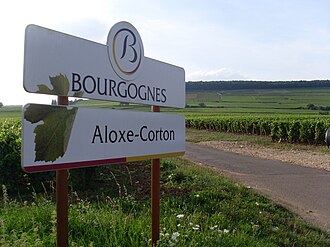
Pinot Noir is most deeply associated with Burgundy, where it became one of the world’s defining red grapes. Its history is not simply a matter of fame. It is the story of a vine that found, in the limestone slopes of the Côte d’Or, a landscape precise enough to reveal its rare talent: the ability to translate tiny differences in site into visible character.
Read more
The Pinot family is ancient, complex, and genetically restless. Pinot Noir is closely related to Pinot Gris and Pinot Blanc through mutation, and the broader Pinot world has given rise to many local forms, clones, and selections. This instability is part of the grape’s personality. Pinot Noir does not stand still easily. It mutates, adapts, varies, and asks growers to pay close attention to the plant material they choose.
In Burgundy, Pinot Noir became inseparable from the concept of climat: the idea that one slope, one curve of land, one soil change, one exposure, or one wall can alter a wine’s identity. Monastic, aristocratic, and later grower traditions helped refine that reading of place. Pinot Noir became the instrument through which Burgundy explained itself.
The grape’s old history also explains why it feels so foundational. Pinot Noir is not a modern success story created by branding. It was already deeply embedded in European viticulture long before today’s global wine market existed. Its importance grew because growers discovered, over centuries, that its fragility could become an advantage in the right sites. A vine that could not hide behind bulk or colour became a vine that could show detail with unusual honesty.
From Burgundy, the grape moved into Champagne, Alsace, Germany, Switzerland, Austria, northern Italy, Oregon, California, New Zealand, Australia, and many other cool to moderate regions. Yet its identity remains unusually attached to origin. Pinot Noir can travel, but it rarely becomes anonymous when grown seriously. It becomes another dialect of the same difficult language.
Ampelography
Thin skins, compact clusters, and fragile precision
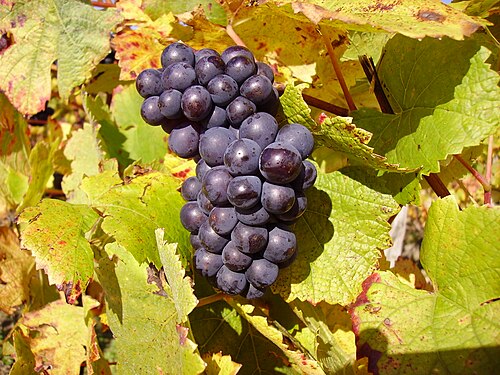
Pinot Noir is a fine-built vine. Its bunches are usually small and compact, often conical, with berries that are small to medium and thin-skinned. That physical delicacy explains much of the grape’s character. Pinot Noir does not bring huge colour or rough structure easily; instead, it gives nuance, fragrance, acidity, and tactile finesse.
Read more
The same morphology also brings risk. Compact bunches can trap moisture, which makes grey rot a constant concern in humid seasons. Thin skins are vulnerable to splitting, sunburn, disease, and rough handling. Pinot Noir is therefore not only difficult because people romanticise it. It is difficult because the plant itself leaves little room for error.
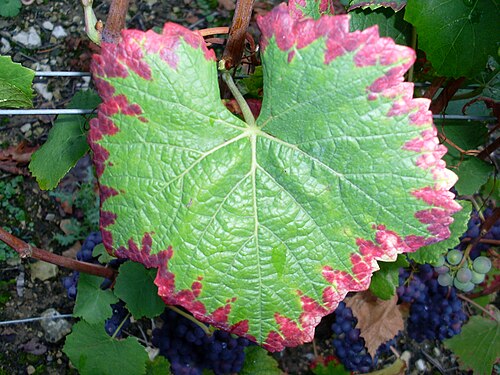
The leaves are medium-sized and variable across clones and selections. Pinot Noir’s clonal diversity is one of its most important viticultural realities. Some selections favour perfume and delicacy; others give more colour, larger berries, smaller berries, different yields, or better disease behaviour. Growers do not simply plant Pinot Noir. They choose a particular version of Pinot Noir.
This matters because Pinot Noir is not a single fixed experience in the vineyard. A high-yielding clone in a fertile site behaves very differently from an old massal selection on a restrained limestone slope. Some material gives open, generous fruit. Some gives smaller berries and more structure. Some can be more prone to rot. Some may carry more aromatic delicacy. The ampelographic story of Pinot Noir is therefore also a story of selection, memory, and local adaptation.
- Leaf: medium-sized, variable across clones and Pinot family material.
- Bunch: small to very small, compact, often conical, disease-sensitive.
- Berry: small to medium, thin-skinned, black, delicate, and relatively low in colour intensity.
- Impression: fragile, precise, highly site-sensitive, and built for nuance rather than force.
Viticulture notes
A difficult vine that rewards restraint and timing
Pinot Noir is one of the most demanding major grape varieties. It buds early, which can expose it to spring frost. It ripens relatively early, which helps in cool climates, but the window for ideal ripeness is narrow. Too little warmth leaves it green and angular; too much warmth can make it soft, heavy, and jammy.
Read more
The vine performs best in cool to moderate climates with a long, even growing season. It needs enough light to ripen skins and seeds, but not so much heat that fragrance collapses. It also needs enough air movement to reduce disease pressure, yet not so much wind that growth becomes stressed. Pinot Noir lives in balance, and its best sites usually offer a precise combination of drainage, exposure, slope, soil restraint, and temperature moderation.
Canopy work matters enormously. A dense canopy can reduce airflow and increase rot risk. Too much leaf removal can expose thin-skinned berries to sunburn or heat stress. Yields must be watched carefully: excessive crop can make Pinot Noir taste diluted and hollow, while overly severe reduction can produce wines that feel forced and heavy. The grower’s task is not simply to concentrate the grape, but to let it stay articulate.
Disease pressure is one of the defining issues. Compact bunches and thin skins make Pinot Noir vulnerable to grey rot, especially when harvest approaches and autumn rain appears. Downy mildew and powdery mildew can also be serious problems depending on climate and season. Because the grape is so transparent, compromised fruit is difficult to hide. Sorting, careful picking, and quick, gentle handling are often essential.
Water balance is another quiet but crucial factor. Pinot Noir does not usually want lush, fertile abundance. Too much water and nitrogen can create excessive vigour, shaded fruit, and soft wines without shape. Too much drought, however, can shut down ripening and turn the fruit hard or dry. The best sites often ask the vine to work, but not to suffer without rhythm.
Pinot Noir’s difficulty is also emotional. It can look promising for much of the season and still disappoint at harvest. It can be ruined by rain, heat spikes, careless picking, or rough extraction. Yet when the season, site, and grower align, the same difficult vine can produce fruit of almost weightless intensity.
Wine styles & vinification
From pale red silk to age-worthy depth
Pinot Noir produces some of the world’s most expressive red wines, but also blanc de noirs, rosé, sparkling wines, and lighter regional styles. Its red wines are rarely defined by deep colour or brute tannin. They are defined by perfume, acidity, texture, and the way fruit, earth, flowers, and spice can seem to hover rather than sit heavily in the glass.
Read more
Classic aromas include red cherry, raspberry, wild strawberry, rose, violet, peony, orange peel, tea leaf, spice, mushroom, undergrowth, damp soil, and sometimes a fine savoury note that grows with age. In warmer sites, the fruit can become darker: plum, black cherry, cola, sweet spice, or baked berries. The best warm-climate examples still keep freshness and lift.
Winemaking is a major part of Pinot Noir’s voice. Whole-cluster fermentation can add stem spice, lift, floral tone, and a fine structural line. Destemmed fruit can give purer berry expression. Oak can deepen texture and add spice, but too much new oak easily overwhelms the grape. Extraction must be gentle and exact. Pinot Noir rarely rewards aggression; it rewards touch.
There are many valid styles. Some producers seek pale, lifted, almost translucent Pinot Noir with minimal extraction. Others aim for darker fruit, firmer tannin, and longer ageing. Some use significant whole bunches; others avoid stems entirely. Some rely on old barrels and quiet élevage; others use new oak to frame structure. The danger is not style itself. The danger is when style becomes heavier than the grape’s own voice.
In sparkling wine, Pinot Noir behaves differently. In Champagne and other traditional-method regions, it can bring structure, red-fruited depth, body, and length to blends. As blanc de noirs, it can produce white sparkling wines with broad texture, subtle red-fruit notes, and a deeper frame than many wines based purely on white grapes. This second identity is essential to understanding Pinot Noir fully.
With age, great Pinot Noir becomes less about fruit and more about atmosphere: dried rose, forest floor, truffle, tea, game, spice, and a softening of all hard edges. It can look pale and still feel immense. That is one of Pinot Noir’s mysteries: the wine seems to lose visible force while gaining emotional depth.
Terroir & microclimate
One of wine’s clearest mirrors of place
Pinot Noir is one of the great terroir grapes because it records small differences with unusual clarity. Soil depth, limestone content, drainage, slope, wind, altitude, clone, rootstock, crop load, and harvest date can all change the final wine. This is why Burgundy’s vineyard map feels so detailed: Pinot Noir gave people a reason to notice.
Read more
Limestone and marl are often associated with great Pinot Noir, especially in Burgundy, but the deeper principle is balance. Pinot Noir wants soils that restrain rather than inflate the vine. Too much fertility can create excessive vigour, shaded fruit, diluted flavour, and a wine that feels broad but anonymous. Good Pinot sites tend to limit the vine just enough to make it articulate.
Microclimate matters just as much. A slightly cooler exposure can preserve red-fruited lift. A warmer slope can add flesh and darker fruit. A sheltered site may give perfume, while an exposed site may sharpen structure. Pinot Noir does not merely change flavour from place to place; it changes posture. It can feel lifted, brooding, silky, angular, earthy, floral, delicate, or quietly muscular depending on where it grows.
This is why Pinot Noir has such a strong relationship with slopes. A gentle incline can improve drainage, catch morning sun, avoid frost pockets, or create air movement that protects fragile fruit. A few metres of elevation can delay ripening. A wall, forest edge, valley mouth, or exposure to wind can shift the whole personality of a wine. Pinot Noir makes these small things matter.
Climate change has made this conversation even more important. In some classic regions, warmer seasons have helped ripen Pinot Noir more reliably. At the same time, heat spikes, drought, lower acidity, and fast sugar accumulation can threaten the grape’s natural elegance. Growers increasingly think about shade, altitude, soil health, cover crops, picking dates, and water balance as part of preserving Pinot Noir’s identity.
Vintage is also highly visible. Warm years may give generosity and ripe fruit; cooler years may bring tension, pale colour, higher acidity, and more herbal or floral detail. This transparency makes Pinot Noir risky, but also deeply educational. It turns wine into a record of both place and season.
Historical spread & modern experiments
From Burgundy to a global cool-climate obsession
Pinot Noir’s spread is different from the spread of many global grapes. It did not travel because it was easy. It travelled because growers became fascinated by what it could do when the conditions were right. Every serious Pinot region outside Burgundy is, in some way, a conversation with Burgundy and also an attempt to find an independent voice.
Read more
Champagne gave Pinot Noir another destiny: sparkling wine. There, it contributes structure, red-fruited depth, and power to blends, and it can produce blanc de noirs of remarkable breadth. Germany, where it is known as Spätburgunder, has become one of the most important modern regions for refined, site-specific Pinot Noir. Switzerland, Austria, and northern Italy each add their own cool-climate accents.
In the New World, Oregon proved that Pinot Noir could produce serious, transparent, age-worthy wines outside Europe. California showed both the danger and promise of warmth: some sites produce broad, dark-fruited wines, while cooler coastal zones can give freshness, perfume, and detail. New Zealand became one of Pinot Noir’s most successful modern homes, with Central Otago, Martinborough, Marlborough, and North Canterbury each offering different expressions.
Australia, too, has shown that Pinot Noir can be far more subtle than older stereotypes suggested. Cooler areas such as Tasmania, the Yarra Valley, Mornington Peninsula, Macedon Ranges, and parts of Adelaide Hills have produced increasingly precise wines. In Chile, cooler coastal zones and southern regions have also given the grape a more serious modern platform. Canada, especially in Ontario and British Columbia, adds another cool-climate dimension.
Pinot Noir’s modern rise also changed how many drinkers think about red wine. It helped open space for lighter colour, lower tannin, brighter acidity, and aromatic complexity. In a world that often rewarded density and volume, Pinot Noir kept reminding people that elegance can be just as serious as concentration.
Modern experimentation continues around clones, whole bunches, amphora, reduced new oak, earlier picking, regenerative farming, and lighter extraction. But the best experiments usually share one principle: Pinot Noir should not be made louder than the site. It should be made clearer.
Tasting profile & food pairing
Red fruit, earth, flowers, and the grace of restraint
Pinot Noir’s classic profile is built around red fruit, floral lift, fresh acidity, fine tannin, and earthy complexity. The grape is usually medium-bodied rather than massive, with colour that can range from pale ruby to deeper garnet. Its power is rarely visual. Its power is aromatic, textural, and emotional.
Read more
Aromas and flavors: red cherry, wild strawberry, raspberry, cranberry, rose, violet, peony, orange peel, tea leaf, clove, cinnamon, mushroom, forest floor, damp earth, truffle, and sometimes a gentle gamey note with maturity. Structure: usually medium-bodied, moderate in tannin, fresh in acidity, fine in texture, and highly transparent to site and vintage.
Food pairings: roast chicken, duck, quail, pigeon, rabbit, pork tenderloin, salmon, tuna, mushroom ragout, lentils, beetroot, truffle dishes, soft cheeses, and autumn vegetables. Pinot Noir is especially good with food that has savoury depth but not overwhelming weight.
The reason it works so well with food is balance. Pinot Noir often has enough acidity to refresh, enough fruit to charm, enough tannin to shape the mouth, and enough savoury detail to connect with herbs, stock, mushrooms, browned butter, and roasted vegetables. It can sit beside a dish rather than standing on top of it.
At the table, Pinot Noir succeeds because it does not dominate. Its acidity refreshes, its tannin rarely overwhelms, and its earthy-floral profile meets food with sympathy rather than force. It is one of the great red wines for birds, mushrooms, herbs, stock, butter, and quiet, layered dishes.
Where it grows
A global grape with Burgundy still at its centre
Pinot Noir is grown across the world, but it is not equally comfortable everywhere. Its best results usually come from cool to moderate regions where ripening is slow enough to preserve perfume and acidity, yet complete enough to avoid harsh greenness. Burgundy remains the reference point, but many other regions now speak Pinot Noir with confidence.
Read more
- France: Burgundy is the classical heart; Champagne is essential for sparkling wine; Alsace also makes still Pinot Noir.
- Germany: Spätburgunder has become one of the most important modern expressions of the grape.
- United States: Oregon is a major reference, with California strongest in cooler coastal regions.
- New Zealand: Central Otago, Martinborough, Marlborough, and North Canterbury all produce distinctive styles.
- Elsewhere: Australia, Switzerland, Austria, northern Italy, Canada, Chile, and other cool regions add further expressions.
Burgundy remains the emotional and historical centre because the region has spent centuries learning how to separate one place from another through Pinot Noir. The Côte de Nuits is often associated with depth, structure, and long ageing, while the Côte de Beaune can bring perfume, red fruit, elegance, and finesse, though these generalisations always depend on village, vineyard, producer, and vintage.
Outside Burgundy, Oregon’s Willamette Valley has become a benchmark for cool-climate Pinot Noir with red fruit, forest notes, and fine acidity. New Zealand often shows vivid fruit, clarity, and polished structure. Germany has moved from pale, simple Spätburgunder to wines of real depth and site expression. California’s best examples tend to come from coastal, fog-influenced, or high-altitude areas where heat is moderated.
The best Pinot Noir regions share one thing: they do not try to make the grape behave like Cabernet Sauvignon or Syrah. They respect its frame. They allow perfume, acidity, red fruit, and soil expression to matter more than power. Pinot Noir succeeds where restraint is understood as a strength.
Why it matters
Why Pinot Noir matters on Ampelique
Pinot Noir matters because it teaches a different idea of greatness. It proves that a grape does not need huge colour, massive tannin, or obvious power to become profound. Its greatness lies in vulnerability, detail, transparency, and the way a fragile vine can make place feel almost intimate.
Read more
For growers, Pinot Noir is a test of judgement: clone, site, crop, canopy, disease pressure, pick date, and sorting all matter. For winemakers, it is a test of touch: extraction, stems, oak, oxygen, and élevage must support the grape without overwhelming it. For drinkers, it is an invitation to slow down and notice detail.
On Ampelique, Pinot Noir is indispensable because it links so many themes: ancient grape families, mutation, terroir, clonal selection, cool-climate viticulture, sparkling wine, global adaptation, food pairing, and the emotional language of wine. It is not only a famous grape. It is one of the clearest ways to explain why grape varieties matter.
It also helps explain why Ampelique should focus on the vine, not only the bottle. Pinot Noir’s wine reputation is famous, but its real story begins before fermentation: in small clusters, thin skins, early buds, fungal pressure, slope, light, clone, and the grower’s decisions. The grape is a living reminder that wine character starts in the plant.
Its lesson is simple but difficult: delicacy can be serious. Fragility can be expressive. A wine does not need to shout to become unforgettable. Pinot Noir gives that lesson more beautifully than almost any other black grape.
Keep exploring
Continue through the PQR grape group to discover more varieties that shape classic regions, historic blends, and the living architecture of wine.
Quick facts
Identity
- Color: black
- Main names / synonyms: Pinot Noir, Pinot Nero, Spätburgunder, Blauburgunder, Pinot
- Parentage: ancient Pinot family; closely linked to Pinot Gris and Pinot Blanc through mutation
- Origin: Burgundy, France
- Common regions: Burgundy, Champagne, Germany, Oregon, California, New Zealand, Switzerland, Australia
Vineyard & wine
- Climate: cool to moderate, with a narrow ideal ripening window
- Soils: often excels on limestone, marl, and restrained, well-drained sites
- Growth habit: early budding, thin-skinned, compact-clustered, disease-sensitive
- Ripening: early to mid-season, requiring careful harvest timing
- Styles: still red, blanc de noirs, rosé, sparkling wine, age-worthy terroir wines
- Signature: red cherry, rose, earth, spice, silk, acidity, transparency
- Classic markers: pale colour, fine tannin, high site sensitivity, aromatic delicacy
- Viticultural note: vulnerable to rot, frost, heat spikes, and overcropping
If you like this grape
If Pinot Noir appeals to you, explore other grapes with fine structure, cool-climate sensitivity, red-fruited lift, or a deep relationship with place and subtle winemaking.
Closing note
Pinot Noir is not great because it is easy. It is great because it turns difficulty into beauty: thin skins, compact bunches, cool sites, careful hands, and the quiet intensity of a grape that can make a single slope feel almost alive.
Image credits
Leaf/detail image: Wikimedia Commons – http://www.kvins.com
Vineyard landscape image: Wikimedia Commons – Karen
Pinot Noir cluster image: Wikimedia Commons – Cjp24
Continue exploring Ampelique
Pinot Noir does not ask to be admired from a distance; it asks you to come closer, where the smallest details begin to glow.
 Ampelique
Leave a comment