Ampelique Grape Profile
Cabernet Sauvignon
Origin, viticulture, morphology, wine styles, and place.
Cabernet Sauvignon is a black grape from Bordeaux, France, and one of the world’s most influential red wine varieties. It is a grape of small dark berries, thick skins, firm tannin, cassis, cedar, graphite and the rare ability to turn structure into elegance over time.
Cabernet Sauvignon sits at the meeting point of viticultural discipline and cultural myth. Its fame can make it seem almost too familiar, yet the vine itself remains precise and demanding: small berries, compact clusters, firm skins, late ripening, clear parentage and a strong relationship with site. Born from Cabernet Franc and Sauvignon Blanc, it carries aromatic lift, herbal nuance, acidity and structure in a darker, more age-worthy form. In Bordeaux, especially on the Left Bank, it became the backbone of wines built for patience. Across the world, it became a language of serious red wine, from Napa Valley and Chile to Coonawarra, Margaret River, Tuscany and South Africa. It became famous because it travels, but it remains interesting because it changes voice without losing its spine.
Grape personality
Structured, dark-skinned, late-ripening, and deeply site-sensitive. Cabernet Sauvignon is a black grape with small berries, compact bunches, thick skins and firm tannin. Its personality is disciplined, reserved, architectural, age-worthy, aromatic in a dark way and best when ripeness is balanced by freshness.
Best moment
Roast lamb, ribeye, cedar, herbs and a slow-opening bottle. Cabernet Sauvignon suits grilled beef, venison, mushroom ragù, hard cheese, pepper, rosemary and charred vegetables. Its best moment is patient, savoury, generous and serious, when tannin meets food and the wine slowly becomes more human.
Cabernet Sauvignon does not hurry to reveal itself: dark berries, gravel warmth, blackcurrant, cedar and tannin gathering slowly into shape. With time, the grape softens without losing its spine.
Contents
Origin & history
A Bordeaux crossing that reshaped red wine
Cabernet Sauvignon emerged in Bordeaux and has come to stand for seriousness in red wine perhaps more than any other grape. Its identity is specific, not vague. It is the natural offspring of Cabernet Franc and Sauvignon Blanc, a parentage that explains much of its behaviour: Cabernet Franc’s dark herbal lift and Sauvignon Blanc’s freshness and aromatic edge, joined in a grape with deeper colour, thicker skins and firmer tannic architecture. This makes Cabernet Sauvignon unusually educational. It shows how genetics can become flavour, how morphology can become texture, and how a crossing from one region can become a global reference.
Read more
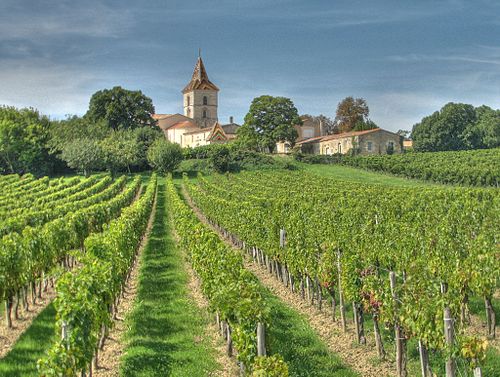
Its rise to prominence is closely tied to the Left Bank of Bordeaux, where gravel soils, maritime moderation and a blending culture helped define the classic image. In Médoc communes such as Pauillac, Saint-Julien, Saint-Estèphe and Margaux, as well as in Graves and Pessac-Léognan, Cabernet Sauvignon became the structural backbone of wines valued for blackcurrant fruit, cedar, graphite, tannin and long evolution. Gravel is important not because it is romantic, but because it warms, drains and helps a late-ripening grape reach maturity in a marginal maritime year.
The grape rarely stood alone in traditional Bordeaux. Merlot often supplied flesh, Cabernet Franc perfume, Petit Verdot colour and spice, and Malbec or Carmenère played smaller historical roles. Yet Cabernet Sauvignon gave the frame: the dark spine, the grip and the long future. That is why it became so strongly associated with the idea of a cellar-worthy red wine. Even when present as only part of a blend, it can define the architecture, much like beams inside an old house.
From Bordeaux it travelled with remarkable success. In California it became a prestige grape of immense cultural influence, especially in Napa Valley. In Chile it found a cool confidence in Maipo and other valleys. In Australia it took on distinctive eucalyptus, cassis and structured forms. Its accent changes, but its grammar remains recognisable. That grammar is built from small berries, firm skins, dark fruit, pyrazine nuance, tannin and a need for time. This is why Cabernet Sauvignon can feel international without becoming anonymous when grown with care.
Ampelography
Small berries, compact clusters and a structured leaf outline
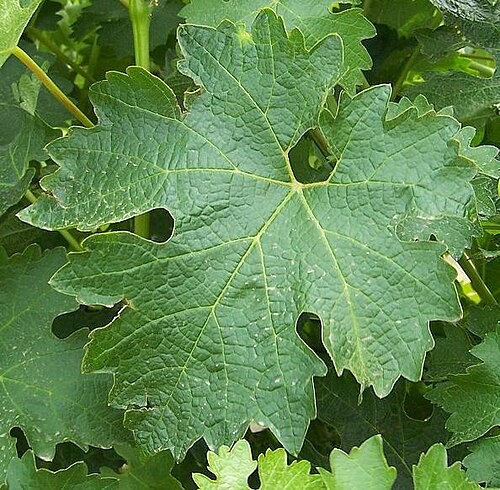
Cabernet Sauvignon’s morphology mirrors its temperament. Adult leaves are usually medium-sized, rounded to pentagonal, often five-lobed, with a structured outline and fairly marked sinuses. The leaf is not the softest visual feature in the vineyard; it looks purposeful, with a defined shape that suits a grape built on line, tannin and proportion. In many vineyards the canopy has a composed, upright feeling, though growth depends strongly on rootstock, soil, climate and training.
Read more
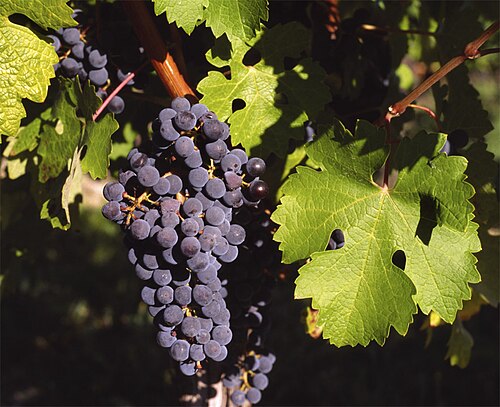
The bunches are generally small to medium-sized, conical or cylindrical-conical, and often compact. This compactness is important. It concentrates fruit, but also means that airflow, canopy openness and disease awareness matter. Cabernet Sauvignon is not a grape that can simply be left to abundance if the goal is fine wine. Compact bunches and thick skins help create intensity, yet they also ask for attention when humidity, shade or uneven ripening threaten fruit quality.
The berries are usually small, round, blue-black to black, and thick-skinned. That skin-to-juice ratio explains much of the variety’s power: colour, tannin, black-fruited density, ageing potential and the ability to hold structure through time. The wine’s architecture begins in the physical architecture of the fruit itself. This is why Cabernet Sauvignon can be deeply coloured even without excessive winemaking, and why harsh extraction is often unnecessary when the fruit has ripened well. The berry is small, but the information it carries is dense: tannin, aroma precursors, anthocyanins, acidity and the tactile promise of a wine that may need years before it becomes generous.
- Leaf: medium-sized, rounded to pentagonal, usually five-lobed with a structured outline.
- Bunch: small to medium, conical or cylindrical-conical, often compact.
- Berry: small, round, blue-black to black, thick-skinned and pigment-rich.
- Impression: concentrated, contained, late-ripening, tannic and built for age.
Viticulture notes
Late ripening, disciplined farming and site selection
Cabernet Sauvignon ripens relatively late, and that one fact explains much of both its greatness and its limits. It needs enough warmth to mature tannins and reduce green pyrazine notes, but too much heat can flatten freshness and push the wine toward jam, weight and alcohol. The best sites provide a long, balanced season rather than simple heat. Proper ripeness is not only sugar ripeness; it is seed, skin, tannin and flavour ripeness arriving together.
Read more
This is why gravel and well-drained soils have been so historically favourable in Bordeaux. On the Left Bank, gravel retains warmth, drains water and helps the late-ripening vine reach maturity in a maritime climate. The grape can also thrive on other soils, but drainage, exposure and season length remain essential. Cabernet Sauvignon is rarely at its best in cold, wet, shaded places. If the season is too short, bell pepper and hard tannin can dominate; if it is too hot, the wine may lose its edge.
Canopy management matters intensely. Too much shade can preserve green notes to the point of rigidity; too much exposure can burn aromatic detail and reduce elegance. Compact bunches need airflow, and small berries need time. Crop level must be controlled so that the vine ripens skins, seeds and pulp together rather than simply accumulating sugar. In dry warm regions, water stress must also be watched carefully: enough stress can concentrate fruit, but too much can shut the vine down.
In the best hands, Cabernet Sauvignon rewards patience and rigor. It is not a grape that flatters indifference. But where farming is precise, it can give fruit with cassis purity, tannic depth, aromatic lift and a line that carries through fermentation, ageing and bottle development. The vineyard challenge is to avoid both extremes: green austerity on one side and heavy over-ripeness on the other. The finest Cabernet often feels controlled, not forced. Good farming lets the grape remain recognisably firm while avoiding bitterness, heat or greenness. This is why Cabernet Sauvignon is so revealing: weak decisions in pruning, canopy, crop load or picking date are rarely hidden for long.
Wine styles & vinification
From graphite and cassis to plush black fruit and cedar
Cabernet Sauvignon’s classic vocabulary is among the most recognisable in red wine: blackcurrant, cassis, black cherry, cedar, graphite, tobacco, mint, dried herbs, cigar box and firm tannin. These notes vary by climate, soil, picking time and ageing, but the variety’s structural identity usually remains visible. It is not only a flavour profile; it is a feeling in the mouth. Cabernet Sauvignon grips, lengthens, straightens and asks the drinker to slow down.
Read more
In cooler or more restrained climates, it may show firmer herbal notes, red-black fruit definition, cedar, graphite and a more linear tannic frame. In warmer regions, it can become richer and broader, with blackberry, plum, chocolate, sweet spice and polished oak. Both directions can be excellent when balance is preserved. The danger is not ripeness; the danger is losing proportion. A great warm-climate Cabernet still needs freshness, and a great cool-climate Cabernet still needs ripe tannin.
Blending remains central to its history. In Bordeaux, Cabernet Sauvignon rarely worked alone. Merlot, Cabernet Franc, Petit Verdot and other grapes help shape texture, perfume and completeness. Outside Bordeaux, varietal Cabernet Sauvignon became a powerful international category, especially in California, Chile, Australia and South Africa, but even there blending often supports balance. A small amount of another grape can soften the centre, lift the aroma or deepen the finish without hiding Cabernet’s identity.
Time changes the wine profoundly. In youth it may seem stern, dark and withholding. With maturity, tannin softens and the aroma can move toward cedar, leather, tobacco, dried herbs, forest floor and warm graphite. Cabernet Sauvignon’s greatness is not only that it can be powerful; it is that power can become articulate. The best bottles do not merely survive time. They use time to become calmer, more detailed and more complete. This ageing capacity is one reason Cabernet Sauvignon became a benchmark for collectors, but it should not be reduced to status. Ageing works because the grape begins with real structure.
Terroir & microclimate
A grape that records climate with unusual honesty
Cabernet Sauvignon may be famous for power, but its real subtlety lies in the way it records temperature and site. In cooler climates, the grape can show blackcurrant leaf, cedar, graphite and firm tannin. In warmer climates, it can show riper cassis, blackberry, plum, chocolate and a broader texture. The same variety can feel stern or plush depending on its growing season, yet its small-berry structure keeps a recognisable core.
Read more
The Left Bank of Bordeaux remains the historic benchmark because it demonstrates what the grape can do in a climate that is never entirely secure. Maritime weather, gravel soils and blending traditions all work together. The best wines feel shaped by restraint: ripe enough to last, but not so ripe that they lose tension. That slight tension is part of the beauty. Cabernet Sauvignon often becomes most interesting when it has had to work for ripeness.
In Napa Valley, Cabernet Sauvignon can become more generous and polished, yet the best examples still keep structure and freshness. In Chile, especially Maipo, the grape can show cassis, mint, graphite and a cool herbal clarity. In Coonawarra and Margaret River, Australian Cabernet may show blackcurrant, bay leaf, eucalyptus or fine-grained tannin. Tuscany gives another story, where Cabernet Sauvignon can sit beside Sangiovese or Merlot in wines that changed Italian expectations.
Because the grape has such a strong structural identity, terroir does not erase it. Instead, terroir bends its voice. The most successful sites allow Cabernet Sauvignon to remain Cabernet Sauvignon while adding their own accent: gravel, mountain, valley, ocean breeze, red soil, limestone, clay or warm afternoon sun. Poor site selection is visible because the grape is honest. Too cool and it becomes severe; too hot and it loses articulation. The most convincing sites give the grape enough warmth for tannin maturity, enough drainage for concentration and enough freshness for the finish to stay alive.
Historical spread & modern experiments
Prestige, expansion and the making of an icon
Cabernet Sauvignon became an icon partly because it fit a modern desire for wines that looked serious, tasted serious and aged seriously. Its dark colour, firm tannin, compatibility with oak and capacity for cellar development aligned perfectly with twentieth-century ideas of fine red wine. It became not just a grape, but a signal of ambition. That signal helped sell wines, shape reputations and define what many consumers expected from expensive red bottles.
Read more
This prestige intensified during the late twentieth century, when varietal labelling, international critics and luxury wine markets helped Cabernet Sauvignon become a global reference point. Napa Valley turned it into a symbol of New World excellence. Super Tuscan producers used it to challenge Italian rules and expectations. Chile, Australia, South Africa and Washington State all developed their own versions of Cabernet confidence. Few varieties have influenced wine culture so broadly.
Success also produced excess. In some periods and regions, Cabernet Sauvignon was pushed toward sheer size: high ripeness, heavy oak, high alcohol and dense extraction. Those wines may impress quickly, but they can blur the grape’s finer qualities. The most interesting modern work often returns to freshness, tannin quality, site detail and drinkability. This does not mean weak wine; it means power with shape, not power as decoration.
That is part of its durability. Cabernet Sauvignon can support grandeur, but it can also learn modesty. It can appear in château cellars, mountain vineyards, coastal sites and carefully farmed smaller estates. Its future will not depend on size alone, but on whether growers and winemakers keep structure, aroma and place in balance. The grape has already proven it can conquer markets; the more interesting question is how well it can continue to express truth. As climates warm and drinkers ask for more freshness, Cabernet Sauvignon’s future may depend less on bigger wines and more on better farming, earlier balance and thoughtful site choice.
Tasting profile & food pairing
Cassis, cedar, graphite and food with substance
Cabernet Sauvignon is one of the table’s great structured reds. It rarely asks for delicate food. It asks for dishes that can absorb tannin, echo dark fruit and meet savoury depth with fat, smoke, herbs or protein. Beef, lamb, venison, mushrooms and hard cheeses all make sense because they give the tannins something to hold. The grape is not unfriendly; it simply prefers food with enough presence.
Read more
Aromas and flavors: blackcurrant, cassis, black cherry, plum skin, cedar, graphite, cigar box, tobacco, mint, eucalyptus, dried herbs, cocoa, leather and sometimes bell pepper or blackcurrant leaf. Structure: deep colour, firm tannin, moderate to full body, fresh to moderate acidity and serious ageing capacity.
Food pairings: grilled ribeye, roast lamb, venison, beef Wellington, mushroom ragù, charred eggplant, lentils, rosemary potatoes, hard cheeses, pepper-crusted steak and slow-cooked dishes with herbs. The best pairings respect the wine’s tannin rather than fighting it.
One of the pleasures of Cabernet Sauvignon is that it teaches timing not only in the vineyard and cellar, but also at the table. Open too young, it can be closed and firm. With air, age or the right food, the same wine can become generous, aromatic and deeply satisfying. Aged bottles can move beyond fruit into cedar, leather, tobacco and autumnal depth, while young bottles often want protein, fat and patience.
Where it grows
Bordeaux first, then the world
Cabernet Sauvignon now grows across the wine world, but its historical and cultural centre remains Bordeaux. It is especially linked to the Left Bank, where Médoc, Graves and Pessac-Léognan built the classical image of structured, age-worthy Cabernet-based blends. Outside France, it became one of the most planted and most recognised black grapes on earth, adapting to many climates while keeping its core identity.
Read more
- France: Bordeaux above all, especially Médoc, Graves and Pessac-Léognan.
- United States: Napa Valley, Sonoma, Washington State and other premium regions.
- Chile and Argentina: Maipo, Colchagua, Mendoza and mountain or valley sites with strong Cabernet identity.
- Australia, South Africa, Tuscany and beyond: Coonawarra, Margaret River, Stellenbosch, Bolgheri and many other important contexts.
Its reach is not accidental. Cabernet Sauvignon combines recognisable flavour, strong vine identity, market prestige and a capacity for regional expression. It became global because it travels well, but it remains meaningful because it can still show difference. A Bordeaux Cabernet, a Napa Cabernet and a Maipo Cabernet should not taste the same. The best examples prove that fame does not have to erase place. This is the difference between a global grape and a generic grape: Cabernet Sauvignon can travel widely while still allowing local climate, soil and culture to speak.
Why it matters
Why Cabernet Sauvignon matters on Ampelique
Cabernet Sauvignon matters on Ampelique because it helps explain the relationship between grape fame and grape truth. Many people know the name before they know the vine. A good profile must bring the grape back to its physical reality: small berries, thick skins, compact bunches, late ripening, tannin and parentage. Without those facts, Cabernet Sauvignon becomes only an image of prestige; with them, it becomes a living plant again.
Read more
It is also a useful educational grape because it makes structure visible. Chardonnay may teach site through line and brightness; Pinot Noir may teach delicacy and transparency; Cabernet Sauvignon teaches architecture. It shows how tannin, acidity, colour, flavour and ageing can form a building rather than just a flavour. In a grape library, that makes it essential. It gives readers a way to understand why some wines need time, food and careful farming.
The grape also anchors cultural understanding. To understand Bordeaux, Napa, Chile, Coonawarra, Super Tuscans and much of the modern premium red-wine market, one must understand Cabernet Sauvignon. Its story reaches from vineyards into economics, criticism, collecting and the language of prestige. But the best way to understand it remains simple: look at the vine, the berry, the bunch and the long season it needs.
For Ampelique, then, Cabernet Sauvignon is essential not simply because it is famous, but because it clarifies so many other things: parentage, morphology, blending, climate, tannin, ageing and the difference between true seriousness and mere heaviness. It is a world classic, yes, but the most useful profile treats it not as a monument. It treats it as a grape.
Keep exploring
Continue through the ABC grape group to discover more varieties that shape Bordeaux families, world classics, and the living architecture of wine.
Quick facts
Identity
- Color: black
- Main names / synonyms: Cabernet Sauvignon; Bidure; Bouchet; Petit Cabernet; Petit Vidure; Sauvignon Rouge
- Parentage: Cabernet Franc × Sauvignon Blanc
- Origin: Bordeaux, France
- Common regions: Bordeaux, Napa Valley, Chile, Coonawarra, Margaret River, Tuscany, South Africa, Washington State and many premium red-wine regions
Vineyard & wine
- Leaf: medium-sized, rounded to pentagonal, usually five-lobed with a structured outline
- Cluster: small to medium, conical or cylindrical-conical, often compact
- Berry: small, round, blue-black to black, thick-skinned and pigment-rich
- Growth habit: moderate to vigorous; needs canopy balance, airflow and yield control
- Ripening: late, requiring a long season for full tannin and flavour maturity
- Styles: Bordeaux blends, varietal Cabernet, structured dry reds, mountain wines and long-ageing cellar wines
- Signature: cassis, blackcurrant, cedar, graphite, tobacco, firm tannin and longevity
- Viticultural note: ripeness must include tannin maturity; too cool becomes green, too hot can become heavy
If you like this grape
If Cabernet Sauvignon appeals to you, explore Cabernet Franc for the parent with herbal lift, Merlot for Bordeaux softness and blend balance, and Sauvignon Blanc for the surprising white-grape side of its family story. Together they show how Bordeaux varieties connect structure, aroma and place.
Closing note
Cabernet Sauvignon is a Bordeaux black grape of tannin, cassis and patience. Its finest role is not simply to make powerful wine, but to turn thick skins, small berries and careful farming into structure that can age with dignity.
Image credit: Cabernet Sauvignon leaf — Wikimedia Commons – Agne27.
Image credit: Cabernet Sauvignon vineyard, Bordeaux/Gironde — Wikimedia Commons – michael clarke stuff.
Image credit: Cabernet Sauvignon grape cluster — Wikimedia Commons – BerndtF.
Continue exploring Ampelique
Cabernet Sauvignon reminds us that fame can still have a vine beneath it: compact bunches, dark berries, gravel warmth and a long line of tannin moving slowly through time.
 Ampelique
Leave a comment