Ampelique Grape Profile
Sauvignon Blanc
Origin, viticulture, morphology, wine styles, and place.
A world classic white grape of French origin, celebrated for brightness, aromatic precision, and one of the clearest signatures in modern wine: Sauvignon Blanc can be piercing and mineral, green and herbal, smoky and textural, tropical and sunlit, or quietly complex. At its best it is not just a grape of aroma, but a grape of direction — vivid, alert, and deeply shaped by climate, harvest timing, and place.
Sauvignon Blanc feels instantly recognizable, yet it is more varied than its reputation suggests. Beneath the clichés of gooseberry, grass, and grapefruit lies a vine capable of serious site expression, fine structural freshness, and remarkable stylistic range. Few white grapes move so effortlessly between youthful energy and intellectual precision.
Sauvignon Blanc rarely slips into the room unnoticed.
It arrives in flashes of light: with citrus, green edges, cool herbs, and a bright electric nerve. Yet beneath all that energy, there is discipline: a grape that turns freshness into focus, and brightness into precision.
Contents
Origin & history
A French original with a voice the world immediately recognized
Sauvignon Blanc is French in origin, and even in its most international expressions it continues to carry that inheritance clearly. It is associated above all with the Loire Valley and Bordeaux, though the two regions show strikingly different possibilities. In the Loire, especially in Sancerre and Pouilly-Fumé, the grape became one of the great vehicles for tension, brightness, and mineral precision. In Bordeaux, it entered a different conversation — one involving blending with Sémillon, barrel work, texture, and in some cases the noble rot wines of Sauternes and Barsac through its relation to white Bordeaux traditions.
Read more →
Its deeper genealogy also matters. Sauvignon Blanc is one of the parents of Cabernet Sauvignon, which gives it a certain quiet historical significance beyond white wine alone. In other words, it belongs not only to a lineage of crisp, aromatic whites, but to one of the most consequential family lines in modern viticulture. This dual role — as an iconic variety in its own right and as a parent of another world classic — helps explain why its presence in grape history is larger than many casual drinkers might assume.
The modern rise of Sauvignon Blanc accelerated dramatically in the late twentieth century, especially as New Zealand turned it into one of the most recognizable varietal styles in the world. Marlborough’s intensely aromatic, high-acid versions changed public perception of the grape. Suddenly Sauvignon Blanc was not only a French classic or a blending component, but a vivid, standalone international phenomenon. That broad success, however, should not flatten the grape into a single profile. Sauvignon Blanc has always been more than one expression.
Its historical arc is therefore unusually rich. It can be read as a Loire terroir grape, a Bordelais structural grape, a parent variety of enormous consequence, and a modern aromatic benchmark. Few white grapes carry so many identities at once while remaining so unmistakably themselves.
Ampelography
A bright-fruited vine with a sharp visual identity
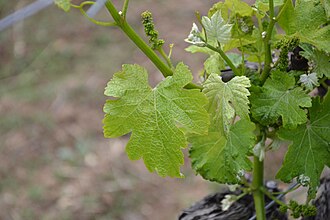
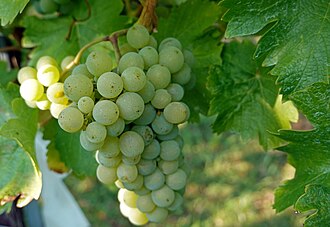
Sauvignon Blanc often gives a very distinct impression in the vineyard. The bunches tend to be relatively small to medium and often compact, with small, round berries that remain green-yellow and can move toward golden tones with ripeness. Leaves are generally medium-sized and strongly shaped, with a more energetic, marked outline than some broader, more neutral white varieties. The vine feels alert in appearance, much like the wines feel alert in the glass.
Read more →
Its ampelographic character matters because it connects to style. Small berries and firm skins contribute to aromatic intensity and a certain tensile feeling in the must and finished wine. The grape does not generally behave like a broad, yielding white. It behaves like a variety intent on definition. Even before fermentation, Sauvignon Blanc often suggests that it is headed somewhere bright, pointed, and aromatic.
In the field, the grape’s compact bunches can also create practical concerns, particularly around disease pressure in humid conditions. That means morphology is never merely descriptive. With Sauvignon Blanc, structure in the vineyard often foreshadows both aromatic intensity and viticultural challenge. It is a grape of brightness, but not of ease.
- Leaf: medium-sized, clearly shaped, energetic outline
- Bunch: small to medium, often compact
- Berry: small, green-yellow to golden
- Impression: vivid, tight, precise, aromatic by nature
Viticulture
A grape of freshness, timing, and very little forgiveness
Sauvignon Blanc is often described as a fresh, aromatic variety, but that freshness depends on discipline. It ripens earlier than many structured white grapes, and the window between under-ripeness and a loss of edge can be surprisingly narrow. Pick too soon and the wine may become aggressively green, thin, or hard. Pick too late and the wine can lose its lift, blur its aromatics, and drift toward a tropical broadness that may be pleasant but less defined. Few white varieties make harvest timing so visible.
Read more →
Climate matters enormously. In cooler zones, Sauvignon Blanc can preserve the kind of acidity and aromatic tension that make the best examples feel electric. In warmer climates, it often moves toward passion fruit, ripe citrus, melon, and softer herbal tones, which can be attractive but need careful management to avoid heaviness. The best sites are therefore often places where sunlight is sufficient, but nights remain cool enough to protect precision.
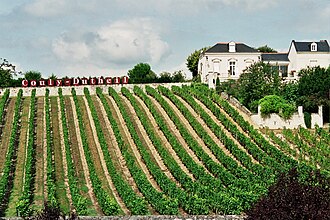
Soils also shape the style. Flint, chalk, limestone, marl, and certain alluvial gravels can lend definition, salinity, and a more structured outline. Fertile or wetter soils may push the vine toward excess vigor, which can weaken aromatic concentration and make canopy work more difficult. Because bunches can be compact, airflow is important, and disease pressure can become a significant issue in humid vintages. Sauvignon Blanc, for all its apparent brightness, is not a carefree vineyard variety.
This is part of what makes it serious. The best Sauvignon Blancs are not just aromatic accidents. They are the result of precise decisions: row orientation, canopy balance, yield control, picking date, and sometimes multiple harvest passes. The variety may taste immediate, but good Sauvignon Blanc is almost never casual.
Wine styles
From flint and citrus to tropical lift and smoky texture
Sauvignon Blanc’s aromatic identity is one of the strongest in white wine. Citrus zest, gooseberry, green herbs, boxwood, nettle, passion fruit, grapefruit, fresh-cut grass, flint, smoke, white peach, and elderflower can all belong to its world depending on climate and cellar handling. Yet what makes the grape truly interesting is not that it smells like these things, but that the balance between them can shift dramatically with place. Sauvignon Blanc is one of the clearest demonstrations that aroma alone is not style. Proportion is style.
Read more →
In the Loire, particularly in Sancerre and Pouilly-Fumé, Sauvignon Blanc often takes on a cooler register: citrus, crushed stone, smoke, white flowers, and a more restrained herbal edge. In Marlborough it can become explosively aromatic, with passion fruit, lime, gooseberry, and piercing freshness. In Bordeaux, especially when blended with Sémillon or touched by oak and lees, it may gain texture, lanolin-like breadth, and a more layered mouthfeel. In warmer zones, the fruit can move toward guava, melon, and ripe tropical tones, sometimes at the expense of the grape’s most defining tension.
Winemaking choices matter as well. Stainless steel preserves brightness and aromatic precision. Lees ageing can add subtle creaminess and breadth. Barrel fermentation or neutral oak maturation can soften the grape’s sharp edges and produce more gastronomic, structured styles. Fermentation temperature, skin contact decisions, reductive handling, and the use of solids all shape how vivid, mineral, smoky, or textural the final wine becomes.
This is why Sauvignon Blanc deserves more respect than its popularity sometimes receives. At its lowest level it is easy to caricature. At its best it is exacting, saline, textured, and deeply shaped by intention. It can be simple refreshment, yes. But it can also be serious white wine of real precision.
Terroir
A white grape that turns climate into aroma and shape
Sauvignon Blanc may not be terroir-transparent in exactly the same way as Chardonnay, because its varietal aroma is stronger and more immediately assertive. Yet it is still one of the world’s most climate-sensitive white grapes. Coolness, sunlight, ripening speed, soil water balance, and harvest date all leave direct marks on the final wine. The grape turns environmental nuance into aroma with unusual speed.
Read more →
In cool climates, the grape tends to show sharper herbal tones, lime, grapefruit, and mineral cut. In slightly warmer but still balanced climates, the profile may open toward white peach, passion fruit, and softer floral detail. In hot sites, the wine can become broadly tropical and less defined, sometimes losing the very energy that makes Sauvignon Blanc distinctive. That sensitivity to thermal rhythm is why the grape can be both thrilling and disappointing depending on where it is grown.
Soils contribute in more subtle ways. Flint, silex, limestone, chalk, and certain gravelly or alluvial sites can sharpen the wine’s shape and produce the smoky, stony qualities prized in regions such as Pouilly-Fumé and Sancerre. More fertile sites may yield broader, less focused wines. The grape does not simply want nutrients; it wants enough restraint in the site to keep its aromatic energy from spilling into vagueness.
Sauvignon Blanc therefore matters as a study in the interaction between inherent varietal character and environmental modulation. The aroma is unmistakably Sauvignon Blanc. But the kind of Sauvignon Blanc it becomes — severe, smoky, tropical, leafy, saline, or textural — depends profoundly on place.
History
From Loire classic to international benchmark
Sauvignon Blanc’s modern life has been shaped by two very different kinds of prestige. One is the quieter old prestige of Sancerre, Pouilly-Fumé, and fine white Bordeaux — wines whose reputation was built over time through gastronomy, structure, and consistency. The other is the explosive international success of Marlborough Sauvignon Blanc, which turned the grape into one of the world’s most immediately recognizable white wine styles.
Read more →
New Zealand’s impact cannot be overstated. It did not invent Sauvignon Blanc, but it dramatically expanded the world’s appetite for it. The grape became a varietal category in its own right for a new generation of drinkers. That visibility was commercially transformative. But it also brought risk: when one aromatic style becomes dominant, many people begin to mistake that style for the entire identity of the grape.
In recent years, many growers and winemakers have pushed back productively against that simplification. They have explored older-vine Sauvignon Blanc, barrel-fermented versions, skin contact, lees work, single-site bottlings, lower-intervention methods, and more restrained aromatic profiles. The result is a broader modern understanding: Sauvignon Blanc is not one style but a family of expressions united by freshness, aromatic precision, and the management of energy.
That ongoing evolution is one reason the grape remains culturally alive. It can satisfy casual drinkers seeking brightness, but it can also reward serious attention. Sauvignon Blanc keeps moving between the everyday and the exacting, which is a rare and valuable position for any grape to hold.
Pairing
A natural partner for brightness, salt, herbs, and green detail
Sauvignon Blanc is one of the table’s most useful white wines because it brings acidity, aromatic lift, and herbal compatibility to food. It does not usually ask for cream or weight in the way richer Chardonnays might. Instead, it excels with salt, freshness, vegetables, herbs, shellfish, goat cheese, and dishes that benefit from a cleansing, energetic counterpoint. It can make a plate feel brighter and more awake.
Read more →
Aromas and flavors: lime, grapefruit, gooseberry, passion fruit, green herbs, nettle, elderflower, cut grass, white peach, flint, and smoke depending on origin and style. Structure: typically high in acidity, medium in body, vivid in aroma, and directed more by brightness and tension than by weight.
Food pairings: oysters, mussels, ceviche, asparagus, peas, herbs, goat cheese, grilled fish, salade niçoise, tomato dishes with freshness, and dishes built around citrus or green nuance. Loire styles pair beautifully with chèvre. Marlborough styles can work brilliantly with shellfish and Southeast Asian-inspired freshness when the aromatics are not overwhelmed by spice.
Textural or barrel-aged Sauvignon Blanc broadens the table slightly, allowing for roast fish, herb-roasted chicken, and dishes with more savory depth. But even then, the grape generally wants freshness somewhere in the frame. It is a wine of brightness first, and the table tends to reward that honesty.
Where it grows
A global white with a strong Loire and Bordeaux memory
Sauvignon Blanc now grows in many of the world’s wine regions, but its identity is still anchored by France. The Loire remains the great reference for taut, mineral, site-led versions. Bordeaux remains essential for broader, blended, and sometimes oak-shaped expressions. New Zealand gave the grape enormous global visibility. Beyond that, Sauvignon Blanc has established itself in California, Chile, South Africa, Australia, Austria, Italy, and many cooler or moderate sites capable of preserving aromatic lift and acidity.
Read more →
- France: Loire Valley and Bordeaux above all
- New Zealand: especially Marlborough, but also other cooler regions
- United States: California and selected cooler sites
- Chile & South Africa: strong modern expressions with freshness and intensity
- Elsewhere: Australia, Austria, Italy, and additional cool to moderate climates worldwide
Its success across so many regions comes from a combination of recognizability and responsiveness. Drinkers recognize the aromatic family. Growers learn that site and timing can reshape it profoundly. That balance between familiarity and nuance is part of the grape’s enduring strength.
Why it matters
Why Sauvignon Blanc matters on Ampelique
Sauvignon Blanc matters on Ampelique because it reveals how a grape can be both instantly recognizable and deeply nuanced. Many people think of it as a simple aromatic variety. In reality, it is a remarkably useful lens for understanding ripening, site, and style. It can teach the difference between cool and warm climate whites, between stainless steel purity and lees-aged texture, between varietal force and terroir modulation.
Read more →
It also occupies an important cultural position. Sauvignon Blanc has become one of the world’s gateway fine-wine grapes because it is so immediate and engaging. Yet behind that accessibility lies enough detail to keep experienced drinkers interested for years. In that sense, it is a bridge grape: one that can welcome readers into the world of varieties while still rewarding serious study.
There is also something exemplary about the way Sauvignon Blanc carries both reputation and misunderstanding. It is often reduced to aroma alone, yet its best versions prove that brightness need not mean simplicity. It can be mineral, textural, smoky, gastronomic, and age-worthy in the right form. This makes it an ideal grape for a platform like Ampelique, which exists not only to identify varieties, but to deepen how we understand them.
For Ampelique, Sauvignon Blanc is therefore more than a famous white grape. It is a study in aromatic identity, climatic expression, modern globalization, and the fine line between immediacy and depth. It is one of the clearest reminders that freshness can be serious.
Quick facts
- Color: white
- Parentage role: parent of Cabernet Sauvignon
- Origin: France
- Climate: cool to moderate, freshness-sensitive
- Soils: flint, limestone, chalk, gravel, varied restrained sites
- Styles: crisp, aromatic, textured, blended, sometimes oak-shaped
- Signature: acidity, aromatic precision, energy
- Classic markers: grapefruit, gooseberry, herbs, flint, citrus, smoke
Closing note
A great Sauvignon Blanc is never only about aroma. It is about timing, cut, freshness, and the way a vivid grape can still hold seriousness inside brightness. At its best, it tastes like light with structure.
Image credits
Leaf/detail image: Wikimedia Commons – Marianne Casamance
Vineyard landscape image: Wikimedia – Mariano P.
Sauvignon blanc cluster image: HBLA Klosterneuburg
A world classic, but still one of the clearest lessons in what freshness can mean.
 Ampelique
Leave a comment