Ampelique Grape Profile
Chardonnay
Origin, viticulture, morphology, wine styles, and place.
Chardonnay is a world classic white grape of Burgundian origin, born from Pinot and Gouais Blanc and now planted across almost every serious wine-growing country. Its greatness is not that it tastes the same everywhere, but that it can listen so carefully to soil, climate, ripeness, and the hand of the grower.
Chardonnay is famous enough to be misunderstood. Its name may suggest oak, butter, richness, or familiar comfort, yet the vine itself is quieter, more sensitive, and far more precise than its reputation. It buds early, ripens relatively early, carries compact bunches, and reacts quickly to frost, disease pressure, canopy choices, soil, and harvest timing. Few grapes are so widely known; fewer still remain so capable of revealing the smallest changes in place.
Grape personality
The quiet interpreter. Chardonnay is calm, responsive, and deeply transparent: a grape that absorbs climate, soil, light, and human touch without losing its own graceful frame. It can be generous, but its greatest beauty is usually not volume. It is the way it allows a vineyard to become readable.
Best moment
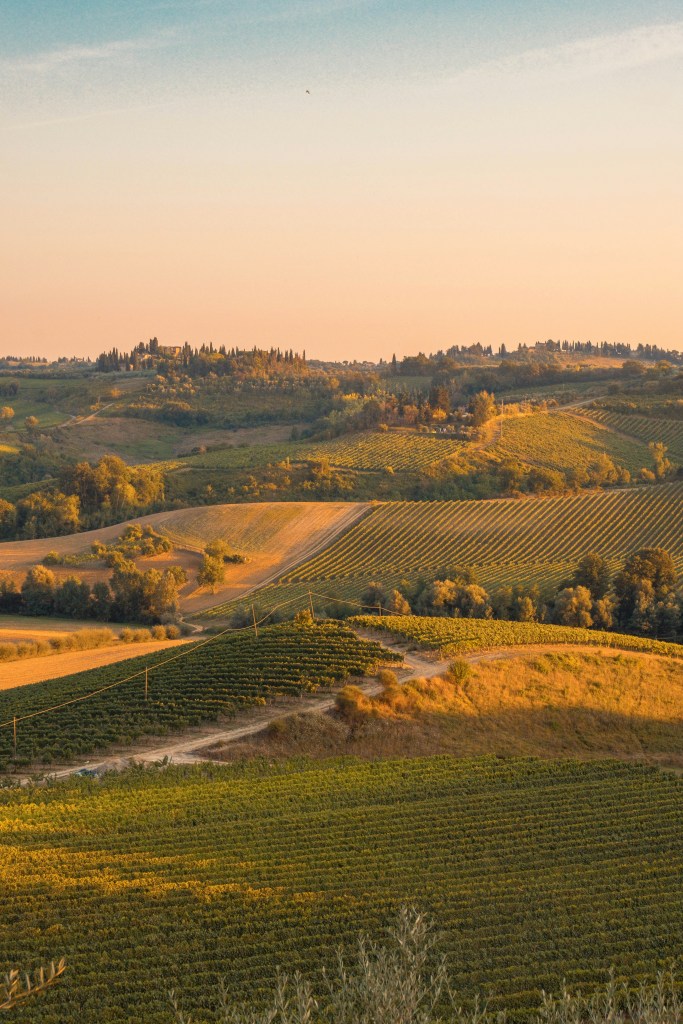
Cool morning, limestone slope. Pale light over Burgundy, chalk underfoot, slow-ripening berries, and a vine turning restraint into quiet beauty. Chardonnay is at its most moving when it feels effortless, as if the wine had gathered air, soil, and season into one clear line.
Chardonnay does not ask for attention. It listens first: to limestone, cool mornings, slow ripening, and the careful hand of the grower. Then, almost quietly, it becomes one of wine’s great languages.
Contents
Origin & history
A Burgundian child of Pinot and Gouais Blanc
Chardonnay’s historical home is Burgundy, and its origin explains much of its character. Modern genetic research identifies Chardonnay as a natural crossing of Pinot and Gouais Blanc. That parentage gives the grape a fascinating dual inheritance: Pinot suggests refinement, sensitivity, and Burgundian identity, while Gouais Blanc suggests older rural resilience and a remarkable capacity to generate important offspring.
Read more →
In Burgundy, Chardonnay became more than a grape name. It became a way to translate slope, stone, and climate. The limestone and marl of the Côte de Beaune, the cooler marine-influenced soils of Chablis, and the more generous hillsides of the Mâconnais each revealed a different side of the same vine. This is one reason Chardonnay has such a central place in the language of fine wine: it can be recognizable while still allowing site to speak.
Chardonnay proved that white grapes could express site with as much seriousness as red grapes, not through loud aromatics, but through line, texture, acidity, and depth. Chablis, Meursault, Puligny-Montrachet, Chassagne-Montrachet, Corton-Charlemagne, and the Mâconnais are not simply places where Chardonnay grows. They are different readings of the same genetic script.
Champagne gave Chardonnay another identity as a grape of finesse, lift, and long ageing in sparkling wine. There, especially in blanc de blancs, the grape becomes less about still-wine breadth and more about acidity, chalk, mousse, and time on lees. The same variety that can become broad and golden in a still Burgundy can become linear, electric, and quietly architectural in Champagne.
Later, California, Australia, South Africa, Chile, New Zealand, England, and many other regions adopted it, each discovering that Chardonnay could be both adaptable and demanding. It grows widely, but it does not become great everywhere. It needs the right balance of ripening, freshness, soil, and human restraint. Chardonnay can speak many languages, but Burgundy established its grammar.
Ampelography
A modest-looking vine with precise detail
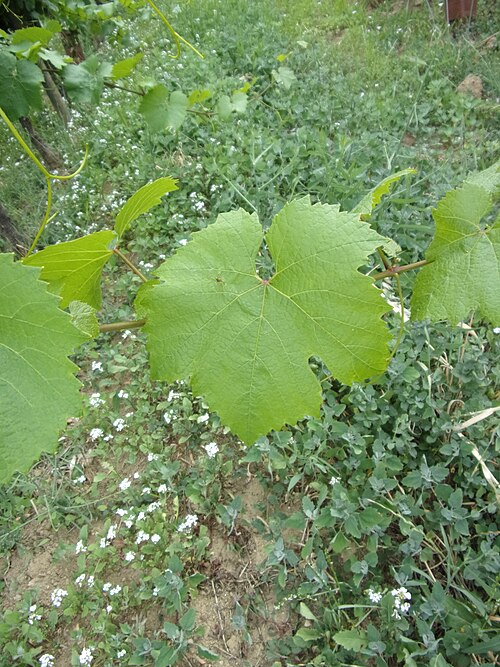
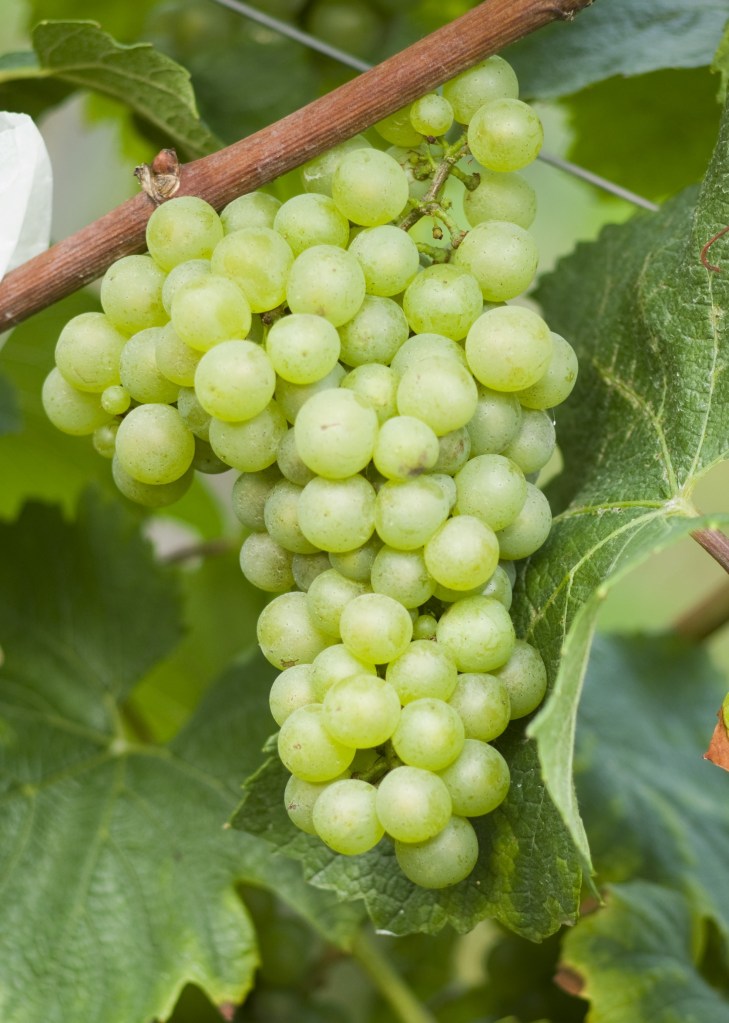
Chardonnay is not flamboyant in the vineyard. Its identity comes through proportion rather than exaggeration. Mature leaves are usually medium-sized, rounded, and often shallowly lobed, with a tidy, readable outline. The bunches are small to medium and can be compact, while the berries are relatively small, green-yellow to golden at full maturity. It is a vine of quiet signals rather than obvious spectacle.
Read more →
The vine’s apparent simplicity is part of its charm. Chardonnay does not have the dramatic leaf shape of some varieties, nor the heavy color of red grapes, nor the obvious aromatic identity of Muscat or Gewürztraminer. In the field, it can look almost quiet. Yet growers know how quickly that quietness can change. A compact bunch in a humid year can become vulnerable to rot. Fine skins can suffer from sunburn if exposure is too intense. Early budburst can turn spring frost into a serious threat.
This modest morphology also helps explain why Chardonnay can be so transparent. The grape does not impose a powerful aromatic mask on its site. Instead, it translates small differences into citrus, orchard fruit, floral notes, chalk, texture, and acidity. Its clusters and berries may look restrained, but that restraint is exactly what allows the vine to become such a sensitive instrument of place.
The berry’s relatively neutral aromatic profile is not a weakness. It is one of Chardonnay’s great gifts. A strongly perfumed variety may always carry its own signature first. Chardonnay gives more room to soil, climate, and winemaking choices. This is why a lean Chablis, a textured Meursault, a precise blanc de blancs, and a coastal Californian Chardonnay can all feel different while still belonging to the same family.
- Leaf: medium-sized, rounded, often shallowly lobed, tidy in outline.
- Bunch: small to medium, often compact, requiring attention to airflow.
- Berry: small, green-yellow to golden, with fine skins.
- Impression: restrained, balanced, sensitive, and unusually site-responsive.
Viticulture notes
Early, adaptable, and never completely easy
Chardonnay buds relatively early and ripens early to mid-season, which explains both its usefulness and its risk. In cool climates, early ripening helps the grape reach maturity before autumn weather becomes too difficult. But early budburst also exposes the vine to spring frost, especially in regions such as Chablis, Champagne, Burgundy, and England. Chardonnay often succeeds in marginal climates precisely because it lives close to danger.
Read more →
Its adaptability is famous, but it should not be misunderstood. Chardonnay can grow in many places, yet fine Chardonnay is not automatic. On overly fertile soils, the vine may produce too much growth and lose detail. In hot climates, sugars can rise quickly while acidity drops, leading to broad wines without line. In wet conditions, compact clusters and fine skins increase the risk of botrytis, bunch rot, and mildew. The variety is forgiving enough to travel, but honest enough to reveal weak sites and careless farming.
Canopy work is therefore essential. Chardonnay needs enough exposure to ripen cleanly and avoid excessive vegetal character, but enough protection to preserve delicate fruit and prevent sunburn. Yield management also matters. Too much crop can dilute the grape’s quiet precision; too little can push richness too far. The best vineyards often work through balance rather than force: moderate vigor, healthy airflow, careful leaf removal, and harvesting decisions that preserve freshness as much as ripeness.
Chardonnay is also highly sensitive to the timing of harvest. Pick too early, and the wine may be sharp, thin, and green-edged. Pick too late, and the wine may lose the tension that gives Chardonnay its shape. The finest growers often search for a narrow window where acidity, flavor, phenolic maturity, and site expression meet. This window can arrive quickly, especially in warmer seasons. Chardonnay rewards attention, not routine.
Chardonnay is often described as a winemaker’s grape, but it is just as much a grower’s grape. Its greatest qualities are shaped long before the cellar: soil drainage, pruning, clone, rootstock, bunch exposure, picking date, and the rhythm of the season. If the vineyard gives clear fruit, the cellar can refine it. If the vineyard gives blurred fruit, Chardonnay rarely hides the problem.
Wine styles & vinification
A style spectrum rooted in the vine
Chardonnay can be taut, mineral, and citrus-led, or broad, creamy, and gently smoky. That range is often credited to winemaking, but it begins with the vine. Climate determines how quickly fruit ripens. Soil influences water availability and structure. Bunch exposure affects flavor, acidity, and phenolic feel. Harvest timing decides whether the grape speaks in lemon, apple, and chalk, or pear, peach, and golden orchard fruit.
Read more →
In cooler sites, Chardonnay often shows lemon, green apple, white flowers, shell, chalk, and a firm mineral line. In moderate climates, it may broaden into pear, yellow apple, white peach, and citrus cream. In warmer regions, the fruit can become richer and more tropical unless altitude, coastal influence, or careful harvest timing preserve freshness. The grape does not have the intense primary perfume of some white varieties. Instead, it offers a structure on which climate and site can write clearly.
Cellar choices then shape that raw material. Stainless steel can preserve direct fruit and acidity. Lees ageing can add texture. Oak can bring spice, toast, and structure. Malolactic fermentation may soften acidity and add creaminess. Traditional-method sparkling wine uses Chardonnay’s acidity and fine structure to build tension, mousse, and ageing potential. Yet the strongest examples rarely feel manufactured. They feel as though the winemaking has simply brought the vineyard into focus.
Oak is one of the most important and most misunderstood elements in Chardonnay. Used well, it can frame the wine, adding subtle spice, oxygen exchange, texture, and a sense of length. Used poorly, it can dominate the grape and replace site expression with flavoring. The best oak-aged Chardonnay does not taste simply of oak. It tastes complete: fruit, acidity, lees, barrel, and mineral structure working as one body.
This is why Chardonnay can be misunderstood. Heavy oak or excessive richness can make it seem like a style rather than a grape. But beneath the clichés lies a variety of remarkable discipline. Its best wines are not impressive because they are loud. They are impressive because acidity, fruit, texture, soil, and time align without shouting.
Terroir & microclimate
Limestone, chalk, climate, and line
Chardonnay is one of the clearest interpreters of cool and moderate terroir. It responds especially well to limestone, chalk, marl, and clay-limestone soils, not because these soils create flavor in a simple way, but because they shape drainage, water availability, root behavior, and ripening rhythm. In the right place, Chardonnay turns those physical conditions into tension, texture, and persistence.
Read more →
In Chablis, cool conditions and limestone-rich soils often give Chardonnay a narrow, saline, citrus-driven profile. In the Côte de Beaune, more sheltered slopes and varied clay-limestone structures can produce greater breadth, texture, and ageing capacity. In the Mâconnais, sunnier conditions often bring a riper orchard-fruit expression. These differences are not accidental stylistic choices. They are vineyard responses, made visible through the same grape.
The grape’s relation to limestone and chalk has become almost mythical, but the practical point is more grounded. These soils often combine drainage with water-holding capacity, allowing the vine to avoid both excess vigor and excessive stress. They can help preserve tension while supporting slow, steady ripening. Chardonnay does not need limestone to be good, but limestone has helped define many of its most admired expressions.
Outside Burgundy, the same pattern continues. Coastal California can give ripe fruit with marine freshness. Oregon often brings a cooler, more lifted line. Tasmania and England show how Chardonnay performs in very cool, sparkling-focused climates. South Africa can combine sun with coastal wind. New Zealand can offer vivid fruit and acidity. In each place, Chardonnay works best when the season allows ripeness without flattening the grape’s natural line.
This makes Chardonnay invaluable for understanding place. It can make soil, exposure, altitude, and climate feel legible without relying on obvious aromatic markers. The grape is not neutral, but it is transparent. It carries enough identity to remain recognizable and enough openness to let the vineyard speak through it.
Historical spread & modern experiments
From benchmark to cliché, and back again
Chardonnay’s modern history is unusually dramatic for a white grape. It became a symbol of fine Burgundy and Champagne, then a global commercial success, then a cliché, then a variety rediscovered through cooler sites, subtler winemaking, and a renewed respect for vineyard expression. Few grapes have been so admired, overused, criticized, and restored.
Read more →
In the late twentieth century, Chardonnay became strongly associated in some markets with rich, buttery, heavily oaked white wines. That style brought pleasure to many drinkers, but it also narrowed the public image of the grape. The later backlash was often not a rejection of Chardonnay itself, but of one dominant interpretation. The variety had become famous enough to be misunderstood on a global scale.
In response, growers and winemakers returned to questions of site, acidity, earlier picking, better clones, old vines, less obvious oak, and more careful lees work. Many New World regions began producing Chardonnays that were more precise, more restrained, and more rooted in place. At the same time, Burgundy, Chablis, and Champagne continued to show that the grape had never been the problem. Excess was the problem.
This global correction is part of why Chardonnay remains so important. It has carried several eras of wine culture: classical European terroir, New World ambition, mass-market popularity, stylistic excess, critical backlash, and contemporary refinement. The grape did not disappear when fashion turned against it. Instead, it proved that a great variety can outlive its own clichés.
Today, the best Chardonnay conversation is broader and more intelligent. It includes sparkling wine, still wine, cool climates, warm climates, concrete, oak, steel, regenerative farming, old vines, and new regions. The grape keeps evolving because it keeps revealing consequences. It shows what happens when a grower changes yield, when a site holds water, when a harvest is delayed, or when restraint allows the vineyard to remain visible.
Tasting profile & food pairing
A table grape of balance and texture
Chardonnay works so well at the table because its structure can move between freshness and texture. Lean, cool-climate styles love shellfish, white fish, and citrus-led dishes. Broader, lees-aged or oak-influenced styles welcome roast chicken, mushrooms, cream, butter, and nutty cheeses. The grape’s range is wide, but the principle is consistent: match delicacy with delicacy, and texture with texture.
Read more →
Aromas and flavors: lemon zest, green apple, pear, white peach, citrus peel, chalk, shell, white blossom, hazelnut, butter, smoke, brioche, and toast, depending on site and cellar handling. Structure: from taut, saline, and mineral to broad, creamy, and textural, ideally held together by freshness and line.
Food pairings: oysters, scallops, lobster, turbot, roast chicken, veal, creamy pasta, mushroom dishes, Comté, fresh goat cheese, and dishes with gentle nuttiness or butter. Sparkling Chardonnay can handle both freshness and depth, while mature still Chardonnay often works beautifully with richer poultry, mushrooms, and aged cheeses.
Style matters enormously. A sharp, unoaked Chablis with oysters is a different experience from a mature, textured Côte de Beaune Chardonnay with roast poultry. A blanc de blancs Champagne can lift salty snacks, seafood, or delicate starters. A richer New World Chardonnay may work better with corn, crab, roast chicken, or dishes with gentle sweetness and butter. Chardonnay’s strength is not one pairing. It is its ability to move across the table with poise.
At the table, Chardonnay’s strength is not only flavor. It is shape. A saline Chablis can sharpen oysters. A textured Meursault-style wine can support poultry and cream. A blanc de blancs can lift both seafood and savory snacks. Chardonnay belongs to fine dining, but also to hospitality. It can be grand, but it can also simply make dinner better.
Where it grows
A global grape with a Burgundian center
Chardonnay now grows in nearly every serious wine-producing country, but its most important reference points remain Burgundy and Champagne. France gives the grape its historic language. The United States, Australia, New Zealand, South Africa, Chile, Argentina, Italy, England, Canada, Germany, Austria, and Switzerland all add their own accents. Its global spread is remarkable, yet the best examples still depend on balance: enough light for ripeness, enough coolness for line.
Read more →
- France: Burgundy, Chablis, Champagne, Jura, Loire, Languedoc, and other regions where Chardonnay moves from mineral still wines to sparkling finesse.
- United States: California remains the largest and most famous center, with Oregon, Washington, and New York offering cooler or more regional expressions.
- Australia and New Zealand: Margaret River, Tasmania, Adelaide Hills, Yarra Valley, Mornington Peninsula, Marlborough, Hawke’s Bay, Gisborne, and Canterbury show how the grape can move from precision to texture.
- Elsewhere: England, South Africa, Chile, Argentina, Italy, Canada, Germany, Austria, and Switzerland all contribute their own versions, especially where freshness remains intact.
What changes from place to place is not only ripeness, but proportion. Burgundy often shows the dialogue between limestone, slope, and cellar restraint. Champagne turns the grape toward acidity and time. California can give generosity, but the best coastal sites bring energy too. Australia has moved from broader styles toward some of the most precise modern interpretations. England is increasingly important for sparkling wine. This is a grape that keeps expanding without losing its origin story.
Why it matters
Why Chardonnay matters on Ampelique
Chardonnay matters on Ampelique because it proves that a famous grape can still be subtle. Some international varieties become so familiar that they stop teaching us much. Chardonnay does the opposite. The more carefully you study it, the more it reveals about parentage, site, vine behavior, frost risk, soils, canopy, harvest timing, cellar choices, and cultural reputation.
Read more →
It also bridges many kinds of readers. A beginner may know the name from a supermarket label. A wine lover may think of Chablis, Meursault, Puligny-Montrachet, or blanc de blancs. A grower may think first of frost, compact bunches, clone choice, and mildew pressure. A winemaker may think of lees, oak, malolactic fermentation, and reduction. Chardonnay can hold all these conversations at once. It is accessible on the surface, but deep underneath.
For Ampelique, Chardonnay is therefore more than a classic profile. It is a key to the entire idea of grape variety study. Through Chardonnay, we can see how one vine carries genetics, geography, farming, climate, and culture. We can also see how reputation can distort a grape. The clichés of buttery Chardonnay or simple crowd-pleasing white wine are real, but they are not the whole story. Beneath them remains one of the most responsive vines in the world.
Chardonnay also teaches an important editorial lesson. A grape profile should not only describe what a wine tastes like. It should show how taste is built: by parentage, site, soil, pruning, weather, disease pressure, picking date, fermentation vessel, lees, oak, time, and fashion. Chardonnay brings all those layers into one story. That is why it deserves a larger profile than many other grapes. It is not only famous. It is structurally important to understanding wine.
A grape library needs Chardonnay because Chardonnay teaches scale. It is local and global, ancient in lineage and modern in reach, commercially powerful and artistically precise. It reminds us that fame does not have to flatten a grape. Sometimes fame simply gives more people a chance to notice what was always there: a vine of quiet intelligence, sensitive to place, and capable of remarkable beauty.
Keep exploring
Chardonnay is one of the great starting points for understanding white grapes, terroir, and cellar influence. Continue through the ABC section, or compare it with other classic white varieties shaped by acidity, texture, and age.
Quick facts
Identity
- Color: white
- Main names / synonyms: Chardonnay, Morillon, Beaunois
- Parentage: Pinot × Gouais Blanc
- Origin: Burgundy, France
- Common regions: Burgundy, Chablis, Champagne, California, Oregon, Australia, New Zealand, South Africa, England
Vineyard & wine
- Climate: cool to moderate; also successful in balanced warmer sites with freshness or altitude
- Soils: limestone, chalk, marl, clay-limestone, and well-drained cool-climate sites
- Growth habit: moderate vigor, responsive to canopy and yield management
- Ripening: early to mid-season; useful in cool climates but vulnerable to spring frost
- Styles: still, sparkling, unoaked, oaked, lees-aged, mineral, textural, age-worthy
- Signature: clarity, adaptability, texture, freshness, and terroir expression
- Classic markers: lemon, green apple, pear, chalk, shell, white flowers, hazelnut, butter, brioche
- Viticultural note: greatness depends on freshness, balanced yields, clean fruit, and restraint from vineyard to cellar
If you like this grape
If you appreciate Chardonnay’s balance between freshness, texture, and place, you might also enjoy Riesling for its precision and electric acidity, Chenin Blanc for its versatility and age-worthy depth, or Pinot Gris for a richer white grape with subtle aromatic breadth. For a more textural path, explore white Burgundy beside Aligoté. For sparkling finesse, compare Chardonnay with Pinot Noir and Pinot Meunier in Champagne.
Closing note
A great Chardonnay is never only about flavor. It is about line, light, surface, and time. It is about how a vine responds to limestone, frost, canopy, harvest, and care. It can be simple, but it is never small. It can be famous, but it can still surprise. Few grapes show so clearly that beauty in wine often begins with a plant listening carefully to its place.
Image credits
Leaf/detail image: Photo by Marianne Casamance
Vineyard landscape image: Photo by Greta Farnedi
Chardonnay cluster image: VIVC / Julius Kühn-Institut. Used with permission.
Continue exploring Ampelique
A world classic, but still one of the gentlest and clearest ways to understand site.
 Ampelique
Leave a comment