Ampelique Grape Profile
Chenin Blanc
A white grape of acidity, patience, honey, and time.
Chenin Blanc is one of the great white grapes of the world: bright, flexible, long-lived, and quietly dramatic. Its home is the Loire Valley, where it can make dry, off-dry, sweet, sparkling, still, severe, generous, mineral, honeyed, and age-worthy wines. Few grapes hold acidity with such grace, and few can move so naturally between freshness and richness. In one glass, Chenin Blanc can feel like apple, quince, chalk, lanolin, beeswax, citrus, blossom, and honey, but always with a line of energy running underneath.
What makes Chenin Blanc so compelling is its patience. It rarely gives everything away at once. In youth it may be sharp, stony, floral, or quietly fruity. With time, it can open into wax, wool, honey, hay, dried apple, saffron, and deep mineral calm. It is a grape that seems to understand both brightness and memory: a white variety that can be refreshing in the moment and profound many years later.
The patient flame.
Chenin Blanc is bright, watchful and quietly intense: holding acidity like a spine, then slowly revealing apple, quince, honey, wax, chalk and time.
Late lunch, bright window.
Goat cheese, roast chicken, river fish, soft light, and a wine that begins with freshness but keeps unfolding after the table has gone quiet.
Chenin Blanc carries light with a hidden edge.
It can taste of apple, stone, honey and rain, yet its true beauty lies in the line that never quite lets go.
Contents
Origin & history
A Loire grape with a long memory
Chenin Blanc is most deeply associated with the Loire Valley, especially Anjou, Saumur, Vouvray, Montlouis and Savennières. It is an old grape with a long regional memory: one that seems to belong naturally to river light, limestone cellars, cool mornings, noble rot, and slow ageing. In the Loire, Chenin Blanc became a complete language for white wine, able to speak in dryness, sweetness, sparkle, austerity and honeyed depth.
Read more →
The variety is often linked to Anjou and Touraine, and the name Chenin is traditionally associated with Mont Chenin near Chenonceaux. Over time, the grape moved through the middle Loire and became central to some of France’s most distinctive white wines. It developed a remarkable identity because the region allowed it to ripen slowly while preserving acidity. That balance between maturity and tension is the key to Chenin Blanc’s greatness.
Chenin Blanc also has a second great historical identity in South Africa, where it has long been known as Steen. There it became one of the country’s most important white grapes, at first often used for volume and versatility, later increasingly valued for old vines, texture, dry-farmed vineyards and expressive regional character. The South African revival of serious Chenin Blanc has helped restore global attention to the grape’s range and dignity.
Today Chenin Blanc belongs to both the Loire and the Cape, but it also grows in smaller pockets around the world. What travels with it is not a single style, but a structure: high acidity, textural possibility, and an extraordinary ability to move from modest freshness to very long-lived complexity.
Ampelography
A vigorous vine with late-ripening patience
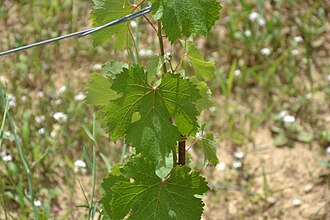
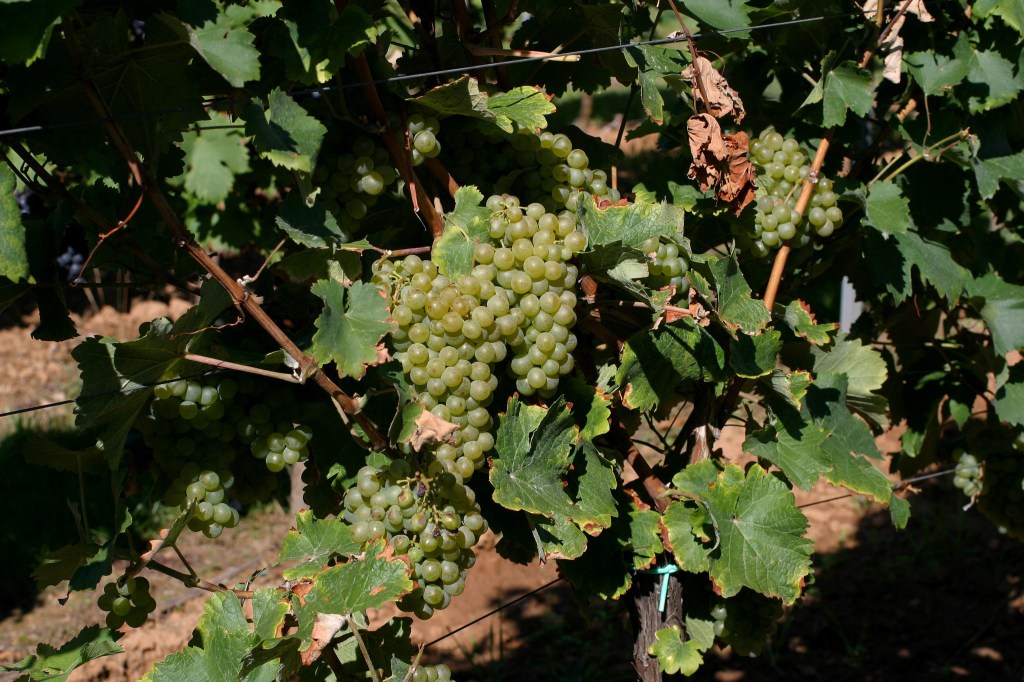
Chenin Blanc is usually a vigorous vine, and that vigor is one of the first things a grower must understand. Its leaves are often medium-sized, generally three- to five-lobed, with a practical, open structure. Bunches are usually conical, sometimes winged, and berries are yellow-green when young, turning more golden as ripeness advances. The field impression is not fragile; Chenin is energetic, productive and alive with movement.
Read more →
That vigor can be a gift or a problem. In fertile soils, Chenin Blanc can overcrop and produce neutral wines without much depth. In poorer soils, especially with older vines and careful pruning, its energy can be focused into concentration and texture. This is why old-vine Chenin can be so moving: the vine’s natural drive is still there, but time has trained it into restraint.
The grape is also famous for its high acidity. This is not visible in the leaf, of course, but it is central to the vine’s identity. Even at significant ripeness, Chenin Blanc can retain a bright inner line. That line allows the grape to produce dry wines with drive, sweet wines with balance, and sparkling wines with tension. Morphology and chemistry meet here: a vigorous, late-ripening vine carrying the raw material for some of the world’s most age-worthy white wines.
- Leaf: medium-sized, often three- to five-lobed
- Bunch: conical, sometimes winged
- Berry: yellow-green to golden, depending on ripeness
- Impression: vigorous, bright, productive, late-ripening and highly expressive
Viticulture
Vigor, acidity, and the discipline of timing
Chenin Blanc buds early and ripens relatively late, a combination that gives it both opportunity and risk. Early budburst can make spring frost a concern in cooler regions, while late ripening means the grape needs a season long enough to build flavor without losing its tension. Its natural acidity is one of its greatest strengths, but acidity alone does not make a great wine. The fruit must also reach aromatic and textural maturity.
Read more →
Because the vine can be vigorous, yield control is essential. Cropped too heavily, Chenin Blanc can become dilute or neutral, especially in warmer regions where fruit may ripen quickly without gaining complexity. Cropped carefully, it can produce wines of density and precision. Old vines are especially valuable because they often regulate themselves more naturally, giving smaller crops and deeper fruit without sacrificing acidity.
Chenin Blanc is also susceptible to botrytis, which can be either a danger or a gift. Unwanted rot can damage fruit and blur flavor; noble rot can create some of the most extraordinary sweet wines in the world. This makes site and season crucial. In the Loire, autumn mists and dry spells can encourage botrytis in favorable years, allowing the grape’s acidity and sweetness to come into remarkable balance.
In dry regions, disease pressure may be lower, but the challenge becomes preserving freshness and avoiding bland abundance. Chenin asks for discipline: thoughtful pruning, balanced crop, canopy openness, harvest timing and a clear idea of style. It is a generous vine, but its finest wines come when that generosity is given shape.
Wine styles
From dry stone to honeyed gold
Few white grapes offer as many legitimate styles as Chenin Blanc. It can be bone-dry and stony, gently off-dry, sparkling, richly sweet, botrytized, oxidative, fresh, textural or profoundly age-worthy. The common thread is acidity. Even when Chenin becomes honeyed, waxy or golden, a line of freshness usually remains beneath the richness. That is why sweet Chenin can feel balanced rather than heavy, and why dry Chenin can age with such quiet authority.
Read more →
Dry Loire Chenin can show apple, pear, quince, citrus, chalk, wool, hay and bitter almond. Savennières is often firm, mineral and serious, with a dry, almost austere dignity in youth. Vouvray and Montlouis can move between dry, off-dry, sparkling and sweet, sometimes with remarkable delicacy. In sweet forms, Chenin Blanc can become one of the great noble-rot grapes: honey, saffron, apricot, quince paste and beeswax carried by acidity that keeps the wine alive for decades.
South African Chenin often adds another register. Old-vine Cape Chenin can be dry, textured, layered and quietly powerful, with notes of yellow apple, stone fruit, citrus peel, herbs, straw, honeycomb and salty earth. Some examples are fresh and direct; others are barrel-fermented, lees-aged and deeply textural. The best wines avoid heaviness and preserve the grape’s lifted, energetic core.
In the cellar, Chenin Blanc can respond well to stainless steel, old oak, concrete, lees ageing and, in some cases, subtle oxidative handling. But it rarely needs excessive decoration. Its own architecture is strong enough. The best winemaking does not try to make Chenin impressive; it allows the grape’s acidity, texture and slow-building complexity to speak.
Terroir
A grape that makes acidity visible
Chenin Blanc is one of the clearest interpreters of site among white grapes, but it expresses place differently from Chardonnay or Riesling. It often translates terroir through acidity, texture, bitterness, waxiness, aromatic restraint and the way sweetness or dryness sits in the mouth. On limestone and tuffeau it can feel chalky and lifted. On schist it may become more powerful, savory and dry-edged. On old granite or sandy soils it can show warmth, fruit and texture in a different register.
Read more →
In the Loire, river influence, autumn mist, limestone caves and varied soils shape Chenin’s many faces. Vouvray and Montlouis can feel more delicate and luminous, while Savennières often has a more muscular, dry and sternly mineral presence. Anjou can produce wines of generosity and depth, especially when botrytis plays a role. These are not simply regional differences. They show how Chenin Blanc magnifies small changes in water, stone, temperature and harvest timing.
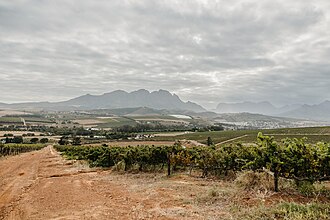
In South Africa, old bush vines and dry-farmed sites have become essential to the grape’s modern reputation. The Swartland, Stellenbosch, Paarl and other Cape regions offer different balances of sun, wind, soil and vine age. Some Cape Chenin feels broad and golden; some is saline, stony and almost austere. The best examples carry old-vine depth without losing Chenin’s alert, bright core.
This is why Chenin Blanc can be difficult to summarize. It is not one flavor, one style or one mood. It is a set of tensions: sweetness and acidity, richness and restraint, youth and age, river and stone, freshness and wax. Its greatness lies in the way those tensions stay alive.
History
A classic rediscovered through old vines
Chenin Blanc has lived several modern lives. In the Loire it remained a noble but sometimes underappreciated classic, admired by devoted drinkers but not always broadly understood. In South Africa it was for many years known more for volume and everyday wine than for greatness. Yet both stories have changed. Today Chenin Blanc is increasingly recognized as one of the most serious white grapes in the world, capable of depth, longevity, and a range few varieties can match.
Read more →
The South African revival has been especially important. Growers and winemakers began to look again at old Chenin vines that had once been treated as practical workhorses. With better farming, lower yields, more thoughtful picking and sensitive cellar work, those vines revealed remarkable concentration and texture. The result was not an imitation of the Loire, but a Cape expression of Chenin Blanc: sunlit, old-vine, salty, layered and increasingly respected.
In the Loire, the renewed global attention has also helped drinkers rediscover how extraordinary traditional Chenin can be. Vouvray, Montlouis, Savennières, Saumur and Anjou each show a different facet of the grape. Some wines are bone dry and stern. Some are sparkling and joyful. Some are sweet, botrytized and almost immortal. Chenin Blanc asks drinkers to give up simple categories and pay closer attention.
That may be why the grape feels so contemporary now. It is not loud or obvious. It is versatile, food-friendly, age-worthy, textural and deeply connected to farming. In a wine world looking again for authenticity and patience, Chenin Blanc seems less like an old classic and more like a grape whose moment keeps arriving.
Pairing
A table grape in the deepest sense
Chenin Blanc is exceptionally useful at the table because its acidity, texture and range of sweetness can meet so many dishes. Dry styles love goat cheese, river fish, shellfish, roast chicken, pork, mushrooms, lentils and dishes with herbs or gentle spice. Off-dry styles can handle heat, sweetness and aromatic cuisines. Sweet Chenin can be extraordinary with blue cheese, fruit desserts, foie gras or simply time and silence.
Read more →
Aromas and flavors: green apple, yellow apple, quince, pear, citrus, chalk, honey, beeswax, hay, chamomile, lanolin, ginger, saffron and dried fruit, depending on ripeness, sweetness, botrytis and age. Structure: usually high in acidity, with styles ranging from lean and mineral to broad, waxy, honeyed and sweet.
Food pairings: goat cheese, oysters, trout, pike, roast chicken, pork with apples, mushrooms, lentils, squash, mild curries, Thai dishes, hard cheeses, blue cheese, fruit tarts and honeyed desserts. Dry Chenin works through freshness and texture. Off-dry Chenin works through contrast. Sweet Chenin works through balance and persistence.
This makes Chenin Blanc one of the most hospitable white grapes in the world. It does not demand one kind of cuisine. It listens to salt, fat, spice, sweetness and earth, then finds a way to answer with acidity. Few grapes can refresh, deepen and cleanse the table so naturally.
Where it grows
Two great homes, many quiet echoes
Chenin Blanc has two great modern homes: the Loire Valley and South Africa. The Loire gives the grape its classical identity, its river landscapes, its limestone cellars and its unmatched range of dry, sparkling and sweet wines. South Africa gives it old-vine depth, Cape sunlight, dry-farmed character and a renewed sense of global possibility. Together, these two places show how broad and serious Chenin Blanc can be.
Read more →
Beyond those reference points, Chenin appears in smaller plantings across the wine world. It can succeed in warm regions if yields are managed and freshness preserved, but it does not always reveal its full depth without attentive farming. Its history as both a noble grape and a practical workhorse means that quality varies widely. That range is part of Chenin’s story: it can be modest and useful, but also astonishingly profound.
- France: Loire Valley, including Anjou, Saumur, Savennières, Vouvray and Montlouis
- South Africa: Swartland, Stellenbosch, Paarl, Breedekloof, Olifants River and other Cape regions
- Elsewhere: California, Australia, New Zealand, Argentina and other selected regions
- Styles by place: Loire for classic tension and longevity; South Africa for old-vine texture and Cape intensity
Why it matters
Why Chenin Blanc matters on Ampelique
Chenin Blanc matters on Ampelique because it shows how a grape can be many things without losing itself. It can be dry, sweet, sparkling, still, simple, profound, young, ancient, fresh, honeyed, lean or golden. Yet underneath all those forms is a recognizable structure: acidity, texture, patience and a subtle ability to turn ripeness into memory. It is one of the best grapes for understanding why variety and place must be studied together.
Read more →
It also matters because it resists simplification. Chenin Blanc is not as immediately famous as Chardonnay, not as instantly aromatic as Sauvignon Blanc, and not as sharply defined in the public imagination as Riesling. But for those who spend time with it, it becomes one of the most rewarding grapes of all. It asks for attention, then keeps giving more back.
For a grape library, Chenin Blanc is essential because it connects so many themes: old vines, river landscapes, botrytis, acidity, longevity, South African renewal, Loire tradition, food versatility and the beauty of not fitting neatly into one category. It teaches that white wine can be light without being simple, sweet without being heavy, and age-worthy without being grandiose.
On Ampelique, Chenin Blanc belongs among the great interpreters. It is a grape of light and resistance, fruit and stone, sweetness and edge. It reminds us that some grapes do not reveal their greatness by force. They reveal it slowly, like a room filling with morning light.
Quick facts
- Color: white
- Parentage: one known parent is Savagnin Blanc; other parent unknown
- Origin: Loire Valley, France
- Climate: cool to moderate; also successful in warm regions with careful yield control
- Soils: limestone, tuffeau, schist, clay-limestone, sandy and stony soils
- Styles: dry, off-dry, sweet, sparkling, botrytized and age-worthy
- Signature: high acidity, apple, quince, honey, wax, chalk and longevity
- Classic markers: green apple, pear, quince, lanolin, beeswax, honey, citrus, hay
Closing note
A great Chenin Blanc is never only about fruit. It is about acidity, patience, texture and the strange beauty of a wine that can be both sharp and honeyed, young and old, modest and profound. It carries light, but also time. It is one of the clearest reminders that white wine can have a long memory.
Image credits
Chenin Blanc leaf image: Wikimedia Commons – Marianne Casamance.
Chenin Blanc vineyard image: Wikimedia Commons – Simonsig Wine Estate.
Chenin Blanc cluster image:VIVC.de – Doris Schneider, Julius Kühn-Institut (JKI), Federal Research Centre for Cultivated Plants, Institute for Grapevine Breeding Geilweilerhof – 76833 Siebeldingen, GERMANY.
If you like this grape
If you appreciate Chenin Blanc’s acidity, texture and age-worthy depth, you might also enjoy Riesling for its precision and longevity, Chardonnay for another great interpreter of place, or Sauvignon Blanc for a brighter, more aromatic expression of freshness.
A white grape with a bright spine and a long memory — patient, luminous, and never finished too soon.
 Ampelique
Leave a comment