Ampelique Grape Profile
Chardonnay
Origin, viticulture, morphology, wine styles, and place.
Chardonnay is one of the world’s best-known white grapes, originally from Burgundy, and part of its charm is that it can take on so many different moods. It can be crisp, fresh and almost salty, but also round, creamy and generous. It can make sparkling wine, easy-going everyday wine and some of the most admired bottles on earth. That range is exactly what makes Chardonnay so fascinating: in one glass, you can taste the influence of climate, soil, the vine and the hand of the winemaker.
Almost everyone knows Chardonnay. You’ll find it in fine restaurants, sunny beach clubs, busy wine bars, long lunches and serious tastings. But Chardonnay is not just famous because it is everywhere. It matters because, when it is made well, it still has class, depth and a kind of quiet precision. Beyond the clichés of “buttery Chardonnay” or simple crowd-pleasing white wine, there is a grape that can be pure, elegant, expressive and genuinely beautiful.
Chardonnay does not ask for attention.
It listens first , to limestone, cool mornings, slow ripening, and the quiet touch of oak. Then, almost without effort, it turns restraint into beauty.
Contents
Origin & history
A Burgundian beginning with global consequences
Chardonnay’s historical home is Burgundy, and that matters not because the grape belongs nowhere else, but because Burgundy taught the world what it was capable of. In the limestone folds of the Mâconnais and the great white slopes of the Côte d’Or, Chardonnay became a medium for place. It showed that white wine could do more than refresh. It could reveal geology, climate, and the patient intelligence of growers.
Read more →
Modern genetic research identifies Chardonnay as a crossing between Pinot and Gouais Blanc, a lineage that feels almost symbolic. One parent suggests refinement and site sensitivity; the other suggests agricultural resilience and breadth. From that union came a grape capable of unusual grace and unusual reach. Few varieties have traveled so widely while remaining so clearly themselves.
Its rise was not sudden. Chardonnay became great because it proved itself over time. In Chablis it showed tension, shell, and cold mineral clarity. In the Côte de Beaune it showed texture, depth, and longevity. In Champagne it became central to some of the finest sparkling wines ever made. By the time it spread widely beyond France, it already carried a serious reputation rooted in place rather than fashion.
Even now, after its global journey, Burgundy remains the emotional center of the grape. Chardonnay can sound eloquent in many languages. In Burgundy, it still speaks with its deepest voice.
Ampelography
A vine of quiet elegance
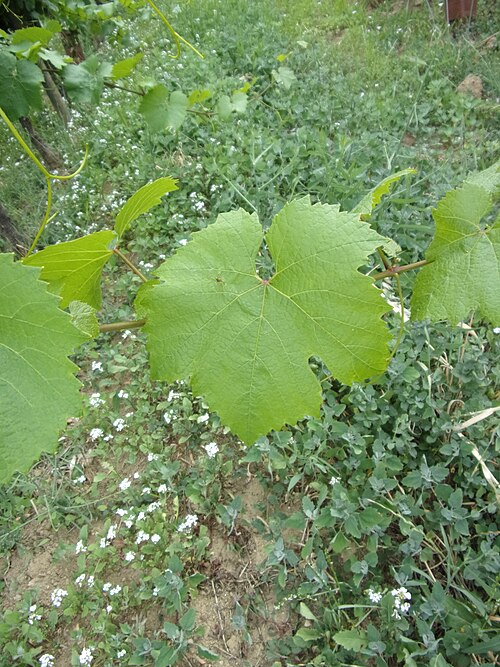
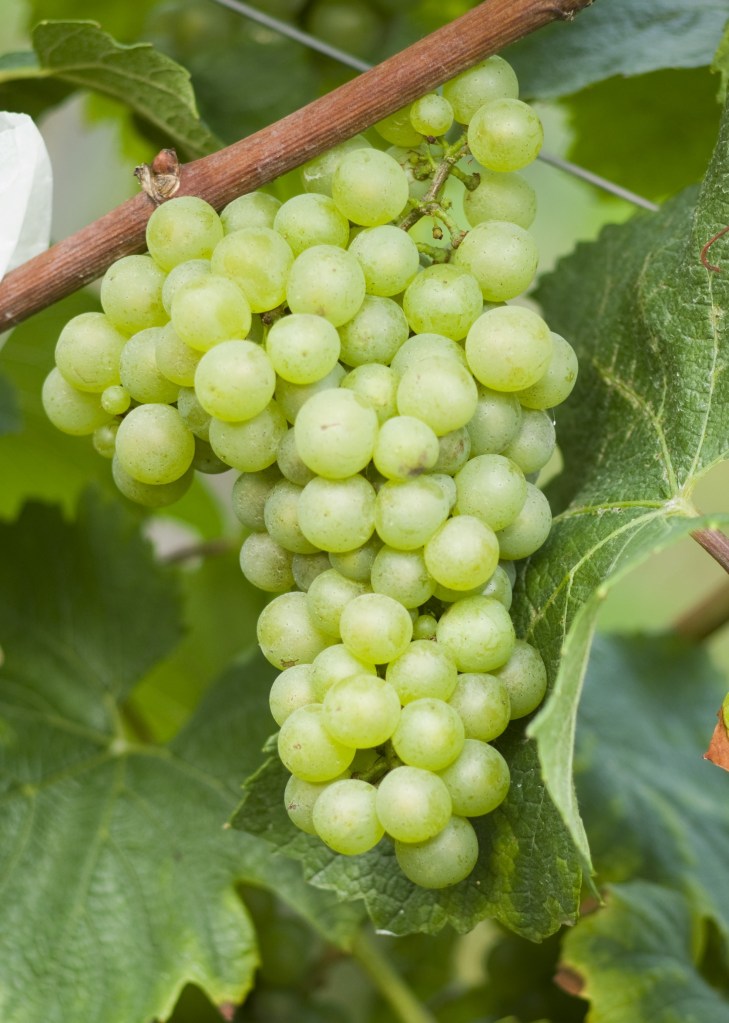
Chardonnay is not flamboyant in the field. Its identity comes through proportion rather than exaggeration. Mature leaves are typically rounded, sometimes shallowly lobed, with a neat and orderly silhouette. Bunches are usually small to medium, berries small and rather fine-skinned. The field impression is one of balance, restraint, and composure rather than spectacle.
Read more →
That modest morphology matters. Chardonnay’s small berries help explain the concentration and finesse it can achieve. The skins are not especially thick, which contributes to delicacy but also means the fruit reacts clearly to sun exposure, humidity, disease pressure, and harvest timing. In practical terms, the grape is more sensitive than its global popularity sometimes suggests.
What makes Chardonnay visually distinctive is not drama but poise. It is a readable vine. Once you know its small bunches, tidy leaves, and orderly field presence, it becomes less anonymous. This, too, feels in character. Chardonnay does not announce itself by theatrical form. It reveals itself through balance.
- Leaf: rounded, often shallowly lobed
- Bunch: small to medium
- Berry: small, green-yellow to golden
- Impression: refined, poised, quietly expressive
Viticulture
Early, responsive, and precise
Chardonnay buds and ripens relatively early, which helps it succeed in cooler climates but leaves it exposed to spring frost. It thrives where ripeness can build steadily without heaviness, and where soil and canopy management preserve the line and freshness that make the grape so articulate. The serenity of the finished wine often begins with a surprisingly tense growing season.
Read more →
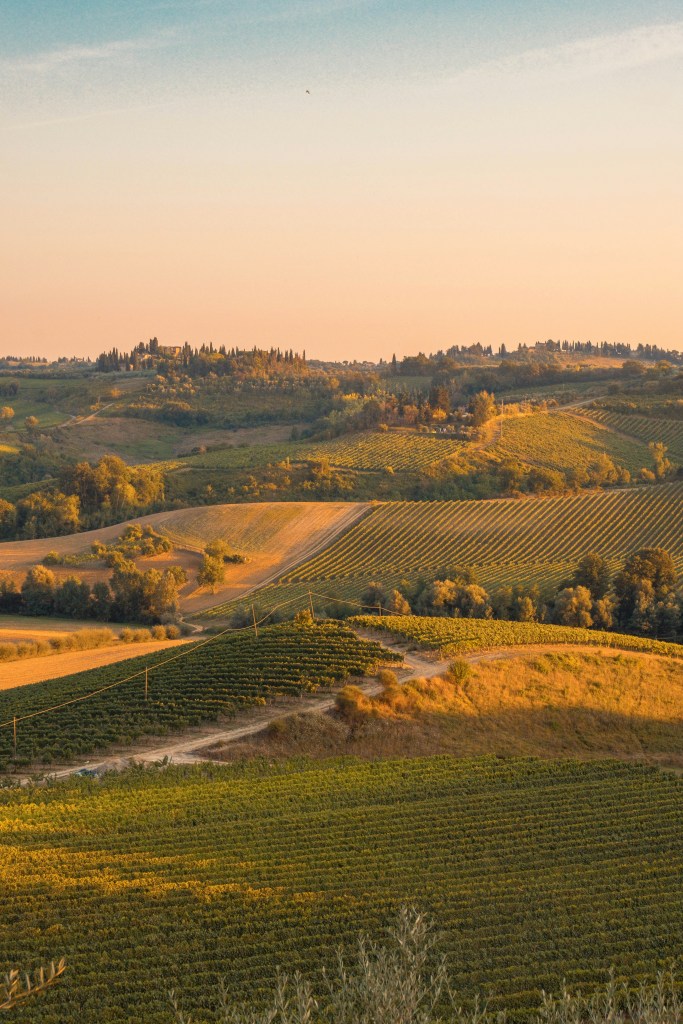
The best Chardonnay vineyards are often on limestone or marl, where drainage, freshness, and mineral precision can align. The vine is capable of broad success, but not all success is equal. On overly fertile soils it can lose detail. In excessive heat it can gain volume too quickly. In strong drought it may sacrifice elegance. The variety is adaptable, but it remains highly responsive to site quality and seasonal rhythm.
Because bunches may be compact and the skins relatively fine, disease pressure matters. Powdery mildew, botrytis, and bunch rot can become serious in humid conditions or dense canopies. In hotter places, the concern may shift toward sunburn and loss of acidity. Chardonnay is a grape that rewards careful balance more than force. Enough crop to avoid excess vigor, enough exposure to keep fruit clean, enough restraint to preserve shape: these are viticultural acts of tuning rather than domination.
For all its adaptability, Chardonnay is not especially forgiving of indifference. If planted in the wrong place, cropped too heavily, picked too late, or burdened with clumsy élevage, it quickly shows the cost of those decisions. That honesty may be one reason serious growers keep returning to it. Chardonnay is difficult to fake at the highest level. It will tell on you.
Wine styles
A spectrum from steel to silk
Chardonnay can be taut, mineral, and saline, or broad, creamy, and gently smoky. It takes on stainless steel, lees, oak, and sparkling technique with unusual grace. Great Chardonnay is not about one style, but about coherence — whatever the register, it should feel composed. This is why mediocre Chardonnay can seem disappointingly generic, while great Chardonnay can feel almost architectural.
Read more →
In cool, chalk-led sites, Chardonnay may show lemon, green apple, white flowers, shell, and wet stone. In warmer but still balanced places, it can broaden into pear, peach, citrus cream, toasted nuts, and fine spice. Barrel fermentation and lees ageing can add dimension, while malolactic fermentation contributes a more enveloping texture. Yet the best wines keep an inner line that prevents them from becoming vague or merely rich.
Its sparkling role is equally important. In Champagne and other traditional-method regions, Chardonnay contributes brightness, lift, and ageing ability. As a blanc de blancs it can be among the most exacting white wines in the world: linear in youth, expansive with time, and full of chalky persistence. This dual capacity — for still profundity and sparkling finesse — is one of the grape’s great advantages.
It is also a grape that reflects cellar philosophy very clearly. Reduction, old wood, new oak, lees contact, concrete, amphora, and harvest timing all show themselves quickly. Chardonnay is less a blank canvas than a finely prepared surface: whatever is placed upon it becomes visible, whether that is brilliance or excess.
Terroir
One of the clearest interpreters of place
Chardonnay has the rare ability to register chalk, marl, altitude, climate, and grower decisions with unusual clarity. Chablis tastes different from Meursault, and both differ again from cool coastal New World examples — not because the grape disappears, but because it allows place to stay audible. This is why it remains central to serious wine conversation. Chardonnay makes geography legible.
Read more →
In Chablis, old marine limestone and a cool climate yield wines of shell, citrus, iodine, and cold mineral tension. In the Côte de Beaune, more sheltered slopes and different soil matrices often produce greater breadth, cream, and aromatic depth. The Mâconnais can lean further toward sunlit orchard fruit without losing Burgundian line when grown in the right places. The grape’s responses are not random. They are deeply tied to site.
Elsewhere in the world the same principle remains. Coastal California can bring marine freshness to ripe fruit. Tasmania can lend cool clarity. England offers sparkling tension. Chardonnay’s greatness is not merely that it survives these places, but that it allows them to remain visible.
There is also a temporal dimension to Chardonnay that keeps it compelling. Young wines can be all brightness and angle; mature ones may widen into hazelnut, honeyed citrus, smoke, mushroom, and cream without losing their frame. In sparkling form especially, age can transform austerity into something almost orchestral. This capacity for evolution is one more reason the grape belongs among the world classics.
History
A classic that kept evolving
Chardonnay’s modern story includes prestige, overuse, backlash, reinvention, and renewal. It became a benchmark grape in the New World, then later a site-driven one again in many of those same places. Great grapes survive fashion. Chardonnay did. That long modern life is part of its fascination.
Read more →
In the late twentieth century, especially in parts of California and elsewhere, Chardonnay became synonymous with rich, heavily oaked white wine. For some drinkers that style was thrilling; for others it became too much of a good thing. The later backlash against Chardonnay was often not a rejection of the grape itself, but of one specific way of treating it. The irony is that the backlash confirmed just how central the grape had become.
In the years since, Chardonnay has been re-read through cooler sites, subtler oak, earlier picks, more careful lees work, and a stronger emphasis on tension and site. England, Oregon, Tasmania, South Africa, Chile, and renewed parts of California have all participated in this recalibration. Meanwhile, Burgundy and Champagne have continued to remind the world what the grape can do when handled with patience and proportion.
Chardonnay keeps teaching the wine world because it keeps revealing the consequences of choice. Site choice. Picking choice. Oak choice. Yield choice. Style choice. That constant educational value is one reason it remains both classic and alive.
Pairing
A natural at the table
Lean Chardonnay loves shellfish and white fish. Richer styles welcome roast chicken, buttery sauces, mushrooms, and nutty cheeses. It is one of the few great white grapes that feels equally at home in focused tastings and in generous, hospitable meals. Chardonnay is not only intellectually satisfying; it is deeply useful at the table.
Read more →
Aromas and flavors: lemon zest, green apple, white peach, pear, chalk, shell, white blossom, hazelnut, butter, smoke, brioche, and toast, depending on site and cellar handling. Structure: anywhere from taut and saline to broad and creamy, but ideally held together by freshness and line.
Food pairings: oysters, scallops, lobster, roast chicken, veal, creamy pasta, mushroom dishes, turbot, shellfish, Comté, and fresh goat cheese. Leaner styles love purity and seafood. Richer styles welcome more texture. Chardonnay rarely wants clumsy heaviness; it prefers dishes with structure and balance of their own.
One of the reasons Chardonnay works so beautifully at the table is that it can bridge delicacy and richness. A saline Chablis can sharpen a plate of oysters. A more textural, lees-aged bottle can support poultry, mushrooms, and cream. A mature blanc de blancs can handle both finesse and depth. This versatility reveals something fundamental about the grape: it belongs not only to prestige, but to hospitality.
Where it grows
A global grape with a very clear home
Chardonnay now grows in nearly every serious wine-producing country, but it does not behave as though it is simply repeating itself from one place to another. In France it remains most deeply associated with Burgundy and Champagne. In the United States it has become foundational in California and deeply important in Oregon and Washington. In Australia it stretches from richer historical styles to today’s cooler, finer expressions. New Zealand gives it energy and vividness. England has made it central to fine sparkling wine.
Read more →
South Africa, Chile, Argentina, Italy, Austria, Germany, Switzerland, and Canada all add their own accents. What makes this distribution interesting is not the list itself, but the pattern underneath it. Chardonnay tends to thrive where there is enough light for ripeness but enough restraint in the season to keep shape and freshness. It is a grape that can tolerate travel, but it prefers places that still ask something of it.
- France: Burgundy, Champagne, Jura, Loire, Languedoc
- United States: California, Oregon, Washington
- Australia & New Zealand: Margaret River, Tasmania, Adelaide Hills, Marlborough, Hawke’s Bay
- Elsewhere: England, Italy, South Africa, Chile, Argentina, Canada, Austria, Germany, Switzerland
Why it matters
Why Chardonnay matters on Ampelique
Chardonnay matters on Ampelique because it demonstrates more clearly than most grapes that a variety can be both famous and subtle. Some international grapes become so generalized that they stop teaching us much. Chardonnay does the opposite. The more carefully you study it, the more it reveals about the relationship between place, vine behavior, farming, and cellar interpretation.
Read more →
It also helps bridge readers. A newcomer may recognize the name. An experienced wine drinker may carry strong opinions about oak, Chablis, Meursault, or blanc de blancs. A grower may think first about frost, yields, and marl. Chardonnay can hold all of those conversations at once. It is accessible on the surface, but inexhaustible underneath.
There is another reason as well. Chardonnay has suffered from cliché, and yet it survives cliché with dignity. Beneath every overdone version there remains a grape of real depth, one capable of elegance, severity, tenderness, and age-worthy power. A grape that can be misunderstood so often and still return to greatness must possess something durable.
For Ampelique, then, Chardonnay is more than a canonical profile. It is a demonstration that a grape variety can become a cultural meeting point: between old Europe and the modern world, between vineyard and cellar, between expert attention and everyday pleasure. It is one of the varieties through which a grape library becomes more than a list. It becomes a map of wine intelligence.
Quick facts
- Color: white
- Parentage: Pinot × Gouais Blanc
- Origin: Burgundy, France
- Climate: cool to moderate
- Soils: limestone, chalk, marl, clay-limestone
- Styles: still and sparkling
- Signature: clarity, adaptability, terroir expression
- Classic markers: citrus, apple, chalk, brioche, hazelnut, fine texture
Closing note
A great Chardonnay is never only about flavor. It is about line, light, surface, and time. It is about how a vine responds to chalk, wind, restraint, and care. It is one of the clearest proofs that wine can be at once agricultural, cultural, and quietly beautiful.
Image credits
Leaf/detail image: Photo by Marianne Casamance
Vineyard landscape image: Photo by Greta Farnedi
Chardonnay cluster image: VIVC / Julius Kühn-Institut. Used with permission.
A world classic, but still one of the gentlest and clearest ways to understand site.
 Ampelique
Leave a comment