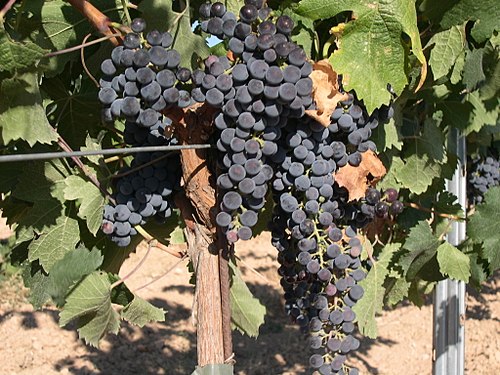
Tag: Black grapes

  • LISTÁN NEGRO

    Ampelique Grape Profile

    Listán Negro

    Origin, viticulture, morphology, wine styles, and place.

    Listán Negro is the defining black grape of the Canary Islands: volcanic, Atlantic, red-fruited, lightly tannic, and deeply shaped by Tenerife and Lanzarote. Its beauty is windblown and mineral: cherry, raspberry, pepper, herbs, smoke, black ash and vines rooted in impossible volcanic ground.

    Listán Negro is one of Spain’s most distinctive island grapes. Grown widely across the Canary Islands, especially Tenerife and Lanzarote, it gives light to medium-bodied reds and rosés with red fruit, pepper, herbs, smoke and volcanic tension. Its wines are rarely heavy; they are often fresh, savoury and transparent to place. On Ampelique, Listán Negro matters because it shows how a black grape can carry Atlantic wind, volcanic soil, old ungrafted vines and Canarian food culture in one vivid, mineral voice.

    Grape personality

    Volcanic, Atlantic, red-fruited, and distinctly Canarian. Listán Negro is a black grape with soft tannin, modest colour, red-berry fruit and smoky mineral detail. Its personality is agile, savoury, wind-shaped and island-rooted, marked by Tenerife, Lanzarote, black ash, old vines and Atlantic freshness.

    Best moment

    Grilled tuna, peppers, lava and Atlantic evening air. Listán Negro feels natural with fish, pork, chicken, mushrooms, goat cheese, papas arrugadas and smoky vegetables. Its best moment is cool, vivid, peppery and local, where red fruit, herbs, salt and Canarian food meet.


    Listán Negro rises from black island earth: red berries, pepper, sea wind, old vines and the dry breath of volcanoes.


    Contents

    Origin & history

    The black grape of the Canary Islands

    Listán Negro is a Spanish black grape most strongly associated with the Canary Islands. It is especially important on Tenerife, where it appears in several denominaciones de origen, and it is also found on Lanzarote, La Palma, La Gomera, El Hierro and Gran Canaria. Its identity is Atlantic, volcanic and unmistakably island-born.

    Read more

    The grape should not be confused with Listán Prieto, the historic variety linked to Mission, País and Criolla Chica. Listán Negro has its own Canarian profile: lighter colour, soft tannin, red fruit, pepper, herbs and a smoky mineral note that often reflects volcanic soils.

    Its importance is practical and cultural. In the Canary Islands, Listán Negro is not a curiosity but a central red variety, used for youthful reds, rosés and blends with other local grapes such as Negramoll and Listán Blanco.

    Listán Negro matters because it gives the Canary Islands a red-wine language unlike mainland Spain. It tastes of altitude, wind, lava, salt and old vines rather than oak, weight or easy ripeness.


    Ampelography

    Modest colour, soft tannin and volcanic perfume

    Listán Negro is a black grape, but its wines are often pale to medium ruby rather than deeply coloured. Tannins are usually soft to moderate, and the structure depends more on acidity, mineral tension and savoury detail than density.

    Read more

    The grape typically shows red cherry, raspberry, strawberry, plum, pepper, dried herbs, earth, smoke and sometimes a flinty volcanic note. The best wines feel aromatic without being sweet-fruited or heavy.

    Its lighter frame makes it well suited to chilled reds and expressive rosés. This is not a grape for forced extraction. Listán Negro works best when its freshness, pepper and island transparency remain visible.

    • Leaf: Canarian vinifera material, with old island biotypes and local vineyard variation.
    • Bunch: black grapes used for reds, rosés and traditional Canarian blends.
    • Berry: dark-skinned, red-fruited, aromatic and suited to light, savoury wines.
    • Impression: volcanic, Atlantic, peppery, lightly tannic and strongly Canarian.

    Viticulture notes

    Wind, drought, volcanic ash and old island training

    Listán Negro grows in demanding island conditions. The Canaries combine Atlantic wind, volcanic soils, strong sun, altitude shifts and limited water. On Lanzarote, vines may be planted in pits dug into black volcanic ash, protected from wind by low stone walls.

    Read more

    On Tenerife, the famous cordón trenzado system braids long vine arms along the ground, especially in Valle de la Orotava. These training methods are not decorative; they are practical responses to wind, terrain and tradition.

    The grape can be sturdy, but quality depends on balance. Too much heat or yield can soften freshness; good sites preserve acidity, red fruit and aromatic lift. Altitude and exposure often matter more than simple ripeness.

    For growers, Listán Negro is a lesson in adaptation. It turns harsh landscapes into elegant wines, provided farming respects the island rather than trying to erase it.


    Wine styles & vinification

    Fresh reds, rosés and volcanic field blends

    Listán Negro is used for dry red wines, rosés and blends. Many of the most exciting examples are fresh, light to medium-bodied, peppery and mineral. They can feel closer to cool-climate reds than their latitude suggests.

    Read more

    Winemaking often protects delicacy. Whole clusters, carbonic or semi-carbonic handling, neutral vessels and gentle extraction may be used to keep the wines agile. Heavy oak can easily cover the grape’s volcanic detail.

    Blends with Negramoll, Listán Blanco or other island grapes are common. In these wines, Listán Negro may provide red fruit, pepper, structure and a smoky island signature without dominating the whole blend.

    The best styles are energetic rather than grand. They are wines for movement, food, sea air and volcanic landscapes: bright, savoury, lightly tannic and alive.


    Terroir & microclimate

    Tenerife, Lanzarote and the volcanic Atlantic

    Listán Negro’s terroir is the Canary Islands. Tenerife is especially important, including Tacoronte-Acentejo, Valle de la Orotava, Ycoden-Daute-Isora and Valle de Güímar. Lanzarote gives another expression, shaped by black ash, pits and fierce wind.

    Read more

    Volcanic soils give the grape much of its modern identity. Wines may show smoke, ash, flint, black earth or salty mineral notes. These details are not just tasting words; they connect directly to the islands’ geology.

    Altitude also shapes the style. Higher sites can preserve freshness, while warmer exposures bring riper red fruit. The best vineyards balance Atlantic air, volcanic ground and careful ripeness.

    This is why Listán Negro feels so singular. It is not simply a Spanish red grape. It is an island translator: lava, wind, salt, altitude and vine age in liquid form.


    Historical spread & modern experiments

    From island staple to modern volcanic icon

    Listán Negro has long been part of Canary Islands wine culture, but international interest has grown as drinkers discovered volcanic wines and lighter, fresher reds. Producers on Tenerife and Lanzarote helped show that the grape can be subtle, complex and deeply regional.

    Read more

    The Canary Islands also preserved many ungrafted vines because phylloxera did not devastate the islands in the same way as mainland Europe. This gives some vineyards a remarkable sense of continuity and old-vine identity.

    Modern Listán Negro can be rustic, natural-leaning, precise or polished, but the strongest wines share a clear thread: red fruit, pepper, ash, freshness and an unmistakable island accent.

    Its future looks strong because it fits contemporary drinking without losing tradition. It is light, savoury, place-driven and refreshing, yet rooted in centuries of Canarian viticulture.


    Tasting profile & food pairing

    Cherry, raspberry, pepper, smoke and volcanic salt

    Listán Negro’s tasting profile is bright, savoury and volcanic. Expect red cherry, raspberry, strawberry, plum, black pepper, herbs, smoke, earth, flint, black ash and sometimes a salty mineral finish. The wines are usually light to medium-bodied.

    Read more

    Aromas and flavors: cherry, raspberry, strawberry, plum, pepper, herbs, smoke, flint and volcanic earth. Structure: light to medium body, soft tannin, moderate acidity, modest alcohol and savoury finish.

    Food pairings: grilled tuna, pork, chicken, mushrooms, peppers, goat cheese, papas arrugadas, mojo sauces and smoky vegetables. Listán Negro works best with food that welcomes red fruit, herbs and volcanic freshness.

    Serve lighter versions slightly chilled. Its pleasure is not weight, but tension: red fruit, pepper, lava, smoke and the taste of Atlantic islands.


    Where it grows

    Spain first, especially the Canary Islands

    Listán Negro’s home is Spain, especially the Canary Islands. It is widely planted across the archipelago and particularly important on Tenerife. It also appears on Lanzarote, La Palma, La Gomera, El Hierro and Gran Canaria.

    Read more
    • Tenerife: key island for Listán Negro, with several important DO zones.
    • Lanzarote: dramatic volcanic vineyards, ash pits and stone wind shelters.
    • Other islands: La Palma, La Gomera, El Hierro and Gran Canaria all contribute to its map.
    • Elsewhere: rare outside the Canary Islands and specialist Spanish vineyards.

    Its map is island-focused and powerful. Listán Negro is not a global grape, but within the Canaries it is central to red wine identity.


    Why it matters

    Why Listán Negro matters on Ampelique

    Listán Negro matters because it gives the Canary Islands a red grape voice that cannot be mistaken for mainland Spain. It is lighter, smokier, more volcanic and more Atlantic than many Spanish reds, with a clarity that feels completely local.

    Read more

    For growers, it is a lesson in adaptation. For winemakers, it is a lesson in restraint. For drinkers, it offers a red wine that feels alive, mineral, peppery and deeply connected to island landscape.

    It also matters because volcanic wines are often discussed as scenery first. Listán Negro proves that the grape itself has a voice: red fruit, soft tannin, pepper and ash.

    Its lesson is clear: a black grape can be light and still profound. In lava, wind, cherry and smoke, Listán Negro finds its truth.

    Keep exploring

    Continue through the JKL grape group to discover more varieties that shape classic regions, historic blends, and the living architecture of wine.

    Quick facts

    Identity

    • Color: black
    • Main names / synonyms: Listán Negro, Listan Negro, Listán Morado, Almuñeco, Negra Común
    • Parentage: not firmly established in simple parentage terms; not the same as Listán Prieto
    • Origin: Spain, especially the Canary Islands
    • Common regions: Tenerife, Lanzarote, La Palma, La Gomera, El Hierro, Gran Canaria and Canary Islands DO zones

    Vineyard & wine

    • Climate: Atlantic island climates with volcanic soils, wind, altitude and strong sun
    • Soils: volcanic ash, basaltic soils, lava-derived sites and mixed island terrains
    • Growth habit: island-adapted, often trained in traditional systems such as cordón trenzado or protected pits
    • Ripening: suited to Canarian conditions, with freshness preserved by altitude and Atlantic influence
    • Styles: fresh reds, rosés, volcanic field blends, youthful wines and lightly oaked expressions
    • Signature: cherry, raspberry, pepper, herbs, smoke, volcanic earth, soft tannin and island freshness
    • Classic markers: Canarian identity, volcanic soils, light body, pepper, smoke and Atlantic character
    • Viticultural note: protect freshness; Listán Negro rewards gentle extraction and site-sensitive farming

    If you like this grape

    If Listán Negro appeals to you, explore other Atlantic grapes. Negramoll adds soft Canarian delicacy, Vijariego Negro brings island rarity, while Hondarribi Beltza shows Basque coastal freshness, salt and lift.

    Closing note

    Listán Negro is a grape of cherry, ash and Canarian memory. It carries Tenerife, Lanzarote, volcanic earth and Atlantic wind in one voice. Its greatness is lightness, smoke and place.

    Continue exploring Ampelique

    Listán Negro reminds us that volcanic red wine can be light, bright, smoky and full of island soul.
  • TROUSSEAU

    Ampelique Grape Profile

    Trousseau

    Origin, viticulture, morphology, wine styles, and place.

    Trousseau is a rare black grape of eastern French origin, most closely associated with the Jura. It gives wines of pale colour, vivid red fruit, spice, earth and a distinctive wild edge. Under the names Bastardo and Merenzao, it also appears in Portugal and Spain. It is not a grape of mass or obvious power. Its strength lies in tension, warmth, savoury lift and a kind of rustic elegance that feels both fragile and stubborn.

    Trousseau is fascinating because it behaves like a grape with two moods. In the vineyard it asks for warmth, dry conditions and careful handling. In the glass it can seem light, aromatic and transparent. That contrast makes it one of the most intriguing Jura varieties: pale but not simple, fresh but not thin, delicate but rarely polite.

    Grape personality

    The wild quiet one.
    Trousseau is pale, spicy, savoury and lifted: a black grape with red fruit, forest edge, warmth and a restless Jura soul.

    Best moment

    Autumn food, cool glass.
    Mushrooms, roast poultry, herbs, old wood, mountain air and a red wine that feels light but never empty.


    Trousseau carries its beauty lightly.
    Red fruit, spice, dry leaves and mountain light — fragile at first glance, but with a stubborn pulse underneath.


    Origin & history

    An eastern French grape with Iberian echoes

    Trousseau is one of the traditional black grapes of the Jura, the small eastern French region between Burgundy and Switzerland. It belongs to the same cultural landscape as Savagnin and Poulsard, but it has a very different personality. Where Poulsard can be pale, airy and almost translucent, Trousseau usually brings more warmth, spice and grip. It still rarely becomes heavy, yet it has a firmer presence than its colour sometimes suggests.

    Read more →

    The grape’s wider story is complicated by its synonyms. In Portugal it is usually known as Bastardo, where it has long appeared in the Douro, Dão and other regions, sometimes as part of fortified wine traditions and sometimes as a dry red. In Spain, especially Galicia, it appears as Merenzao. These names are not simply labels; they show how the same variety adapted to different vineyard cultures, climates and wine expectations.

    Genetically, Trousseau is closely linked to Savagnin, probably in a parent-offspring relationship. That link feels appropriate in the Jura context. Both grapes can be demanding, distinctive and resistant to simple classification. Trousseau is not an international crowd-pleaser in the usual sense. It is a local grape with a wandering life, one that became quietly important wherever growers valued personality over predictability.

    Today Trousseau is admired by drinkers who enjoy lighter reds with savoury depth. It fits beautifully into a modern taste for freshness, transparency and low-extraction red wines, while still holding onto a rustic, mountain-edged identity that keeps it from becoming merely fashionable.


    Ampelography

    A compact-bunched black grape with pale, aromatic force

    Trousseau is a black grape, though its wines often appear lighter in colour than many other black varieties. The vine tends to form compact bunches, and the berries are dark-skinned but capable of giving wines that are more about perfume and spice than deep colour. The leaves are generally medium-sized, often rounded to slightly wedge-shaped, with moderate lobing and a practical, rather than dramatic, vineyard appearance.

    Read more →

    The compactness of the bunches is important. It helps explain both concentration and vulnerability. Trousseau needs warmth to ripen properly, but compact fruit can become a problem if autumn turns humid or if the canopy remains too dense. Good airflow is essential. In this sense, Trousseau asks for a precise vineyard balance: enough sun to ripen, enough dryness to stay healthy, and enough restraint to prevent the wine from becoming coarse.

    Its berries can produce wines with a curious tension between colour and sensation. The wine may look light, but the palate can be warmer, spicier and more structured than expected. This gives Trousseau its particular charm: it refuses to match visual expectation. It may enter softly, then finish with grip, earth and heat.

    • Leaf: medium-sized, rounded to slightly wedge-shaped, moderately lobed
    • Bunch: compact, often tightly packed
    • Berry: black-skinned, aromatic, capable of pale but expressive wines
    • Impression: warm, spicy, delicate in colour, firmer in character than it first appears

    Viticulture

    A demanding grape that needs warmth more than its colour suggests

    Trousseau is not always easy to grow. Although its wines can look delicate, the grape itself often needs relatively warm, dry sites to ripen well. This is one reason it occupies a particular place in the Jura: it is more demanding than Poulsard and often needs better-exposed parcels. Without enough heat, Trousseau can feel thin, sharp or green-edged. With too much heat, it may lose the aromatic lift that makes it compelling.

    Read more →

    The best sites are usually warm, well-drained and protected enough to allow steady ripening. Limestone, marl and gravelly or stony soils can all support good results, depending on region. In Jura, slope exposure is important. In Portugal and Spain, the grape behaves differently under warmer conditions, often gaining more body, darker fruit and sometimes a more rugged expression.

    Compact bunches mean disease pressure must be watched carefully. Humidity can bring rot risk, especially if the canopy is crowded or if harvest is delayed. The grower must encourage airflow without exposing the fruit too harshly. Trousseau needs sun, but not brutality; dryness, but not drought stress; ripeness, but not heaviness. Its viticulture is a balancing act.

    Yields also matter. Too much crop can weaken the grape’s already delicate colour and leave the wine without structure. Balanced yields allow the fruit to develop spice, savoury depth and a more complete palate. Trousseau rewards growers who understand that lightness still needs concentration.


    Wine styles

    Pale colour, warm spice and a savoury red-fruited line

    Trousseau usually gives red wines of light to medium colour, bright acidity and a distinctive aromatic mix of red berries, wild strawberry, cherry, pepper, dried herbs, forest floor and sometimes a faintly animal or smoky edge. It is not a plush grape. Even when ripe, it tends to keep a savoury, slightly untamed character. This makes it especially attractive to drinkers who enjoy reds with transparency and complexity rather than sweetness and weight.

    Read more →

    In the Jura, Trousseau is often made with relatively gentle extraction, allowing perfume, spice and lift to stay at the center. Some producers use whole clusters or partial whole clusters, which can add stem spice, structure and aromatic complexity. Oak is usually subtle when used, because the grape’s appeal lies in its tension and savoury detail rather than in polish or sweetness.

    Under the name Bastardo in Portugal, the grape can show a warmer and more robust personality, especially in the Douro and Dão. Under the name Merenzao in Spain, particularly Galicia, it often returns to a more Atlantic, fresh, red-fruited shape. These differences are valuable because they show how the same grape can shift between mountain, Atlantic and warmer inland identities without losing its spicy core.

    The best Trousseau wines are rarely obvious at first sip. They unfold through contrast: pale colour but firm flavor, light frame but earthy depth, red fruit but savoury finish. They are wines of edge and atmosphere.


    Terroir

    A grape that shows place through warmth, spice and texture

    Trousseau expresses terroir less through pure fruit and more through texture, ripeness and savoury detail. In the Jura, where limestone, marl and varied slopes shape small parcels, the grape can show bright red fruit, smoky spice, dry herbs and mineral grip. It often feels more rustic than Pinot Noir, but that rusticity can be part of its truth. Trousseau does not polish place into elegance. It lets the edges remain visible.

    Read more →

    In cooler Jura sites, Trousseau may struggle to develop full body, but it can gain delicate aromatics and high-toned spice. In warmer, better-exposed parcels, the grape becomes more complete, with darker cherry, pepper, firmer tannin and a more satisfying middle palate. The difference between under-ripe and beautifully restrained can be narrow, which is why site selection is so important.

    In Iberian regions, the same grape may express more warmth, depending on altitude, exposure and local climate. Portugal’s Bastardo can be more robust, while Galician Merenzao may retain a cooler, fresher feel. This makes Trousseau a useful grape for understanding how one variety can carry a core identity across different landscapes while still changing shape in response to climate.

    The terroir message of Trousseau is never simply pretty. It is textural, herbal, sometimes earthy, sometimes wild. It tastes like a grape that remembers weather.


    History

    From regional obscurity to quiet cult status

    For much of modern wine history, Trousseau remained a regional and somewhat obscure grape. Even in the Jura it was never as widely planted as more practical varieties, partly because it needs warmer sites and careful vineyard work. Outside France it often disappeared behind other names, especially Bastardo and Merenzao, which meant many drinkers did not realize they were encountering the same variety in different cultural clothing.

    Read more →

    Its modern revival is linked to the broader rediscovery of Jura wines and lighter, more transparent red styles. As drinkers became more interested in native grapes, low-extraction reds, alpine and near-alpine regions, and wines with savoury complexity, Trousseau found a new audience. It did not need to become international in the conventional sense. Its appeal grew precisely because it remained particular.

    The grape has also become interesting to growers in places such as California and Australia, where small experimental plantings have shown that Trousseau can work in carefully chosen sites. These new versions often emphasize freshness, spice and pale colour, though the challenge remains the same as in Europe: ripen the grape fully without losing the fragile savoury lift that makes it special.

    Trousseau’s rise is not a story of mass fame. It is a story of recognition. A grape once known mainly to regional specialists now speaks clearly to drinkers looking for freshness, individuality and red wine without heaviness.


    Pairing

    A red for mushrooms, herbs, birds and autumn kitchens

    Trousseau is highly useful at the table because it combines freshness, moderate body, savoury spice and relatively gentle tannin. It can be served slightly cool, especially in lighter versions, and it works beautifully with dishes that need red-wine character without too much weight. Mushrooms, roast poultry, charcuterie, herbs, lentils, pork, game birds and earthy vegetables all fit its natural register.

    Read more →

    Aromas and flavors: cherry, wild strawberry, cranberry, raspberry, red plum, pepper, dried herbs, smoke, forest floor, leather, warm earth and sometimes a faintly feral note. Structure: light to medium body, bright acidity, moderate tannin and a savoury finish that often feels more complex than the wine’s pale colour suggests.

    Food pairings: roast chicken, guinea fowl, duck, mushrooms, lentils, charcuterie, pork, terrines, herb-roasted vegetables, Comté, washed-rind cheeses, and simple dishes with thyme, bay leaf or black pepper. Warmer Iberian versions can handle slightly richer stews or grilled meats, while Jura styles shine with earthy and mountain-inspired food.

    The best pairings avoid excessive sweetness or very heavy sauces. Trousseau wants food with texture, savoury depth and enough space for its aromatic edge. It is a wine for a table with conversation, not ceremony.


    Where it grows

    A Jura grape with Portuguese and Spanish lives

    Trousseau’s classic French home is the Jura, especially around Arbois and related appellations. But its largest and most historically significant plantings outside France have often been found under other names. In Portugal, Bastardo has been part of the Douro and Dão landscape. In Spain, Merenzao appears in Galicia and other northern zones. Smaller plantings now exist in California, Australia and elsewhere, usually among growers attracted to rare varieties and lighter red styles.

    Read more →
    • France: Jura, especially Arbois, Côtes du Jura and related Jura appellations
    • Portugal: Douro, Dão and other regions under the name Bastardo
    • Spain: Galicia, especially as Merenzao; also known by other regional names
    • United States: small plantings, especially in California
    • Elsewhere: small experimental plantings in Australia and other regions

    Its geography is part of its fascination. Trousseau is not globally famous, but it has travelled through names, climates and traditions. Each region reveals another angle of the same restless grape.


    Why it matters

    Why Trousseau matters on Ampelique

    Trousseau matters on Ampelique because it shows that rare grapes are not only curiosities. They can reveal whole ways of thinking about wine. Trousseau teaches that colour is not always strength, that lightness can hide warmth, and that a grape may be both delicate and stubborn at the same time. It belongs to the family of varieties that resist easy explanation.

    Read more →

    It also helps connect Jura to the wider wine world. Many people come to the Jura through Savagnin, Vin Jaune or oxidative whites, but the red grapes are just as important to the region’s identity. Trousseau brings a warmer, spicier, more structured red voice than Poulsard, while remaining far from the density of more familiar black grapes.

    For a grape library, Trousseau is especially valuable because it has multiple identities. It is Trousseau in the Jura, Bastardo in Portugal, Merenzao in Spain. These names show how grapes move, adapt and gather meaning. They also remind us that a variety’s story is often wider than one region or one famous bottle.

    For Ampelique, Trousseau is a grape of nuance: rare, local, travelling, aromatic, earthy and alive. It deserves a place because it makes the map of grape varieties more human, less predictable and much more interesting.


    Quick facts

    • Color: black
    • Main names: Trousseau, Trousseau Noir, Bastardo, Merenzao
    • Parentage: probably parent-offspring relationship with Savagnin; wider family links to Chenin Blanc and Sauvignon Blanc
    • Origin: eastern France, especially associated with the Jura
    • Common regions: Jura, Douro, Dão, Galicia, California and small experimental plantings elsewhere
    • Climate: moderate to warm; needs warmer, dry sites to ripen properly
    • Soils: limestone, marl, gravelly and stony well-drained sites depending on region
    • Styles: pale savoury reds, Jura reds, Bastardo/Merenzao wines, fresh light reds, occasional fortified-use traditions
    • Signature: pale colour, red fruit, spice, acidity, savoury earth and a wild aromatic edge
    • Classic markers: wild strawberry, cherry, cranberry, pepper, dried herbs, smoke, forest floor and warm earth
    • Viticultural note: compact bunches, warmth requirement and sensitivity to rot make site choice and canopy balance important

    Closing note

    A great Trousseau is never only pale. It is red fruit with weather in it, spice with mountain air, delicacy with a dry and stubborn heart. It reminds us that some grapes do not impress by force, but by the strange persistence of their character.

    If you like this grape

    If you appreciate Trousseau’s pale colour, spice and savoury lift, you might also enjoy Poulsard for even lighter Jura transparency, Gamay for red-fruited freshness and joy, or Pinot Noir for delicacy, perfume and terroir expression.

    A black grape of pale colour, red fruit, spice and Jura tension — rare, savoury and quietly unforgettable.

  • POULSARD

    Ampelique Grape Profile

    Poulsard

    Origin, viticulture, morphology, wine styles, and place.

    Poulsard is a rare black grape from the Jura, famous for producing some of the palest and most delicate red wines in the world. Its thin skins, pale colour, gentle tannin and fragrant red-fruit character give it a quiet, almost fragile beauty. Yet Poulsard is not simply light. It carries earth, herbs, sour cherry, wild strawberry and mountain freshness in a way that makes it one of the Jura’s most distinctive voices.

    Poulsard is often misunderstood because colour normally teaches drinkers to expect power. This grape breaks that rule. It can look almost like a deep rosé, yet still behave as a true red: savoury, structured in its own fine-boned way, and deeply tied to the limestone and marl landscapes of eastern France. It is a grape of transparency, tension and quiet persistence.

    Grape personality

    The transparent red.
    Poulsard is pale, tender, earthy and aromatic: a black grape that behaves like red wine drawn in fine watercolour.

    Best moment

    Slightly chilled, quietly poured.
    A simple table, mushrooms, Comté, roast chicken, spring herbs and a glass that feels almost weightless.


    Poulsard is a red grape made of almost translucent things.
    Cherry skin, forest floor, pale spice, wet stone and the softest kind of persistence.


    Origin & history

    A Jura original with a pale but unmistakable voice

    Poulsard is one of the signature black grapes of the Jura, and perhaps the most visually surprising of them all. It is black by grape colour, but the wines it produces are often very pale: ruby, rose-red, sometimes almost onion-skin or light cranberry in tone. This unusual contrast is central to the grape’s identity. Poulsard asks the drinker to look twice, and then to taste beyond colour.

    Read more →

    Its home is eastern France, especially the Jura appellations where it has long stood beside Trousseau and Pinot Noir as part of the region’s red-grape identity. Poulsard is particularly associated with Arbois and Pupillin, where it can produce wines of remarkable perfume, delicacy and earthy tension. The variety is sometimes written as Ploussard, especially in local usage, and that alternate name feels fitting: slightly rustic, regional and intimate.

    Unlike grapes that travelled widely through trade, fashion or imperial agriculture, Poulsard remained closely tied to its place. That narrow geography is part of its charm. It did not become important because it was easy, deeply coloured or commercially obvious. It stayed important because local growers understood its voice: pale, aromatic, sometimes unruly, but capable of extraordinary transparency when treated carefully.

    In the modern world, Poulsard has become beloved among drinkers interested in lighter reds, natural wine, low extraction, regional varieties and wines with a strong sense of place. Yet it should not be reduced to trend. Poulsard’s delicacy is old. The current taste for freshness has simply made more people ready to listen to it.


    Ampelography

    Thin skins, pale colour and a fragile-looking vine with real character

    Poulsard is a black grape with notably thin skins and relatively low colour extraction. This is the reason its wines can look almost transparent even when fully vinified as reds. The berries tend to be dark but delicate, and the bunches can be compact enough to create disease challenges. Leaves are generally medium-sized, rounded to slightly pentagonal, with moderate lobing and a soft, balanced vineyard appearance rather than a dramatic silhouette.

    Read more →

    The grape’s thin skin is not just a visual detail. It shapes almost everything about Poulsard. It gives low colour, gentle tannin and a very particular aromatic openness. It also makes the fruit vulnerable. Skins that allow delicacy in the glass can bring fragility in the vineyard. Poulsard is not a grape that hides poor fruit condition behind colour or tannic force. Its transparency is both beauty and risk.

    Clusters may be moderately compact, and this can increase sensitivity to rot in humid conditions. The berry structure encourages a style that is fragrant rather than dense. Aromatic development often sits in the world of red cherry, cranberry, wild strawberry, dried leaves, damp earth and spice rather than black fruit or deep colour. The vine looks modest, but the wines can be deeply expressive.

    • Leaf: medium-sized, rounded to slightly pentagonal, moderately lobed
    • Bunch: small to medium, often moderately compact
    • Berry: black-skinned, thin-skinned, low in colour extraction
    • Impression: delicate, pale, fragrant, fragile in appearance but distinctive in identity

    Viticulture

    A sensitive grape that rewards careful hands

    Poulsard is demanding because it combines delicacy with vulnerability. It is not a high-colour, high-tannin grape that can withstand rough handling. It needs clean fruit, balanced canopies and careful timing. In the Jura, where seasons can be variable and humidity can be a challenge, this makes the grape both beloved and difficult. It asks growers to protect its fragility without smothering its freshness.

    Read more →

    The vine generally prefers sites where ripening can occur steadily without excessive heat. It does not need the warmer exposures that Trousseau often demands, but it still needs enough maturity to avoid thinness. Limestone and marl-based soils suit its Jura identity well, especially where drainage, slope and airflow help maintain fruit health. Poulsard’s best vineyards are not necessarily the most forceful sites; they are often the ones that let the grape ripen gently and cleanly.

    Disease pressure is a central concern. Thin skins and compact bunches can make rot a serious problem, particularly in damp years. Good canopy management is essential, but aggressive exposure is not always the answer. The fruit needs airflow and health, yet the delicate skins can suffer if the vineyard is pushed too harshly. Poulsard requires a calm, attentive style of farming.

    Yields also matter. If cropped too heavily, the wine can become watery or merely pale. If yields are balanced and the fruit is healthy, Poulsard gains aromatic definition and a subtle inner structure. The grape proves that lightness still needs concentration. Without it, transparency becomes emptiness; with it, transparency becomes beauty.


    Wine styles

    Almost translucent reds with earth, red fruit and quiet savour

    Poulsard produces some of the lightest red wines made from a black grape. The colour can be so pale that it confuses expectations, but the aroma can be striking: sour cherry, cranberry, wild strawberry, redcurrant, rosehip, damp leaves, earth, spice and sometimes a faintly smoky or rustic note. Its tannins are usually soft, acidity is lively and the overall impression is more atmospheric than forceful.

    Read more →

    In the cellar, Poulsard is often handled gently. Too much extraction can disturb its balance without adding useful depth. Many producers favour short to moderate maceration, whole clusters or partial whole clusters, low intervention and vessels that do not impose heavy oak flavour. The aim is usually not to darken the wine, but to preserve its perfume, lightness and savoury line.

    Poulsard can be bottled as a varietal wine, but it may also appear in blends with Trousseau or Pinot Noir. Those blends can add colour, structure or additional aromatic dimensions. Yet varietal Poulsard has its own magic. It shows a type of red wine that feels closer to breath than architecture: light, open, gently earthy and often deeply drinkable.

    The best versions are not thin. They are fine. That difference matters. Thin wine lacks centre. Fine Poulsard has a centre, but it is drawn in pale lines: acidity, earth, fruit skin, spice and mineral freshness rather than tannin or density.


    Terroir

    A grape that turns Jura limestone and marl into pale red tension

    Poulsard is deeply tied to the Jura’s soils and climate. Limestone, marl, clay and slopes with good drainage help shape its pale but expressive wines. It does not show terroir through density. It shows place through freshness, aroma, texture and the way earthy notes sit beneath red fruit. In the right site, Poulsard feels as though the soil is visible through the wine.

    Read more →

    The grape’s transparency makes site differences noticeable, though not always in dramatic ways. Warmer parcels can give slightly fuller fruit, red cherry and more body. Cooler sites may produce cranberry, rhubarb, herbal tones and a more angular profile. Marl can lend earthy depth, while limestone often helps keep the wine lifted and fine. These are subtle differences, but Poulsard is a subtle grape.

    Because the Jura’s climate can be cool and variable, vintage also matters. Warm years may give more complete ripeness and rounder fruit. Cooler years can highlight acidity, delicacy and herbal notes. Rain near harvest can be difficult because Poulsard’s thin skins leave little margin for error. The grape records weather quickly. Its wines often feel seasonal in a very direct way.

    Terroir in Poulsard is never monumental. It is intimate. It appears in the line between fruit and earth, in the way a pale red wine can feel anchored, and in the quiet echo that remains after the glass seems almost weightless.


    History

    From regional survival to modern fascination

    Poulsard’s history is one of regional persistence rather than global spread. It survived because Jura growers kept it alive in a landscape where local identity mattered. For many years, the wider wine world paid little attention. Pale red wines from obscure varieties did not fit the dominant story of prestige, which often favoured depth of colour, oak, concentration and familiar names. Poulsard existed outside that story.

    Read more →

    Its modern revival came as drinkers began to seek freshness, lighter extraction, regional authenticity and wines with more vulnerability than polish. Jura became a magnet for curious wine lovers, and Poulsard played a major role in that fascination. It offered something almost opposite to mainstream red wine: colour without darkness, flavour without weight, character without heaviness.

    Natural wine culture also helped make Poulsard visible, partly because many Jura producers worked with low-intervention methods and a preference for gentle extraction. But the grape should not be understood only through that lens. Traditional, careful, cleanly made Poulsard can be just as compelling. The essential point is not ideology, but sensitivity. Poulsard punishes roughness and rewards attention.

    Today it remains rare, but its symbolic importance is larger than its planted area. Poulsard reminds us that the wine world is not only built by famous grapes. Sometimes the most memorable varieties are the ones that nearly disappear into place, then return as if they had been waiting for taste to become quiet enough.


    Pairing

    A pale red for delicate food, earthy dishes and quiet tables

    Poulsard is exceptionally food-friendly because it brings red-wine aroma without heavy tannin. It can be served slightly chilled and works with dishes that would be overwhelmed by darker reds. Mushrooms, roast chicken, soft cheeses, charcuterie, trout, lentils, vegetable tarts, herbs and Jura cheeses all sit naturally beside it. It is a grape for food that values detail over drama.

    Read more →

    Aromas and flavors: sour cherry, cranberry, wild strawberry, redcurrant, rosehip, rhubarb, dried leaves, soft spice, damp earth and sometimes a faint smoky or rustic edge. Structure: very light to medium body, pale colour, lively acidity, low to moderate tannin and a finish that often feels savoury rather than sweetly fruity.

    Food pairings: roast chicken, charcuterie, pâté, mushrooms, lentils, Comté, Morbier, soft washed-rind cheeses, trout, salmon, vegetable terrines, herb omelettes, autumn salads and simple dishes with thyme or bay leaf. Poulsard also works beautifully with picnic-style food when lightly chilled, because it has enough aroma to feel red and enough freshness to stay agile.

    Its best pairings avoid very heavy sauces, strong sweetness or aggressive spice. Poulsard wants room to breathe. It is not a wine that fights for dominance. It clarifies the table quietly, almost like a red wine that learned the manners of a white.


    Where it grows

    A Jura grape with only a small life beyond home

    Poulsard is overwhelmingly associated with France’s Jura region. Its most important homes include Arbois, Pupillin, Côtes du Jura and related Jura appellations. Outside the Jura it is rare, though a few growers in other countries have explored it in small experimental plantings. Unlike Gamay or Pinot Noir, Poulsard has not become a widely planted international grape. Its identity remains local, and that locality is part of its value.

    Read more →
    • France: Jura, especially Arbois, Pupillin and Côtes du Jura
    • Jura context: often grown alongside Trousseau, Pinot Noir, Savagnin and Chardonnay
    • Experimental plantings: very small parcels in selected New World regions
    • Best sites: cool to moderate slopes with limestone, marl, drainage and good airflow

    Poulsard’s limited geography makes it especially important for a grape library. It is not a grape that can be understood through global repetition. It has to be understood through place.


    Why it matters

    Why Poulsard matters on Ampelique

    Poulsard matters on Ampelique because it expands the idea of what a black grape can be. Many black grapes are discussed through colour, tannin, power and structure. Poulsard speaks in another language: pale colour, soft tannin, high-toned fruit, earth and fragile perfume. It proves that grape identity is not only about intensity. It can also be about transparency.

    Read more →

    It also helps explain the Jura as more than an unusual white-wine region. The Jura’s red grapes are essential to its personality, and Poulsard is the most delicate of them. If Trousseau shows warmth and spice, Poulsard shows air, skin and shadow. Together they reveal why regional grape diversity matters. A place is rarely defined by one grape alone.

    Poulsard is also useful for readers because it breaks visual assumptions. A wine can look pale and still be serious. A black grape can make something that behaves almost like a rosé and still carry true red-wine identity. A grape can be fragile without being weak. These lessons are important, especially for a platform built around varieties rather than labels alone.

    For Ampelique, Poulsard is a small grape with a large message. It reminds us that the world of grapes is full of quiet exceptions — varieties that do not dominate, but change how we see the whole map.


    Quick facts

    • Color: black
    • Main names: Poulsard, Ploussard
    • Parentage: traditional Jura variety; exact parentage is not firmly established
    • Origin: Jura, eastern France
    • Common regions: Jura, especially Arbois, Pupillin and Côtes du Jura; very small experimental plantings elsewhere
    • Climate: cool to moderate; needs healthy fruit, steady ripening and good airflow
    • Soils: limestone, marl, clay-limestone and well-drained Jura slopes
    • Styles: pale red, light red, Jura red, delicate blends with Trousseau or Pinot Noir, sometimes rosé-like in appearance
    • Signature: pale colour, thin skins, red fruit, soft tannin, lively acidity and earthy transparency
    • Classic markers: sour cherry, cranberry, wild strawberry, redcurrant, rosehip, rhubarb, dried leaves and damp earth
    • Viticultural note: thin skins and compact bunches make rot risk important; careful canopy work and gentle handling are essential

    Closing note

    A great Poulsard is never pale by accident. It is pale because the grape speaks through skin, scent, acidity and earth rather than colour or force. It is one of the clearest reminders that delicacy can be a form of depth.

    If you like this grape

    If you appreciate Poulsard’s pale colour, red-fruited delicacy and earthy lift, you might also enjoy Trousseau for a spicier Jura red, Gamay for fresh red-fruited charm, or Pinot Noir for perfume, transparency and fine-boned structure.

    A black grape of pale colour, thin skins, red fruit and Jura transparency — delicate, earthy and quietly profound.

  • MERLOT

    Ampelique Grape Profile

    Merlot

    Origin, viticulture, morphology, wine styles, and place.

    A world classic dark grape of Bordeaux origin, celebrated for suppleness, plush fruit, and its ability to bring generosity without losing seriousness: Merlot can be silky and immediate, deep and age-worthy, plummy and velvety, or mineral, cool, and quietly austere. At its best it is not merely soft. It is one of the great grapes of texture, balance, and human warmth in wine.

    Merlot is one of the most misunderstood noble grapes. Its accessibility made it globally famous, and that same accessibility sometimes caused people to underestimate it. Yet in the best sites and in the best hands, Merlot can be as profound as any classical red variety: tender but not weak, rich but not lazy, generous without ever needing to shout.

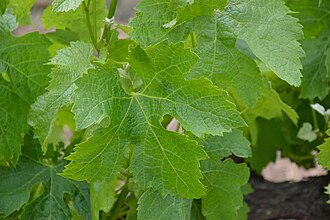
    Merlot grape leaf in summer, showing mature green foliage.
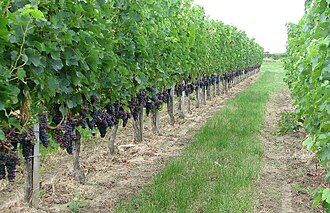
    Row of Merlot vines in summer in Bourg France.
    Ripe clusters of Merlot grapes.

    Merlot is velvet in motion: generous, supple, and quietly luminous, turning ripe fruit, soft tannin, and warmth into effortless grace.


    Origin & history

    A Bordeaux original that taught the world how softness can still be noble

    Merlot belongs historically to Bordeaux, and more specifically to the right bank and to the cooler, clay-rich or moisture-retentive sites where its early-ripening character can become an advantage rather than a risk. If Cabernet Sauvignon is the emblematic spine of the Médoc, Merlot is the emotional center of places such as Saint-Émilion and Pomerol. There it became capable of wines that are broad without being loose, plush without being careless, and deeply age-worthy without needing to arrive in the sternest possible form.

    Read more →

    Modern DNA work has shown that Merlot is the offspring of Cabernet Franc and Magdeleine Noire des Charentes. That lineage is revealing. Cabernet Franc contributes aromatic intelligence and structural finesse, while the second parent ties Merlot to older southwestern French vine history. Merlot’s identity is therefore not accidental. It emerges from a family network deeply woven into the classical heart of French viticulture.

    Historically, Merlot did not gain prestige because it was loud. It gained prestige because it could make Bordeaux more complete. In blends it supplied flesh, fruit, softness, and early accessibility where Cabernet Sauvignon could be hard or unyielding in youth. On the right bank it demonstrated that it did not need Cabernet to achieve nobility. On the best clay and limestone sites, it could carry an entire wine on its own terms.

    Its later global journey, particularly to Italy, California, Chile, Washington State, and many other regions, would turn Merlot into an international name. But that fame often obscured the grape’s real history. Merlot is not simply a soft, easy red. It is one of the classic varieties through which Bordeaux learned to balance firmness with grace.


    Ampelography

    A dark-fruited vine with generous flesh and early ripening character

    Merlot typically produces medium-sized bunches and berries with relatively thin skins compared with more structurally severe red grapes such as Cabernet Sauvignon. The berries tend toward generous pulp and early sugar accumulation, helping explain why the wines often feel softer and more open in youth. The leaves are structured but not severe, and the vineyard impression is often one of readiness rather than resistance. Merlot looks, in a way, like a grape inclined toward giving.

    Read more →

    That generosity, however, should not be mistaken for weakness. Merlot’s thinner skins and fuller pulp help explain its textural accessibility, but in top sites the grape still develops enough structure, color, and phenolic depth to age beautifully. It simply builds that depth in a different manner. Merlot does not usually assert itself through the strictest tannin line. It asserts itself through volume, dark red and black fruit, and a broad middle palate that gives wines their signature caressing shape.

    This morphology also creates certain viticultural vulnerabilities. Merlot’s early character and fruit shape can make it sensitive to rot pressure and to vintage variation around flowering and ripening. In other words, the same physical attributes that help it become generous in the glass can make it more exposed in the vineyard. This tension — between softness of effect and difficulty of growing — is part of the grape’s deeper personality.

    • Leaf: medium-sized, structured but not severe
    • Bunch: medium, reasonably full
    • Berry: medium, dark, relatively pulpy
    • Impression: ripe, generous, textural, early in temperament

    Viticulture

    An early-ripening grape that thrives where generosity meets control

    Merlot ripens earlier than Cabernet Sauvignon, and that fact lies at the center of its historic success. In cooler or wetter sites where Cabernet may struggle to reach complete maturity, Merlot can finish more reliably, giving plush fruit and softer tannins. This is why it became so important on Bordeaux’s right bank and in many temperate regions around the world. Early ripening is not just a convenience. It is the key to the grape’s broad adaptability.

    Read more →

    At its best, however, Merlot still needs a disciplined site. Clay-rich soils are especially important in some of its noblest expressions because they retain moisture and moderate ripening, allowing the grape to develop depth without stress or shriveling. Limestone can add lift and firmness. Gravel or warmer sites may push the fruit profile darker and softer, but without enough freshness Merlot can lose distinction and become merely plush. This is why the best Merlot is not simply ripe. It is ripe with contour.

    Viticultural challenges remain real. Merlot can be sensitive to frost because of its early cycle, and it may also be vulnerable to coulure, mildew, or rot under the wrong conditions. Crop load matters. Overcropped Merlot can become dilute at the center, with softness but little real character. The grape needs enough concentration to keep its plushness from turning into vagueness.

    The grower’s task, then, is a subtle one: preserve the grape’s natural charm while preventing it from becoming soft, overripe, or anonymous. Merlot’s highest achievements come not from excess, but from managed tenderness.


    Wine styles

    From plum and velvet to graphite, truffle, and dark floral depth

    Merlot’s classic aromatic range includes plum, black cherry, red currant, blackberry, cocoa, cedar, tobacco, violet, bay leaf, damp earth, and in mature or high-quality examples often truffle or graphite-like nuance. What distinguishes Merlot from many other dark grapes is not only what it smells like, but how it moves across the palate. Merlot is often a grape of curve and breadth rather than line and severity. It can seem to arrive from the center outward, coating the mouth with dark fruit and fine texture before tannins announce themselves.

    Read more →

    In cooler or more restrained contexts, Merlot can show redder fruits, fine herbs, graphite, and a firmer mineral edge than its reputation might suggest. In warmer climates it may deepen toward richer plum, dark chocolate, mocha, and softer, sweeter fruit expression. Oak can add polish, cedar, vanilla, and spice, but because Merlot is already naturally plush, too much new wood can flatten its inner detail rather than enrich it.

    Blending remains central to the grape’s history. In Bordeaux it often works alongside Cabernet Franc and Cabernet Sauvignon, adding roundness and generosity. But some of the world’s most moving Merlots are varietal or nearly varietal, especially on the right bank. There, Merlot proves that softness can carry greatness when supported by site, discipline, and age-worthy balance.

    With maturity, Merlot can become deeply persuasive. The fruit turns from fresh plum and cherry toward dried fruit, tobacco, forest floor, leather, truffle, cocoa, and cedar. The texture softens but ideally retains shape. Great old Merlot does not merely become easier. It becomes deeper, quieter, and more complete.


    Terroir

    A grape whose softness changes dramatically with soil and climate

    Merlot is often described as soft, but that softness is not uniform. Soil and climate transform it profoundly. On the clay-rich plateaus of Pomerol, Merlot can become dark, velvety, almost enveloping, with a density that still feels poised. On limestone in Saint-Émilion, it may gain more lift, mineral tension, and floral detail. In warmer New World settings it can become richer, rounder, and more open. In cooler or more restrained climates it may show fine red and black fruit, graphite, and a firmer frame than many expect.

    Read more →

    This is why Merlot should never be reduced to a generic style of soft red. The grape responds to water balance, soil temperature, and ripening conditions with considerable sensitivity. A water-retentive clay can slow and steady its development, helping preserve depth and seriousness. Too much warmth or too fertile a site can make the grape too easy, too quickly, with plushness arriving before complexity.

    What terroir often changes in Merlot is not merely flavor, but density and grain. Some sites give silky breadth. Others give chalky lift. Others again produce broad, warm-fruited generosity. Merlot therefore teaches an important lesson: texture itself can be terroir-driven. The grape’s reputation for softness should not blind us to how differently that softness can feel from place to place.

    The finest sites make Merlot not simpler, but more articulate. They reveal that generosity can still have direction. This is part of the grape’s nobility and one of the reasons it remains indispensable to serious wine culture.


    History

    Prestige, popularity, backlash, and rehabilitation

    Few noble grapes have experienced modern reputation swings as dramatic as Merlot’s. It was once prized internationally as a way to achieve softness, ripeness, and immediate appeal in red wine. Plantings expanded rapidly in many countries, and the grape became deeply familiar to consumers. That familiarity, however, produced its own danger. When a grape becomes associated with easy drinking and broad market recognition, it can begin to lose prestige even while remaining commercially successful.

    Read more →

    That is, in many ways, what happened. Large volumes of simple, soft Merlot made the grape seem less interesting than it really was. Popular culture amplified this simplification. Yet the best Merlots — especially from Pomerol, Saint-Émilion, and a handful of exceptional global sites — never ceased to demonstrate the grape’s capacity for greatness. They simply operated at a quieter register than more obviously stern or prestigious varieties.

    In recent years Merlot has undergone a kind of rehabilitation. As wine lovers become more attentive to texture, site, and the nuances of right-bank Bordeaux, the grape’s finer qualities have re-emerged. Better site selection, less exaggerated winemaking, and a renewed respect for balance have all helped. The best modern Merlot no longer needs to apologize for charm. It simply proves that charm can coexist with depth.

    That makes Merlot historically important in a broader sense. It teaches how fashion can distort perception, and how true quality eventually resists simplification. Great Merlot survived its own overfamiliarity. That is not a small achievement.


    Pairing

    A red for comfort, earth, and polished savory depth

    Merlot is one of the most naturally companionable fine red wines at the table. Because its tannins are often softer and its fruit more rounded than those of Cabernet Sauvignon, it works beautifully with dishes that favor tenderness, earthiness, and moderate richness rather than aggressive char. Roast duck, veal, pork, mushroom dishes, lentils, truffle accents, and sauces with savory depth all sit naturally within Merlot’s world.

    Read more →

    Aromas and flavors: plum, black cherry, red currant, blackberry, violet, tobacco, cocoa, cedar, bay leaf, earth, and with age often truffle and leather. Structure: medium to full body, moderate tannin, plush fruit core, and a palate shaped more by texture and breadth than by strict tannic severity.

    Food pairings: roast chicken with mushrooms, duck breast, veal, pork loin, beef stew, lentil dishes, truffle pasta, hard and semi-hard cheeses, and savory vegetarian preparations with depth. Firmer, cooler-climate Merlots can also take on grilled meats more confidently, while richer and rounder styles are especially at ease with sauces, roasted roots, and dishes where softness and umami matter more than smoke.

    What Merlot offers at the table is not dramatic contrast, but easeful intelligence. It tends to make food feel more complete, more settled, and more human. That is a quieter gift than spectacle, but often a more lasting one.


    Where it grows

    A global red with a distinctly Bordeaux heart

    Merlot now grows across most of the serious wine world. France remains the great reference, especially Bordeaux. Italy has embraced it in many regions, including Tuscany. California and Washington State have produced notable versions, from plush to site-conscious. Chile has long relied on Merlot and Merlot-adjacent plantings as part of its modern red identity. South Africa, New Zealand, and many other places have shown that the grape’s early-ripening, textural character can be highly adaptable.

    Read more →
    • France: Bordeaux above all, especially Saint-Émilion and Pomerol
    • Italy: Tuscany and additional major regions
    • United States: California and Washington State
    • Chile: a major modern red grape, though sometimes historically confused with Carmenère in old plantings
    • Elsewhere: South Africa, New Zealand, Argentina, and many additional wine regions

    Its success across so many countries comes from a combination of early ripening, stylistic charm, and adaptability. But the best Merlots, wherever they are grown, still tend to show one essential lesson from Bordeaux: softness becomes noble only when it is held inside real structure.


    Why it matters

    Why Merlot matters on Ampelique

    Merlot matters on Ampelique because it corrects an important misconception in wine culture: that softness and accessibility are somehow opposed to greatness. Merlot shows that this is false. A grape can be generous, charming, and immediately persuasive while still carrying immense complexity, terroir expression, and age-worthiness. In fact, one of Merlot’s great achievements is precisely that it humanizes nobility. It makes greatness feel more touchable.

    Read more →

    It also helps readers understand the full spectrum of Bordeaux. Without Merlot, Bordeaux becomes a partial story told only through structure and Cabernet-driven prestige. Merlot restores the other half: clay, right bank, tenderness, breadth, and wines whose authority comes not from severity but from complete integration. That broader view is essential to any serious grape library.

    For Ampelique, Merlot is equally valuable because its modern reputation is layered and contradictory. It is famous and underestimated, global and local, easy to recognize yet often poorly understood. Those tensions make it fertile ground for exactly the kind of nuanced work a grape platform should do: moving beyond shorthand toward a fuller, more accurate, more beautiful understanding.

    Merlot deserves world-class status not because it is common, but because in its highest form it is unforgettable. It reminds us that grace can be profound, and that some of the greatest wines persuade not through hardness, but through trust.


    Quick facts

    • Color: Black
    • Origin: Bordeaux, France
    • Parentage: Cabernet Franc × Magdeleine Noire des Charentes
    • Climate: moderate, often favorable in cooler or clay-rich sites
    • Soils: clay, limestone, mixed right-bank terroirs, and many global equivalents
    • Styles: plush, supple, structured, age-worthy, blended or varietal
    • Signature: plum, velvet, breadth, right-bank nobility
    • Classic markers: black cherry, plum, cocoa, violet, tobacco, truffle with age

    Closing note

    A great Merlot is never only soft. It is softness given gravity — plum and velvet steadied by earth, mineral memory, and the quiet structure of a noble site.

    A world classic, and one of red wine’s finest lessons in how tenderness can still carry depth.

  • XINOMAVRO

    Ampelique Grape Profile

    Xinomavro

    Origin, viticulture, morphology, wine styles, and place.

    Xinomavro is one of Greece’s greatest black grape varieties: late-ripening, high in acidity, firm in tannin and deeply tied to the cool uplands of northern Greece. It is a grape of tension rather than softness, of red fruit, tomato leaf, dried herbs, earth and long ageing potential. In the vineyard it demands patience, careful site choice and disciplined yields. In the glass it can be demanding when young, but profoundly expressive with time.

    Xinomavro is not an easy grape, and that is part of its greatness. Its name is often translated as “sour black”, a clue to its acid structure and dark-skinned identity. It can give pale colour compared with its tannic force, and it often expresses itself through structure, savoury aroma and site more than through simple fruit richness.

    Grape personality

    The austere northern black.
    Xinomavro is a black grape of late ripening, high acidity, firm tannin, savoury aroma and remarkable ageing potential.

    Best moment

    Cool evening, slow food.
    Lamb, tomato-rich stews, mushrooms, game, aged cheese and a red that opens slowly rather than immediately.


    Xinomavro rarely flatters at first glance.
    It asks for altitude, time, air and patience — then gives one of Greece’s most serious red-grape voices.


    Origin & history

    A northern Greek classic with structure, austerity and time at its core

    Xinomavro is one of Greece’s defining black grape varieties and the great red grape of northern Greece. Its strongest historical associations are with Naoussa, Amyndeon, Goumenissa and Rapsani, though each region gives the grape a different frame. In Naoussa it can be firm, pale, aromatic and age-worthy. In Amyndeon, where altitude and cooler conditions matter strongly, it can show more lifted red fruit and freshness. In Rapsani, on the slopes of Mount Olympus, it traditionally appears in blends, adding structure and savoury detail.

    Read more →

    The name Xinomavro is often translated as “sour black”, with “xino” referring to sour or acidic and “mavro” to black. That name captures two of the grape’s central traits: acidity and dark grape identity. Yet the wines are not always deeply coloured. Like Nebbiolo, to which it is often compared, Xinomavro can combine relatively moderate colour with formidable tannin, high acidity and savoury complexity. The comparison is useful, but only up to a point. Xinomavro remains unmistakably Greek in its herbal, tomato-like, earthy and mountain-shaped expression.

    Historically, the grape was important because it could produce serious, age-worthy red wines in climates where many easier varieties might have seemed more generous but less durable. Its high acidity and tannin made it valuable for long ageing, but also challenging. Poor farming, high yields or insufficient ripeness could make the wines hard and severe. Better site selection and modern viticulture have helped reveal the grape’s true potential more clearly.

    Today Xinomavro stands as one of Greece’s most internationally respected indigenous grapes. It is not loved because it is easy. It is loved because it has depth, tension and identity. It proves that Greek red wine can be structured, age-worthy and profoundly site-sensitive without imitating any other tradition.


    Ampelography

    A black grape of firm skins, late maturity and naturally serious structure

    Xinomavro is a black grape, but its identity is not simply about colour. The variety is more defined by acidity, tannin, phenolic grip and aromatic complexity than by sheer pigment. Berries are dark-skinned, yet wines can sometimes appear paler than expected given their structural power. This contrast is one of the grape’s fascinating features: it can look almost delicate while behaving with great firmness.

    Read more →

    Leaves are generally medium to large, and the vine can show notable vigour depending on site and soil. Canopy management is therefore important, particularly because Xinomavro needs a long season to ripen fully. Too much shading can delay ripening and increase herbal severity. Too much exposure, however, can stress fruit or push imbalance in warmer zones. The grape asks for a precise middle ground.

    Bunches are typically medium-sized and can be relatively compact. This matters because late-ripening grapes face autumn weather risk, and compact clusters can become vulnerable if humidity or rain increases. Fruit health is essential. Xinomavro’s noble structure depends on fully ripened tannins; if the grapes are underripe or compromised, the finished wine can become hard, bitter or green.

    • Leaf: medium to large, with canopy vigour requiring thoughtful management
    • Bunch: medium-sized, sometimes compact, with harvest health important in late seasons
    • Berry: black, dark-skinned, high in structural potential rather than simple colour depth
    • Impression: late-ripening, tannic, acidic, savoury and strongly shaped by site

    Viticulture

    A late-ripening grape that needs patience, airflow and precise harvest timing

    Xinomavro is a demanding vineyard grape. It ripens late, carries high acidity and requires full phenolic maturity if its tannins are to become noble rather than severe. This makes site choice critical. The best vineyards provide enough warmth to ripen the grape fully, but enough coolness to preserve its aromatic detail and acid structure. Northern Greece offers this balance in several ways: altitude, continental influence, cool nights and long autumns.

    Read more →

    Yield control is central. Xinomavro can produce wines of serious structure, but only when the vine is balanced and the fruit reaches maturity. Excessive yields can create thin, hard wines with aggressive acidity and rough tannin. Low to moderate yields help the grape build concentration, but concentration alone is not enough. The tannins must ripen. This is why patient harvest timing is so important.

    Canopy management must balance sunlight and protection. Open canopies support airflow and reduce disease pressure, especially where bunches are compact and the season extends late. But fruit that is too exposed may lose nuance or suffer stress. Xinomavro’s finest expression often comes from vineyards where ripening is slow, steady and complete rather than hurried.

    Disease pressure can be a concern in difficult autumns. Botrytis and rot may threaten if rain arrives before the grape has fully ripened. This adds to the grower’s challenge: harvest too early and tannins remain raw; wait too long and weather risk increases. The grape’s greatness lies partly in this tension. It asks the grower to read the season carefully.

    Viticulturally, Xinomavro is therefore not a forgiving grape. It rewards discipline, old vines, hillside sites, calcareous soils, moderated climates and growers willing to sacrifice easy fruit for long-term structure. When handled well, it becomes one of the most serious black grapes in southeastern Europe.


    Wine styles

    From pale, fierce reds to profound age-worthy bottles

    Xinomavro produces some of Greece’s most age-worthy red wines. The classic profile is not built on simple dark fruit or plush texture. Instead, it combines high acidity, firm tannin, savoury aroma and a distinctive register of red fruit, dried tomato, olive, spice, herbs, earth and sometimes floral lift. Young wines can be angular and demanding. With time, they can become complex, haunting and deeply gastronomic.

    Read more →

    Naoussa often gives the most classical, structured expression: tannic, savoury, refined and capable of long ageing. Amyndeon can show a cooler, brighter side of the grape, sometimes with more red fruit, lift and freshness. Goumenissa traditionally blends Xinomavro with Negoska, which can soften and round the final wine. Rapsani blends Xinomavro with other local grapes on the slopes of Mount Olympus, creating a more integrated mountain expression.

    Winemaking decisions shape the grape strongly. Traditional longer ageing can emphasize leather, spice, dried fruit and savoury development. Modern approaches may seek cleaner fruit, gentler extraction and better tannin integration. Oak can support the wine, but heavy oak can easily obscure the grape’s distinctive herbal and tomato-like character. The best examples feel structured but not forced.

    Xinomavro can also produce rosé, sparkling and lighter red styles, particularly in cooler regions such as Amyndeon. These styles show the grape’s acidity and red-fruit lift in a more immediate form. Still, its deepest identity remains linked to serious red wines where tannin, acidity and savoury complexity need time to unfold.


    Terroir

    A grape that turns altitude, limestone and long seasons into structure

    Terroir matters intensely for Xinomavro. The grape is not naturally soft, easy or forgiving, so the site must help it ripen without losing its essential tension. Northern Greece provides a range of vineyard settings: limestone-rich hills, continental climates, high-elevation sites, lake-influenced vineyards and mountain slopes. These conditions shape not only fruit flavour, but tannin quality and aromatic detail.

    Read more →

    Naoussa, on the slopes of Mount Vermio, is often seen as the grape’s classical heartland. Here the best wines can combine acid, tannin, savoury aroma and ageing potential with a firm but elegant line. Limestone and clay-limestone soils are especially important in many serious sites, helping give structure and definition. Elevation and exposure help determine how fully the grape ripens and how refined the tannins become.

    Amyndeon offers a cooler and higher-altitude expression. The region’s elevation and lakes can preserve freshness, making Xinomavro feel more lifted and sometimes more delicate. This matters because the grape’s acidity can be both a strength and a challenge. In the right cool climate, it feels vivid and energetic. In an underripe context, it can feel hard. Terroir decides which version appears.

    The grape’s transparency is not soft or easy. It expresses place through structure: tannin grain, acid line, aromatic savouriness, fruit ripeness and ageing capacity. Xinomavro is therefore one of the best Greek grapes for showing that terroir is not only flavour. It is architecture.


    History

    From demanding local red to international symbol of Greek seriousness

    Xinomavro’s modern rise is one of the important stories in Greek wine. For a long time, Greek reds were often understood internationally through broad categories rather than specific indigenous grapes. Xinomavro helped change that. Its strong identity, ageing potential and ability to carry appellation character made it one of the varieties that could present Greek red wine as serious, distinctive and worthy of deep study.

    Read more →

    The grape has not always been easy for new drinkers. Its tannins, acidity and savoury tomato-like profile can surprise those expecting plush fruit. But this difficulty is also what gives Xinomavro its authority. It does not behave like an international soft red. It insists on its own grammar: bright acid, firm tannin, savoury complexity, red fruit, dried herbs and time.

    Modern Greek producers have refined the grape’s expression. Better vineyard management, lower yields, improved clonal understanding, gentler extraction and more sensitive oak use have all helped make Xinomavro more precise. The best examples today can keep their classical structure while offering cleaner fruit, more integrated tannin and clearer site expression.

    That evolution matters because Xinomavro is now one of the grapes by which Greek wine is judged internationally. It is no longer merely local. It is a benchmark: a grape that proves Greece can produce reds of structure, age and intellectual depth while remaining unmistakably rooted in its own landscape.


    Pairing

    A serious food grape for tomato, lamb, herbs, game and aged flavours

    Xinomavro is one of the most gastronomic Greek red grapes because its acidity, tannin and savoury aroma all work strongly with food. It is not a red for sweet softness or easy fruit alone. It belongs with dishes that can meet its structure: lamb, tomato-rich stews, grilled meat, mushrooms, aged cheeses, game, lentils, aubergine and herbs such as oregano, thyme and rosemary.

    Read more →

    Aromas and flavors: sour cherry, red plum, dried tomato, tomato leaf, olive, rose, violet, dried herbs, spice, leather, earth and sometimes tobacco or truffle with age. Structure: high acidity, firm tannin, moderate to medium-plus body, age-worthy phenolics and a savoury finish that can become increasingly complex over time.

    Food pairings: lamb shoulder, goat, game birds, beef stew, tomato-braised dishes, mushrooms, lentils, aubergine, grilled sausages, aged hard cheeses, dishes with olives, herb-roasted vegetables and Greek mountain cuisine. The grape’s tomato-like savoury notes make it especially interesting with tomato-based food, where many red wines can feel awkward.

    Older Xinomavro can work beautifully with autumnal flavours: mushrooms, truffle, slow-cooked meat, aged cheese and dishes with earthy depth. Its acidity keeps the table alive, while its tannins ask for protein, fat or time in bottle. This is a grape that becomes more generous when the meal has patience too.


    Where it grows

    Northern Greece first: Naoussa, Amyndeon, Goumenissa and Rapsani

    Xinomavro’s home is northern Greece. The grape reaches its most famous expressions in Naoussa, where it produces structured, age-worthy reds. Amyndeon offers a cooler, high-altitude expression and is also important for rosé and sparkling styles. Goumenissa and Rapsani show the grape in blended regional traditions. Outside Greece, plantings remain limited, though interest in the grape has grown among producers fascinated by indigenous varieties and age-worthy reds.

    Read more →
    • Naoussa: the classical home of structured, age-worthy Xinomavro
    • Amyndeon: high-altitude, cooler-climate expressions with freshness and red-fruit lift
    • Goumenissa: traditional blends, often with Negoska, giving a softer regional frame
    • Rapsani: Mount Olympus slopes, where Xinomavro appears in local blends
    • Elsewhere in Greece: selected plantings where growers value structure, acidity and indigenous identity
    • Outside Greece: rare, but increasingly watched by growers interested in distinctive black grapes

    The grape’s geography explains its personality. Xinomavro belongs where ripening is long, nights are cool, soils can give structure and growers are willing to wait. Its best regions do not make it easy. They make it complete.


    Why it matters

    Why Xinomavro matters on Ampelique

    Xinomavro matters on Ampelique because it is one of the clearest examples of a grape whose greatness lies in structure, not ease. It is not simply a Greek red variety. It is a teaching grape: a variety through which readers can understand late ripening, tannin maturity, acidity, altitude, savoury aroma and the difference between charm and seriousness.

    Read more →

    It also helps broaden the image of Greek wine. Many people first encounter Greece through white grapes such as Assyrtiko or through more approachable reds such as Agiorgitiko. Xinomavro adds another dimension: firmness, austerity, mountain climate, age-worthiness and deep regional identity. It shows that Greek red wine can be as intellectually serious as any classical European red tradition.

    For a grape library, Xinomavro is essential because it resists simplification. It is black but not always deeply coloured. It is aromatic but not sweetly perfumed. It is powerful but not necessarily full-bodied in a plush sense. It is difficult when young but beautiful with time. Those tensions make it one of the most interesting grapes to study.

    On Ampelique, Xinomavro should stand as one of the great European black grapes: not because it imitates Nebbiolo, Pinot Noir or Sangiovese, but because it has its own grammar of acidity, tannin, savoury detail and place. It is a grape for readers who want to go deeper.


    Quick facts

    • Color: black
    • Main names / synonyms: Xinomavro; also written Xynomavro
    • Parentage: traditional Greek variety; exact parentage is not firmly established in common public sources
    • Origin: northern Greece
    • Common regions: Naoussa, Amyndeon, Goumenissa, Rapsani and selected other Greek regions
    • Climate: moderate to continental-influenced sites with long seasons and cool nights
    • Soils: limestone, clay-limestone, marl and well-drained hillside soils can be important
    • Growth habit: vigorous enough to require canopy control and yield discipline
    • Ripening: late ripening; full phenolic maturity is essential for tannin quality
    • Disease sensitivity: late harvest and compact bunches can make fruit health important in difficult autumns
    • Styles: structured red, age-worthy red, rosé, sparkling, and regional blends
    • Signature: high acidity, firm tannin, savoury aroma, red fruit and long ageing potential
    • Classic markers: sour cherry, dried tomato, tomato leaf, olive, herbs, rose, leather, spice and earth
    • Viticultural note: site choice, altitude, yield control and harvest timing determine whether the grape becomes noble or severe

    Closing note

    A great Xinomavro is never only a red wine of fruit. It is a black Greek grape of altitude, acid, tannin, patience and savoury depth — a variety that proves austerity can become beauty when time and place are allowed to speak.

    If you like this grape

    If you appreciate Xinomavro’s acidity, tannin and savoury depth, you might also enjoy Nebbiolo for pale colour and firm structure, Sangiovese for acidity and cherry-herb tension, or Agiorgitiko for a softer Greek black-grape contrast.

    A black Greek grape of acid, tannin, altitude and time — difficult when young, magnificent when understood.