Ampelique Grape Profile
Nebbiolo
Origin, viticulture, morphology, wine styles, and place.
A world classic dark grape of Piedmontese origin, celebrated for perfume, tannin, longevity, and one of the most haunting identities in red wine: Nebbiolo can be pale in color yet immense in structure, floral yet severe, transparent yet monumental. At its best it unites rose, tar, stone, and time into wines of uncommon authority, precision, and emotional depth.
Nebbiolo is one of the great paradox grapes. It looks lighter than its tannins suggest, smells more floral than its severity predicts, and often seems austere in youth only to become one of the most moving red wines in maturity. It is not a grape of easy persuasion. It is a grape of revelation : one that teaches patience, site, and the beauty of structure unfolding slowly.
Nebbiolo does not offer comfort at first touch.
It arrives like a mountain wind over autumn hills : pale in colour, but fierce in memory. Rose, iron, tar, red fruit, mist and stone move through it like old voices. Its tannins do not flatter; they wait, they hold, they teach. And slowly, with time, Nebbiolo reveals its deepest gift: elegance that first had to become stern before it could become tender.
Contents
Origin & history
A Piedmont original that turned fog, slope, and patience into legend
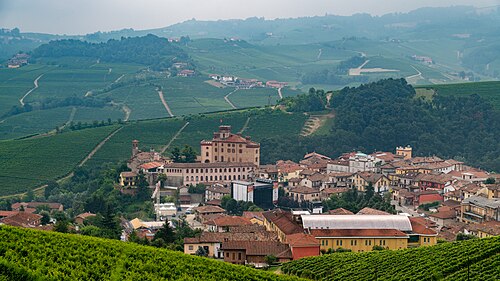
Nebbiolo belongs to Piedmont with unusual intensity. Many famous grapes have historical homes; Nebbiolo has something closer to a fate. In the Langhe hills and in neighboring zones such as Roero, Valtellina, and parts of northern Italy, it found the long, slow, autumnal ripening season that allows it to become fully itself. The name is often linked to nebbia, the fog that settles over Piedmont in autumn, and whether or not every linguistic thread of that association is exact, the image feels right. Nebbiolo is a grape of mist, altitude, and late light.
Read more →
Historical references to Nebbiolo go back centuries, and over time the grape became the foundation of some of Italy’s most revered wines, above all Barolo and Barbaresco. It also found expression in Ghemme, Gattinara, Boca, Carema, and Valtellina, each showing another facet of the variety’s remarkable relationship with mountain foothills, poor soils, and late ripening. Nebbiolo never became a universal grape in the same way as Cabernet Sauvignon or Merlot. Instead, it became one of the world’s most site-bound classics — difficult to replicate, difficult to simplify, and impossible to mistake at its highest level.
That relative narrowness of origin is part of what makes Nebbiolo so compelling. It did not become famous by proving it could grow anywhere. It became famous by showing that in a handful of extraordinary places it could produce wines of haunting singularity. Rose petals, tar, iron, dried cherry, orange peel, and tannin of almost architectural force: Nebbiolo does not imitate other great reds. It created its own category of greatness.
Its later prestige outside Piedmont remained relatively limited, which only deepened its aura. Nebbiolo never really became anonymous. It remained a grape of place, and through that fidelity it achieved world-class stature.
Ampelography
A pale-skinned paradox built for tannin and time
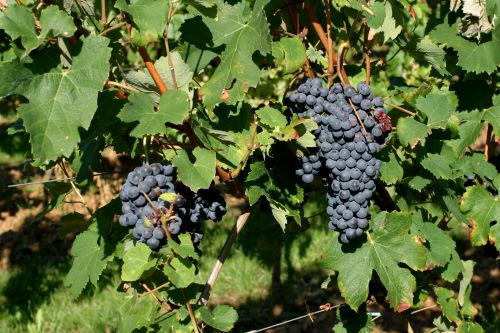
Nebbiolo’s morphology already hints at the contradiction that defines it. The berries are relatively small to medium, and the skins, while capable of yielding formidable tannin, do not produce the deepest color one might expect from such a structurally severe grape. The result is the famous Nebbiolo paradox: wines of pale ruby-garnet appearance that nevertheless possess immense tannic force and ageing potential. The vine looks finer and lighter than its authority in the glass would suggest.
Read more →
Clusters are typically medium-sized and often more elongated than broad, and the grape’s overall field impression is not one of mass but of discipline. Nebbiolo does not present itself as a dark, thick-skinned brute. Instead, it appears almost deceptively elegant. This matters because it helps explain why drinkers unfamiliar with the variety are so often surprised. The color reads one way. The tannin reads another. Nebbiolo is always teaching the eye not to decide too quickly.
Morphology also connects to aromatic nuance. Nebbiolo can generate extraordinary perfume — rose, violet, dried herbs, red fruits, orange peel — while still delivering the kind of tannic frame more often associated with darker-looking varieties. The grape’s physical form therefore mirrors its conceptual identity: beauty, austerity, and deception held together.
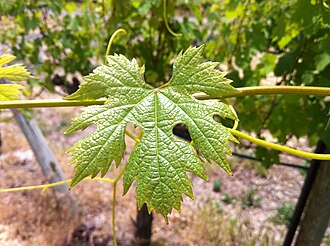
- Leaf: medium, structured, classical outline
- Bunch: medium, often elongated
- Berry: small to medium, comparatively pale for the structure it gives
- Impression: deceptively fine-looking, severe beneath elegance
Viticulture
A late-ripening grape that asks for autumn and punishes compromise
Nebbiolo is a late-ripening grape in the most demanding sense. It needs a long season to reach physiological maturity, and that dependence on autumn is one reason it remains so tied to very specific landscapes. It wants enough warmth and sunlight to ripen tannins, but it also wants cool nights, altitude, and a slow finish to the season. This combination is not easy to find. Nebbiolo is therefore one of the great examples of a grape whose viticultural difficulty is inseparable from its greatness.
Read more →
Exposure matters enormously. In Piedmont, the best Nebbiolo vineyards are often south- or southwest-facing slopes where autumn sunlight can carry the fruit into full ripeness. Soil composition matters as well, especially the contrast between marl, limestone, clay, sand, and other local matrices that influence water regulation and heat retention. The finest sites help Nebbiolo finish its long journey without losing aromatic nuance or succumbing to rawness.
This is also a grape of risk. Early season weather, hail, autumn rain, and incomplete ripening can all become serious problems. If picked too soon, Nebbiolo can be punishing: harsh tannins, underdeveloped perfume, and an impression of severity without reward. If picked too late or in overly warm sites, it can lose tension and become broader, with the tannins still present but less integrated into something noble. The ideal window is narrow, and the consequences of missing it are obvious.
This is why Nebbiolo remains such a grower’s grape. It is not forgiving. But when season, exposure, and patience align, it produces wines that no easier variety can imitate. Its difficulty is not incidental. It is the price of its singularity.
Wine styles
From rose and red fruit to tar, truffle, and stern magnificence
Nebbiolo’s aromatic signature is among the most beautiful and recognizable in red wine: rose petals, dried cherry, red currant, blood orange, violet, tea leaf, licorice, tar, anise, iron, truffle, and dried herbs all belong to its world. Yet to describe Nebbiolo only through aroma is to miss its defining tension. Nebbiolo is a grape of perfume and punishment in youth, fragrance and force intertwined. It can be almost fragile in scent while being almost severe in structure.
Read more →
In youth, Nebbiolo often feels angular: high tannin, vivid acidity, and a kind of tensile austerity. The fruit may seem red rather than black, and the palate can feel all edge and architecture. This is one reason the grape commands such respect. It does not flatter quickly. It asks for cellaring, air, or both. But what it gives in return is extraordinary. With age, the tannins soften, the bouquet widens, and the wine begins to carry rose, forest floor, orange peel, tar, dried mushroom, tobacco, and haunting earthiness in a form that can be almost impossible to forget.
Barolo and Barbaresco remain the most famous expressions, but even within those categories style varies according to village, cru, elevation, soil, and cellar method. Traditional long macerations and larger casks create one language; shorter extractions and more polished oak regimes create another. Yet the grape’s essential personality remains stubbornly intact. Nebbiolo does not disappear beneath stylistic interpretation. It stands there, rose-scented and demanding, however it is framed.
This is part of why Nebbiolo belongs with the world classics. It produces wines that not only age, but transform — wines whose deepest eloquence often lies years away from the moment of release. Great Nebbiolo is a long conversation, not a quick impression.
Terroir
One of the clearest red-wine translators of slope, marl, and altitude
Nebbiolo is a profoundly terroir-sensitive grape. Differences in exposition, altitude, soil composition, and mesoclimate become visible in both the architecture and aroma of the wines. In the Langhe, distinctions between marl-rich and sandier soils, between warmer and cooler slope positions, and between villages such as Serralunga d’Alba, La Morra, Monforte, Castiglione Falletto, and Barbaresco’s communes all shape the final profile in meaningful ways. Nebbiolo does not merely tolerate these differences. It amplifies them.
Read more →
Some terroirs yield a Nebbiolo that is tighter, sterner, more iron-like, with slower-maturing tannins. Others produce more open perfume, softer contours, and earlier accessibility. Yet even these relative differences should be handled carefully: Nebbiolo rarely becomes casual. Even the more graceful or open examples retain a firmness of identity that prevents them from becoming easy in the ordinary sense.
Outside Piedmont, Valtellina offers another beautiful variation, where mountain terraces and altitude produce a more filigreed expression of the grape. Roero can lean toward fragrance and delicacy. Northern Piedmont denominations such as Gattinara and Ghemme add further distinctions shaped by volcanic or glacial influences, cooler conditions, and different local histories. Nebbiolo’s world is therefore not singular even within its home. It is richly regional.
This terroir sensitivity is one of the reasons Nebbiolo commands such devotion among serious wine lovers. It rewards comparative attention. It asks to be read not just as a grape, but as a map of places.
History
Tradition, reinterpretation, and the long authority of Barolo and Barbaresco
Nebbiolo’s modern history includes some of the most important stylistic debates in Italian wine. Questions about maceration length, extraction, botti versus barrique, early accessibility versus long ageing, and the appropriate balance between modern polish and traditional austerity all found especially vivid expression through Nebbiolo. Barolo in particular became a stage on which these debates played out. Yet for all the noise surrounding those arguments, the grape itself remained unchanged in one fundamental respect: it still demanded respect for structure and time.
Read more →
Traditional long-maceration Nebbiolo aged in large casks could produce wines of formidable austerity in youth and majestic complexity in maturity. Modernists sought ways to soften that trajectory, using shorter extractions and smaller oak to make the wines more immediate, more polished, and in some cases more internationally legible. Both camps influenced the history of the grape, and the most interesting contemporary producers often draw from both legacies with greater nuance than the older polemics suggest.
At the same time, the rise of single-vineyard language and greater attention to crus and MGAs helped refine how Nebbiolo was understood. Drinkers increasingly began to see Barolo and Barbaresco not as singular monoliths, but as mosaics of site expression. This only deepened the grape’s prestige. Nebbiolo became not merely a noble grape, but an instrument for reading landscape with extraordinary precision.
Its status today rests on that combination of history and refinement. Nebbiolo is one of the few grapes whose greatest wines still feel almost ceremonial — not because they are inaccessible, but because they ask us to slow down enough to deserve them.
Pairing
A red for truffle, game, fat, and dishes that honor structure
Nebbiolo is a grape that needs food of real substance. Its tannins, acidity, and aromatic intensity call for dishes that can answer both structure and nuance. Braised meats, game, risotto with truffle, tajarin with butter and white truffle, mushroom dishes, aged cheeses, and slow-cooked ragù all sit naturally within its orbit. Nebbiolo does not want merely richness. It wants depth, earth, and a sense of occasion.
Read more →
Aromas and flavors: rose, violet, dried cherry, red currant, orange peel, tar, tea leaf, licorice, tobacco, earth, anise, and truffle with age. Structure: high tannin, high acidity, relatively pale color, and a long ageing arc in which perfume and severity gradually reconcile.
Food pairings: braised beef, osso buco, roast game birds, venison, truffle pasta, porcini risotto, hard cheeses, and slow, savory dishes where fat and umami can meet tannin gracefully. Younger Nebbiolo needs especially careful pairing or decanting. Older Nebbiolo, once the tannins soften and tertiary aromas emerge, can become one of the world’s most moving partners to autumnal cuisine.
What Nebbiolo offers at the table is gravity. It asks food not just to accompany it, but to stand beside it. When the pairing works, something extraordinary happens: the wine’s austerity relaxes, the perfume rises, and the whole experience becomes more complete than either dish or glass could have been alone.
Where it grows
A great red that remains most fully itself in northern Italy
Nebbiolo remains overwhelmingly identified with Italy, and especially with Piedmont. Barolo and Barbaresco are its most famous homes, but the grape also matters deeply in Roero, the Alto Piemonte denominations, and Valtellina in Lombardy, where it appears under the local name Chiavennasca. Outside these zones, Nebbiolo has had only selective success. A few plantings in California, Australia, Mexico, Argentina, and elsewhere have produced interesting wines, but very few regions have matched the combination of long season, exposure, and limestone-marl complexity that the grape seems to require.
Read more →
- Italy: Piedmont above all — Barolo, Barbaresco, Roero, Gattinara, Ghemme, Boca, Carema, and more
- Lombardy: Valtellina / Chiavennasca
- Elsewhere: limited but intriguing plantings in the United States, Australia, Mexico, Argentina, and selected experimental sites
That relative lack of global spread is telling. Nebbiolo is not universally adaptable in the way some classical grapes are. It remains one of wine’s most geographically faithful varieties, and that fidelity is part of its prestige. It suggests not limitation, but exactness.
Why it matters
Why Nebbiolo matters on Ampelique
Nebbiolo matters on Ampelique because it exemplifies one of the platform’s most important ideas: that grape varieties are not just flavor categories, but ways of understanding place, time, and style. Nebbiolo is a near-perfect teaching grape for this. It shows that color can mislead, that perfume can coexist with stern structure, and that a wine’s deepest beauty may not be available immediately. It asks readers to slow down and to think.
Read more →
It also broadens the imagination of what red wine can be. Many of the world’s most famous reds speak through darkness, extraction, or obvious fruit mass. Nebbiolo speaks through contrast: pale color, severe tannin, lifted perfume, and slow release. It proves that authority can look delicate and that elegance can still be formidable. That is an invaluable lesson for any serious grape library.
For Ampelique, Nebbiolo is equally important because it resists simplification. It cannot easily be reduced to a single style, even within Barolo or Barbaresco. It forces attention to cru, altitude, exposition, and cellar philosophy. That density of meaning makes it not only a great grape, but a generative one: a variety that opens more doors the longer you study it.
Nebbiolo deserves world-class status because it has created one of the highest forms of red wine available anywhere. But beyond prestige, it deserves attention because it reminds us that some of the finest things in wine are not built for immediacy. They are built for reverence.
Quick facts
- Color: red
- Origin: Piedmont, Italy
- Climate: cool to moderate, long-season, late-ripening
- Soils: marl, limestone-clay, sandier and volcanic variants depending on zone
- Styles: profoundly structured, age-worthy, perfumed, terroir-driven
- Signature: rose, tar, tannin, acidity, longevity
- Classic markers: dried cherry, orange peel, tea, truffle, iron, violet
- Great paradox: pale color with immense structure
Closing note
A great Nebbiolo is never only austere. It is austerity made fragrant — rose and red fruit lifted over iron, tea, and tannin, until time reveals the tenderness hidden inside its discipline.
Image credits
Leaf/detail image: Wikimedia Commons – Agne27
Vineyard landscape image: Wikikedia Commons – Christoph Strässler
Nebbiolo cluster image: Julius Kühn Institute https://www.vivc.de/ – Doris Schneider
A world classic, and one of red wine’s clearest proofs that perfume and severity can belong to the same noble form.
 Ampelique
Leave a comment