Ampelique Grape Profile
Grenache Noir
Origin, viticulture, morphology, wine styles, and place.
Grenache Noir is one of the great warm-climate red grapes of the wine world. Known as Garnacha in Spain and Cannonau in Sardinia, it is generous, sun-loving, wind-tested and deeply Mediterranean. It can produce wines that are pale or powerful, fragrant or muscular, youthful or age-worthy. Its natural warmth gives it charm, but its best examples are never only about ripeness. They carry red fruit, herbs, spice, texture and a luminous softness that makes the variety both welcoming and profound.
Few grapes understand the language of sun and stone quite like Grenache Noir. It can turn dry hillsides, old bush vines and poor soils into wines of remarkable tenderness and depth. From Aragón to the southern Rhône, from Priorat to Sardinia and beyond, Grenache Noir is not simply a grape of heat. It is a grape of resilience, old-vine wisdom, drought, wind and place made visible in red fruit, spice and light.
The generous wanderer.
Grenache Noir is warm, open-hearted and quietly resilient: red-fruited, herb-scented, softly spicy, and shaped by old vines, dry hillsides and Mediterranean light.
Golden hour, long table.
Late-afternoon light, grilled vegetables, lamb with herbs, dusty terraces and conversations that slowly drift into evening.
Grenache Noir does not resist the sun.
It gathers heat, herbs, wind and dust, then gives them back as fragrance, warmth and an almost effortless generosity.
Contents
Origin & history
A Spanish beginning with Mediterranean reach
Grenache Noir is widely believed to have originated in northeastern Spain, where it is known as Garnacha. From there it spread across the Mediterranean world and became deeply rooted in southern France, Sardinia and other warm, dry wine regions. Its historical success comes not only from adaptability, but from its remarkable affinity with poor soils, long summers, drought, wind and the practical intelligence of growers working in sunlit landscapes.
Read more →
In France, Grenache Noir found one of its great modern homes in the southern Rhône, where it became central to Châteauneuf-du-Pape, Gigondas, Vacqueyras and many surrounding appellations. There it helped define a style of red wine that is generous, spicy, warming and often deeply aromatic. In Spain, Garnacha developed a broader identity. It could be rustic and productive, but also vivid, mountain-grown and refined when cultivated on poor soils or old bush vines.
For a long time, Grenache Noir was valued more for abundance and blending power than for finesse. It brought alcohol, fruit and warmth to wines that needed volume and charm. That usefulness made it widespread, but also caused many people to underestimate it. The modern revival of old-vine Garnacha has changed the conversation. Today, the grape is increasingly admired for fragrance, transparency and its ability to express altitude, soil and vine age.
This dual identity — humble and noble, rustic and refined — is part of what makes Grenache Noir so compelling. It is a grape of real historical depth, but also of contemporary rediscovery.
Ampelography
A vigorous vine with a soft-colored voice
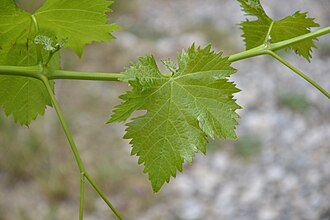
Grenache Noir is usually a vigorous vine, capable of generous growth if planted on fertile soils. Its leaves are medium to large, generally rounded and sometimes shallowly lobed, while its bunches are medium to large and often relatively compact. The berries are thin-skinned for a red grape, which helps explain the variety’s lighter color, soft tannins and ability to produce wines that feel more fragrant and flowing than dark or severe.
Read more →
The vine’s physical character helps define its wine identity. Thin skins mean that Grenache Noir often gives more warmth, fruit and texture than deep color or hard tannin. It can produce wines that look almost transparent in the glass yet carry surprising alcohol, body and aromatic force. This contrast is part of its charm. Grenache Noir can appear gentle while carrying considerable inner heat.
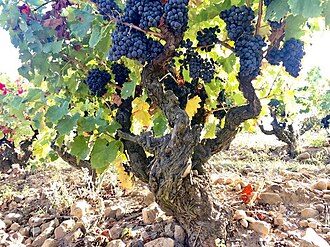
Because it is naturally vigorous, Grenache Noir often performs best in poor soils that limit excessive growth. Old bush vines are especially important, not only because they reduce yield naturally, but because they allow the plant to regulate itself in difficult climates. The field image of old Grenache — low trunks, twisted arms, sparse canopies and stony ground — is one of the great visual signatures of Mediterranean viticulture.
- Leaf: medium to large, rounded, often shallowly lobed
- Bunch: medium to large, often compact
- Berry: thin-skinned, blue-black, relatively modest in color extraction
- Impression: vigorous, sun-adapted, generous, quietly expressive
Viticulture
Late ripening, drought-resistant, and demanding of balance
Grenache Noir buds relatively early and ripens late, which makes a long, warm season important. It is famously tolerant of drought and wind, and this explains why it feels so at home in dry Mediterranean landscapes. Yet the grape’s toughness can be misleading. It is not simply a survivor. To make truly fine Grenache Noir, growers must manage vigor, yields, exposure and harvest timing with considerable care.
Read more →
On rich soils, Grenache Noir can become too productive, and the resulting wines may feel loose, hot or simple rather than finely shaped. This is why poor, rocky soils are often so valuable. They slow the vine down. They keep bunches smaller, fruit more concentrated and vine growth more disciplined. Old age helps in the same way. Old Grenache vines tend to self-regulate, producing less fruit of greater concentration and more stable balance.
Canopy management matters because Grenache Noir needs enough shade to protect berries from sunburn, but enough airflow to avoid disease. Its bunches can be relatively compact, making rot a concern if late rain arrives near harvest. Another challenge is sugar accumulation. In hot years, Grenache Noir can reach high potential alcohol before aromatic complexity and tannin maturity feel fully aligned, so picking decisions are critical.
Done well, Grenache Noir becomes one of the most exciting grapes for a warmer future. It does not merely endure heat. It can turn heat into charm, fragrance and place. But it only does so when the grower keeps abundance under control.
Wine styles
From pale-fruited perfume to powerful Mediterranean depth
Grenache Noir can make a surprising range of wines. It is central to many southern Rhône blends, beautiful in dry rosé, compelling as a single-varietal red, and important in certain fortified wines. Its aroma profile often leans toward strawberry, raspberry, red cherry and pomegranate rather than very dark fruit, and these notes are frequently accompanied by dried herbs, white pepper, orange peel, warm stone, anise and spice.
Read more →
In the southern Rhône, Grenache Noir is often supported by Syrah, Mourvèdre and other varieties that bring color, tannin and darker tones. Grenache, however, is frequently the heart of the wine. It supplies flesh, spice, red fruit, alcohol and a sense of warmth that holds the blend together. Without it, many Rhône wines would feel more angular and less hospitable.
Modern Garnacha from Spain has broadened the conversation even further. In mountain sites on granite, the wines can become pale, floral and almost filigreed. From schist or hotter sites they may be denser, darker and more mineral. In all of these forms, the grape tends to retain a certain openness. Even serious Grenache Noir often feels more conversational than authoritarian.
Rosé Grenache, especially from southern France, shows another side: light-footed, juicy, softly spicy and highly adaptable at the table. Fortified Grenache can move toward dried fruit, cocoa, fig and warming sweetness. Very few red grapes move so easily between easy pleasure and serious depth.
Terroir
A grape that turns heat into place
Grenache Noir is sometimes described too simply as a grape of climate, as if sunshine alone explains it. The best wines prove otherwise. Grenache responds strongly to soil, altitude and exposure. On granite it can become more floral and lifted. On schist it can seem darker, drier and more mineral. On sand it may feel softer and more delicate. On limestone it can gain shape, freshness and aromatic clarity.
Read more →
Altitude plays a crucial role. Higher elevations help slow ripening, preserve acidity and protect aromatic detail. This is one of the reasons mountain Garnacha from Spain has become so admired. It shows that Grenache Noir does not need to be heavy or overripe. When the season remains warm but not rushed, the grape can produce wines of translucency, fragrance and inner precision.
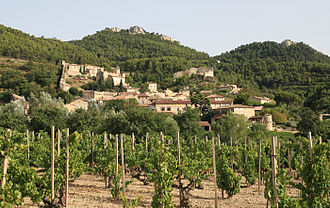
In places like Châteauneuf-du-Pape, the famed rounded stones help accumulate and radiate heat, contributing to richness and complete ripening. In Sierra de Gredos, granite and altitude produce a very different register: bright, floral, almost transparent wines that still carry Mediterranean warmth. These contrasts show how adaptable Grenache Noir is, but also how readable. It lets place remain visible.
That may be one of the grape’s greatest modern lessons. Warm-climate varieties do not have to produce anonymous richness. In the right places, Grenache Noir makes geography legible.
History
From blending workhorse to old-vine classic
For much of its recent history, Grenache Noir was prized more for utility than for distinction. It ripened reliably, gave generous fruit and alcohol, and blended gracefully with other varieties. Those strengths made it widespread, but they also caused many drinkers to underestimate it. Only more recently has Grenache been re-read through the lens of old vines, single vineyards, careful picking and gentler extraction.
Read more →
This reappraisal has been especially important in Spain, where Garnacha has emerged from the shadow of more structured, darker grapes and from its own reputation as a simple, high-yielding variety. Old parcels that might once have been ignored are now among the most exciting vineyard sources in the country. The grape has become central to a broader movement that values heritage material, dry farming, mountain viticulture and nuance over weight.
In the Rhône, too, Grenache Noir has benefited from more thoughtful handling. Earlier picking, less aggressive extraction and a renewed respect for site have allowed many wines to feel more lifted and articulate. The grape has not changed. The way people listen to it has changed.
That is often the mark of a truly important grape. It survives fashion, then returns with deeper meaning. Grenache Noir is living that kind of second life now.
Pairing
Made for herb, smoke and generous food
Grenache Noir is one of the most naturally hospitable red grapes at the table. Its softness, spice and warmth make it ideal with grilled vegetables, lamb, chicken, pork, tomato-led dishes, olives, mushrooms, paprika and Mediterranean herbs. It is rarely fussy. It likes food with sunlight in it — dishes that are savory, aromatic and made to be shared.
Read more →
Aromas and flavors: strawberry, raspberry, red cherry, pomegranate, orange peel, white pepper, thyme, rosemary, lavender, anise, warm earth, dried herbs and sun-heated stone. Structure: typically medium to full-bodied, often generous in alcohol, with moderate acidity and soft, rounded tannins.
Food pairings: lamb with rosemary, grilled peppers, ratatouille, roast chicken, chorizo, mushroom dishes, tomato stews, hard cheeses, lentils with herbs, pork with fennel, and smoky vegetable dishes. Lighter examples can be served slightly cool and pair beautifully with charcuterie and informal summer meals.
Grenache Noir does not usually want highly delicate cuisine. It wants flavor, herbs, olive oil, smoke and ease. It is a wine for the long table rather than the white tablecloth, even when the bottle itself is serious.
Where it grows
A Mediterranean grape with several homes
Grenache Noir grows most naturally in warm, dry climates, and its strongest associations remain Mediterranean. Spain and France are the two great reference points, while Sardinia adds another important regional identity under the name Cannonau. Elsewhere, Grenache has found homes in Australia, California, South Africa and parts of South America, where growers value both its drought tolerance and its ability to create expressive warm-climate reds.
Read more →
In Spain, Garnacha is important in Aragón, Navarra, Rioja, Catalonia, Terra Alta, Campo de Borja, Calatayud, Priorat and Sierra de Gredos. In France, Grenache is central to the southern Rhône, Roussillon, Provence and parts of the Languedoc. In Sardinia, Cannonau has become part of the island’s own wine identity, often with a distinctly warm, savory and sunlit tone.
- Spain: Aragón, Navarra, Rioja, Catalonia, Priorat, Terra Alta, Campo de Borja, Calatayud, Sierra de Gredos
- France: Southern Rhône, Roussillon, Provence, Languedoc
- Italy: Sardinia, where it is commonly known as Cannonau
- Elsewhere: Australia, California, South Africa, Chile, Argentina
Why it matters
Why Grenache Noir matters on Ampelique
Grenache Noir matters on Ampelique because it broadens the idea of what a great grape can be. It is not built on stern tannin or cold precision. Its greatness lies elsewhere: in warmth, old vines, fragrance, adaptability and the way it turns dry landscapes into wines that feel both generous and articulate. It helps readers understand that finesse does not belong only to cool-climate grapes.
Read more →
It is also one of the best varieties for telling a transnational story. Grenache, Garnacha and Cannonau are more than synonyms. They point to different cultural settings, culinary landscapes and wine traditions. One grape moves across borders and becomes several regional identities. That makes it exactly the kind of variety a project like Ampelique should hold close.
There is also a modern reason. Grenache Noir speaks directly to the future of viticulture. Its drought tolerance and affinity for dry farming make it increasingly relevant in warmer regions, but its true value is not simply practical. When grown in the right place and handled with care, it turns resilience into beauty.
For Ampelique, then, Grenache Noir is essential not only because it is famous, but because it carries a richer lesson: warmth can be nuanced, generosity can be elegant, and old Mediterranean vines still have much to teach the modern wine world.
Quick facts
- Color: red
- Main names: Grenache Noir, Garnacha, Cannonau
- Origin: probably northeastern Spain
- Climate: warm, dry, Mediterranean
- Soils: granite, schist, limestone, sand, stony alluvial soils
- Styles: red, rosé, blended, single-varietal, fortified sweet wine
- Signature: red fruit, spice, warmth, soft tannin, old-vine depth
- Classic markers: strawberry, raspberry, dried herbs, orange peel, white pepper, warm stone
Closing note
A great Grenache Noir is never only about ripeness. It is about how warmth becomes perfume, how old vines turn scarcity into depth, and how dry landscapes can produce wines that feel at once generous, grounded and quietly luminous. It is one of the clearest reminders that Mediterranean grapes can be both hospitable and profound.
Image credits
Vineyard landscape image: Wikimedia Commons – Jean-Marc Rosier.
Grenache Noir cluster image: Wikimedia Commins – Marianne Casamance.
Grenache Noir leaf image: Wikimedia Commons – Finca Vistahermosa.
If you like this grape
If you appreciate Grenache Noir’s warmth, spice and old-vine generosity, you might also enjoy Syrah for its darker peppery depth, Mourvèdre for structure and wild Mediterranean character, or Tempranillo for a Spanish red grape with more firmness and savoury elegance.
A grape of warmth, wind and old vines — generous in spirit, but far more nuanced than its reputation sometimes suggests.
 Ampelique
Leave a comment