Ampelique Grape Profile
Tempranillo
Origin, viticulture, morphology, wine styles, and place.
A world classic dark grape of Iberian origin, celebrated for poise, savory depth, and its ability to unite ripe fruit with structure and age-worthy calm: Tempranillo can be bright and red-fruited, dark and cedar-toned, supple in youth or profound with age, but at its best it is always a grape of balance. Few varieties speak so convincingly of stone, sun, restraint, and the dignity of time.
Tempranillo is one of the great organizing grapes of red wine. It rarely relies on sheer excess. Instead it persuades through measure: fruit held in structure, ripeness steadied by earth, and oak or age used not as decoration but as language. In its finest forms it feels composed, adult, and quietly inevitable.
Tempranillo carries warmth with discipline. It can smell of cherry, tobacco, cedar, and dust, as though sunlight had been taught to mature slowly.
Contents
Origin & history
An Iberian original that became the classical spine of Spain’s great reds
Tempranillo is the great classical red grape of Spain, and more than perhaps any other Iberian variety it helped define how seriousness, ageing, and regional identity would be expressed in modern Spanish wine. Though planted in multiple regions and under multiple local names, its deepest historical bond is with Rioja and Ribera del Duero, where it became the central material through which growers interpreted altitude, climate, oak, and time. It is one of those grapes that turned regional style into a recognizable international language.
Read more →
Its name is often linked to temprano, meaning early, a reference to the grape’s relatively early ripening compared with some other Iberian red varieties. That etymology already says something important about the grape’s personality. Tempranillo has long succeeded in climates and landscapes where timing matters — where a grape that can ripen with poise before the season turns hostile has a decisive advantage. This partly explains its wide historic usefulness and why it became so central to Spain’s major red-wine regions.
Tempranillo also has an unusual cultural breadth because it appears under different local names: Tinta del País, Tinto Fino, Cencibel, Ull de Llebre, Aragonez, and Tinta Roriz among others, especially as it moves through Spain and into Portugal. That plurality matters. It suggests a grape whose identity is stable enough to remain itself, yet adaptable enough to become local without disappearing. Few classical grapes manage that balance so gracefully.
Its modern prestige rests on this long history of usefulness refined into greatness. Tempranillo did not rise because it was exotic or flamboyant. It rose because it could carry region, restraint, and ageing with remarkable assurance.
Ampelography
A medium-built, dark-fruited vine with natural order and proportion
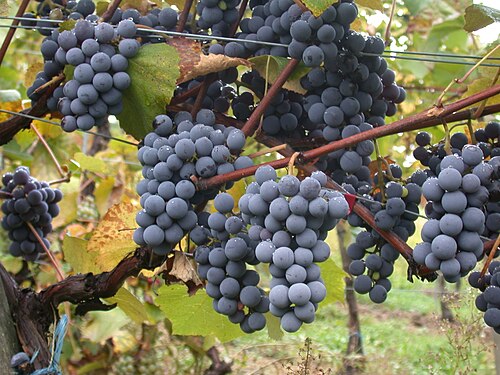
Tempranillo typically produces medium-sized clusters and berries, with skins that contribute respectable color and tannin without the ferocious phenolic weight of the most severe red grapes. The vine often gives an impression of proportion. It is not extreme in form, and this relative equilibrium mirrors the wines it tends to produce: structured but not wild, ripe but rarely exaggerated, composed rather than theatrical.
Read more →
That apparent moderation should not be mistaken for simplicity. Tempranillo’s physical form supports a wine profile in which fruit, acidity, tannin, and oak-ageing capacity can remain in useful balance. It is rarely a variety that must be tamed from excess. Instead, it must be guided toward distinction. That makes it especially responsive to site, crop level, and stylistic choices in the cellar.
Its morphology also helps explain why the grape can play multiple roles. In some contexts it can give a supple, fruit-led wine of approachability. In others, especially from altitude or lower-yielding, older-vine sites, it can become much more concentrated, serious, and deeply structured. The grape’s body is therefore one of its great strengths: stable enough to age, flexible enough to interpret place.
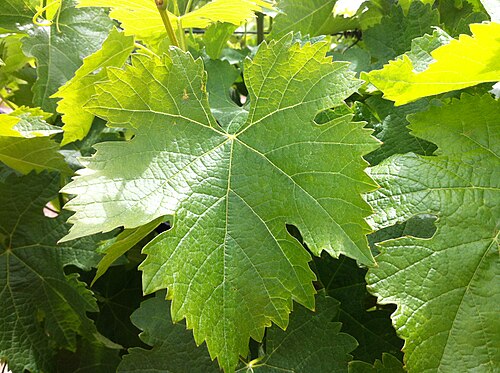
- Leaf: medium-sized, balanced, classical form
- Bunch: medium, orderly, compact to moderate
- Berry: medium, dark, structurally useful rather than excessive
- Impression: measured, versatile, built for harmony and ageing
Viticulture
An early-ripening grape that thrives when sun is moderated by altitude and restraint
Tempranillo’s early-ripening nature is one of its defining viticultural gifts. It can reach maturity more readily than some later-ripening red varieties, which has historically made it valuable in continental and elevated regions where the season can tighten unexpectedly. But this advantage comes with nuance. Tempranillo does not want indiscriminate heat. In very warm sites it may lose acidity, aromatic detail, and freshness. Some of its most compelling expressions therefore come from places where sunlight is ample but nights remain cool enough to preserve structure.
Read more →
This is one reason altitude is so important in Ribera del Duero and in other serious Tempranillo zones. Elevated vineyards allow the grape to accumulate ripeness without becoming flat. In Rioja, regional and subregional variation also changes the balance between warmth and freshness, especially across Atlantic-influenced versus more continental or Mediterranean-influenced sectors. Tempranillo is therefore not just a grape of sun. It is a grape of managed sun.
Yield control matters as well. Overcropped Tempranillo can become soft, generic, and under-defined, especially where fruit ripeness is easy to achieve. But when yields are moderated and vines are rooted in restrained soils, the grape can gain remarkable depth and seriousness. Old vines are especially valued in many regions because they naturally limit production and deepen concentration without losing harmony.
Tempranillo’s viticultural beauty lies in this equilibrium: it ripens with relative generosity, but shows greatness only when freshness, crop, and place keep that generosity in form. It is a grape that loves order.
Wine styles
From cherry and plum to cedar, tobacco, leather, and age-made calm
Tempranillo’s classic aromatic range includes cherry, red plum, dark berry, dried fig, tobacco leaf, cedar, leather, spice, balsamic notes, and in mature examples a beautifully resolved combination of fruit, earth, and wood. Yet the grape’s signature is not just aromatic. It is structural and tonal. Tempranillo often feels composed in the mouth — less dramatic than some varieties, but more settled. It can carry fruit and ageing influence together with unusual calm.
Read more →
In Rioja, oak-ageing became historically central to the identity of the wine. American oak in particular helped create a traditional style marked by vanilla, coconut, cedar, dill, and sweet spice over Tempranillo’s red fruit and savory core. More modern approaches may use French oak, shorter ageing, or less dominant wood, yielding wines where fruit purity is more visible. Ribera del Duero often presents a darker, firmer, more concentrated interpretation, especially from altitude and low-yielding sites. Yet in both cases the grape’s essential composure remains intact.
Tempranillo can also work beautifully in fresher, less oak-defined styles, especially where altitude or cooler conditions bring more acidity and red-fruited lift. But one of its most classical virtues remains its compatibility with ageing. Few grapes integrate time in barrel and time in bottle so gracefully when the fruit is good enough. Tempranillo often seems to welcome maturity rather than merely survive it.
With age, the wine becomes more than the sum of fruit, tannin, and wood. The edges soften, tobacco and leather emerge, cedar becomes quieter, and the whole profile enters a register of dignity that is very difficult to imitate. Great aged Tempranillo does not merely taste older. It tastes resolved.
Terroir
A grape that changes tone with altitude, soil, and the tempo of ripening
Tempranillo is more terroir-sensitive than its reputation sometimes suggests. Because it is so often discussed through ageing categories — joven, crianza, reserva, gran reserva — people can forget how differently the grape behaves according to place. Rioja, Ribera del Duero, Toro, Navarra, La Mancha, and the Portuguese regions where its local forms are planted all reveal different aspects of the variety. Altitude, continentality, soil water balance, and oak tradition all reshape its expression.
Read more →
In Rioja, especially where Atlantic influence and diverse soils intervene, Tempranillo can be more red-fruited, supple, aromatic, and cedar-framed. In Ribera del Duero, high altitude and continental extremes often push the grape toward deeper concentration, firmer tannins, and darker, more severe fruit. In Toro, depending on site and vine age, it may become more forceful still. Yet these are not different varieties in any meaningful cultural sense. They are regional inflections of the same structural intelligence.
What terroir often alters in Tempranillo is the balance between red and dark fruit, between pliancy and severity, between early charm and slow-building authority. Some sites give a wine that feels polished from youth. Others make a more inward wine that needs age to speak fully. This is precisely why the grape deserves more serious terroir attention than it sometimes receives.
The finest Tempranillo sites make the grape not simply richer, but more articulate. They allow its fruit, tannin, and ageing capacity to fall into proportion. That proportionality is one of its deepest signatures.
History
Oak, ageing categories, and the making of a classical Spanish style
Tempranillo’s modern history cannot be understood without oak and classification. Rioja in particular helped establish one of the world’s clearest systems linking ageing regime to stylistic expectation: crianza, reserva, gran reserva. These categories shaped not only market understanding but also the cultural image of Spanish fine red wine. Tempranillo became the grape through which bottle age, barrel influence, and composure were formalized into a public language.
Read more →
That historical framework produced wines of remarkable distinctiveness, especially when good fruit and disciplined élevage coincided. Yet it also created a risk: that wood and category might overshadow site. In recent decades, many producers have responded by pursuing more vineyard-specific, terroir-conscious expressions, sometimes with less dominant oak and a stronger focus on altitude, soil, and old vines. This has enriched the grape’s image rather than diminished its classical heritage.
Ribera del Duero also changed the modern conversation by showing that Tempranillo could produce darker, more muscular, more concentrated wines without abandoning nobility. The grape’s international prestige therefore rests on two intertwined legacies: Rioja’s age-worthy civility and Ribera’s high-altitude seriousness. Together they broadened Tempranillo’s cultural horizon while keeping it unmistakably Spanish.
Today the best producers can move across this history rather than choosing only one part of it. They can make wines that respect age, wood, and tradition while recovering Tempranillo’s vineyard voice more fully. That maturity of vision has only strengthened the grape’s claim to world-class status.
Pairing
A red for lamb, smoke, paprika, and the slow dignity of savory food
Tempranillo is an unusually adaptable food wine because it balances fruit, tannin, and savory depth without becoming too sweet or too severe. It is especially at home with lamb, roast pork, cured meats, grilled vegetables, mushroom dishes, paprika-led preparations, and foods whose depth develops slowly rather than explosively. It likes dishes that echo its calm authority.
Read more →
Aromas and flavors: cherry, plum, tobacco, cedar, leather, dried herbs, spice, balsamic accents, and with age often cigar box, earth, and softened vanilla or sweet spice from oak. Structure: medium to full body, moderate acidity, fine to moderate tannin, and a profile that often feels settled and integrated rather than aggressively marked by any single element.
Food pairings: roast lamb, suckling pig, grilled pork, chorizo, Manchego, mushroom dishes, stews, roasted peppers, and slow-cooked meat with herbs and paprika. Younger, fresher Tempranillos can work well with tapas and grilled foods. More mature Rioja or reserva-style wines often shine with roast meats and dishes where leather, cedar, and savory reduction can find an echo.
Tempranillo does not usually seek drama at the table. It seeks fit. When it is paired well, it seems to calm the meal into coherence, bringing fruit, spice, fat, and age into an unexpectedly harmonious whole.
Where it grows
A global red whose center of gravity remains unmistakably Iberian
Tempranillo grows widely in Spain and is deeply important in Portugal as well, especially under local names such as Tinta Roriz and Aragonez. Rioja and Ribera del Duero remain the two most internationally recognizable centers, but Toro, Navarra, La Mancha, Cigales, Valdepeñas, and other Spanish regions all contribute important expressions. Portugal incorporates the grape into major dry table wines and fortified-wine traditions. Outside Iberia, Tempranillo has been planted in Argentina, the United States, Australia, and elsewhere, sometimes with excellent results, but its strongest cultural voice remains Spanish.
Read more →
- Spain: Rioja, Ribera del Duero, Toro, Navarra, La Mancha, Cigales, Valdepeñas, and many more
- Portugal: Tinta Roriz / Aragonez in major table-wine and fortified-wine contexts
- Elsewhere: Argentina, the United States, Australia, and additional experimental or regional plantings
Its wider spread confirms the grape’s versatility, but also reveals something important: while Tempranillo can travel, it speaks with greatest fullness where Iberian climate, altitude, and tradition give it both ripeness and restraint.
Why it matters
Why Tempranillo matters on Ampelique
Tempranillo matters on Ampelique because it demonstrates that classical greatness does not always arrive through drama. Some grapes dazzle through perfume, tannin, or extremity. Tempranillo often works differently. It teaches proportion. It shows how fruit, oak, age, and terroir can be held in equilibrium without any single element overwhelming the others. That makes it one of the clearest study grapes for balance in red wine.
Read more →
It is also culturally essential because it helps map the difference between region-driven identity and grape-driven identity. Rioja is not just Tempranillo, Ribera del Duero is not just Tempranillo, and Portugal’s local forms add still more complexity. Yet the grape remains the connective tissue between them. That makes it ideal for Ampelique’s broader mission of showing how varieties move through geography, naming, and style without dissolving into vagueness.
For readers, Tempranillo offers another valuable lesson: age and oak are not necessarily masks. In the right context, they are part of a grape’s cultural vocabulary. Tempranillo helps explain how maturation in barrel and bottle can become tradition rather than mere technique. That is a subtle but important distinction.
It deserves world-class status because it has produced some of the most coherent, age-worthy, and regionally meaningful red wines in Europe. But just as importantly, it deserves that status because it reminds us that authority in wine can be calm.
Quick facts
- Color: red
- Origin: Iberia, especially Spain
- Parentage: Albillo Mayor x Benedicto
- Climate: moderate to warm, often best when altitude preserves freshness
- Soils: varied Iberian soils, often showing strong regional differentiation
- Styles: fresh and fruit-led, cedar-aged and classical, concentrated and age-worthy
- Signature: cherry, plum, tobacco, cedar, composure
- Classic markers: red fruit, leather, spice, balsamic notes, tobacco, age-softened oak
- Great strength: making ripeness and maturity feel orderly rather than excessive
Closing note
A great Tempranillo is never only ripe. It is ripeness schooled by stone, altitude, and time — fruit deepened by cedar, tobacco, and the patient discipline of age.
Image credits
Leaf/detail image: Wikimedia Commons – Agne27
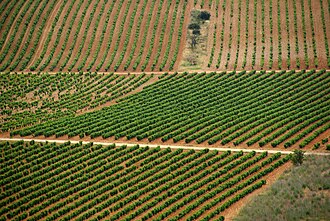
Vineyard landscape image: Wikikedia Commons – karstensfotos
Nebbiolo cluster image: Wikimedia – Wolfgang Lendl
A world classic, and one of red wine’s most persuasive proofs that balance can be as memorable as force.
 Ampelique
Leave a comment