Ampelique Grape Profile
Mourvèdre / Monastrell
Origin, viticulture, morphology, wine styles, and place.
Mourvèdre / Monastrell is one of the great late-ripening black grapes of the Mediterranean world. Known as Monastrell in Spain, Mourvèdre in France and sometimes Mataro in Australia and California, it is a vine of heat, patience, thick skins, compact strength and serious structure. It does not hurry easily. It needs long summers, dry air and enough warmth to bring its dark berries fully into balance. When the site is right, it becomes one of the most distinctive grapes of sun, stone, tannin and savoury depth.
This is not a soft, easy-going grape by nature. Mourvèdre / Monastrell has a firmer, darker, more brooding character than Grenache Noir, and a wilder Mediterranean edge than many international red varieties. In the vineyard, it is valuable because it tolerates heat and drought, but it also asks for discipline. Its long ripening cycle, thick skins, compact bunches and appetite for sun make it both resilient and demanding.
The dark Mediterranean anchor.
Mourvèdre / Monastrell is serious, sun-hungry and quietly wild: thick-skinned, late-ripening, structured and shaped by heat, drought and stone.
Hot stones, late harvest, sea wind.
A dry hillside near the Mediterranean, dark compact bunches, herbal scrubland, warm dust and the patience of a grape that ripens slowly.
Mourvèdre / Monastrell does not rush toward sweetness.
It waits for heat, stone, wind and time, then answers with dark skins, firm structure and Mediterranean depth.
Contents
Origin & history
A Spanish-rooted grape with a Mediterranean second life
Mourvèdre / Monastrell is most convincingly understood as a grape of Spanish origin, with Monastrell as its major Iberian name. From eastern and southeastern Spain it became deeply associated with warm, dry regions such as Jumilla, Yecla, Bullas, Alicante and Valencia. Later, under the name Mourvèdre, it gained one of its most important French identities in Provence, especially Bandol, and across parts of the southern Rhône and Languedoc-Roussillon.
Read more →
The name Mourvèdre is often associated with the old Spanish town name Murviedro, now Sagunto, north of Valencia. Whether one approaches the grape through Spain or France, its deeper identity remains strongly Mediterranean. It belongs to landscapes of dry heat, poor soils, scrubland herbs, old bush vines, stony slopes and long ripening seasons. It is not a grape that easily detaches from its climate. It needs warmth as part of its physical logic.
Historically, the grape has often played two roles. In Spain, Monastrell could stand as a principal variety, particularly in regions where it became adapted to drought, heat and low rainfall. In France, Mourvèdre often became part of blends, valued for structure, colour, tannin, dark fruit and savoury depth. In Bandol, however, it became something more central: a grape capable of defining an entire regional identity.
Its spread beyond Europe took it to Australia, where it is often known as Mataro, as well as to California, South Africa and other warm-climate regions. Yet wherever it travels, the same basic truth remains: Mourvèdre / Monastrell is not a grape for half-light. It needs a long season and a place that allows its slow, firm nature to complete itself.
Ampelography
Thick skins, compact strength and dark berries
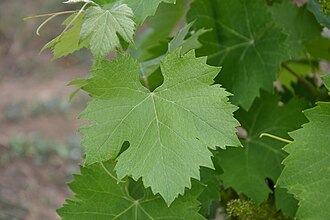
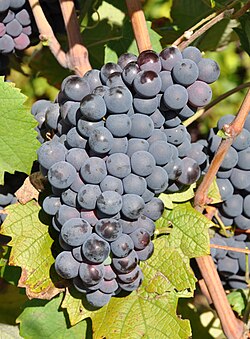
In the vineyard, Mourvèdre / Monastrell gives an impression of firmness. The leaves are generally medium to large, often wedge-shaped or rounded, with three to five lobes depending on clone, age and site. The bunches are medium to large and can be compact. The berries are dark, thick-skinned and capable of strong colour and tannin. This physical structure explains much of the grape’s personality.
Read more →
Thick skins are one of the key features of the grape. They help protect berries in dry, hot climates and contribute to colour, tannin and savoury intensity. They also mean the grape needs proper ripeness. If harvested before skins and seeds are mature, Mourvèdre / Monastrell can feel hard, dry or rustic. If allowed to ripen fully in the right conditions, its firmness becomes depth rather than severity.
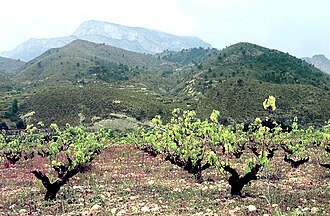
The compact nature of many bunches means airflow is important, especially in regions with humidity or late-season rain. In dry Mediterranean climates this is less of a problem, and the grape can retain healthy, thick-skinned berries through a long season. The vine does not usually look fragile. It has a rugged vineyard presence, particularly as old bush vines in Spain or as sturdy plants on warm slopes near the sea.
- Leaf: medium to large, often three to five lobes, with a firm and slightly rugged aspect
- Bunch: medium to large, commonly compact, requiring dry air and good airflow
- Berry: dark blue-black, thick-skinned, tannic and late to reach full maturity
- Impression: structured, heat-loving, firm, drought-adapted and strongly Mediterranean
Viticulture
Late ripening, heat-loving and drought-aware
Mourvèdre / Monastrell is one of the classic late-ripening Mediterranean red grapes. It needs a long, warm growing season to reach full maturity, and it performs best where autumn does not arrive too quickly. Cool or damp conditions can leave it hard, herbal or incomplete. Warmth alone, however, is not enough. The grape needs time, dry air and a site where its thick skins and tannins can ripen properly.
Read more →
Its drought tolerance is an important strength, especially in southeastern Spain where rainfall can be low and summer heat intense. Old bush vines are particularly valuable because they can regulate yield, shade fruit naturally and survive in marginal dry sites. In such settings, Monastrell has become one of the most practical and expressive grape choices, not because it avoids hardship, but because it can turn hardship into character.
The vine can be moderately vigorous, depending on soil and water. On fertile ground, it may produce too much canopy or crop, reducing concentration and delaying ripening. On poorer, well-drained soils, growth is more controlled and berries may ripen with better balance. This is why rocky, limestone, gravelly and stony sites often suit the grape well. They help contain vigour while allowing roots to search deeply for water.
Canopy work must balance sun exposure and protection. Mourvèdre / Monastrell wants light and airflow, but berries can suffer in extreme heat if fully exposed. Compact bunches also make disease management important where humidity appears. In dry years and dry regions, the main challenge is not rot but water stress and late-season maturity. The grower must keep the vine alive and balanced long enough for the grape to finish ripening.
Harvest timing is therefore crucial. Pick too early and the grape can feel firm, medicinal or bitter. Pick too late and it may lose shape or become heavy. The ideal moment is often narrow: enough maturity for the skins, seeds and tannins to soften, but enough freshness to keep the grape from becoming purely dense.
Wine styles
Dark, structured and often savoury
Although the grape itself is the focus here, wine style helps reveal its nature. Mourvèdre / Monastrell often gives dark-fruited, structured wines with blackberry, plum, black cherry, pepper, leather, dried herbs, earth, game, tobacco and sometimes a slightly wild, animal or coastal note. Its tannins can be firm, and its colour can be deep. It is rarely a purely pretty grape. Its beauty is darker and more grounded.
Read more →
In Bandol, Mourvèdre can produce some of the most distinctive and age-worthy red wines of Provence. In Spain, Monastrell ranges from robust, dark and sun-filled to increasingly refined examples from old vines and higher or limestone-influenced sites. In southern Rhône blends, the grape often provides structure, colour, savoury depth and ageing potential alongside Grenache Noir and Syrah.
The grape is also important in rosé, especially in Provence and Bandol, where it can contribute colour, structure and savoury depth rather than simple fruitiness. In Australia and California, under the name Mataro or Mourvèdre, it appears both as a varietal wine and in blends inspired by Mediterranean traditions.
The key is ripeness without heaviness. Mourvèdre / Monastrell needs full maturity, but excessive extraction or overripe fruit can make it dry, dense or blunt. The best examples show the grape’s firm structure while still allowing aromatic detail, herbal lift and a sense of place.
Terroir
A grape that needs heat, but loves tension
Mourvèdre / Monastrell is sometimes described simply as a hot-climate grape, but that is only partly true. It needs heat, yes, but the best sites give more than heat. They offer dry air, poor soils, drainage, old vines, altitude or maritime influence. Without some kind of natural tension, the grape can become too heavy. With tension, it becomes dark, savoury, structured and expressive.
Read more →
In southeastern Spain, Monastrell is often grown in dry inland regions with limestone-rich soils, high sunshine and limited rainfall. These conditions may seem severe, but the grape is adapted to them. Old vines and low yields help concentrate fruit without relying on excessive fertility. In Bandol, Mourvèdre benefits from Mediterranean warmth, but also from sea influence, limestone soils and long ripening under coastal light.
Soil matters because it controls water and vigour. Limestone can support freshness and structure. Clay-limestone can hold enough moisture for long ripening. Gravel and stony soils encourage drainage and restrict growth. Poor soils often suit the grape better than rich ones, because they prevent excessive vigour and help the bunches ripen with concentration rather than dilution.
There is also a strong coastal dimension to many of the grape’s most admired expressions. Sea wind, reflected light, dry air and herbal landscapes all seem to fit Mourvèdre / Monastrell. It is a grape that does not only taste of fruit. It often carries the darker scent of place: scrubland, stone, leather, salt, dust and heat.
History
From regional strength to climate-relevant classic
For much of its history, Mourvèdre / Monastrell was valued for strength: colour, tannin, structure, resistance to heat and usefulness in blends. It was not always treated as glamorous. In many places it worked quietly, adding depth to wines that needed backbone. Yet in regions where it was given centre stage — especially Bandol and parts of southeastern Spain — it showed that it could be more than support. It could be identity.
Read more →
In Spain, Monastrell has sometimes been associated with powerful, sun-filled wines, but recent work with old vines, better site selection and more careful extraction has revealed a more nuanced side. The grape can be robust, but it does not need to be crude. When grown on the right soils and picked with attention, it can carry dried herbs, dark flowers, mineral tones and firm but noble structure.
In France, especially in Provence, Mourvèdre became a benchmark for a more serious, structured kind of Mediterranean red. Its role in Bandol made the variety internationally respected among growers and wine drinkers who value age-worthy, savoury, coastal wines. In the southern Rhône, it has long been valued as a partner to Grenache Noir and Syrah, giving the blend spine, colour and darker aromatic depth.
Today, Mourvèdre / Monastrell feels increasingly relevant. As warm and dry conditions become more important in many regions, growers are returning to grapes that can tolerate heat while still producing serious wines. Mourvèdre / Monastrell is one of those grapes: ancient in temperament, but modern in relevance.
Pairing
Made for herbs, smoke and slow food
Mourvèdre / Monastrell belongs at the table with food that has depth, savouriness and time. It works with lamb, beef, game, slow-cooked stews, grilled sausages, mushrooms, black olives, rosemary, thyme, smoked paprika, roasted aubergine and hard cheeses. It is not usually a grape for light delicacy. It wants food with structure, herbs, fat, smoke or earth.
Read more →
Aromas and flavors: blackberry, black plum, dark cherry, pepper, leather, tobacco, dried herbs, thyme, bay leaf, earth, game, cocoa, smoke and sometimes a salty or coastal savouriness. Structure: usually medium to full-bodied, with firm tannins, moderate acidity and a long, dark, savoury finish when fully ripe.
Food pairings: lamb shoulder with rosemary, beef stew, venison, grilled merguez, pork with paprika, mushroom ragù, roasted aubergine, lentils with herbs, black olive tapenade, aged sheep’s cheese and dishes with smoke, char or Mediterranean herbs. Younger, firmer wines prefer protein and fat; mature examples can be more subtle with earthy dishes.
Where it grows
Spain, southern France and warm-climate outposts
The grape’s strongest roots are in Spain and southern France. In Spain, Monastrell is especially important in Jumilla, Yecla, Bullas, Alicante, Valencia and surrounding southeastern regions. In France, Mourvèdre is most famously associated with Bandol, but it also appears in Provence, the southern Rhône, Languedoc and Roussillon. Outside Europe, it is found in Australia, California, South Africa and other warm regions, sometimes under the name Mataro.
Read more →
- Spain: Jumilla, Yecla, Bullas, Alicante, Valencia, Murcia and parts of Catalonia
- France: Bandol, Provence, southern Rhône, Languedoc and Roussillon
- Australia: Barossa Valley, McLaren Vale and other warm regions, often under the name Mataro
- United States: California, especially warm-climate Rhône-influenced plantings
- Elsewhere: South Africa and other dry, warm regions where late-ripening red grapes can succeed
Why it matters
Why Mourvèdre / Monastrell matters on Ampelique
Mourvèdre / Monastrell matters because it represents a different kind of greatness from more fragrant or immediately charming grapes. It is not built on softness. It is built on structure, heat, patience, thick skins and Mediterranean resilience. It helps readers understand that some grape varieties reveal themselves slowly, through tannin, savoury depth, old vines and climate adaptation.
Read more →
It also belongs to the future conversation around viticulture. A grape that can handle dry conditions, long summers and poor soils has obvious relevance in a warming world. Yet its value is not only practical. Mourvèdre / Monastrell is not merely heat-resistant. When treated seriously, it can translate dry landscapes into wines of real depth, carrying notes of herbs, stone, dark fruit, leather and sea wind.
For Ampelique, it is especially useful because it connects Spain, France and the wider world through a single grape. Monastrell tells the story of southeastern Spain. Mourvèdre tells the story of Bandol and the southern French Mediterranean. Mataro opens the door to Australia and old Rhône-inspired plantings elsewhere. One variety carries several names, and each name reveals a slightly different cultural landscape.
In a grape library, Mourvèdre / Monastrell is essential because it shows that vines are not only about flavor. They are about survival strategies, climate fit, skin thickness, ripening rhythm, soil, old wood and the long patience of growers who understand difficult grapes.
Quick facts
- Color: red / black grape
- Main names: Mourvèdre, Monastrell, Mataro
- Parentage: parentage not firmly established; generally treated as an old western Mediterranean / Spanish variety
- Origin: Spain, most strongly associated with eastern and southeastern Spain
- Most common regions: Spain: Jumilla, Yecla, Bullas, Alicante, Valencia and Murcia; France: Bandol, Provence, southern Rhône, Languedoc and Roussillon; Australia: Barossa Valley and McLaren Vale; United States: California
- Climate: warm to hot, dry Mediterranean climates; needs a long season and full ripening
- Viticulture: late-ripening, thick-skinned, drought-tolerant, compact-bunched, sensitive to incomplete ripeness
- Soils: limestone, clay-limestone, gravel, stony slopes, poor dry soils and well-drained sites
- Styles: structured reds, Mediterranean blends, Bandol-style reds and rosés, old-vine Monastrell, Mataro blends
- Signature: dark fruit, firm tannin, thick skins, savoury depth, dried herbs, leather, heat and coastal Mediterranean character
Closing note
Mourvèdre / Monastrell is a grape of patience. It asks for heat, but not laziness; dryness, but not neglect; time, but not excess. Its strength lies in thick skins, late ripening, dark fruit and the ability to carry the tougher side of the Mediterranean into the vineyard. It is not the easiest grape to love at first glance, but it is one of the most rewarding to understand.
Image credits
Leaf image: Wikimedia Commons –Marianne Casamance.
Vineyard image: Wikimedia Commons – LBM1948 .
Cluster image: Wikimedia Commons – Doris Schneider, Julius Kühn-Institut (JKI), Federal Research Centre for Cultivated Plants, Institute for Grapevine Breeding Geilweilerhof – 76833 Siebeldingen, GERMANY from http://www.vivc.de with UploadWizard.
If you like this grape
If you appreciate Mourvèdre / Monastrell’s dark structure, Mediterranean depth and savoury edge, you might also enjoy Syrah for peppery darkness, Grenache Noir for warmer red-fruited generosity, or Aglianico for another late-ripening grape with firm tannin and serious ageing potential.
A late-ripening Mediterranean grape of dark skins, dry heat, firm structure and quiet, savoury power.
 Ampelique
Leave a comment