Ampelique Grape Profile
Aglianico
Origin, viticulture, morphology, wine styles, and place.
Aglianico is one of southern Italy’s great black grapes: ancient, late-ripening, thick-skinned, tannic, acidic and deeply tied to volcanic hillsides. It is most closely associated with Campania and Basilicata, especially Taurasi and Aglianico del Vulture, where the vine turns heat, altitude, ash, stone and long autumns into wines of structure and dark mineral depth. It is not an easy grape, nor a quick one. Aglianico asks for time in the vineyard, time in the cellar and time in the glass.
In the vineyard, Aglianico is a grape of patience and severity. It buds relatively early but ripens very late, sometimes deep into autumn, and it holds its acidity with remarkable force. Its berries can produce dense colour, firm tannin and a savoury, earthy profile, but only when the season is long enough and the site is disciplined enough. Aglianico is not simply a southern grape. It is a mountain-minded, volcanic, slow-ripening red variety with one of Italy’s most serious vineyard personalities.
The volcanic stoic.
Aglianico is dark, stern and patient: a late-ripening grape of ash, altitude, firm tannin, preserved acidity and slow southern intensity.
Late autumn, black soil.
Cool mountain air, volcanic dust, dark berries still hanging late, and a vineyard that refuses to hurry into softness.
Aglianico does not offer itself quickly.
It waits for stone, ash, altitude and autumn, then speaks in tannin, shadow and time.
Contents
Origin & history
An ancient southern grape with uncertain roots
Aglianico belongs to southern Italy so deeply that it feels almost geological. Its strongest homes are Campania and Basilicata, where the vine has been linked for centuries to volcanic hills, inland plateaus and long, dry, sunlit seasons. The exact origin of the grape remains uncertain. Older traditions connect it with ancient Greek settlement, while modern scholarship is more cautious. What is clear is that Aglianico has become one of the defining black grapes of the Italian south.
Read more →
Its parentage is not firmly established, which gives the variety a certain mystery. Unlike Chardonnay or Carménère, Aglianico cannot yet be neatly explained through a simple parent combination. It stands instead as one of those old regional vines whose history is preserved more in landscape, dialect, usage and survival than in a tidy genetic story. This uncertainty suits the grape. Aglianico feels ancient because it resists easy simplification.
Historically, it is often discussed in relation to the ancient wines of southern Italy, including the world around Campania, inland Irpinia and the slopes of Mount Vulture. Whether or not every legend can be proven, the grape clearly belongs to a very old viticultural culture. It is not a fashionable newcomer or a modern travelling variety. It is a survivor of difficult terrain, late harvests, poor soils and growers who understood that severity could become beauty if given enough time.
Today, Aglianico is most famous through Taurasi in Campania and Aglianico del Vulture in Basilicata. These two expressions show different faces of the same demanding vine. Taurasi often speaks through altitude, inland coolness and firm structure. Vulture adds a darker volcanic register, shaped by the old extinct volcano and its mineral soils. Together, they make Aglianico one of Italy’s most profound red grape stories.
Ampelography
Dark berries, firm skins, and a serious frame
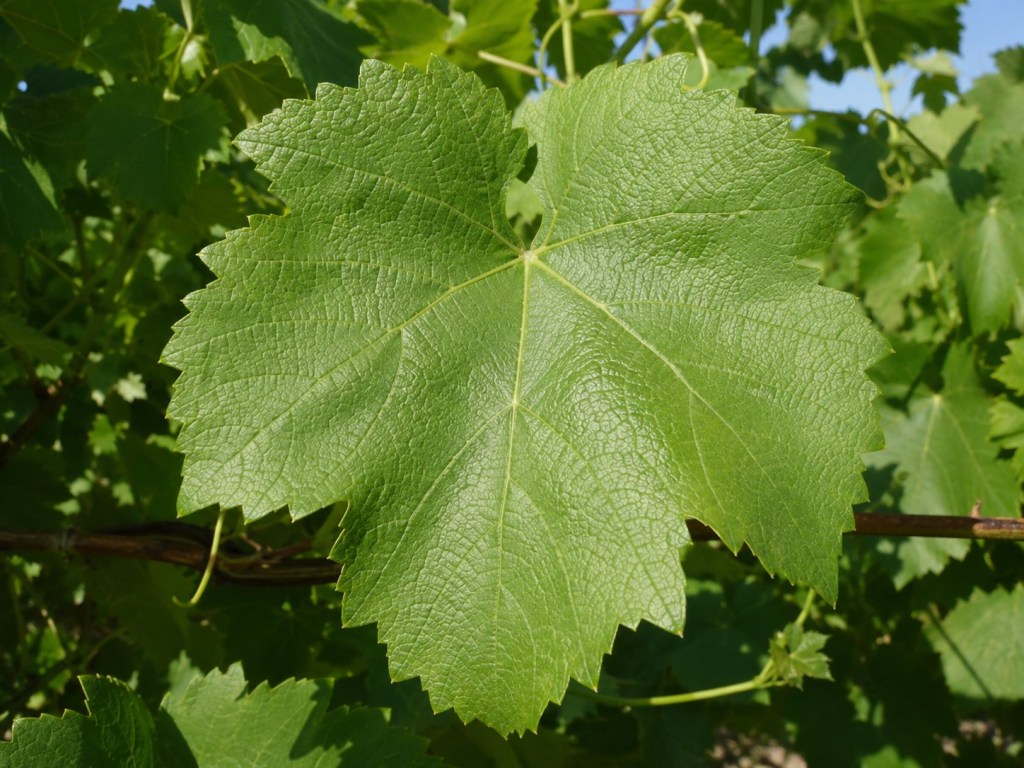
Aglianico is a black grape with a field identity that feels compact, firm and severe. The vine can show medium-sized leaves and clusters that tend toward medium size, with berries that become deeply coloured as they mature. The skins are important: they help provide the grape’s colour, tannic grip and capacity for long ageing. Even before the wine is made, the structure of Aglianico is already visible in the fruit.
Read more →
Its clusters are not usually famous for looseness or fragility. Instead, the grape gives an impression of density and seriousness. The berries can carry high acidity and powerful phenolic material, which explains why Aglianico can seem stern when young. It is a variety that builds structure naturally. The grower’s work is not to create power from nothing, but to guide power toward balance.
The leaves and bunches may vary across biotypes, local selections and sites, which is not surprising for an old regional grape. In southern Italy, Aglianico has lived through centuries of local adaptation. Some vines are trained in modern systems, while older plantings may still carry the memory of traditional pruning, low yields and dry-farmed resilience. The vine’s identity is therefore not only botanical. It is also agricultural and historical.
- Leaf: medium-sized, usually not highly ornamental, with a practical southern vineyard appearance
- Bunch: medium-sized, capable of giving concentrated fruit when yields are controlled
- Berry: dark-skinned, structured, phenolic and naturally suited to firm, age-worthy reds
- Impression: serious, late, compact, tannic, acidic and deeply tied to site discipline
Viticulture
Early to wake, very late to finish
Aglianico is one of those grapes whose viticulture explains its character almost completely. It can bud early, yet ripens extremely late. This creates a long and sometimes risky growing season. The vine needs enough warmth and sunlight to mature its tannins, but it also benefits from altitude and cool nights that preserve acidity. In the best sites, this tension between southern heat and mountain freshness gives Aglianico its unmistakable force.
Read more →
The late ripening is crucial. If Aglianico is picked too early, the grape can be aggressively tannic, hard and austere, with acidity that feels severe rather than noble. If yields are too high, the vine may produce fruit without the concentration needed to balance its natural structure. It is not a grape that forgives impatience. The grower must wait long enough for phenolic ripeness, while still preserving freshness and avoiding autumn rain, disease or dilution.
Dry, sunny climates suit Aglianico, but the best examples rarely come from simple heat. They come from places where heat is moderated by altitude, wind, volcanic drainage or inland temperature shifts. Too much warmth without restraint can make the grape broad and alcoholic. Too little warmth leaves it raw. Aglianico’s ideal season is long, bright and patient, with enough autumn calm to let the skins and seeds mature fully.
Disease pressure can also matter. The grape is often described as relatively resistant to some problems, but it can be vulnerable to downy mildew and botrytis in unfavourable conditions. Because harvest is late, autumn weather becomes a real concern. Good canopy management, open airflow, careful yield control and well-drained soils are not optional. They are the vineyard tools that allow this severe grape to become balanced rather than brutal.
Wine styles
Structure first, pleasure later
Aglianico is famous for wines of firm tannin, high acidity, dark fruit and long ageing potential. But even here, the wine style begins in the grape. Few varieties carry such a powerful natural architecture. The berries bring colour, phenolic density and savoury depth; the late season preserves acidity; the best sites add volcanic, earthy or mineral tension. Aglianico is not built for instant charm. Its beauty often appears slowly.
Read more →
Young Aglianico can be dark, severe and almost architectural. Black cherry, plum, blackberry, sour cherry, dried herbs, smoke, earth, leather, iron and bitter cocoa are common associations, but the true signature is structural: acidity and tannin working together. This is why the grape is often compared to Nebbiolo, though the comparison should not be taken too literally. Both can be tannic, age-worthy and serious, but Aglianico belongs to a darker, hotter, more volcanic world.
With age, the grape can soften without losing its frame. The fruit becomes more dried and savoury, while notes of tobacco, forest floor, leather, spice and volcanic dust emerge. In Taurasi, the expression can feel austere, noble and inland. In Vulture, it may feel darker, more smoky and mineral. These are not merely cellar differences. They are vineyard differences made durable through a grape that can carry structure for many years.
Modern producers may work with gentler extraction, earlier drinkability and more polished textures, but Aglianico should not be made too soft. Its identity lies in tension. The best wines do not erase the grape’s severity. They refine it. Aglianico is most convincing when it remains dark, structured, fresh and slightly untamed.
Terroir
Volcanic soils, altitude and southern light
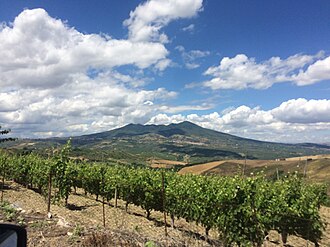
Aglianico’s most compelling terroirs are often volcanic, elevated or inland. This matters because the grape needs both ripeness and restraint. Basilicata’s Mount Vulture gives one of the most dramatic settings: an extinct volcano, black soils, altitude, wind and slow ripening. Campania’s Taurasi zone offers another: inland hills, clay-limestone and volcanic influences, warm days, cool nights and a long season that allows the grape to mature without losing its spine.
Read more →
In Vulture, Aglianico can take on a smoky, dark, almost basaltic personality. The soils help manage vigour and drainage, while altitude slows ripening and preserves acidity. In Taurasi, the grape often feels more severe and noble, with firm tannins and a slow-building savoury depth. Taburno, Benevento and Cilento add further Campanian nuances, while parts of Puglia and Molise show that the grape can travel within the south, though not every warm place gives it the same seriousness.
The grape’s terroir response is not about perfume alone. It is about structure. Soil and climate shape tannin texture, acidity, ripening speed and the depth of fruit. Poor, well-drained soils can reduce excessive vigour and concentrate the vine’s energy. Altitude can extend the season and protect freshness. Wind can help keep the fruit healthy late into autumn. These forces are especially important because Aglianico often remains on the vine long after easier grapes have been picked.
This is why Aglianico is not simply a “hot climate” grape. It needs southern light, but it also needs discipline. The best sites slow the grape down just enough. They give heat without softness, ripeness without collapse, and tannin without brutality. Few varieties show so clearly that greatness in warm regions often comes from elevation, stone and restraint.
History
From ancient reputation to modern rediscovery
For much of the modern international wine conversation, Aglianico stood in the shadows. It did not have the immediate global fame of Cabernet Sauvignon, Merlot or Syrah, nor the broad Italian recognition of Sangiovese. Yet within southern Italy, it remained a serious grape with deep local authority. Its reputation grew slowly because the wines it produced often needed time, and because its greatest regions were less internationally visible than Tuscany or Piedmont.
Read more →
The comparison with Nebbiolo helped some drinkers understand Aglianico’s seriousness: late-ripening, tannic, acidic, age-worthy and often austere in youth. But Aglianico deserves to be understood on its own terms. It is southern, volcanic, darker-fruited and more earthbound. Its greatness is not borrowed from Piedmont. It comes from Campania and Basilicata, from inland hills, lava soils, late harvests and growers willing to wait.
In recent decades, Aglianico has gained more international attention as producers improved vineyard selection, reduced excessive yields and refined extraction. The wines can still be stern, but they are increasingly understood as serious rather than rustic. The grape has also attracted interest in warmer parts of the New World, where growers see its late ripening, acidity and structure as useful traits in changing climates. Yet its deepest identity remains Italian and southern.
Aglianico’s modern story is therefore not one of reinvention, but of recognition. The grape was always there: difficult, slow, tannic and profound. What has changed is the world’s willingness to listen to a variety that does not flatter quickly. Aglianico rewards attention. That is precisely why it matters.
Pairing
A grape for depth, smoke and slow food
Aglianico’s structure makes it a natural partner for food with substance. Its acidity cuts through richness, while its tannins need protein, fat, smoke or slow cooking to soften their edge. This is not a grape for very delicate dishes. It belongs with lamb, beef, game, aged cheeses, mushrooms, bitter greens, tomato-rich sauces, grilled vegetables and southern Italian food with depth and savoury force.
Read more →
Aromas and flavors: black cherry, sour cherry, plum, blackberry, dried herbs, smoke, leather, tobacco, iron, bitter cocoa, earth, volcanic dust and dark spice. Structure: full-bodied, high in tannin, high in acidity, often austere in youth and capable of long development when grown and made with care.
Food pairings: lamb shoulder, beef stew, grilled steak, wild boar ragù, aged pecorino, mushrooms, aubergine, tomato braises, lentils, black olives, rosemary, smoked meats and slow-cooked southern Italian dishes. Aglianico works especially well when the plate has depth, salt, fat, char or umami.
The pairing logic is simple: meet structure with structure. A young Aglianico may feel too hard beside light food, but with roasted meat, smoky vegetables or aged cheese, its severity becomes part of the pleasure. Mature bottles can be more flexible, developing earthy, leathery and savoury tones that sit beautifully beside autumnal dishes and slow meals.
Where it grows
Campania, Basilicata and the volcanic south
Aglianico’s most important regions are in southern Italy. Campania and Basilicata are the essential reference points, with Taurasi, Aglianico del Vulture and Aglianico del Taburno forming the core of its reputation. The grape also appears in parts of Molise, Puglia and other southern Italian areas. Outside Italy, it has been planted experimentally in places such as California, Texas and Australia, usually in warm regions looking for structured, late-ripening red grapes.
Read more →
In Campania, Taurasi in Irpinia is the most famous expression, built on altitude, inland climate and long ageing potential. Aglianico del Taburno offers another important Campanian identity, often with a slightly different balance of fruit, structure and approachability. In Basilicata, Aglianico del Vulture is tied to the volcanic slopes of Mount Vulture, where ash, basaltic material, altitude and late ripening shape the grape’s dark mineral personality.
- Campania: Taurasi, Irpinia, Aglianico del Taburno, Benevento, Cilento
- Basilicata: Aglianico del Vulture and the volcanic slopes around Mount Vulture
- Other Italy: Molise, Puglia and smaller southern Italian plantings
- Beyond Italy: California, Texas, Australia and other warm-climate experimental sites
Why it matters
Why Aglianico matters on Ampelique
Aglianico matters on Ampelique because it expands the meaning of greatness. It is not a grape of easy charm, aromatic prettiness or immediate softness. Its greatness lies in structure, patience, volcanic place, old southern identity and the ability to turn severity into depth. It reminds us that some vines are not meant to please quickly. They are meant to endure.
Read more →
For a grape library, Aglianico is essential because it shows how viticulture, geology and time can become inseparable. Its late ripening is not a technical footnote; it is the centre of the story. Its acidity is not merely a tasting note; it is a climatic response. Its tannin is not just texture; it is the physical voice of a thick-skinned grape grown in demanding places. Through Aglianico, readers can understand how a vine’s biology shapes culture.
It also gives Ampelique a strong southern Italian anchor. Many famous Italian grapes are associated with Tuscany or Piedmont, but Aglianico belongs to another Italy: volcanic, inland, mountainous, ancient and less polished on the surface. Its profile brings balance to the library. It stands beside Sangiovese and Nebbiolo not as an imitation, but as a third kind of seriousness.
Aglianico is a grape that teaches respect. Respect for late harvests, for difficult tannins, for volcanic soils, for local history and for wines that may need years before they open. It is not always easy, but that is precisely why it is important. Some grapes charm. Aglianico stands its ground.
Quick facts
- Color: red
- Main names: Aglianico, Aglianico del Vulture, Aglianico di Taurasi, Aglianico Nero
- Parentage: unknown / not firmly established
- Origin: southern Italy; ancient origin traditionally linked to Campania and Basilicata
- Most common regions: Campania: Taurasi, Irpinia, Aglianico del Taburno, Benevento, Cilento; Basilicata: Aglianico del Vulture and Mount Vulture; also Molise, Puglia and smaller plantings in California, Texas and Australia
- Climate: warm, sunny, dry to moderately dry; best with altitude, wind or cool nights
- Viticulture: early budding, very late ripening, naturally high acidity, firm tannins, sensitive to harvest timing
- Soils: volcanic soils, ash, basaltic material, clay-limestone, well-drained hillside sites
- Styles: structured red wines, often age-worthy, tannic, savoury and deeply coloured
- Signature: dark fruit, high acidity, firm tannin, volcanic depth, smoke, leather and slow development
Closing note
A great Aglianico is never only dark and powerful. It is the result of a vine that ripens slowly, a site that gives heat without surrender, and a grower who understands patience. It carries ash, altitude, acidity and tannin like memory. It may begin stern, but with time it reveals one of the deepest voices of southern Italy.
Image credits
Aglianico leaf image: Wikimedia Commons –
Aglianico vineyard image: Wikimedia Commons – Gianmarco Tirico.
Aglianico cluster image: .
If you like this grape
If you appreciate Aglianico’s structure, darkness and slow-building depth, you might also enjoy Nebbiolo for its tannin and age-worthy precision, Sangiovese for its acidity and savoury Italian character, or Syrah for darker fruit, spice and mineral force.
A grape of volcanic patience — dark, late, tannic and quietly monumental.
 Ampelique
Leave a comment