Ampelique Grape Profile
Müller-Thurgau
Origin, viticulture, morphology, wine styles, and place.
Müller-Thurgau is a white grape bred for early ripening, reliable yields, gentle aromatics, and easy cool-climate adaptability. It became one of Europe’s most widely planted modern varieties, loved for usefulness, criticised for simplicity, and increasingly interesting again when grown with restraint.
Müller-Thurgau matters because it changed everyday white wine in large parts of Europe. It is not a dramatic grape, and it is not naturally built for grandeur, but it shows how breeding, yield, climate, and market demand can shape vineyard landscapes. At its weakest it becomes neutral and thin; at its best it is fresh, floral, practical, and quietly charming.
Grape personality
Early, generous, approachable, and quietly floral. Müller-Thurgau is a practical vineyard companion: not grand by nature, but useful, adaptable, and capable of fresh charm when yields are controlled.
Best moment
A fresh, uncomplicated table. Müller-Thurgau fits light lunches, salads, young cheeses, simple fish, asparagus, herbs, and moments where freshness and ease matter more than depth.
Müller-Thurgau is a grape of usefulness and restraint: early to ripen, easy to like, and most convincing when simplicity becomes freshness.
Contents
Origin & history
A Swiss-bred grape that reshaped German vineyards
Müller-Thurgau was created in 1882 by Hermann Müller, a Swiss scientist from the canton of Thurgau. The grape was bred to combine useful ripening behaviour with pleasant white-wine character, and it eventually became one of the most influential modern varieties in German-speaking Europe. For many years it was widely known or marketed as Rivaner, partly because people believed it was a Riesling × Silvaner crossing. Modern understanding places its parentage differently: Riesling crossed with Madeleine Royale. That correction matters, because it explains the grape more clearly. Riesling contributes some aromatic lift and freshness, while Madeleine Royale helps explain the early ripening and practical vineyard usefulness that made Müller-Thurgau so successful.
Read more
The grape’s rise was extraordinary. It offered growers early ripening, reliable crops, and wines that could be made in soft, approachable styles. In regions where Riesling could be demanding or slow to ripen, Müller-Thurgau felt practical and commercially attractive.
That success also created its reputation problem. When planted widely and cropped heavily, Müller-Thurgau could produce simple, neutral, slightly soft wines. It became associated with volume rather than depth, especially in the late twentieth century.
Today, its story is more balanced. Müller-Thurgau remains a practical grape, but careful growers can make fresh, floral, dry wines that show the variety in a cleaner and more serious light.
Ampelography
Pale berries and a practical vineyard form
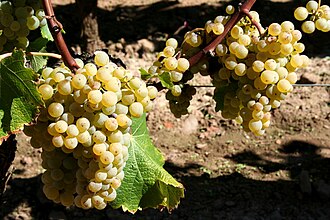
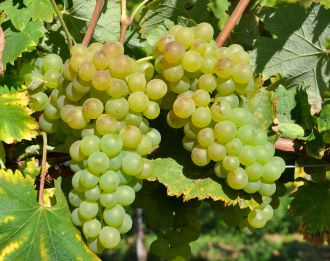
Müller-Thurgau is a pale-skinned white grape whose identity is less dramatic in appearance than in vineyard behaviour. It was not created to be visually spectacular, but to be useful: early enough, productive enough, and aromatic enough for cool-climate white wine. The berries are white to pale green-yellow, and the clusters can be generous when the vine is allowed to crop freely. Its ampelographic personality is therefore practical rather than theatrical. It does not have the instantly recognisable pink skin of Gewürztraminer or the highly distinctive aromatic berries of Muscat. Instead, Müller-Thurgau is recognised through its growth rhythm, early ripening, moderate acidity, easy fruiting, and tendency to produce gentle, lightly floral wines when farmed carefully.
Read more
The grape’s visual modesty matches its reputation. Müller-Thurgau is not a variety that announces itself through extreme morphology. Its importance lies in how easily it can fit into a vineyard system and how reliably it can produce fruit in climates where later grapes may be less dependable.
At the same time, the vine’s productivity must be watched carefully. The bunches can give attractive yields, but high yields quickly reduce intensity. This is one reason the grape’s quality image became uneven: its strengths were often pushed too far.
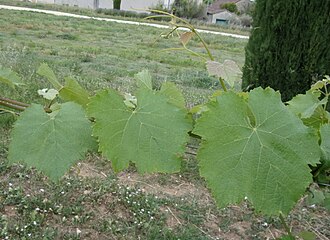
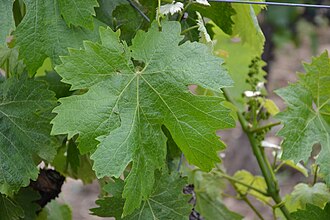
- Leaf: not usually the main everyday identification feature in general wine descriptions.
- Bunch: generally productive and generous, requiring yield control for quality.
- Berry: white to pale green-yellow, suited to light, fresh, aromatic white wines.
- Impression: early-ripening, useful, productive, soft, and lightly floral.
Viticulture notes
Early ripening, generous yields, and careful restraint
Müller-Thurgau is valued in the vineyard because it ripens earlier than many classic white varieties and can crop reliably. This made it extremely attractive in cooler parts of Germany, Switzerland, Austria, northern Italy, and Central Europe. The grape can reach useful maturity without needing the long, precise season demanded by Riesling. Yet this convenience comes with a warning: Müller-Thurgau can be too generous if the grower lets it behave only as a production grape. High yields often lead to pale, simple wines with little definition. Good viticulture means controlling crop load, keeping the canopy healthy, protecting freshness, and picking before the fruit becomes flat or overly soft. The grape rewards restraint more than ambition.
Read more
The variety’s early ripening is especially useful in cool regions. It gives growers a reliable option where Riesling, Chardonnay, or other grapes may need more time, better sites, or warmer autumn conditions. This helped explain its enormous spread.
Disease pressure and canopy density also matter. Müller-Thurgau’s productive nature means the fruit zone should not be neglected. Good airflow, balanced leaf area, and sensible yields help keep fruit clean and aromatically fresh.
Its best vineyard expression comes when growers stop treating it as a volume solution and start treating it as a delicate early-ripening grape. Then it can show more floral lift, cleaner fruit, and better balance.
Wine styles & vinification
Fresh, floral, gentle, and easy to drink
Although this profile is mainly about the grape, Müller-Thurgau’s wine style explains its long popularity. It usually gives light to medium-bodied white wines with gentle aromas of green apple, pear, citrus, white flowers, grape blossom, herbs, and sometimes a soft muscat-like note. The acidity is generally moderate rather than piercing, and the wines are often made for early drinking. Dry examples can be fresh and simple; off-dry examples can feel rounder and more aromatic. In northern Italy, under names such as Müller Thurgau, the grape can show bright mountain freshness. In Germany and Switzerland, it can range from everyday wine to more focused dry bottlings. The best examples are clean, floral, and quietly refreshing.
Read more
Müller-Thurgau rarely benefits from heavy winemaking. Oak, excessive ripeness, or too much cellar shaping can make the grape feel clumsy. Its natural style is lighter, cleaner, and more immediate, with aromatics preserved by careful handling.
Some of the most attractive examples come from cooler or higher sites where the grape’s softness is balanced by freshness. This is why mountain and northern vineyard contexts can give Müller-Thurgau more lift than warmer, high-yielding sites.
The grape should not be judged by the standards of Riesling. Its beauty, when present, is more modest: easy fruit, gentle perfume, and a kind of relaxed freshness that suits simple food and early drinking.
Terroir & microclimate
Cool sites give it its best voice
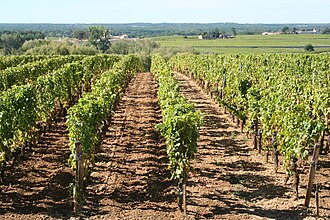
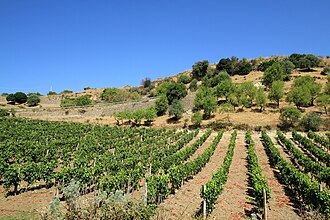
Müller-Thurgau is not usually considered a dramatic terroir grape, but site still matters enormously. Because the variety is naturally moderate in acidity and capable of high yields, cool sites, altitude, and good airflow help preserve freshness and aromatic clarity. The grape can become flat in warm, overproductive vineyards, while cooler slopes can give it a brighter, more graceful shape. It is adaptable to different soils, but the most important factor is often balance: enough drainage to avoid excessive vigour, enough warmth to ripen gently, and enough coolness to keep the fruit alive. In mountain regions, northern valleys, and cooler German-speaking vineyards, Müller-Thurgau can show why it became such a useful grape in the first place.
Read more
The grape expresses place less through mineral drama and more through freshness, aroma, and body. A cool site keeps the wine lively. A warmer, heavier site can make the same grape feel broad and ordinary.
Altitude can be especially helpful. Northern Italy’s mountain examples show how cool nights, clean air, and careful picking can give Müller-Thurgau a more precise and aromatic profile than lowland volume styles.
Its terroir message is therefore subtle but important. Müller-Thurgau does not make every site profound, but the right site can turn a simple grape into a genuinely refreshing and expressive one.
Historical spread & modern experiments
From promise to volume and back to restraint
Few modern grape varieties have had a more dramatic rise than Müller-Thurgau. It spread widely through Germany and beyond because it answered real grower needs: early ripening, reliable production, and approachable wines. In the twentieth century, it became a major part of German white-wine production and also gained ground in Switzerland, Austria, northern Italy, Hungary, the Czech Republic, Slovakia, and other cool European regions. Its success, however, became a burden. Too much Müller-Thurgau was grown for volume, and many wines lacked definition. As tastes changed and quality-focused producers returned to Riesling, Silvaner, Pinot varieties, and site-driven wines, Müller-Thurgau’s reputation declined. Today, its best future lies in smaller, fresher, more carefully grown examples.
Read more
The name Rivaner still appears in some markets, especially for fresh, dry, approachable versions. It softens the reputation of Müller-Thurgau and points to a lighter, cleaner style rather than the old image of mass-produced sweetness.
The grape also influenced later breeding and vineyard thinking. It proved that modern crossings could reshape planting patterns quickly when they met practical needs. That success came with lessons about quality, yield, and reputation.
Its modern revival, where it exists, is not about making Müller-Thurgau grand. It is about making it honest: fresh, dry, aromatic, light, and grown with enough care to avoid the blandness that damaged its name.
Tasting profile & food pairing
Apple, pear, flowers, herbs, and gentle freshness
Müller-Thurgau typically gives wines with green apple, pear, citrus, white flowers, grape blossom, fresh herbs, and sometimes a soft nutmeg or muscat-like tone. The structure is generally light to medium-bodied, with moderate acidity and a gentle finish. The wines are usually best young, when their floral freshness is still present. Food pairing should follow the grape’s relaxed character. It works with salads, asparagus, young goat cheese, mild cheeses, freshwater fish, light chicken dishes, vegetable tarts, herbs, and simple picnic food. It does not need rich sauces or intense flavours. Its best pairings are quiet, fresh, and easy — exactly where the grape’s gentle personality feels most natural.
Read more
Aromas and flavors: green apple, pear, lemon, grape blossom, white flowers, herbs, soft spice, and sometimes a faint muscat-like note. Structure: light to medium body, moderate acidity, gentle fruit, and a fresh early-drinking finish.
Food pairing: asparagus, salads, young cheeses, trout, simple white fish, chicken with herbs, vegetable quiche, mild goat cheese, spring vegetables, and light picnic dishes.
Müller-Thurgau should not be forced into grandeur. Its pleasure is freshness, ease, and gentle aromatic charm. When it is honest and well grown, that can be more satisfying than its reputation suggests.
Where it grows
Germany, Switzerland, Austria, Italy, and Central Europe
Müller-Thurgau is most closely associated with Germany, where it became one of the country’s defining twentieth-century white grapes. It is also important in Switzerland, the homeland of Hermann Müller, and remains present in Austria, northern Italy, Luxembourg, the Czech Republic, Slovakia, Hungary, and other Central European regions. In Italy, especially in cooler Alpine and sub-Alpine areas such as Trentino-Alto Adige, the grape can show a fresher and more precise side. In Germany, it appears under both Müller-Thurgau and Rivaner, depending on style and producer. Its distribution follows its strengths: cool to moderate climates, reliable ripening, and markets that value fresh, gentle white wines. It is widespread because it is useful, not because it is dramatic.
Read more
- Germany: the grape’s most important historical and modern production base.
- Switzerland: linked to Hermann Müller’s origin and the grape’s early story.
- Austria and Central Europe: valued for early ripening and approachable white wines.
- Northern Italy: often fresher and more aromatic in cool Alpine vineyard settings.
The grape’s best modern expressions usually come from growers who use its practicality without abusing its productivity. In the right hands, Müller-Thurgau can feel fresh, honest, and surprisingly graceful.
Why it matters
Why Müller-Thurgau matters on Ampelique
Müller-Thurgau matters because it shows how deeply a grape can influence wine culture even without being noble in the traditional sense. It changed vineyard economics, expanded white-wine production, and offered growers a practical solution for cool climates. It also teaches a cautionary lesson: a useful grape can lose prestige when yield is valued more than character. On Ampelique, Müller-Thurgau deserves a serious place because grape history is not only about famous classics. It is also about varieties that shaped everyday drinking, changed planting decisions, and forced growers to think about the relationship between productivity and quality. Its story is practical, imperfect, and very human.
Read more
The grape also helps explain why breeding history matters. For years, the name Rivaner suggested one family story, while modern parentage gives a different one. That makes Müller-Thurgau a useful case study in how grape identity can change as knowledge improves.
It also reminds us not to confuse modesty with irrelevance. Müller-Thurgau may not have the tension of Riesling or the texture of Chardonnay, but it has fed whole regions with fresh, accessible white wine for generations.
For a grape library, Müller-Thurgau is essential: a modern crossing with enormous influence, a difficult reputation, and a quiet chance for renewal when treated with respect.
Keep exploring
Continue through the MNO grape group to discover more varieties that show how breeding, regional history, climate, and vineyard usefulness shape wine.
Quick facts
Identity
- Color: white
- Main names / synonyms: Müller-Thurgau, Mueller-Thurgau, Rivaner, Riesling-Sylvaner
- Parentage: Riesling × Madeleine Royale
- Origin: created in 1882 by Hermann Müller from Thurgau, Switzerland
- Common regions: Germany, Switzerland, Austria, northern Italy, Luxembourg, Czech Republic, Slovakia, Hungary, Central Europe
Vineyard & wine
- Climate: cool to moderate climates where early ripening and reliable crops are useful
- Soils: adaptable, but better with sites that control vigour and preserve freshness
- Growth habit: productive, early-ripening, generous, and quality-sensitive to crop load
- Ripening: early
- Styles: dry, off-dry, fresh white wines, Rivaner styles, everyday aromatic whites
- Signature: gentle floral notes, green apple, pear, soft citrus, herbs, and easy freshness
- Classic markers: moderate acidity, light to medium body, pale fruit, subtle muscat-like lift
- Viticultural note: yield control and cool-site freshness are essential to avoid blandness
If you like this grape
If you enjoy Müller-Thurgau, look for other early, fresh, aromatic white grapes where usefulness, gentle perfume, and cool-climate ease matter more than intensity.
Closing note
Müller-Thurgau is a grape of practical beauty: early, generous, lightly floral, and historically important. It asks for restraint, and when that restraint is given, it can be far more graceful than its reputation suggests.
Continue exploring Ampelique
A white grape of early ripeness, gentle flowers, practical history, and quiet second chances.
 Ampelique