Ampelique Grape Profile
Vermentino
Origin, viticulture, morphology, wine styles, and place.
Vermentino is one of the Mediterranean’s most graceful white grapes: bright, coastal, lightly herbal, and often touched by a salty edge. It is a grape of sea wind, citrus, almond, pale stone, and dry hillsides where sunlight needs air to stay fresh.
Vermentino rarely feels detached from landscape. It seems shaped by coastal light, wind, scrubland herbs, limestone, granite, sandy soils, and the dry shimmer of Mediterranean air. In the glass it can show lemon, grapefruit, pear, white peach, almond, wild herbs, citrus blossom, and a clean mineral finish. It feels fresh without being sharp, aromatic without being loud, and textured without becoming heavy.
Grape personality
The coastal herbalist. Vermentino feels sunlit but never heavy. It gathers citrus, almond, wild herbs, dry stone, and sea wind into a wine that is bright, savory, and quietly textured.
Best moment
Seafood, herbs, late afternoon. Grilled fish, lemon, olive oil, rosemary, salty air, and a glass that feels like a clean breeze moving over warm Mediterranean stone.
Vermentino carries the coast without making a show of it: lemon, herbs, almond, salt, and wind moving through pale hills.
Contents
Origin & history
A Mediterranean grape with many coastal names
Vermentino is deeply associated with the western Mediterranean. Its strongest modern homes are Sardinia, Liguria, Corsica, Tuscany, and southern France, where it is often known as Rolle. In Liguria, closely related local expressions are also associated with the name Pigato. The grape’s exact origin has long been debated, because its history seems to move across islands, ports, coastal hillsides, and maritime trade routes. What is clear is that Vermentino belongs naturally to Mediterranean light and sea-shaped air.
Read more
Sardinia has given Vermentino one of its clearest identities. Vermentino di Gallura, from the island’s north, shows how the grape can take on depth, mineral edge, and concentration when grown in dry, windy landscapes on granite-rich soils. Liguria offers a more slender and coastal expression, often with herbal lift and a delicate bitter finish. Corsica brings a wilder Mediterranean voice, where sun, wind, maquis, and mountain influence can all meet in the glass.
Historically, Vermentino was not a grape of grand international fame. It was local, useful, expressive, and fitted to the landscapes where it grew. That may be part of its charm. It did not become important because it was neutral or easy to standardize. It became important because it could make white wine with freshness in places where heat, dryness, and strong light might otherwise lead to heaviness.
Today Vermentino is increasingly admired beyond its traditional regions. It has become a grape of interest for warm climates, coastal vineyards, and growers looking for white varieties that can hold brightness without needing a cold climate. Yet even as it travels, its strongest emotional centre remains Mediterranean.
Its story is therefore one of movement and belonging. It has many names, many coasts, and many local accents, but the same core remains: sea wind, pale stone, herbs, sunlight, and a dry finish that feels beautifully alive.
Ampelography
A bright white grape with a dry Mediterranean frame
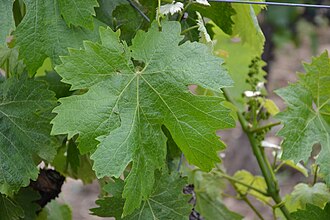
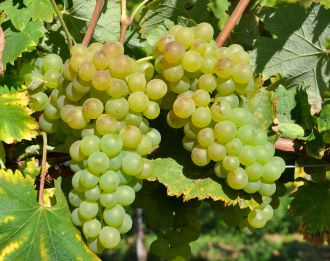
Vermentino is a white-skinned grape whose vineyard character often feels practical, sun-adapted, and coastal rather than fragile. Its leaves are usually medium-sized and may appear rounded to slightly pentagonal, often with three to five lobes depending on clone, site, and vine age. The vine is frequently grown in warm, dry, windy places where canopy balance and fruit exposure are essential. Its berries can ripen toward yellow-green or golden tones, supporting citrus, stone fruit, herbs, and a faint phenolic edge.
Read more
Young shoots can be vigorous when water and soil fertility allow, but in many traditional coastal sites the vine is moderated by wind, dry soils, and restrained water availability. Vermentino’s field appearance is not delicate in the way of some cool-climate white grapes. It looks like a vine built for sun, air, and the careful management of ripeness.
- Leaf: medium-sized, rounded to slightly pentagonal, often three- to five-lobed.
- Bunch: medium-sized, conical to cylindrical-conical, sometimes moderately compact.
- Berry: yellow-green to golden, medium-sized, often with a dry aromatic edge.
- Impression: coastal, sun-adapted, herbal, fresh, and quietly textured.
Clusters may be moderately compact, so site and airflow matter. In dry, breezy vineyards, this is often manageable. In more humid or sheltered sites, disease pressure can increase, especially if the canopy becomes too dense or the fruit remains poorly ventilated.
The grape’s slight bitterness is also part of its identity. When balanced, it appears as almond skin, citrus pith, or dried herbs, giving Vermentino its dry Mediterranean shape rather than simple fruitiness.
Viticulture notes
Sun-loving, wind-shaped, and careful with ripeness
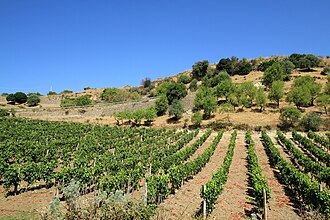
Vermentino generally performs best in warm, dry, maritime or Mediterranean climates where ripening is supported by sunlight but moderated by wind, altitude, soil, or sea influence. It can handle heat better than many white grapes, but it still needs balance. The aim is not simply ripeness, but freshness with flavor: citrus, herbs, stone fruit, almond, and a dry mineral finish rather than flat warmth. In the vineyard, wind is often part of the grape’s hidden architecture.
Read more
Vigor can vary with site. On fertile soils, Vermentino may produce a generous canopy and require careful leaf work, shoot positioning, and crop management. On poorer, stonier, wind-exposed soils, the vine may naturally find a more restrained rhythm. Moderate yields are usually important for aromatic clarity.
Overcropping can make the wine simple and dilute, while excessive ripeness can make it broad and lose the salty-herbal line that gives the grape its charm. A good Vermentino should feel sunlit, but it should not taste tired. Its freshness comes from precision as much as climate.
Canopy management is about moderation. Too much shade may reduce aromatic expression and leave the fruit neutral. Too much exposure, especially in very hot sites, can push the berries toward sunburn or dull ripeness. The best growers use air and light carefully.
Disease pressure is often moderate in dry, windy regions, but compact clusters and humid sites can still bring mildew or rot concerns. Coastal humidity is not always harmless; it must be balanced by ventilation.
Wine styles & vinification
Citrus, herbs, almond, and a salty finish
Vermentino is most often made as a dry white wine, usually fresh, medium-bodied, and gently aromatic. Its classic profile includes lemon, grapefruit, pear, white peach, green almond, Mediterranean herbs, citrus blossom, and sometimes a saline or mineral edge. The finish may carry a faint bitterness, often like almond skin or citrus pith. That bitterness is not a flaw when balanced; it gives the wine grip, keeps the fruit dry-edged, and makes Vermentino especially useful at the table.
Read more
Stainless steel is common for bright, coastal styles, especially where the goal is to preserve citrus clarity and freshness. Some producers use lees contact, larger neutral vessels, or gentle ageing to build more texture. In richer versions, Vermentino can show pear, peach, chamomile, honeyed citrus, and a broader mouthfeel.
The trick is keeping the wine dry-edged and alive. Vermentino loses much of its identity when it becomes soft and generic. The best wines hold together fruit, herbs, salinity, almond, and texture without turning heavy or obviously tropical.
In Sardinia, particularly in Gallura, Vermentino can become more structured and mineral, sometimes with enough concentration to age for several years. In Liguria, it may feel more slender, herbaceous, and sea-scented. In Corsica and southern France, it can move between freshness, ripe fruit, and wild-herb complexity.
There are also sparkling, skin-contact, and more experimental versions, though these remain less central to its identity. Vermentino’s clearest form is still a dry Mediterranean white: bright enough for seafood, textured enough for olive oil, and herbal enough to feel rooted in place.
Terroir & microclimate
Where sun needs wind to stay fresh
Vermentino expresses terroir through freshness, texture, bitterness, herbal tone, and the way fruit ripeness is held in check by air and soil. It does not usually speak in sharp acidity alone. Instead, it often feels like a balance of sun and restraint: ripe citrus and pear held by salt, stone, almond, and a dry finish. In the best examples, the wine seems to carry warmth and breeze at once. Few grapes make Mediterranean light feel so clean.
Read more
Granite-rich sites, especially in parts of Sardinia and Corsica, can give Vermentino a firmer mineral edge and a slightly more serious frame. Limestone and calcareous soils may bring shape, brightness, and a dry, clean finish. Sandy coastal soils often produce lighter, more fragrant expressions.
Clay can add body, but if vigor becomes excessive, the wine may lose detail. The variety is not demanding in only one direction; it asks for the right balance of drainage, light, and airflow. Vermentino works best when its warmth is framed rather than exaggerated.
Microclimate matters greatly. Coastal wind can preserve fruit health and aromatic definition. Altitude can slow ripening and protect freshness. Dry air can reduce disease pressure, while reflected light from pale soils or sea-facing slopes can help build flavor without heaviness.
This is why Vermentino feels so suited to the Mediterranean. It does not fight the climate; it translates it. It turns dry hills, salt air, herbs, stone, and sunlight into a white wine that still feels lifted.
Historical spread & modern experiments
From local coastal grape to climate-smart classic
Vermentino’s modern rise is part of a wider rediscovery of Mediterranean white grapes. For a long time, many famous white varieties were associated with cooler climates, higher acidity, or international cellar styles. Vermentino offers another model: a white grape that can grow in warm, dry regions and still produce wines of freshness, nuance, and food-friendly clarity. That has made it increasingly relevant in a warming wine world. It is an old grape with a very modern usefulness.
Read more
The grape has gained attention in southern France, parts of Italy beyond its traditional homes, and New World regions looking for varieties better suited to sun, drought, and coastal influence. Australia, California, and other warm-climate regions have shown interest in Vermentino because it can give freshness without needing the same cool conditions as grapes like Riesling or Sauvignon Blanc.
It is not a solution to every climate problem, but it is clearly part of a more Mediterranean future for white wine. It can make wines that feel vivid and alive in places where other white grapes might become heavy, flat, or dependent on heavy cellar correction.
At the same time, its traditional regions continue to define the grape’s emotional vocabulary. Sardinia brings power and granite. Liguria brings coast and delicacy. Corsica brings herbs, wildness, and island light. Provence brings the Rolle identity, often linked to pale, Mediterranean whites.
Modern Vermentino is therefore both old and new. It is an old coastal grape with renewed relevance. It shows how local varieties, once seen as regional details, can become globally useful without losing their soul.
Tasting profile & food pairing
A natural wine for fish, herbs, and olive oil
Vermentino is a deeply useful table wine because it speaks the language of Mediterranean food. It loves grilled fish, shellfish, prawns, squid, lemon, olive oil, basil, fennel, rosemary, capers, fresh tomatoes, courgettes, artichokes, and salty cheeses. Its citrus freshness cuts through oil, while its herbal and almond notes echo the ingredients around it. It refreshes the palate without feeling too sharp or fragile, and it rarely dominates the table.
Read more
Aromas and flavors: lemon, grapefruit, pear, white peach, citrus blossom, green almond, fennel, rosemary, dried herbs, sea salt, wet stone, and sometimes a light bitter note like citrus pith or almond skin. Structure: usually dry, fresh, medium-bodied, lightly textured, and often saline on the finish.
Food pairing: grilled sea bass, sardines, prawns, mussels, squid, seafood pasta, pesto, roast chicken with lemon, herbed vegetables, artichokes, tomato salads, olives, goat cheese, pecorino, and simple dishes with olive oil and sea salt.
It is also excellent with vegetable dishes that are often awkward for wine: artichokes, fennel, courgette, green beans, and salads with herbs or citrus. The grape’s dry finish and slight bitterness make it flexible where softer, fruitier whites may struggle.
Serve it cool but not frozen. Too cold, Vermentino becomes simple citrus; slightly warmer, it reveals almond, herb, salt, pear skin, and the soft mineral texture that makes the grape so satisfying.
Where it grows
Sardinia, Liguria, Corsica, Provence, and beyond
Vermentino’s most important homes sit around the western Mediterranean. Sardinia is one of the strongest reference points, especially in Gallura, where the grape can be powerful, mineral, and deeply connected to granite and wind. Liguria offers a more delicate coastal voice, while Tuscany brings both fresh seaside whites and more structured inland examples. Corsica gives Vermentino a wild herbal intensity, and southern France knows the grape mainly as Rolle. Together, these regions form the grape’s true map.
List view
- Sardinia: one of the grape’s great homes, especially Gallura, where granite, wind, and dry light shape powerful examples.
- Liguria: a slender, coastal expression, often herbal, fresh, and delicate beside seafood and olive oil.
- Corsica: island Vermentino with herbs, sun, mountain influence, and a wilder Mediterranean tone.
- Southern France: commonly known as Rolle, important in Provence and parts of Languedoc.
- Elsewhere: Australia, California, and other warm or maritime-influenced vineyards exploring Mediterranean varieties.
Beyond these classical regions, Vermentino is spreading slowly into warm and coastal wine areas that value freshness and resilience. Its future may be especially strong in places where white grapes must handle sunlight and drought while still producing lively, drinkable wines.
Why it matters
Why Vermentino matters on Ampelique
Vermentino matters on Ampelique because it shows how a white grape can belong to warmth without surrendering freshness. It is not a cold-climate grape pretending to be Mediterranean. It is Mediterranean by nature: sunlit, herbal, dry-edged, salt-touched, and comfortable beside olive oil, seafood, and pale stone. It helps explain an important idea in viticulture: freshness is not only a matter of cool temperatures. It can also come from wind, soil, bitterness, timing, and balance.
Read more
It also matters because it gives attention to local and regional grape culture. Vermentino, Rolle, and Pigato show how one grape family can carry different names and identities across nearby landscapes. The differences are not just linguistic. They reflect place, tradition, farming, and style.
For readers, Vermentino is easy to love but worth studying. It can be a simple seaside glass, but also a serious expression of granite, limestone, dry hills, and island wind. It invites people to think about Mediterranean whites as precise responses to climate and cuisine.
It also belongs in a modern grape library because it is increasingly relevant. As more wine regions think seriously about heat, drought, and the search for resilient white varieties, Vermentino offers a practical and beautiful example of Mediterranean intelligence.
On Ampelique, Vermentino stands for coastal intelligence. It is a grape of bright restraint: never empty, never heavy, and most beautiful when it tastes as if the landscape has been allowed to breathe through it.
Keep exploring
Continue through the VWX grape group to discover more varieties that shape classic regions, historic blends, and the hidden architecture of wine.
Quick facts
Identity
- Color: white
- Main names / synonyms: Vermentino, Rolle, Pigato, Favorita
- Parentage: exact parentage not clearly established
- Origin: western Mediterranean, with strong links to Sardinia, Liguria, Corsica, and southern France
- Common regions: Sardinia, Liguria, Tuscany, Corsica, Provence, Languedoc, and warm coastal vineyards abroad
Vineyard & wine
- Climate: warm, dry, maritime and Mediterranean climates with airflow and balanced ripening
- Soils: granite, limestone, sandy coastal soils, stony slopes, and well-drained Mediterranean sites
- Growth habit: moderate to vigorous depending on soil and water availability
- Ripening: needs careful timing to preserve freshness, herbs, and salty almond-edged structure
- Styles: dry still white, textured coastal white, richer island styles, occasional sparkling or skin-contact versions
- Signature: lemon, grapefruit, pear, almond, herbs, salt, and a dry mineral finish
- Classic markers: citrus pith, green almond, fennel, rosemary, sea breeze, wet stone, and bitter almond
- Viticultural note: avoid overcropping and excessive ripeness; Vermentino needs brightness as much as sun
If you like this grape
If Vermentino appeals to you, explore grapes that share its Mediterranean freshness, herbal lift, coastal identity, and dry almond-textured finish.
Closing note
Vermentino is a grape of coastal intelligence. It takes heat, wind, stone, herbs, salt, and sunlight, then turns them into a white wine that feels clear, dry, lifted, and deeply alive.
Continue exploring Ampelique
A Mediterranean white of lemon, herbs, almond, salt, and wind-shaped brightness.
 Ampelique
Leave a comment