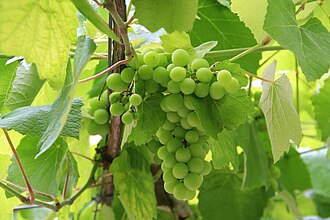
Tag: White grapes

White grape profiles. Origin, ampelography, viticulture notes and quick facts. Filter by country to explore regional styles.

  • VERDEJO

    Ampelique Grape Profile

    Verdejo

    Origin, viticulture, morphology, wine styles, and place.

    Verdejo is a white Spanish grape most closely associated with Rueda, where old vines, stony soils and harsh continental weather shape one of Spain’s most distinctive fresh white styles. It combines citrus, herbs, fennel, stone fruit and a characteristic bitter almond edge. At its best, Verdejo is not merely crisp. It is aromatic, textured, dry, resilient and quietly serious.

    Verdejo lives between freshness and warmth. It grows in a landscape of hot days, cold nights, poor soils and old bush vines, yet it can keep a lively, herbal brightness. The grape’s best expressions carry a dry Castilian clarity: lemon, grass, bay leaf, fennel, peach skin and a firm little bitter note that gives the finish shape.

    Grape personality

    The dry-country herbal white.
    Verdejo is a white grape of small green-gold berries, aromatic skins, fresh acidity and a naturally dry, lightly bitter edge.

    Best moment

    Bright lunch, simple food.
    Grilled fish, green herbs, goat cheese, rice dishes, tapas and a glass with freshness but also a dry savoury edge.


    Verdejo tastes of sun, stone and green shade.
    It is a white grape that keeps its nerve in a hard landscape, turning dryness into freshness.


    Origin & history

    A Castilian white grape reborn through Rueda

    Verdejo is one of Spain’s most important indigenous white grapes, with its strongest identity in Rueda, on the high Castilian plateau northwest of Madrid. It is a grape shaped by continental extremes: hot summers, cold winters, large day-night temperature shifts, dry air and poor soils. In that setting, Verdejo developed a personality very different from softer Mediterranean whites. It is fresh, herbal, dry, textured and often marked by a subtle bitter note.

    Read more →

    The grape’s history in the region is long, though its modern reputation is relatively recent. For much of the twentieth century, Verdejo was not always treated as a fine varietal white grape. Oxidative styles existed, and the grape’s potential for crisp, aromatic, modern dry white wine was not fully understood internationally. Rueda’s late twentieth-century revival changed that. With cooler fermentation, better fruit handling and renewed focus on varietal expression, Verdejo became one of Spain’s most successful white wine grapes.

    That revival matters because Verdejo could easily have remained a local grape known mainly inside Spain. Instead, it became a benchmark for fresh Spanish whites. Its success came from a combination of regional identity and clear sensory appeal: citrus, herbs, fennel, green fruit, peach, almond and a dry, appetizing finish. Unlike some neutral white grapes, Verdejo has a recognizable personality without becoming overly perfumed.

    Today Verdejo remains deeply associated with Rueda, though it is also planted elsewhere in Spain and occasionally explored beyond. Its strongest message is still Castilian: a white grape that turns heat, drought and poor soils into freshness, aromatic edge and dry texture.


    Ampelography

    A white grape of small berries, green-gold fruit and aromatic concentration

    Verdejo is a white grape, with berries that usually remain green-yellow to golden at full ripeness. It is not a large, soft, neutral variety. Its best fruit often gives concentration, herbal aroma and a gently phenolic edge. The grape can produce wines with both freshness and texture, and that balance begins in the vineyard: berry size, skin character, yield, exposure and harvest timing all matter.

    Read more →

    Leaves are generally medium-sized, rounded to somewhat pentagonal, with moderate lobing depending on vine vigour and clone. The canopy can be vigorous enough to require management, especially in more fertile sites, but many of the most expressive old vineyards grow in poor, stony soils where natural restraint is stronger. These older vines often form a key part of Verdejo’s quality identity.

    Bunches are usually small to medium-sized and can be moderately compact. The berries tend to have enough skin character to contribute aroma and the light bitter grip often associated with the grape. This phenolic edge is not a flaw when balanced. It is part of Verdejo’s personality, giving the finish a dry, almond-like shape and making the wines especially useful at the table.

    • Leaf: medium-sized, rounded to slightly pentagonal, usually moderately lobed
    • Bunch: small to medium-sized, sometimes moderately compact
    • Berry: white, green-yellow to golden, with aromatic and lightly phenolic potential
    • Impression: fresh, herbal, dry, textured and strongly influenced by old vines and poor soils

    Viticulture

    A dry-country grape that depends on night coolness and careful handling

    Verdejo is well adapted to the dry continental conditions of Rueda. Summers can be hot, rainfall is limited, and soils are often poor, stony and well drained. These conditions help control vigour and concentrate flavour. At the same time, high elevation and cool nights are crucial. They allow the grape to preserve acidity and aromatic lift despite strong daytime heat.

    Read more →

    Old bush vines are especially important for Verdejo. In traditional vineyards, low-trained vines can handle dry conditions and regulate crop naturally. Their deep roots help the plant survive drought and draw water from deeper soil layers. These vines often produce smaller crops and more intense fruit, which can give the grape more complexity than young, high-yielding plantings.

    Modern trellised vineyards are also common, especially where mechanization and canopy control are priorities. The challenge is to balance exposure and protection. Verdejo needs sunlight to develop its full aromatic profile, but excessive heat or overexposure can reduce freshness and push the wine toward broadness. Too much shade, on the other hand, can make the fruit greener and less complete.

    Harvest timing is critical. Verdejo can lose aromatic precision if picked too late, but it can taste sharp, grassy or incomplete if picked too early. Night harvesting is often used in warm regions to preserve freshness and protect aromas before fermentation. This matters because Verdejo is sensitive to oxidation. Careful handling from vineyard to cellar is part of the grape’s modern quality story.

    Disease pressure is often reduced by Rueda’s dry climate, but compact bunches and wet periods can still create risks. Powdery mildew, downy mildew and rot must be managed where conditions allow them. Overall, however, the grape’s main viticultural challenge is not simply disease. It is preserving the fine balance between aromatic ripeness, acidity, phenolic texture and freshness.


    Wine styles

    Citrus, fennel, stone fruit and the almond edge of Rueda

    Modern Verdejo is best known for dry white wines that are fresh, aromatic and immediately appealing. Typical notes include lemon, grapefruit, lime, green apple, pear, peach, fennel, anise, cut grass, bay leaf, herbs and bitter almond. The palate is usually medium-bodied, with fresh acidity and a dry finish. The grape’s light bitter edge is one of its signatures, giving the wine shape and food friendliness.

    Read more →

    The simplest modern style emphasizes stainless steel freshness and primary aromatics. These wines are often bright, crisp and built for early drinking. They can be extremely attractive when well made, especially because Verdejo has more personality than many neutral fresh whites. It gives not just citrus, but also herbs, fennel and that dry almond-like finish.

    There is also a more serious side to Verdejo. Old-vine fruit, lees ageing, larger neutral vessels, careful oak use and extended texture work can produce wines with greater depth, waxiness and longevity. These versions show that Verdejo does not have to be only a quick-drinking aromatic white. It can become broader, more savoury and more layered while still preserving freshness.

    Historically, Verdejo was also associated with more oxidative styles, and that background still matters. The modern fresh style dominates, but the grape’s sensitivity to oxidation and its ability to develop nutty, herbal complexity are part of its identity. When handled with skill, Verdejo can sit between freshness and texture in a way that feels distinctly Spanish rather than simply international.


    Terroir

    A grape shaped by stones, sand, altitude and cold nights

    Verdejo expresses terroir through freshness, herbal detail and texture rather than through dramatic mineral force. In Rueda, the best vineyards often sit on gravelly, stony and sandy soils that provide excellent drainage and help restrain vigour. These poor soils are important because Verdejo can become too productive or too simple if grown in overly fertile conditions.

    Read more →

    The continental climate is just as important as soil. Hot days help ripen the grape and build aromatic intensity. Cold nights slow down ripening and preserve acidity. This day-night contrast gives Verdejo its tension. Without it, the grape can become broad or dull. With it, the fruit remains crisp, herbal and clearly outlined even in a warm, dry region.

    Old vines can deepen the terroir expression. Their lower yields and more balanced growth often produce wines with stronger texture, more savoury detail and a longer finish. Younger, more productive vines may give pleasant aromatics, but they do not always carry the same dry intensity. This is why old-vine Verdejo has become increasingly important in quality-focused discussions.

    Terroir with Verdejo is therefore a matter of restraint. The right site keeps the vine from becoming too generous, helps the fruit remain fresh and allows the grape’s herbal, citrus and almond-like details to stay precise. Rueda’s best vineyards do not make Verdejo louder. They make it sharper and more complete.


    History

    From overlooked local grape to Spain’s modern white reference

    Verdejo’s modern history is one of rediscovery. It was always part of Rueda’s viticultural identity, but its current reputation as a fresh, aromatic, internationally appealing white grape developed through modern winemaking and renewed regional focus. Once producers began protecting the fruit from oxidation and fermenting it in a way that preserved aroma, Verdejo’s character became much easier to recognize.

    Read more →

    This shift allowed Rueda to become one of Spain’s strongest white-wine appellations. For many drinkers, Verdejo became an alternative to Sauvignon Blanc: fresh, aromatic, herbal and accessible, but with a different texture and a more Spanish savoury edge. That comparison helped the grape internationally, though it can also oversimplify it. Verdejo is not just Spain’s answer to Sauvignon Blanc. It has its own structure, bitterness and regional story.

    Modern experimentation has expanded the image of the grape. Some producers continue to focus on clean, fresh stainless-steel versions. Others work with old vines, lees contact, barrel fermentation, concrete, amphora or lower-intervention methods to show more texture and depth. These different approaches have helped Verdejo move beyond the category of simple fresh white and into a more serious conversation.

    The grape’s history now feels like a balance between popularity and rediscovery. Its fresh, easy styles brought it fame. Its old vines and more textured bottlings show why it deserves deeper respect. Verdejo’s future depends on keeping both sides alive: refreshment and seriousness.


    Pairing

    A white grape for herbs, seafood, tapas and dry savoury freshness

    Verdejo is extremely useful at the table because it combines freshness with herbal and lightly bitter notes. It works well with dishes that need brightness but also benefit from a dry savoury edge. Seafood, tapas, grilled vegetables, goat cheese, rice dishes, herbs, salads and lighter white meats all suit it well. Its bitter almond finish can make food feel cleaner and more precise.

    Read more →

    Aromas and flavors: lemon, grapefruit, lime, green apple, pear, peach, fennel, anise, cut grass, bay leaf, herbs, almond and sometimes a waxy or nutty note in more textured styles. Structure: fresh acidity, medium body, dry finish and a characteristic light bitterness that gives shape.

    Food pairings: grilled fish, prawns, calamari, seafood rice, chicken with herbs, goat cheese, sheep’s milk cheese, asparagus, artichoke, green olives, tortilla española, croquetas, gazpacho, salads with herbs, grilled courgette, fennel and simple tapas. More textured Verdejo can also work with roast poultry, creamy rice dishes and richer fish.

    The best pairings use Verdejo’s herbal side. It is not just a lemony white wine. It has green, savoury and slightly bitter tones that make it especially good with vegetables, herbs and salty foods.


    Where it grows

    Rueda first, with Castile as the grape’s natural language

    Verdejo grows most famously in Rueda, in Castilla y León. This is its benchmark region and the place where the grape’s modern identity was built. It also appears elsewhere in Spain, though outside Rueda it rarely carries the same cultural weight. The grape’s success has led to broader plantings, but its strongest voice remains tied to the high, dry Castilian plateau.

    Read more →
    • Spain – Rueda: Verdejo’s classic and most important modern region
    • Castilla y León: the broader high-plateau context that shapes the grape’s continental character
    • Old-vine sites: especially important for more textured, concentrated and serious Verdejo
    • Other Spanish regions: smaller plantings and blends, often inspired by Rueda’s success
    • Outside Spain: limited plantings and experiments; Verdejo remains strongly Spanish in identity

    Its geography is part of its meaning. Verdejo is not simply a fresh white grape. It is a response to altitude, dry air, cold nights, old vines and poor soils.


    Why it matters

    Why Verdejo matters on Ampelique

    Verdejo matters on Ampelique because it is one of the clearest examples of a regional white grape becoming a modern national reference. It shows how old vines, local climate and improved winemaking can transform the reputation of a variety. Verdejo was not invented by modern technique, but modern technique allowed its freshness and aromatic character to become visible.

    Read more →

    It also broadens the conversation around Spanish grapes. Spain is often associated internationally with red varieties such as Tempranillo, Garnacha or Monastrell. Verdejo shows that Spain also has white grapes with strong personality, local identity and serious potential. It helps correct the idea that Spanish white wine is secondary to Spanish red wine.

    For readers, Verdejo is a useful teaching grape because it explains the relationship between climate and style. It grows in a hot, dry region, yet its best wines are fresh. That freshness comes from altitude, night coolness, poor soils, harvest timing and careful handling. The grape therefore shows that warm-climate white wine does not have to be heavy or dull.

    Verdejo belongs on Ampelique because it carries a precise regional voice: stony soils, cold nights, old vines, citrus, herbs and bitter almond. It is accessible enough to welcome beginners, but detailed enough to reward closer study.


    Quick facts

    • Color: white
    • Main names / synonyms: Verdejo; historically associated with Rueda and sometimes seen in blends labeled by region
    • Parentage: traditional Spanish variety; exact parentage is not firmly established
    • Origin: Spain, especially the Rueda area in Castilla y León
    • Common regions: Rueda, Castilla y León and selected other Spanish regions
    • Climate: dry continental climate with hot days, cold nights and strong seasonal contrasts
    • Soils: stony, gravelly, sandy and well-drained poor soils, often important for concentration and restraint
    • Growth habit: moderately vigorous; old bush vines and controlled yields are especially valued
    • Ripening: requires careful timing to balance citrus freshness, herbal aroma, texture and bitter almond character
    • Styles: fresh stainless-steel whites, old-vine Verdejo, lees-aged styles, textured whites and occasional oak-influenced wines
    • Signature: citrus, herbs, fennel, stone fruit, fresh acidity, dry texture and a light bitter almond finish
    • Classic markers: lemon, grapefruit, pear, peach, fennel, anise, cut grass, bay leaf, almond and waxy notes in richer styles
    • Viticultural note: quality depends on old vines, poor soils, night coolness, careful harvest timing and protection from oxidation

    Closing note

    A great Verdejo is not only fresh. It is dry, herbal and quietly textured: a Castilian white shaped by stones, old vines, cold nights and the bitter almond edge that gives brightness a backbone.

    If you like this grape

    If you appreciate Verdejo’s citrus, herbs and dry almond finish, you might also enjoy Sauvignon Blanc for aromatic brightness, Arinto de Bucelas for firm acidity, or Assyrtiko for a more mineral, saline expression of warm-climate freshness.

    A white Spanish grape of citrus, fennel, old vines and dry Castilian freshness — bright, herbal and quietly serious.
  • ALVARINHO – ALBARIÑO

    Ampelique Grape Profile

    Alvarinho / Albariño

    An Atlantic white grape of citrus, granite, blossom, and sea-breeze precision.

    Alvarinho, known across the Spanish border as Albariño, is one of the great white grapes of the Iberian Atlantic. It belongs to green hills, granite soils, ocean air, and cool maritime light. Its wines often combine lime, grapefruit, white peach, blossom, wet stone, and a faint saline edge, held together by bright acidity and a clean, persistent finish. It can feel refreshing and effortless, yet the best examples carry more depth than their breezy surface first suggests.

    What makes Alvarinho so appealing is its balance between brightness and texture. It does not rely only on acidity, nor only on perfume. In the right place it has both: citrus lift, floral detail, a lightly salty line, and enough mid-palate weight to feel complete. It is a grape that seems to breathe with the coast — fresh, precise, quietly aromatic, and shaped by moving air.

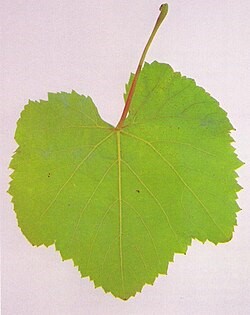
    Alvarinho grape leaf back side
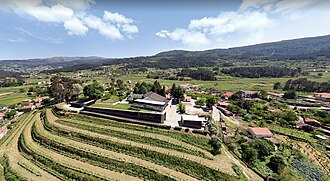
    Albariño vineyard with a wide view
    Alvarinho grape cluster pre veraison
    Grape personality

    The Atlantic line.
    Alvarinho is bright, coastal and quietly precise: gathering lime, blossom, granite and sea air into a white wine that feels clean without ever feeling thin.

    Best moment

    Seafood, daylight, open air.
    Oysters, grilled fish, citrus herbs, a bright lunch by the water, and a glass that leaves the mouth as fresh as sea spray.


    Alvarinho seems to carry the Atlantic with it.
    Lime, blossom, wet stone and salt move together, like sea wind passing over granite.


    Origin & history

    An Iberian Atlantic grape with two names

    Alvarinho is one of the great white grapes of the Iberian Atlantic. Its historic home lies in northwestern Portugal, especially in the Monção and Melgaço subregion of Vinho Verde, where it has long been valued for its ability to ripen fully while holding freshness. Across the nearby border in Galicia, the same grape is known as Albariño and became equally important in Rías Baixas. Together, these two regions shaped the variety’s identity: bright, coastal, aromatic, textured, and deeply connected to granite and ocean air.

    Read more →

    For centuries Alvarinho remained mostly local, closely tied to cool green landscapes, granite soils, humidity, and Atlantic influence. In those conditions it developed a reputation for lively acidity, citrus fruit, aromatic lift, and a subtle saline note that many growers and drinkers still associate with its character. Its exact parentage remains unresolved, but its cultural roots in the northwest of the Iberian Peninsula are clear. It is not a grape invented by modern fashion; it is a grape shaped by place, farming, and weather over time.

    Historically, the grape was often grown in mixed farming systems and trained high to keep bunches away from damp ground. This made sense in a humid region where airflow could mean the difference between healthy fruit and rot. As vineyard work became more precise and winemaking more focused, Alvarinho emerged not just as a regional grape, but as one of Iberia’s most internationally admired white varieties. It showed that freshness and perfume could coexist with texture and aging potential.

    Today Alvarinho is planted not only in Portugal and Spain, but also in selected coastal or cooler sites in California, Oregon, Uruguay, New Zealand, Australia and Chile. Even so, its deepest identity remains Atlantic. It is a grape that seems to make most sense where air moves, mornings are cool, and ripening is steady rather than rushed.


    Ampelography

    Bright leaves, compact clusters, and thick-skinned berries

    Alvarinho leaves are medium to large and usually round to slightly pentagonal. They commonly show three to five lobes, with moderate sinuses and a petiole sinus that is often open or shallowly V-shaped. Margins are regular and evenly toothed. The upper surface is smooth and often lightly glossy green, while the underside may show fine down along the veins. In the vineyard, the foliage often looks lively and clean rather than heavy.

    Read more →

    Young leaves can show a pale green or slightly bronze tint in spring before the canopy settles into fuller growth. In balanced vineyards the foliage often looks neat and open enough to allow air movement through the fruiting zone. That visual openness suits the grape well, because airflow is one of the keys to keeping fruit healthy in humid Atlantic conditions. Alvarinho may carry the romance of sea air, but in the vineyard it asks for practical discipline.

    Clusters are medium-sized and usually conical to cylindrical-conical, often fairly compact. Berries are small to medium, round, and yellow-green to golden as they ripen. The skins are relatively thick for a white grape, which helps the variety handle humidity better than some more delicate white varieties. That said, compact bunches still mean vineyard balance matters. Brightness in the glass begins with clean, evenly ripened fruit.

    • Leaf: medium to large, round to slightly pentagonal
    • Petiole sinus: open or shallowly V-shaped
    • Bunch: medium-sized, conical, often fairly compact
    • Berry: small to medium, yellow-green to golden, relatively thick-skinned
    • Impression: bright, neat, Atlantic, precise and naturally fresh

    Viticulture

    Freshness shaped by air, canopy, and timing

    Alvarinho generally shows moderate vigor, though it can become more vegetative on fertile soils or in humid valleys where growth is strong. In traditional settings it was often trained high, especially in pergola systems, to improve ventilation and keep the fruit away from damp ground. In modern vineyards, vertical shoot positioning is also common where growers want more precise canopy control. The method may change, but the principle remains: light, airflow, and balanced ripening matter deeply.

    Read more →

    The grape benefits from careful canopy work because airflow is so important in its home climates. Shoot thinning, moderate leaf removal, and good row orientation help keep the fruit zone open without exposing berries too harshly. Yield control also matters. If the crop is too high, the wine can lose concentration and aromatic detail. If the crop is balanced, Alvarinho can deliver both freshness and surprising texture. Its best wines are not watery or merely crisp; they have shape.

    Ripening is usually steady rather than especially fast, and that suits the variety well. The goal is not maximum sugar, but a point where citrus brightness, floral lift, and a slight saline or mineral feel all seem to align. That moment can be narrow, so harvest timing deserves close attention. Pick too early and the wine may feel sharp or incomplete. Pick too late and the Atlantic line can blur into softness.

    Because it is often grown in humid climates, Alvarinho can face pressure from downy mildew, powdery mildew, and botrytis if the canopy remains too dense. Its skins offer some help, but they do not remove the need for attentive vineyard work. Good fruit-zone ventilation, accurate spray timing, and a canopy that dries cleanly after rain or dew are essential. In the right site, the variety can remain remarkably fresh and healthy, but only if humidity is managed rather than ignored.


    Wine styles

    Citrus clarity with quiet texture

    Alvarinho is most often made as a dry white wine that emphasizes freshness, citrus, flowers, and clarity of fruit. Stainless steel is common, especially for styles that aim to preserve the grape’s precision and Atlantic brightness. In those wines, lime, grapefruit, white peach, apricot skin, citrus blossom and wet stone notes usually sit over a firm line of acidity. The finish is often clean, lightly saline and more persistent than the wine’s breezy image might suggest.

    Read more →

    Some producers use lees contact or larger neutral vessels to build more mid-palate texture without losing freshness. A few explore subtle oak, longer aging, wild fermentation, or even sparkling styles, especially where the grape’s acidity gives enough backbone. In Portugal and Spain alike, the best examples often show more than just freshness. They can also carry a calm mineral persistence that gives the wines real depth. The finest versions do not simply refresh the mouth; they hold the palate in a clean, bright line.

    Blends also exist, especially in Vinho Verde, where Alvarinho may be combined with Loureiro, Trajadura, Avesso or other local grapes. Even there, it often provides the wine’s spine: fragrance, acidity, texture and precision. As a varietal wine, however, it is usually at its clearest and most complete. Monção and Melgaço examples can show more concentration and structure, while Rías Baixas Albariño often leans into bracing coastal freshness and seafood-friendly clarity.

    Alvarinho’s great stylistic gift is that it feels precise without feeling severe. It can be aromatic without becoming perfumed, textured without becoming heavy, and fresh without becoming thin. That balance explains why it has become one of the most admired modern white grapes for drinkers who want brightness, but also character.


    Terroir

    Granite, wind, and the taste of clean air

    Alvarinho responds strongly to site, especially through the balance between fruit ripeness, salinity and acidity. In cooler, wind-touched places it often feels sharper, more citrus-led and more mineral. In slightly warmer exposures it may gain peach, apricot and broader texture without losing its line. Granite, altitude, marine influence and air movement all play visible roles in the grape’s expression. It is a variety that seems to turn climate into finish.

    Read more →

    Granite is one of its classic partners, especially in northern Portugal and Galicia, where it often supports the grape’s brightness and subtle mineral edge. Sandy and well-drained alluvial soils can also work well. Heavy, wet soils are less ideal unless drainage and canopy discipline are carefully managed. Alvarinho likes freshness, but not stagnation. It likes moisture in the landscape, but not dampness trapped in the bunch.

    Microclimate matters because the grape depends on a clean, slow ripening season. Morning mist, afternoon breeze, and a steady autumn can all help build the style people value most in Alvarinho. It is not a grape that wants extremes. It wants movement, moderation, and enough time. The best places let it ripen slowly while keeping the wine taut, aromatic and clear.

    This is why Alvarinho can feel so regionally specific. It does not simply taste of citrus; it tastes of citrus shaped by air. It does not simply show acidity; it shows freshness carried by place. In its finest examples, fruit, stone, salt and breeze seem to arrive together.


    History

    From regional treasure to modern coastal classic

    Alvarinho’s rise beyond Portugal and Galicia is fairly recent. For a long time, it was a regional treasure: loved in its home landscapes, but not widely understood elsewhere. As global interest in fresher, more precise white wines grew, the variety attracted attention in coastal and cool-climate regions outside Iberia. California, Oregon, Uruguay, Australia, Chile and New Zealand have all explored its potential in smaller but meaningful plantings.

    Read more →

    Modern experiments often focus on lees ageing, sparkling versions, wild fermentation, subtle oak, and more site-specific bottlings. Yet the grape rarely loses its essential character. Even when the style changes, Alvarinho still tends to carry brightness, sea-breeze freshness and a firm, clean finish. This consistency is part of its appeal. It can travel, but it does not easily become anonymous.

    At the same time, its Iberian reference points remain essential. Monção and Melgaço show how the grape can gain body and concentration while staying fresh. Rías Baixas shows the power of Atlantic clarity, shellfish culture and coastal brightness. Together, they have made Alvarinho / Albariño one of the few white grapes that can feel both deeply regional and internationally understandable.

    Its modern success also comes from timing. In a world often looking for freshness, lower weight, and food-friendly wines, Alvarinho feels naturally suited to the moment. It does not need exaggeration. It only needs to be grown cleanly, picked well, and allowed to keep its coastal line.


    Pairing

    A natural partner for shellfish, salt, and citrus

    Alvarinho is one of the most natural white grapes for seafood. Its acidity, citrus fruit, floral lift and saline edge make it beautifully suited to oysters, clams, mussels, grilled white fish, ceviche, sushi, prawns, salads with citrus or herbs, and young goat’s cheese. It is especially good with dishes that echo its own freshness: salt, lemon, green herbs, clean fish, and simple preparations where precision matters more than weight.

    Read more →

    Aromas and flavors: lime, grapefruit, lemon peel, white peach, apricot, citrus blossom, white flowers, wet stone, green herbs and sometimes a faint saline note. Structure: usually light to medium-bodied, with high acidity, a bright fruit core and a clean, persistent finish. The best wines feel fresh but not thin, with energy carried by texture as much as by acid.

    Food pairings: oysters, clams, mussels, grilled sardines, sea bass, cod, ceviche, sushi, prawns, crab, citrus salads, herb-led dishes, young goat’s cheese, grilled vegetables, rice with seafood and lightly spicy dishes with lime or coriander. Alvarinho works best when the food has freshness, salt, lift or clean texture.

    Its table value is not only about seafood, though that is the obvious match. Alvarinho can also handle white meats, citrus sauces, herb omelets, vegetable tempura, and lighter dishes with Mediterranean or Atlantic character. It refreshes without erasing flavor. It brightens the table like an open window.


    Where it grows

    Portugal, Galicia, and a wider coastal future

    Alvarinho’s most important homes remain Portugal and Spain. In Portugal, it is especially associated with Vinho Verde’s Monção and Melgaço subregion, where the grape can produce wines with more body, concentration and ageing potential than many people expect from the wider Vinho Verde image. In Spain, as Albariño, it defines much of Rías Baixas, where Atlantic influence, granite soils and seafood culture have shaped its modern identity.

    Read more →

    Beyond Iberia, Alvarinho is still a specialist rather than a mainstream grape, but interest is growing. It attracts producers who want a white variety with natural freshness, aromatic clarity and food-friendly precision. Coastal California, Oregon, Uruguay, Australia, Chile and New Zealand all offer small but interesting examples. The best non-Iberian plantings usually respect the grape’s need for moderation, movement and clean ripening rather than trying to push it into a hot-climate style.

    • Portugal: Vinho Verde, especially Monção and Melgaço
    • Spain: Rías Baixas and other parts of Galicia, under the name Albariño
    • Americas: coastal California, Oregon, Uruguay and Chile in selected plantings
    • Elsewhere: Australia, New Zealand and other cooler or maritime-influenced regions

    Why it matters

    Why Alvarinho matters on Ampelique

    Alvarinho matters on Ampelique because it shows how a grape can be both regional and modern. It belongs deeply to the Iberian Atlantic, yet its style speaks clearly to today’s appetite for freshness, precision and food-friendly whites. It is not a neutral grape, but it is also not loud. Its character lies in detail: lime, blossom, wet stone, salt, texture and a finish that seems to keep moving after the wine is gone.

    Read more →

    It also helps explain why maritime viticulture matters. Alvarinho is not shaped only by sun and soil, but by humidity, airflow, morning mist, afternoon breeze and the constant need to keep fruit clean in a damp environment. It is a grape of movement. That makes it valuable for a grape library: it teaches that climate is not just temperature, but rhythm, air and timing.

    For readers, Alvarinho is a beautiful bridge between pleasure and learning. It is easy to love with seafood, but it also opens the door to discussions of granite, Atlantic influence, canopy management, thick skins, local names and cross-border identity. Alvarinho and Albariño are not two separate grapes, but two cultural expressions of the same variety. That alone makes the grape a useful reminder that wine language is shaped by borders, history and place.

    On Ampelique, Alvarinho stands as one of the great Atlantic whites: clean but not simple, aromatic but not heavy, fresh but not thin. It reminds us that some grapes do not need drama to be memorable. Sometimes a clear line, a little salt, and the memory of the sea are enough.


    Quick facts

    • Color: white
    • Parentage: native Iberian Atlantic variety; exact parentage remains unresolved
    • Origin: northwestern Portugal and Galicia, Spain
    • Climate: cool to moderate maritime climates with moving air and steady ripening
    • Soils: granite, sandy soils, alluvial soils and well-drained coastal sites
    • Styles: dry still whites, textured lees-aged wines, blends and occasional sparkling styles
    • Signature: lime, blossom, white peach, wet stone, salinity and bright acidity
    • Synonyms: Albariño in Spain; Alvarinho in Portugal

    Closing note

    A great Alvarinho is never only about freshness. It is about the way freshness gains texture, how citrus becomes floral, how granite seems to hold salt, and how a wine can feel light without being slight. It is one of the clearest reminders that white wine can be vivid, precise and quietly complete.

    If you like this grape

    If you appreciate Alvarinho’s citrus brightness, saline edge and Atlantic freshness, you might also enjoy Loureiro for a more floral Portuguese white, Riesling for sharper acidity and ageing potential, or Sauvignon Blanc for a brighter, more aromatic expression of freshness.

    An Atlantic white with citrus in its voice and salt in its shadow — bright, precise, and quietly shaped by the sea.