See Garnacha Blanca
Tag: French grapes
French grape varieties, a broad group of grapes from one of the world’s most influential wine countries, shaped by history, regional diversity, and deep viticultural tradition.
-
GRENACHE NOIR
Ampelique Grape Profile
Grenache Noir
Origin, viticulture, morphology, wine styles, and place.
Grenache Noir is one of the great warm-climate red grapes of the wine world. Known as Garnacha in Spain and Cannonau in Sardinia, it is generous, sun-loving, wind-tested and deeply Mediterranean. It can produce wines that are pale or powerful, fragrant or muscular, youthful or age-worthy. Its natural warmth gives it charm, but its best examples are never only about ripeness. They carry red fruit, herbs, spice, texture and a luminous softness that makes the variety both welcoming and profound.
Few grapes understand the language of sun and stone quite like Grenache Noir. It can turn dry hillsides, old bush vines and poor soils into wines of remarkable tenderness and depth. From Aragón to the southern Rhône, from Priorat to Sardinia and beyond, Grenache Noir is not simply a grape of heat. It is a grape of resilience, old-vine wisdom, drought, wind and place made visible in red fruit, spice and light.
 Grape personality
The generous wanderer.
Grenache Noir is warm, open-hearted and quietly resilient: red-fruited, herb-scented, softly spicy, and shaped by old vines, dry hillsides and Mediterranean light.Best momentGolden hour, long table.
Late-afternoon light, grilled vegetables, lamb with herbs, dusty terraces and conversations that slowly drift into evening.
Grenache Noir does not resist the sun.
It gathers heat, herbs, wind and dust, then gives them back as fragrance, warmth and an almost effortless generosity.
Contents
Origin & history
A Spanish beginning with Mediterranean reach
Grenache Noir is widely believed to have originated in northeastern Spain, where it is known as Garnacha. From there it spread across the Mediterranean world and became deeply rooted in southern France, Sardinia and other warm, dry wine regions. Its historical success comes not only from adaptability, but from its remarkable affinity with poor soils, long summers, drought, wind and the practical intelligence of growers working in sunlit landscapes.
Read more →
In France, Grenache Noir found one of its great modern homes in the southern Rhône, where it became central to Châteauneuf-du-Pape, Gigondas, Vacqueyras and many surrounding appellations. There it helped define a style of red wine that is generous, spicy, warming and often deeply aromatic. In Spain, Garnacha developed a broader identity. It could be rustic and productive, but also vivid, mountain-grown and refined when cultivated on poor soils or old bush vines.
For a long time, Grenache Noir was valued more for abundance and blending power than for finesse. It brought alcohol, fruit and warmth to wines that needed volume and charm. That usefulness made it widespread, but also caused many people to underestimate it. The modern revival of old-vine Garnacha has changed the conversation. Today, the grape is increasingly admired for fragrance, transparency and its ability to express altitude, soil and vine age.
This dual identity — humble and noble, rustic and refined — is part of what makes Grenache Noir so compelling. It is a grape of real historical depth, but also of contemporary rediscovery.
Ampelography
A vigorous vine with a soft-colored voice
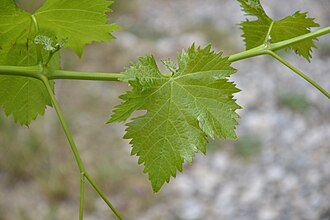
Grenache Noir is usually a vigorous vine, capable of generous growth if planted on fertile soils. Its leaves are medium to large, generally rounded and sometimes shallowly lobed, while its bunches are medium to large and often relatively compact. The berries are thin-skinned for a red grape, which helps explain the variety’s lighter color, soft tannins and ability to produce wines that feel more fragrant and flowing than dark or severe.
Read more →
The vine’s physical character helps define its wine identity. Thin skins mean that Grenache Noir often gives more warmth, fruit and texture than deep color or hard tannin. It can produce wines that look almost transparent in the glass yet carry surprising alcohol, body and aromatic force. This contrast is part of its charm. Grenache Noir can appear gentle while carrying considerable inner heat.
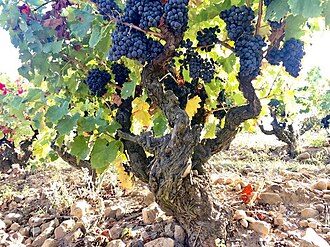
Because it is naturally vigorous, Grenache Noir often performs best in poor soils that limit excessive growth. Old bush vines are especially important, not only because they reduce yield naturally, but because they allow the plant to regulate itself in difficult climates. The field image of old Grenache — low trunks, twisted arms, sparse canopies and stony ground — is one of the great visual signatures of Mediterranean viticulture.
- Leaf: medium to large, rounded, often shallowly lobed
- Bunch: medium to large, often compact
- Berry: thin-skinned, blue-black, relatively modest in color extraction
- Impression: vigorous, sun-adapted, generous, quietly expressive
Viticulture
Late ripening, drought-resistant, and demanding of balance
Grenache Noir buds relatively early and ripens late, which makes a long, warm season important. It is famously tolerant of drought and wind, and this explains why it feels so at home in dry Mediterranean landscapes. Yet the grape’s toughness can be misleading. It is not simply a survivor. To make truly fine Grenache Noir, growers must manage vigor, yields, exposure and harvest timing with considerable care.
Read more →
On rich soils, Grenache Noir can become too productive, and the resulting wines may feel loose, hot or simple rather than finely shaped. This is why poor, rocky soils are often so valuable. They slow the vine down. They keep bunches smaller, fruit more concentrated and vine growth more disciplined. Old age helps in the same way. Old Grenache vines tend to self-regulate, producing less fruit of greater concentration and more stable balance.
Canopy management matters because Grenache Noir needs enough shade to protect berries from sunburn, but enough airflow to avoid disease. Its bunches can be relatively compact, making rot a concern if late rain arrives near harvest. Another challenge is sugar accumulation. In hot years, Grenache Noir can reach high potential alcohol before aromatic complexity and tannin maturity feel fully aligned, so picking decisions are critical.
Done well, Grenache Noir becomes one of the most exciting grapes for a warmer future. It does not merely endure heat. It can turn heat into charm, fragrance and place. But it only does so when the grower keeps abundance under control.
Wine styles
From pale-fruited perfume to powerful Mediterranean depth
Grenache Noir can make a surprising range of wines. It is central to many southern Rhône blends, beautiful in dry rosé, compelling as a single-varietal red, and important in certain fortified wines. Its aroma profile often leans toward strawberry, raspberry, red cherry and pomegranate rather than very dark fruit, and these notes are frequently accompanied by dried herbs, white pepper, orange peel, warm stone, anise and spice.
Read more →
In the southern Rhône, Grenache Noir is often supported by Syrah, Mourvèdre and other varieties that bring color, tannin and darker tones. Grenache, however, is frequently the heart of the wine. It supplies flesh, spice, red fruit, alcohol and a sense of warmth that holds the blend together. Without it, many Rhône wines would feel more angular and less hospitable.
Modern Garnacha from Spain has broadened the conversation even further. In mountain sites on granite, the wines can become pale, floral and almost filigreed. From schist or hotter sites they may be denser, darker and more mineral. In all of these forms, the grape tends to retain a certain openness. Even serious Grenache Noir often feels more conversational than authoritarian.
Rosé Grenache, especially from southern France, shows another side: light-footed, juicy, softly spicy and highly adaptable at the table. Fortified Grenache can move toward dried fruit, cocoa, fig and warming sweetness. Very few red grapes move so easily between easy pleasure and serious depth.
Terroir
A grape that turns heat into place
Grenache Noir is sometimes described too simply as a grape of climate, as if sunshine alone explains it. The best wines prove otherwise. Grenache responds strongly to soil, altitude and exposure. On granite it can become more floral and lifted. On schist it can seem darker, drier and more mineral. On sand it may feel softer and more delicate. On limestone it can gain shape, freshness and aromatic clarity.
Read more →
Altitude plays a crucial role. Higher elevations help slow ripening, preserve acidity and protect aromatic detail. This is one of the reasons mountain Garnacha from Spain has become so admired. It shows that Grenache Noir does not need to be heavy or overripe. When the season remains warm but not rushed, the grape can produce wines of translucency, fragrance and inner precision.
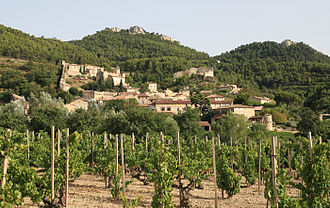
In places like Châteauneuf-du-Pape, the famed rounded stones help accumulate and radiate heat, contributing to richness and complete ripening. In Sierra de Gredos, granite and altitude produce a very different register: bright, floral, almost transparent wines that still carry Mediterranean warmth. These contrasts show how adaptable Grenache Noir is, but also how readable. It lets place remain visible.
That may be one of the grape’s greatest modern lessons. Warm-climate varieties do not have to produce anonymous richness. In the right places, Grenache Noir makes geography legible.
History
From blending workhorse to old-vine classic
For much of its recent history, Grenache Noir was prized more for utility than for distinction. It ripened reliably, gave generous fruit and alcohol, and blended gracefully with other varieties. Those strengths made it widespread, but they also caused many drinkers to underestimate it. Only more recently has Grenache been re-read through the lens of old vines, single vineyards, careful picking and gentler extraction.
Read more →
This reappraisal has been especially important in Spain, where Garnacha has emerged from the shadow of more structured, darker grapes and from its own reputation as a simple, high-yielding variety. Old parcels that might once have been ignored are now among the most exciting vineyard sources in the country. The grape has become central to a broader movement that values heritage material, dry farming, mountain viticulture and nuance over weight.
In the Rhône, too, Grenache Noir has benefited from more thoughtful handling. Earlier picking, less aggressive extraction and a renewed respect for site have allowed many wines to feel more lifted and articulate. The grape has not changed. The way people listen to it has changed.
That is often the mark of a truly important grape. It survives fashion, then returns with deeper meaning. Grenache Noir is living that kind of second life now.
Pairing
Made for herb, smoke and generous food
Grenache Noir is one of the most naturally hospitable red grapes at the table. Its softness, spice and warmth make it ideal with grilled vegetables, lamb, chicken, pork, tomato-led dishes, olives, mushrooms, paprika and Mediterranean herbs. It is rarely fussy. It likes food with sunlight in it — dishes that are savory, aromatic and made to be shared.
Read more →
Aromas and flavors: strawberry, raspberry, red cherry, pomegranate, orange peel, white pepper, thyme, rosemary, lavender, anise, warm earth, dried herbs and sun-heated stone. Structure: typically medium to full-bodied, often generous in alcohol, with moderate acidity and soft, rounded tannins.
Food pairings: lamb with rosemary, grilled peppers, ratatouille, roast chicken, chorizo, mushroom dishes, tomato stews, hard cheeses, lentils with herbs, pork with fennel, and smoky vegetable dishes. Lighter examples can be served slightly cool and pair beautifully with charcuterie and informal summer meals.
Grenache Noir does not usually want highly delicate cuisine. It wants flavor, herbs, olive oil, smoke and ease. It is a wine for the long table rather than the white tablecloth, even when the bottle itself is serious.
Where it grows
A Mediterranean grape with several homes
Grenache Noir grows most naturally in warm, dry climates, and its strongest associations remain Mediterranean. Spain and France are the two great reference points, while Sardinia adds another important regional identity under the name Cannonau. Elsewhere, Grenache has found homes in Australia, California, South Africa and parts of South America, where growers value both its drought tolerance and its ability to create expressive warm-climate reds.
Read more →
In Spain, Garnacha is important in Aragón, Navarra, Rioja, Catalonia, Terra Alta, Campo de Borja, Calatayud, Priorat and Sierra de Gredos. In France, Grenache is central to the southern Rhône, Roussillon, Provence and parts of the Languedoc. In Sardinia, Cannonau has become part of the island’s own wine identity, often with a distinctly warm, savory and sunlit tone.
- Spain: Aragón, Navarra, Rioja, Catalonia, Priorat, Terra Alta, Campo de Borja, Calatayud, Sierra de Gredos
- France: Southern Rhône, Roussillon, Provence, Languedoc
- Italy: Sardinia, where it is commonly known as Cannonau
- Elsewhere: Australia, California, South Africa, Chile, Argentina
Why it matters
Why Grenache Noir matters on Ampelique
Grenache Noir matters on Ampelique because it broadens the idea of what a great grape can be. It is not built on stern tannin or cold precision. Its greatness lies elsewhere: in warmth, old vines, fragrance, adaptability and the way it turns dry landscapes into wines that feel both generous and articulate. It helps readers understand that finesse does not belong only to cool-climate grapes.
Read more →
It is also one of the best varieties for telling a transnational story. Grenache, Garnacha and Cannonau are more than synonyms. They point to different cultural settings, culinary landscapes and wine traditions. One grape moves across borders and becomes several regional identities. That makes it exactly the kind of variety a project like Ampelique should hold close.
There is also a modern reason. Grenache Noir speaks directly to the future of viticulture. Its drought tolerance and affinity for dry farming make it increasingly relevant in warmer regions, but its true value is not simply practical. When grown in the right place and handled with care, it turns resilience into beauty.
For Ampelique, then, Grenache Noir is essential not only because it is famous, but because it carries a richer lesson: warmth can be nuanced, generosity can be elegant, and old Mediterranean vines still have much to teach the modern wine world.
Quick facts
- Color: red
- Main names: Grenache Noir, Garnacha, Cannonau
- Origin: probably northeastern Spain
- Climate: warm, dry, Mediterranean
- Soils: granite, schist, limestone, sand, stony alluvial soils
- Styles: red, rosé, blended, single-varietal, fortified sweet wine
- Signature: red fruit, spice, warmth, soft tannin, old-vine depth
- Classic markers: strawberry, raspberry, dried herbs, orange peel, white pepper, warm stone
Closing note
A great Grenache Noir is never only about ripeness. It is about how warmth becomes perfume, how old vines turn scarcity into depth, and how dry landscapes can produce wines that feel at once generous, grounded and quietly luminous. It is one of the clearest reminders that Mediterranean grapes can be both hospitable and profound.
Image credits
Vineyard landscape image: Wikimedia Commons – Jean-Marc Rosier.
Grenache Noir cluster image: Wikimedia Commins – Marianne Casamance.
Grenache Noir leaf image: Wikimedia Commons – Finca Vistahermosa.If you like this grape
If you appreciate Grenache Noir’s warmth, spice and old-vine generosity, you might also enjoy Syrah for its darker peppery depth, Mourvèdre for structure and wild Mediterranean character, or Tempranillo for a Spanish red grape with more firmness and savoury elegance.
Continue exploring AmpeliqueA grape of warmth, wind and old vines — generous in spirit, but far more nuanced than its reputation sometimes suggests.
-
ETRAIRE DE L’ADUÏ
Understanding Etraire de l’Aduï: Origin, Viticulture, Styles, and Tasting Profile
A rare alpine red grape of the Dauphiné, dark in color and stubbornly local in spirit: Etraire de l’Aduï is a historic dark-skinned French grape from the Isère and Dauphiné sphere, now extremely rare, known for vigorous growth, large clusters, colored and tannic wines, and a style that can feel rustic, structured, and deeply tied to old southeastern French viticulture.
Etraire de l’Aduï feels like a survivor from an older mountain-edge vineyard world. It is not sleek or internationally polished. It can give deeply colored, concentrated, tannic wines, sometimes stern when underripe, yet full of local force and memory when grown well. It belongs to that fragile family of grapes whose value lies not only in taste, but in the fact that they still exist at all.
Origin & history
Etraire de l’Aduï is an old red grape of southeastern France, especially associated with the Dauphiné and the department of Isère. Its name is linked to the Mas de l’Aduï near Saint-Ismier, where the variety was historically identified. This very local naming already tells part of its story: it is not a broad, empire-building grape, but one born from a very specific landscape.
Before the devastation caused by phylloxera and later mildew, the grape had a stronger local place in regional viticulture. Like several old Alpine and pre-Alpine varieties, it emerged from a world where vineyards, hedgerows, wild vines, and mixed agriculture still lived close together. It belongs to the old vineyard culture of southeastern France rather than to the better-known grand narratives of Bordeaux, Burgundy, or the Rhône.
Its decline was dramatic. By the late twentieth century only tiny amounts remained, and today it survives more through local memory, conservation, and renewed curiosity than through any major commercial role. Its rarity is now part of its identity.
Modern interest in forgotten regional grapes has helped bring Etraire de l’Aduï back into discussion. It is still obscure, but it now stands as a reminder that France’s viticultural history is much broader and stranger than the handful of globally famous grapes might suggest.
Ampelography: leaf & cluster
Leaf
Etraire de l’Aduï has a fairly distinctive traditional ampelographic profile. Adult leaves are generally broad and five-lobed, with a slightly overlapping petiole sinus, convex teeth, and a blade that can appear a little blistered or lightly puckered around the petiole zone. The young shoot is woolly, while young leaves may show green tones with bronze highlights.
The overall visual impression is of an old, vigorous French field variety rather than a refined modern cultivar. It looks practical, fertile, and rooted in a tougher agricultural environment.
Cluster & berry
Clusters are generally large, and the berries are also relatively large, with a short elliptical shape. This already separates the variety from many tiny-berried grapes associated with prestige red wine. Etraire de l’Aduï is physically generous in fruit set, even if the resulting wine is not soft in personality.
The berries are capable of producing deeply colored, concentrated wines with notable tannin. If fully ripe, the fruit can support wines of substance. If not, the grape can turn astringent, which is one of the reasons site and maturity are so important.
Leaf ID notes
- Lobes: adult leaves are generally broad and clearly 5-lobed.
- Petiole sinus: slightly overlapping.
- Teeth: convex in shape.
- Underside: public descriptions emphasize the woolly young shoot more than the mature underside.
- General aspect: vigorous old French mountain-edge vine with broad traditional foliage.
- Clusters: generally large.
- Berries: relatively large, short-elliptical, dark-skinned, suited to colored and tannic wines.
Viticulture notes
Growth & training
Etraire de l’Aduï is known as a very vigorous vine and also a relatively fertile and productive one. Because of that, short pruning is generally recommended. This is not a naturally restrained little aristocrat of the vineyard. It is a grape with energy, and that energy needs to be controlled if quality is the aim.
Its vigor helps explain both its survival and its challenge. A vine that grows strongly can endure and crop well, but if left too productive it may struggle to reach the balanced maturity needed for good red wine. This is especially important because the grape’s tannic profile means underripeness shows clearly.
In that sense, Etraire de l’Aduï rewards patient and informed local farming. It is not a grape that wants to be rushed into generic modernity. It wants understanding.
Climate & site
Best fit: hillside conditions of the Isère and broader Dauphiné sphere, especially where a warm enough season can bring the fruit fully to maturity.
Soils: the variety is described as being well adapted to clay-limestone hillside soils, which fits the broader geological pattern of many southeastern French vineyard landscapes.
These sites seem to suit the grape because they combine enough structure and drainage to help manage vigor, while still allowing the long season needed for ripeness. Etraire de l’Aduï does not want flat richness. It wants a slope and a season.
Diseases & pests
The vine is noted as relatively resistant to powdery mildew, which is a useful trait in the vineyard. At the same time, it is said to fear winter frost, which places clear limits on where it can succeed comfortably.
That combination makes sense for an old regional grape: tough in some respects, vulnerable in others, and never reducible to a simple idea of total resilience. Careful site choice still matters enormously.
Wine styles & vinification
Etraire de l’Aduï gives wines that are typically colored, concentrated, and tannic. This is not a pale alpine curiosity. It has real red-wine substance. Yet that substance comes with a condition: if maturity is not fully achieved, the wines can become noticeably astringent.
When handled well, the grape can produce wines of dark fruit, firmness, and rustic mountain-edge structure. The style is better understood through tension and concentration than through charm or softness. It belongs to an older red-wine tradition in which texture and seriousness mattered more than polish.
It is also sometimes compared in spirit to Persan, another rare Alpine red, though Etraire de l’Aduï remains very much its own variety. Both share that sense of deep regional identity and slightly stern distinction that makes such grapes increasingly fascinating today.
Terroir & microclimate
Etraire de l’Aduï appears to express place through ripeness, tannin maturity, and concentration more than through delicate aromatic nuance. In cooler or less favorable years it risks hardness and astringency. In warmer, well-exposed hillside sites it can become darker, fuller, and more complete.
Microclimate matters because this is a grape that sits very close to the line between sternness and true depth. The best sites do not try to make it soft. They simply help it become fully itself.
Historical spread & modern experiments
Few grapes illustrate the fragility of local vineyard history as clearly as Etraire de l’Aduï. Once part of a broader regional fabric, it now survives only in tiny pockets. That near-disappearance has transformed it from a working grape into a conservation grape.
Yet that is precisely why it has become newly compelling. Modern wine culture is increasingly interested in rare regional material, and Etraire de l’Aduï offers something almost impossible to fake: a genuine voice from a nearly forgotten corner of French viticulture.
Tasting profile & food pairing
Aromas: dark berries, plum skin, earthy spice, rustic herbal tones, and a firm structural impression more than overt perfume. Palate: colored, concentrated, tannic, and potentially austere if not fully ripe.
Food pairing: Etraire de l’Aduï works well with game dishes, slow-cooked beef, mountain cheeses, mushroom stews, and rustic alpine-inspired cuisine where tannin and concentration have something substantial to meet.
Where it grows
- Isère
- Saint-Ismier
- Dauphiné
- Very small surviving plantings in southeastern France
- Historic links to Vin de Savoie in the Isère-connected zone
Quick facts for grape geeks
Field Details Color Red / Dark-skinned Pronunciation eh-trair duh lah dwee Parentage / Family Historic French Vitis vinifera red grape from the Dauphiné / Isère sphere Primary regions Isère, Saint-Ismier, and tiny surviving southeastern French plantings Ripening & climate Needs enough warmth and season length to avoid astringency and reach full maturity Vigor & yield Very vigorous, fairly fertile and productive; short pruning is recommended Disease sensitivity Relatively resistant to powdery mildew but sensitive to winter frost Leaf ID notes Broad 5-lobed leaves, slightly overlapping petiole sinus, convex teeth, large clusters and short-elliptical berries Synonyms Étraire de la Dui, Étraire de l’Aduï, Étraire, Beccu de l’Aduï, Gros Persan, Grosse Étraire -
FER
Ampelique Grape Profile
Fer Servadou
Origin, viticulture, morphology, wine styles, and place.
Fer Servadou is an old black grape of southwest France, known by different names in different valleys: Mansois in Marcillac, Braucol in Gaillac and Pinenc in parts of Béarn and Madiran. Its name “Fer” evokes iron, a reference often linked to the vine’s hard wood and firm character. It is not a soft international grape. It is local, perfumed, slightly rustic, deeply regional and strongly tied to the uplands, red soils and small appellations of the French southwest.
Fer Servadou matters because it gives the southwest a voice that is neither Bordeaux nor Burgundy. It carries black fruit, violet, pepper, smoke, wild herbs and a firm mineral edge, but its real identity begins in the vineyard: hard wood, moderate vigour, good colour, useful acidity and a regional stubbornness that has allowed it to survive in places where wine culture stayed close to landscape.
Grape personalityThe iron-hearted local.
Fer Servadou is firm, aromatic and regional: a southwest French grape of hard wood, dark fruit, pepper, violets and quiet mountain-edge energy.Best momentEvening in Marcillac.
Red clay slopes, cool air after a warm day, dark bunches in the rows and a rustic table set with duck, lentils and herbs.
Fer Servadou does not polish away its origins.
It keeps the iron in its wood, the smoke in its fruit and the memory of the southwest in every dark cluster.
Contents
Origin & history
An old southwest French variety with many local names
Fer Servadou belongs to the old grape landscape of southwest France. Its identity shifts with the region: Mansois in Marcillac and Aveyron, Braucol in Gaillac, Pinenc around Madiran and Béarn. That abundance of names tells us something important. This is not a recently fashionable grape, but an old regional variety that spread through local valleys, monastic routes, mixed vineyards and small appellations long before modern grape branding existed.
Read more →
Its precise deeper origin is not completely settled. Some sources place it broadly in southwest France, others suggest a connection toward the Gironde or the Basque-Pyrenean world. What is clear is that Fer Servadou belongs to the same cultural and ampelographic universe as other old southwestern black grapes: firm, aromatic, useful in blends, and closely tied to local food, climate and soils.
The word “Fer” means iron in French. It is commonly connected to the vine’s hard wood, which can make the plant feel physically stubborn in the vineyard. “Servadou” is often interpreted in relation to keeping or preserving, a fitting name for a grape that has stayed alive through local attachment rather than global demand.
Today Fer Servadou is most meaningful in Marcillac, Gaillac, Madiran, Béarn, Entraygues-Le Fel and Estaing. It is one of those grapes that gives the French southwest its particular, slightly wild voice: darker, less polished, and deeply rooted in place.
Ampelography
Hard wood, dark fruit and firm vineyard presence
Fer Servadou’s vineyard character is often described through firmness. The wood is hard, the fruit dark, and the wines usually have a smoky, peppery, structured edge. The vine is not especially fragile, but it does need attentive pruning and training because that hard wood can make vineyard work more demanding. It is a variety that feels agricultural before it feels decorative.
Read more →
Leaves and bunches vary with clone and site, but the general impression is one of a robust black grape capable of good colour and aromatic definition. It tends to produce fruit with a marked personality: not just dark berries, but pepper, smoke, herb and sometimes violet. That aromatic side is part of why the grape remains so distinctive in Marcillac and Gaillac.
- Leaf: medium-sized to fairly broad, depending on vine age and site
- Bunch: generally compact enough to require healthy airflow in humid seasons
- Berry: black-skinned, colour-giving and aromatic, with peppery and smoky potential
- Impression: firm, local, dark-fruited, iron-wooded and regionally expressive
Viticulture
A grape that asks for structure in the vineyard
Fer Servadou is not a grape of lazy abundance. It benefits from thoughtful training, careful pruning and a site that can bring ripeness without flattening its aromatic edge. In cooler or wetter years, its rustic side can become more obvious. In better-balanced sites, the grape gives colour, perfume, fresh acidity and a savoury, smoky structure that feels distinctly southwestern.
Read more →
In Marcillac, where it is known as Mansois, the grape is often grown on striking red soils and slopes that help drainage and exposure. In Gaillac, under the name Braucol, it forms part of a broader historic grape mix. In Madiran and Béarn, where the name Pinenc appears, it is usually a supporting but characterful element beside more powerful varieties such as Tannat.
The best vineyard work with Fer Servadou is about keeping the grape clear rather than heavy. Enough sun for ripeness, enough air for healthy fruit, enough crop control for concentration, and enough restraint to preserve its aromatic lift. It is a grape that rewards local knowledge more than formula.
Wine styles
Pepper, smoke, violet and red-black fruit
Fer Servadou is often less about plushness than about energy and savoury detail. It can show black cherry, blackcurrant, raspberry, violet, pepper, smoke, herbs and a slightly wild earthy note. In Marcillac, it can be brisk, dark and rustic in a charming way. In Gaillac, it may add structure and regional identity. In blends, it brings colour, spice and aromatic edge.
Read more →
The grape can feel rustic if handled too heavily or picked without enough maturity. But when it is treated with care, that rusticity becomes character rather than roughness. It is one of those varieties where too much polish would miss the point. Fer Servadou should keep a little edge: a smoky line, a mineral bite, a wild herb note, something that reminds the drinker of its hill-country origin.
Terroir
A grape shaped by red soils and upland air
Fer Servadou is at its most evocative when it feels tied to the slopes and soils of the southwest. Marcillac’s red, iron-rich clay and stony hillsides give the grape a particularly vivid setting. The name Fer almost seems to belong there: iron in the word, iron in the soil, iron in the vine’s hard wood. This is where the grape feels most like itself.
Read more →
In Gaillac, the grape lives inside a much older mixed-variety culture, where Braucol adds depth to a region already rich in local grapes. In Madiran and Béarn, the Pinenc name points toward another part of the same southwestern web. Across these areas, the grape seems to prefer conditions that give enough warmth for ripeness while preserving its brisk, savoury shape.
This makes Fer Servadou a good reminder that terroir is not only famous limestone or grand cru exposure. Sometimes terroir is a small valley, a local name, a slope of red earth, a variety that never became international, and the growers who still know how to prune it.
History
A survivor of local viticulture
Fer Servadou’s history is not written through global expansion. It is written through survival in small places. The grape remained because it had use: colour, perfume, structure, acidity, local recognition and enough individuality to stay relevant. Its synonyms show movement, but mostly within a cultural zone rather than across the world.
Read more →
Modern interest in indigenous and regional grapes has helped Fer Servadou feel newly important. It offers something different from international red varieties: less polish perhaps, but more local accent. In a world where many wines can taste increasingly similar, Fer Servadou still sounds like a place.
Pairing
Best with rustic southwest cooking
Fer Servadou works best with food that can meet its pepper, smoke and savoury structure. Think duck, lentils, sausages, mushrooms, grilled pork, charcuterie, black pudding, herb stews and firm cheeses. It does not need fine-dining delicacy. It wants a table with warmth, fat, herbs and regional honesty.
Read more →
Aromas and flavors: black cherry, raspberry, blackcurrant, violet, pepper, smoke, herbs, earth and sometimes a slightly feral savoury note. Food pairings: duck confit, lentils with sausage, pork with herbs, mushroom dishes, grilled meats, aged cheese and rustic pâté.
Where it grows
Marcillac, Gaillac and the wider southwest
Fer Servadou remains primarily a southwest French grape. Its most visible home is Marcillac, where it is called Mansois and can define the appellation’s dark, peppery reds. In Gaillac, Braucol is part of the region’s old grape identity. In Madiran and Béarn, Pinenc is usually more of a supporting variety. It also appears in Entraygues-Le Fel and Estaing, small appellations that keep the grape close to its upland character.
Read more →
- Marcillac / Aveyron: known locally as Mansois
- Gaillac / Tarn: commonly known as Braucol
- Madiran & Béarn: often known as Pinenc
- Other southwest areas: Entraygues-Le Fel, Estaing, Saint-Mont and nearby regional plantings
Why it matters
Why Fer Servadou matters on Ampelique
Fer Servadou matters because it keeps southwest France from becoming a footnote to better-known regions. It is a grape of local names, hard wood, red soils and aromatic bite. It teaches that grape greatness is not only about international fame. Sometimes it is about how firmly a vine belongs to its own place.
Read more →
For Ampelique, Fer Servadou is valuable because it connects ampelography with culture. The same grape becomes Mansois, Braucol or Pinenc depending on where it grows. That is exactly what makes grape varieties fascinating: they are botanical, but also linguistic, agricultural and human.
Quick facts
- Color: red / black grape
- Main names: Fer Servadou, Fer, Mansois, Braucol, Pinenc
- Parentage: deeper parentage not firmly established; generally treated as an old southwest French variety within the wider Carmenet-related family context
- Origin: France, especially the southwest; precise deeper origin debated
- Most common regions: Marcillac and Aveyron, Gaillac and Tarn, Madiran, Béarn, Entraygues-Le Fel, Estaing and Saint-Mont
- Climate: temperate to warm southwest French climates; benefits from good exposure and airflow
- Viticulture: hard wood, firm vine character, needs thoughtful pruning and balanced ripening
- Soils: red clay, iron-rich soils, stony slopes, clay-limestone and mixed southwest French soils
- Styles: varietal Marcillac reds, Gaillac blends, supporting role in Madiran and Béarn, rustic regional reds
- Signature: black cherry, raspberry, violet, pepper, smoke, herbs, firm freshness and regional character
Closing note
Fer Servadou is a grape with iron in its name and place in its bones. It is not smooth in the international sense, and that is its strength. It carries pepper, smoke, violets, red soils, hard wood and local memory. It reminds us that some grapes are most beautiful when they are allowed to remain unmistakably regional.
If you like this grape
If you appreciate Fer Servadou’s peppery freshness, smoke and southwest French identity, you might also enjoy alongside Malbec for darker regional depth, Abouriou for another rare southwest grape, or Tannat for firmer structure and deeper tannin.
Continue exploring AmpeliqueA southwest French grape of iron-hard wood, peppery fruit and local names that still matter.
-
ENFARINÉ NOIR
Understanding Enfariné Noir: Origin, Viticulture, Styles, and Tasting Profile
A rare old Jura red of pale bloom, bright acidity, and nearly vanished history: Enfariné Noir is a historic French red grape once planted more widely in eastern France, now surviving only in tiny amounts, best known for its high natural acidity, light-bodied profile, delicate red-fruit character, and quiet usefulness in blends and fresh early-drinking wines.
Enfariné Noir feels like a whisper from an older vineyard world. It is not a grape of power, density, or modern spectacle. Its charm lies in freshness, bright acidity, light red fruit, and a fragile sense of continuity. In a glass it can feel almost translucent in spirit: lively, slightly rustic, and quietly moving because it comes from a viticultural culture that nearly disappeared.
Origin & history
Enfariné Noir is an old French red grape variety historically associated with eastern France, especially the Jura and the broader Franche-Comté sphere. Its name comes from the French word farine, meaning flour, a reference to the dusty bloom on the berries that can make the fruit look as if it has been lightly powdered.
The grape appears in historical records from the eighteenth century and was once more widely planted than it is today. Over time, however, its vineyard presence collapsed. Like many old regional grapes, it was pushed aside by changing tastes, agricultural simplification, and the general narrowing of the European grape landscape.
In modern times Enfariné Noir has become almost a survival grape rather than a major commercial variety. Small replanting and conservation efforts in the Jura have helped keep it alive, often through the work of growers interested in preserving forgotten local material.
Its history is also complicated by old synonyms, including Gouais Noir, though it is not the same grape as Gouais Blanc and has no direct identity connection with that famous parent of many classic European varieties. Enfariné Noir stands on its own as a rare relic of eastern French wine history.
Ampelography: leaf & cluster
Leaf
Enfariné Noir belongs visually to the old European vinifera world rather than to the more standardized image of modern international grapes. Public descriptions do not circulate widely in the same detail as for famous cultivars, but the vine is generally understood as part of a traditional eastern French ampelographic landscape.
Its leaf appearance is less important in public wine culture than its rarity and historical character. In practical terms, it is a heritage vine whose field identity has long depended on local knowledge as much as on broad international documentation.
Cluster & berry
The berries carry the pale dusty bloom that gave the grape its name, creating a flour-like visual effect on the fruit surface. This is one of the variety’s most memorable physical markers.
Enfariné Noir is not generally linked to massive skins, deep extraction, or concentrated black-fruit intensity. Instead, it is associated with lighter-bodied wines, bright acid structure, and a fresher, more delicate red-wine profile.
Leaf ID notes
- Lobes: detailed broad-public descriptors are limited.
- Petiole sinus: not commonly emphasized in general modern references.
- Teeth: not a major public-facing identifying focus.
- Underside: rarely foregrounded in accessible descriptions.
- General aspect: rare old eastern French red vine with strong heritage character.
- Clusters: public references focus more on rarity and wine style than exact cluster architecture.
- Berries: dusted with a flour-like bloom; suited to light, acid-driven red wines.
Viticulture notes
Growth & training
Enfariné Noir is generally associated with naturally high acidity, and that is one of its most important viticultural and stylistic traits. Rather than ripening into broad, heavy reds, it tends toward lighter wines with freshness and lift.
This makes it a grape that probably rewards careful balance more than sheer ripeness. Too much crop or too little maturity could easily flatten what is naturally a delicate profile, while the best results likely come when freshness and red-fruit clarity remain intact.
Its historical use in blends also suggests a practical vineyard role. Enfariné Noir was not necessarily prized as a grand soloist, but as a grape that could contribute acid line, lightness, and structure to regional wines.
Climate & site
Best fit: eastern French conditions such as Jura and nearby zones where freshness can be preserved and lighter red styles remain viable.
Soils: Enfariné Noir is historically tied more to regional survival than to one famous soil narrative, though its modern conservation vineyards sit within the broader limestone and marl-influenced culture of eastern France.
The grape seems best suited to sites where acidity is not a problem to be corrected but a virtue to be expressed. In such places it can produce wines of brightness rather than weight.
Diseases & pests
As a rare old vinifera variety, Enfariné Noir should be approached as a grape that still requires careful farming rather than as a modern resistant solution. Clean fruit is especially important because its wines rely on freshness and subtlety more than on force.
Its near disappearance also suggests that it has not survived through commercial ease alone. Like many heritage varieties, it likely depends on grower commitment as much as on raw agronomic advantage.
Wine styles & vinification
Enfariné Noir tends to produce high-acid wines that are best suited to early drinking, lighter-bodied red styles, and sometimes blending use. Its personality is more about freshness and lift than about density or oak-driven seriousness.
Red fruit, bright acidity, and a leaner frame are central to its likely profile. In some contexts, this also makes the grape suitable for sparkling wine production, where acidity becomes a structural advantage rather than a challenge.
As a result, Enfariné Noir belongs to that delicate category of grapes whose value lies not in power but in animation. It can bring energy and local identity to wines that are meant to refresh rather than dominate.
Terroir & microclimate
Enfariné Noir appears to express place through freshness level and fruit clarity more than through broad tannic mass or deep color. In cooler and more restrained sites, it is likely to show especially bright acidity and delicate red-fruit tones.
Microclimate matters because a grape this light in style needs enough ripeness to remain charming, but not so much that it loses its central identity. Its best expression probably lives in that narrow space between fragility and vividness.
Historical spread & modern experiments
Enfariné Noir is one of those grapes whose modern significance lies largely in conservation and rediscovery. Once more widespread in eastern France, it now survives only in tiny amounts, making every serious planting an act of memory as much as production.
That rarity has also made it newly interesting. In an age of renewed fascination with forgotten local grapes, Enfariné Noir carries the appeal of something almost lost: a delicate red variety with authentic regional roots and a style far removed from international sameness.
Tasting profile & food pairing
Aromas: light red berries, tart cherry, subtle herbal lift, and a fresh acid-driven profile more than deep dark fruit. Palate: light-bodied, lively, high-acid, and best suited to youthful drinking or refreshing styles.
Food pairing: Enfariné Noir works well with charcuterie, simple poultry dishes, mushroom tart, country pâté, light alpine fare, and foods that benefit from brightness rather than tannic weight.
Where it grows
- Jura
- Eastern France
- Historic Franche-Comté plantings
- Tiny conservation and revival vineyards
Quick facts for grape geeks
Field Details Color Red / Dark-skinned Pronunciation ahn-fah-ree-NAY nwahr Parentage / Family Historic French Vitis vinifera red grape, also long known under several old regional synonyms Primary regions Jura and eastern France Ripening & climate Known for high acidity and light, fresh wine styles rather than heavy extraction Vigor & yield Historic regional grape whose best value lies in balance, freshness, and blending utility Disease sensitivity Requires careful traditional vineyard management and healthy fruit for best results Leaf ID notes Rare heritage vine better known for its bloom-dusted berries and historical identity than for broad public ampelographic detail Synonyms Includes Gouais Noir, Enfarine, Enfarine du Jura, and many older regional names
 Ampelique