Ampelique Grape Profile
Tannat
Origin, viticulture, morphology, wine styles, and place.
Tannat is one of the most structured black grapes of the wine world. Born in southwest France and made famous in Madiran, it is a variety of thick skins, deep colour, firm tannins and powerful vineyard presence. Its name seems almost too perfect: Tannat is indeed tannic, but reducing it to tannin alone would miss its deeper character. This is a grape of strength, endurance, dark fruit, mountain-edge freshness and serious agricultural identity.
Few grapes carry such a strong physical signature. Tannat gives colour easily, tannin abundantly and structure almost by instinct. In France it speaks of Madiran, Béarn, Irouléguy and the rugged southwest. In Uruguay it found a second homeland, becoming a national emblem and showing a more supple, generous side. One grape, two powerful identities: old Gascon firmness and South American warmth.
The iron-backed guardian.
Tannat is dark, thick-skinned and deeply structured: a grape of tannin, strength, mountain air, black fruit and slow patience.
Cold evening, slow fire.
Dark fruit, grilled meat, mountain air, long conversation and a wine that opens only when the evening has truly begun.
Tannat does not soften itself to be liked.
It stands firm in its skins, its tannins and its dark-fruited depth, then slowly reveals the beauty of structure.
Contents
Origin & history
A southwest French beginning with a Uruguayan second homeland
Tannat comes from southwest France, where it is most deeply associated with Madiran and the broader Gascon and Pyrenean foothill landscape. It belongs to a world of firm red grapes, rustic food, Atlantic influence, mountain air and wines built for structure. In Madiran, Tannat became the central grape because its natural power suited the region’s identity: dark, tannic, long-lived and serious.
Read more →
The grape’s second great story is Uruguay. Brought there in the nineteenth century, Tannat adapted remarkably well to the country’s Atlantic-influenced climate and became the country’s signature grape. In Uruguay, it often shows a rounder, more approachable side than the sternest examples from Madiran, while still keeping its dark colour, firm structure and savoury depth. This dual identity makes Tannat unusual: it is both a deeply French regional grape and a New World national emblem.
Its deeper parentage is not firmly established. Tannat is generally treated as an old southwest French variety, part of the broader genetic and cultural environment of the Pyrenean and Gascon vineyard world. It may not have a tidy family story, but it has an unmistakable ampelographic identity: thick skins, high tannin, deep colour and a strong relationship with place.
The modern reputation of Tannat has changed. Once admired mainly for force and longevity, it is now understood with more nuance. Growers have learned to manage its tannins more carefully, while warmer regions outside France have shown that the grape can be powerful without being forbidding.
Ampelography
A thick-skinned grape built for structure
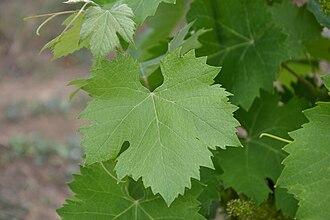
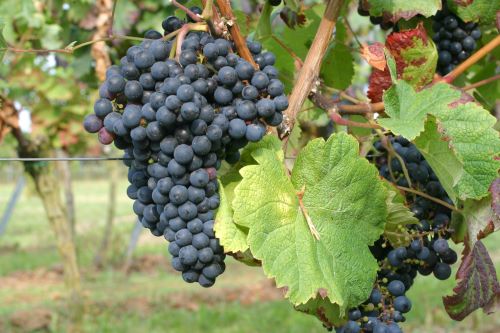
Tannat is physically expressive in the vineyard. Its berries are dark and thick-skinned, giving the grape its deep colour and formidable tannic structure. The bunches can be compact, and the vine has enough vigour to require control. This is not a grape that disappears quietly into the background. Its morphology already suggests the wines it can produce: dense, structured, slow to soften and built around skin-derived power.
Read more →
The thick skins are central. They protect the berries, carry phenolic material and give Tannat its unmistakable grip. They also make ripeness important. If the skins and seeds are not mature, the grape can feel hard and severe. If ripened well, the tannins become a frame rather than a wall. Tannat is therefore a grape where vine balance and harvest timing matter deeply.
- Leaf: medium to large, depending on clone, vigour and site
- Bunch: medium, often compact enough to require good airflow
- Berry: dark, thick-skinned, colour-rich and tannin-bearing
- Impression: powerful, structured, dark, firm and slow to reveal itself
Viticulture
Vigorous, tannic and demanding of ripeness
Tannat is a vigorous grape that needs careful vineyard discipline. It can produce strong growth, generous phenolic material and deeply coloured fruit, but that strength has to be directed. Too much vigour can delay ripening or reduce clarity. Too much crop can make tannins feel raw. Too little attention to canopy can increase disease pressure in compact bunches. Tannat rewards seriousness.
Read more →
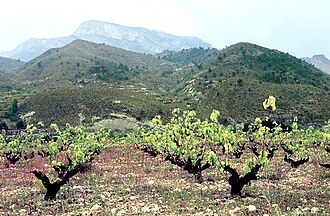
In Madiran, the grape benefits from warm days, cooler influences and soils that can give both ripeness and firmness. In Uruguay, maritime influence and a generally milder Atlantic setting help Tannat ripen with a different balance, often softening the harshest edges while preserving dark structure. This is why the same grape can feel severe in one place and more generous in another.
Canopy management is important because the fruit needs both exposure and protection. The grape’s thick skins can handle sun, but balanced ripening is more valuable than brute heat. Airflow matters too, especially where humidity can threaten compact bunches. The ideal vineyard gives Tannat enough warmth to mature fully, enough restraint to control vigour and enough freshness to keep the final wine from feeling heavy.
This is not a grape for careless winemaking or casual farming. Tannat’s strength is real, but unmanaged strength can become hardness. When the vineyard is balanced, however, that same force becomes architecture: colour, tannin, acidity and dark fruit holding together with impressive authority.
Wine styles
Dark fruit, serious tannin and long ageing potential
Although the focus here is the grape, Tannat’s wines reveal its physical nature clearly. They are usually dark, tannic and deeply flavoured, with black plum, blackberry, black cherry, tobacco, cocoa, smoke, earth and sometimes a leathery or iron-like edge. In traditional Madiran, the wines can be long-lived and stern in youth. In Uruguay, they often feel rounder, fruitier and more approachable.
Read more →
Modern techniques have changed the way Tannat is understood. Gentler extraction, better phenolic ripeness, oxygen management and more careful use of oak have helped reduce harshness while keeping structure. The grape does not need to become soft to be successful. It simply needs its power to be shaped rather than exaggerated.
This is why Tannat is such a useful variety to study. It shows the difference between tannin as a flaw and tannin as a structure. At its best, Tannat is not merely strong. It is composed, dark, age-worthy and deeply tied to the thickness of its skins.
Terroir
A grape that turns place into structure
Tannat does not translate terroir in a delicate, transparent way like Pinot Noir. It translates place through density, tannin, freshness and muscular architecture. In Madiran, it can feel dark, firm and long-lived, shaped by clay, stones, slopes and the cool-warm rhythm of the southwest. In Irouléguy, close to the Basque foothills, it can show mountain freshness and a more lifted frame. In Uruguay, Atlantic air and warmer ripening give a different expression: broader, polished and often more immediately generous.
Read more →
Soils matter because they influence vigour and water balance. Clay can support the vine through dry periods, gravel and stones can improve drainage, and slopes can help exposure and airflow. Tannat needs enough resources to ripen fully, but not so much fertility that the vine becomes heavy and unfocused. The best sites give power with control.
That is the heart of Tannat terroir: not delicacy, but discipline. It is a grape that can easily become too much. Place, farming and climate must give it direction.
History
From rustic power to modern precision
Tannat’s history has often been framed by power. In Madiran, the grape was known for wines that needed time, food and patience. Their strength was part of their identity, but also part of their challenge. Modern vineyard and cellar work has made the grape more legible. Today Tannat can still be firm, but it no longer has to be harsh.
Read more →
Uruguay gave Tannat a second life. There it became more than an imported European variety. It became a national reference point, a grape through which the country could define its red wine identity. That matters for Ampelique, because it shows how grape varieties migrate and then become local again. Tannat is French by origin, but Uruguayan by adoption.
Pairing
Built for protein, smoke and slow meals
Tannat is a natural partner for food with protein, fat and depth. Its tannins need something to hold onto: grilled beef, lamb, duck, cassoulet, barbecue, sausages, mushrooms, hard cheeses and slow-cooked stews. In Uruguay, the connection with grilled meat is obvious. In southwest France, it belongs just as naturally with duck, beans and rustic winter cooking.
Read more →
Aromas and flavors: blackberry, black plum, black cherry, tobacco, cocoa, smoke, leather, earth and dark spice. Food pairings: grilled beef, lamb shoulder, duck confit, cassoulet, smoked sausages, mushrooms, aged cheese, barbecue and dishes with deep savoury flavour.
Where it grows
Madiran, Uruguay and warm-climate outposts
Tannat’s two main homes are southwest France and Uruguay. In France, it is the core grape of Madiran and appears in neighbouring areas such as Béarn, Irouléguy, Saint-Mont and Tursan. In Uruguay, it is widely planted and has become the country’s flagship red grape, especially around Canelones, Montevideo, Maldonado, Colonia and other wine regions. Smaller plantings exist in Argentina, Brazil, the United States and other warm-climate areas.
Read more →
- France: Madiran, Béarn, Irouléguy, Saint-Mont, Tursan and the wider southwest
- Uruguay: Canelones, Montevideo, Maldonado, Colonia, San José and other regions
- South America: Argentina and Brazil in smaller but meaningful plantings
- Elsewhere: United States, especially California, plus experimental warm-climate plantings
Why it matters
Why Tannat matters on Ampelique
Tannat matters because it shows that grape character can be physical. Some varieties seduce through perfume; Tannat speaks through structure. It teaches us about skins, tannins, vigour, ageing and the way a grape can carry strength without losing identity. It also shows how a variety can move across continents and become meaningful twice: first in Madiran, then again in Uruguay.
Read more →
For Ampelique, Tannat is essential because it connects ampelography with cultural identity. Its thick skins are not an abstract detail; they shape the wine, the farming, the ageing, the food pairing and the regions that made it famous. It is a grape that lets readers understand why the vine itself matters.
Quick facts
- Color: red / black grape
- Main names: Tannat, Harriague, Moustrou, Moustroun
- Parentage: deeper parentage not firmly established; generally treated as an old southwest French variety from the Pyrenean-Gascon vineyard world
- Origin: southwest France, especially the Madiran / Béarn region
- Most common regions: France: Madiran, Béarn, Irouléguy, Saint-Mont and Tursan; Uruguay: Canelones, Montevideo, Maldonado, Colonia and San José; also Argentina, Brazil and California
- Climate: temperate to warm; needs enough ripeness to mature tannins fully
- Viticulture: vigorous, thick-skinned, tannin-rich, colour-giving, requires canopy and yield control
- Soils: clay, gravel, stones, slopes and well-drained soils that balance vigour and ripeness
- Styles: structured reds, age-worthy Madiran, softer Uruguayan Tannat, blends and modern varietal wines
- Signature: deep colour, firm tannin, black fruit, tobacco, cocoa, smoke, leather and powerful structure
Closing note
Tannat is not a grape of quick charm. It is a grape of structure, patience and deep-rooted strength. Its beauty lies in the way thick skins become architecture, tannin becomes memory and dark fruit becomes something that can age, soften and endure. From Madiran to Uruguay, Tannat proves that firmness can be its own kind of elegance.
Image credits
Leaf image: placeholder image — Wikimedia Commons.
Vineyard image: placeholder image — Wikimedia -.
Cluster image: VIVC.de – Doris Schneider, Julius Kühn-Institut (JKI), Federal Research Centre for Cultivated Plants, Institute for Grapevine Breeding Geilweilerhof – 76833 Siebeldingen, GERMANY.
If you like this grape
If you appreciate Tannat’s deep colour, firm tannin and slow-building structure, you might also enjoy Malbec for dark southwest French depth, Fer Servadou for peppery regional character, or Mourvèdre / Monastrell for another thick-skinned Mediterranean grape with savoury power.
A grape of thick skins, deep colour and tannic architecture — stern at first, but deeply rewarding with time.
 Ampelique
Leave a comment