Ampelique Grape Profile
Grüner Veltliner
Austria’s signature white grape of pepper, citrus, texture, and quiet depth.
Grüner Veltliner is Austria’s great white calling card: fresh, savory, citrus-led, lightly peppery, and capable of far more seriousness than its most cheerful versions first suggest. It can be crisp and easy, poured by the glass with schnitzel or asparagus, but it can also become deep, textured, age-worthy and almost architectural. Its finest wines carry green apple, lime, white pepper, lentil, herbs, stone, and sometimes a subtle smoky or honeyed note with age.
What makes Grüner Veltliner fascinating is its range without losing identity. It can be lean, bright and almost electric, yet also broad, layered and quietly powerful. The grape is naturally linked to Austria’s loess terraces, Danube valleys, cool nights and careful vineyard work. In the best examples, it feels both earthy and precise: a white wine with freshness, texture, savory detail and a calm intelligence that grows more interesting with every glass.
The peppered thinker.
Grüner Veltliner is bright, savory and quietly clever: carrying citrus, white pepper, herbs and texture without ever needing to shout.
Schnitzel, asparagus, clean daylight.
Crisp food, herbs, spring vegetables, roast chicken, and a glass that cuts, lifts, and leaves the table feeling brighter.
Grüner Veltliner speaks in green light and white pepper.
It can be quick as a spring morning, or slow and deep as loess holding the memory of rain.
Contents
Origin & history
Austria’s defining white grape
Grüner Veltliner is the most important white grape of Austria and one of Central Europe’s most distinctive varieties. It is strongly linked to the Danube regions, especially Wachau, Kamptal, Kremstal, Wagram and Weinviertel, where it has shaped both everyday drinking culture and some of the country’s most serious white wines. Its name can be translated loosely as “green Veltliner,” though the grape’s true identity is less about color than character: citrus, pepper, savory lift, texture and a uniquely Austrian sense of precision.
Read more →
Modern genetic research identifies Grüner Veltliner as a crossing involving Traminer, often understood through the Savagnin/Traminer family, and a rare old variety known as St. Georgen. That parentage feels fitting. The Traminer side suggests aromatic history and European depth; the St. Georgen side gives the grape a local, almost archaeological connection to Austrian viticulture. Grüner Veltliner is not merely planted in Austria. It feels woven into the country’s vineyard memory.
For a long time, Grüner Veltliner was better known locally than internationally. It was a practical grape, a table grape in the cultural sense: not for eating, but for drinking with food, with conversation, with everyday Austrian meals. Over time, careful growers proved that the same variety could produce not only crisp, peppery wines, but also profound, long-lived bottles from old vines and great sites. This dual identity is part of its charm.
Today the grape has become one of the clearest symbols of modern Austrian wine. It travels to other countries, but it still speaks most naturally in Austria: on loess, primary rock, terraces, cool valleys, and sunlit slopes where ripeness and freshness can grow side by side.
Ampelography
A vigorous vine with generous clusters and green-gold fruit
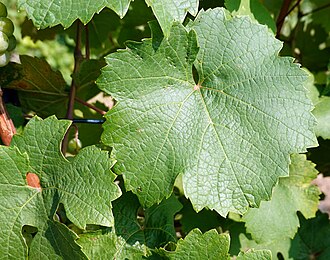
Grüner Veltliner is usually a fairly vigorous variety, with medium to large leaves and a canopy that can become generous if soil fertility and water supply are strong. The leaves are often rounded to slightly pentagonal, usually with three to five lobes and moderately marked sinuses. In the field, the vine can look healthy, open and productive, but not always naturally restrained. It often needs thoughtful pruning, canopy work and yield management to move from simple freshness into real detail.
Read more →
The petiole sinus is generally open to moderately open, and the leaf surface can appear slightly textured. The underside may show light hairiness along the veins. Young growth is typically bright and vigorous, especially in fertile loess soils where the vine can push strongly early in the season. This energy is useful, but it must be directed. Grüner Veltliner can produce abundant fruit, and great quality usually depends on bringing that abundance into balance.
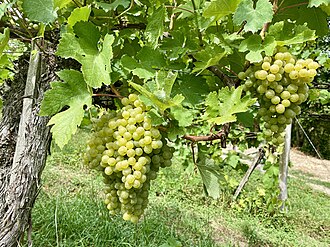
Clusters are typically medium to large and can be fairly compact, depending on clone and growing conditions. Berries are medium-sized, green-yellow to golden when ripe, with enough skin presence to contribute texture and savory structure. The grape’s field personality is not delicate or fragile. It is productive, adaptable and capable, but it needs discipline if the final wine is to show clarity rather than simple volume.
- Leaf: medium to large, rounded to slightly pentagonal, usually three- to five-lobed
- Petiole sinus: open to moderately open
- Bunch: medium to large, sometimes compact, often productive
- Berry: green-yellow to golden, medium-sized, fresh and savory in profile
- Impression: vigorous, generous, bright, peppery and highly site-responsive
Viticulture
Productive, adaptable, and best when carefully restrained
Grüner Veltliner is adaptable and can produce reliable crops, which helped make it important in Austria. But reliability alone does not explain greatness. The best wines come when growers control vigor, balance yields, protect freshness and allow the fruit to develop full flavor without losing its savory edge. On fertile soils, especially loess, the grape can be generous and richly textured. On rockier or cooler sites, it may become leaner, more mineral and more tightly wound.
Read more →
The grape generally prefers cool to moderate continental climates with enough warmth to ripen fully and enough night-time freshness to retain acidity. Austria’s Danube-influenced regions suit it beautifully because they offer contrasts: warm days, cool nights, slopes, terraces, river influence and varied soils. In warmer sites, Grüner Veltliner can gain body and yellow fruit. In cooler sites, it can stay sharper and more herbal. In balanced sites, both sides meet.
Canopy management is important because excessive shade can make wines bland or vegetal, while too much sun may push ripeness faster than flavor. Balanced leaf exposure helps preserve acidity and develop the grape’s classic savory notes. Yield control is equally important. High yields can make Grüner Veltliner simple, light and pleasant. Lower, balanced yields from good sites can bring density, pepper, texture and the capacity to age.
Disease pressure depends on region, canopy and season. Compact bunches and vigorous growth can make rot and mildew a concern in humid conditions, so airflow matters. Grüner Veltliner is not usually treated as a fragile grape, but it is not automatic either. Its finest expression requires the grower to shape abundance into precision.
Wine styles
From crisp peppery whites to powerful age-worthy wines
Grüner Veltliner can be light, crisp and refreshing, but also full-bodied, complex and long-lived. At the lighter end, it shows lime, green apple, white pepper, herbs and a bright dry finish. These wines are often made in stainless steel and designed for early drinking. They can be joyful, direct and extremely useful at the table. At the more serious end, especially from old vines and top sites, Grüner Veltliner can become rich, layered and deeply textured without losing its savory core.
Read more →
In richer styles, the grape may show yellow apple, pear, ripe citrus, lentil, tobacco leaf, smoke, honey, spice and a more substantial mid-palate. Lees contact, larger neutral vessels and careful ageing can add texture, though the best wines rarely need obvious oak. Grüner Veltliner’s natural interest lies in its balance of fruit, pepper, herbs, texture and earth. Heavy cellar treatment can blur that balance.
Austria’s categories and regional traditions add further nuance. In the Wachau, terms such as Steinfeder, Federspiel and Smaragd indicate increasing ripeness and body. Elsewhere, regional styles range from lean and peppery Weinviertel examples to more powerful wines from Wagram loess or concentrated single-vineyard bottlings in Kamptal and Kremstal. The grape is broad enough to hold these differences without losing its identity.
Ageing can be remarkable. Mature Grüner Veltliner may develop honey, wax, mushroom, smoke, spice and earthy depth, yet often keeps a firm line underneath. This capacity for evolution is one reason the grape deserves serious attention. It is not just a crisp white for quick refreshment. It can become one of Europe’s most compelling dry whites.
Terroir
Loess, stone, river air, and savory precision
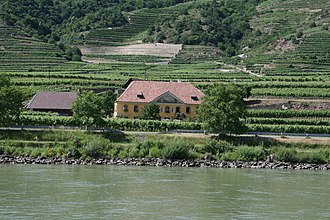
Grüner Veltliner is deeply responsive to soil and site. Loess is one of its classic partners, especially in regions such as Wagram and parts of Kamptal and Kremstal, where it can produce wines with body, spice and a rounded yet dry texture. Primary rock, gneiss, schist and stony terrace soils often bring a tighter, more mineral expression. The grape is able to translate these differences clearly, not always through dramatic aroma, but through shape, grip and finish.
Read more →
In loess, Grüner Veltliner can feel generous, peppery and almost creamy in the middle, with a savory softness that still remains dry. On rockier slopes, it may become more angular, citrus-driven and tense. River influence, altitude and diurnal shift all matter, especially in regions shaped by the Danube and its side valleys. Warm days build ripeness; cool nights protect freshness and aromatic clarity.
This terroir sensitivity is sometimes quieter than in Riesling, but no less real. Grüner Veltliner often speaks in texture rather than high perfume. One site may give lentil, pepper and density. Another may give lime, herbs and stone. Another may age toward smoke, wax and earth. The grape is a patient interpreter of place, especially when yields are balanced and the cellar does not overstate itself.
At its best, Grüner Veltliner makes landscape taste practical and beautiful at the same time. It is not only about romance or geology. It is about how soil, farming and weather create a wine that belongs naturally at the table, but can still reward long attention.
History
From local staple to international benchmark
Grüner Veltliner’s modern reputation grew as Austrian wine itself became more focused, transparent and quality-driven. What had once been viewed mainly as a dependable national grape began to receive international attention for its freshness, food compatibility and unexpected seriousness. Sommeliers helped bring it to wider audiences because it matched beautifully with difficult foods: asparagus, vegetables, pork, fried dishes and aromatic herbs.
Read more →
Its rise also coincided with a growing appreciation for wines that were not simply fruity or heavily oaked. Grüner Veltliner offered something different: savory freshness, pepper, dryness, texture and a clear link to regional identity. It could be casual without being boring, serious without being solemn. This made it unusually flexible in restaurants and at home.
Outside Austria, Grüner Veltliner has been planted in places such as the Czech Republic, Slovakia, Hungary, Germany, New Zealand, Australia, and the United States. Some examples are very promising, particularly in cooler or continental sites where the grape can keep acidity and develop its peppery profile. Still, Austria remains the benchmark. The grape can travel, but its grammar was written along the Danube.
Today Grüner Veltliner stands as one of Europe’s great white varieties. It is not famous because it imitates Chardonnay, Riesling or Sauvignon Blanc. It is famous because it does something of its own: fresh, savory, peppered, textured and honest.
Pairing
A brilliant food wine for vegetables, herbs, and crisp textures
Grüner Veltliner is one of the most useful white wines at the table. It handles foods that can be difficult for many wines: asparagus, artichokes, green vegetables, herbs, salads, pork, fried dishes and lightly spicy cooking. Its acidity refreshes, its peppery note adds lift, and its savory texture allows it to stand beside food rather than simply cut through it. Few white grapes are so quietly practical and so genuinely interesting at the same time.
Read more →
Aromas and flavors: lime, green apple, pear, lemon peel, white pepper, lentil, fresh herbs, celery leaf, radish, smoke, wet stone and sometimes honey, wax or mushroom with age. Structure: usually dry, fresh and savory, ranging from light and crisp to full-bodied and textured, with acidity, pepper and a firm finish providing shape.
Food pairings: Wiener schnitzel, roast pork, asparagus, artichokes, herb salads, fried chicken, trout, smoked fish, goat cheese, fresh cheeses, dumplings, vegetable tempura, grilled chicken, lentils and dishes with parsley, chives, dill or lemon. Lighter styles love crisp, fresh foods; richer styles can handle more substantial dishes.
Its special strength is that it can make green flavors feel elegant. Where many wines clash with asparagus or herbs, Grüner Veltliner seems to understand them. It does not overpower the plate. It sharpens it, seasons it, and leaves the mouth ready for another bite.
Where it grows
Austria first, with a growing life beyond
Austria remains the heart of Grüner Veltliner. Wachau, Kamptal, Kremstal, Wagram, Weinviertel and other regions each show a different face of the grape. Wachau can give powerful, mineral, long-lived examples. Kamptal and Kremstal often balance depth with precision. Wagram’s loess soils can bring body and generosity. Weinviertel is especially associated with the grape’s classic peppery freshness.
Read more →
Beyond Austria, Grüner Veltliner is also grown in the Czech Republic, Slovakia, Hungary and other Central European regions. In the New World, it appears in New Zealand, Australia, the United States and smaller experimental plantings. These wines can be successful when the climate allows full ripeness without losing acidity. The grape needs enough warmth to avoid thinness and enough coolness to keep its pepper, herbs and structure alive.
- Austria: Wachau, Kamptal, Kremstal, Wagram, Weinviertel and other regions
- Central Europe: Czech Republic, Slovakia, Hungary and neighboring areas
- New World: New Zealand, Australia, the United States and selected cool-climate plantings
- Best sites: cool to moderate climates with loess, primary rock, terraces or good diurnal range
Why it matters
Why Grüner Veltliner matters on Ampelique
Grüner Veltliner matters on Ampelique because it shows that a great grape does not need to fit the familiar international categories. It is not Chardonnay, not Riesling, not Sauvignon Blanc. It has its own logic: pepper, citrus, herbs, savory texture, loess, Danube air, food-friendliness and patient ageing. It expands the idea of what a serious white grape can be.
Read more →
It also matters because it connects grape identity to everyday culture. Grüner Veltliner can be profound, but it is not remote. It belongs with food, taverns, terraces, vegetables, pork, river landscapes and the rhythm of Austrian hospitality. That gives it a human quality. It is serious without becoming untouchable.
For a grape library, it is especially valuable because it teaches several lessons at once: how productive vines can become precise, how loess differs from rock, how savory flavors can be beautiful, and how a national grape can become an international benchmark without losing its roots. It is a grape of clarity, but not simplicity.
On Ampelique, Grüner Veltliner stands for quiet intelligence. It is bright, useful, deeply regional, and capable of ageing into something moving. It reminds us that greatness can be fresh, peppery, practical and humble — and still stay with you for a long time.
Quick facts
- Color: white
- Parentage: Traminer/Savagnin family × St. Georgen
- Origin: Austria / Central Europe
- Climate: cool to moderate continental climates with enough warmth for full ripeness
- Soils: loess, primary rock, gneiss, schist, gravel and well-drained terrace sites
- Styles: crisp dry whites, textured single-vineyard wines, powerful age-worthy bottlings
- Signature: lime, green apple, white pepper, herbs, lentil, texture and savory freshness
- Synonyms: Weißgipfler, Grüner Muskateller in some historical contexts
Closing note
A great Grüner Veltliner is never only about freshness. It is about how freshness becomes seasoning, how pepper becomes structure, how loess becomes texture, and how a generous vine can be shaped into precision. It is one of Europe’s most quietly complete white grapes: practical, bright, savory, and capable of surprising depth.
Image credits
Grüner Veltliner leaf image: Wikimedia Commons – Geolina163.
Grüner Veltliner vineyard image: Wikimedia Commons – jay8085.
Grüner Veltliner cluster image: Wikimedia Commons – Funke.
If you like this grape
If you appreciate Grüner Veltliner’s citrus brightness, peppery lift and savory texture, you might also enjoy Riesling for sharper acidity and ageing detail, Sauvignon Blanc for brighter aromatic energy, or Chenin Blanc for texture, acidity and long-lived white-wine depth.
A white grape with citrus in its line and pepper in its shadow — fresh, savory, Austrian, and quietly built for the table.
 Ampelique
Leave a comment