Tag: White grapes

White grape profiles. Origin, ampelography, viticulture notes and quick facts. Filter by country to explore regional styles.

  • FRONTENAC BLANC

    Ampelique Grape Profile

    Frontenac Blanc

    Origin, viticulture, morphology, wine styles, and place.

    Frontenac Blanc is a cold-hardy white grape from the Frontenac family, valued for winter survival, early ripening, bright acidity and yellow-golden fruit. It is not an ancient European variety, but a modern northern answer: a grape shaped by cold climates, short seasons and the need for reliable white wine production where many traditional varieties struggle.

    Frontenac Blanc carries the resilience of Frontenac in a lighter, white-skinned form. It is a grape of northern light rather than Mediterranean warmth: fresh, productive, adaptable and quietly important for growers building wine cultures in very cold regions.

    Grape personality

    The northern white survivor.
    Frontenac Blanc is fresh, hardy and practical: a white grape of golden berries, bright acidity, cold winters and modern vineyard resilience.

    Best moment

    Spring light after winter.
    A crisp glass with trout, goat cheese, herbs, river air and the feeling that the vineyard has made it through again.


    Frontenac Blanc is a pale answer to a dark northern question.
    It keeps the courage of Frontenac, but turns it toward citrus, gold, freshness and cold-climate white wine.


    Origin & history

    A white mutation from the Frontenac family

    Frontenac Blanc is a white-fruited genetic variant of Frontenac. It belongs to the same cold-hardy family as Frontenac and Frontenac Gris, but turns the family’s northern strength toward white wine. Where Frontenac gives blue-black berries and red wine potential, Frontenac Blanc gives yellow to golden fruit, bright acidity and a white-wine profile suited to cold-climate vineyards.

    Read more →

    Its story is modern and practical. Frontenac itself was released by the University of Minnesota as a cold-hardy red grape. Frontenac Gris later appeared as a color mutation, and Frontenac Blanc followed as an even paler expression of the same family. This makes Frontenac Blanc part of a rare lineage where growers can see how one genetic foundation expresses itself through different berry colors and wine possibilities.

    That origin matters. Frontenac Blanc is not defined by old European prestige, but by adaptation. It exists because northern growers need varieties that can withstand winter, ripen in shorter seasons and still give distinctive wine. Its identity is agricultural first, then stylistic: survival, reliability, acidity, freshness and cold-climate usefulness.


    Ampelography

    Golden berries on a vigorous cold-climate vine

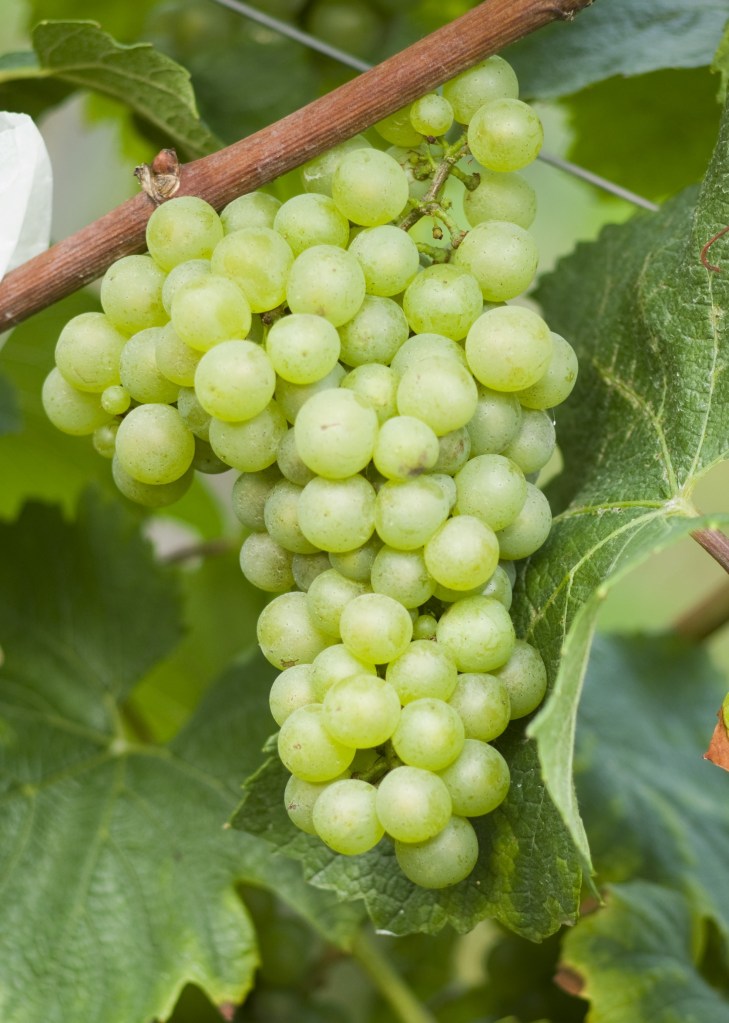
    Frontenac Blanc shares much of the general vine character of the Frontenac family. It is vigorous, productive and built for difficult northern conditions. The berries are yellow-green to golden rather than dark or gris-colored, and this visual difference is the main feature that separates it from its siblings in the vineyard. Its clusters can support generous yields, especially when the site and canopy are well managed.

    Read more →

    The vine’s vigor is both strength and challenge. Strong growth helps the plant recover and thrive in climates where winter injury and short growing seasons are real concerns. But excess canopy can shade fruit, reduce airflow and complicate ripening. As with Frontenac, the grower’s task is to turn natural energy into useful balance.

    • Leaf: vigorous canopy, requiring good airflow and thoughtful positioning
    • Bunch: productive clusters, capable of generous yields
    • Berry: yellow-green to golden, white-fruited mutation of Frontenac
    • Vine impression: hardy, energetic, productive and northern
    • Style clue: brightness, acidity, citrus fruit and cold-climate freshness

    Viticulture

    Early, cold-hardy and capable of high yields

    Frontenac Blanc’s viticultural value lies in its combination of cold hardiness, early harvest potential and productivity. It is especially attractive in regions where growers need reliable white grapes that can finish ripening before autumn turns difficult. Compared with Frontenac and Frontenac Gris, it is often noted for an earlier harvest window, which can be a major advantage in very short-season climates.

    Read more →

    The variety can carry high yields while still producing useful fruit quality, but that does not mean it should be farmed carelessly. Crop level, canopy density and site exposure all influence the final balance. In colder regions, every extra bit of sunlight and airflow matters. A dense canopy may preserve vine strength, but it can also delay ripening and soften aromatic definition.

    Like other cold-hardy hybrids, Frontenac Blanc is often grown in places where disease pressure and humidity can be significant. Its resilience is useful, but not absolute. Good vineyard hygiene, open canopies, balanced nutrition and thoughtful harvest timing remain essential. The aim is not simply to get fruit to the winery. The aim is to keep acidity, ripeness and aromatic clarity in proportion.


    Wine styles

    Fresh white wines with citrus, stone fruit and bright acid

    Frontenac Blanc is generally used for fresh, aromatic white wines, often with citrus, apple, pear, tropical hints and bright acidity. It can also suit off-dry, sparkling, dessert-style or ice wine directions, depending on site and producer intention. Its naturally lively acid structure is one of its defining features, and winemaking usually works to frame that energy rather than hide it completely.

    Read more →

    Because the grape is not as old or widely established as classic vinifera varieties, its stylistic identity is still being explored. Some producers may favor clean stainless steel fermentations to preserve freshness. Others may use a small amount of residual sugar to balance acidity. Lees contact can add roundness, while sparkling production can turn its acidity into an asset.

    The best versions do not try to imitate Chardonnay, Sauvignon Blanc or Riesling too directly. Frontenac Blanc is most convincing when it speaks as a northern hybrid: clean, bright, practical, fruit-driven and full of cold-climate energy. Its beauty lies in usefulness as much as complexity.


    Terroir

    A grape shaped by short seasons and northern freshness

    Frontenac Blanc’s terroir story begins with climate. It belongs to places where winter survival, early ripening and bright acidity matter more than the old-world language of grand crus and famous slopes. In cold regions, terroir is not only soil. It is frost, snow cover, wind, drainage, sunlight, disease pressure and the length of the frost-free season.

    Read more →

    Good sites for Frontenac Blanc help the vine ripen without losing its natural freshness. Warm exposures, good air movement and well-drained soils can all help. In cooler or wetter years, acidity may dominate. In better-balanced seasons, the fruit can show more citrus, apple, pear and tropical softness. The grape records the northern season through ripeness and acid balance more than through subtle mineral signatures.


    History

    A young grape in an evolving northern tradition

    Frontenac Blanc is still young as a named wine grape, and that makes its story open rather than fixed. Growers and winemakers are still learning how best to use it: how much crop it can carry, how early to harvest, how to manage acidity, and which styles show the grape most clearly. This gives the variety a sense of movement. It is not yet enclosed by tradition.

    Read more →

    Its historical importance lies in the broader Frontenac family. Together, Frontenac, Frontenac Gris and Frontenac Blanc show how cold-climate breeding and mutation can create a practical range of vineyard tools. For regions that once struggled to produce reliable wine grapes, this family represents a new kind of local possibility. Frontenac Blanc adds a white voice to that conversation.


    Pairing

    Freshness for herbs, river fish and bright food

    Frontenac Blanc’s acidity makes it useful with food that needs lift: freshwater fish, goat cheese, green herbs, salads, lightly spiced dishes, roast chicken, grilled vegetables and creamy but not heavy sauces. Off-dry versions can also work well with gentle heat, because the combination of fruit, acidity and a little sweetness can soften spice while keeping the palate fresh.

    Read more →

    Aromas and flavors: lemon, green apple, pear, white peach, citrus peel, light tropical fruit, sometimes floral or honeyed tones depending on ripeness and style. Structure: bright acidity, light to medium body, refreshing fruit and a clean northern profile.

    Food pairings: trout, perch, goat cheese, herb salads, asparagus, roast chicken, green vegetables, mild curries, creamy fish dishes, soft cheeses and apple-based savory dishes.


    Where it grows

    A northern white for the United States and Canada

    Frontenac Blanc is most relevant in cold-climate North America. It is associated with Minnesota and the broader Upper Midwest, and it also has importance in Canadian regions such as Quebec and Ontario. Its map is not large in the global sense, but it is meaningful: it appears where growers need a hardy, productive white grape for short seasons and cold winters.

    Read more →
    • United States: Minnesota, Wisconsin, Iowa, Upper Midwest, New York and other cold-climate regions
    • Canada: Quebec, Ontario and selected cold-climate vineyards
    • Best suited to: short-season regions requiring winter hardiness, acidity and white wine potential

    Its value is not measured by worldwide fame. It is measured by what it makes possible in places where conventional white wine grapes may be too fragile, too late or too winter-sensitive.


    Why it matters

    Why Frontenac Blanc matters on Ampelique

    Frontenac Blanc matters on Ampelique because it widens the meaning of grape diversity. It reminds readers that grape varieties are not only inherited from the past. Some are created, selected or discovered to answer new problems. Frontenac Blanc belongs to the story of climate adaptation, regional independence and the patient work of building viticulture in difficult places.

    Read more →

    It also shows how one grape family can branch into several useful identities. Frontenac provides red color and dark fruit. Frontenac Gris gives a pink-grey expression. Frontenac Blanc offers a white version built around freshness and yellow-golden fruit. Together, they show that grape diversity is not static. It keeps moving, mutating and answering the needs of growers.


    Quick facts

    • Color: white / yellow-golden berries
    • Main name: Frontenac Blanc
    • Parentage / origin: white-fruited genetic variant of Frontenac
    • Family: Frontenac family, alongside Frontenac and Frontenac Gris
    • Institution: University of Minnesota grape breeding program
    • Availability / release context: became available in the early 2010s
    • Most common regions: Minnesota, Wisconsin, Iowa, Upper Midwest, Quebec, Ontario, New York and other cold-climate North American regions
    • Climate: cold-climate, winter-hardy, short-season suitable
    • Viticultural character: vigorous, productive, early-harvest potential, capable of high yields with good management
    • Wine styles: dry white, off-dry white, sparkling, dessert-style and ice wine possibilities
    • Classic markers: citrus, apple, pear, white peach, bright acidity, light tropical fruit

    Closing note

    Frontenac Blanc is a young grape with a practical kind of beauty. It does not carry the romance of ancient Europe, but it carries something equally meaningful: the courage of northern viticulture. It turns cold hardiness, yellow fruit and bright acidity into a white wine voice for regions that need their own grapes, their own language and their own future.

    If you like this grape

    If you are interested in Frontenac Blanc’s cold-climate freshness, you might also enjoy Frontenac Gris for the pink-grey mutation of the family, La Crescent for a more aromatic northern white, or Itasca for another modern Minnesota white grape.

    A cold-hardy white grape of golden fruit, bright acidity and northern possibility.
  • PRAIRIE STAR

    Ampelique Grape Profile

    Prairie Star

    Origin, viticulture, morphology, wine styles, and place.

    Prairie Star is a cold-hardy white grape bred by Elmer Swenson for northern vineyards, valued for winter survival, moderate disease resistance, reliable ripening and a calm, useful wine profile. It is not an aromatic showpiece like La Crescent, nor a world classic like Riesling. Its importance lies in something quieter: it gives cold-climate growers a practical white grape with body, balance and dependable vineyard behavior.

    Prairie Star is a grape of usefulness rather than spectacle. Its charm is not loud perfume, but composure: good winter hardiness, a generous mid-palate, lower acidity than many northern hybrids, and the ability to support blends where sharper varieties need softness and flesh.

    Grape personality

    The quiet northern helper.
    Prairie Star is hardy, composed and practical: a white grape of body, balance, mild fruit and cold-climate reliability.

    Best moment

    Simple supper, early autumn.
    Roast chicken, lake fish, soft herbs, mild cheese and a glass that brings calm rather than drama.


    Prairie Star does not need to dazzle.
    It brings steadiness, body and winter courage — a quiet white grape for places where survival itself is part of beauty.


    Origin & history

    An Elmer Swenson grape from the cold-climate frontier

    Prairie Star belongs to the cold-climate grape legacy of Elmer Swenson, one of the most important private grape breeders in northern American viticulture. It was tested as ES 3-24-7 and comes from the cross ES 2-7-13 × ES 2-8-1. That family background places it among the complex interspecific varieties designed not for tradition alone, but for adaptation: grapes able to survive severe winters and still produce useful wine fruit.

    Read more →

    The name itself carries a local feeling. Prairie Star is associated with the landscape of Wisconsin and the northern Midwest, where grape growing must answer questions that Burgundy, Bordeaux or the Loire rarely ask. Can the vine survive winter? Can the wood harden properly? Can the fruit ripen before autumn closes? Can the wine avoid excessive acidity? Prairie Star was bred for that world.

    It is not the most famous cold-hardy white grape, but it is one of the practical ones. Its value lies in reliability, mid-palate contribution and usefulness in blends. In a northern vineyard, those are not minor virtues. They can be the difference between a difficult crop and a balanced wine.


    Ampelography

    A vigorous white vine with useful vineyard balance

    Prairie Star is generally a vigorous white grape with good winter hardiness and a practical growth habit. Its clusters are usually suited to wine production rather than table-grape display, and the berries ripen to a pale green-gold or yellowish tone. The vine’s field identity is less about dramatic leaf shape and more about behavior: hardiness, growth, ripening pattern and the way fruit can bring body without excessive sharpness.

    Read more →

    Like many cold-hardy hybrids, Prairie Star should be read through its purpose. It was not bred to imitate a classical vinifera leaf or cluster. It was bred to function in harsh growing regions. That means its morphology matters most when connected to vineyard management: canopy vigor, fruit zone exposure, disease resistance and the ability to mature fruit under northern conditions.

    • Leaf: vigorous green canopy, usually requiring thoughtful management
    • Bunch: wine-focused clusters, generally suited to cold-climate production
    • Berry: pale green to golden-white at ripeness
    • Vine impression: hardy, practical, moderate in aromatic force
    • Style clue: body, softness, mild fruit and blending usefulness

    Viticulture

    Winter-hardy, moderate in disease pressure, and useful in northern sites

    Prairie Star’s chief strength is its ability to grow where winter conditions are severe. It is associated with cold-hardy zones and is valuable in regions where traditional European white grapes would be unreliable. It can reach useful sugar levels and tends to produce acidity that is more moderate than some sharper northern hybrids, which makes it attractive both as a varietal grape and as a blending component.

    Read more →

    The vine is often described as suitable for training systems such as vertical shoot positioning, which helps manage canopy and fruit exposure. In practical terms, Prairie Star asks for the same careful attention as many vigorous northern grapes: enough canopy to ripen and protect fruit, but not so much that airflow suffers. Good air movement is especially important in humid summer climates.

    Its disease resistance is useful, but it should not be treated as a no-work grape. Cold-hardy does not mean carefree. Growers still need to manage mildew, fruit health, crop load and ripeness. Prairie Star rewards practical, attentive viticulture more than romantic neglect.


    Wine styles

    Neutral, rounded whites with body and blending value

    Prairie Star is usually not a highly aromatic white grape. Its wines are often relatively neutral, sometimes with floral lift in favorable years, and generally valued for mouthfeel, softness and finish. That makes the grape especially useful in blends. Where another cold-climate variety brings acidity and aroma but lacks body, Prairie Star can add a quieter sense of breadth.

    Read more →

    As a varietal wine, Prairie Star can be gentle, clean and understated. It may show mild apple, pear, citrus, blossom or light herbal notes, but it rarely depends on dramatic perfume. In this sense it is very different from La Crescent. La Crescent wants attention; Prairie Star often works behind the scenes, improving balance and texture.

    This quieter profile should not be dismissed. In cold-climate winemaking, structure is often the hardest thing to achieve. Prairie Star can help soften acidity, fill the mid-palate and produce whites that feel less sharp and more complete. Its best role may be less glamorous, but very valuable.


    Terroir

    A grape shaped first by winter and season length

    For Prairie Star, terroir begins with cold. The most important question is whether the vine can survive winter, ripen fruit and maintain health in short, humid or unpredictable seasons. Soil still matters, but climate is the dominant voice. A good Prairie Star site offers winter protection, enough sunlight, airflow, drainage and a growing season long enough to bring fruit toward balance.

    Read more →

    In warmer or better-exposed northern sites, the grape can reach more complete ripeness and contribute a rounder palate. In cooler or wetter years, it may remain more neutral and functional. This makes Prairie Star a useful reminder that cold-climate terroir is not always expressed through dramatic flavor. Sometimes it is expressed through balance, survival and the ability to make a wine feel whole.


    History

    Part of the practical architecture of northern wine

    Prairie Star belongs to a modern chapter in grape history: the development of hardy varieties for regions once considered too cold for reliable wine production. Its importance is not measured by fame or prestige, but by usefulness. It helped give northern growers another tool, another blending option and another white grape capable of handling difficult winters.

    Read more →

    In that sense, Prairie Star is part of the quiet infrastructure of cold-climate wine. Some grapes become famous because they define a flavor. Others matter because they help a region function. Prairie Star belongs more to the second category. It may not always be the star of the label, but it can help a wine achieve shape, softness and balance.


    Pairing

    Gentle whites for simple, savory food

    Prairie Star wines, when made in a clean dry or semi-dry style, are best with food that does not overwhelm them. Think lake fish, roast chicken, mild cheeses, simple vegetable dishes, creamy soups, pork, herbs and lightly seasoned grains. The grape’s value at the table is its softness and ease rather than dramatic flavor contrast.

    Read more →

    Aromas and flavors: mild apple, pear, citrus, light flowers, soft herbs and sometimes a faint floral lift in better years. Structure: light to medium body, moderate acidity compared with many northern hybrids, and a useful rounded finish.

    Food pairings: freshwater fish, roast poultry, soft cheeses, creamy pasta, vegetable gratin, potato dishes, mild pork, white beans, mushroom dishes and simple picnic foods.


    Where it grows

    A northern North American specialty

    Prairie Star is most relevant in cold-climate North America. It is associated with states and regions such as Minnesota, Wisconsin, Iowa, Illinois and other northern areas, with some plantings also appearing in Canada. Its geography is narrow compared with international grapes, but that narrowness is exactly what gives the variety meaning. It belongs to a very specific viticultural problem and helps answer it.

    Read more →
    • United States: Minnesota, Wisconsin, Iowa, Illinois and other cold-climate regions
    • Canada: selected cold-climate vineyards and hybrid-focused regions
    • Best suited to: winter-cold regions needing a practical white grape with body and moderate acidity

    Prairie Star is therefore not a grape of global expansion, but of regional usefulness. Its place is the northern vineyard, where resilience and balance matter deeply.


    Why it matters

    Why Prairie Star matters on Ampelique

    Prairie Star matters on Ampelique because it reminds us that not every important grape is famous, ancient or intensely aromatic. Some grapes matter because they make winegrowing possible in difficult places. Prairie Star helps tell the story of northern vineyards, hybrid breeding and the practical intelligence behind cold-climate wine.

    Read more →

    It also balances the grape library. Alongside expressive cold-climate varieties such as La Crescent and quieter varieties such as Louise Swenson, Prairie Star shows another role: the structural helper. It is a grape of usefulness, mid-palate and regional adaptation. That may sound modest, but in real vineyards modest strengths can be essential.


    Quick facts

    • Color: white
    • Main name: Prairie Star
    • Breeding number: ES 3-24-7
    • Parentage: ES 2-7-13 × ES 2-8-1
    • Breeder: Elmer Swenson
    • Origin: Wisconsin / northern United States breeding context
    • Most common regions: Minnesota, Wisconsin, Iowa, Illinois, other cold-climate U.S. regions, and selected Canadian plantings
    • Climate: cold-climate, winter-hardy, short-season suitable
    • Viticultural character: vigorous, hardy, moderately disease-resistant, useful in VSP and other managed systems
    • Style: dry to semi-dry white wines; often useful in blends
    • Classic markers: mild apple, pear, citrus, light flowers, soft body, rounded finish

    Closing note

    Prairie Star is a quiet grape, but not an unimportant one. It brings body, winter hardiness and practical balance to northern vineyards. Its beauty is not in spectacle, but in usefulness: the kind of grape that helps a region become possible.

    If you like this grape

    If you are interested in Prairie Star’s cold-climate usefulness, you might also enjoy Louise Swenson for a gentle northern white, La Crescent for a more aromatic cold-hardy grape, or Frontenac Blanc for another modern white variety from northern viticulture.

    A quiet northern white grape of body, balance and winter-tested purpose.

  • XAREL-LO

    Ampelique Grape Profile

    Xarel·lo

    Origin, viticulture, morphology, wine styles, and place.

    Xarel·lo is one of Catalonia’s defining white grapes and arguably the structural heart of traditional Cava. It is a grape of firmness, earth, acidity and quiet Mediterranean depth. Where Macabeo can bring softness and Parellada can bring lift, Xarel·lo brings backbone. It gives sparkling wines grip, ageing potential and a distinctive savory edge, while still wines can show citrus, fennel, apple, almond, herbs and a dry mineral strength that feels unmistakably Catalan.

    Xarel·lo is not the most immediately charming of the classic Cava grapes, but it may be the most serious. It is resistant, adaptable and strongly tied to calcareous Mediterranean landscapes. Its wines often carry tension, texture and a slightly rustic honesty. In an age of renewed interest in native grapes, Xarel·lo has become one of Spain’s most compelling white varieties.

    Grape personality

    The Catalan backbone.
    Xarel·lo is firm, dry, earthy and quietly powerful: citrus-skinned, fennel-scented, mineral, resistant and built more on structure than easy perfume.

    Best moment

    Late lunch by the coast.
    Grilled fish, almonds, olives, fennel, sea air and a glass that feels dry, saline and quietly serious.


    Xarel·lo does not rely on charm alone.
    It brings firmness, salt, herbs and stone — the quiet architecture beneath Catalonia’s most important sparkling wines.


    Origin & history

    A Catalan white with deep roots in sparkling wine culture

    Xarel·lo is a traditional white grape of Catalonia and one of the defining varieties of Cava. Its name is closely tied to the Penedès and surrounding Catalan vineyard zones, where it has long been valued not for easy aromatic charm, but for structure, acidity, dry extract and ageing capacity. In the classical Cava blend, it is often the most serious component: the grape that gives spine, earthiness and durability.

    Read more →

    For many years, Xarel·lo was understood mostly through its role in sparkling wine. It was part of a blend rather than a celebrity grape in its own right. But as Catalan producers began to focus more deeply on native varieties, site identity and long ageing on lees, Xarel·lo gained a new kind of attention. Growers and winemakers increasingly recognized that it was not merely a base-wine grape. It could produce still wines of real character and sparkling wines with depth, grip and longevity.

    Its Catalan identity matters. Xarel·lo belongs to a warm Mediterranean landscape, but it does not behave like a soft, aromatic southern grape. It can hold acidity, resist drought reasonably well and produce wines with a firm, sometimes savory profile. That combination makes it especially valuable in a warming climate and in regions where freshness must be grown, not simply added through cellar technique.

    Today, Xarel·lo stands as one of Spain’s most important native white grapes. It remains central to Cava, but it also increasingly represents a broader Catalan search for identity, resilience and seriousness in white wine.


    Ampelography

    A sturdy vine with firm fruit and structural intent

    Xarel·lo is generally a robust, moderately vigorous vine with good adaptation to Mediterranean conditions. Its leaves are usually medium to large, rounded to slightly pentagonal, and moderately lobed. In the vineyard, the plant often gives a practical, resilient impression rather than a delicate one. This fits its wine identity: Xarel·lo tends toward firmness, structure and dry extract rather than softness or obvious perfume.

    Read more →

    Clusters are usually medium-sized and can be compact, with berries that are relatively firm-skinned for a white grape. That firmness is important. It helps the grape resist certain vineyard pressures and contributes to the textural and phenolic side of the wines. Xarel·lo is not only about juice acidity. It often gives a tactile impression: dry, lightly grippy, mineral, sometimes almost savory.

    The berries are green-yellow to golden at ripeness and can deliver citrus, apple, pear, herbs, fennel and almond-like notes. Aromatically, the grape is not as overt as Muscat or Sauvignon Blanc. Its personality is more structural. The most interesting examples often show themselves through texture, length and savory tension rather than immediate fragrance.

    • Leaf: medium to large, rounded to slightly pentagonal, moderately lobed
    • Bunch: medium-sized, sometimes compact
    • Berry: green-yellow to golden, relatively firm-skinned
    • Vine impression: sturdy, Mediterranean, resilient and structurally expressive
    • Style clue: citrus, herbs, fennel, almond, dry grip and ageing potential

    Viticulture

    Resilient, drought-aware and built for Mediterranean balance

    Xarel·lo is well suited to warm Mediterranean viticulture because it can retain acidity and structure better than many softer white grapes. It is generally considered a hardy variety, capable of coping with heat and moderate drought when grown in balanced sites. That resilience is one of the reasons it remains so important in Catalonia: it can give freshness and firmness in a climate where both are valuable.

    Read more →

    The vine can be moderately productive, but quality depends on control. Excessive yields can dilute the grape’s most important traits: its dry extract, structure and savory detail. Better examples come from vineyards where vigor is moderated and fruit reaches full phenolic maturity without becoming overripe. This is especially important for still Xarel·lo, where the grape cannot hide behind bubbles or blend architecture.

    Canopy management is important because the grape needs both ripeness and preserved freshness. Too much shade may leave the fruit hard and green-edged. Too much heat and exposure may reduce nuance. The best farming gives Xarel·lo a slow, steady path toward maturity: enough sunlight for structure, enough restraint for tension.

    Disease pressure varies by site and season. Compact bunches can make careful airflow useful, but Xarel·lo’s firm skins often give it more vineyard confidence than more fragile white grapes. It is not effortless, but it is dependable. That dependability has helped make it central to Catalan sparkling wine and increasingly respected as a still wine grape.


    Wine styles

    From age-worthy Cava to serious still white wines

    Xarel·lo is central to Cava because it gives sparkling wines structure, acidity, dry extract and ageing potential. It is not usually the prettiest grape in the blend, but it may be the most architectural. It can support long lees ageing, adding firmness and savory complexity. In serious traditional-method sparkling wines, Xarel·lo often helps the wine feel less like simple refreshment and more like a complete, age-worthy expression.

    Read more →

    As a still wine, Xarel·lo has gained significant attention. It can be made in stainless steel for clarity, in old oak or concrete for texture, or with skin contact for a more phenolic, savory style. The grape’s natural firmness makes it suitable for these approaches, but it also needs careful handling. Too much extraction or oxidation can make it heavy; too little attention can make it plain.

    The flavor profile often includes lemon peel, apple, pear, herbs, fennel, almond, hay, dry earth and sometimes a salty or chalky edge. With lees ageing, it can develop more bread, nut and wax-like notes. With bottle age, the best examples can become deeper, more savory and more textural, while retaining a firm Mediterranean line.

    Xarel·lo is therefore unusually versatile within a local frame. It can be sparkling or still, youthful or age-worthy, clean or textured, blended or varietal. Through all these forms, it usually keeps a dry, firm, slightly earthy personality.


    Terroir

    A grape that turns Mediterranean restraint into structure

    Xarel·lo expresses place through structure more than perfume. It is not a grape that dramatically changes its aromatic identity from one vineyard to another. Instead, site appears in the balance of acidity, phenolic grip, salinity, herbal tone and dry extract. Calcareous soils, stony sites and well-drained Mediterranean vineyards can help the grape develop firmness without heaviness.

    Read more →

    In the Penedès, Xarel·lo can reflect the tension between Mediterranean warmth and limestone-influenced freshness. Warmer sites tend to produce broader, more powerful fruit, while cooler or higher locations can preserve a more lifted profile. The best vineyards often give wines that feel both ripe and dry, with enough extract to carry long ageing but enough freshness to avoid heaviness.

    This makes Xarel·lo important for understanding Mediterranean white wine. It does not depend on cool-climate sharpness. It shows another path: structure through skins, dry extract, calcareous soils, drought adaptation and careful farming. It can feel sunny without becoming soft, serious without becoming severe.

    Xarel·lo’s terroir voice is therefore not loud, but it is highly instructive. It teaches that white grapes in warm regions can produce wines of discipline and longevity when their natural structure is respected.


    History

    From blend component to native-grape standard bearer

    Historically, Xarel·lo was most visible as part of Cava rather than as a varietal wine. It helped define the style, but the grape itself often remained behind the broader category. That has changed. As Catalan producers have moved toward more precise farming, longer ageing, single-vineyard bottlings and greater respect for indigenous varieties, Xarel·lo has become one of the region’s most important identity grapes.

    Read more →

    The rise of serious still Xarel·lo has been especially important. These wines show the grape’s structure more directly than sparkling blends sometimes can. They reveal its capacity for texture, salinity, herbal complexity and bottle development. This has helped move Xarel·lo from a background role into a clearer position as a white grape worth studying on its own.

    At the same time, improvements in quality sparkling wine have also increased appreciation for Xarel·lo’s traditional role. Producers making long-aged Cava or other Catalan sparkling wines often rely on Xarel·lo for persistence and depth. It is the grape that can help a wine develop beyond fruit into bread, nuts, herbs and savory complexity.

    Its modern story is therefore not about reinvention, but recognition. Xarel·lo has always been important. The difference is that more people are now able to see why.


    Pairing

    A natural match for salt, herbs, almonds and Mediterranean food

    Xarel·lo is excellent with food because it brings dryness, texture and savory freshness. It does not need very delicate dishes, nor does it require richness. It works especially well with the flavors of the Mediterranean: olive oil, grilled fish, almonds, fennel, herbs, white beans, seafood rice, charred vegetables and salty snacks. In sparkling form, its structure and acidity make it even more useful.

    Read more →

    Aromas and flavors: lemon peel, apple, pear, fennel, dried herbs, almond, hay, chalk, salt, dry earth and sometimes beeswax or nutty lees tones with age. Structure: medium-bodied, firm, fresh, often slightly phenolic, with more texture and grip than many simple white grapes.

    Food pairings: grilled sardines, prawns, clams, oysters, roast chicken, fennel salad, almonds, olives, tortilla, grilled vegetables, seafood rice, white beans with herbs, manchego, fried fish and salty tapas. Still Xarel·lo works beautifully with herbal and nutty dishes, while sparkling versions are excellent with salt, crunch and seafood.

    Its table value comes from structure rather than fragrance. Xarel·lo refreshes, but it also holds its ground. That makes it especially useful with dishes that have oil, salt, herbs and texture.


    Where it grows

    A Catalan grape with limited but meaningful reach

    Xarel·lo is overwhelmingly associated with Catalonia, especially the Penedès and Cava-producing areas. It is not a widely planted international grape, and that is part of its identity. Unlike Chardonnay or Sauvignon Blanc, it has not become a universal white variety. Its meaning remains tied to Catalan soils, Catalan sparkling wine and the modern revival of native Spanish grapes.

    Read more →
    • Spain: Catalonia above all, especially Penedès and Cava-producing zones
    • Penedès: the key reference area for both sparkling and still Xarel·lo
    • Other Catalan areas: used in regional white wines and sparkling blends
    • Elsewhere in Spain: limited presence compared with Catalonia
    • International plantings: rare, mostly experimental or specialist

    Its geography is therefore concentrated, but that concentration gives it clarity. Xarel·lo is not trying to be global. It is one of the grapes through which Catalonia explains itself.


    Why it matters

    Why Xarel·lo matters on Ampelique

    Xarel·lo matters on Ampelique because it shows that white grapes can be serious without being internationally famous, highly aromatic or obviously luxurious. Its greatness is local, structural and practical. It is a grape of backbone. It helps explain how sparkling wine is built, how Mediterranean freshness can be preserved and how native varieties can carry cultural identity.

    Read more →

    It also completes the story of the classic Cava grapes. Parellada gives lift. Macabeo brings pale fruit and softness. Xarel·lo gives structure and depth. Without Xarel·lo, the blend can lose its central support. This makes it an ideal grape for readers who want to understand not only individual varieties, but how varieties work together inside a regional style.

    For Ampelique, Xarel·lo is also important because it challenges the idea that great white wine must be built around perfume or oak-polished richness. Xarel·lo offers another model: dry, firm, herbal, saline and textural. Its beauty is not decorative. It is architectural.

    That makes it one of the most meaningful Spanish white grapes to include in a serious grape library. Xarel·lo teaches that structure can be quiet, that locality can be powerful, and that some grapes become essential not by charm, but by what they hold together.


    Quick facts

    • Color: white
    • Main name: Xarel·lo
    • Parentage / family: exact parentage is not definitively established; traditional Catalan white variety
    • Origin: Catalonia, Spain
    • Most common regions: Catalonia, especially Penedès and Cava-producing areas
    • Climate: Mediterranean; warm to moderate sites where acidity and structure can be preserved
    • Soils: limestone, clay-limestone, stony Mediterranean soils and well-drained calcareous sites
    • Styles: traditional-method sparkling wine, still white wine, textured whites and occasional skin-contact styles
    • Signature: citrus peel, apple, fennel, herbs, almond, salt, dry extract and firm structure
    • Viticultural character: sturdy, moderately vigorous, relatively drought-tolerant and structurally expressive
    • Classic role: brings backbone, acidity, grip and ageing potential to Cava blends

    Closing note

    Xarel·lo is not a decorative grape. It is a structural one. Its beauty lies in firmness, dryness, herbs, salt and the quiet endurance it brings to Catalonia’s sparkling and still white wines. It is one of those varieties that makes more sense the longer you listen to it.

    If you like this grape

    If you appreciate Xarel·lo’s structure, herbal depth and Catalan identity, you might also enjoy Macabeo for a softer Mediterranean white profile, Parellada for high-altitude freshness and delicacy, or Marsanne for another white grape built on texture, weight and quiet seriousness.

    A Catalan white of backbone, salt and stone — not loud, but essential to the architecture of Cava and modern Mediterranean white wine.

  • PARELLADA

    Ampelique Grape Profile

    Parellada

    Origin, viticulture, morphology, wine styles, and place.

    Parellada is a white grape from Spain, especially Catalonia, and one of the classic traditional grapes of Cava. It is a grape of altitude, pale berries, late ripening, citrus, blossom and the quiet freshness that gives sparkling blends their lifted edge.

    Parellada is one of Catalonia’s classic white grapes, best known as part of the traditional Cava trio with Macabeo and Xarel·lo. It is not the most powerful of the three, and that is exactly its value. Where Xarel·lo can give structure and earthy depth, and Macabeo can bring pale fruit and soft Mediterranean usefulness, Parellada contributes lift, delicacy, freshness and a fine floral line. In the vineyard it is vigorous, productive and late-ripening, with medium to large rounded leaves, generous clusters and pale green-yellow berries. Its finest results usually come from cooler, higher sites where slow ripening keeps the grape fresh rather than thin.

    Grape personality

    Delicate, late-ripening, altitude-loving, and quietly floral. Parellada is a white grape with vigorous growth, generous bunches, pale berries and a naturally light aromatic profile. Its personality is not muscular or loud, but lifted, fresh, mountain-suited, blending-friendly and best when cool nights preserve its fine line.

    Best moment

    Almonds, fresh cheese, seafood and a glass with mountain air. Parellada suits shellfish, grilled fish, citrus salads, herbs, mild cheeses, rice dishes and light tapas. Its best moment is clean, pale, calm and refreshing, when delicacy makes the whole table feel easier.


    Parellada brings height into wine: pale berries, cool nights, white blossom and the soft hush of Catalan hills before the morning warms.


    Contents

    Origin & history

    A Catalan grape shaped by altitude and restraint

    Parellada is a traditional white grape of Catalonia, most strongly associated with the elevated inland zones that contribute to Cava production. Alongside Macabeo and Xarel·lo, it forms part of the classic Cava identity, but its role is distinct. It is the lightest, most delicate and most altitude-sensitive of the three traditional grapes. That makes it especially important for balance: without grapes like Parellada, a sparkling blend can lose its sense of air, verticality and pale aromatic movement.

    Read more

    Its history is not one of global expansion or dramatic fame. Parellada remained closely tied to its Catalan landscape and to the practical needs of sparkling wine production. That local rootedness is part of its charm. It is a grape whose importance makes most sense when seen through vineyard altitude, blend architecture and regional tradition rather than through varietal celebrity.

    The variety is especially valued in cooler, higher sites because it ripens late and can preserve acidity when lower, warmer vineyards would produce broader fruit. This high-altitude identity has shaped its reputation. It is not a grape of density, nor does it usually produce powerful wines on its own. Its strength lies in lift. In a finished wine this can be felt more than loudly tasted: a brighter finish, a finer line of acidity, a little more white blossom and a sense that the wine has room inside it.

    For Ampelique, Parellada matters because it shows why quiet grapes can be essential. Some varieties define a wine by force; others complete a wine by adding grace. Parellada belongs to the second group. It is a grape of balance, freshness and supporting elegance. It reminds the grower and the drinker that a supporting grape can still be a decisive grape.


    Ampelography

    Rounded leaves, generous clusters and pale mountain fruit

    In the vineyard, Parellada is generally vigorous and productive. Adult leaves are usually medium to large, rounded to slightly pentagonal, often moderately lobed, with a broad and practical appearance rather than a sharply sculpted one. The canopy can become sizeable, so site, pruning and airflow matter if growers want freshness rather than simple volume. On vigorous sites, unchecked growth can shade fruit and soften aromatic detail; on better-balanced sites, the vine’s productivity becomes an asset rather than a problem.

    Read more

    The petiolar sinus is usually described in broad practical terms rather than as a famous visual marker. The leaf blade tends to feel generous and functional, fitting a variety that has long been valued for reliability and blending use. It should be understood as a working Catalan white grape, not as a fragile ornamental vine.

    Clusters are often medium to large and may be loose to moderately compact, depending on site, clone and crop level. The berries are medium-sized, round to slightly oval, pale green-yellow at maturity and usually modest in aroma. This morphology explains the wine style: light colour, subtle fruit, fine freshness and a tendency toward delicacy rather than weight. The grape’s physical form does not suggest density or tannic force; it suggests a pale white variety whose quality depends on keeping energy intact.

    • Leaf: medium to large, rounded to slightly pentagonal, usually moderately lobed.
    • Bunch: medium to large, often generous, loose to moderately compact.
    • Berry: medium-sized, round to slightly oval, pale green-yellow when ripe.
    • Impression: vigorous, productive, late-ripening, pale-fruited and altitude-sensitive.

    Viticulture notes

    Late ripening and altitude are the key

    Parellada is a late-ripening variety, and this shapes almost every serious vineyard decision. In warm lowland vineyards it may lose the freshness that makes it valuable, becoming broad or simply neutral. In cooler, higher locations it can ripen slowly while retaining acidity and delicate aromatics.

    Read more

    The grape is productive, so yield control is essential. Too much crop can leave the wine thin and anonymous. Moderate yields, clean canopies and careful harvest timing help preserve citrus, apple, white flower and light herbal detail. The aim is not power. The aim is clarity: healthy berries, clean acidity, restrained alcohol and enough fruit definition for the grape’s delicate citrus and floral side to remain visible.

    Canopy management should protect the fruit without creating a shaded, damp fruit zone. Large or generous clusters need airflow, especially if the season turns humid. At altitude, the combination of sun, breeze and cool nights can help the grapes develop flavour while keeping alcohol and weight in balance.

    For growers, Parellada is a lesson in restraint. Its best qualities are easily lost if it is treated as a volume grape. With thoughtful farming, however, its delicacy becomes useful: a clean, pale, lifted component that can make sparkling and still wines feel lighter and more elegant.


    Wine styles & vinification

    Cava freshness, still whites and quiet aromatic lift

    Parellada is best known through Cava. In traditional Cava blends, it can bring freshness, lightness and aromatic lift, especially when grown in cooler sites. It does not usually supply the deepest structure; that role more often belongs to Xarel·lo. Instead, Parellada helps make a blend feel more graceful.

    Read more

    As a still wine, the grape can produce pale, dry whites with lemon, green apple, pear, white flowers, fennel, herbs and a soft almond note. These wines are usually light to medium-bodied and made for freshness rather than long oak ageing. When yields are high, they can be neutral; when grown well, they can be charming and quietly precise.

    Vinification should protect delicacy. Stainless steel, cool fermentation and gentle handling are natural choices. Lees ageing can add texture, but heavy oak usually overwhelms the grape. In sparkling production, early picking and acidity management are central to keeping the base wine clean and lively.

    The strongest wines are not dramatic. They are balanced, lifted and transparent. This is why Parellada can be easy to miss in a blend but difficult to replace when the goal is freshness and grace. Parellada’s gift is not intensity, but the ability to make a wine breathe: citrus, blossom, air, pale fruit and a finish that stays fresh.


    Terroir & microclimate

    Catalan altitude, cool nights and pale precision

    Parellada’s terroir identity is closely linked to altitude. Higher vineyards in Catalonia give the grape the slower ripening and cooler nights it needs. These conditions help preserve acidity and delicate aromatics, while allowing the fruit to reach maturity without becoming heavy.

    Read more

    The grape responds more to temperature and elevation than to one famous soil type. Limestone, clay, stony slopes and mixed Mediterranean soils can all play a role, but altitude often matters most. The difference between a flat, neutral Parellada and a fine, lifted one is frequently the difference between too much warmth and enough cool air.

    Its best sites give light rather than heat. They allow green apple, lemon, white blossom and herbs to appear without turning the palate broad. This is why Parellada feels like a mountain or highland grape within the Cava world, even though it belongs to Catalonia’s broader Mediterranean context.

    The terroir voice is subtle. Parellada does not usually announce a vineyard with strong spice, thick texture or dramatic fruit. It is more likely to show place through the preservation of acidity, the lightness of the aroma and the fine tension of the finish. It speaks through freshness, restraint and the sensation of space inside a wine.


    Historical spread & modern experiments

    A supporting grape with enduring Catalan value

    Parellada has never become a global varietal star, but its historical spread within Catalonia makes it important. It survived because it had a clear role: bringing lift and aromatic delicacy to blends, especially sparkling wines. That supporting role is not secondary in a negative sense. In a blend, support can be essential.

    Read more

    Modern Cava and Corpinnat producers have increasingly focused on vineyard origin, longer ageing and traditional varieties. This has helped bring new attention to grapes like Parellada. When sourced from suitable high-altitude vineyards, it can contribute refinement rather than merely volume.

    Its future will probably remain linked to Catalonia and sparkling wine. That is appropriate. Parellada’s value is regional, practical and stylistic. It does not need to become a famous international solo grape to matter. It matters because Cava’s traditional architecture would feel different without it.

    For a grape library, Parellada is useful because it explains blend logic. A wine style is not built only from the loudest grape. It is built from parts: structure, fruit, acidity, perfume, texture and lift. Parellada often provides the lift. In that sense, it behaves almost like altitude translated into grape form: not heavier flavour, but more space.


    Tasting profile & food pairing

    Lemon, green apple, white flowers and almond

    Parellada’s tasting profile is restrained and fresh. Expect lemon, green apple, pear, white flowers, fennel, herbs, soft almond, light citrus peel and sometimes a delicate mineral or chalky impression. The wines are usually pale, dry and fine rather than broad or intense.

    Read more

    Aromas and flavors: lemon, green apple, pear, white flowers, fennel, herbs, almond, citrus peel and gentle mineral notes. Structure: light to medium body, fresh acidity, pale colour, subtle aroma and strong suitability for sparkling blends.

    Food pairings: shellfish, grilled fish, almonds, fresh cheese, citrus salads, rice dishes, light tapas, herb omelettes, white asparagus and simple Mediterranean plates. The grape works best where food needs lift rather than weight.

    Its table role is refreshing and discreet. This makes it especially useful with food that would be overwhelmed by richer whites: raw or lightly cooked seafood, delicate vegetables, fresh cheeses and herb-led dishes. Parellada does not dominate food. It cleanses, brightens and gives a pale frame around delicate flavours. In sparkling form, its freshness can make salty snacks, seafood and light cheeses feel more vivid.


    Where it grows

    Catalonia first, especially elevated Cava areas

    Parellada’s essential home is Spain, especially Catalonia. It is most closely linked with the traditional Cava area and with higher vineyards where the grape can preserve acidity. Its geography should remain specific: it is not simply a Spanish white grape, but a Catalan variety with a clear sparkling-wine role.

    Read more
    • Catalonia: the central home and cultural identity of Parellada.
    • Penedès and surrounding Cava areas: important for its traditional sparkling-wine role.
    • Higher inland sites: especially valuable for freshness, slow ripening and aromatic delicacy.
    • Elsewhere: small or occasional plantings rather than broad international spread.

    The grape’s map is narrow but meaningful. Its strength is not expansion; its strength is belonging. Parellada makes the most sense where altitude, Catalan tradition and sparkling-wine culture meet. Parellada belongs to Catalonia because Catalonia gives it a purpose: altitude, freshness, Cava, restraint and a place inside a traditional blend.


    Why it matters

    Why Parellada matters on Ampelique

    Parellada matters because it teaches the value of delicacy. In a wine world that often praises concentration, it shows why lightness can be meaningful. It brings freshness, aromatic lift and altitude-driven restraint to one of Spain’s most important sparkling traditions.

    Read more

    For growers, it teaches the importance of site choice and yield control. For winemakers, it offers finesse rather than force. For drinkers, it explains why some sparkling wines feel airy, clean and lifted. For Ampelique, it is essential because it completes the traditional Cava triangle with Macabeo and Xarel·lo.

    It also matters because not every grape must be judged alone. Parellada is often at its best inside a blend, where its quiet virtues become visible through the whole wine. That makes it an excellent grape for understanding structure beyond single-variety thinking.

    The lesson is simple: a gentle grape can still be important. In a library of grape varieties, Parellada earns its place not by force, but by showing how delicacy, altitude and blend logic can shape a whole regional style. Parellada may not shout, but it gives breath, brightness and highland calm to the wines that depend on it.

    Keep exploring

    Continue through the PQR grape group to discover more varieties that shape Spanish whites, Catalan vineyards, and the living architecture of wine.

    Quick facts

    Identity

    • Color: black
    • Main names / synonyms: Parellada; Montonec; Montonega; Martorella; Montònec in some Catalan contexts
    • Parentage: not firmly established in this profile
    • Origin: Catalonia, Spain
    • Common regions: Catalonia, Penedès, Cava areas and higher inland Catalan vineyards

    Vineyard & wine

    • Leaf: medium to large, rounded to slightly pentagonal, usually moderately lobed
    • Cluster: medium to large, generous, loose to moderately compact depending on site and clone
    • Berry: medium-sized, round to slightly oval, pale green-yellow when ripe
    • Growth habit: vigorous and productive; needs yield control and open canopy management
    • Ripening: late; best suited to cooler, higher sites that preserve acidity
    • Styles: Cava blends, still dry whites, light sparkling wines and fresh Catalan whites
    • Signature: lemon, green apple, white flowers, fennel, almond, freshness and altitude lift
    • Viticultural note: avoid warm lowland heaviness and overcropping; altitude helps preserve delicacy

    If you like this grape

    If Parellada appeals to you, explore Macabeo for another classic Cava partner, Xarel·lo for the firmer structural side of Catalan sparkling wine, and Subirat Parent for a more aromatic Catalan white. Together they show the balance of fruit, structure, lift and perfume in Catalonia’s white-grape culture.

    Closing note

    Parellada is a Catalan white grape of altitude, freshness and delicacy. Its finest role is often quiet but essential: bringing light, blossom, citrus and highland lift to Cava and to the softer side of Spain’s white-grape landscape.

    Continue exploring Ampelique

    Parellada reminds us that not every grape needs volume to matter: pale fruit, cool nights, white flowers and the grace of a wine that breathes.

  • CHARDONNAY

    Ampelique Grape Profile

    Chardonnay

    Origin, viticulture, morphology, wine styles, and place.

    Chardonnay is a world classic white grape of Burgundian origin, born from Pinot and Gouais Blanc and now planted across almost every serious wine-growing country. Its greatness is not that it tastes the same everywhere, but that it can listen so carefully to soil, climate, ripeness, and the hand of the grower.

    Chardonnay is famous enough to be misunderstood. Its name may suggest oak, butter, richness, or familiar comfort, yet the vine itself is quieter, more sensitive, and far more precise than its reputation. It buds early, ripens relatively early, carries compact bunches, and reacts quickly to frost, disease pressure, canopy choices, soil, and harvest timing. Few grapes are so widely known; fewer still remain so capable of revealing the smallest changes in place.

    Close-up of a Chardonnay grape leaf in spring
    Chardonnay vineyards in Burgundy at golden hour
    Close-up of a Chardonnay grape cluster on the vine

    Grape personality

    The quiet interpreter. Chardonnay is calm, responsive, and deeply transparent: a grape that absorbs climate, soil, light, and human touch without losing its own graceful frame. It can be generous, but its greatest beauty is usually not volume. It is the way it allows a vineyard to become readable.

    Best moment

    Cool morning, limestone slope. Pale light over Burgundy, chalk underfoot, slow-ripening berries, and a vine turning restraint into quiet beauty. Chardonnay is at its most moving when it feels effortless, as if the wine had gathered air, soil, and season into one clear line.


    Chardonnay does not ask for attention. It listens first: to limestone, cool mornings, slow ripening, and the careful hand of the grower. Then, almost quietly, it becomes one of wine’s great languages.


    Origin & history

    A Burgundian child of Pinot and Gouais Blanc

    Chardonnay’s historical home is Burgundy, and its origin explains much of its character. Modern genetic research identifies Chardonnay as a natural crossing of Pinot and Gouais Blanc. That parentage gives the grape a fascinating dual inheritance: Pinot suggests refinement, sensitivity, and Burgundian identity, while Gouais Blanc suggests older rural resilience and a remarkable capacity to generate important offspring.

    Read more →

    In Burgundy, Chardonnay became more than a grape name. It became a way to translate slope, stone, and climate. The limestone and marl of the Côte de Beaune, the cooler marine-influenced soils of Chablis, and the more generous hillsides of the Mâconnais each revealed a different side of the same vine. This is one reason Chardonnay has such a central place in the language of fine wine: it can be recognizable while still allowing site to speak.

    Chardonnay proved that white grapes could express site with as much seriousness as red grapes, not through loud aromatics, but through line, texture, acidity, and depth. Chablis, Meursault, Puligny-Montrachet, Chassagne-Montrachet, Corton-Charlemagne, and the Mâconnais are not simply places where Chardonnay grows. They are different readings of the same genetic script.

    Champagne gave Chardonnay another identity as a grape of finesse, lift, and long ageing in sparkling wine. There, especially in blanc de blancs, the grape becomes less about still-wine breadth and more about acidity, chalk, mousse, and time on lees. The same variety that can become broad and golden in a still Burgundy can become linear, electric, and quietly architectural in Champagne.

    Later, California, Australia, South Africa, Chile, New Zealand, England, and many other regions adopted it, each discovering that Chardonnay could be both adaptable and demanding. It grows widely, but it does not become great everywhere. It needs the right balance of ripening, freshness, soil, and human restraint. Chardonnay can speak many languages, but Burgundy established its grammar.


    Ampelography

    A modest-looking vine with precise detail

    Chardonnay is not flamboyant in the vineyard. Its identity comes through proportion rather than exaggeration. Mature leaves are usually medium-sized, rounded, and often shallowly lobed, with a tidy, readable outline. The bunches are small to medium and can be compact, while the berries are relatively small, green-yellow to golden at full maturity. It is a vine of quiet signals rather than obvious spectacle.

    Read more →

    The vine’s apparent simplicity is part of its charm. Chardonnay does not have the dramatic leaf shape of some varieties, nor the heavy color of red grapes, nor the obvious aromatic identity of Muscat or Gewürztraminer. In the field, it can look almost quiet. Yet growers know how quickly that quietness can change. A compact bunch in a humid year can become vulnerable to rot. Fine skins can suffer from sunburn if exposure is too intense. Early budburst can turn spring frost into a serious threat.

    This modest morphology also helps explain why Chardonnay can be so transparent. The grape does not impose a powerful aromatic mask on its site. Instead, it translates small differences into citrus, orchard fruit, floral notes, chalk, texture, and acidity. Its clusters and berries may look restrained, but that restraint is exactly what allows the vine to become such a sensitive instrument of place.

    The berry’s relatively neutral aromatic profile is not a weakness. It is one of Chardonnay’s great gifts. A strongly perfumed variety may always carry its own signature first. Chardonnay gives more room to soil, climate, and winemaking choices. This is why a lean Chablis, a textured Meursault, a precise blanc de blancs, and a coastal Californian Chardonnay can all feel different while still belonging to the same family.

    • Leaf: medium-sized, rounded, often shallowly lobed, tidy in outline.
    • Bunch: small to medium, often compact, requiring attention to airflow.
    • Berry: small, green-yellow to golden, with fine skins.
    • Impression: restrained, balanced, sensitive, and unusually site-responsive.

    Viticulture notes

    Early, adaptable, and never completely easy

    Chardonnay buds relatively early and ripens early to mid-season, which explains both its usefulness and its risk. In cool climates, early ripening helps the grape reach maturity before autumn weather becomes too difficult. But early budburst also exposes the vine to spring frost, especially in regions such as Chablis, Champagne, Burgundy, and England. Chardonnay often succeeds in marginal climates precisely because it lives close to danger.

    Read more →

    Its adaptability is famous, but it should not be misunderstood. Chardonnay can grow in many places, yet fine Chardonnay is not automatic. On overly fertile soils, the vine may produce too much growth and lose detail. In hot climates, sugars can rise quickly while acidity drops, leading to broad wines without line. In wet conditions, compact clusters and fine skins increase the risk of botrytis, bunch rot, and mildew. The variety is forgiving enough to travel, but honest enough to reveal weak sites and careless farming.

    Canopy work is therefore essential. Chardonnay needs enough exposure to ripen cleanly and avoid excessive vegetal character, but enough protection to preserve delicate fruit and prevent sunburn. Yield management also matters. Too much crop can dilute the grape’s quiet precision; too little can push richness too far. The best vineyards often work through balance rather than force: moderate vigor, healthy airflow, careful leaf removal, and harvesting decisions that preserve freshness as much as ripeness.

    Chardonnay is also highly sensitive to the timing of harvest. Pick too early, and the wine may be sharp, thin, and green-edged. Pick too late, and the wine may lose the tension that gives Chardonnay its shape. The finest growers often search for a narrow window where acidity, flavor, phenolic maturity, and site expression meet. This window can arrive quickly, especially in warmer seasons. Chardonnay rewards attention, not routine.

    Chardonnay is often described as a winemaker’s grape, but it is just as much a grower’s grape. Its greatest qualities are shaped long before the cellar: soil drainage, pruning, clone, rootstock, bunch exposure, picking date, and the rhythm of the season. If the vineyard gives clear fruit, the cellar can refine it. If the vineyard gives blurred fruit, Chardonnay rarely hides the problem.


    Wine styles & vinification

    A style spectrum rooted in the vine

    Chardonnay can be taut, mineral, and citrus-led, or broad, creamy, and gently smoky. That range is often credited to winemaking, but it begins with the vine. Climate determines how quickly fruit ripens. Soil influences water availability and structure. Bunch exposure affects flavor, acidity, and phenolic feel. Harvest timing decides whether the grape speaks in lemon, apple, and chalk, or pear, peach, and golden orchard fruit.

    Read more →

    In cooler sites, Chardonnay often shows lemon, green apple, white flowers, shell, chalk, and a firm mineral line. In moderate climates, it may broaden into pear, yellow apple, white peach, and citrus cream. In warmer regions, the fruit can become richer and more tropical unless altitude, coastal influence, or careful harvest timing preserve freshness. The grape does not have the intense primary perfume of some white varieties. Instead, it offers a structure on which climate and site can write clearly.

    Cellar choices then shape that raw material. Stainless steel can preserve direct fruit and acidity. Lees ageing can add texture. Oak can bring spice, toast, and structure. Malolactic fermentation may soften acidity and add creaminess. Traditional-method sparkling wine uses Chardonnay’s acidity and fine structure to build tension, mousse, and ageing potential. Yet the strongest examples rarely feel manufactured. They feel as though the winemaking has simply brought the vineyard into focus.

    Oak is one of the most important and most misunderstood elements in Chardonnay. Used well, it can frame the wine, adding subtle spice, oxygen exchange, texture, and a sense of length. Used poorly, it can dominate the grape and replace site expression with flavoring. The best oak-aged Chardonnay does not taste simply of oak. It tastes complete: fruit, acidity, lees, barrel, and mineral structure working as one body.

    This is why Chardonnay can be misunderstood. Heavy oak or excessive richness can make it seem like a style rather than a grape. But beneath the clichés lies a variety of remarkable discipline. Its best wines are not impressive because they are loud. They are impressive because acidity, fruit, texture, soil, and time align without shouting.


    Terroir & microclimate

    Limestone, chalk, climate, and line

    Chardonnay is one of the clearest interpreters of cool and moderate terroir. It responds especially well to limestone, chalk, marl, and clay-limestone soils, not because these soils create flavor in a simple way, but because they shape drainage, water availability, root behavior, and ripening rhythm. In the right place, Chardonnay turns those physical conditions into tension, texture, and persistence.

    Read more →

    In Chablis, cool conditions and limestone-rich soils often give Chardonnay a narrow, saline, citrus-driven profile. In the Côte de Beaune, more sheltered slopes and varied clay-limestone structures can produce greater breadth, texture, and ageing capacity. In the Mâconnais, sunnier conditions often bring a riper orchard-fruit expression. These differences are not accidental stylistic choices. They are vineyard responses, made visible through the same grape.

    The grape’s relation to limestone and chalk has become almost mythical, but the practical point is more grounded. These soils often combine drainage with water-holding capacity, allowing the vine to avoid both excess vigor and excessive stress. They can help preserve tension while supporting slow, steady ripening. Chardonnay does not need limestone to be good, but limestone has helped define many of its most admired expressions.

    Outside Burgundy, the same pattern continues. Coastal California can give ripe fruit with marine freshness. Oregon often brings a cooler, more lifted line. Tasmania and England show how Chardonnay performs in very cool, sparkling-focused climates. South Africa can combine sun with coastal wind. New Zealand can offer vivid fruit and acidity. In each place, Chardonnay works best when the season allows ripeness without flattening the grape’s natural line.

    This makes Chardonnay invaluable for understanding place. It can make soil, exposure, altitude, and climate feel legible without relying on obvious aromatic markers. The grape is not neutral, but it is transparent. It carries enough identity to remain recognizable and enough openness to let the vineyard speak through it.


    Historical spread & modern experiments

    From benchmark to cliché, and back again

    Chardonnay’s modern history is unusually dramatic for a white grape. It became a symbol of fine Burgundy and Champagne, then a global commercial success, then a cliché, then a variety rediscovered through cooler sites, subtler winemaking, and a renewed respect for vineyard expression. Few grapes have been so admired, overused, criticized, and restored.

    Read more →

    In the late twentieth century, Chardonnay became strongly associated in some markets with rich, buttery, heavily oaked white wines. That style brought pleasure to many drinkers, but it also narrowed the public image of the grape. The later backlash was often not a rejection of Chardonnay itself, but of one dominant interpretation. The variety had become famous enough to be misunderstood on a global scale.

    In response, growers and winemakers returned to questions of site, acidity, earlier picking, better clones, old vines, less obvious oak, and more careful lees work. Many New World regions began producing Chardonnays that were more precise, more restrained, and more rooted in place. At the same time, Burgundy, Chablis, and Champagne continued to show that the grape had never been the problem. Excess was the problem.

    This global correction is part of why Chardonnay remains so important. It has carried several eras of wine culture: classical European terroir, New World ambition, mass-market popularity, stylistic excess, critical backlash, and contemporary refinement. The grape did not disappear when fashion turned against it. Instead, it proved that a great variety can outlive its own clichés.

    Today, the best Chardonnay conversation is broader and more intelligent. It includes sparkling wine, still wine, cool climates, warm climates, concrete, oak, steel, regenerative farming, old vines, and new regions. The grape keeps evolving because it keeps revealing consequences. It shows what happens when a grower changes yield, when a site holds water, when a harvest is delayed, or when restraint allows the vineyard to remain visible.


    Tasting profile & food pairing

    A table grape of balance and texture

    Chardonnay works so well at the table because its structure can move between freshness and texture. Lean, cool-climate styles love shellfish, white fish, and citrus-led dishes. Broader, lees-aged or oak-influenced styles welcome roast chicken, mushrooms, cream, butter, and nutty cheeses. The grape’s range is wide, but the principle is consistent: match delicacy with delicacy, and texture with texture.

    Read more →

    Aromas and flavors: lemon zest, green apple, pear, white peach, citrus peel, chalk, shell, white blossom, hazelnut, butter, smoke, brioche, and toast, depending on site and cellar handling. Structure: from taut, saline, and mineral to broad, creamy, and textural, ideally held together by freshness and line.

    Food pairings: oysters, scallops, lobster, turbot, roast chicken, veal, creamy pasta, mushroom dishes, Comté, fresh goat cheese, and dishes with gentle nuttiness or butter. Sparkling Chardonnay can handle both freshness and depth, while mature still Chardonnay often works beautifully with richer poultry, mushrooms, and aged cheeses.

    Style matters enormously. A sharp, unoaked Chablis with oysters is a different experience from a mature, textured Côte de Beaune Chardonnay with roast poultry. A blanc de blancs Champagne can lift salty snacks, seafood, or delicate starters. A richer New World Chardonnay may work better with corn, crab, roast chicken, or dishes with gentle sweetness and butter. Chardonnay’s strength is not one pairing. It is its ability to move across the table with poise.

    At the table, Chardonnay’s strength is not only flavor. It is shape. A saline Chablis can sharpen oysters. A textured Meursault-style wine can support poultry and cream. A blanc de blancs can lift both seafood and savory snacks. Chardonnay belongs to fine dining, but also to hospitality. It can be grand, but it can also simply make dinner better.


    Where it grows

    A global grape with a Burgundian center

    Chardonnay now grows in nearly every serious wine-producing country, but its most important reference points remain Burgundy and Champagne. France gives the grape its historic language. The United States, Australia, New Zealand, South Africa, Chile, Argentina, Italy, England, Canada, Germany, Austria, and Switzerland all add their own accents. Its global spread is remarkable, yet the best examples still depend on balance: enough light for ripeness, enough coolness for line.

    Read more →
    • France: Burgundy, Chablis, Champagne, Jura, Loire, Languedoc, and other regions where Chardonnay moves from mineral still wines to sparkling finesse.
    • United States: California remains the largest and most famous center, with Oregon, Washington, and New York offering cooler or more regional expressions.
    • Australia and New Zealand: Margaret River, Tasmania, Adelaide Hills, Yarra Valley, Mornington Peninsula, Marlborough, Hawke’s Bay, Gisborne, and Canterbury show how the grape can move from precision to texture.
    • Elsewhere: England, South Africa, Chile, Argentina, Italy, Canada, Germany, Austria, and Switzerland all contribute their own versions, especially where freshness remains intact.

    What changes from place to place is not only ripeness, but proportion. Burgundy often shows the dialogue between limestone, slope, and cellar restraint. Champagne turns the grape toward acidity and time. California can give generosity, but the best coastal sites bring energy too. Australia has moved from broader styles toward some of the most precise modern interpretations. England is increasingly important for sparkling wine. This is a grape that keeps expanding without losing its origin story.


    Why it matters

    Why Chardonnay matters on Ampelique

    Chardonnay matters on Ampelique because it proves that a famous grape can still be subtle. Some international varieties become so familiar that they stop teaching us much. Chardonnay does the opposite. The more carefully you study it, the more it reveals about parentage, site, vine behavior, frost risk, soils, canopy, harvest timing, cellar choices, and cultural reputation.

    Read more →

    It also bridges many kinds of readers. A beginner may know the name from a supermarket label. A wine lover may think of Chablis, Meursault, Puligny-Montrachet, or blanc de blancs. A grower may think first of frost, compact bunches, clone choice, and mildew pressure. A winemaker may think of lees, oak, malolactic fermentation, and reduction. Chardonnay can hold all these conversations at once. It is accessible on the surface, but deep underneath.

    For Ampelique, Chardonnay is therefore more than a classic profile. It is a key to the entire idea of grape variety study. Through Chardonnay, we can see how one vine carries genetics, geography, farming, climate, and culture. We can also see how reputation can distort a grape. The clichés of buttery Chardonnay or simple crowd-pleasing white wine are real, but they are not the whole story. Beneath them remains one of the most responsive vines in the world.

    Chardonnay also teaches an important editorial lesson. A grape profile should not only describe what a wine tastes like. It should show how taste is built: by parentage, site, soil, pruning, weather, disease pressure, picking date, fermentation vessel, lees, oak, time, and fashion. Chardonnay brings all those layers into one story. That is why it deserves a larger profile than many other grapes. It is not only famous. It is structurally important to understanding wine.

    A grape library needs Chardonnay because Chardonnay teaches scale. It is local and global, ancient in lineage and modern in reach, commercially powerful and artistically precise. It reminds us that fame does not have to flatten a grape. Sometimes fame simply gives more people a chance to notice what was always there: a vine of quiet intelligence, sensitive to place, and capable of remarkable beauty.

    Keep exploring

    Chardonnay is one of the great starting points for understanding white grapes, terroir, and cellar influence. Continue through the ABC section, or compare it with other classic white varieties shaped by acidity, texture, and age.

    Quick facts

    Identity

    • Color: white
    • Main names / synonyms: Chardonnay, Morillon, Beaunois
    • Parentage: Pinot × Gouais Blanc
    • Origin: Burgundy, France
    • Common regions: Burgundy, Chablis, Champagne, California, Oregon, Australia, New Zealand, South Africa, England

    Vineyard & wine

    • Climate: cool to moderate; also successful in balanced warmer sites with freshness or altitude
    • Soils: limestone, chalk, marl, clay-limestone, and well-drained cool-climate sites
    • Growth habit: moderate vigor, responsive to canopy and yield management
    • Ripening: early to mid-season; useful in cool climates but vulnerable to spring frost
    • Styles: still, sparkling, unoaked, oaked, lees-aged, mineral, textural, age-worthy
    • Signature: clarity, adaptability, texture, freshness, and terroir expression
    • Classic markers: lemon, green apple, pear, chalk, shell, white flowers, hazelnut, butter, brioche
    • Viticultural note: greatness depends on freshness, balanced yields, clean fruit, and restraint from vineyard to cellar

    If you like this grape

    If you appreciate Chardonnay’s balance between freshness, texture, and place, you might also enjoy Riesling for its precision and electric acidity, Chenin Blanc for its versatility and age-worthy depth, or Pinot Gris for a richer white grape with subtle aromatic breadth. For a more textural path, explore white Burgundy beside Aligoté. For sparkling finesse, compare Chardonnay with Pinot Noir and Pinot Meunier in Champagne.

    Closing note

    A great Chardonnay is never only about flavor. It is about line, light, surface, and time. It is about how a vine responds to limestone, frost, canopy, harvest, and care. It can be simple, but it is never small. It can be famous, but it can still surprise. Few grapes show so clearly that beauty in wine often begins with a plant listening carefully to its place.

    Image credits
    Leaf/detail image: Photo by Marianne Casamance
    Vineyard landscape image: Photo by Greta Farnedi
    Chardonnay cluster image: VIVC / Julius Kühn-Institut. Used with permission.

    Continue exploring Ampelique

    A world classic, but still one of the gentlest and clearest ways to understand site.