Tag: French grapes

French grape varieties, a broad group of grapes from one of the world’s most influential wine countries, shaped by history, regional diversity, and deep viticultural tradition.

  • MANSENG NOIR

    Ampelique Grape Profile

    Manseng Noir

    Origin, viticulture, morphology, wine styles, and place.

    Manseng Noir is a rare black grape from the Pyrenean vineyards of southwestern France, historically important but now only modestly present. It produces deeply coloured, structured red wines with tannin, acidity and ageing potential, and belongs to the same broad regional world as Tannat, Petit Manseng and Gros Manseng.

    Unlike Courbu Noir, which tends toward lighter colour and lower alcohol, Manseng Noir is darker, more tannic and more forceful. Yet it remains a grape of regional memory rather than global fame. Its story is about colour, grip, family lineage and the rediscovery of a nearly forgotten Pyrenean black variety.

    Grape personality

    The dark Manseng ancestor.
    Manseng Noir is a black grape of deep colour, firm tannin, acidity, late ripening and old Pyrenean identity.

    Best moment

    Rustic food, dark fruit, firm grip.
    Duck, lamb, charcuterie, beans, grilled mushrooms, mountain cheese and dishes that can soften tannin.


    Manseng Noir carries colour like memory.
    Dark, firm, old and almost forgotten — a black grape from the Pyrenean edge of France.


    Origin & history

    A dark Pyrenean grape at the root of the Manseng story

    Manseng Noir is one of the old black grapes of the Pyrenean vineyards of southwestern France. It belongs to the same deep regional story as Tannat, Fer Servadou, Courbu Noir, Petit Manseng and Gros Manseng, but its modern presence is far smaller than its historical importance suggests. For a long time, Manseng Noir was largely overlooked, surviving as a regional memory rather than as a clearly promoted variety.

    Read more →

    The grape is especially interesting because it is closely associated with the Manseng family. In several modern references, Manseng Noir is treated as an ancestral or parent variety connected to Petit Manseng and Gros Manseng. This gives it a significance beyond its current vineyard surface. It is not merely a rare black grape; it is part of the background structure of one of the southwest’s most important grape families.

    Historically, Manseng Noir was far more widely planted than it is today. Its decline reflects the pressures faced by many old regional grapes: difficult marketing, strong tannins, acidity, late ripening, changing wine fashions and the rise of more commercially understandable varieties. Yet renewed interest in forgotten grapes has brought Manseng Noir back into conversation, especially among producers interested in southwest heritage and climate-relevant red varieties.

    Its identity is therefore double: ancient and newly relevant. Manseng Noir is old enough to feel almost archival, yet its deep colour, moderate alcohol potential, acidity and firm structure may make it newly interesting in a warming wine world.


    Ampelography

    Bronzed young growth, dark leaves and berries built for colour

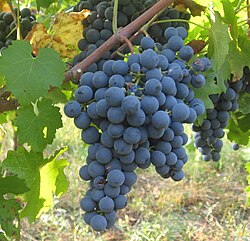
    Manseng Noir has a distinctive ampelographic profile. Young shoots are strongly hairy, and the young leaves can appear reddish with bronze markings. Adult leaves are dark green, often circular or wedge-shaped, entire or three-lobed, with an open U-shaped petiole sinus and a textured, sometimes blistered or undulating blade. The berries are round, and the bunches are medium to large and fairly loose.

    Read more →

    The berries are small to medium-sized, and their skin gives the grape one of its defining wine traits: extremely deep colour. This separates Manseng Noir clearly from Courbu Noir, which tends to produce lighter-coloured wines. Manseng Noir is a black grape that behaves like a black grape in the glass: dark, firm and strongly pigmented.

    The loose bunch structure is also important. It can help with airflow and fruit condition, especially in a region where humidity and late-season weather are practical concerns. The grape’s morphology therefore supports a profile of colour, tannin and structure rather than simple aromatic delicacy.

    • Leaf: dark green, circular or wedge-shaped, entire or three-lobed
    • Young foliage: reddish with bronze markings; young shoots very hairy
    • Bunch: medium to large, fairly loose
    • Berry: round, small to medium-sized, black-skinned
    • Impression: dark, structured, tannic, acid-retentive and clearly Pyrenean

    Viticulture

    A late-ripening grape with strong structure and renewed practical interest

    Manseng Noir is a late-ripening black grape. Its maturity is often placed around four weeks after Chasselas, which means it needs a sufficiently long and favourable season to reach full expression. This late rhythm places it naturally in the world of serious southwestern red grapes: varieties that depend on warmth, patience and careful harvest timing.

    Read more →

    The vine can be vigorous and needs to be managed carefully. Because it can produce structured, tannic and deeply coloured wines, the vineyard objective is not simply sugar ripeness. The grower must also manage phenolic maturity, acidity, tannin development and yield. If handled without care, the wines may become hard or overly rustic. If grown with balance, Manseng Noir can produce fine, dark, age-worthy reds or useful blending material.

    Its disease profile is part of its renewed interest. Manseng Noir is often described as having good resistance to certain fungal pressures, especially downy mildew. Recent attention to alternative and forgotten varieties has therefore looked at Manseng Noir not only through heritage, but also through adaptation. A grape that can give colour and structure without excessive alcohol may become more relevant as climates shift.

    This makes Manseng Noir different from many rare grapes. It is not only a museum piece. It may have practical viticultural value if matched to the right sites and handled with modern precision.


    Wine styles

    Deep colour, tannin, acidity and a fine ageing frame

    Manseng Noir produces very deeply coloured wines. This is one of its clearest signatures. The colour can be dark ruby to almost inky, giving the grape immediate visual presence. Structurally, the wines are tannic, somewhat acidic, astringent when young, and suited to ageing or blending. They are not soft, easy reds by nature. They are wines of grip and architecture.

    Read more →

    The aromatic profile is usually described around dark fruits, plum, blackcurrant, spice, pepper, sometimes herbal or earthy elements, and a firm phenolic structure. Because the grape is still rare, its tasting vocabulary is not as broadly standardized as that of famous varieties. Still, the direction is clear: Manseng Noir belongs to the world of dark, structured southwestern reds rather than pale, perfumed reds.

    Its value in blends is significant. A grape with deep colour, tannin and acidity can strengthen wines that need structure, while also preserving a sense of regional identity. In this respect, Manseng Noir can be compared conceptually with other structural black grapes of the southwest, though its own personality remains distinct.

    The best modern approach is likely one of calibration: enough extraction to use the grape’s colour and structure, but not so much that its tannin becomes severe. Manseng Noir is serious material. It needs handling, not decoration.


    Terroir

    A grape of Pyrenean structure, Atlantic freshness and dark regional memory

    Manseng Noir’s terroir identity belongs to the western Pyrenean and southwestern French landscape. It is shaped by a region where warmth, rain, altitude, slope, Atlantic influence and local grape diversity all meet. This is not a grape that became famous through a single grand appellation image. It belongs instead to a complex regional ecosystem of black and white varieties.

    Read more →

    Because it ripens late, site choice is essential. Manseng Noir needs enough warmth and seasonal length to mature tannins, but its acidity means it can still produce wines with freshness. This combination may be one reason it has attracted renewed attention. A red grape that offers structure, colour and freshness without requiring extremely high alcohol is increasingly valuable.

    In terroir terms, Manseng Noir is not only about soil. It is about rhythm. The grape must move slowly enough to build structure, but cleanly enough to avoid disease pressure. It must reach phenolic maturity without losing the acidity that gives it line. That balance is exactly the kind of old regional intelligence often hidden in forgotten varieties.

    Manseng Noir therefore matters as a terroir grape not because it has a famous global style, but because it translates a particular regional problem: how to make structured red wine in the Pyrenean southwest while preserving freshness and identity.


    History

    From hundreds of hectares to rediscovery

    Manseng Noir’s recent history is dramatic. It was once planted in meaningful quantities, with hundreds of hectares recorded in mid-twentieth-century France, but later fell to only a tiny surface. That collapse reflects how quickly a grape can move from regional familiarity to near disappearance when fashion, economics and viticultural preference shift.

    Read more →

    The decline was understandable in commercial terms. Manseng Noir can be tannic, acidic and demanding. In a period when softer, more familiar or more productive grapes were easier to sell, a firm old regional black grape had little advantage. Yet the very traits that once made it difficult may now make it interesting again: colour, structure, acidity, moderate alcohol potential and disease resilience.

    Recent conservation work and small producer interest have helped bring Manseng Noir back into view. This is not a mass revival. It is something quieter: a careful re-examination of a grape that nearly disappeared from the vineyard map. Such revivals are important because they restore options to growers and restore memory to wine culture.

    Manseng Noir’s history is therefore not only nostalgic. It is strategic. Forgotten grapes may become part of the future precisely because they carry traits modern viticulture needs again.


    Pairing

    A dark, structured red for food with fat, smoke and earth

    Manseng Noir’s tannin, acidity and deep colour point toward food with substance. It is not a red for delicate dishes. It wants protein, fat, smoke, earth, herbs and slow cooking. Duck, lamb, pork, charcuterie, grilled mushrooms, lentils, beans, aged sheep’s milk cheese and rustic southwestern dishes all make sense beside a grape with this much structure.

    Read more →

    Aromas and flavors: black plum, blackcurrant, dark berries, pepper, spice, earth, herbs and sometimes an inky or mineral dryness. Structure: deep colour, firm tannin, acidity, astringency in youth and good potential for ageing or blending.

    Food pairings: duck breast, lamb shoulder, cassoulet-style beans, grilled pork, smoked sausage, charcuterie, lentils, roast mushrooms, game birds, aged sheep’s milk cheese, hard mountain cheeses and dark herb sauces.

    The key is to meet the grape’s grip rather than avoid it. Manseng Noir becomes most useful at the table when food turns tannin into structure and acidity into freshness.


    Where it grows

    Southwestern France first, with a very small modern footprint

    Manseng Noir belongs primarily to southwestern France, especially the Pyrenean and Béarn-related vineyard world. It is allowed in Béarn AOC but remains rarely used. Its modern plantings are small, though recent renewed interest has brought it back from near oblivion in selected conservation and producer-led projects.

    Read more →
    • France: origin and main modern context
    • Southwestern France: broad regional home
    • Pyrenean vineyards: key historical and cultural frame
    • Béarn: permitted appellation context, though rarely used
    • Conservation and revival plantings: increasingly important for its future
    • Elsewhere: limited modern presence, though related names and historical synonyms appear in broader Iberian contexts

    Its geography is not large, but its meaning is large enough: Manseng Noir helps reveal the dark, tannic, structured side of the Manseng and Pyrenean story.


    Why it matters

    Why Manseng Noir matters on Ampelique

    Manseng Noir matters on Ampelique because it connects several important themes at once: forgotten grapes, Pyrenean viticulture, black-grape structure, family lineage and climate adaptation. It is not simply a curiosity. It is one of those varieties that makes the grape world feel deeper and less predictable.

    Read more →

    It also gives context to Petit Manseng and Gros Manseng. Many people know those grapes only as white varieties of freshness, sweetness and aromatic intensity. Manseng Noir reveals the darker side of that family story: tannin, colour, acidity and red-wine architecture. The family becomes more complete when the black ancestor or relative is included.

    For readers, Manseng Noir is a useful reminder that rarity is not always softness or delicacy. This is a rare grape with force: deep colour, astringency, acidity and ageing potential. It shows why some forgotten varieties need modern interpretation rather than romantic simplification.

    On Ampelique, Manseng Noir should stand as a black grape of rediscovery: old, dark, structural, regionally specific and newly meaningful in the search for resilient varieties with identity.


    Quick facts

    • Color: black
    • Main names / synonyms: Manseng Noir, Mansenc Noir, Manseng Rouge, Gros Manzenc, Arrouya, Courbu Rouge, Ferron, Noir du Pays and other regional synonyms
    • Parentage: old Pyrenean variety, closely linked to the Manseng family and often described as connected to Petit Manseng and Gros Manseng
    • Origin: Pyrenean vineyards of southwestern France
    • Common regions: southwestern France, Béarn, Pyrenean vineyard zones and revival/conservation plantings
    • Climate: needs a long enough season for late ripening while preserving acidity and healthy fruit
    • Soils: specific soil preferences are less central than site balance, warmth, drainage and regional Pyrenean fit
    • Growth habit: vigorous enough to require careful management; quality depends on balance and phenolic maturity
    • Ripening: late, around four weeks after Chasselas in comparative observations
    • Disease sensitivity: generally interesting for its fungal-disease resilience, especially good resistance to downy mildew in several descriptions
    • Styles: deeply coloured, tannic, acid-accented red wines, often useful for ageing or blending
    • Signature: very deep colour, tannin, acidity, astringency, structure and ageing potential
    • Classic markers: black plum, blackcurrant, dark berries, spice, pepper, earthy notes and inky dryness
    • Viticultural note: Manseng Noir is valuable as both a heritage grape and a possible modern alternative for structured reds with freshness

    Closing note

    Manseng Noir is a black grape of deep colour, grip and rediscovery. It does not offer easy softness. It offers structure, ancestry and the dark side of a family better known through white grapes. In that tension, it becomes one of the most fascinating hidden varieties of the French southwest.

    If you like this grape

    If you are interested in Manseng Noir’s dark Pyrenean identity, you might also explore Petit Manseng and Gros Manseng for the white Manseng family, Courbu Noir for a rarer and lighter black comparison, or Tannat for the southwest’s most powerful black grape.

    A rare black grape of the Pyrenean vineyards — dark, tannic, acid-lined and newly meaningful as both heritage and future possibility.
  • COURBU NOIR

    Ampelique Grape Profile

    Courbu Noir

    Origin, viticulture, morphology, wine styles, and place.

    Courbu Noir is a rare black grape from the Pyrenean vineyards of southwestern France. Despite its name, it is not simply the black form of Courbu, but a distinct variety with its own identity. It gives light-coloured, relatively low-alcohol, somewhat astringent wines, and belongs to the quiet, almost hidden heritage of Béarn and the French southwest.

    Courbu Noir is not a grape of broad fame or easy abundance. It is late-ripening, fairly unproductive and now extremely rare. Its value lies in what it reveals: the old Pyrenean vineyard world was not made only of Manseng, Tannat and Courbu Blanc, but also of small, fragile, highly local red varieties that carried their own subtle, sometimes austere voice.

    Grape personality

    The rare Pyrenean black.
    Courbu Noir is a black grape of small berries, late ripening, low productivity and quiet southwestern identity.

    Best moment

    Rustic food, light colour.
    Charcuterie, mountain cheese, roast poultry, herbs, lentils and simple southwestern dishes where grip matters more than weight.


    Courbu Noir feels like a grape from the edge of memory.
    Small, late, rare and local — a black variety that survived more as a whisper than a shout.


    Origin & history

    A rare black grape from the Pyrenean vineyards

    Courbu Noir is a native black grape of the Pyrenean vineyards of southwestern France. Its name naturally invites comparison with Courbu, the white grape, but that comparison must be handled carefully. Courbu Noir is not the black form of Courbu. It is a distinct variety, with its own morphology, growth pattern and wine profile.

    Read more →

    The grape belongs to the old vineyard culture of the French southwest, especially the Pyrenean and Béarn-influenced zone where many varieties survived locally without becoming international names. In this landscape, grapes were often kept because they fitted a specific place, a particular farm habit or a small blending need, not because they had commercial fame.

    Courbu Noir is now extremely rare. Its recorded French surface has fallen to tiny levels, which makes it more of a heritage and ampelographic grape than a widely encountered wine variety. That rarity matters. It means the grape should be described with care and not inflated into something it is not. Its story is one of survival, not scale.

    On Ampelique, Courbu Noir is valuable because it completes the Courbu family picture. It shows that similar names can hide distinct genetic and viticultural identities. It also reminds us that the grape library of southwestern France contains many small, half-forgotten doors.


    Ampelography

    Bronzed young leaves, small berries and a distinct field identity

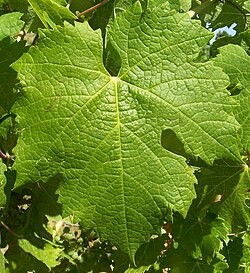
    Courbu Noir has a clear ampelographic identity. Young leaves are notably red and strongly bronzed. Adult leaves usually have five lobes, open lateral sinuses and an open petiole sinus. The veins can show moderate to strong anthocyanin coloration, and the underside of the leaf may carry a medium to high density of prostrate hairs. These details matter because this is exactly the kind of grape where careful identification prevents confusion.

    Read more →

    The berries are round, and both bunches and berries are small. That smallness gives the grape a compact identity, although not necessarily the kind of deep-colour concentration associated with more famous black grapes. Courbu Noir is capable of producing wines that are light in colour and alcohol, with a relatively astringent edge. In other words, black skin does not automatically mean dark, powerful wine.

    This makes Courbu Noir especially interesting for a grape platform. It disrupts simple assumptions. A black grape can be pale. A rare grape can be astringent rather than lush. A variety with a familiar name can be genetically and viticulturally distinct from the grape that name seems to imply.

    • Leaf: adult leaves with five lobes, open lateral sinuses and an open petiole sinus
    • Young foliage: red and strongly bronzed
    • Veins: moderate to strong anthocyanin coloration
    • Bunch: small
    • Berry: small, round and black-skinned
    • Impression: rare, late, compact, astringent and clearly distinct from Courbu

    Viticulture

    A late-ripening, fairly unproductive variety that asks for long pruning

    Courbu Noir is not an easy modern production grape. It is fairly unproductive and is normally managed with long pruning. It also ripens late, around four weeks after Chasselas in PlantGrape’s comparative phenology. This combination helps explain why the grape never became widely planted. It asks for patience without necessarily promising large commercial reward.

    Read more →

    Late ripening can be valuable in certain climates, but for a rare grape it also creates risk. The fruit needs enough season to mature, while the grower must manage disease pressure and keep the crop healthy. In southwestern France, where weather can shift and autumn conditions may be variable, a late grape always requires careful site choice.

    Disease behaviour is mixed. Courbu Noir is fairly susceptible to powdery mildew, which makes canopy health and preventive vineyard work important. At the same time, it resists downy mildew well. This contrast is useful but not enough to make the grape easy. Rare old varieties often survive precisely because they fit a small set of local conditions rather than because they are broadly adaptable.

    Courbu Noir is therefore best understood as a conservation-minded grape: fascinating, locally meaningful and technically distinct, but not a variety built for easy expansion.


    Wine styles

    Light colour, modest alcohol and a firm astringent edge

    Courbu Noir produces wines that are fine, light in colour and light in alcohol, but relatively astringent. This profile sets it apart from the famous black grapes of the southwest, especially Tannat, which is associated with deep colour and strong tannic structure. Courbu Noir is more modest, paler and more fragile in expression.

    Read more →

    Because the grape is so rare, it is best not to overstate a broad commercial style. It is more responsible to describe its known tendencies: light colour, restrained alcohol and astringency. In practice, this would likely make it better suited to local blends or small heritage bottlings than to lush, fruit-forward varietal wines.

    Its astringency is important from a grape point of view. It suggests that phenolic grip can appear even when colour and alcohol are not especially high. That can create a wine that feels firm, rustic or angular if not handled carefully. Courbu Noir therefore sits in a different register from plush red grapes: it is more about edge than generosity.

    This is not a weakness in a grape library. It is useful information. Courbu Noir shows that not every variety is built for modern softness. Some grapes carry the older, more austere side of regional viticulture.


    Terroir

    A grape whose meaning belongs to a very small regional world

    Courbu Noir is not a terroir grape in the global prestige sense. Its meaning is much narrower and perhaps more interesting. It belongs to the Pyrenean vineyards, to the old mixed-variety landscape of the French southwest, and to the survival of local black grapes that never became famous.

    Read more →

    The grape’s late ripening means site matters strongly. It needs a place that can bring it to maturity without excessive disease pressure or autumn dilution. In that sense, its terroir is practical before it is poetic: enough warmth, enough season, enough air, and enough grower patience to justify keeping a rare, low-yielding vine in the ground.

    Because it is so rare, Courbu Noir should not be forced into a large stylistic map. Its terroir story is mostly one of local fit and near disappearance. It tells us that some grapes survive as traces rather than movements. Their value is not in market presence, but in the biodiversity they preserve.

    For Ampelique, that is exactly the point. Courbu Noir helps make the vineyard map more honest. Not every grape is a world classic. Some grapes are regional clues.


    History

    From local memory to near disappearance

    Courbu Noir’s modern history is almost a disappearance story. In France, the recorded surface has declined to around a hectare-level presence. That is not merely a statistic. It changes how we should write about the grape. It is not a variety shaping modern wine lists. It is a fragile remnant of local viticultural history.

    Read more →

    Many grapes disappear because they are difficult, low yielding, unfashionable or poorly aligned with modern production needs. Courbu Noir has several of those challenges: late ripening, low productivity, susceptibility to powdery mildew and wines that are not obviously dark, soft or high in alcohol. In a commercial vineyard, those traits are hard to defend unless there is a strong conservation or heritage reason.

    Yet those same traits make the grape fascinating. Courbu Noir tells us about an older wine world in which not every grape had to become a varietal brand. Some grapes were kept because they belonged somewhere, because they added a particular local accent, or because they were inherited along with the vineyard itself.

    Its future will likely depend less on market demand and more on conservation, curiosity and the renewed interest in rare regional varieties. Even if Courbu Noir never becomes common again, documenting it well matters.


    Pairing

    A light but firm red for rustic southwestern food

    Because Courbu Noir is rare, pairing suggestions should remain grounded in its known structure rather than in an imagined modern style. A wine that is light in colour and alcohol but relatively astringent would suit food with enough protein, fat or earthy substance to soften its grip. Think charcuterie, roast poultry, lentils, beans, simple lamb, mountain cheeses and herb-led dishes rather than rich, glossy sauces.

    Read more →

    Aromas and flavors: not widely standardized in modern tasting language, but likely restrained rather than lush, with red-fruit, herbal, earthy or rustic impressions depending on vinification. Structure: light colour, modest alcohol, small-berry grip and a relatively astringent finish.

    Food pairings: Bayonne-style ham, charcuterie, roast chicken, duck rillettes in small measure, lentils, white beans, grilled mushrooms, rustic pork dishes, mountain cheeses, herb omelette and simple southwestern farmhouse food.

    Courbu Noir is not a grape that asks for luxury. It asks for food with honesty: salt, herbs, texture and enough substance to meet its grip.


    Where it grows

    Almost entirely a grape of the French Pyrenean southwest

    Courbu Noir is a grape of the Pyrenean vineyards of France. Its modern presence is extremely small, and it should be treated as a rare heritage variety rather than a broadly planted regional grape. Its strongest associations are with the southwestern French vineyard world, especially around Béarn and related Pyrenean zones.

    Read more →
    • France: country of origin and almost certainly the main remaining context
    • Pyrenean vineyards: the grape’s historical and cultural home
    • Béarn / French southwest: the broader regional frame for understanding the grape
    • Conservation plantings: important for maintaining the variety’s future
    • Outside France: no significant modern international identity

    Its geography is therefore not wide, but precise. Courbu Noir belongs to a small regional memory, and that is where its identity makes sense.


    Why it matters

    Why Courbu Noir matters on Ampelique

    Courbu Noir matters on Ampelique because it is a perfect example of why grape names must be treated with care. It sounds like a colour variant of Courbu, but it is not. It is a distinct black variety from the Pyrenean vineyards, with its own traits, own difficulties and own fragile place in the regional record.

    Read more →

    It also helps make the French southwest more complete. The region is often summarized through a handful of better-known grapes: Tannat, Petit Manseng, Gros Manseng, Fer Servadou, Duras, Prunelard and others. Courbu Noir sits much further in the background, but that background is part of the truth. A grape library should include both the famous and the nearly forgotten.

    For readers, the grape teaches several useful lessons. Black grapes are not always dark and powerful. Rare grapes are not always hidden treasures in the romantic sense; sometimes they are difficult, pale, astringent, low-yielding and commercially fragile. But they still matter because they preserve biological and cultural diversity.

    On Ampelique, Courbu Noir should stand as a rare Pyrenean black grape: distinct from Courbu, modest in wine power, but important as a small surviving thread in the fabric of southwestern viticulture.


    Quick facts

    • Color: black
    • Main names / synonyms: Courbu Noir; no officially recognized synonym in France or the European Union for propagation material
    • Parentage: distinct native Pyrenean variety; not the black form of Courbu
    • Origin: Pyrenean vineyards, southwestern France
    • Common regions: French southwest, especially Pyrenean and Béarn-related heritage contexts
    • Climate: needs a long enough season for late ripening and careful site selection
    • Soils: specific soil preferences are less documented than its regional Pyrenean origin and viticultural behaviour
    • Growth habit: fairly unproductive; managed with long pruning
    • Ripening: late-season, around four weeks after Chasselas in comparative observations
    • Disease sensitivity: fairly susceptible to powdery mildew; good resistance to downy mildew
    • Styles: light-coloured, low-alcohol red wines with relative astringency
    • Signature: rarity, small berries, late ripening, pale colour and firm grip
    • Classic markers: restrained red-fruit or rustic impressions are likely, but the grape is too rare for a broad modern tasting vocabulary
    • Viticultural note: Courbu Noir is best understood as a conservation and heritage grape rather than a broadly commercial variety

    Closing note

    Courbu Noir is a black grape of rarity rather than fame. It is late, small-berried, fairly unproductive and nearly lost from the vineyard map. Yet its quiet survival matters: it reminds us that the French southwest was built not only by great grapes, but also by fragile local varieties that still deserve a name.

    If you like this grape

    If you are interested in Courbu Noir’s rare Pyrenean identity, you might also explore Courbu for the distinct white variety, Manseng Noir for another black grape of the southwest, or Tannat for the region’s much more powerful and better-known black grape.

    A rare black grape of the Pyrenean vineyards — distinct from Courbu, modest in colour, late in ripening and valuable as a surviving thread of southwestern vine heritage.

  • COURBU BLANC

    Ampelique Grape Profile

    Courbu

    Origin, viticulture, morphology, wine styles, and place.

    Courbu is a white grape of the French Pyrenean southwest, closely linked to Jurançon, Pacherenc du Vic-Bilh, Irouléguy, Béarn and Saint-Mont. It is not a loud or international variety. Its role is quieter: texture, body, freshness, subtle honeyed-citrus detail and regional depth in the white wines of southwestern France.

    Courbu belongs to the old vocabulary of the southwest: a grape of slopes, blends, local names and careful proportion. It rarely dominates the conversation, yet it helps complete the structure of many regional whites. Where Manseng brings vivid fruit and acid force, Courbu can bring softness, roundness and a discreet, savoury calm.

    Grape personality

    The quiet structural white.
    Courbu is a white grape of southwestern France, valued for body, texture, moderate aroma, freshness and its role in regional blends.

    Best moment

    Quiet mountain food.
    Trout, roast poultry, sheep’s milk cheese, white beans, herbs, soft spice and a white wine with texture rather than noise.


    Courbu does not try to outshine the Mansengs.
    It gives the blend a shoulder, a curve, and the quiet weight of place.


    Origin & history

    A Pyrenean white with a quiet but important regional role

    Courbu is a traditional white grape of the Pyrenean vineyards of southwestern France. It belongs to the same regional world as Petit Manseng, Gros Manseng, Petit Courbu, Camaralet and other local varieties that help define Jurançon, Pacherenc du Vic-Bilh, Irouléguy, Béarn and Saint-Mont. It is not a famous international grape, but in its home territory it has long served as part of the structure and texture of regional white blends.

    Read more →

    The name Courbu can create confusion, because different sources and regional traditions sometimes distinguish between Courbu Blanc and Petit Courbu, while older references may use overlapping names. For clarity, this profile treats Courbu as the white Pyrenean variety often referred to as Courbu or Courbu Blanc, distinct from Courbu Noir and closely related in regional use to Petit Courbu.

    Historically, Courbu’s importance was not built on varietal fame. It mattered as part of a blended language. In the French southwest, white wines have often been composed from several local grapes, each contributing something different: acidity, sweetness, aroma, texture, body, ageing potential or freshness. Courbu’s role is often about breadth and quiet support rather than solo performance.

    That makes it especially valuable on Ampelique. Courbu helps show that grape culture is not only about headline varieties. Some grapes work in the background, giving balance and regional shape to wines that would be less complete without them.


    Ampelography

    A white grape of small clusters, green-yellow berries and local identity

    Courbu is generally described as a white grape with small clusters and small green-yellow berries. Its visual identity is not as famous as that of deeply studied international grapes, but its morphology fits its regional role: compact enough to give concentration, modest enough not to dominate, and capable of contributing body and aromatic nuance in blends.

    Read more →

    One reason Courbu is best handled carefully in writing is the overlap of names and relatives in the region. Petit Courbu, Courbu Blanc and other local synonyms can cause confusion, and some older sources do not always separate them cleanly. Ampelographically, the safest approach is to present Courbu as a regional white variety with distinctive local use, while avoiding claims that belong more precisely to Petit Courbu unless clearly stated.

    The grape’s name is often linked to the idea of curvature or bending, which suits the old vineyard language of the southwest: names derived from observed vine form, cluster shape, local speech or field memory rather than modern branding. Courbu feels like that kind of grape — practical, regional, quietly named by people who knew it in the vineyard before anyone needed it on a label.

    • Leaf: regional white variety; detailed descriptions vary by source and naming tradition
    • Bunch: often described as small, fitting its quiet structural role
    • Berry: small, green-yellow to yellow at maturity
    • Impression: local, textural, discreet, blend-friendly and southwestern in character

    Viticulture

    A productive local grape that needs discipline to keep character

    Courbu can be a productive variety, which is useful for growers but can also become a challenge for quality. If cropping is too generous, the grape may lose distinction and produce wines that feel broad, simple or lacking in detail. When yields are balanced and the site is appropriate, Courbu can bring body, subtle aroma and a gently rounded texture to southwestern white blends.

    Read more →

    The variety belongs to warm but fresh southwestern conditions, where altitude, slope, Atlantic influence and Pyrenean air all help preserve balance. Courbu is not usually the sharpest or most acid-driven grape in the blend. It often works best when partnered with grapes that bring more vivid lift, such as Gros Manseng or Petit Manseng. In that context, its body and softer texture become useful rather than heavy.

    Site choice matters because fertile soils can emphasize productivity at the expense of shape. Better-drained, balanced sites allow the vine to keep more precision. Canopy management is also important, especially in regions where humidity can influence disease pressure. The aim is not extreme concentration but healthy, flavourful fruit that contributes to the harmony of the final wine.

    Courbu therefore rewards restraint. It is not a grape that automatically announces itself through dramatic aroma. It needs good farming, reasonable yields and thoughtful blending to show why earlier generations kept it in the vineyard.


    Wine styles

    Texture, citrus-honey nuance and the art of blending

    Courbu is most often appreciated as a blending grape in dry and sweet white wines of the southwest. It can contribute body, softness, subtle citrus notes, gentle honeyed detail and a rounded palate. It is not usually the most aromatic grape in the blend, but that is exactly why it can be valuable. It fills space without overwhelming the brighter local varieties around it.

    Read more →

    In Jurançon and Pacherenc du Vic-Bilh, Courbu may appear with Gros Manseng, Petit Manseng, Petit Courbu, Arrufiac or Camaralet depending on appellation and producer. In these wines, it can help soften acidity, add mid-palate texture and bring a more composed, savoury feel. The best blends feel complete because no single grape has to do everything.

    The flavour profile is often described in restrained terms: citrus, soft white fruit, delicate honey, flowers, mild spice and sometimes a slightly waxy or chewy texture. These are not explosive markers. They are quiet structural details. Courbu is a grape that helps a white wine feel broader, calmer and more grounded.

    In sweet wines, its contribution is usually less about dramatic sugar-acid tension than about texture and integration. Petit Manseng may carry the golden intensity; Gros Manseng may bring fruit and freshness; Courbu can help round the edges. Its value is proportion.


    Terroir

    A grape shaped by Pyrenean blends, not by solitary fame

    Courbu’s terroir expression is best understood through its regional context. It is not a grape that usually claims the stage alone. Instead, it belongs to the blended architecture of the Pyrenean southwest, where different local grapes interact with slope, rainfall, altitude, wind and harvest choices. Its place is not merely geographical; it is compositional.

    Read more →

    In Jurançon, the grape may contribute to wines defined by mountain influence, acidity, late-season ripeness and the interplay of dry and sweet traditions. In Irouléguy, the Basque and Pyrenean setting gives a different accent: smaller production, slope-based viticulture and a strong local identity. In Pacherenc du Vic-Bilh and Saint-Mont, Courbu joins a broader ensemble of southwestern grapes.

    Soils vary widely across these zones: clay-limestone, stones, slopes, mixed sedimentary formations and well-drained foothill sites all play a role. For Courbu, the key is not one dramatic soil signature, but balanced growth. If the vine is too vigorous, the wines can lose shape. If the site encourages moderate yield and healthy fruit, Courbu can add texture without dulling the blend.

    This makes Courbu a terroir grape in a quiet way. It may not translate soil as loudly as Riesling or Chardonnay, but it belongs to a very specific regional ecosystem. Remove it from that ecosystem, and much of its meaning disappears.


    History

    A background grape that helps preserve the region’s real complexity

    Courbu’s modern story is partly one of survival through regional relevance. It did not become an international varietal brand. It was not adopted widely as a fashionable alternative white. Instead, it remained attached to the appellations and growers of the southwest, where its usefulness in blends continued to matter.

    Read more →

    That kind of history is easy to overlook. Wine culture often celebrates the grape that dominates the label, but many regional wines are built from quieter varieties whose job is not dominance. Courbu belongs to that group. Its history is the history of local proportion: how growers learned which grapes brought freshness, which brought sweetness, which brought body and which brought aromatic detail.

    Modern interest in indigenous and regional varieties gives Courbu a new kind of importance. It may never be widely planted outside its home area, and that is fine. Its role is to deepen the identity of the southwest and to remind readers that biodiversity is often hidden in blends.

    For Ampelique, Courbu is therefore not a minor grape to rush past. It is a key to understanding how local white wines of the Pyrenean southwest are constructed.


    Pairing

    A textural white for poultry, fish, cheese and gentle mountain flavours

    Courbu’s food role follows its wine role: it works through texture, body and quiet aromatic lift. In blends, it can support wines that pair well with trout, roast chicken, pork, sheep’s milk cheese, goat cheese, white beans, mushrooms, leeks, soft herbs and dishes with gentle spice. It is not a grape for loud aromatic clashes. It is a grape for balance.

    Read more →

    Aromas and flavors: restrained citrus, white fruit, mild flowers, honeyed nuance, soft herbs, gentle spice and a rounded, sometimes slightly waxy texture. Structure: medium body, moderate aromatic intensity, textural contribution and a blend-friendly profile.

    Food pairings: trout, river fish, roast poultry, pork with herbs, mushroom dishes, leek tart, white beans, soft mountain cheeses, goat cheese, sheep’s milk cheese, mild charcuterie and simple southwestern cooking with herbs rather than heat.

    The best food setting for Courbu is not theatrical. It is regional, warm, quiet and textural. Courbu belongs at a table where freshness and softness need to meet.


    Where it grows

    Jurançon, Pacherenc, Irouléguy and the Pyrenean southwest

    Courbu is a grape of southwestern France, especially the Pyrenean and Gascon vineyard world. Its strongest associations are with Jurançon, Pacherenc du Vic-Bilh, Irouléguy, Béarn and Saint-Mont. It is not widely planted around the world, and that limited geography is part of its charm. Courbu is best understood as a regional grape with a regional purpose.

    Read more →
    • France – Jurançon: important regional context, usually alongside Manseng-family grapes
    • Pacherenc du Vic-Bilh: another classic setting for local white blends
    • Irouléguy: Basque and Pyrenean context where Courbu Blanc has historical relevance
    • Béarn: part of the broader southwestern white-grape landscape
    • Saint-Mont: regional white blends may include related Courbu material depending on the specific grape and rules

    Courbu’s map is modest but meaningful. It belongs where white wines are built from local grapes rather than imported identities.


    Why it matters

    Why Courbu matters on Ampelique

    Courbu matters on Ampelique because it represents the quiet architecture of regional wine. It is not the most famous white grape of the southwest, and that is exactly why it is important. A serious grape library should not only describe the grapes that dominate labels. It should also describe the grapes that make blends complete.

    Read more →

    It also helps explain the French southwest as a living grape landscape. Petit Manseng and Gros Manseng may carry more name recognition, but Courbu shows the blended reality behind many local wines. It reminds readers that body, texture and balance are just as important as aroma and acidity.

    For Ampelique, Courbu is a useful contrast grape. It sits between the rare heritage profile of Ahumat Blanc and the more expressive profile of Gros Manseng. It is not as dramatic as Petit Manseng, not as aromatic as Gros Manseng, not as obscure as some nearly lost varieties. Its place is in the middle — and that middle matters.

    On Ampelique, Courbu should stand as a white grape of proportion: local, textural, historically useful and quietly essential to the southwestern family of varieties.


    Quick facts

    • Color: white
    • Main names / synonyms: Courbu, Courbu Blanc, Courbis, Courbi, Courbut Blanc, Vieux Pacherenc and several Basque-related synonyms
    • Parentage: traditional Pyrenean variety; exact parentage is not usually presented as firmly established in common sources
    • Origin: southwestern France, especially the Pyrenean vineyard world
    • Common regions: Jurançon, Pacherenc du Vic-Bilh, Irouléguy, Béarn, Saint-Mont and the broader French southwest
    • Climate: suited to warm but fresh southwestern conditions, especially where blends benefit from body and texture
    • Soils: varied; balanced, well-drained sites help prevent excessive productivity and dullness
    • Growth habit: can be productive; quality benefits from yield control and careful blending
    • Ripening: generally suited to regional southwestern harvest conditions; often used with other local white grapes
    • Disease sensitivity: site and canopy management matter, especially in humid southwestern conditions
    • Styles: dry white blends, sweet white blends and regional white wines with texture and body
    • Signature: body, texture, restrained citrus, subtle honeyed notes and blend-friendly softness
    • Classic markers: white fruit, citrus, mild flowers, honey, soft herbs and rounded texture
    • Viticultural note: Courbu is most valuable when it adds proportion, texture and regional character rather than simple volume

    Closing note

    Courbu is a white grape of quiet usefulness. It does not need to dominate to matter. In the blends of the French southwest, it can give body, curve, softness and local texture — the kind of detail that makes a regional wine feel complete.

    If you like this grape

    If you are interested in Courbu’s quiet southwestern identity, you might also explore Gros Manseng for a fresher, more aromatic regional comparison, Petit Manseng for the concentrated sweet-wine side of the Manseng family, or Ahumat Blanc for a rarer heritage grape of the same wider vineyard world.

    A quiet white grape of the Pyrenean southwest — textural, local, blend-friendly and stronger in proportion than in fame.

  • PRUNELARD

    Ampelique Grape Profile

    Prunelard

    Origin, viticulture, morphology, wine styles, and place.

    Prunelard is an old black grape from southwest France, most closely linked to Gaillac and the Tarn. It is rare today, but historically important far beyond its small modern footprint. The grape belongs to the old Cotoïdes world of southwestern varieties and is best known as one of the parents of Malbec, also known as Côt. That alone gives Prunelard a quiet authority: it may not be famous in itself, but it stands behind one of the world’s great red grapes.

    There is something deeply Ampelique about Prunelard. It is not a grape of easy fame. It almost disappeared, remained in the margins, and returned through the patience of growers who cared about local identity. Its name suggests plum, and its fruit can indeed be dark, rounded and deep. But the real beauty of Prunelard lies in its survival: a small old vine carrying a large genetic memory.

    Grape personality

    The quiet ancestor.
    Prunelard is rare, dark and historically deep: a southwest French grape of plum fruit, old vines, genetic memory and understated strength.

    Best moment

    Gaillac, after the heat of the day.
    Old vines, dark berries, red earth, a quiet cellar, and the feeling of a grape returning from the edge of forgetting.


    Prunelard does not ask to be famous.
    It stands behind other names, carrying plum-dark fruit, old southwest memory and the quiet dignity of survival.


    Origin & history

    An old Gaillac grape with a hidden family role

    Prunelard is generally associated with the Gaillac region in the Tarn, one of the oldest and most individual wine landscapes of southwest France. It belongs to a local grape culture where varieties such as Duras, Braucol, Mauzac, Ondenc and Len de l’El created a distinctive identity long before modern international grapes became dominant. Prunelard’s history is part of that world: regional, old, agricultural and easily overlooked from a distance.

    Read more →

    Its name is usually connected to the Occitan word for plum, suggesting the colour or shape of its berries. That small linguistic detail gives the grape a rooted quality. It is not a technical name imposed from outside, but a local word shaped by people looking at the fruit in the vineyard. Prunelard is a grape of observation, not marketing.

    Its genetic importance is striking. Prunelard is one of the parents of Malbec, together with Magdeleine Noire des Charentes. This means that a rare Gaillac-linked grape helped shape one of the most internationally famous red varieties of modern wine. That contrast is beautiful: Prunelard remains small, but its descendant became global.

    For a long time, Prunelard was close to disappearing. Its modern revival is modest, but meaningful. It represents a wider return to forgotten local grapes and a growing desire to understand wine regions through their own old plant material rather than only through international varieties.


    Ampelography

    Small bunches, dark berries and old-vine concentration

    Prunelard is usually described as a black grape with relatively small, compact bunches and dark berries. The fruit can give colour, density and a firm red-wine structure. It is not a light or decorative grape. Its natural register is darker, more concentrated and slightly rustic, with the kind of compact presence often found in old southwestern varieties.

    Read more →

    The name’s association with plum makes sense in the imagination of the vineyard. Prunelard suggests dark fruit, rounded berries and deep colour. In the field, its identity is not flamboyant but concentrated. It feels like a grape made for local knowledge: a vine that rewards people who understand the site, the pruning and the moment of harvest rather than those looking for easy abundance.

    • Leaf: typical of an old southwest French black variety, with details varying by clone and site
    • Bunch: often small to medium, compact and suited to controlled yields
    • Berry: black, plum-like in name and impression, giving colour and structure
    • Impression: rare, dark, concentrated, old-fashioned and deeply regional

    Viticulture

    A rare vine that asks for careful preservation

    Because Prunelard is rare, its viticulture is not as widely documented or standardized as that of major international varieties. That makes the grape more dependent on local experience. In Gaillac, growers who work with it tend to treat it as a heritage variety: something to understand patiently rather than force into a generic production model.

    Read more →

    The grape is often valued for its colour and body, but those qualities are only useful when the vine is balanced. Compact bunches need healthy airflow, especially in humid seasons. Yield control matters because too much crop can reduce the depth that makes Prunelard interesting. In a rare variety, every vineyard decision also has a preservation aspect: the goal is not only to produce fruit, but to keep a fragile genetic line alive.

    Prunelard’s best role may be in vineyards where growers value identity over volume. It suits a slower kind of viticulture: old parcels, selected material, thoughtful pruning and an acceptance that a rare grape should not always behave like a modern workhorse. Its scarcity is part of its character.


    Wine styles

    Dark, plummy and quietly structured

    Prunelard can produce deeply coloured red wines with plum, black cherry, dark berries, spice and a firm but not necessarily brutal structure. It is not widely known enough to have one fixed global style, and that is part of its appeal. The wines tend to feel local: dark-fruited, slightly rustic, grounded and more interesting for their individuality than for polish.

    Read more →

    Compared with Malbec, its famous descendant, Prunelard can seem more compact, less internationally rounded and more directly tied to the old southwest. It does not need to imitate Malbec to be important. Its value lies in showing part of the older genetic and regional story behind Malbec’s later global success.

    Used as a varietal wine, Prunelard can feel like a quiet rediscovery. Used in blends, it can bring colour, depth and regional accent. In both forms, it belongs best to drinkers who enjoy grapes with history, texture and a little roughness at the edges.


    Terroir

    A grape of Gaillac, limestone, clay and memory

    Prunelard’s terroir story is inseparable from Gaillac and the Tarn. This is a region of varied soils, old grape traditions and a long history of viticulture. Clay-limestone, gravelly terraces, slopes and mixed exposures can all shape the vine. Prunelard does not express terroir through global fame or a familiar tasting template. It expresses it by remaining stubbornly local.

    Read more →

    The grape seems most meaningful when grown as part of this regional mosaic, not as a transplanted curiosity. In Gaillac, old varieties speak to each other. Prunelard gains context beside Duras, Braucol and the wider Cotoïdes family. Its place is not only geological but cultural: a vineyard memory kept alive by growers who choose not to simplify the region’s identity.


    History

    From near disappearance to careful revival

    The modern history of Prunelard is a survival story. Like many old local grapes, it lost ground as vineyard systems changed, varieties were simplified and more productive or better-known grapes became dominant. For a time, Prunelard seemed destined to become a historical reference rather than a living vine. Its revival has been small, but symbolically powerful.

    Read more →

    Its return reflects a broader movement in southwest France: the rediscovery of old grapes not because they are easy, but because they are meaningful. Prunelard reminds us that genetic history can hide in small vineyards. It is the kind of grape that makes ampelography feel alive: one small name opening a door to Malbec, Gaillac, local language and centuries of farming.


    Pairing

    Best with dark, rustic food

    Prunelard works best with food that can meet its dark fruit and regional firmness. Think duck, pork, lentils, mushrooms, grilled sausages, black pudding, roast vegetables, hard cheeses and slow-cooked dishes with herbs. It is not a grape for overly delicate food. It wants texture, warmth and a little rusticity.

    Read more →

    Aromas and flavors: plum, black cherry, blackberry, dark spice, earth, herbs and sometimes a slightly rustic savoury note. Food pairings: duck confit, pork shoulder, lentils with sausage, mushroom dishes, grilled beef, hard sheep’s cheese and herb-led stews.


    Where it grows

    Mostly Gaillac and the Tarn

    Prunelard remains a very local grape. Its main home is Gaillac and the Tarn in southwest France, with historical associations that may reach toward the Garonne valley and the wider Cotoïdes family of grapes. Modern plantings are small, but its symbolic value is much larger than its vineyard area. It is a grape of preservation rather than expansion.

    Read more →
    • France: Gaillac, Tarn, wider southwest France and occasional neighbouring plantings
    • Regional family context: associated with the Cotoïdes grape family and the old red-grape landscape of the southwest
    • Historical importance: parent of Malbec / Côt, together with Magdeleine Noire des Charentes
    • Modern role: rare varietal wines, local blends and heritage plantings focused on preservation

    Why it matters

    Why Prunelard matters on Ampelique

    Prunelard matters because it changes the way we look at famous grapes. Malbec did not appear from nowhere. Behind it stands a small, rare, old grape from southwest France. That is exactly why Prunelard belongs on Ampelique. It shows that grape history is not only made by celebrities, but by quiet ancestors, local survivors and varieties almost lost from view.

    Read more →

    For a grape library, Prunelard is more than a rare profile. It is a connecting point: Gaillac, Malbec, the Cotoïdes family, regional preservation and the fragile beauty of biodiversity. It reminds us that every famous grape has a deeper story, and that some of the most important vines are the ones that nearly disappeared.


    Quick facts

    • Color: red / black grape
    • Main names: Prunelard, Prunelart
    • Parentage: deeper parentage not firmly established; Prunelard is a parent of Malbec / Côt, together with Magdeleine Noire des Charentes
    • Origin: southwest France, especially Gaillac and the Tarn
    • Most common regions: France: Gaillac, Tarn and small heritage plantings in the wider southwest
    • Climate: temperate to warm southwest French conditions; benefits from balanced ripening and healthy airflow
    • Viticulture: rare, compact-bunched, dark-fruited, best with yield control and careful preservation
    • Soils: clay-limestone, gravel, slopes and mixed Gaillac soils
    • Styles: deeply coloured reds, local varietal wines, heritage blends and small-production regional bottlings
    • Signature: plum, black cherry, dark berries, spice, colour, structure and old southwest French identity

    Closing note

    Prunelard is a small grape with a long shadow. It carries the memory of Gaillac, the parentage of Malbec and the fragile beauty of vines almost lost. Its value is not in fame, but in continuity. It reminds us that grape history often survives quietly, in old rows, local names and the hands of growers who choose to remember.

    If you like this grape

    If you appreciate Prunelard’s rare southwest French identity, dark plum fruit and historical depth, you might also enjoy Malbec for its famous descendant story, Duras for another Gaillac red grape, or Fer Servadou for peppery regional character.

    A rare Gaillac grape of plum-dark fruit, old genetic memory and quiet ancestral importance.

  • CARMENÈRE

    Ampelique Grape Profile

    Carménère

    Origin, viticulture, morphology, wine styles, and place.

    Carménère is one of the old red grapes of Bordeaux, but its modern life belongs most clearly to Chile. It is a late-ripening, dark-skinned variety from the Cabernet family, known for its deep colour, soft tannins, leafy spice and need for a long, warm season. Once nearly lost in France and long mistaken for Merlot in Chile, Carménère is now one of the great rediscovery stories of modern viticulture.

    For growers, Carménère is not an easy grape. It asks for patience, dry weather, good flowering, careful canopy work and real maturity. Picked too soon, it can become sharply green. Given enough time, it turns its herbal edge into something darker, warmer and more graceful. It is a vine of crimson leaves, late harvests, hidden identity and deep-rooted character.

    Carmenere grape leaf in close up
    Vineyard Carmenere grape in Chili
    Carmenere grape cluster on vine.
    Grape personality

    The hidden survivor.
    Carménère is late, dark, patient and a little mysterious: a Bordeaux grape that found its truest modern voice in Chile’s dry valleys.

    Best moment

    Late harvest, warm dusk.
    Dry autumn air, crimson leaves, smoky herbs, grilled peppers, soft light and a vineyard that finally had enough time.


    Carménère does not hurry into ripeness.
    It waits for dry air, long autumn light and the slow turning of green spice into depth.


    Origin & history

    A Bordeaux grape with a hidden Chilean afterlife

    Carménère comes from Bordeaux, where it once belonged to the wider family of red grapes that shaped the region’s blends. It stood alongside Cabernet Sauvignon, Cabernet Franc, Merlot, Malbec and Petit Verdot, though it never became as reliable as those companions. Its old French name is often linked to crimson colour, and that feels fitting. Carménère can show reddish young growth, autumn leaves that burn with copper and ruby tones, and deeply coloured fruit when the season allows full maturity.

    Read more →

    The variety’s parentage places it firmly inside the old Cabernet world. Carménère is understood as a natural crossing of Gros Cabernet and Cabernet Franc. This matters because the plant carries clear family signs: dark berries, leafy aromatics, a tendency toward green spice, and a need for real phenolic maturity before its character becomes balanced. It is not simply “like Merlot,” even though it was confused with Merlot for many years. It is a more restless and demanding vine, closer in spirit to the leafy, late-ripening side of the Cabernet family.

    In Bordeaux, Carménère was never easy. The Atlantic climate could be too cool, too damp or too uncertain for a grape that ripens late and flowers imperfectly in poor conditions. After phylloxera changed the vineyard landscape of France, growers often preferred more dependable varieties. Carménère survived, but only barely, and for a long time it seemed more like a historic memory than a practical modern grape. Its difficulty nearly erased it from the place where it began.

    Chile changed that story. Nineteenth-century cuttings from Bordeaux reached Chile before phylloxera devastated Europe, and among them were vines that growers later believed to be Merlot. For decades, this “Chilean Merlot” ripened later, tasted darker and greener, and behaved differently in the vineyard. In 1994, French ampelographer Jean-Michel Boursiquot identified these vines as Carménère. The grape had not disappeared. It had been hiding in plain sight, waiting for a country whose long, dry autumns suited it far better than Bordeaux ever had.


    Ampelography

    Broad leaves, dark berries, and a crimson field signature

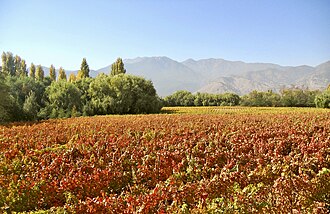
    Carménère is not a delicate-looking vine, but its identity is subtle. The leaves are generally medium to large, often broad, sometimes with rounded lobes and a rather full surface. Young shoot tips can show reddish or bronze tones, and the mature canopy may take on striking red colour in autumn. That seasonal colouring gives the vine a visual drama that fits its name: a grape marked by crimson not only in the glass, but in the vineyard itself.

    Read more →

    Its clusters are usually medium-sized, sometimes loose to moderately compact, and the berries are dark blue to black at maturity. The grape’s skins give colour and aromatic intensity, yet the tannins can be softer and less severe than Cabernet Sauvignon. This combination is one reason Carménère often feels generous rather than hard when fully ripe. The vine can carry depth without needing the same firm structural frame as its more famous Cabernet relatives.

    In the field, Carménère can be difficult to distinguish from related varieties without close observation. Its historical confusion with Merlot in Chile and with Cabernet Franc in parts of Italy shows how easily the vine can hide among its family members. Yet its behaviour gives clues. It ripens late. It often keeps a leafy, peppery aromatic trace longer into the season. Its fruit may lag behind neighbouring Merlot, and its canopy can hold a distinctive reddish cast as the year turns.

    • Leaf: medium to large, broad, sometimes rounded, with reddish young growth and crimson autumn tones
    • Bunch: medium-sized, loose to moderately compact, depending on clone, flowering and site
    • Berry: dark blue-black, capable of deep colour and strong savoury aroma
    • Impression: late, dark, leafy, warm-climate sensitive and quietly dramatic

    Viticulture

    Late ripening, uneven flowering, and the need for patience

    Carménère is above all a late-ripening grape. This single fact explains much of its history, its decline in Bordeaux and its success in Chile. It needs a long season not only to accumulate sugar, but to soften its tannins and reduce the more aggressive side of its green, peppery character. In a short or cool season, Carménère may remain tense, vegetal and unfinished. In a long, dry autumn, it can become supple, dark and complete.

    Read more →

    The vine is also known for problems with fruit set. Coulure can reduce yields when flowering weather is poor, especially in cool, wet or unsettled conditions. This makes Carménère less dependable than Merlot and one reason it became unattractive to growers who needed consistent production. A vine that flowers irregularly and ripens late asks more from both climate and grower. It is not a practical grape for every vineyard, however romantic its story may be.

    Canopy management is central. Too much shade can preserve methoxypyrazine-driven green notes, making fruit smell strongly of bell pepper, raw herbs or jalapeño. Too much sun, however, can stress the fruit, reduce freshness or push ripeness toward heaviness. Carménère needs a careful balance: enough exposure for maturity, enough leaf cover for protection, enough airflow for health, and enough patience to avoid harvesting before the variety has settled into itself.

    Warm, dry sites with moderate vigour suit the grape best. Fertile soils can produce leafy growth and dilute fruit, while overly hot conditions can turn softness into heaviness. The best vineyards tend to let Carménère ripen slowly under generous light, often with cool nights or mountain influence to preserve shape. The grower is always trying to guide the vine from green to ripe without losing its savoury nerve. That is the viticultural heart of Carménère.


    Wine styles

    A grape whose flavour begins in the vineyard

    Although Carménère is usually discussed through wine, its flavour identity begins very clearly in the plant. The grape is naturally rich in leafy, peppery compounds that can be beautiful when ripe and severe when immature. Its best-known markers — black fruit, roasted pepper, tobacco leaf, green peppercorn, cocoa and smoke — are not simply winemaking choices. They are the sensory result of a late-ripening vine finally reaching balance.

    Read more →

    In fully ripe fruit, Carménère tends toward dark plum, blackberry, black cherry, blueberry skin and savoury spice. Its tannins are often rounder and less forceful than Cabernet Sauvignon, while its colour can be deep and staining. The grape rarely feels as bright as Cabernet Franc or as immediately plush as Merlot. It sits somewhere between: darker than Merlot, softer than Cabernet Sauvignon, greener and more aromatic than many warm-climate red grapes.

    This makes harvest timing crucial. If picked too early, the wine can taste dominated by raw capsicum, grass, stems or sharp herbal notes. If picked too late, the fruit may become heavy and the natural freshness may fade. The most successful Carménère often keeps a savoury green line, but surrounds it with ripe black fruit and calm texture. The aim is not to erase the green note entirely. The aim is to let it become seasoning rather than the main dish.

    As a varietal wine, Carménère often shows its most recognizable personality. In blends, especially with Cabernet Sauvignon or Merlot, it can add colour, softness, mid-palate richness and aromatic spice. Yet even then, the grape’s vineyard nature remains visible. Carménère is never a neutral supporting actor. It brings a warm, dark, leafy signature that marks the wine with the memory of its long season.


    Terroir

    Long autumns, dry valleys, and slow maturity

    Carménère’s ideal terroir is warm, dry and patient. It does not simply need heat; it needs a season long enough for the grape to move from green structure to ripe savoury depth. Chile’s central valleys offer this with unusual clarity: bright days, low disease pressure, dry autumns, mountain influence and many sites where ripening can continue late without the constant danger of rain. This is why the grape found such a persuasive second home there.

    Read more →

    In Colchagua, Carménère can become broad, dark and generous, especially where sun and drainage are well balanced. Cachapoal and Peumo are often associated with some of the grape’s most polished Chilean expressions, combining ripeness with savoury detail. Maipo can bring firmer structure and a more Cabernet-like frame, while Maule and Curicó add further variation, from warmer valley-floor expressions to older, more rustic vineyard material.

    Soil and water matter greatly. Carménère benefits from well-drained soils that reduce excessive vigour and help berries ripen evenly. Alluvial soils, gravel, clay-loam and colluvial slopes can all work when the balance is right. Too much fertility creates shade and leafy growth. Too little water in a hot site can stress the vine and make ripening uneven. The most successful vineyards allow the vine to struggle just enough to concentrate its fruit, but not so much that maturity becomes blocked.

    Outside Chile, Carménère remains more selective. It can be found in Italy, especially in the northeast, where some plantings were historically confused with Cabernet Franc. In China, the name Cabernet Gernischt is often discussed in relation to Carménère, though identification and local usage can be complex. Smaller plantings also exist in Argentina, California, Washington and elsewhere. Yet the pattern is clear: the grape travels, but it only truly opens where warmth, dryness and time come together.


    History

    From near-oblivion to national signature

    The history of Carménère is one of the most memorable stories in grape culture. It was not simply exported, planted and celebrated. It was misread, almost lost, preserved under another name and later recovered. That makes it different from many famous varieties. Carménère’s identity had to be found again. Its modern importance begins not with fame, but with confusion.

    Read more →

    In Chile, the grape was long part of vineyards labelled or understood as Merlot. Growers noticed that some vines behaved differently, ripened later and gave wines with a darker, more herbal profile. But without modern identification, these differences were often accepted as local variation. When the true identity was recognized in the 1990s, Carménère gave Chile something rare: not merely another international grape, but a variety with a dramatic story and a strong sense of national belonging.

    At first, the rediscovery story may have been more famous than the viticulture. “The lost grape of Bordeaux” is an irresistible phrase. But the real work came afterwards. Chilean growers had to understand which sites suited Carménère, how much leaf exposure it needed, when to harvest, how to manage its green character and how to avoid both underripeness and heaviness. The grape became a national signature only through decades of observation and correction.

    This is why Carménère is so valuable for a grape library. It shows that a variety is not fixed in one place or one era. A grape can fail in its homeland, survive abroad, be misunderstood for generations and then return to the world with new meaning. Its history is not tidy, but it is alive. Carménère reminds us that viticulture is full of hidden identities, old migrations and second chances.


    Pairing

    A natural match for smoke, herbs and warmth

    Carménère’s table personality follows the grape’s vineyard personality. It is soft enough for generous food, dark enough for grilled meat, and savoury enough for herbs, peppers, mushrooms and smoke. Because the variety often carries green peppercorn, roasted capsicum, tobacco leaf and cocoa-like depth, it works beautifully with dishes that have char, warmth or earthy sweetness.

    Read more →

    Aromas and flavors: blackberry, plum, black cherry, blueberry skin, green peppercorn, roasted red pepper, tobacco leaf, bay leaf, cocoa, smoke, cedar and warm earth. Structure: usually medium to full-bodied, often deep in colour, with rounded tannins and moderate freshness when grown in balanced sites.

    Food pairings: grilled beef, lamb, pork shoulder, empanadas, roasted peppers, mushrooms, black beans, lentils, smoky aubergine, hard cheeses, mild chilli, barbecue, paprika-led dishes and herb-roasted vegetables. It is especially good where sweetness from roasting or grilling meets savoury spice.

    The pairing logic is simple: echo the grape’s dark fruit with caramelized food, and echo its herbal edge with peppers, rosemary, bay, cumin, smoked paprika or char. Carménère rarely asks for very delicate cuisine. It prefers food with texture, warmth and a little rustic generosity. That makes it one of the more relaxed and useful red grapes at the table.


    Where it grows

    Chile at the centre, Bordeaux in the background

    Carménère now grows most importantly in Chile. The central valleys are its modern heart, especially Colchagua, Cachapoal, Peumo, Rapel, Maipo, Maule and Curicó. These areas give the vine what it struggled to find in Bordeaux: a long growing season, warm days, dry autumn weather and enough time for late maturity. France remains the origin, but Chile is the country that turned Carménère into a living modern grape again.

    Read more →

    Chile’s relationship with Carménère is not one-dimensional. Colchagua often gives richness and broad dark fruit. Cachapoal and Peumo are prized for depth, polish and fine savoury detail. Maipo can contribute structure and a more classical Bordeaux-family feel. Maule and Curicó broaden the range, especially where older vineyards or warmer inland conditions shape the grape differently. Even within Chile, Carménère is not one thing; it is a vine that changes with valley, soil, exposure and harvest date.

    • Chile: Colchagua, Cachapoal, Peumo, Rapel, Maipo, Maule, Curicó, Aconcagua and other Central Valley sites
    • France: Bordeaux origin; now rare but historically important
    • Italy: Veneto and Friuli-Venezia Giulia, including plantings once confused with Cabernet Franc
    • China: often linked with Cabernet Gernischt, though local naming and identification can be complex
    • Elsewhere: Argentina, California, Washington and other small experimental plantings

    Why it matters

    Why Carménère matters on Ampelique

    Carménère matters on Ampelique because it shows how much story can live inside one grape variety. It is a plant with parentage, migration, confusion, near-loss, rediscovery and national identity written into its vineyard life. It teaches that grape varieties are not only flavour categories. They are biological histories moving through place and time.

    Read more →

    It is also a superb grape for explaining viticulture. With Carménère, almost everything comes back to the vineyard: late ripening, fruit set, canopy shade, pyrazines, harvest timing, soil vigour and site warmth. The difference between raw greenness and beautiful savoury depth is not abstract. It is created in the field, week by week, through the slow negotiation between vine, weather and grower.

    For readers, Carménère is immediately memorable. It has a dramatic biography and a clear sensory profile. But beneath that accessibility lies real complexity. It connects Bordeaux and Chile, old genetics and modern identity, ampelography and marketing, vineyard difficulty and national pride. Few varieties make the link between plant science and wine culture so visible.

    For Ampelique, Carménère is therefore essential. It reminds us that some grapes are not famous because they were always dominant, but because they survived. It is a variety with scars, disguise and return. A grape that almost vanished from its origin, only to become a signature somewhere else, deserves a place in any serious map of the world’s vines.


    Quick facts

    • Color: red
    • Main names: Carménère, Carmenere, Grande Vidure; sometimes linked with Cabernet Gernischt in China
    • Parentage: Gros Cabernet × Cabernet Franc
    • Origin: Bordeaux, France
    • Modern home: Chile, especially the Central Valley and its warmer, dry subregions
    • Most common regions: Chile: Colchagua, Cachapoal, Peumo, Rapel, Maipo, Maule, Curicó and Aconcagua; also smaller or complex plantings in France, Italy, China, Argentina and the United States
    • Climate: warm, dry, long-season sites; needs extended autumn ripening
    • Viticulture: late ripening, sensitive to coulure, prone to green flavours if harvested too early
    • Soils: well-drained alluvial, gravelly, clay-loam and colluvial soils that moderate vigour
    • Signature: dark fruit, deep colour, soft tannin, leafy spice and a remarkable rediscovery story

    Closing note

    A great Carménère is never only dark and smooth. It is the result of a vine that needed time, a season that stayed dry, a canopy that let in just enough light, and a grower who knew not to hurry. Its beauty lies in that slow transformation: from green edge to savoury depth, from mistaken identity to unmistakable character.

    If you like this grape

    If you appreciate Carménère’s dark fruit, soft tannins and savoury green spice, you might also enjoy Merlot for its plushness, Cabernet Franc for its leafy perfume, or Malbec for another dark red grape with South American strength and generous texture.

    A lost Bordeaux grape, found again in Chile — late, dark, leafy and full of second life.