Tag: French grapes

French grape varieties, a broad group of grapes from one of the world’s most influential wine countries, shaped by history, regional diversity, and deep viticultural tradition.

  • SAVAGNIN BLANC

    Ampelique Grape Profile

    Savagnin

    Origin, viticulture, morphology, wine styles, and place.

    Savagnin is a white Jura grape variety known for profound acidity, thick skins, spicy aromatics, and the legendary oxidative wines of vin jaune. It is a grape of salt, walnut, mountain air, old cellars, yellow fruit, and a slow, almost geological kind of patience.

    Savagnin deserves a generous profile because it is one of Europe’s most distinctive white grapes. In the Jura it gives dry, sharp, mineral wines, but also the extraordinary oxidative wines aged under voile, including vin jaune and Château-Chalon. Its identity is not built on easy fruit. Instead, Savagnin speaks through acidity, structure, spice, savoury depth, citrus peel, green walnut, curry-like notes, bruised apple, hay, and a long salty finish. It is related to the old Traminer family and stands apart from more familiar white grapes because it can be both severe and generous, austere and aromatic, ancient and strangely modern.

    Grape personality

    Intense, savoury, and deeply individual. Savagnin is not a soft white grape. It has acidity, spice, grip, and a distinctive oxidative potential. Its personality is intellectual but not cold: a grape for drinkers who enjoy tension, texture, patience, and flavours that move beyond simple fruit.

    Best moment

    A slow meal with Comté, mushrooms, chicken, walnuts, or curry spices. Savagnin feels most alive when food has savoury depth. It can be sharp and refreshing, but in its greatest Jura styles it becomes a wine for long tables, old cheese, and patient conversation.


    Savagnin is a white grape with an old soul: bright as mountain air, deep as a cellar, and edged with salt, spice, and time.


    Origin & history

    An ancient white with a Jura soul

    Savagnin is one of the defining white grapes of the Jura, a narrow wine region in eastern France where limestone slopes, cool air, and old cellar traditions have preserved a style unlike almost anywhere else. It belongs to the wider Traminer family, which links it to some of Europe’s oldest aromatic white varieties, yet in the Jura it has developed a personality that is sharper, more savoury, and more mineral than most of its relatives.

    Read more →

    The grape is historically connected to the old Savagnin or Traminer group, a family of varieties that has travelled under many names and mutations. Gewürztraminer is the most aromatic and famous relative, but Savagnin itself is usually more restrained, more acidic, and more structured. It carries spice, but not the perfume-heavy exuberance of Gewürztraminer. Its power lies in endurance and depth.

    In the Jura, Savagnin became inseparable from oxidative winemaking. The region’s famous vin jaune is made from Savagnin and aged for years in barrel under a natural yeast veil known as voile. This process protects the wine from total oxidation while allowing slow transformation, creating aromas of walnut, curry spice, dried apple, hay, almond, smoke, and salt.

    Savagnin also makes non-oxidative wines, sometimes labelled ouillé, where barrels are topped up to prevent voile development. These wines show the grape’s fresher side: citrus peel, pear, yellow apple, white flowers, saline minerals, and a firm acid spine. The grape therefore has two faces: one bright and direct, the other slow, oxidative, and almost timeless.


    Ampelography

    Thick skins, compact fruit, and serious acidity

    Savagnin is a white grape with a sturdy physical character. It tends to have thick skins, relatively compact bunches, and a firm acid structure that remains central even when the fruit reaches full ripeness. This makes it especially suited to wines that need time, structure, and resistance: not only fresh dry whites, but also the long-aged oxidative wines that have made the Jura famous.

    Read more →

    Compared with many neutral white grapes, Savagnin has a strong morphological and sensory identity. Its skins can contribute grip and phenolic texture, while its acidity gives the wine lift and longevity. These traits explain why Savagnin can survive extended ageing in barrel without becoming shapeless. It has enough internal architecture to remain standing as the wine slowly changes.

    The berries can reach golden maturity while keeping freshness. This combination is central to the grape’s appeal. In topped-up styles, it gives wines that are dry, saline, spicy, and firm. In oxidative styles, the same structure supports aromas that would overwhelm a softer grape: walnut, spice, smoke, dried fruit, and cellar-like savouriness.

    • Leaf: Usually medium-sized, part of an old Traminer-related family with several mutations and local identities.
    • Bunch: Small to medium, often compact, with careful airflow important in humid or difficult seasons.
    • Berry: Thick-skinned, pale green to golden at maturity, with juice that combines spice, acidity, and savoury potential.
    • Impression: A structural white grape built for acidity, texture, cellar ageing, and unusually complex wine styles.

    Viticulture notes

    Late, sturdy, and demanding of patience

    Savagnin is not a grape for hurried viticulture. It needs enough time to build full flavour and phenolic maturity, yet it must retain the acidity that gives Jura wines their energy. In cool eastern French conditions, that balance can be difficult but rewarding. The grower has to wait for ripeness without losing the tight, savoury, mineral line that makes the grape so compelling.

    Read more →

    The Jura’s climate is continental, with cold winters, spring frost risk, and growing seasons that can be unpredictable. Savagnin’s thick skins and firm structure help, but the grape still demands careful farming. Compact bunches can create disease pressure if airflow is poor, so canopy management, site exposure, and harvest timing matter greatly.

    Yields need to be balanced. Too much crop can make Savagnin hard and diluted, with acidity but little depth. Too little care in warm years can produce broader fruit without the tension needed for great Jura wine. The best growers aim for concentration, acidity, and savoury maturity at once. This is especially important for vin jaune, where the wine must endure long ageing.

    Savagnin’s vineyard identity is therefore tied to patience. It asks the grower to trust slow ripening, firm acidity, and restrained fruit. It does not give easy charm in the vineyard or cellar. It gives architecture, and that architecture becomes extraordinary when time is allowed to work.


    Wine styles & vinification

    Ouillé, sous voile, and the mystery of vin jaune

    Savagnin is famous because it can make radically different wines from the same grape. In topped-up, or ouillé, styles it can be fresh, mineral, citrus-driven, and tightly wound. In sous voile styles it ages under a yeast veil and becomes one of the world’s most distinctive white wines, full of walnut, spice, salt, dried fruit, and cellar depth.

    Read more →

    Ouillé Savagnin is the modern gateway style for many drinkers. The barrels are topped up, limiting oxygen exposure. These wines can resemble tense, mineral white Burgundy in structure, but the flavour is different: more spicy, more saline, and often more phenolic. They may show lemon, quince, pear, fennel, white pepper, almond, and stone.

    Sous voile wines are different. A natural yeast veil forms on the wine’s surface in partly filled barrels. Over years, the wine transforms slowly, developing aromas often compared to walnuts, curry, fenugreek, dried apple, hay, almond, smoke, and salt. Vin jaune is the most famous result, aged for many years and bottled in the traditional clavelin.

    Savagnin can also appear in blends, sparkling wines, and sweet or late-harvest contexts, but its deepest identity remains Jura dry white wine. Few grapes can move so convincingly between freshness and oxidation. That range makes Savagnin both challenging and fascinating.


    Terroir & microclimate

    Marl, limestone, cool air, and cellar time

    Savagnin’s most important terroir is the Jura’s mixture of limestone, marl, slopes, and cool continental influence. The grape seems to translate these conditions into wines of salt, stone, grip, and long acidity. Its terroir expression is not only in the vineyard, however. In the Jura, cellar conditions and ageing tradition become part of the place itself.

    Read more →

    The Jura’s blue and grey marls are often associated with structured, savoury wines, while limestone can sharpen the impression of acidity and mineral line. Savagnin handles these soils especially well because it has enough natural intensity to avoid disappearing into austerity. It can take the region’s coolness and turn it into energy rather than thinness.

    Château-Chalon is the symbolic summit of Savagnin’s oxidative identity. Wines from this appellation are vin jaune only, and the grape’s structure allows the region’s long cellar ageing to become a true style rather than a technical trick. The wine is both vineyard and time: fruit grown on slope, then transformed slowly in barrel.

    Savagnin’s terroir language is therefore layered. It speaks of soil and climate, but also of oxygen, yeast veil, evaporation, wood, and time. Few grapes make the boundary between vineyard and cellar feel so beautifully porous.


    Historical spread & modern experiments

    From Traminer roots to Jura revival

    Savagnin’s history extends beyond the Jura through the wider Traminer family, but its clearest modern identity is local, specific, and deeply Jura. In recent decades, curiosity about oxidative wines, natural wine, old regional grapes, and food-friendly whites has brought Savagnin new attention. It is no longer only a local secret for specialists.

    Read more →

    The Traminer family has a complicated history of names, mutations, and regional identities. Savagnin has been linked to this ancient group, while names such as Traminer, Heida, Païen, and Gewürztraminer appear in related contexts. This makes Savagnin part of a broad European genetic and cultural story, even though Jura gives it its most famous expression.

    Modern experimentation has widened the grape’s image. Some producers now make precise ouillé wines that appeal to drinkers of mineral white Burgundy. Others embrace traditional oxidative ageing. Natural wine producers have also helped bring Jura varieties to a wider audience, although Savagnin’s greatest examples do not depend on fashion. They depend on structure and patience.

    Beyond France, related forms and names appear in Switzerland and Alpine contexts, especially as Heida or Païen. These wines can show a fresher mountain expression of the Savagnin family. Still, the Jura remains the reference point where the grape’s identity becomes most complete.


    Tasting profile & food pairing

    Citrus, walnut, spice, salt, and mountain grip

    Savagnin’s tasting profile depends strongly on style. Topped-up wines can show lemon, quince, pear, white pepper, fennel, almond, and saline minerals. Oxidative wines move into walnut, curry spice, dried apple, hay, smoke, and deep savoury notes. In both forms, the grape keeps tension, acidity, and a long dry finish.

    Read more →

    Aromas and flavors: Lemon peel, quince, yellow apple, pear, white flowers, fennel, almond, white pepper, salt, chalk, walnut, curry leaf, hay, dried apple, smoke, and umami-like savouriness. Structure: High acidity, medium to full texture, phenolic grip, strong ageing potential, and a long, dry, mineral finish.

    Food pairings: Comté, aged Gruyère, roast chicken with cream, mushrooms, morels, walnuts, trout, smoked fish, poultry in vin jaune sauce, curry-spiced dishes, pumpkin, cauliflower, and dishes with nutty or earthy depth. Savagnin is one of the great white grapes for complex savoury food.

    The key is to match the style. Ouillé Savagnin can work with fresher dishes, shellfish, herbs, and firm cheeses. Vin jaune needs richer, nuttier, more savoury food. When the pairing is right, Savagnin can feel almost architectural: flavour, acidity, texture, and time locked together.


    Where it grows

    Jura, Château-Chalon, Switzerland, and Alpine echoes

    Savagnin’s central home is the Jura, especially appellations such as Arbois, Côtes du Jura, L’Étoile, and Château-Chalon. It also has relatives and regional expressions in Switzerland, where names such as Heida and Païen are associated with high-altitude white wines. The grape’s geography is small but rich, concentrated around cool slopes, limestone, marl, and Alpine influence.

    Read more →
    • Jura: The classic home of Savagnin, where it makes both ouillé dry whites and oxidative wines aged under voile.
    • Château-Chalon: The iconic appellation for vin jaune, entirely devoted to Savagnin in its most long-aged oxidative form.
    • Arbois and Côtes du Jura: Important Jura appellations where Savagnin appears in a wide range of dry, oxidative, and blended wines.
    • Switzerland: Related expressions under names such as Heida and Païen show a fresher Alpine side of the Savagnin family.

    Savagnin’s map is not broad like Chardonnay’s, but it is unusually deep. A small area has preserved a grape, a method, a flavour world, and a cellar culture that remain almost impossible to copy exactly elsewhere.


    Why it matters

    Why Savagnin matters on Ampelique

    Savagnin matters because it expands the idea of what white wine can be. It is not only fresh fruit, not only oak, not only aromatic perfume. It can be sharp, salty, nutty, spicy, oxidative, cellar-aged, mountain-grown, and still beautifully dry. Few grapes connect vineyard, microbiology, tradition, food, and time so completely.

    Read more →

    For Ampelique, Savagnin is essential because it shows that grape identity can be inseparable from method. Chardonnay can be made in many ways, but Savagnin under voile becomes something that almost no other grape could be. Its acidity, skins, structure, and flavour potential make the style possible. The grape and the process complete each other.

    It also gives the grape library a deeper European dimension. Savagnin links Jura, Traminer history, Swiss Alpine names, oxidative winemaking, and one of the world’s most distinctive food-pairing traditions. It is not globally planted in large quantities, but its cultural importance is far bigger than its surface area.

    Savagnin deserves to stand beside the great white grapes because it does something truly individual. It asks for curiosity, patience, and a willingness to taste beyond the familiar. In return, it gives wines that feel alive with salt, air, cellar, stone, and time.

    Keep exploring

    Continue through the STU grape group to discover more varieties that shape classic regions, historic blends, and the hidden architecture of wine.

    Quick facts

    Identity

    • Color: white
    • Main names / synonyms: Savagnin, Savagnin Blanc, Traminer, Naturé, Heida, Païen
    • Parentage: Ancient Traminer-family variety with several mutations and related forms
    • Origin: Central European and Alpine-related history; most famously associated with the Jura in eastern France
    • Common regions: Jura, Château-Chalon, Arbois, Côtes du Jura, L’Étoile, Switzerland, and selected Alpine contexts

    Vineyard & wine

    • Climate: Cool to moderate continental climates where acidity, structure, and full flavour can develop together
    • Soils: Marl, limestone, clay-limestone slopes, and Jura-style mineral soils
    • Growth habit: Sturdy and structural; compact fruit and thick skins require careful vineyard attention
    • Ripening: Later ripening; needs patience to achieve flavour maturity while preserving acidity
    • Styles: Ouillé dry white, sous voile white, vin jaune, Château-Chalon, blends, Alpine dry whites, and occasional sweet or sparkling styles
    • Signature: Lemon peel, quince, pear, almond, salt, walnut, curry spice, hay, smoke, and savoury mineral depth
    • Classic markers: High acidity, phenolic grip, thick skins, oxidative potential, long ageing ability, and a dry salty finish
    • Viticultural note: Savagnin’s structure makes long ageing possible, but quality depends on full ripeness and balanced yields

    If you like this grape

    If you like Savagnin, explore other grapes where acidity, structure, and individuality matter more than simple fruit. Aligoté shares a lean mineral freshness, Chardonnay offers a broader Burgundian comparison, and Ribolla Gialla brings phenolic grip, citrus, and a historic white-wine identity with its own textured depth.

    Closing note

    Savagnin is a grape of patience and transformation. It begins with acidity, thick skins, and mountain-grown fruit, then becomes something larger through soil, cellar, oxygen, yeast, and time. Few white grapes feel so ancient, so specific, and so alive.

    Continue exploring Ampelique
  • PETIT VERDOT

    Understanding Petit Verdot: Origin, Viticulture, Styles, and Tasting Profile

    Small grape, dark authority: Petit Verdot is a deeply colored, late-ripening red grape known for floral intensity, firm tannins, and the ability to add structure, spice, and dark energy to serious wines.

    Petit Verdot often works from the edge of the blend, yet its presence can be unmistakable. It brings ink, violet, spice, and a dark structural pulse that can sharpen the architecture of a wine without ever becoming its largest voice. When bottled on its own, it reveals another side: intense, floral, muscular, and sometimes surprisingly refined. It is a grape that asks for heat, patience, and restraint.

    Origin & history

    Petit Verdot is one of the classic red grapes of Bordeaux. It has historically played a much smaller role than varieties such as Cabernet Sauvignon, Merlot, and Cabernet Franc. Its origins are tied to southwestern France, where it became known as a late-ripening grape capable of bringing color, structure, and aromatic depth to blends when conditions allowed it to ripen fully. For much of its history, however, that final condition was the challenge.

    In Bordeaux, Petit Verdot was traditionally used in small amounts, especially in warmer years, because its tannin, acidity, floral notes, and dark fruit could sharpen a blend beautifully. Yet because it ripens later than the other principal Bordeaux varieties, it often struggled in cooler or wetter vintages. This limited its planting and reinforced its role as a minor but valued component rather than a dominant player.

    As the modern wine world expanded into warmer regions, Petit Verdot found new opportunities. In places where full ripening is easier, the grape has increasingly been bottled on its own. This reveals a character that Bordeaux blends only hinted at. The character is deeply colored, floral, spicy, and strongly structured. This shift helped transform Petit Verdot from a blending specialist into a varietal wine of interest in its own right.

    Today the grape is grown in France, Spain, Italy, Australia, South America, the United States, and elsewhere. Even so, it still carries the aura of Bordeaux tradition. Whether in a blend or alone, Petit Verdot remains a grape of architecture rather than softness, bringing shape and seriousness wherever it appears.

    Ampelography: leaf & cluster

    Leaf

    Petit Verdot leaves are generally medium-sized and often rounded to slightly pentagonal, usually with five clearly formed lobes. The sinuses can be well marked, giving the leaf a somewhat sculpted look. The blade is often firm and may appear slightly textured or blistered, with a classic Bordeaux-family seriousness in overall shape.

    The petiole sinus is commonly open to lyre-shaped, and the teeth along the margins are regular and distinct. The underside may show some hairiness, especially near the veins. In the vineyard, the foliage often looks balanced and purposeful, reflecting a vine that is less about exuberant growth than about ripening small, concentrated fruit.

    Cluster & berry

    Clusters are usually small to medium-sized, conical to cylindrical, and often moderately compact. Berries are small, round, and deep blue-black in color, with thick skins and a high skin-to-juice ratio. This berry structure helps explain the grape’s intense color, powerful tannins, and aromatic concentration.

    The compactness of the bunches and the thickness of the skins are viticulturally important. They contribute to the grape’s dense, serious profile, but they also mean that Petit Verdot needs enough heat and time to ripen fully. Its physical form is closely tied to its reputation as a grape of power and structure.

    Leaf ID notes

    • Lobes: usually 5; clearly defined and fairly marked.
    • Petiole sinus: open to lyre-shaped.
    • Teeth: regular and distinct.
    • Underside: some hairiness may appear near veins.
    • General aspect: sculpted, firm leaf with a classic Bordeaux-family appearance.
    • Clusters: small to medium, conical to cylindrical, moderately compact.
    • Berries: small, thick-skinned, deep blue-black, highly concentrated.

    Viticulture notes

    Growth & training

    Petit Verdot is famous for its late ripening. It generally buds relatively late and reaches maturity after the main Bordeaux varieties, which is one reason it has often been difficult to grow successfully in cooler or more marginal climates. When conditions are not warm enough or the season is not long enough, the grape can remain hard, vegetal, and structurally severe.

    In suitable climates, however, the vine can be highly rewarding. It is often moderately vigorous, with naturally small berries and a tendency toward concentration. Yield control still matters, because excessive crop levels can delay ripening even further and weaken the grape’s aromatic detail. The key is to give Petit Verdot every possible chance to complete its long season calmly and evenly.

    Training systems vary, but vertical shoot positioning is common in modern vineyards. Canopy management and good exposure are especially important, since sunlight helps refine tannins and deepen color while encouraging full flavor development. Petit Verdot is not a forgiving grape. It asks for the right climate, the right site, and careful vineyard timing.

    Climate & site

    Best fit: warm to hot climates with a long growing season, enough sunlight for full ripening, and some freshness to keep the wine from becoming blunt. Petit Verdot is often most convincing where autumn remains dry and extended, allowing the grape to ripen without rushing.

    Soils: gravel, well-drained clay, sandy-gravel mixes, and other free-draining warm soils often suit Petit Verdot well. In Bordeaux, gravel helped support ripening when the climate allowed. In warmer New World regions, well-drained sites are especially important so vigor remains under control and the fruit can mature evenly.

    Site matters enormously because Petit Verdot can become either under-ripe and stern or overripe and heavy if placed poorly. In strong vineyards with warm days, good airflow, and enough seasonal length, it finds its best shape: dark fruit, violet perfume, spice, and a tannic frame that feels firm but complete.

    Diseases & pests

    Petit Verdot can face the usual vineyard challenges of mildew, rot, and uneven ripening depending on season and region, but its greatest challenge is often climatic rather than pathological. If the season closes before the grape is fully mature, the wine may never achieve harmony. In more humid regions, bunch health also matters because a late harvest can increase exposure to autumn weather pressure.

    Growers therefore pay close attention to canopy openness, disease control, and harvest timing. In suitable climates, the grape’s thick skins and small berries help support concentration and resilience. But even there, balance is essential. Petit Verdot does not reward either neglect or excess.

    Wine styles & vinification

    Petit Verdot is most famous as a blending grape, especially in Bordeaux-style wines where it contributes color, floral lift, spice, and a tightening structural edge. Even a small proportion can have a noticeable effect on the final wine, sharpening definition and adding depth. In that role it often works like a seasoning element rather than the main body of the dish.

    As a varietal wine, Petit Verdot can be deeply colored, full-bodied, intensely floral, and firmly tannic, with notes of violet, black plum, blackberry, licorice, cedar, dark spice, and sometimes graphite or dried herbs. Because its structure is naturally strong, winemaking choices are usually aimed at polishing rather than amplifying. Stainless steel, concrete, and oak all play roles depending on style, but heavy extraction or overly aggressive new oak can make the wine feel rigid rather than complete.

    At its best, Petit Verdot produces wines of dark energy and floral tension rather than sheer bulk. Even in powerful forms, its violet-like perfume can bring lift. This is one of the reasons the grape remains so valued: it can be serious and forceful without becoming merely blunt.

    Terroir & microclimate

    Petit Verdot is highly dependent on terroir and microclimate because its ripening threshold is demanding. One site may barely bring it to maturity, yielding herbal severity and hard tannin. Another may allow it to achieve dark fruit, violet perfume, and complete structure. This makes it one of the clearest examples of a grape whose true identity only appears in the right conditions.

    Microclimate matters especially through heat accumulation, autumn dryness, airflow, and diurnal shift. Too little warmth and the grape remains unfinished. Too much easy heat and it may lose some aromatic distinction. The best examples often come from places where the season is long and warm, but not careless, and where freshness still survives beneath the sun.

    Historical spread & modern experiments

    Petit Verdot has spread well beyond Bordeaux in recent decades and now appears in Spain, Italy, Australia, California, Washington State, Argentina, Chile, and other warm-climate regions. This expansion reflects a simple truth: in many of these places, it ripens more reliably than it does in its classic home. As a result, it has become both a blending tool and a varietal curiosity of increasing seriousness.

    Modern experimentation includes single-vineyard varietal Petit Verdot, fresher earlier-picked expressions, amphora and concrete élevage, and more restrained oak use to highlight floral character over raw mass. These developments have broadened the grape’s image. It is no longer seen only as the fifth or sixth voice in a Bordeaux blend, but as a distinctive grape with a strong identity of its own.

    Tasting profile & food pairing

    Aromas: violet, blackberry, black plum, blueberry, licorice, cedar, cocoa, dried herbs, pepper, and dark spice. Some examples also show graphite or floral lavender-like notes. Palate: usually medium- to full-bodied, deeply colored, firmly tannic, and strongly structured, with moderate to fresh acidity and a dense but often aromatic core.

    Food pairing: grilled lamb, beef, game, braised meats, hard cheeses, smoky dishes, and richly seasoned food with enough depth to meet the wine’s structure. Varietal Petit Verdot especially suits robust dishes, while smaller blending components in Bordeaux-style wines naturally follow the pairing logic of those blends.

    Where it grows

    • France – Bordeaux
    • Spain
    • Italy
    • USA – especially California and Washington
    • Australia
    • Argentina
    • Chile
    • Other warm-climate wine regions worldwide

    Quick facts for grape geeks

    Field Details
    Color Red
    Pronunciation puh-TEE vehr-DOH
    Parentage / Family Historic Bordeaux variety; part of the classic Bordeaux red family
    Primary regions Bordeaux, Spain, California, Australia
    Ripening & climate Very late-ripening; best in warm to hot climates with long seasons
    Vigor & yield Moderate vigor; naturally concentrated, but crop control still matters for full ripening
    Disease sensitivity Mildew, rot, and incomplete ripening can be concerns depending on climate
    Leaf ID notes 5 lobes; sculpted leaf; small thick-skinned berries; dense color and tannin
    Synonyms Petit Verdau, Verdot
  • TANNAT

    Ampelique Grape Profile

    Tannat

    Origin, viticulture, morphology, wine styles, and place.

    Tannat is one of the most structured black grapes of the wine world. Born in southwest France and made famous in Madiran, it is a variety of thick skins, deep colour, firm tannins and powerful vineyard presence. Its name seems almost too perfect: Tannat is indeed tannic, but reducing it to tannin alone would miss its deeper character. This is a grape of strength, endurance, dark fruit, mountain-edge freshness and serious agricultural identity.

    Few grapes carry such a strong physical signature. Tannat gives colour easily, tannin abundantly and structure almost by instinct. In France it speaks of Madiran, Béarn, Irouléguy and the rugged southwest. In Uruguay it found a second homeland, becoming a national emblem and showing a more supple, generous side. One grape, two powerful identities: old Gascon firmness and South American warmth.

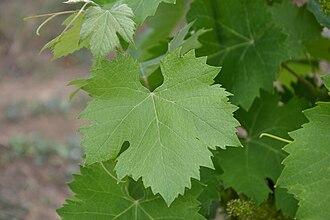
    Tannat grape leaf close up
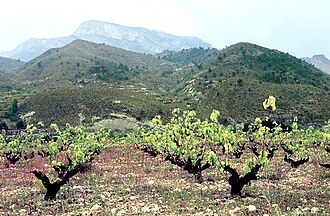
    Vineyard of Tannat in Bandol
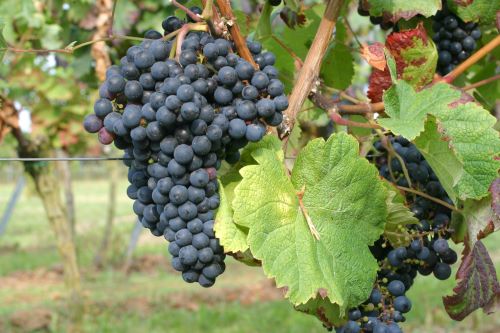
    Tannat grape clusdter on the vine.
    Grape personality

    The iron-backed guardian.
    Tannat is dark, thick-skinned and deeply structured: a grape of tannin, strength, mountain air, black fruit and slow patience.

    Best moment

    Cold evening, slow fire.
    Dark fruit, grilled meat, mountain air, long conversation and a wine that opens only when the evening has truly begun.


    Tannat does not soften itself to be liked.
    It stands firm in its skins, its tannins and its dark-fruited depth, then slowly reveals the beauty of structure.


    Origin & history

    A southwest French beginning with a Uruguayan second homeland

    Tannat comes from southwest France, where it is most deeply associated with Madiran and the broader Gascon and Pyrenean foothill landscape. It belongs to a world of firm red grapes, rustic food, Atlantic influence, mountain air and wines built for structure. In Madiran, Tannat became the central grape because its natural power suited the region’s identity: dark, tannic, long-lived and serious.

    Read more →

    The grape’s second great story is Uruguay. Brought there in the nineteenth century, Tannat adapted remarkably well to the country’s Atlantic-influenced climate and became the country’s signature grape. In Uruguay, it often shows a rounder, more approachable side than the sternest examples from Madiran, while still keeping its dark colour, firm structure and savoury depth. This dual identity makes Tannat unusual: it is both a deeply French regional grape and a New World national emblem.

    Its deeper parentage is not firmly established. Tannat is generally treated as an old southwest French variety, part of the broader genetic and cultural environment of the Pyrenean and Gascon vineyard world. It may not have a tidy family story, but it has an unmistakable ampelographic identity: thick skins, high tannin, deep colour and a strong relationship with place.

    The modern reputation of Tannat has changed. Once admired mainly for force and longevity, it is now understood with more nuance. Growers have learned to manage its tannins more carefully, while warmer regions outside France have shown that the grape can be powerful without being forbidding.


    Ampelography

    A thick-skinned grape built for structure

    Tannat is physically expressive in the vineyard. Its berries are dark and thick-skinned, giving the grape its deep colour and formidable tannic structure. The bunches can be compact, and the vine has enough vigour to require control. This is not a grape that disappears quietly into the background. Its morphology already suggests the wines it can produce: dense, structured, slow to soften and built around skin-derived power.

    Read more →

    The thick skins are central. They protect the berries, carry phenolic material and give Tannat its unmistakable grip. They also make ripeness important. If the skins and seeds are not mature, the grape can feel hard and severe. If ripened well, the tannins become a frame rather than a wall. Tannat is therefore a grape where vine balance and harvest timing matter deeply.

    • Leaf: medium to large, depending on clone, vigour and site
    • Bunch: medium, often compact enough to require good airflow
    • Berry: dark, thick-skinned, colour-rich and tannin-bearing
    • Impression: powerful, structured, dark, firm and slow to reveal itself

    Viticulture

    Vigorous, tannic and demanding of ripeness

    Tannat is a vigorous grape that needs careful vineyard discipline. It can produce strong growth, generous phenolic material and deeply coloured fruit, but that strength has to be directed. Too much vigour can delay ripening or reduce clarity. Too much crop can make tannins feel raw. Too little attention to canopy can increase disease pressure in compact bunches. Tannat rewards seriousness.

    Read more →

    In Madiran, the grape benefits from warm days, cooler influences and soils that can give both ripeness and firmness. In Uruguay, maritime influence and a generally milder Atlantic setting help Tannat ripen with a different balance, often softening the harshest edges while preserving dark structure. This is why the same grape can feel severe in one place and more generous in another.

    Canopy management is important because the fruit needs both exposure and protection. The grape’s thick skins can handle sun, but balanced ripening is more valuable than brute heat. Airflow matters too, especially where humidity can threaten compact bunches. The ideal vineyard gives Tannat enough warmth to mature fully, enough restraint to control vigour and enough freshness to keep the final wine from feeling heavy.

    This is not a grape for careless winemaking or casual farming. Tannat’s strength is real, but unmanaged strength can become hardness. When the vineyard is balanced, however, that same force becomes architecture: colour, tannin, acidity and dark fruit holding together with impressive authority.


    Wine styles

    Dark fruit, serious tannin and long ageing potential

    Although the focus here is the grape, Tannat’s wines reveal its physical nature clearly. They are usually dark, tannic and deeply flavoured, with black plum, blackberry, black cherry, tobacco, cocoa, smoke, earth and sometimes a leathery or iron-like edge. In traditional Madiran, the wines can be long-lived and stern in youth. In Uruguay, they often feel rounder, fruitier and more approachable.

    Read more →

    Modern techniques have changed the way Tannat is understood. Gentler extraction, better phenolic ripeness, oxygen management and more careful use of oak have helped reduce harshness while keeping structure. The grape does not need to become soft to be successful. It simply needs its power to be shaped rather than exaggerated.

    This is why Tannat is such a useful variety to study. It shows the difference between tannin as a flaw and tannin as a structure. At its best, Tannat is not merely strong. It is composed, dark, age-worthy and deeply tied to the thickness of its skins.


    Terroir

    A grape that turns place into structure

    Tannat does not translate terroir in a delicate, transparent way like Pinot Noir. It translates place through density, tannin, freshness and muscular architecture. In Madiran, it can feel dark, firm and long-lived, shaped by clay, stones, slopes and the cool-warm rhythm of the southwest. In Irouléguy, close to the Basque foothills, it can show mountain freshness and a more lifted frame. In Uruguay, Atlantic air and warmer ripening give a different expression: broader, polished and often more immediately generous.

    Read more →

    Soils matter because they influence vigour and water balance. Clay can support the vine through dry periods, gravel and stones can improve drainage, and slopes can help exposure and airflow. Tannat needs enough resources to ripen fully, but not so much fertility that the vine becomes heavy and unfocused. The best sites give power with control.

    That is the heart of Tannat terroir: not delicacy, but discipline. It is a grape that can easily become too much. Place, farming and climate must give it direction.


    History

    From rustic power to modern precision

    Tannat’s history has often been framed by power. In Madiran, the grape was known for wines that needed time, food and patience. Their strength was part of their identity, but also part of their challenge. Modern vineyard and cellar work has made the grape more legible. Today Tannat can still be firm, but it no longer has to be harsh.

    Read more →

    Uruguay gave Tannat a second life. There it became more than an imported European variety. It became a national reference point, a grape through which the country could define its red wine identity. That matters for Ampelique, because it shows how grape varieties migrate and then become local again. Tannat is French by origin, but Uruguayan by adoption.


    Pairing

    Built for protein, smoke and slow meals

    Tannat is a natural partner for food with protein, fat and depth. Its tannins need something to hold onto: grilled beef, lamb, duck, cassoulet, barbecue, sausages, mushrooms, hard cheeses and slow-cooked stews. In Uruguay, the connection with grilled meat is obvious. In southwest France, it belongs just as naturally with duck, beans and rustic winter cooking.

    Read more →

    Aromas and flavors: blackberry, black plum, black cherry, tobacco, cocoa, smoke, leather, earth and dark spice. Food pairings: grilled beef, lamb shoulder, duck confit, cassoulet, smoked sausages, mushrooms, aged cheese, barbecue and dishes with deep savoury flavour.


    Where it grows

    Madiran, Uruguay and warm-climate outposts

    Tannat’s two main homes are southwest France and Uruguay. In France, it is the core grape of Madiran and appears in neighbouring areas such as Béarn, Irouléguy, Saint-Mont and Tursan. In Uruguay, it is widely planted and has become the country’s flagship red grape, especially around Canelones, Montevideo, Maldonado, Colonia and other wine regions. Smaller plantings exist in Argentina, Brazil, the United States and other warm-climate areas.

    Read more →
    • France: Madiran, Béarn, Irouléguy, Saint-Mont, Tursan and the wider southwest
    • Uruguay: Canelones, Montevideo, Maldonado, Colonia, San José and other regions
    • South America: Argentina and Brazil in smaller but meaningful plantings
    • Elsewhere: United States, especially California, plus experimental warm-climate plantings

    Why it matters

    Why Tannat matters on Ampelique

    Tannat matters because it shows that grape character can be physical. Some varieties seduce through perfume; Tannat speaks through structure. It teaches us about skins, tannins, vigour, ageing and the way a grape can carry strength without losing identity. It also shows how a variety can move across continents and become meaningful twice: first in Madiran, then again in Uruguay.

    Read more →

    For Ampelique, Tannat is essential because it connects ampelography with cultural identity. Its thick skins are not an abstract detail; they shape the wine, the farming, the ageing, the food pairing and the regions that made it famous. It is a grape that lets readers understand why the vine itself matters.


    Quick facts

    • Color: red / black grape
    • Main names: Tannat, Harriague, Moustrou, Moustroun
    • Parentage: deeper parentage not firmly established; generally treated as an old southwest French variety from the Pyrenean-Gascon vineyard world
    • Origin: southwest France, especially the Madiran / Béarn region
    • Most common regions: France: Madiran, Béarn, Irouléguy, Saint-Mont and Tursan; Uruguay: Canelones, Montevideo, Maldonado, Colonia and San José; also Argentina, Brazil and California
    • Climate: temperate to warm; needs enough ripeness to mature tannins fully
    • Viticulture: vigorous, thick-skinned, tannin-rich, colour-giving, requires canopy and yield control
    • Soils: clay, gravel, stones, slopes and well-drained soils that balance vigour and ripeness
    • Styles: structured reds, age-worthy Madiran, softer Uruguayan Tannat, blends and modern varietal wines
    • Signature: deep colour, firm tannin, black fruit, tobacco, cocoa, smoke, leather and powerful structure

    Closing note

    Tannat is not a grape of quick charm. It is a grape of structure, patience and deep-rooted strength. Its beauty lies in the way thick skins become architecture, tannin becomes memory and dark fruit becomes something that can age, soften and endure. From Madiran to Uruguay, Tannat proves that firmness can be its own kind of elegance.

    If you like this grape

    If you appreciate Tannat’s deep colour, firm tannin and slow-building structure, you might also enjoy Malbec for dark southwest French depth, Fer Servadou for peppery regional character, or Mourvèdre / Monastrell for another thick-skinned Mediterranean grape with savoury power.

    A grape of thick skins, deep colour and tannic architecture — stern at first, but deeply rewarding with time.

  • MELON DE BOURGOGNE

    Ampelique Grape Profile

    Melon de Bourgogne

    Origin, viticulture, morphology, wine styles, and place.

    Melon de Bourgogne is the quiet white grape behind Muscadet, the Atlantic wine of the western Loire. Born in Burgundy but almost completely redefined near Nantes, it is a variety of restraint, freshness, salt, lees and stony understatement. It rarely seeks aromatic drama. Instead, it offers clarity, acidity, texture and an unusually direct relationship with maritime climate and hard, ancient soils.

    Few grapes are so easily underestimated. Melon de Bourgogne can look modest beside more aromatic white varieties, yet that modesty is exactly its strength. In the right place, especially in Muscadet Sèvre et Maine and its crus communaux, it becomes a lens for granite, gneiss, schist, cool Atlantic air and slow lees ageing. It is not a grape of volume. It is a grape of line.

    Grape personality

    The Atlantic minimalist.
    Melon de Bourgogne is quiet, saline, fresh and precise: a white grape of lees, stone, sea air, citrus, restraint and understated persistence.

    Best moment

    Oysters, rainlight, Atlantic air.
    A cool table near the coast, shellfish, lemon, sea salt, simple bread and a glass that tastes cleaner with every sip.


    Melon de Bourgogne does not decorate the glass.
    It clears it, cools it, and leaves behind the taste of stone, salt, lees and Atlantic light.


    Origin & history

    A Burgundian grape that found its true voice by the Atlantic

    Melon de Bourgogne carries its origin in its name, but its destiny unfolded far from Burgundy. The grape is historically Burgundian, related to the same old vine world that gave rise to many classical French varieties, yet it became almost completely identified with the western Loire. Around Nantes, close to the Atlantic Ocean, Melon de Bourgogne found a landscape that suited its cool temperament, steady acidity and understated fruit.

    Read more →

    The grape’s move westward changed everything. In Burgundy it never became a major modern identity. In the Nantais, it became the basis of Muscadet, a wine culture built around freshness, maritime food, modest alcohol and a sense of directness. The distinction is important: Melon de Bourgogne is the grape; Muscadet is the wine region and style most closely associated with it. Yet in everyday language the two are so intertwined that many drinkers know the wine before they know the variety.

    Melon de Bourgogne’s genetic story also places it in a familiar European pattern. It is understood as a natural crossing involving Pinot and Gouais Blanc, a parentage that links it to several historically important grape families. From Pinot it seems to inherit a quiet sensitivity to place. From Gouais Blanc, perhaps, it carries the old agricultural resilience that allowed many European varieties to travel, adapt and survive beyond their first homes.

    Today, Melon de Bourgogne matters because it teaches a different kind of greatness. It is not famous for perfume, color, opulence or obvious power. Its importance lies in precision, usefulness, regional fidelity and the way it translates a cool Atlantic edge into white wine. It is one of the clearest examples of a grape that became great not by dominating a region, but by fitting it perfectly.


    Ampelography

    A modest white vine with compact fruit and clear structure

    Melon de Bourgogne is not a flamboyant vine. Its leaves are generally medium-sized and rounded to slightly pentagonal, often with moderate lobing and a practical, orderly outline. Bunches are usually small to medium-sized, sometimes compact, with small green-yellow berries that ripen without dramatic color change. In the vineyard, it gives an impression of neatness, restraint and cool-climate utility rather than expressive ornament.

    Read more →

    This modest morphology is part of the grape’s charm. Melon de Bourgogne does not arrive in the vineyard with the visual intensity of deeply colored red grapes or the aromatic promise of Muscat. Its identity is more structural. Small berries, fresh acidity and relatively neutral fruit make it well suited to wines where texture, lees contact and soil impression are more important than primary fruit intensity.

    The vine can be productive, but quality depends on keeping yields within bounds. If it carries too much crop, the resulting fruit may become dilute and the wine thin rather than delicate. When managed well, Melon keeps enough concentration to make its quietness meaningful. In a variety like this, small differences in fruit quality matter greatly because there is no heavy aromatic mask to hide behind.

    • Leaf: medium-sized, rounded to slightly pentagonal, generally tidy
    • Bunch: small to medium, sometimes compact
    • Berry: small, green-yellow, fresh and relatively neutral in aroma
    • Impression: restrained, practical, cool-climate, acidity-led and site-responsive

    Viticulture

    Early budding, Atlantic-tested and dependent on careful yield control

    Melon de Bourgogne is often described as well suited to the cool, maritime conditions of the Nantais, but that does not mean it is effortless. It buds relatively early, making spring frost a real concern, especially in low-lying or exposed sites. It can also produce generously if not controlled, and excessive yields quickly reduce the definition that gives the grape its value. The best Melon is not about abundance. It is about clarity.

    Read more →

    The Atlantic climate brings both freshness and pressure. Cool temperatures help preserve acidity, while oceanic influence gives the wines their crisp, saline identity. At the same time, humidity and rainfall can create disease challenges. Canopy management therefore matters: enough openness for airflow, enough leaf cover to ripen evenly, and enough crop control to avoid thin fruit. Melon de Bourgogne asks for quiet precision, not heroic intervention.

    Soil choice is central to the grape’s modern quality story. The best Muscadet vineyards are often planted on hard, well-drained ancient rocks such as granite, gneiss, schist, gabbro and orthogneiss. These soils are not merely background geology. They shape water availability, drainage, vine vigor and ripening rhythm. For a restrained grape, that physical environment becomes especially visible.

    Melon de Bourgogne also rewards old vines. Older parcels often give more density, more extract and a stronger sense of mineral persistence, even when the wines remain light in alcohol. That combination — modest alcohol, firm acidity and real depth — is one of the grape’s most beautiful possibilities.


    Wine styles

    Fresh, saline, lees-shaped and quietly age-worthy

    Melon de Bourgogne is best known through Muscadet, especially Muscadet Sèvre et Maine. The classic style is dry, pale, crisp and maritime, with notes of lemon, green apple, pear skin, wet stone, sea spray, almond and sometimes a faint yeasty texture from ageing on the lees. Its beauty is subtle. It is not designed to overwhelm the senses. It is designed to sharpen them.

    Read more →

    The term sur lie is central to Melon de Bourgogne’s identity in Muscadet. Ageing the wine on its fine lees gives texture, protection and a subtle savory dimension. It can add breadth without making the wine heavy. For a naturally restrained grape, this is essential. Lees contact helps Melon feel complete: still fresh, still crisp, but with enough mid-palate presence to avoid austerity.

    The rise of Muscadet’s crus communaux has expanded the grape’s image. Wines from places such as Clisson, Gorges, Le Pallet, Goulaine, Mouzillon-Tillières, Château-Thébaud, Monnières-Saint-Fiacre, La Haye-Fouassière, Vallet and others show that Melon can be more than a simple oyster wine. With lower yields, older vines, distinctive bedrock and longer ageing, it can become broader, deeper and more age-worthy while remaining fundamentally Atlantic.

    Even then, the grape should not be judged by the standards of aromatic whites. It is not trying to be Sauvignon Blanc, Riesling or Chenin Blanc. Its language is drier, quieter and more saline. The best examples prove that neutrality can be expressive when the vineyard and cellar give it shape.


    Terroir

    A grape that makes hard rock and sea air visible

    Melon de Bourgogne is one of the clearest grapes for understanding how a relatively neutral variety can become terroir-expressive. Because its fruit character is restrained, soil, lees, climate and vineyard management are highly visible. In Muscadet, the relationship between grape and bedrock has become increasingly central. Granite, gneiss, schist, gabbro and other ancient formations each shape the wine’s texture, weight and finish.

    Read more →

    On granite, Muscadet may feel firm, stony and lifted. On gabbro, it can become broader, darker in texture and more powerful. Schist may lend a different kind of tension and verticality. These differences should not be reduced to simple flavor labels, but they matter. They influence drainage, warmth, rooting depth, water stress and the way the vine carries acidity and extract into the fruit.

    The Atlantic climate is equally important. Melon de Bourgogne does not express place only through soil. It expresses wind, rain, coolness and proximity to the sea. Its wines often carry a saline impression not because salt is literally in the grape, but because acidity, low alcohol, freshness and mineral restraint create a sensory association with the coast. It is one of the great examples of climate becoming style.

    This is why serious Muscadet can be far more interesting than its modest reputation suggests. Melon de Bourgogne is not a neutral grape in the sense of being empty. It is neutral in the sense of being transparent. It leaves room for place to speak.


    History

    From simple seafood wine to serious Atlantic classic

    For a long time, Muscadet was known mainly as a brisk, affordable wine for oysters and shellfish. That identity was not wrong, but it was incomplete. Melon de Bourgogne was valued for freshness, dryness and usefulness, yet its deeper potential was often overlooked. In recent decades, growers in the Nantais have worked to show that the grape can produce wines of site, depth and ageing capacity when treated with greater ambition.

    Read more →

    The development of cru communal Muscadet has been central to this reappraisal. These wines typically come from delimited areas with specific geological identities and often undergo longer ageing before release. The result is a different image of Melon de Bourgogne: not just light and fresh, but persistent, textural, age-worthy and surprisingly complex. The grape has not changed. The attention given to it has changed.

    There is also a broader cultural lesson here. Not every important grape becomes famous through power or prestige. Some matter because they belong so perfectly to a way of eating, farming and living. Melon de Bourgogne belongs to the Atlantic table: oysters, mussels, river fish, salt, butter, rain, stone houses, cool wind and simple meals that become memorable through precision.

    Its modern future depends on this same balance: keeping freshness and accessibility while showing more clearly what old vines, serious soils and thoughtful lees ageing can achieve. Melon de Bourgogne does not need reinvention. It needs careful listening.


    Pairing

    A natural partner for shellfish, salt and simple precision

    Melon de Bourgogne is one of the great food grapes of the white-wine world. It is almost inseparable from shellfish, especially oysters, mussels, clams and simple seafood preparations. Its acidity refreshes, its saline impression echoes the sea, and its modest body keeps the food central. This is not a wine that competes with the plate. It sharpens it.

    Read more →

    Aromas and flavors: lemon, green apple, pear skin, white flowers, almond, wet stone, sea spray, bread dough, subtle herbs and a faint leesy creaminess in sur lie styles. Structure: usually light to medium-bodied, dry, high in freshness, moderate in alcohol and driven by acidity, salinity and texture rather than perfume.

    Food pairings: oysters, mussels, clams, prawns, crab, grilled sardines, sole, cod, trout, fresh goat cheese, salads with lemon, simple chicken, herb omelettes and dishes with butter, salt and restraint. More serious crus can handle richer fish, aged cheeses, mushroom dishes and roast poultry with subtle cream or beurre blanc.

    The best pairings with Melon de Bourgogne often look simple on paper. That is the point. This grape loves clarity: raw shellfish, steamed mussels, grilled fish, lemon, salt, parsley, butter and bread. It belongs to meals where freshness is not decoration, but the whole architecture.


    Where it grows

    Almost entirely at home in the Nantais

    Melon de Bourgogne is unusual because its modern distribution is so concentrated. Although the grape originated in Burgundy, its real home today is the western Loire, especially the vineyards around Nantes. The major appellations include Muscadet Sèvre et Maine, Muscadet Coteaux de la Loire, Muscadet Côtes de Grandlieu and the broader Muscadet area. Small plantings exist elsewhere, but none define the grape as powerfully as the Nantais.

    Read more →
    • France: western Loire, especially the Nantais around Nantes
    • Key appellation: Muscadet Sèvre et Maine
    • Other Muscadet zones: Coteaux de la Loire, Côtes de Grandlieu and broader Muscadet
    • Cru communal areas: Clisson, Gorges, Le Pallet, Goulaine, Mouzillon-Tillières, Château-Thébaud, Monnières-Saint-Fiacre, La Haye-Fouassière, Vallet and others
    • Elsewhere: very limited plantings outside the Loire, mostly experimental or historical

    This concentration is part of the grape’s identity. Melon de Bourgogne is not a global traveler in the way Chardonnay or Sauvignon Blanc is. It is a local specialist — and that makes it valuable. It shows how one grape can become almost inseparable from a landscape.


    Why it matters

    Why Melon de Bourgogne matters on Ampelique

    Melon de Bourgogne matters on Ampelique because it expands the definition of what an important grape can be. It is not famous for grandeur. It is not a luxury symbol. It is not aromatically explosive. Its greatness lies in usefulness, transparency, restraint and regional truth. It teaches readers that some grapes are most beautiful when they refuse to perform too loudly.

    Read more →

    It also gives Ampelique a chance to clarify a common confusion. Muscadet is not the grape. Melon de Bourgogne is the grape, and Muscadet is the region and wine identity built around it. That distinction is exactly the kind of thing a grape platform should make elegant and easy. Understanding this variety helps readers understand how grape names, place names and wine styles often overlap without meaning the same thing.

    The grape also represents a form of ecological and cultural fit. In an age of increasingly global varieties, Melon de Bourgogne remains deeply local. It proves that a grape does not need to be planted everywhere to matter. Sometimes a variety matters because it belongs somewhere so completely that it becomes part of that region’s rhythm, food and landscape.

    For Ampelique, Melon de Bourgogne is essential because it speaks for quiet grapes, coastal grapes and grapes of place rather than personality. It reminds us that understatement can be a form of depth, and that freshness can carry memory.


    Quick facts

    • Color: white
    • Main names: Melon de Bourgogne, Melon, Muscadet grape
    • Parentage: Pinot × Gouais Blanc
    • Origin: Burgundy, France; modern identity in the western Loire
    • Common regions: Muscadet Sèvre et Maine, Muscadet Coteaux de la Loire, Muscadet Côtes de Grandlieu, broader Nantais
    • Climate: cool to moderate maritime climate with strong Atlantic influence
    • Soils: granite, gneiss, schist, gabbro, orthogneiss and other ancient hard-rock soils
    • Styles: dry, crisp, sur lie, cru communal, occasionally sparkling or experimental
    • Signature: freshness, salinity, lees texture, low to moderate alcohol and stony restraint
    • Classic markers: lemon, green apple, pear skin, almond, sea spray, wet stone, subtle lees and bread dough
    • Viticultural note: early budding and frost-sensitive; quality depends strongly on yield control, airflow and site selection

    Closing note

    A great Melon de Bourgogne is never only light. It is a lesson in quietness: acidity without aggression, texture without weight, salt without drama, and place without ornament. It may be one of the least showy white grapes in France, but in the right hands it becomes one of the clearest.

    If you like this grape

    If you appreciate Melon de Bourgogne’s freshness, salinity and understated structure, you might also enjoy Albariño for Atlantic brightness, Picpoul for coastal acidity, or Chenin Blanc for Loire texture and age-worthy white-wine depth.

    A white grape of Atlantic air, ancient rock and the beauty of restraint.

  • GAMAY NOIR

    Ampelique Grape Profile

    Gamay

    Origin, viticulture, morphology, wine styles, and place.

    Gamay is the red grape behind Beaujolais, and one of the clearest examples of how delicacy can still carry seriousness. It is bright, early-ripening, naturally fresh and often transparent to site, especially on the granitic hills of northern Beaujolais. At its simplest it can be joyful and immediate. At its best, it becomes perfumed, mineral, structured and quietly age-worthy.

    Gamay has often been underestimated because it is so easy to enjoy. Yet beneath its red cherry, raspberry, violet and spice lies a serious viticultural story: old vines, poor soils, whole clusters, thin skins, high acidity and a rare ability to make freshness feel generous. It is one of the world’s great grapes of lift, charm and granite-born precision.

    Grape personality

    The bright-hearted red.
    Gamay is fresh, floral and red-fruited: a grape of granite hills, whole clusters, violet, cherry and joyful precision.

    Best moment

    Cool bottle, simple table.
    Roast chicken, charcuterie, mushrooms, autumn light and a glass that feels lively, fragrant and completely unforced.


    Gamay does not need weight to make an impression.
    It moves through red fruit, violet, spice and stone with a quick, graceful pulse.


    Origin & history

    A Burgundian exile that found its voice in Beaujolais

    Gamay’s story begins in the wider Burgundian world, but its true cultural home became Beaujolais. The grape’s full name, often given as Gamay Noir à Jus Blanc, points to a black-skinned grape with pale juice. Historically, Gamay was present in Burgundy, but it was famously pushed away from the Côte d’Or in favor of Pinot Noir. That rejection became the beginning of its own identity rather than the end of its story.

    Read more →

    In Beaujolais, Gamay found the conditions that allowed it to become more than a lighter alternative to Pinot. The granitic and sandy soils of the north, the rolling hills, the relatively cool but sufficiently sunny climate, and the tradition of whole-bunch handling all shaped a style that was fresh, fragrant and energetic. The grape’s natural acidity, early ripening and modest tannin made it particularly suited to this landscape.

    Modern genetic work has shown Gamay to be a crossing of Pinot and Gouais Blanc, the same broad parentage combination that also produced other important varieties. That lineage helps explain its mix of delicacy and vigor. Pinot suggests finesse, red-fruit subtlety and sensitivity to place. Gouais Blanc brings a more rustic, productive historical background. Gamay sits somewhere between: graceful when controlled, generous when allowed, and deeply shaped by site.

    Today Gamay is inseparable from Beaujolais, but it is also grown in parts of the Loire, Switzerland, Canada, the United States and other cool-climate regions. Even so, Beaujolais remains the grape’s clearest center: the place where Gamay learned to be both joyful and serious.


    Ampelography

    A black grape with pale juice, compact clusters and early energy

    Gamay is a black grape, though the juice itself is pale, which is why the full name Gamay Noir à Jus Blanc remains useful. The vine tends to be vigorous and productive if not carefully managed. Leaves are generally medium-sized, rounded to slightly pentagonal, often with three to five lobes. The clusters are usually medium-sized and can be compact, while the berries are dark, thin-skinned and capable of producing wines with bright color but relatively gentle tannin.

    Read more →

    Its physical structure is central to its style. Thin skins and pale juice help explain the grape’s delicacy, but compact bunches and vigor mean the vineyard cannot be left to itself. Gamay can overcrop, and when it does, the wines may become simple, dilute or too sharply fruity. Old vines on poor granitic soils often provide natural yield control, producing smaller crops with greater concentration and more mineral definition.

    Gamay’s early budding and early ripening are also important. Early budding can make the vine vulnerable to spring frost, while early ripening allows it to succeed in cooler zones where later grapes might struggle. This combination gives Gamay both risk and advantage. It begins the season with tension and often finishes before autumn becomes too cold or wet.

    • Leaf: medium-sized, rounded to slightly pentagonal, usually 3–5 lobed
    • Bunch: medium-sized, often compact
    • Berry: black-skinned, pale-juiced, relatively thin-skinned
    • Impression: vigorous, early-ripening, fresh, delicate and site-sensitive

    Viticulture

    Early, productive and best when restrained by poor soils

    Gamay is naturally productive, which is both a gift and a danger. In generous soils it can yield abundantly, but abundance without control often leads to wines without depth. Its finest expressions usually come from sites that limit vigor: granite, schist, sandy soils, slopes and old vines. In these conditions the grape’s red fruit becomes more focused, the floral notes become clearer and the acidity feels integrated rather than merely sharp.

    Read more →

    Because Gamay buds early, frost risk can be serious in spring. This is one of the grape’s main vulnerabilities. Growers need suitable exposures, air drainage and careful pruning decisions to reduce risk. Later in the season, Gamay’s early ripening can be helpful, especially in cooler years, because it can reach maturity before autumn weather becomes too unstable.

    Disease pressure depends strongly on site and canopy. Compact clusters can be vulnerable to rot in humid conditions, while vigorous growth can make airflow more difficult. The best growers aim for balance rather than force: enough leaf to protect freshness, enough exposure to ripen and dry the fruit, enough crop control to preserve concentration, and enough restraint to keep the grape’s natural liveliness intact.

    Gamay rewards intelligent farming because it reveals imbalance quickly. Too much crop and it becomes light without meaning. Too much heat and it loses perfume. Too much extraction and it can become awkward. The grape’s greatness lies in proportion.


    Wine styles

    From joyful fruit to cru Beaujolais with structure and depth

    Gamay can make wines of immediate pleasure and wines of real seriousness. The lighter end of the spectrum is bright, juicy and red-fruited, with cherry, raspberry, strawberry, violet and gentle spice. The more serious end, especially in the crus of Beaujolais, can show darker fruit, mineral grip, floral detail, savoury notes and enough structure to age. The grape’s range is wider than its easy charm sometimes suggests.

    Read more →

    Winemaking plays a major role. Whole-cluster fermentation, semi-carbonic maceration and carbonic maceration are closely associated with Beaujolais. These methods can emphasize fruit, perfume, low tannin and aromatic lift. In simpler wines, they may create a vivid, playful style. In more serious cru Beaujolais, whole clusters can add fragrance, structure and layered complexity when combined with old vines and careful extraction.

    The crus of Beaujolais show Gamay’s site range especially well. Fleurie can be floral and silky. Morgon can be deeper, more structured and earthy. Moulin-à-Vent can be firm and age-worthy. Chiroubles often feels lifted and delicate. Côte de Brouilly can show stony brightness. These differences are not decorative; they prove that Gamay can transmit place with remarkable clarity when grown on the right soils.

    Gamay is at its best when the winemaking respects its natural movement. It does not need heavy oak or forceful extraction. It needs freshness, fragrance, enough tannic frame and a clear line from fruit to finish.


    Terroir

    Granite, altitude and the art of light red wine

    Gamay’s finest terroir expression is closely linked to granite. In northern Beaujolais, granitic and sandy soils often restrain the vine, improve drainage and help produce wines of perfume, lift and mineral clarity. This is one reason Gamay can feel so different from heavier red grapes grown in warmer, richer soils. It does not need density to speak of place. It speaks through brightness, aroma, texture and finish.

    Read more →

    Altitude and exposure also matter. Higher or cooler sites preserve acidity and floral detail, while warmer slopes can produce riper, darker fruit. Poor soils help keep yields in check and intensify the wine’s shape. Old vines are especially important because they naturally moderate production and often root deeply into fractured stone. In these conditions, Gamay becomes more than fresh red wine. It becomes a clear expression of hillside and soil.

    The contrast between Beaujolais-Villages and the individual crus is useful. Simpler wines often emphasize immediate red fruit and refreshment. The crus show how the same grape can take on more specific shapes: firm in Moulin-à-Vent, floral in Fleurie, muscular in Morgon, airy in Chiroubles, stony in Côte de Brouilly. Gamay’s transparency is not identical to Pinot Noir’s, but it can be just as revealing in its own language.

    Terroir in Gamay often feels like energy rather than mass. The best wines seem to run across the palate with red fruit, violet, spice and mineral tension. They are light-footed, but not slight.


    History

    From cheerful reputation to renewed seriousness

    For many drinkers, Gamay became associated with Beaujolais Nouveau: youthful, fruity, quickly released and easy to drink. That style brought enormous visibility, but it also simplified the grape’s image. Gamay became known as fun, which is not wrong, but incomplete. The modern recovery of serious Beaujolais has helped restore a fuller understanding of the variety.

    Read more →

    Over recent decades, growers and winemakers in Beaujolais have emphasized old vines, lower yields, organic and regenerative farming, cru identity, gentler extraction and less caricatured winemaking. The result has been a renaissance. Gamay is now widely recognized as one of the most exciting grapes for elegant, fresh, terroir-driven red wine. It has moved from being underestimated to being actively sought out by sommeliers and thoughtful drinkers.

    This renewal did not require Gamay to become heavier or more prestigious in an obvious way. Its revival happened because people learned to take its lightness seriously. The grape’s low to moderate tannin, high acidity, red-fruit perfume and ability to work with whole clusters make it especially suited to contemporary tastes: fresh, drinkable, transparent and food-friendly.

    Gamay’s modern story is therefore not a reinvention, but a correction. The grape always had depth. It simply needed growers, drinkers and writers to listen past the laughter.


    Pairing

    A red grape made for the table, not the trophy shelf

    Gamay is one of the world’s most useful red grapes at the table. Its moderate tannin, bright acidity and red-fruit profile allow it to work with foods that would be overwhelmed by heavier reds. It can be served slightly cool, which makes it especially flexible. Roast chicken, charcuterie, mushrooms, pork, pâté, sausages, lentils, bistro dishes and vegetable-forward plates all fit naturally with Gamay’s easy but precise character.

    Read more →

    Aromas and flavors: red cherry, raspberry, strawberry, cranberry, violet, peony, banana or candy notes in some carbonic styles, black cherry in riper crus, spice, earth, mineral and sometimes a savoury stem-like lift from whole clusters. Structure: usually light to medium-bodied, high in acidity, moderate to low in tannin, and driven by freshness and perfume rather than weight.

    Food pairings: roast chicken, duck, charcuterie, pâté, sausages, pork, mushroom dishes, lentils, bistro salads, grilled vegetables, tuna, salmon, mild cheeses and simple autumn dishes. Lighter Gamay works beautifully with casual food, while structured cru Beaujolais can handle richer, earthier plates.

    The best pairings avoid treating Gamay as a miniature heavy red. It does not need steakhouse drama. It wants movement, salt, herbs, fat in moderation and food that lets its brightness stay alive. Gamay belongs to hospitality as much as to analysis.


    Where it grows

    A Beaujolais grape with a growing cool-climate future

    Gamay’s central home is Beaujolais, south of Burgundy, where the grape dominates the landscape and reaches its greatest range. It is also planted in parts of the Loire, where it can produce fresh, easy-drinking reds and rosés. Switzerland has a long relationship with Gamay as well, often in blends with Pinot Noir or as varietal wine. In recent years, cooler regions in North America and elsewhere have explored Gamay because of its early ripening and bright acidity.

    Read more →
    • France: Beaujolais, especially the ten crus, plus parts of the Loire and Burgundy
    • Switzerland: Valais, Vaud and other regions, often alongside Pinot Noir
    • Canada: Ontario and other cool-climate sites
    • United States: Oregon, California and selected cool-climate vineyards
    • Elsewhere: small plantings in cool or moderate regions interested in fresh red styles

    Its distribution tells a useful story. Gamay is not a grape for every warm red-wine region. It is most convincing where ripeness arrives without heaviness and where freshness remains central to the wine’s identity.


    Why it matters

    Why Gamay matters on Ampelique

    Gamay matters on Ampelique because it challenges one of wine’s most persistent assumptions: that seriousness must be heavy. Gamay proves the opposite. It can be light, fresh, joyful and still deeply expressive. It can make wines that disappear quickly at the table and wines that reward years of attention. That duality makes it one of the most instructive red grapes in the world.

    Read more →

    It also teaches the importance of context. Gamay on fertile soils at high yields can be simple. Gamay from old vines on granite can be vivid, mineral and complex. The grape itself is only part of the answer. Soil, vine age, yield, cluster handling and cellar restraint all shape the result. Few grapes make this lesson so approachable.

    For readers, Gamay is a bridge. It can welcome beginners through fruit and softness, then lead them toward cru differences, granite soils, whole-cluster fermentation, old vines and ageing potential. Like Loureiro among whites, it shows that charm does not exclude depth. Like Pinot Noir, it can be transparent, but it speaks in a more direct and generous accent.

    For Ampelique, Gamay is essential because it brings brightness to the red-grape canon. It reminds us that red wine can be fragrant, agile, transparent and deeply satisfying without becoming massive. It is a grape of pleasure, but pleasure with roots.


    Quick facts

    • Color: black
    • Main name: Gamay
    • Full name: Gamay Noir à Jus Blanc
    • Parentage: Pinot × Gouais Blanc
    • Origin: Burgundy / eastern France, with Beaujolais as its defining home
    • Common regions: Beaujolais, Loire Valley, Burgundy, Switzerland, Canada, Oregon and selected cool-climate sites
    • Climate: cool to moderate; early-ripening and freshness-sensitive
    • Soils: granite, sand, schist and poor well-drained soils, especially in northern Beaujolais
    • Styles: light red, cru Beaujolais, whole-cluster red, semi-carbonic styles, rosé and fresh cool-climate reds
    • Signature: red fruit, violet, high acidity, modest tannin, freshness and granite-born lift
    • Classic markers: cherry, raspberry, strawberry, violet, spice, mineral, sometimes banana in carbonic styles
    • Viticultural note: vigorous and productive; quality depends on yield control, poor soils, healthy fruit and balanced ripeness

    Closing note

    A great Gamay is never only easy. It is freshness with roots, fruit with stone beneath it, joy with discipline. In its finest Beaujolais forms, it proves that a red grape can be light in body and deep in meaning at the same time.

    If you like this grape

    If you appreciate Gamay’s red fruit, freshness and light-footed structure, you might also enjoy Pinot Noir for its delicacy and terroir expression, Trousseau for pale red perfume and savoury lift, or Poulsard for another Jura-born red grape of transparency and charm.

    A black grape of red fruit, violet, granite and joyful precision — light on its feet, serious in its roots.