Ampelique Grape Profile
Tribidrag
Origin, viticulture, morphology, wine styles, and place.
Tribidrag is the older Adriatic name behind the grape known today as Primitivo in Puglia and Zinfandel in California. It is one black grape variety with several cultural lives: Croatian by deep historical memory, southern Italian by one of its strongest European homes, and Californian by modern fame. In the vineyard, Tribidrag is generous, vigorous and sun-loving, with dark berries, compact clusters and a famous tendency toward uneven ripening. It is a grape of warmth, old vines, dry hillsides and careful harvest decisions.
For Ampelique, Tribidrag is a perfect example of why grape identity is more than a name. Primitivo points toward Puglia, Zinfandel toward California, and Crljenak Kaštelanski toward the rediscovery of the grape on the Dalmatian coast. Tribidrag gives the variety an older centre. It allows the grape to be seen not as three separate stories, but as one vine moving through geography, language and time.
The Adriatic shapeshifter.
Tribidrag is old, vigorous and many-named: a dark-fruited grape that became Primitivo in Puglia and Zinfandel in California.
Dalmatian heat, old stone, dark fruit.
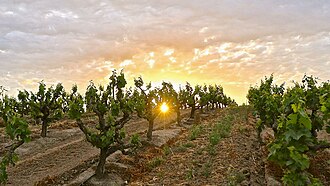
A dry coastal slope, compact uneven clusters, warm Adriatic air, and the feeling of a grape rediscovering its own name.
Tribidrag carries more than one passport.
It remembers Dalmatian stone, ripens into Puglian warmth, and finds old-vine confidence under the Californian sun.
Contents
Origin & history
The old Adriatic name behind Primitivo and Zinfandel
Tribidrag is the historic Croatian name for the grape better known internationally as Primitivo and Zinfandel. Modern genetic work has shown that these names refer to the same variety, with Crljenak Kaštelanski also part of the same identity. That discovery changed the meaning of the grape. What once looked like separate American and Italian stories became part of a much older Adriatic vine lineage.
Read more →
The different names matter because they describe different historical landscapes. Tribidrag points toward the eastern Adriatic and the deeper origin of the grape. Crljenak Kaštelanski points toward the Dalmatian rediscovery of the variety near Kaštela. Primitivo points toward Puglia, where the grape became a southern Italian classic. Zinfandel points toward California, where it became one of the great old-vine grapes of American wine.
Ampelographically, it is best to understand these names as cultural expressions of one grape. The differences between Primitivo and Zinfandel are not differences of species or variety, but differences of place, vine material, climate, vineyard age and wine style. A Puglian Primitivo and a Californian Zinfandel may taste different, but the vine identity behind them is shared.
That makes Tribidrag a strong main name for Ampelique. It restores historical depth while still allowing readers to find the better-known names. Under Tribidrag, Primitivo and Zinfandel become chapters in one longer story, rather than separate entries competing for attention.
Ampelography
A vigorous vine with uneven clusters
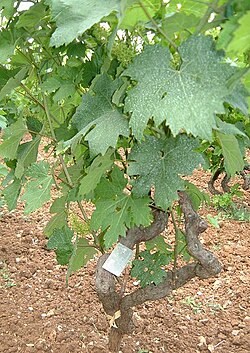
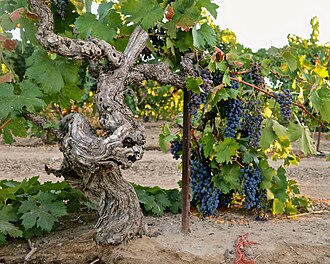
Tribidrag is a black grape with a generous physical character. The leaves are usually medium to large, often rounded to pentagonal, with three to five lobes and a fairly open outline. The bunches are medium to large, conical to cylindrical-conical, and often compact. The berries are dark blue-black, capable of strong colour and expressive fruit, but the most important feature of the grape is not simply darkness. It is uneven ripening.
Read more →
Within the same bunch, some berries may reach high sugar while others remain less ripe. This is one of the defining viticultural challenges of Tribidrag. It gives the grape a restless, uneven energy. In the best vineyards, that irregularity can create complexity: ripe dark fruit alongside fresher, spicier notes. In weaker conditions, it can create imbalance, with raisined berries, green berries, or both in the same harvest window.
The compactness of the bunches also matters. In dry regions, compact clusters can remain healthy and concentrated. In humid or rainy conditions, they may be vulnerable to rot and mildew. This helps explain why the grape feels most secure in warm, dry climates with enough air movement and sunlight. It is not a cool-climate grape of slow restraint. It is a grape that wants heat, but needs the grower to manage that heat carefully.
- Leaf: medium to large, rounded to pentagonal, often three to five lobes
- Bunch: medium to large, conical to cylindrical-conical, often compact
- Berry: dark blue-black, medium-sized, sugar-accumulating and fruit-rich
- Impression: vigorous, sun-loving, productive, compact-clustered and marked by uneven ripening
Viticulture
Warmth, vigour and careful timing
Tribidrag is a grape of warm to hot climates, but it rewards discipline more than excess. It can grow vigorously, carry generous crops and accumulate sugar quickly. This makes it attractive in dry, sunny regions, but also risky if yield, canopy and harvest timing are not controlled. The vine naturally offers abundance. The viticultural task is to turn abundance into balance.
Read more →
Old vines are especially important in the story of Tribidrag under the name Zinfandel. In California, many old head-trained vines survive in dry-farmed vineyards. These vines are often low-yielding, deeply rooted and naturally self-regulating. Their old trunks and open goblet-like forms can help the grape cope with dry conditions while keeping fruit concentration high and vigour under control.
In Puglia, where the grape is known as Primitivo, the challenge is similar but expressed through a different landscape. Warm southern conditions help the vine ripen fully, while limestone, red soils, coastal influence and careful vineyard management can help preserve enough freshness. In Croatia, especially in Dalmatian contexts, the grape’s heritage identity connects it to dry coastal slopes, stone, sun and maritime air.
Because bunches may be compact and ripening uneven, careful crop thinning and canopy work can be important. Too much fruit increases inconsistency. Too little shade can encourage sunburn or dehydration. Too much shade can slow the least ripe berries and increase disease risk. Tribidrag asks for balance in the vineyard before it can show balance in the glass.
The key decision is often harvest. Sugar may be high before all berries feel evenly mature. If picked late, the fruit can become raisined or heavy. If picked too early, the uneven berries may show green or angular notes. The best growers read the bunch carefully. Tribidrag is not a grape that should be harvested by numbers alone.
Wine styles
Dark fruit, spice and warmth, shaped by place
Although this profile is mainly about the grape, Tribidrag’s wine styles help reveal its vineyard behaviour. Under the names Primitivo and Zinfandel, the grape often gives dark berry fruit, plum, black cherry, pepper, spice and generous texture. Alcohol can be relatively high, tannins are usually moderate rather than severe, and the best wines keep a line of freshness beneath the fruit.
Read more →
In California, Zinfandel can range from bright and peppery to rich and powerful. Old-vine examples often show more savoury depth, mixed berry complexity and texture. In Puglia, Primitivo often leans toward ripe plum, dark cherry, warmth and soft generosity. Croatian examples are less globally visible, but they are important because they reconnect the grape to its older Adriatic identity.
The grape has also produced rosé, including the famous White Zinfandel style in the United States. That style became commercially important, but it is only one small part of the grape’s story. For Ampelique, the main point is that Tribidrag is naturally versatile because its fruit carries colour, sugar, aroma and generosity with ease.
The danger is excess. Too much ripeness can turn the grape heavy; too much oak can flatten its fruit; too much extraction is rarely needed. The best wines are those that respect the grape’s natural abundance while keeping it clear, lively and shaped.
Terroir
Heat needs a boundary
Tribidrag is strongly shaped by warmth, but its best sites are not simply the hottest ones. The grape needs enough heat to ripen fully, yet it benefits from some form of restraint: old vines, poor soils, maritime air, altitude, diurnal shift or careful dry farming. Without restraint, it can become too broad. With restraint, it can turn heat into depth, spice and vineyard character.
Read more →
In Dalmatia, the grape’s older identity belongs to a coastal, stony, sunlit environment. In Puglia, Primitivo grows in a southern Italian landscape of heat, limestone, red earth and dry summers. In California, Zinfandel has adapted to a wide range of sites, from sandy old-vine vineyards to rocky hillsides and warmer inland valleys. These places are different, but they share a need to manage the grape’s natural energy.
Soil is important mainly because it influences vigour and water. Sandy loams can give perfume and softness. Gravel and rocky soils support drainage and limit growth. Limestone can help structure and freshness. Volcanic or iron-rich soils may bring darker, more savoury tones. Tribidrag does not need luxurious soil. It often performs best where the vine must work.
Old vines are perhaps the grape’s most powerful terroir amplifier. They reduce excess, deepen root systems and slow the rush toward simple fruit. For a variety so naturally generous, old vines act like memory and discipline at once. They help Tribidrag become more than ripeness.
History
Migration, confusion and rediscovery
The history of Tribidrag is a story of migration and mistaken separation. For many years, Zinfandel was seen as California’s own mystery grape, while Primitivo belonged to southern Italy. Only later did genetic identification bring the pieces together and connect both names to Croatian material. That rediscovery gave the grape a deeper and more coherent history.
Read more →
In California, Zinfandel became deeply tied to nineteenth-century planting, immigrant farming, field blends and old head-trained vines. In Puglia, Primitivo became one of the leading grapes of the south, connected to ripeness, warmth and Mediterranean abundance. In Croatia, Crljenak Kaštelanski and Tribidrag became part of a rediscovery narrative: a reminder that famous grapes can sometimes survive quietly in their older homelands while becoming famous elsewhere under different names.
This is why Tribidrag is such a valuable main name. It prevents the Californian and Italian stories from becoming isolated from the grape’s older identity. It also respects the fact that grape names are not just labels. They carry geography, memory, farming traditions and cultural pride.
Today, the grape continues to evolve in all its homes. In California, old-vine Zinfandel is increasingly treated with site sensitivity. In Puglia, Primitivo producers often seek more freshness and nuance. In Croatia, the grape carries heritage value. One vine, several futures.
Pairing
A grape for smoke, spice and generous food
Tribidrag’s natural fruit, spice and warmth make it a strong match for food with smoke, char, tomato, pepper and savoury sweetness. It is not a grape for delicate cuisine. It prefers generous flavours: grilled meats, tomato-based dishes, roasted vegetables, sausages, barbecue, hard cheeses and dishes with black pepper, paprika or herbs.
Read more →
Aromas and flavors: blackberry, raspberry, plum, black cherry, pepper, warm spice, dried herbs, cocoa, licorice and sometimes raisined or jammy notes in very ripe examples. Structure: usually medium to full-bodied, often generous in alcohol, with moderate acidity and soft to moderate tannin.
Food pairings: barbecue ribs, burgers, grilled sausages, pepperoni pizza, tomato pasta, roast pork, smoked brisket, meatballs, spicy aubergine, grilled peppers, aged cheddar, pecorino and dishes with sweet-spicy sauces. Fresher styles work well with tomato and herbs; richer styles prefer smoke, char and protein.
Where it grows
Croatia, Puglia and California
Tribidrag’s most important identities are spread across three regions. Croatia provides the older Adriatic origin and the names Tribidrag and Crljenak Kaštelanski. Puglia gives the grape its Primitivo identity, especially around Manduria and Gioia del Colle. California gives it its Zinfandel identity, especially through old vineyards in Sonoma, Napa, Lodi, Paso Robles, Mendocino, Amador and Contra Costa.
Read more →
- Croatia: Dalmatia, Kaštela area and the eastern Adriatic heritage context under Tribidrag and Crljenak Kaštelanski
- Italy: Puglia, especially Primitivo di Manduria and Gioia del Colle
- United States: California, especially Sonoma, Napa, Lodi, Paso Robles, Mendocino, Amador and Contra Costa
- Elsewhere: smaller plantings in Australia, South Africa, Mexico and other warm-climate regions
Why it matters
Why Tribidrag matters on Ampelique
Tribidrag matters because it proves that a grape variety can travel so far that its own identity becomes divided across names. Under Primitivo, it belongs to Puglia. Under Zinfandel, it belongs to California. Under Crljenak Kaštelanski, it belongs to modern Croatian rediscovery. Under Tribidrag, the story gathers itself again.
Read more →
For Ampelique, this is exactly the kind of grape that deserves careful treatment. It is not only important because it is widely planted or well known. It is important because it shows how grape varieties move through migration, trade, naming, farming and rediscovery. Tribidrag is a botanical identity, but it is also a cultural map.
Viticulturally, it is also a useful teaching grape. Its uneven ripening, compact clusters, vigorous growth, affinity for dry warmth and dependence on careful harvest timing make it a vivid example of how vine behaviour shapes everything that follows. It is not a passive grape. It demands choices.
By placing Tribidrag at the centre, Ampelique can offer something richer than a simple Zinfandel or Primitivo page. It can show the whole vine: Adriatic memory, Puglian heat, Californian old vines and the living complexity of a grape with many names.
Quick facts
- Color: red / black grape
- Main names: Tribidrag, Crljenak Kaštelanski, Primitivo, Zinfandel, Kratošija
- Parentage: deeper parentage not firmly established; Tribidrag, Crljenak Kaštelanski, Primitivo and Zinfandel are genetically the same variety
- Origin: Croatia / eastern Adriatic, with major later identities in Puglia and California
- Most common regions: Croatia: Dalmatia and Kaštela area; Italy: Puglia, especially Manduria and Gioia del Colle; United States: California, especially Sonoma, Napa, Lodi, Paso Robles, Mendocino, Amador and Contra Costa
- Climate: warm to hot, dry climates; best with old vines, airflow, cooling influence or good diurnal shift
- Viticulture: vigorous, generous, compact-clustered, uneven ripening, careful harvest timing needed
- Soils: sandy loam, gravel, limestone, rocky slopes, volcanic soils and well-drained alluvial sites
- Styles: dark-fruited reds, old-vine reds, field blends, dry rosé and White Zinfandel
- Signature: dark berries, plum, pepper, warm spice, generous texture, old-vine depth and sunlit energy
Closing note
Tribidrag is one grape with several lives. It carries an old Adriatic memory, southern Italian warmth and Californian old-vine confidence. Its beauty lies in generosity, but also in the discipline required to shape that generosity. Under the names Primitivo and Zinfandel it became famous; under the name Tribidrag it becomes whole again.
Image credits
Leaf image: Wikimedia Commons – Randy Caparoso.
Vineyard image: Wikimedia Commons – Randy Caparoso.
Cluster image: Wikimedia Commons – A. Matulić..
If you like this grape
If you appreciate Tribidrag’s dark fruit, warmth and old-vine generosity, you might also enjoy Grenache Noir for Mediterranean softness and spice, Syrah for darker peppery depth, or Aglianico for a more structured southern grape with tannin and age-worthy force.
An old Adriatic grape with many names — Croatian in memory, Italian in warmth, Californian in old-vine soul.
 Ampelique
Leave a comment