Tag: Italian grapes

Italian grape profiles. Origin, ampelography, viticulture tips and quick facts. Use color filters to narrow results.

  • VERDICCHIO

    Ampelique Grape Profile

    Verdicchio

    Origin, viticulture, morphology, wine styles, and place.

    Verdicchio is a white Italian grape variety most closely associated with the Marche, especially Castelli di Jesi and Matelica. It is a grape of green light, mountain air, sea-breeze freshness, and a quiet almond finish that lingers like stone warmed by the sun.

    Verdicchio matters because it shows how a regional grape can become one of Italy’s most complete white varieties. In the vineyard it combines vigor, firm acidity, thick-skinned berries, and a need for good exposure. In the cellar it can become crisp and immediate, structured and age-worthy, sparkling, late-harvest, or quietly profound. On Ampelique, Verdicchio belongs among the grapes that explain place: limestone hills, clay soils, Adriatic influence, inland valleys, and the patient rhythm of central Italy.

    Grape personality

    Clear, mineral, quietly confident. Verdicchio is not a loud grape, but it has remarkable inner strength: vivid acidity, citrus brightness, herbal detail, saline edges, and a firm almond-like finish that gives even simple wines a sense of shape. It feels precise rather than decorative, more like a clean architectural line than a floral gesture.

    Best moment

    A late lunch near the Adriatic. Verdicchio feels most itself with grilled fish, olive oil, bitter greens, fresh herbs, and a table that moves slowly from noon into afternoon. It is a wine for brightness and appetite, but also for quiet conversation and the second glass.


    Verdicchio does not need perfume to be memorable. Its beauty lies in line, tension, salt, citrus, and the bitter almond echo that makes the final sip feel complete.


    Origin & history

    A Marche white with deep regional roots

    Verdicchio is one of central Italy’s defining white grapes. Its strongest identity belongs to the Marche, where it shapes the wines of Verdicchio dei Castelli di Jesi and Verdicchio di Matelica, two landscapes that show different sides of the same variety.

    Read more →

    The grape’s name is usually connected with “verde”, meaning green, a reference to the greenish hue that can appear in the berries and in young wines. This visual clue suits Verdicchio well. Even when ripe, the variety often keeps a cool, green-gold impression: citrus peel, fennel, herbs, green almond, and a mineral edge rather than tropical softness.

    In the Marche, Verdicchio has become much more than a local white. Around Jesi, closer to the Adriatic influence, it often gives wines with brightness, salinity, citrus lift, and accessible charm. Around Matelica, further inland and more enclosed by hills and mountains, it can become tighter, more vertical, and more severe in youth, with excellent capacity to develop in bottle.

    Verdicchio is also linked genetically and historically with several Italian white names, especially the wider Trebbiano-related world. Yet its Marche identity remains unmistakable. It is a grape that proves local white varieties can be both traditional and serious: everyday at the table, but capable of depth, texture, and age. That combination makes it one of Italy’s most rewarding white varieties for anyone interested in the connection between grape, region, and style.


    Ampelography

    Green-gold berries and compact form

    Verdicchio is generally a vigorous white grape with medium leaves, medium-sized bunches, and round berries that tend toward yellow-green when ripe. Its visual identity is not dramatic, but it is precise: compact enough to need careful site choice, bright enough to suggest the freshness of the wines.

    Read more →

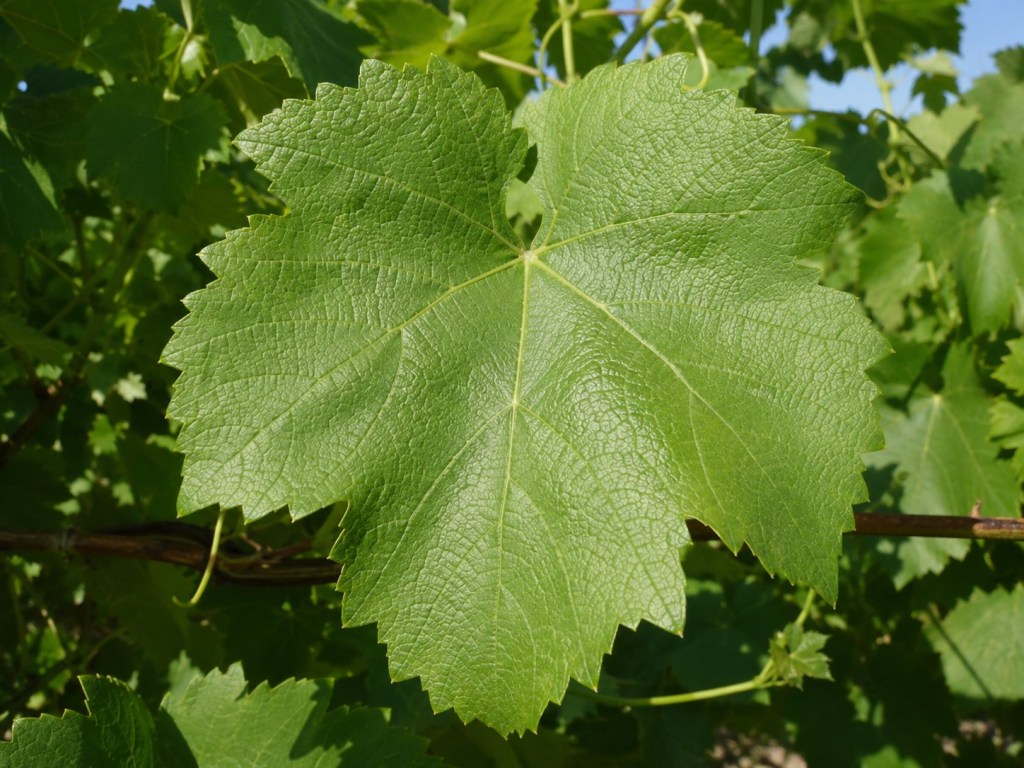
    The vine can show good vigor and a semi-upright habit, with shoots that require balanced canopy management. Leaves are typically medium in size, often pentagonal and three- to five-lobed, with a dark green upper surface and a paler, sometimes downy underside. This gives the canopy a dense but not necessarily heavy appearance when well managed.

    The bunch is usually medium in size, conical or winged, and compact to semi-compact. This is important in the vineyard, because compact clusters can increase pressure from rot when humidity is high or when the canopy traps moisture. The berries are medium, round, yellowish-green, with relatively thick skins and juicy pulp. The grape does not present itself through dramatic color or unusual bunch shape; its interest is subtler, lying in the relationship between compact fruit, firm acidity, and the green-gold freshness that later appears in the glass.

    • Leaf: Medium-sized, often pentagonal, three- to five-lobed, with a dark green surface and paler underside.
    • Bunch: Medium, conical or winged, compact to semi-compact, requiring good ventilation.
    • Berry: Medium, round, yellow-green, thick-skinned, with fresh, simple, sweet pulp.
    • Impression: A sturdy, green-gold white grape whose morphology explains both its freshness and its need for careful vineyard work.

    Viticulture notes

    Vigor, exposure, and the art of balance

    Verdicchio performs best where vigor can be controlled and ripening can proceed slowly but fully. Well-exposed hillsides, clay-rich soils, good airflow, and careful canopy work help the grape keep its natural acidity while developing enough flavor and texture.

    Read more →

    The variety is naturally capable of producing generous growth, so vineyard balance is essential. If yields are pushed too high, Verdicchio can become thin, neutral, or simply acidic. When yields are moderated and grapes reach proper maturity, the same acidity becomes one of its great strengths, carrying citrus, herb, almond, and mineral notes with clarity.

    Because bunches can be compact, Verdicchio appreciates ventilation. Hillside vineyards are valuable not only for exposure, but also for air movement, especially in wetter years. Growers need to watch fungal pressure, particularly where humidity combines with dense canopy. Leaf removal, measured pruning, and thoughtful training all help protect fruit quality. The aim is not to expose the fruit harshly, but to create a canopy that breathes: enough shade to protect aromatic freshness, enough light to ripen skins and pulp.

    Ripening is usually medium to late, and the best results often come from patient harvesting. Picking too early can emphasize sharpness without depth. Picking too late can soften the green-citrus precision that makes the grape distinctive. The finest Verdicchio comes from this narrow but rewarding middle point: ripe enough for texture, fresh enough for tension. It is a variety that punishes laziness but rewards attentive farming with wines that feel bright, structured, and genuinely regional.


    Wine styles & vinification

    From bright table wine to serious Riserva

    Verdicchio is unusually versatile. It can be made as a crisp stainless-steel white, a more textured lees-aged wine, a sparkling base, a late-harvest or passito style, and a structured Riserva with real ageing potential.

    Read more →

    The most immediate expressions focus on freshness. Fermentation in stainless steel preserves citrus, green apple, white flowers, and herbal notes, while the grape’s natural acidity gives the wine lift and energy. These bottles are often dry, clean, and food-friendly, with the typical almond-like finish appearing as a small bitter accent rather than a dominant flavor.

    More ambitious Verdicchio can gain texture from lees contact, later harvesting, older vessels, or restrained oak. The aim is rarely to make the wine heavy. Instead, the best versions add breadth without losing line: lemon oil, chamomile, fennel, hay, wet stone, pear skin, and almond skin can appear as the wine opens. The grape’s acidity is crucial here, because it allows producers to build palate weight without losing drinkability.

    Riserva styles are where Verdicchio becomes especially serious. With lower yields, mature fruit, and careful ageing, the grape can develop waxy texture, savory depth, honeyed notes, and a mineral backbone. It is one of the Italian white grapes that can genuinely improve with bottle age, not by becoming louder, but by becoming more layered. This makes Verdicchio useful both for simple refreshment and for a deeper cellar conversation about Italian white wine.


    Terroir & microclimate

    Sea air, inland valleys, and clay hills

    Verdicchio is deeply shaped by the contrast between Adriatic influence and inland elevation. The grape likes sunny hills, clay or clay-limestone soils, and enough air movement to keep its compact bunches healthy.

    Read more →

    In Castelli di Jesi, the landscape is broader and more open toward the Adriatic. Maritime influence can soften extremes and bring a saline freshness to the wines. Many examples from this area show lemon, green apple, white flowers, herbs, and a gentle almond note, often with a rounded but lively palate.

    Matelica is different. It lies further inland, in a valley system influenced by the Apennines. The climate can bring greater day-night temperature shifts and a more vertical expression of acidity. Verdicchio from Matelica is often described as firmer, more mineral, more restrained, and more age-worthy in its youth. Where Jesi can feel open, generous, and maritime, Matelica often feels narrower, cooler, and more mountain-shaped.

    Soils matter as much as climate. Clay gives water-holding capacity and body, limestone can sharpen the mineral impression, and well-drained hillside sites protect the grape from heaviness. Verdicchio does not need the warmest land. It needs land that lets it ripen slowly, stay fresh, and finish dry, clean, and complete. Its best terroirs do not hide the grape’s acidity; they give that acidity something to carry.


    Historical spread & modern experiments

    A local grape with wider Italian echoes

    Although Verdicchio’s reputation belongs above all to the Marche, the grape has important connections with other Italian white varieties and synonyms, including Turbiana and Trebbiano di Soave. These links make Verdicchio part of a wider central and northern Italian vine story.

    Read more →

    For much of its modern history, Verdicchio was known mainly as a fresh, affordable white from central Italy. The fish-shaped amphora bottle of Castelli di Jesi became recognizable, but it also risked reducing the grape to a simple image. Over time, better growers showed that Verdicchio could be much more serious than its old market reputation suggested.

    Modern Verdicchio now covers a broad range: light and bright wines for early drinking, organically farmed hillside expressions, lees-aged bottlings, traditional-method sparkling wines, and Riserva wines intended for ageing. The best producers have moved attention away from packaging and toward site, vine age, yield, and precision. That shift is important, because Verdicchio’s strength is not branding but substance: acidity, structure, mineral detail, and a flavor profile that can remain fresh even when the wine gains complexity.

    Outside the Marche, related names can create confusion. Turbiana around Lake Garda and Trebbiano di Soave in Veneto show close connections, but wines labelled Verdicchio are culturally tied to Marche identity. This makes the grape both local and expansive: rooted in one region, but part of a larger Italian family of fresh, structured white varieties.


    Tasting profile & food pairing

    Citrus, herbs, salt, and bitter almond

    Verdicchio is usually dry, fresh, and savory rather than overtly fruity. Its classic markers are lemon, green apple, pear skin, white flowers, fennel, herbs, wet stone, saline notes, and a clean bitter-almond finish.

    Read more →

    Aromas and flavors: Lemon, lime, green apple, pear, white peach, chamomile, acacia, fennel, sage, hay, almond skin, and sometimes a subtle marine or stony note. Structure: Medium to high acidity, light to medium body in youthful styles, more breadth in Riserva wines, usually dry, with a firm, refreshing finish.

    Food pairings: Grilled fish, seafood pasta, anchovies, fried calamari, roast chicken with lemon, porchetta, bitter greens, artichokes, pesto, young pecorino, olive oil-based dishes, and simple vegetables with herbs. Its acidity handles richness, while the almond finish works beautifully with savory and bitter flavors. It is also one of those white wines that can handle dishes many softer whites struggle with: artichoke, fennel, green herbs, capers, and oily fish.

    The pleasure of Verdicchio is often in its restraint. It rarely shouts from the glass. Instead, it builds through texture, brightness, and detail. Young bottles refresh the palate; mature bottles can become more complex, with wax, honey, dried herbs, nuts, and a deeper mineral tone. The best examples keep a line of freshness even as they age, which is why Verdicchio can surprise drinkers who expect simple Italian white wine and find something far more complete.


    Where it grows

    The grape of Jesi and Matelica

    Verdicchio grows most famously in the Marche, especially in Verdicchio dei Castelli di Jesi and Verdicchio di Matelica. It also appears under related names in other Italian regions, but its most meaningful identity remains Marche.

    Read more →
    • Verdicchio dei Castelli di Jesi: The larger and best-known zone, shaped by rolling hills, Adriatic influence, and a broad range of styles from fresh everyday wines to serious Riserva.
    • Verdicchio di Matelica: A smaller inland area where altitude, valley conditions, and mountain influence often give firmer, more mineral, age-worthy wines.
    • Other parts of Marche: Verdicchio appears in wider regional wines and blends, often carrying freshness and local identity.
    • Related Italian identities: Closely connected names such as Turbiana and Trebbiano di Soave show how Verdicchio belongs to a broader Italian white-grape network.

    For Ampelique, the key is not to treat Verdicchio as a generic Italian white. Its identity is regional, architectural, and site-sensitive. Jesi and Matelica are the two essential reference points, and together they show why the grape deserves serious attention. Jesi gives the wider, coastal, historically famous face; Matelica gives the compact inland face. Between them, Verdicchio becomes a lesson in how one grape can hold more than one landscape without losing its own voice.


    Why it matters

    Why Verdicchio matters on Ampelique

    Verdicchio matters because it brings together everything Ampelique wants to show: grape identity, regional history, viticultural detail, and the way a variety can translate landscape into flavor without needing fame on the scale of Chardonnay or Sauvignon Blanc.

    Read more →

    It is a grape that rewards curiosity. At first, Verdicchio may seem simple: pale, dry, citrusy, fresh. But the closer one looks, the more structure appears. The acidity is not just sharpness; it is architecture. The almond finish is not just bitterness; it is identity. The green-gold character is not underripeness; it is part of the grape’s natural signature.

    Verdicchio also helps explain why local white grapes matter. Many international whites travel widely and adapt easily, but Verdicchio is most convincing when read through its home. The difference between Jesi and Matelica, between sea influence and inland altitude, gives the grape a clear educational role. It allows a reader to understand that “Italian white wine” is not one thing, but a mosaic of climates, slopes, histories, and farming decisions.

    For a grape library, Verdicchio is essential. It is not obscure, but still underappreciated outside Italy. It offers morphology, terroir, history, synonyms, food culture, and stylistic range. It is exactly the kind of variety that makes Ampelique more than a list of grapes: it becomes a map of how vines belong to place. Verdicchio deserves the space because it is both accessible and serious, both regional and connected, both refreshing and capable of depth.

    Keep exploring

    Continue through the VWX grape group to discover more varieties that shape classic regions, historic blends, and the hidden architecture of wine.

    Quick facts

    Identity

    • Color: white
    • Main names / synonyms: Verdicchio, Verdicchio Bianco, Trebbiano di Soave, Trebbiano Verde, Turbiana, Verdicchio Verde
    • Parentage: Exact parentage not fully settled; part of a wider Italian white-grape network related to Trebbiano-type identities
    • Origin: Italy, especially the Marche region
    • Common regions: Verdicchio dei Castelli di Jesi, Verdicchio di Matelica, wider Marche, with related identities in Veneto and Lombardy

    Vineyard & wine

    • Climate: Sunny hillsides with good airflow; coastal or inland sites that preserve acidity
    • Soils: Clay, clay-limestone, loam, and well-drained hillside soils
    • Growth habit: Vigorous, semi-upright, requiring balanced canopy and yield control
    • Ripening: Medium to late; best with full but not excessive ripeness
    • Styles: Dry still white, Riserva, sparkling, late-harvest, passito, and textured lees-aged wines
    • Signature: Fresh acidity, citrus, herbs, saline-mineral detail, and bitter almond finish
    • Classic markers: Lemon, green apple, fennel, white flowers, wet stone, almond skin, medium body, clean finish
    • Viticultural note: Compact bunches and vigor make airflow, pruning, and site choice especially important

    If you like this grape

    If you like Verdicchio, explore grapes that share its fresh structure, Italian identity, mineral line, or almond-edged finish. Turbiana and Trebbiano di Soave are closely connected by identity and synonym history, while Greco offers a southern Italian echo of texture, citrus, herbs, and age-worthy white-wine depth. These varieties are not identical, but they all reward drinkers who enjoy whites with structure rather than simple fruitiness.

    Closing note

    Verdicchio is one of those grapes that becomes more interesting the longer you stay with it. At first it may seem simply fresh, green, and citrus-driven, but behind that brightness is a deeper architecture of salt, almond, hillside air, and regional memory. It is not a grape of noise or excess. It is a grape of clarity, patience, and quiet confidence.

    Continue exploring Ampelique
  • BARBERA

    Ampelique Grape Profile

    Barbera

    Origin, viticulture, morphology, wine styles, and place.

    Barbera is a classic black grape of northern Italy, most deeply associated with Piemonte, loved for vivid acidity, generous fruit, deep colour and unusually gentle tannin. Its beauty is all movement: cherry, plum, purple light, quick acidity, and the warm table rhythm of a wine that refreshes as much as it comforts.

    Barbera is sometimes called easy because its wines can be joyful, juicy and immediately drinkable. But the grape itself is not simple. Behind its charm lies a fascinating viticultural profile: high natural acidity, modest tannic force, strong colour, productive growth and a rare ability to make wines that feel both generous and agile. On Ampelique, Barbera matters because it proves that a grape can be everyday, serious, historic and deeply human all at once.

    Grape personality

    Bright, generous, vigorous, and restless. Barbera is a black grape with high natural acidity, deep colour, modest tannin and productive growth. Its personality is juicy, energetic, adaptable, food-loving and open-hearted, but it becomes much more serious when yield, site and ripeness are carefully disciplined.

    Best moment

    Pasta night, warm light, and a full table. Barbera feels natural with tomato sauces, pizza, salumi, roasted vegetables, agnolotti, grilled sausage, mushrooms and herbs. Its best moment is generous, informal, bright, comforting and alive with food rather than distant from it.


    Barbera moves like a red wine with quick feet: cherry, plum, acidity and warmth, generous at the table but always alive in the glass.


    Contents

    Origin & history

    A Piedmontese classic with everyday soul and serious depth

    Barbera is one of the great traditional grapes of Piemonte, where it has long stood beside Nebbiolo and Dolcetto as part of the region’s red-wine identity. If Nebbiolo often carries prestige, structure and aristocratic distance, Barbera carries energy, generosity and table life. It is the grape of acidity, colour and movement: less tannic than Nebbiolo, often brighter than Dolcetto, and deeply connected to daily drinking culture as well as serious hillside viticulture.

    Read more

    Its historical heart lies in the hills of Monferrato, Asti and Alba, where the grape became central to local food, farming and cellar traditions. Barbera was once often treated as the practical workhorse of Piemonte: productive, reliable, colourful and capable of making wines that refreshed the table. That practical reputation never disappeared, but over time growers discovered that old vines, lower yields and better sites could give Barbera more depth than its simple image suggested.

    This duality is central to the grape. Barbera can be joyful, direct and easy to drink, but it can also become layered, age-worthy and serious when grown on good slopes and handled with care. It does not achieve seriousness by imitating Nebbiolo. It achieves it through its own grammar: acidity rather than tannin, fruit rather than austerity, colour rather than hardness, and a flowing structure rather than a rigid frame.

    Today Barbera remains one of Italy’s most important native grapes. It is still most at home in Piemonte, but it also appears elsewhere in Italy and in several New World regions. Wherever it grows, its signature remains recognizable: dark colour, high acidity, modest tannin and a vivid fruit profile that seems made for food, conversation and movement.


    Ampelography

    A black grape of colour, acidity and generous growth

    Barbera is a black grape, and unlike some pale-skinned black varieties, it usually gives wines with a confident depth of colour. The vine can be vigorous and productive, with medium to large bunches and berries that carry enough pigment to produce wines of deep ruby to purple tone. Yet the structural feel of the grape is unusual: colour can be strong, acidity high, but tannin often remains relatively soft.

    Read more

    The leaves are generally medium to large, often three- to five-lobed, with a broad and practical vineyard appearance. The vine’s natural productivity is one of its defining traits. This can be an advantage for reliable yields, but also a risk for quality. If allowed to overcrop, Barbera can become thin in the middle despite its acidity and colour. If yields are controlled, the grape gains density, aromatic shape and a more satisfying texture.

    Bunches are often fairly full and can require attention in humid conditions. The berries tend to ripen with strong acidity, which is one of Barbera’s great gifts. Even in warm seasons, the grape often keeps a bright internal line. That acidity gives Barbera its famous agility at the table and its ability to handle rich food without becoming tiring.

    • Leaf: medium to large, usually three- to five-lobed, broad and practical.
    • Bunch: medium to large, often generous, productive and requiring yield discipline.
    • Berry: black-skinned, colour-rich, high in acidity and usually moderate in tannic force.
    • Impression: vigorous, colourful, bright, generous, adaptable and naturally food-oriented.

    Viticulture notes

    Productive, high-acid and best when disciplined

    Barbera’s natural productivity is both blessing and challenge. It can give reliable crops, which helped make it historically important to growers, but quality depends strongly on restraint. Too much yield can make the grape taste sharp, hollow or simple. Balanced yields, good exposure and old vines can transform it into something much more complete: still bright and fresh, but with deeper cherry, plum, spice and soil expression.

    Read more

    The grape ripens relatively late compared with some other local varieties, yet it usually preserves acidity very well. This makes site choice important. In cooler or less-exposed places, Barbera may keep too much sharpness and fail to develop full fruit depth. In good hillside sites with enough warmth, it ripens more harmoniously while retaining the freshness that defines it. The best Barbera vineyards are therefore not just warm; they are balanced.

    Canopy management matters because Barbera’s vigor can become excessive on fertile soils. Too much vegetative growth shades fruit and weakens aromatic definition. Careful shoot positioning, green harvesting where needed, and sensible pruning help keep the vine in balance. Old vines can be especially valuable because they often regulate yield naturally and produce fruit with more concentration.

    Disease pressure varies by region and season, but full bunches and vigorous canopies require attention to airflow. Barbera is not usually valued for difficult fragility in the way Poulsard is, nor for severe sensitivity in the way some thin-skinned grapes are. Its challenge is different: controlling abundance. The grower’s task is to turn natural generosity into shape.


    Wine styles & vinification

    Deep colour, bright acidity and red-fruited generosity

    Barbera usually gives wines of deep ruby colour, lively acidity and soft to moderate tannin. The classic flavour profile sits around sour cherry, red plum, black cherry, blackberry, violet, spice, dried herbs and sometimes a faint earthy or almond-like edge. It is a grape whose structure feels more vertical through acidity than horizontal through tannin. This makes Barbera energetic rather than imposing.

    Read more

    Traditional Barbera styles were often fresh, unoaked, direct and highly drinkable. They emphasized fruit, acidity and table usefulness. In the late twentieth century, some producers began making richer, oak-aged versions, especially from lower yields and riper fruit. These wines could show more body, darker fruit, vanilla, toast and polished texture. At their best, they proved Barbera could handle ambition. At their worst, oak and ripeness risked covering the grape’s natural freshness.

    Today many of the most compelling Barberas find a middle path. They preserve the grape’s acidity and food-friendly snap while adding enough texture and depth to feel serious. Stainless steel, concrete, large neutral oak and older barrels can all work well. New oak can be successful, but it needs care because Barbera’s low tannin and high acid do not always absorb wood in the same way as more structured grapes.

    The best wines are often joyful without being simple. They can be fresh and vivid in youth, yet gain savoury notes with age. Barbera is not usually a wine of monumental patience, but fine examples from old vines and strong sites can develop beautifully, moving from cherry and plum toward spice, leather, dried flowers and earthy complexity.


    Terroir & microclimate

    A grape that translates site through freshness, fruit and rhythm

    Barbera expresses terroir differently from Nebbiolo. It does not usually reveal site through severe tannic architecture or haunting floral austerity. Instead, it shows place through the balance of fruit ripeness, acidity, body and texture. A cooler or less-favoured site may give leaner, sharper wines. A warmer slope with mature vines can give deeper fruit, broader texture and still a bright acid line. Barbera’s terroir language is one of rhythm.

    Read more

    In Barbera d’Asti, the grape often shows bright red fruit, energy and a lifted structure. In Barbera d’Alba, especially from strong hillside vineyards, it can become fuller, darker and more textured, sometimes with greater depth and oak influence. In Monferrato, it may retain a more rustic and regional charm. These differences are not absolute rules, but they show how Barbera can shift according to slope, soil, climate and cellar choices.

    The grape performs best where warmth allows complete fruit development, but not so much that acidity becomes detached from ripeness. It likes the confidence of hillside exposure, yet it needs enough discipline to avoid becoming too loose or heavy. In clay-limestone and marl-rich Piedmontese settings, it can combine dark fruit with a savoury grip that gives the wine more depth than its easy reputation suggests.

    Outside Piemonte, Barbera adapts to warmer regions with surprising comfort, but the result changes. In California, Argentina or Australia, the grape can become darker, riper and broader, while still holding a recognisable line of acidity. The best examples do not erase Barbera’s brightness; they translate it through a different climate.


    Historical spread & modern experiments

    From Piemonte’s table to a wider wine world

    Barbera’s historic centre remains Piemonte, but its usefulness helped it travel. Within Italy it appears beyond its northern home, especially where growers value colour, acidity and productivity. Outside Italy, it has found small but meaningful homes in California, Argentina, Australia and other regions. Its spread is not as glamorous as Cabernet Sauvignon’s or Pinot Noir’s, but it is logical: growers appreciate a grape that can carry freshness even in warm conditions.

    Read more

    In California, Barbera was often used historically as a blending or workhorse grape because it could add colour and acidity. In more recent years, some producers have treated it with greater care, making varietal wines that show ripe cherry, plum and spice without losing the grape’s essential lift. The same pattern appears elsewhere: Barbera rewards growers who do not treat it merely as a filler.

    Modern experiments often explore oak ageing, old-vine concentration, lower yields, single-vineyard bottlings and fresher unoaked styles. This range is part of Barbera’s appeal. It can be a wine for the trattoria, a serious cellar selection, a bright natural-style red, or a polished oak-aged wine. The grape bends, but it does not disappear. Its acidity keeps bringing it back to itself.

    This flexibility explains why Barbera remains relevant. It is not locked into one narrow expression. It can satisfy people who want freshness, fruit, comfort, colour and energy, while still offering enough complexity for growers and winemakers who want to push it beyond simple everyday drinking.


    Tasting profile & food pairing

    Cherry, plum, bright acidity, soft tannin and a natural place at the table

    Barbera’s tasting profile is generous but rarely heavy when handled well. Expect sour cherry, black cherry, red plum, blackberry, violet, spice, dried herbs, liquorice, almond, earth and sometimes a gentle smoky or vanilla note if oak is used. The key is the structure: vivid acidity, relatively soft tannin, medium to full colour, and a palate that refreshes even when the fruit feels ripe. This is why Barbera is one of the great food grapes.

    Read more

    Aromas and flavors: sour cherry, red plum, black cherry, blackberry, violet, spice, dried herbs, earth, liquorice, almond and sometimes oak notes of vanilla, toast or smoke. Structure: high acidity, deep colour, soft to moderate tannin, generous fruit and a lively, mouth-watering finish.

    Food pairings: tomato pasta, pizza, agnolotti, lasagne, roasted vegetables, mushrooms, salumi, grilled sausage, pork, veal, braised beef, polenta, herbs, hard cheeses and rustic Piedmontese dishes. Barbera’s acidity cuts through fat and tomato, while its soft tannin makes it flexible with many foods.

    A fresh Barbera is beautiful slightly cool, especially with simple food. A deeper oak-aged Barbera can handle richer dishes and a larger glass. In both cases, the grape works best when it stays alive. Barbera should not feel stiff. Its pleasure is movement: fruit, acid, food, conversation, another bite, another sip.


    Where it grows

    Piemonte first, then Italy and beyond

    Barbera’s most important home is Piemonte, especially the areas of Asti, Alba and Monferrato. These landscapes define the grape’s cultural identity: hillsides, mixed farms, pasta, salumi, truffles, hazelnuts, old cellars and wines made for both daily life and serious attention. Beyond Piemonte, Barbera appears in other Italian regions and in several New World vineyards, especially where growers want colour and acidity in warm climates.

    Read more
    • Barbera d’Asti: often bright, energetic, red-fruited and strongly associated with the grape’s classic identity.
    • Barbera d’Alba: often fuller, darker and more textured, especially from warmer slopes and careful producers.
    • Monferrato: a historic heartland where Barbera keeps a rustic, local and deeply Piedmontese voice.
    • New World regions: California, Argentina and Australia can make ripe, colourful versions that still rely on acidity.

    Although Barbera travels, it is never more convincing than when its freshness is protected. Warmth can give ripe fruit, but without acidity Barbera loses its pulse. Piemonte remains the reference point because it shows the grape’s full personality: colour, fruit, sharpness, softness, generosity and cultural belonging.


    Why it matters

    Why Barbera matters on Ampelique

    Barbera matters because it refuses the idea that greatness must always be severe. It is a grape of brightness, appetite, usefulness and movement. It can be simple without being dull, serious without becoming stiff, and generous without losing freshness. In a grape library, Barbera is essential because it shows how acidity can be as important as tannin, and how a wine’s greatness can be measured at the table as much as in the cellar.

    Read more

    For growers, Barbera is a lesson in controlled abundance. For winemakers, it is a lesson in balance: how to protect fruit and acidity, how much oak to use, how much extraction is necessary, and when not to overwork a grape that already has natural energy. For drinkers, it is one of the clearest examples of wine as food’s companion.

    It also matters because it carries Piedmontese culture in a different way from Nebbiolo. Nebbiolo may be the region’s most famous red grape, but Barbera is often closer to everyday life. It belongs to lunches, kitchens, village cellars, market food and family tables. That cultural weight is not less important than prestige; it is simply another kind of significance.

    Barbera’s lesson is generous: not every important grape needs to dominate. Some grapes keep the meal alive. Some bring colour, fruit, acidity and human warmth. Barbera is one of those grapes: bright-hearted, historic, practical and capable of real beauty when allowed to be itself.

    Keep exploring

    Continue through the ABC grape group to discover more varieties that shape classic regions, historic blends, and the living architecture of wine.

    Quick facts

    Identity

    • Color: black
    • Main names / synonyms: Barbera, Barbera Nera
    • Parentage: not firmly established
    • Origin: northern Italy, most closely associated with Piemonte
    • Common regions: Barbera d’Asti, Barbera d’Alba, Monferrato, wider Italy, California, Argentina and Australia

    Vineyard & wine

    • Climate: temperate to warm sites where full ripeness and acidity can stay in balance
    • Soils: performs well on good hillside sites, including classic Piedmontese marl and clay-limestone settings
    • Growth habit: vigorous and productive; quality depends strongly on yield control
    • Ripening: relatively late, while retaining naturally high acidity
    • Styles: fresh unoaked reds, oak-aged reds, old-vine bottlings, regional blends and food-friendly table wines
    • Signature: deep colour, high acidity, soft tannin, cherry, plum, spice and lively freshness
    • Classic markers: vivid acid line, purple-ruby colour, generous fruit and low-to-moderate tannic grip
    • Viticultural note: avoid overcropping; Barbera needs disciplined yields and good exposure to show depth

    If you like this grape

    If Barbera appeals to you, explore other Italian black grapes with strong regional identity. Dolcetto brings softer fruit and darker ease, Nebbiolo gives structure and perfume, and Croatina adds rustic northern Italian depth.

    Closing note

    Barbera is a grape of appetite, brightness and human warmth. It carries Piemonte’s everyday soul while still allowing depth, age and ambition. Its greatness is not distance, but movement, generosity and life at the table.

    Continue exploring Ampelique

    Barbera reminds us that brightness can be profound, and that some of the most important grapes are the ones that keep the table alive.

  • DOLCETTO

    Ampelique Grape Profile

    Dolcetto

    Origin, viticulture, morphology, wine styles, and place.

    Dolcetto is a classic black grape of Piemonte, known for deep colour, soft fruit, moderate to low acidity, and a gently bitter almond edge. Despite its name, it does not usually make sweet wines. Its charm lies in immediacy: dark cherry, plum, violet, soft spice and a dry, savoury finish. Dolcetto is often drunk young, but the best examples show far more structure and regional character than its casual reputation suggests.

    Dolcetto is one of Piemonte’s most human grapes. It does not carry Nebbiolo’s severe architecture or Barbera’s bright acidity. Instead, it offers something darker, softer and more direct: a black grape of early ripening, deep colour, gentle fruit and dry tannic grip. It belongs to everyday tables, hillside farms and local drinking culture, yet it can be quietly serious when grown in the right place.

    Grape personality

    The dark, easy-hearted Piedmontese.
    Dolcetto is generous, dry, soft-fruited and quietly bitter: a black grape with plum, violet, almond and everyday charm.

    Best moment

    Simple food, honest glass.
    Salumi, pasta, mushrooms, roasted vegetables, a wooden table and a red wine that does not need ceremony.


    Dolcetto rarely asks for attention loudly.
    It offers dark fruit, dry tannin, violet shadow and a bitter almond finish — honest, local and quietly complete.


    Origin & history

    A Piedmontese grape with a soft name and a dry heart

    Dolcetto is one of the traditional black grapes of Piemonte, where it has long lived beside Nebbiolo and Barbera. Its name can mislead. “Dolcetto” suggests something small and sweet, yet the wines are usually dry, dark-fruited and often marked by a gentle bitter note. The sweetness in the name is more likely connected to the grape’s character or berry taste than to the finished wine. In practice, Dolcetto is one of Piemonte’s most direct and table-friendly reds.

    Read more →

    Its historical role in Piemonte is important because it occupied a different place from both Nebbiolo and Barbera. Nebbiolo demanded the best slopes, long ripening and patience. Barbera brought acidity, colour and energetic table freshness. Dolcetto offered earlier ripening, darker fruit, softer acidity and a wine that could be enjoyed without waiting for years. This practical role made it deeply valuable to growers and households. It was not simply a lesser grape. It was a different answer to daily life.

    The grape is especially associated with areas such as Dogliani, Alba, Diano d’Alba and Ovada, each giving slightly different interpretations. Dogliani is often regarded as one of Dolcetto’s strongest homes, where the grape can show more depth, structure and seriousness. Alba versions may be charming, fresh and immediately drinkable. Ovada can bring firmer, darker expressions. Together these places show that Dolcetto is not one simple style, but a family of local voices.

    Today Dolcetto is sometimes overshadowed by the fame of Nebbiolo and the cheerful popularity of Barbera, but it remains essential to understanding Piemonte. It reveals another side of the region: less grand, less acidic, less austere, more immediate, more darkly fruited and often more quietly rustic. It is a grape of local affection rather than international glamour.


    Ampelography

    A black grape of dark colour, early ripeness and compact character

    Dolcetto is a black grape that generally gives wines of good colour, often deep ruby to purple when young. The berries tend to be dark-skinned, and the grape can produce wines that look fuller and more structured than their relatively moderate acidity might suggest. Its bunches are usually medium-sized and can be compact, which means vineyard health and airflow matter. The vine’s appearance fits its character: practical, dark-fruited and not overly ornamental.

    Read more →

    The leaves are usually medium-sized, often rounded to slightly pentagonal, with three to five lobes depending on vine, clone and site. The canopy can be reasonably vigorous, but Dolcetto’s main vineyard identity is not extreme productivity in the way Barbera can be. Instead, its importance lies in its earlier ripening and its ability to produce drinkable, dark-coloured wines before Nebbiolo has reached full maturity.

    The berries contain enough phenolic material to give colour and a dry tannic touch, but Dolcetto does not usually build the severe structure of Nebbiolo. Its tannins can be noticeable, sometimes even slightly drying, but the wine’s overall impression is softened by fruit and moderate body. This creates a particular balance: low to moderate acidity, dark fruit, dry grip and a bitter almond finish.

    • Leaf: medium-sized, rounded to slightly pentagonal, often three- to five-lobed
    • Bunch: medium-sized, often compact enough to require airflow and fruit-zone attention
    • Berry: black-skinned, colour-giving, usually suited to dry red wines
    • Impression: early-ripening, dark-fruited, softly structured but not without tannic grip

    Viticulture

    Earlier ripening, sensitive timing and a need for calm balance

    Dolcetto ripens earlier than Nebbiolo and often earlier than Barbera, which historically made it useful in Piemonte. It could be planted in places where the late-ripening Nebbiolo was less certain, or harvested before autumn weather became too threatening. This earlier rhythm is one of the grape’s great strengths, but it also means that harvest timing must be handled carefully. Pick too early and the wine may taste hard and bitter. Pick too late and the fruit can lose freshness and become dull.

    Read more →

    The grape usually performs best in moderate hillside sites where it can ripen fully without losing all lift. It does not depend on very high acidity for its structure, so excessive warmth can make the wine soft or flat. At the same time, under-ripeness can make tannins feel dry and the bitter edge too prominent. Dolcetto therefore needs a middle path: enough sun for plum and cherry fruit, enough restraint for freshness, and enough care to prevent roughness.

    Canopy work is important because compact bunches and dense growth can increase disease pressure. Good airflow helps maintain fruit health. Dolcetto is also known in some contexts for sensitivity around flowering and fruit set, which can affect yield regularity. It may look like a practical local grape, but it is not careless. Its apparent simplicity in the glass depends on good vineyard judgment.

    Compared with Barbera, Dolcetto usually has lower acidity and more noticeable tannic dryness. Compared with Nebbiolo, it ripens earlier and is more immediately approachable. This gives the grower a different target. Dolcetto should not be made to behave like either neighbour. It succeeds when its natural dark fruit, moderate body and dry finish are allowed to remain clear.


    Wine styles

    Dark fruit, soft acidity and a dry almond edge

    Dolcetto usually produces dry red wines with deep colour, dark cherry, plum, blackberry, violet, licorice, soft spice and a characteristic bitter almond or dried herb note. The wines are often medium-bodied, with moderate alcohol, low to moderate acidity and tannins that can be gentle or slightly firm depending on extraction and site. Dolcetto is usually made for earlier drinking, but that does not mean it lacks structure.

    Read more →

    Traditional Dolcetto is typically fermented and aged in ways that preserve fruit and directness. Heavy oak is not usually central to the grape’s best expression, because Dolcetto’s charm lies in its dark fruit, dry snap and savoury simplicity. Stainless steel, concrete or neutral vessels often suit it well. Some more serious examples may spend time in larger wood or receive longer ageing, but the best results avoid smothering the grape’s local personality.

    The bitter note is important. In poor examples it can seem harsh or drying. In good examples it acts like punctuation, giving the fruit a savoury close. This almond-like or herbal dryness makes Dolcetto particularly effective with food. It stops the wine from feeling merely soft and gives structure where acidity is not as dominant as in Barbera.

    The most ambitious Dolcetto wines, especially from Dogliani and strong hillside sites, can show greater density, firmer tannin and more ageing potential. Still, Dolcetto’s deepest appeal remains its honesty. It does not need to become grand to be memorable. It needs dark fruit, dryness, balance and a sense of place.


    Terroir

    A grape that shows place through fruit density, tannin and bitter detail

    Dolcetto expresses terroir in a more grounded way than Nebbiolo. It does not usually reveal a site through haunting perfume or long, architectural tannin. Instead, place appears through fruit density, tannin quality, bitterness, earthiness and overall balance. A good hillside site can make Dolcetto feel complete and savoury. A less suitable site can leave the wine either thin and bitter or soft and dull.

    Read more →

    Dogliani often shows Dolcetto at its most serious, with deeper colour, firmer structure and more dark-fruited weight. Dolcetto d’Alba can be fragrant, fresh and immediately appealing, especially when made for earlier drinking. Diano d’Alba and Ovada add further local identities, each shaped by slope, soil, altitude and producer intention. These differences show that Dolcetto is not a generic local red, but a grape capable of expressing region through subtle shifts in body and texture.

    Soils that offer drainage and moderate restraint are helpful. Calcareous marl, clay-limestone and hillside sites can support a balanced expression. Very fertile soils may produce broader, less focused wines. Very cool or marginal sites can make the bitter edge more pronounced. Because Dolcetto does not have Barbera’s high acidity to provide lift, site balance is especially important.

    Microclimate matters through ripening speed and tannin development. Warmth helps soften the grape’s dry edge and bring fruit into focus, but too much warmth can flatten freshness. The finest Dolcetto sites usually offer enough sun for dark fruit, enough air movement for health, and enough restraint to keep the wine from becoming too soft.


    History

    From everyday red to a grape worth listening to again

    Dolcetto’s modern story is partly a story of underestimation. Because it was often drunk young, because it lacked Nebbiolo’s grandeur, and because it did not have Barbera’s obvious acid brightness, it was easy to treat Dolcetto as a simple local wine. That simplicity is part of its value, but it should not be confused with emptiness. Dolcetto has always carried a distinct personality.

    Read more →

    In recent decades, producers in areas such as Dogliani have worked to show that Dolcetto can be more structured and serious than its everyday image suggests. Lower yields, better vineyard work, careful extraction and more thoughtful ageing have all helped reveal the grape’s capacity for depth. Still, the best modern Dolcetto usually succeeds by respecting its nature rather than forcing it into a prestige costume.

    That point matters. Dolcetto does not need to taste like small Nebbiolo, nor like softer Barbera. Its value is its own: dry, dark, early, local, food-friendly, bitter-edged and quietly satisfying. It can be made in a fresh, youthful style, but it can also carry more serious tannin and concentration. The range is broader than many drinkers assume.

    Dolcetto’s challenge today is visibility. In a region of famous wines, it can be overlooked. Yet for people who love grape varieties, it is essential: a reminder that not every important grape is built for export glamour or long ageing. Some are important because they explain how people actually drink, eat and live with wine.


    Pairing

    A dry, dark-fruited red for simple food and savoury comfort

    Dolcetto is highly useful at the table because it brings dark fruit and dry grip without the severe tannin of Nebbiolo or the strong acidity of Barbera. It works well with food that has earth, fat, herbs and savoury simplicity. It is especially good with the kinds of dishes that do not need a grand wine: salumi, pasta, mushrooms, roasted vegetables, simple meats and rustic cheeses.

    Read more →

    Aromas and flavors: black cherry, plum, blackberry, violet, licorice, almond, dried herbs, soft spice and sometimes a slightly earthy or bitter finish. Structure: medium body, low to moderate acidity, moderate tannin, good colour and a dry, savoury close that makes the wine feel more serious than its fruit might suggest.

    Food pairings: salumi, tajarin with meat sauce, agnolotti, mushroom pasta, roast chicken, pork, veal, grilled vegetables, eggplant, lentils, polenta, pizza with earthy toppings, soft cheeses and medium-aged hard cheeses. Dolcetto’s gentle bitterness also works well with herbs, roasted onions, walnuts and dishes with a slightly rustic edge.

    The best pairings do not ask Dolcetto to cut through food in the same way Barbera does. Instead, they let its dry fruit and almond-like finish settle into the dish. Dolcetto is not a sharpener. It is a companion: dark, calm, local and quietly satisfying.


    Where it grows

    A strongly Piedmontese grape with limited life beyond home

    Dolcetto is overwhelmingly associated with Piemonte. Its most important appellations and cultural homes include Dolcetto d’Alba, Dolcetto d’Asti, Dolcetto di Diano d’Alba, Dolcetto d’Ovada and Dogliani. The grape also appears in Liguria under related local traditions and in small plantings elsewhere, but its identity remains strongly northern Italian. Unlike Barbera, it has not become widely established as an international grape.

    Read more →
    • Italy – Piemonte: Alba, Asti, Dogliani, Diano d’Alba, Ovada and Monferrato
    • Italy – Liguria: related local expressions and historic regional presence
    • Elsewhere: limited experimental plantings outside Italy
    • Best sites: moderate hillside vineyards with enough warmth, drainage and airflow

    Its limited spread is part of its identity. Dolcetto is not a universal grape. It is local, regional and culturally specific. That makes it especially valuable in a grape library, because it shows how important varieties can remain deeply tied to place rather than becoming global brands.


    Why it matters

    Why Dolcetto matters on Ampelique

    Dolcetto matters on Ampelique because it shows that regional importance is not the same as global fame. It is not Piemonte’s most prestigious grape, but it is one of its most revealing. It helps explain how a wine region works in daily life: which grapes ripen earlier, which wines are drunk young, which bottles belong to local meals, and how different varieties share a landscape.

    Read more →

    It also teaches an important structural lesson. Many red grapes are judged through acidity or tannin, but Dolcetto’s balance is less obvious. It has less acidity than Barbera, less grandeur than Nebbiolo, but more dark-fruited immediacy than either. Its dry bitterness gives shape. Its fruit gives warmth. Its moderate body gives usefulness. This is a different kind of grape intelligence.

    For readers, Dolcetto also corrects a misconception about simplicity. A wine can be straightforward and still culturally rich. A grape can be approachable and still worth study. Dolcetto is not important because it tries to become something else. It is important because it remains itself: dry, dark, local, early, food-loving and quietly expressive.

    For Ampelique, Dolcetto belongs because grape diversity is not only made of famous classics and rare curiosities. It is also made of honest regional companions: varieties that may not dominate headlines, but quietly carry the taste of a place.


    Quick facts

    • Color: black
    • Main names / synonyms: Dolcetto; local related names include Ormeasco in Liguria and Ormeasco di Pornassio
    • Parentage: traditional northern Italian variety; exact parentage is not firmly established
    • Origin: northern Italy, especially Piemonte
    • Common regions: Dogliani, Dolcetto d’Alba, Dolcetto d’Asti, Diano d’Alba, Ovada, Monferrato and Liguria
    • Climate: moderate hillside climates; ripens earlier than Nebbiolo and often earlier than Barbera
    • Soils: calcareous marl, clay-limestone, well-drained slopes and moderately restrained sites
    • Styles: dry red, youthful red, darker structured Dogliani styles, local table wines and occasionally more serious age-worthy bottlings
    • Signature: deep colour, dark fruit, moderate body, low to moderate acidity, dry tannin and bitter almond finish
    • Classic markers: black cherry, plum, blackberry, violet, licorice, almond, dried herbs and soft spice
    • Viticultural note: earlier ripening and useful in Piemonte, but sensitive to site, harvest timing, disease pressure and tannin balance

    Closing note

    A great Dolcetto is never grand in the obvious sense. It is dark fruit, dry grip, almond shadow and local honesty. It reminds us that not every meaningful grape needs to be rare, severe or famous. Some matter because they make everyday drinking feel rooted.

    If you like this grape

    If you appreciate Dolcetto’s dark fruit, soft acidity and dry almond edge, you might also enjoy Barbera for brighter Piedmontese acidity, Gamay for fresh red-fruited ease, or Montepulciano for deeper Italian fruit and rustic warmth.

    A black grape of dark fruit, soft acidity, dry tannin and Piedmontese honesty — approachable, local and quietly full of character.

  • CORVINA

    Ampelique Grape Profile

    Corvina

    Origin, viticulture, morphology, wine styles, and place.

    A black grape of Veneto, central to Valpolicella, Amarone, Recioto and the dried-grape imagination of northeastern Italy: Corvina is not naturally the darkest or most tannic red grape, yet it carries one of Italy’s most distinctive wine cultures. Its strength lies in sour cherry, floral lift, almond-like bitterness, bright acidity, and a thick-skinned suitability for appassimento.

    Corvina is a grape of tension and transformation. Fresh, it can be cherry-bright, fragrant and lightly structured. Dried, blended and patiently aged, it becomes part of the deep, bittersweet world of Amarone and Recioto.

    Grape personality

    The cherry-bright black grape of Valpolicella.
    Corvina is a black grape of sour cherry, violet, fresh acidity, moderate tannin, thick skins and remarkable suitability for appassimento.

    Best moment

    With herbs, roast meats, bitter edges and Italian comfort.
    Best with risotto, roast pork, duck, grilled vegetables, aged cheese, mushroom dishes, polenta and slow-cooked northern Italian food.


    Corvina carries cherry like a memory of Verona: bright, bitter-edged, fragrant, and waiting patiently for air, time and drying rooms.


    Origin & history

    A Veronese grape at the heart of Valpolicella’s identity

    Corvina, often written more fully as Corvina Veronese, is one of the defining black grapes of Veneto in northeastern Italy. Its deepest cultural home is the area around Verona, especially Valpolicella, where it forms the backbone of a family of wines ranging from light, cherry-bright reds to dried-grape Amarone and sweet Recioto.

    Read more →

    Corvina is not usually a grape of massive natural tannin or extreme colour when compared with the darkest southern Italian reds. Its importance comes from another set of qualities: fragrance, acidity, sour cherry, thick enough skins for drying, and an ability to take part in blends that become far more complex than the grape might suggest on paper. It is a grape of architecture rather than obvious force.

    Its historical role is inseparable from the Valpolicella blend, where Corvina works alongside grapes such as Rondinella, Corvinone and, in some traditions, Molinara. These partners help shape the final wine, but Corvina remains the central reference point. It gives the bright cherry core, the aromatic lift, and much of the recognizable Veronese profile.

    For Ampelique, Corvina matters because it shows how a grape can become famous through a regional method as much as through its own varietal bottlings. Fresh Corvina is one thing. Corvina after appassimento is another. The grape’s identity is therefore both botanical and cultural.


    Ampelography

    A black grape with thick skins, bright fruit and drying potential

    Corvina is a black grape in the Ampelique colour system. The berries ripen to blue-black or black tones, with skins that are important not only for colour and aroma, but also for the grape’s suitability for drying. This thick-skinned character is one of the reasons Corvina became so central to Amarone and Recioto production.

    Read more →

    Ampelographically, Corvina is often described with medium-sized leaves and compact to moderately compact clusters. The berries are not simply raw material for colour. Their skin-to-pulp relationship, acidity and aroma make them useful for both fresh red wine and appassimento. The grape’s structure is more elegant than brute: moderate tannin, notable acidity and a vivid aromatic register.

    • Color: black
    • Berries: blue-black to black at full ripeness
    • Skin character: thick enough to support appassimento and drying
    • Structure: bright acidity, moderate tannin and fragrant cherry fruit
    • Important distinction: Corvina is related in regional use to Corvinone, but it is not the same variety

    Viticulture

    A grape that needs healthy skins, balanced ripeness and careful drying potential

    Corvina’s viticulture is closely linked to its final use. For fresh Valpolicella, the grower wants aromatic fruit, acidity and healthy berries. For Amarone or Recioto, the requirements become even stricter: grapes must be ripe enough, clean enough and structurally sound enough to survive drying without rot or collapse.

    Read more →

    This makes berry health a central issue. Appassimento is not a rescue method for poor fruit. It is a demanding process that concentrates what already exists in the grape. If the fruit is underripe, dull or unhealthy, drying will not create elegance. It will simply concentrate weakness. Corvina destined for drying must therefore be selected with care, often from well-exposed bunches with good airflow and intact skins.

    Vineyard balance is equally important. Too much yield can weaken flavour and structure. Too much shade can reduce aromatic clarity and make fruit less suitable for drying. Excessive heat can push ripeness while reducing the acidity that gives Corvina its essential line. The best sites and farming choices therefore aim for a precise middle: ripe fruit, bright acidity, healthy skins and aromatic definition.

    In this sense, Corvina is a grape of discipline. Its best wines are not simply made by concentration. They are made by choosing the right fruit before concentration begins.


    Wine styles

    From fresh Valpolicella to Amarone, Recioto and Ripasso

    Corvina’s style range is unusually wide because it appears in several different Valpolicella traditions. In fresh Valpolicella, it brings sour cherry, red plum, violet, herbs and almond-like bitterness, often with medium body and bright acidity. These wines can be lively, food-friendly and much lighter than Amarone’s reputation might suggest.

    Read more →

    In Amarone della Valpolicella, Corvina is part of a dried-grape method that changes everything. The grapes are dried after harvest, losing water and concentrating sugars, acids, phenolics and flavour. Fermented dry, the resulting wine is richer, higher in alcohol, more intense and often marked by dried cherry, plum, spice, cocoa, tobacco, leather and bitter chocolate. Corvina provides the aromatic and structural thread that helps keep this richness connected to Valpolicella rather than becoming simply heavy.

    Recioto della Valpolicella uses dried grapes too, but remains sweet or semi-sweet, showing Corvina’s cherry and dried-fruit side in a more luscious frame. Valpolicella Ripasso sits between fresh Valpolicella and Amarone, gaining additional body, texture and dried-fruit notes through contact with Amarone or Recioto pomace. Bardolino, where Corvina also appears, usually shows a lighter, brighter, red-fruited expression.

    The remarkable thing is that Corvina can serve all these styles without losing its core: cherry, acidity, fragrance and a slight bitter almond edge. It is a grape that changes form without disappearing.


    Terroir

    A grape shaped by limestone hills, valley warmth and drying rooms

    Corvina’s terroir expression is tied to the hills and valleys around Verona. In Valpolicella Classica, Valpantena and other Veronese zones, site affects ripeness, acidity, aromatic detail and the quality of fruit destined for appassimento. Cooler hillside sites can preserve brightness and floral lift, while warmer areas can produce riper, darker fruit.

    Read more →

    Because so many Corvina-based wines involve blends and cellar techniques, terroir can be less immediately obvious than in a single-variety, single-site wine. Yet it still matters deeply. Site determines whether the fruit has enough acidity, whether skins are healthy, whether flavours are ripe without becoming jammy, and whether the grape can dry successfully after harvest. For Amarone and Recioto, the vineyard and drying room form a continuous terroir chain.

    This makes Corvina unusual. Place is expressed not only through soil and climate, but through what the fruit can become after harvest. A great Corvina site gives grapes that can remain vivid even after concentration.


    History

    The grape behind one of Italy’s most distinctive red-wine traditions

    Corvina’s modern fame is inseparable from the rise of Amarone. Although fresh Valpolicella is historically important, Amarone gave Corvina and its blending partners a dramatic international stage. The drying of grapes for powerful dry red wine turned a regional blend into one of Italy’s most recognizable prestige styles.

    Read more →

    Yet Corvina should not be understood only through Amarone. Its lighter expressions matter as well. Valpolicella can show the grape’s freshness, fragrance and food-friendly side. Bardolino can show an even lighter, more delicate red-fruited register. Ripasso reveals how the grape can absorb dried-fruit depth without becoming as imposing as Amarone. Recioto preserves the older sweet dried-grape tradition that sits behind the dry Amarone story.

    The last decades have also brought more attention to varietal Corvina and more precise interpretations of Valpolicella. Producers increasingly understand that Corvina’s elegance, acidity and aromatic lift are just as important as concentration. This has helped restore balance to a grape often associated only with power.

    Corvina’s history is therefore a story of method, market and rediscovery: from local blending grape to Amarone engine, and now increasingly back toward freshness, place and varietal clarity.


    Pairing

    A red for cherry, herbs, roast meats, bitter almond and northern Italian tables

    Corvina’s food pairings depend strongly on style. Fresh Valpolicella suits pasta, pizza, salumi, grilled vegetables, roast chicken, pork and mushroom dishes. Amarone needs richer food: braised beef, game, aged cheeses, risotto with Amarone, bitter chocolate, or slow-cooked dishes with depth and sweetness. Recioto works with chocolate, blue cheese and contemplative dessert moments.

    Read more →

    Aromas and flavors: sour cherry, red cherry, plum, violet, herbs, almond, spice, dried cherry, cocoa, tobacco and leather depending on style. Structure: bright acidity, moderate tannin in fresh wines, greater concentration and alcohol in appassimento styles.

    Food pairings: mushroom risotto, roast pork, duck, grilled sausage, polenta, pasta with ragù, aged Monte Veronese, braised beef, game, grilled vegetables, bitter greens and dark chocolate for sweeter Recioto styles.

    Corvina is especially good with food that has both savoury depth and a slight bitter edge. Its acidity keeps dishes moving, while its cherry and almond notes echo the warmth of northern Italian cooking.


    Where it grows

    Veneto first, especially Valpolicella and Bardolino

    Corvina is overwhelmingly associated with Veneto, especially the Veronese districts of Valpolicella and Bardolino. Its identity is so tied to this region that plantings outside northeastern Italy remain relatively rare. Where it is grown elsewhere, it is usually because producers are interested in Italian varieties, appassimento-inspired methods, or fresh, cherry-driven reds.

    Read more →
    • Italy: Veneto, especially Valpolicella and Bardolino
    • Valpolicella: key grape for Valpolicella, Ripasso, Amarone and Recioto
    • Bardolino: lighter, fresher Corvina-based red wines
    • Other countries: small experimental or specialist plantings only
    • Important context: commonly blended with Rondinella, Corvinone and other permitted local grapes

    Why it matters

    Why Corvina matters on Ampelique

    Corvina matters on Ampelique because it shows how a grape can become central through regional practice. It is not famous simply because of varietal bottlings. It is famous because Valpolicella, Amarone, Ripasso and Recioto all depend on the way Corvina behaves in vineyards, blends and drying rooms.

    Read more →

    It also helps explain why grape identity cannot always be separated from winemaking method. Corvina fresh from the vine and Corvina after appassimento are expressions of the same variety, but they speak in different registers. One is bright and food-friendly. The other is concentrated, dark, warming and contemplative. This makes Corvina a perfect example of how technique can enlarge a grape’s vocabulary.

    For readers, Corvina also teaches the importance of blends. Valpolicella is not usually Corvina alone, but Corvina gives the system its centre of gravity. Understanding it helps make sense of Rondinella, Corvinone, Molinara and the wider Veronese red-wine landscape.

    That makes Corvina essential: not the loudest black grape, not the most tannic, not the darkest in personality, but one of Italy’s great grapes of transformation.


    Quick facts

    • Color: black
    • Main names / synonyms: Corvina, Corvina Veronese, Cruina
    • Parentage: not central to its modern identity; distinct from Corvinone and Corbina
    • Origin: Italy, especially Veneto
    • Common regions: Valpolicella, Bardolino and the Veronese area of Veneto
    • Climate: moderate to warm, with best results where acidity and healthy skins are preserved
    • Soils: varied Veronese hillside and valley soils; drainage and exposure matter for appassimento-quality fruit
    • Growth habit: requires healthy fruit, balanced yields and careful selection, especially for drying
    • Ripening: must ripen fully while retaining acidity and skin integrity
    • Disease sensitivity: berry health is crucial, particularly when fruit is destined for drying rooms
    • Styles: Valpolicella, Valpolicella Ripasso, Amarone, Recioto, Bardolino and occasional varietal Corvina
    • Signature: sour cherry, violet, herbs, almond, red plum, dried cherry and bright acidity
    • Classic markers: thick skins, moderate tannin, fresh acidity, cherry fruit and appassimento suitability
    • Viticultural note: Corvina is most convincing when fragrance, acidity, skin health and drying potential remain in balance

    Closing note

    Corvina is a black grape of cherry, acid and transformation. In Valpolicella it is bright and immediate; in Amarone it becomes darker, dried, bitter-sweet and patient.

    If you like this grape

    If you are drawn to Corvina’s cherry-bright Veronese character, you might also explore Corvinone for a related but distinct Valpolicella partner, Rondinella for another essential grape in the Amarone blend, or Molinara for the lighter, more delicate side of traditional Valpolicella.

    A black grape of Verona, and one of Italy’s clearest reminders that a grape can become great not only by ripening, but by transforming.

  • AGLIANICO

    Ampelique Grape Profile

    Aglianico

    Origin, viticulture, morphology, wine styles, and place.

    Aglianico is one of southern Italy’s great black grapes: ancient, late-ripening, thick-skinned, tannic, acidic and deeply tied to volcanic hillsides. It is most closely associated with Campania and Basilicata, especially Taurasi and Aglianico del Vulture, where the vine turns heat, altitude, ash, stone and long autumns into wines of structure and dark mineral depth. It is not an easy grape, nor a quick one. Aglianico asks for time in the vineyard, time in the cellar and time in the glass.

    In the vineyard, Aglianico is a grape of patience and severity. It buds relatively early but ripens very late, sometimes deep into autumn, and it holds its acidity with remarkable force. Its berries can produce dense colour, firm tannin and a savoury, earthy profile, but only when the season is long enough and the site is disciplined enough. Aglianico is not simply a southern grape. It is a mountain-minded, volcanic, slow-ripening red variety with one of Italy’s most serious vineyard personalities.

    Aglianico grape leaf close up
    Aglianico grape vineyard at Vulture
    Grape personality

    The volcanic stoic.
    Aglianico is dark, stern and patient: a late-ripening grape of ash, altitude, firm tannin, preserved acidity and slow southern intensity.

    Best moment

    Late autumn, black soil.
    Cool mountain air, volcanic dust, dark berries still hanging late, and a vineyard that refuses to hurry into softness.


    Aglianico does not offer itself quickly.
    It waits for stone, ash, altitude and autumn, then speaks in tannin, shadow and time.


    Origin & history

    An ancient southern grape with uncertain roots

    Aglianico belongs to southern Italy so deeply that it feels almost geological. Its strongest homes are Campania and Basilicata, where the vine has been linked for centuries to volcanic hills, inland plateaus and long, dry, sunlit seasons. The exact origin of the grape remains uncertain. Older traditions connect it with ancient Greek settlement, while modern scholarship is more cautious. What is clear is that Aglianico has become one of the defining black grapes of the Italian south.

    Read more →

    Its parentage is not firmly established, which gives the variety a certain mystery. Unlike Chardonnay or Carménère, Aglianico cannot yet be neatly explained through a simple parent combination. It stands instead as one of those old regional vines whose history is preserved more in landscape, dialect, usage and survival than in a tidy genetic story. This uncertainty suits the grape. Aglianico feels ancient because it resists easy simplification.

    Historically, it is often discussed in relation to the ancient wines of southern Italy, including the world around Campania, inland Irpinia and the slopes of Mount Vulture. Whether or not every legend can be proven, the grape clearly belongs to a very old viticultural culture. It is not a fashionable newcomer or a modern travelling variety. It is a survivor of difficult terrain, late harvests, poor soils and growers who understood that severity could become beauty if given enough time.

    Today, Aglianico is most famous through Taurasi in Campania and Aglianico del Vulture in Basilicata. These two expressions show different faces of the same demanding vine. Taurasi often speaks through altitude, inland coolness and firm structure. Vulture adds a darker volcanic register, shaped by the old extinct volcano and its mineral soils. Together, they make Aglianico one of Italy’s most profound red grape stories.


    Ampelography

    Dark berries, firm skins, and a serious frame

    Aglianico is a black grape with a field identity that feels compact, firm and severe. The vine can show medium-sized leaves and clusters that tend toward medium size, with berries that become deeply coloured as they mature. The skins are important: they help provide the grape’s colour, tannic grip and capacity for long ageing. Even before the wine is made, the structure of Aglianico is already visible in the fruit.

    Read more →

    Its clusters are not usually famous for looseness or fragility. Instead, the grape gives an impression of density and seriousness. The berries can carry high acidity and powerful phenolic material, which explains why Aglianico can seem stern when young. It is a variety that builds structure naturally. The grower’s work is not to create power from nothing, but to guide power toward balance.

    The leaves and bunches may vary across biotypes, local selections and sites, which is not surprising for an old regional grape. In southern Italy, Aglianico has lived through centuries of local adaptation. Some vines are trained in modern systems, while older plantings may still carry the memory of traditional pruning, low yields and dry-farmed resilience. The vine’s identity is therefore not only botanical. It is also agricultural and historical.

    • Leaf: medium-sized, usually not highly ornamental, with a practical southern vineyard appearance
    • Bunch: medium-sized, capable of giving concentrated fruit when yields are controlled
    • Berry: dark-skinned, structured, phenolic and naturally suited to firm, age-worthy reds
    • Impression: serious, late, compact, tannic, acidic and deeply tied to site discipline

    Viticulture

    Early to wake, very late to finish

    Aglianico is one of those grapes whose viticulture explains its character almost completely. It can bud early, yet ripens extremely late. This creates a long and sometimes risky growing season. The vine needs enough warmth and sunlight to mature its tannins, but it also benefits from altitude and cool nights that preserve acidity. In the best sites, this tension between southern heat and mountain freshness gives Aglianico its unmistakable force.

    Read more →

    The late ripening is crucial. If Aglianico is picked too early, the grape can be aggressively tannic, hard and austere, with acidity that feels severe rather than noble. If yields are too high, the vine may produce fruit without the concentration needed to balance its natural structure. It is not a grape that forgives impatience. The grower must wait long enough for phenolic ripeness, while still preserving freshness and avoiding autumn rain, disease or dilution.

    Dry, sunny climates suit Aglianico, but the best examples rarely come from simple heat. They come from places where heat is moderated by altitude, wind, volcanic drainage or inland temperature shifts. Too much warmth without restraint can make the grape broad and alcoholic. Too little warmth leaves it raw. Aglianico’s ideal season is long, bright and patient, with enough autumn calm to let the skins and seeds mature fully.

    Disease pressure can also matter. The grape is often described as relatively resistant to some problems, but it can be vulnerable to downy mildew and botrytis in unfavourable conditions. Because harvest is late, autumn weather becomes a real concern. Good canopy management, open airflow, careful yield control and well-drained soils are not optional. They are the vineyard tools that allow this severe grape to become balanced rather than brutal.


    Wine styles

    Structure first, pleasure later

    Aglianico is famous for wines of firm tannin, high acidity, dark fruit and long ageing potential. But even here, the wine style begins in the grape. Few varieties carry such a powerful natural architecture. The berries bring colour, phenolic density and savoury depth; the late season preserves acidity; the best sites add volcanic, earthy or mineral tension. Aglianico is not built for instant charm. Its beauty often appears slowly.

    Read more →

    Young Aglianico can be dark, severe and almost architectural. Black cherry, plum, blackberry, sour cherry, dried herbs, smoke, earth, leather, iron and bitter cocoa are common associations, but the true signature is structural: acidity and tannin working together. This is why the grape is often compared to Nebbiolo, though the comparison should not be taken too literally. Both can be tannic, age-worthy and serious, but Aglianico belongs to a darker, hotter, more volcanic world.

    With age, the grape can soften without losing its frame. The fruit becomes more dried and savoury, while notes of tobacco, forest floor, leather, spice and volcanic dust emerge. In Taurasi, the expression can feel austere, noble and inland. In Vulture, it may feel darker, more smoky and mineral. These are not merely cellar differences. They are vineyard differences made durable through a grape that can carry structure for many years.

    Modern producers may work with gentler extraction, earlier drinkability and more polished textures, but Aglianico should not be made too soft. Its identity lies in tension. The best wines do not erase the grape’s severity. They refine it. Aglianico is most convincing when it remains dark, structured, fresh and slightly untamed.


    Terroir

    Volcanic soils, altitude and southern light

    Aglianico’s most compelling terroirs are often volcanic, elevated or inland. This matters because the grape needs both ripeness and restraint. Basilicata’s Mount Vulture gives one of the most dramatic settings: an extinct volcano, black soils, altitude, wind and slow ripening. Campania’s Taurasi zone offers another: inland hills, clay-limestone and volcanic influences, warm days, cool nights and a long season that allows the grape to mature without losing its spine.

    Read more →

    In Vulture, Aglianico can take on a smoky, dark, almost basaltic personality. The soils help manage vigour and drainage, while altitude slows ripening and preserves acidity. In Taurasi, the grape often feels more severe and noble, with firm tannins and a slow-building savoury depth. Taburno, Benevento and Cilento add further Campanian nuances, while parts of Puglia and Molise show that the grape can travel within the south, though not every warm place gives it the same seriousness.

    The grape’s terroir response is not about perfume alone. It is about structure. Soil and climate shape tannin texture, acidity, ripening speed and the depth of fruit. Poor, well-drained soils can reduce excessive vigour and concentrate the vine’s energy. Altitude can extend the season and protect freshness. Wind can help keep the fruit healthy late into autumn. These forces are especially important because Aglianico often remains on the vine long after easier grapes have been picked.

    This is why Aglianico is not simply a “hot climate” grape. It needs southern light, but it also needs discipline. The best sites slow the grape down just enough. They give heat without softness, ripeness without collapse, and tannin without brutality. Few varieties show so clearly that greatness in warm regions often comes from elevation, stone and restraint.


    History

    From ancient reputation to modern rediscovery

    For much of the modern international wine conversation, Aglianico stood in the shadows. It did not have the immediate global fame of Cabernet Sauvignon, Merlot or Syrah, nor the broad Italian recognition of Sangiovese. Yet within southern Italy, it remained a serious grape with deep local authority. Its reputation grew slowly because the wines it produced often needed time, and because its greatest regions were less internationally visible than Tuscany or Piedmont.

    Read more →

    The comparison with Nebbiolo helped some drinkers understand Aglianico’s seriousness: late-ripening, tannic, acidic, age-worthy and often austere in youth. But Aglianico deserves to be understood on its own terms. It is southern, volcanic, darker-fruited and more earthbound. Its greatness is not borrowed from Piedmont. It comes from Campania and Basilicata, from inland hills, lava soils, late harvests and growers willing to wait.

    In recent decades, Aglianico has gained more international attention as producers improved vineyard selection, reduced excessive yields and refined extraction. The wines can still be stern, but they are increasingly understood as serious rather than rustic. The grape has also attracted interest in warmer parts of the New World, where growers see its late ripening, acidity and structure as useful traits in changing climates. Yet its deepest identity remains Italian and southern.

    Aglianico’s modern story is therefore not one of reinvention, but of recognition. The grape was always there: difficult, slow, tannic and profound. What has changed is the world’s willingness to listen to a variety that does not flatter quickly. Aglianico rewards attention. That is precisely why it matters.


    Pairing

    A grape for depth, smoke and slow food

    Aglianico’s structure makes it a natural partner for food with substance. Its acidity cuts through richness, while its tannins need protein, fat, smoke or slow cooking to soften their edge. This is not a grape for very delicate dishes. It belongs with lamb, beef, game, aged cheeses, mushrooms, bitter greens, tomato-rich sauces, grilled vegetables and southern Italian food with depth and savoury force.

    Read more →

    Aromas and flavors: black cherry, sour cherry, plum, blackberry, dried herbs, smoke, leather, tobacco, iron, bitter cocoa, earth, volcanic dust and dark spice. Structure: full-bodied, high in tannin, high in acidity, often austere in youth and capable of long development when grown and made with care.

    Food pairings: lamb shoulder, beef stew, grilled steak, wild boar ragù, aged pecorino, mushrooms, aubergine, tomato braises, lentils, black olives, rosemary, smoked meats and slow-cooked southern Italian dishes. Aglianico works especially well when the plate has depth, salt, fat, char or umami.

    The pairing logic is simple: meet structure with structure. A young Aglianico may feel too hard beside light food, but with roasted meat, smoky vegetables or aged cheese, its severity becomes part of the pleasure. Mature bottles can be more flexible, developing earthy, leathery and savoury tones that sit beautifully beside autumnal dishes and slow meals.


    Where it grows

    Campania, Basilicata and the volcanic south

    Aglianico’s most important regions are in southern Italy. Campania and Basilicata are the essential reference points, with Taurasi, Aglianico del Vulture and Aglianico del Taburno forming the core of its reputation. The grape also appears in parts of Molise, Puglia and other southern Italian areas. Outside Italy, it has been planted experimentally in places such as California, Texas and Australia, usually in warm regions looking for structured, late-ripening red grapes.

    Read more →

    In Campania, Taurasi in Irpinia is the most famous expression, built on altitude, inland climate and long ageing potential. Aglianico del Taburno offers another important Campanian identity, often with a slightly different balance of fruit, structure and approachability. In Basilicata, Aglianico del Vulture is tied to the volcanic slopes of Mount Vulture, where ash, basaltic material, altitude and late ripening shape the grape’s dark mineral personality.

    • Campania: Taurasi, Irpinia, Aglianico del Taburno, Benevento, Cilento
    • Basilicata: Aglianico del Vulture and the volcanic slopes around Mount Vulture
    • Other Italy: Molise, Puglia and smaller southern Italian plantings
    • Beyond Italy: California, Texas, Australia and other warm-climate experimental sites

    Why it matters

    Why Aglianico matters on Ampelique

    Aglianico matters on Ampelique because it expands the meaning of greatness. It is not a grape of easy charm, aromatic prettiness or immediate softness. Its greatness lies in structure, patience, volcanic place, old southern identity and the ability to turn severity into depth. It reminds us that some vines are not meant to please quickly. They are meant to endure.

    Read more →

    For a grape library, Aglianico is essential because it shows how viticulture, geology and time can become inseparable. Its late ripening is not a technical footnote; it is the centre of the story. Its acidity is not merely a tasting note; it is a climatic response. Its tannin is not just texture; it is the physical voice of a thick-skinned grape grown in demanding places. Through Aglianico, readers can understand how a vine’s biology shapes culture.

    It also gives Ampelique a strong southern Italian anchor. Many famous Italian grapes are associated with Tuscany or Piedmont, but Aglianico belongs to another Italy: volcanic, inland, mountainous, ancient and less polished on the surface. Its profile brings balance to the library. It stands beside Sangiovese and Nebbiolo not as an imitation, but as a third kind of seriousness.

    Aglianico is a grape that teaches respect. Respect for late harvests, for difficult tannins, for volcanic soils, for local history and for wines that may need years before they open. It is not always easy, but that is precisely why it is important. Some grapes charm. Aglianico stands its ground.


    Quick facts

    • Color: red
    • Main names: Aglianico, Aglianico del Vulture, Aglianico di Taurasi, Aglianico Nero
    • Parentage: unknown / not firmly established
    • Origin: southern Italy; ancient origin traditionally linked to Campania and Basilicata
    • Most common regions: Campania: Taurasi, Irpinia, Aglianico del Taburno, Benevento, Cilento; Basilicata: Aglianico del Vulture and Mount Vulture; also Molise, Puglia and smaller plantings in California, Texas and Australia
    • Climate: warm, sunny, dry to moderately dry; best with altitude, wind or cool nights
    • Viticulture: early budding, very late ripening, naturally high acidity, firm tannins, sensitive to harvest timing
    • Soils: volcanic soils, ash, basaltic material, clay-limestone, well-drained hillside sites
    • Styles: structured red wines, often age-worthy, tannic, savoury and deeply coloured
    • Signature: dark fruit, high acidity, firm tannin, volcanic depth, smoke, leather and slow development

    Closing note

    A great Aglianico is never only dark and powerful. It is the result of a vine that ripens slowly, a site that gives heat without surrender, and a grower who understands patience. It carries ash, altitude, acidity and tannin like memory. It may begin stern, but with time it reveals one of the deepest voices of southern Italy.

    If you like this grape

    If you appreciate Aglianico’s structure, darkness and slow-building depth, you might also enjoy Nebbiolo for its tannin and age-worthy precision, Sangiovese for its acidity and savoury Italian character, or Syrah for darker fruit, spice and mineral force.

    A grape of volcanic patience — dark, late, tannic and quietly monumental.