Ampelique Grape Profile
Sémillon
Origin, viticulture, morphology, wine styles, and place.
Sémillon is one of the world’s great quiet white grapes: golden-skinned, textural, long-lived, and deeply associated with Bordeaux and Hunter Valley. It is not famous because it shouts. It matters because it can carry wax, citrus, hay, lanolin, honey, noble rot, and age with a calm authority few white varieties can match.
Sémillon can seem modest in youth, especially beside more aromatic grapes such as Sauvignon Blanc or Riesling. Yet that modesty is part of its secret. It has a way of gathering depth slowly: lemon turning to wax, pear to honey, straw to toast, freshness to golden persistence. It is a grape of patience, texture, vulnerability, and remarkable transformation.
The quiet alchemist.
Sémillon is calm, waxy, golden and patient: a grape that can turn modest citrus fruit into honey, lanolin, toast and age-worthy depth.
Late lunch, golden light.
Roast chicken, shellfish, soft cheese, honeyed richness, quiet conversation and a wine that reveals itself slowly.
Sémillon does not hurry to impress.
It waits, gathers wax, straw, honey and time, then turns quietness into one of white wine’s deepest forms of grace.
Contents
Origin & history
A Bordeaux white with a golden second life
Sémillon is most deeply associated with Bordeaux, where it became essential to both dry and sweet white wine. In dry Bordeaux, especially in Graves and Pessac-Léognan, it brings body, roundness, waxy texture and ageing potential, often beside the sharper line of Sauvignon Blanc. In Sauternes and Barsac, it takes on an even more dramatic role: as the main grape behind some of the world’s greatest botrytised sweet wines. Few white grapes have such a strong double identity.
Read more →
Its historical prestige was never built on obvious perfume alone. Sémillon does not behave like Muscat, Gewürztraminer or Sauvignon Blanc. Its language is quieter: lemon, pear, straw, wax, lanolin, honey, gentle nuts and an almost oily texture. That quietness can make young Sémillon seem understated. With time, however, it can become one of the most complex white grapes in the world. Its greatness often appears gradually rather than immediately.
The grape’s second great story belongs to Australia, especially Hunter Valley. There, Sémillon developed a dry style unlike Bordeaux: often low in alcohol, unoaked, lemony and almost austere when young, yet capable of ageing into toast, honey, wax and remarkable complexity. This Australian identity is crucial because it proves that Sémillon is not only a Bordeaux blending grape or a sweet wine vehicle. It can stand alone as a profound dry white variety.
Today, Sémillon matters because it resists easy classification. It can be quiet or rich, dry or sweet, broad or tense, youthful or very long-lived. It is a grape that rewards the drinker who listens closely.
Ampelography
Golden berries, calm foliage and a vulnerable skin
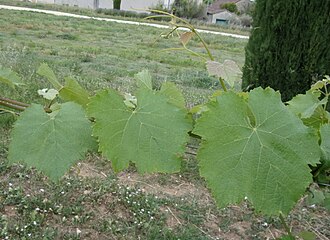
Sémillon is not a dramatic-looking vine. Its leaves are usually medium-sized, rounded to slightly pentagonal, with three to five lobes that are present without being deeply sculptural. The overall field impression is balanced, practical and quietly vigorous. Its identity is less about visual flamboyance than about what the fruit can become: textural, golden, waxy, and capable of remarkable change through ripening, botrytis and bottle age.
Read more →
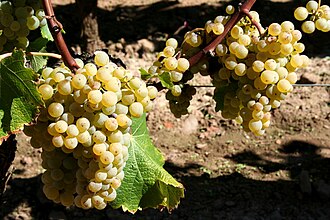
The bunches are usually medium-sized and may be moderately compact. The berries are golden-skinned when ripe, and their relatively thin skins are central to the grape’s entire story. Thin skins make Sémillon susceptible to botrytis, sunburn and rot pressure in the wrong conditions. Yet in the right sweet wine landscape, that same susceptibility becomes the opening through which noble rot can create concentration, honey, saffron, apricot and enormous persistence.
This is one of the reasons Sémillon is so interesting as a grape, not only as a wine style. Its physical vulnerability is not separate from its greatness. The same berry structure that can create risk in the vineyard can also enable some of the most profound sweet wines ever made. Sémillon lives on that edge between fragility and depth.
- Leaf: medium-sized, rounded to slightly pentagonal, usually 3–5 lobes
- Bunch: medium-sized, often moderately compact
- Berry: golden-skinned, relatively thin-skinned, prone to botrytis
- Impression: calm, practical, productive, quietly noble
Viticulture
Productive, sensitive, and shaped by timing
Sémillon can be productive and reliable, but quality depends strongly on balance. If yields are too generous, the grape may become broad, neutral or heavy. If farmed with discipline, it can develop shape, waxy depth, citrus line and the kind of quiet structure that supports long ageing. It is not usually a grape of high aromatic fireworks. It needs texture, freshness and careful timing to become expressive.
Read more →
In Bordeaux, Sémillon often benefits from its partnership with Sauvignon Blanc. The vineyard logic is partly structural: Sémillon brings texture and breadth, while Sauvignon Blanc brings sharper acidity and aromatic lift. For sweet wines, the logic changes. There, the aim is to allow botrytis to develop under the right conditions, usually through a delicate combination of morning mist, autumn humidity, dry afternoons and careful harvest passes.
Hunter Valley presents a different viticultural logic. There, Sémillon is often picked early, before high sugar, preserving freshness and moderate alcohol. The young wines can seem almost austere: lemony, taut, light and restrained. But with bottle age, they develop remarkable complexity without needing heavy oak or obvious winemaking decoration. This makes Hunter Valley Sémillon one of the great examples of how picking decisions can define an entire regional style.
Disease pressure is always part of the conversation. Botrytis can be noble or destructive depending on timing, site and intention. Sunburn can also be a concern because of the grape’s skin. The best growers treat Sémillon not as an easy neutral white, but as a variety whose greatness depends on reading the season with care.
Wine styles
From restrained dry whites to golden botrytis
Sémillon’s style range is wide, but its personality remains recognizable. In dry wines it often shows lemon, pear, hay, straw, beeswax, lanolin, gentle nuts and a rounded, almost waxy texture. In blends, especially with Sauvignon Blanc, it adds body and depth. In sweet wines affected by noble rot, it can become golden, honeyed, apricot-rich, saffron-scented and extraordinarily persistent. Its power is not usually sharp aromatics. Its power is transformation.
Read more →
Dry white Bordeaux often uses Sémillon as a textural counterweight to Sauvignon Blanc. The best examples are not merely blends of convenience. They show how Sémillon can broaden the palate, add age-worthiness and soften the bright edge of Sauvignon Blanc without erasing freshness. With time, these wines may develop wax, honey, toast, herbs and a deeper savoury complexity.
Hunter Valley Sémillon is perhaps the most distinctive dry expression. It can begin life pale, light, citrus-driven and almost narrow. Then, with years in bottle, it develops toast, lemon butter, wax, honey and nutty complexity, often without having seen new oak. This ageing curve is one of the great mysteries and pleasures of the variety. Sémillon proves here that quiet wines can become profound through time alone.
In Sauternes and Barsac, noble rot changes everything. Botrytis concentrates sugar, acidity and flavour, transforming the grape into a source of honey, marmalade, apricot, saffron, dried citrus and immense length. These wines are luxurious, but the greatest ones are not merely sweet. They are balanced by acidity, bitterness, texture and time. Sémillon provides the golden body that makes them last.
Terroir
A grape that reads microclimate more than drama
Sémillon is terroir-sensitive, but not always in an obvious aromatic way. It does not usually announce soil and climate through piercing perfume. Instead, place appears through texture, weight, acidity, waxiness, botrytis development, fruit tone and ageing rhythm. One site may produce a lean, citrus-led wine. Another may give broader pear, wax and honey. In sweet wine regions, microclimate becomes almost the whole story, because noble rot depends on a precise balance of humidity and drying conditions.
Read more →
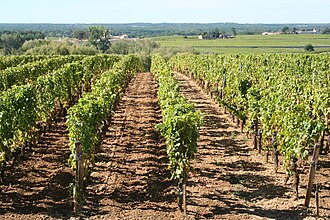
In Bordeaux, gravel, clay-limestone and mixed soils can support different expressions, but Sémillon’s most famous transformations often rely on climate as much as soil. In Sauternes and Barsac, morning mists from local water influences can encourage botrytis, while drier afternoons help prevent destructive rot. The grape’s thin skin allows the process to take hold. Without that microclimatic choreography, the same variety would not become the same wine.
In Hunter Valley, the terroir lesson is almost opposite. The region is warm, yet cloud cover, rainfall patterns, early picking and long local experience create a style that is light in alcohol and built for slow bottle development. This shows how Sémillon does not respond to climate in a simple way. Human timing and regional tradition are part of its terroir expression.
Sémillon therefore teaches a subtle lesson. Not every terroir grape is loud. Some speak through texture, timing and age. Sémillon is one of those.
History
From noble Bordeaux to rediscovered dry white
Sémillon’s history has moved through prestige, neglect and rediscovery. In Bordeaux, it never really disappeared from importance, because it remained central to Sauternes, Barsac and white Bordeaux blends. But as global wine markets became more varietal and aroma-driven, Sémillon often struggled for attention. It is not an easy grape to explain quickly. It does not always taste impressive in youth. Its deepest virtues may require age, context and patience.
Read more →
Australia kept another part of the story alive. Hunter Valley Sémillon showed that the grape could become iconic in dry form, and that a white wine did not need obvious fruit, high alcohol or strong oak to age beautifully. South Africa, Chile and other regions have also preserved old plantings or renewed interest in the variety, often through more careful farming and less heavy-handed winemaking.
Modern Sémillon has benefited from a wider reappraisal of texture in white wine. Drinkers who once focused mainly on perfume and acidity are increasingly interested in mouthfeel, phenolic shape, old vines, restrained aromatics and bottle development. That shift suits Sémillon well. It is a grape for people who like the quieter architecture of wine.
This makes the grape feel newly relevant. It is old-fashioned in the best sense: agricultural, patient, textural and not built for instant applause. Yet that is precisely why it feels valuable now.
Pairing
A grape for texture, richness and gentle depth
Dry Sémillon works especially well where texture matters. Its waxy body and gentle citrus make it a natural partner for shellfish, roast chicken, richer fish dishes, soft herbs, creamy sauces and cheeses. Sweet Sémillon, especially botrytised versions, belongs to a different table: foie gras, blue cheese, pâté, fruit desserts, almond pastries and salty-rich contrasts. Few grapes can move so naturally from restraint to opulence.
Read more →
Aromas and flavors: lemon, pear, quince, straw, hay, beeswax, lanolin, honey, toast, almond, apricot, marmalade and saffron depending on style and age. Structure: usually textural rather than sharply aromatic, with medium body in dry wines and deep concentration in noble-rot wines.
Food pairings: oysters, scallops, roast chicken, creamy fish, crab, lobster, pâté, soft cheeses, Comté, blue cheese, foie gras, apricot tart, almond cake and fruit-based desserts in sweeter versions. Dry Sémillon loves food with roundness. Sweet Sémillon loves food with salt, fat or fruit.
The key is not to treat Sémillon as merely neutral. Its strength is subtle shape. It can support a dish without dominating it, then quietly deepen the whole experience through texture and length.
Where it grows
A Bordeaux grape with an Australian voice
Sémillon’s main homes remain France and Australia. Bordeaux gives the grape its classical frame: dry blends in Graves and Pessac-Léognan, and sweet wines in Sauternes, Barsac and related appellations. Hunter Valley gives it a second iconic identity: dry, light, unoaked, citrus-led and long-lived. Beyond these centres, Sémillon appears in South Africa, Chile, Argentina, California, Washington, New Zealand and other regions, sometimes as a varietal wine and often as a blending partner.
Read more →
- France: Bordeaux, Graves, Pessac-Léognan, Sauternes, Barsac, Cérons
- Australia: Hunter Valley, Barossa Valley, Margaret River and other regions
- South Africa: old-vine and blended expressions, including historic Cape plantings
- Americas: Chile, Argentina, California, Washington and smaller plantings elsewhere
- Elsewhere: New Zealand and selected warm to moderate regions
Its distribution reflects its usefulness. It can provide body in blends, nobility in sweet wines, and surprising longevity in dry wines. But it is at its best where growers understand that quiet fruit still needs exact farming.
Why it matters
Why Sémillon matters on Ampelique
Sémillon matters on Ampelique because it broadens the idea of what greatness in a white grape can look like. Not every important grape is highly perfumed, sharply acidic or instantly charming. Some grapes matter because they hold texture, time and transformation. Sémillon is one of those. It reminds us that subtlety can be a kind of power.
Read more →
It is also a perfect grape for explaining why morphology matters. Thin skins, botrytis sensitivity, golden berries and moderate compactness are not just vineyard details. They shape the entire cultural meaning of Sémillon. Without those physical traits, Sauternes and Barsac would not exist in the same way. Without careful early picking, Hunter Valley Sémillon would not have its extraordinary ageing story.
The grape also helps connect readers to blending. In a world that often celebrates single varieties, Sémillon shows the intelligence of partnership. With Sauvignon Blanc, it becomes part of one of the great white wine conversations: freshness meeting wax, citrus meeting body, edge meeting depth. It teaches that a grape can be essential even when it is not always alone on the label.
For Ampelique, Sémillon is therefore not a minor supporting grape. It is a quiet pillar: a variety that carries Bordeaux history, Australian identity, botrytis magic, dry-white restraint and the slow beauty of age.
Quick facts
- Color: white
- Parentage: exact parentage not firmly established; historic French white variety from the Bordeaux world
- Origin: France, strongly associated with Bordeaux
- Most common regions: Bordeaux, Sauternes, Barsac, Graves, Pessac-Léognan, Hunter Valley, Barossa Valley, Margaret River, South Africa, Chile, Argentina, California and Washington
- Climate: moderate to warm; also successful where early picking preserves freshness
- Soils: gravel, clay-limestone, mixed Bordeaux soils and well-drained vineyard sites
- Styles: dry white, blended white, unoaked age-worthy white, noble-rot sweet wine
- Signature: waxy texture, golden fruit, lanolin, honey, age-worthiness and botrytis affinity
- Classic markers: lemon, pear, hay, beeswax, lanolin, honey, apricot, saffron and toast with age
Closing note
A great Sémillon is never only about fruit. It is about wax, patience, golden skin, careful timing and the strange beauty of transformation. It can be quiet, but it is not small. It can be hidden inside a blend, yet still give the wine its body and future. Few white grapes show so clearly how time can turn restraint into depth.
Image credits
Leaf/detail image: Wikimedia Commons – Marianne Casamance.
Vineyard landscape image: Wikimedia Commons – Megan Mallen Flickr: Château d’Yquem, Sauternes
Sémillon cluster image: Wikimedia Common – Megan Mallen
If you like this grape
If you appreciate Sémillon’s waxy texture, golden depth and quiet ageing ability, you might also enjoy Sauvignon Blanc for its brighter Bordeaux partner role, Chenin Blanc for another age-worthy white with many styles, or Chardonnay for a more famous white grape with texture, place and longevity.
A quiet white grape with golden patience — modest in youth, profound when time begins to speak.
 Ampelique
Leave a comment