Ampelique Grape Profile
Cabernet Franc
Origin, viticulture, morphology, wine styles, and place.
Cabernet Franc is one of the great historic black grapes of France: elegant, aromatic, fresh, and quietly structural. It is less imposing than Cabernet Sauvignon, yet in many ways more revealing. It can show red cherry, raspberry, violet, graphite, tobacco, bell pepper, dried herbs, and a fine mineral edge. In the Loire Valley it often speaks with lift and precision; in Bordeaux it gives perfume, shape and nerve to some of the world’s most admired blends.
Few black grapes are as articulate as Cabernet Franc. It does not need mass to make an impression. Its beauty lies in line, scent, freshness and detail: the green whisper of leaf, the coolness of graphite, the brightness of red fruit, the calm confidence of fine tannin. At its best, Cabernet Franc feels intelligent rather than loud — a grape that speaks clearly, but never shouts.
Grape personality
The poised conversationalist. Cabernet Franc is fragrant, precise and quietly magnetic: red-fruited, floral, herbal, graphite-edged, and built more on line and freshness than on force. The vine asks for balance, not drama, and rewards growers who manage leaves, light and crop load with care.
Best moment
Cool evening, open window. Cabernet Franc feels right with roast chicken, herbs, mushrooms, lamb, lentils and soft light. Its best moment is savoury, fresh and quietly elegant, with a glass that smells of violets, pencil shavings, leaf and red fruit.
Cabernet Franc does not need grandeur to be memorable.
It speaks in red fruit, leaf, violet and graphite — a quiet voice that often says more than power ever could.
Contents
Origin & history
A historic French grape with deep family ties
Cabernet Franc is one of France’s great historic black grapes and one of the foundation stones of the Cabernet family. It has deep roots in western France, especially in the Loire Valley and Bordeaux, and it carries a quieter authority than many more famous varieties.
Read more
Genetic parentage gives the grape a central role in wine history: Cabernet Franc is one of the parents of Cabernet Sauvignon, together with Sauvignon Blanc. It is therefore not simply a companion to Cabernet Sauvignon, but a source variety behind one of the world’s most recognized red grapes.
Its French identity is broad but not vague. In the Loire, Cabernet Franc became a grape of varietal expression, shaped by river air, tuffeau limestone, gravel terraces, clay-limestone slopes and a marginal climate that rewards precision. In Bordeaux, it became part of a blending language, valued for perfume, freshness and shape rather than sheer volume. Those two French homes explain the grape better than any single tasting note.
The Loire Valley became one of its most expressive homes. Chinon, Bourgueil, Saumur-Champigny and Anjou developed a long tradition of varietal wines built around freshness, perfume, red fruit, graphite and herbal lift. In Bordeaux, especially on the Right Bank, Cabernet Franc gives aromatic complexity, line and structural elegance to blends often led by Merlot.
Its historic value also lies in timing. Cabernet Franc ripens earlier than Cabernet Sauvignon, making it useful in cooler or less predictable seasons. It offers greatness through fragrance, freshness, poise and a deeply articulate sense of place.
That is why Cabernet Franc should never be treated as a secondary grape. It is historically old, genetically influential, regionally expressive and viticulturally demanding. Its importance comes from the vine itself as much as from famous wines: a black grape with a long memory, a narrow ripening window and an unusual ability to turn freshness into seriousness.
Ampelography
Sculpted leaves, small berries and a classic Cabernet form
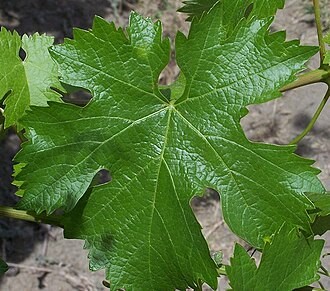
In the vineyard, Cabernet Franc has a recognizable Cabernet-family appearance. The adult leaf is generally medium-sized, often pentagonal, and commonly five-lobed. The lateral sinuses may be clearly cut, giving the blade a sculpted, architectural outline. Marginal teeth are regular and sharp enough to make the leaf look precise rather than soft.
Read more
The petiolar sinus is often open to lyre-shaped. The upper surface can be slightly blistered or textured, while the underside may show light hairiness, especially along the veins. Young shoots and shoot tips often carry a pale, downy look before hardening into a neat, balanced canopy.
The leaf is an important visual clue because Cabernet Franc often looks less broad and heavy than Merlot, and less massive in impression than Cabernet Sauvignon. The blade has a controlled, defined shape, with lobes that can look almost cut into the leaf. In a well-managed vineyard, the canopy appears ordered and airy, not sprawling, which suits the grape’s need for light and ventilation around the bunch zone.
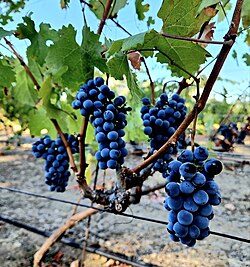
Clusters are usually small to medium-sized, conical to cylindrical-conical, sometimes winged, and generally not very large. Berries are small, round, blue-black, and relatively thick-skinned. This berry structure supports colour, aromatic concentration and fine tannic shape without forcing the grape toward heaviness.
The bunch architecture also helps explain why Cabernet Franc can make wines of tension rather than mass. Compactness, berry size and skin ratio influence tannin and aroma, but the grape’s finest expression depends on even ripening. Uneven maturity can make the herbal element feel sharp; complete maturity turns that same botanical note into bay leaf, tobacco, violet stem and graphite-like savour.
- Leaf: medium-sized, pentagonal, commonly five-lobed, with marked sinuses.
- Cluster: small to medium, conical to cylindrical-conical, sometimes winged.
- Berry: small, round, blue-black, with relatively thick skins.
- Impression: sculpted, balanced, precise and classic in Cabernet-family form.
Viticulture notes
Earlier ripening, site-sensitive and precise
Cabernet Franc tends to bud and ripen earlier than Cabernet Sauvignon. This characteristic has long made it valuable in cooler or less predictable climates. Yet the vine is not simple. It is highly sensitive to site, crop load, canopy, exposure and harvest timing, and small errors can quickly show in the finished wine.
Read more
The vine can be moderately vigorous and may produce generously if yields are not controlled. When cropped too heavily or picked before full phenolic maturity, Cabernet Franc can show a raw green edge. When grown in a balanced site, that same herbal register becomes one of its attractions: leaf, bay, dried herbs, graphite and a cool savoury lift around the fruit.
The grower’s task is to make the vine ripen evenly without losing the freshness that defines the grape. Too much crop stretches the season and keeps tannins angular. Too little crop in a hot site can produce fruit that feels dark, soft and less transparent. The best farming seeks proportion: enough leaf to feed the fruit, enough light to ripen skins, and enough airflow to keep clusters healthy.
Canopy management is essential. The fruit zone benefits from sunlight and airflow, but not from brutal exposure. Too much shade exaggerates vegetal character; too much heat can push the wine toward softness and blur detail. Growers often work for filtered light, open bunches and steady ripening.
Training and pruning depend on region and tradition, but the principle is consistent: Cabernet Franc likes discipline. In the Loire, where autumn weather can be variable, open canopies and careful crop management help protect ripeness and health. In Bordeaux, where it may be part of a blend, picking date is critical because it must bring perfume and line without introducing hard green tannin.
Spring frost can be a risk because of relatively early budburst. Coulure, mildew and rot may also matter depending on season and region. Good viticulture seeks healthy, evenly ripened fruit with enough freshness to preserve the grape’s aromatic clarity.
Wine styles & vinification
From Loire freshness to Right Bank finesse
Cabernet Franc can produce a wide range of red wine styles, from light, crunchy and gently herbal to serious, age-worthy and structured. In the Loire Valley it often appears as a varietal wine with red cherry, raspberry, violet, pencil shavings, graphite and leafy nuance.
Read more
In Bordeaux and other warmer regions, it may contribute darker fruit, polish, depth and architectural finesse, especially in blends with Merlot. As a blending grape, it brings aromatic lift, line, freshness, fine tannin and savoury detail rather than brute force.
In the Loire, the grape can be made in a bright, early-drinking style with crunchy red fruit and gentle extraction, but it can also produce serious wines that age for many years. The difference often comes from site, vine age and tannin management. Chinon and Bourgueil can move from fragrant and supple to deeply structured; Saumur-Champigny often emphasizes lift, purity and tuffeau-shaped finesse.
As a varietal wine, it can be strikingly complete when yields, ripeness and extraction are well judged. Stainless steel, concrete, large oak, old barrels and smaller barriques may all be used. Heavy new oak can blur its floral and savoury clarity, so thoughtful producers use wood to frame rather than cover the wine.
Fermentation choices are important because Cabernet Franc can be delicate despite its tannic spine. Gentle extraction protects perfume; excessive punch-downs can make tannins feel dry. Whole clusters may add lift, spice and stem-like complexity when stems are ripe, but they can also sharpen green notes if used carelessly. The best cellar work respects the vineyard rather than trying to correct it.
At its best, Cabernet Franc is a grape of structure without harshness and perfume without excess. It can age beautifully, developing tobacco, cedar, forest floor, dried herbs and a more complex mineral savour while keeping its essential freshness.
Terroir & microclimate
A transparent grape with a narrow window
Cabernet Franc is highly responsive to terroir. It tends to reveal site through shifts in fruit tone, herb character, tannin shape, acidity and aromatic detail rather than through sheer weight. One vineyard may yield bright red fruit, violets and chalky tension; another may produce darker fruit, graphite, tobacco and a broader mid-palate.
Read more
Microclimate is especially important because the grape lives in a narrow space between leafy underripeness and graceful freshness. Cool nights, well-exposed fruit, airflow and a steady ripening season help it find its best form. In poor conditions, green notes dominate; in ideal conditions, they become subtle, fragrant and deeply attractive.
This is why the same grape can feel so different between the Loire and Bordeaux. The Loire often highlights red fruit, floral lift, chalky or gravelly tension and a cooler herbal line. Bordeaux, particularly on the Right Bank, can bring more depth, plum, tobacco, cedar and a broader frame. Neither expression is more correct; each reflects a different balance of climate, soil and viticultural intention.
Soils shape expression in nuanced ways. Limestone and tuffeau in the Loire can support floral, linear, finely textured wines with a cool mineral line. Gravel and clay in Bordeaux can build more density and structure. Sandier or alluvial sites may produce softer, more immediate wines.
Water availability also matters. Cabernet Franc does not want excessive fertility, which can enlarge the canopy and delay ripeness, but severe drought can harden tannins and reduce aromatic detail. Moderate stress, balanced roots and a soil profile that allows steady ripening are more valuable than extremes.
This sensitivity makes Cabernet Franc one of the most rewarding grapes to study. It shows not only where it is grown, but how carefully it has been grown.
Historical spread & modern experiments
A classic rediscovered through freshness
For much of the modern wine era, Cabernet Franc was treated primarily as a blending grape or as a Loire specialty. Today it is increasingly admired as a standalone variety with its own voice: moderate in alcohol, aromatic, food-friendly, terroir-sensitive and capable of aging without relying on heaviness.
Read more
Its historical spread now reaches far beyond France. Cabernet Franc has important roles in Italy, Hungary, Canada, the United States, Argentina, Chile and other regions. In some places it remains a blending component; in others it has emerged as a distinctive varietal wine.
This wider spread has not erased its French identity. Instead, it has shown how adaptable the grape can be when growers understand its need for balance. In cooler regions, it can give bright red fruit and tension. In warmer places, it needs careful canopy and picking decisions to avoid losing the aromatic clarity that makes it special.
Modern experimentation suits the grape when used with judgement. Whole-cluster fermentation, lighter extraction, concrete aging, large neutral vessels and fresher picking can all work. Too much extraction or too much oak dulls the qualities that make it compelling.
Its modern appeal is easy to understand. In a wine world interested in freshness, transparency and drinkability, Cabernet Franc feels newly relevant without needing reinvention. It was always this elegant; many drinkers are simply listening more carefully now.
Tasting profile & food pairing
Red fruit, violet, graphite and savoury freshness
A typical Cabernet Franc can show red cherry, raspberry, plum, violet, graphite, pencil shavings, dried herbs, bell pepper, tobacco, cedar, forest floor and subtle spice. The structure is usually medium-bodied, with fresh acidity, fine to moderate tannins and a poised, savoury frame.
Read more
Aromas and flavors: red cherry, raspberry, violet, graphite, pencil shavings, dried herbs, bell pepper, tobacco, cedar, forest floor and subtle spice. Warmer styles may show darker fruit and softer herbal notes.
The key is that Cabernet Franc rarely tastes purely fruity. Even in ripe examples, there is usually a savoury edge: leaf, stem, pencil lead, tobacco, tea, dried flowers or cool earth. This is why it can feel so transparent at the table. It links fruit to herbs, meat, mushrooms and roasted vegetables rather than standing apart as a sweetly fruited red.
Food pairings: roast chicken with herbs, duck breast, lamb chops, grilled vegetables, lentil dishes, mushroom preparations, pork, charcuterie, goat cheese, tomato dishes and herb-rich stews. It works especially well with foods that echo its freshness and savoury line.
Its green and herbal notes can be a gift at the table. They connect beautifully with parsley, thyme, rosemary, bay leaf, green pepper, mushrooms and earthier vegetables.
Where it grows
France first, then a global future
Cabernet Franc remains most strongly associated with France, especially the Loire Valley and Bordeaux. Yet it now grows in many regions where growers value freshness, aromatic precision and moderate ripening. Its ability to produce both varietal wines and refined blends has helped it travel widely.
Read more
- France: Loire Valley, Bordeaux and southwest France.
- Loire Valley: Chinon, Bourgueil, Saumur-Champigny and Anjou.
- Bordeaux: especially important in Right Bank blends with Merlot.
- Beyond France: Italy, Hungary, Canada, the United States, Argentina, Chile and other moderate regions.
It should always be introduced as a French classic before its global story is widened. France explains both its history and its most refined vocabulary.
Why it matters
Why Cabernet Franc matters on Ampelique
Cabernet Franc matters because it teaches a different kind of red-wine beauty. It is not simply about power, ripeness or prestige. It is about line, scent, restraint and the ability of a black grape to carry both fruit and savoury complexity.
Read more
It bridges worlds. A beginner may recognize the Cabernet name. A more advanced drinker may think of Chinon, Bourgueil, Cheval Blanc, Saint-Émilion or cool-climate varietal examples. A grower may think first of ripeness, canopy and the management of herbal character.
It is also one of the clearest grapes for teaching the difference between grape character and winemaking style. Cabernet Franc can be light or serious, youthful or age-worthy, Loire-bright or Bordeaux-polished, but the thread remains recognizable: red fruit, freshness, leaf, fine tannin and a graphite-like line.
It has also become newly relevant. In a warming climate and a changing wine culture, many drinkers and growers are looking for red wines with freshness, moderate body and aromatic complexity. Cabernet Franc answers that need without pretending to be modern.
For Ampelique, Cabernet Franc is essential because it shows how a grape can be historically important, genetically influential, regionally expressive and quietly fashionable all at once.
Keep exploring
Continue through the ABC grape group to discover more varieties that shape French vineyards, Cabernet-family history, and the living architecture of wine.
Quick facts
Identity
- Color: black
- Main name: Cabernet Franc
- Origin: France, especially linked to the Loire Valley and Bordeaux
- Parentage: parent of Cabernet Sauvignon, with Sauvignon Blanc
- Key identity: aromatic, fresh, structured black grape with red fruit and herbal lift
Vineyard & wine
- Leaf: medium-sized, often pentagonal, commonly five-lobed
- Cluster: small to medium, conical to cylindrical-conical, sometimes winged
- Berry: small, round, blue-black, with relatively thick skins
- Growth: moderately vigorous, earlier-ripening and highly site-sensitive
- Climate: cool to moderate, also balanced warmer sites with good canopy work
- Styles: varietal red wines and refined blends, especially with Merlot
- Signature: red cherry, raspberry, violet, graphite, leaf, tobacco and fine tannin
- Viticultural note: crop load, light exposure and harvest timing strongly shape quality
If you like this grape
If you appreciate Cabernet Franc’s freshness, graphite edge and red-fruited elegance, you might also enjoy Cabernet Sauvignon for more structure and depth, Merlot for a softer Right Bank companion, or Carménère for another historic Bordeaux-family grape with a distinctive herbal signature.
Closing note
A great Cabernet Franc is never only about fruit. It is about fragrance, line, freshness and the beautiful tension between ripeness and leaf. It proves that red wine can be structured without being heavy, serious without being severe, and expressive without raising its voice.
Image credits
Cabernet Franc leaf image: Wikimedia Commons – Agne27.
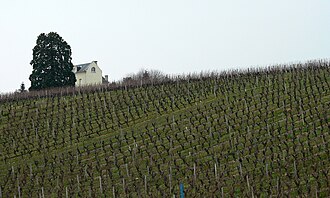
Cabernet Franc vineyard image: Wikimedia Commons – Agne27.
Cabernet Franc cluster image: Wikimedia Commons – Ginoffvine.
Continue exploring Ampelique
A black grape of perfume, graphite and quiet structure — elegant by nature, but never without a spine.
 Ampelique
Leave a comment