Ampelique Grape Profile
Cabernet Sauvignon
Origin, viticulture, morphology, wine styles, and place.
A world classic dark grape of Bordeaux origin, celebrated for structure, longevity, and its ability to unite power with definition: Cabernet Sauvignon can be stern or generous, herbal or solar, graphite-like or cassis-rich, but at its best it is a grape of line, tannin, proportion, and place. It became one of the world’s most influential red varieties not simply because it travels well, but because it can still remain serious wherever it goes.
Cabernet Sauvignon sits at the meeting point of viticultural discipline and cultural myth. It can be austere in youth, noble with age, exacting in the vineyard, and unmistakable in the glass. More than almost any other red grape, it helped define what the modern world thinks a “serious” red wine can be.
Cabernet Sauvignon does not hurry to reveal itself.
It stands with quiet confidence : dark-skinned, structured, and patient . Gathering strength from gravel, sun, wind, and time. In youth, it speaks with cassis, cedar, and shadow. With age, it softens into something deeper: not louder, but wiser.
Contents
Origin & history
A Bordeaux crossing that reshaped the modern red wine world
Cabernet Sauvignon emerged in Bordeaux and has come to stand for seriousness in red wine perhaps more than any other grape. Its fame can make it seem ancient beyond definition, yet its identity is surprisingly specific. It is the offspring of Cabernet Franc and Sauvignon Blanc, a natural crossing discovered through modern DNA work but long suspected by those who observed its aromatic and structural habits. That parentage tells a persuasive story: aromatic lift and leafy nuance from one side, freshness and definition from the other, united in a darker, sterner, more age-worthy form.
Read more →
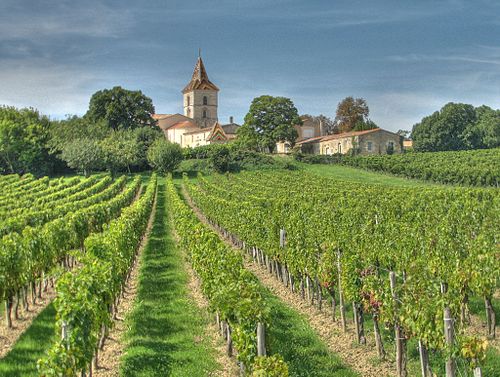
Its rise to prominence is closely tied to the Left Bank of Bordeaux, where gravel soils, maritime moderation, and a blending tradition built around structure and longevity helped define the grape’s classic image. In Médoc communes such as Pauillac, Saint-Julien, Saint-Estèphe, and Margaux, Cabernet Sauvignon became the backbone of wines valued for blackcurrant fruit, cedar, graphite, tannin, and slow evolution. While Merlot often contributed flesh and early charm, Cabernet Sauvignon supplied the skeletal frame, the dark spine, and the long future.
From Bordeaux it traveled with remarkable success. In California it became a prestige grape of immense cultural influence, especially in Napa Valley. In Chile it found a cool confidence in places such as Maipo and beyond. In Australia it took on distinctive eucalyptus, cassis, and structured forms. In South Africa, Washington State, Tuscany, and many other regions it demonstrated that while its accent changes, its grammar remains recognizable. That is one reason Cabernet Sauvignon belongs among the true world classics: it is global without becoming vague.
Its fame also changed the economics of wine. Cabernet Sauvignon helped create an international idea of premium red wine built around concentration, tannin, oak handling, and age-worthiness. Yet behind all that prestige remains something simpler and more interesting: a grape that is deeply responsive to climate, crop, and patience, and that can still reveal place with dignity when not pushed into caricature.
Ampelography
A compact, dark-berried vine built for structure
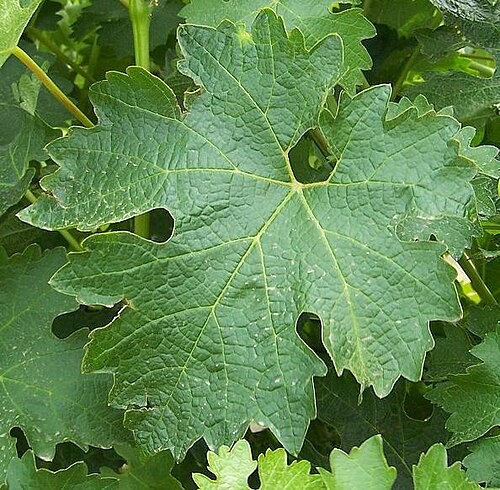
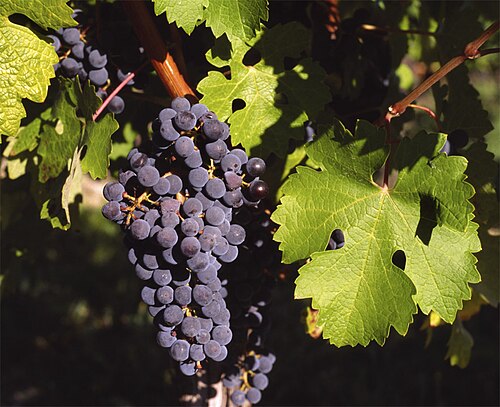
Cabernet Sauvignon’s morphology mirrors its temperament. The berries are generally small, dark, and thick-skinned. Clusters are often small to medium and relatively compact. The leaves are medium-sized and more distinctly lobed than those of some softer, broader-fruited varieties. Visually, the vine gives an impression of concentration rather than generosity. It is not a sprawling, loose-fruited type. It feels contained, upright, and built toward intensity.
Read more →
Those small berries and thick skins matter enormously. They help explain Cabernet Sauvignon’s high tannin potential, deep color, and resilience in the cellar. Skin-to-juice ratio is central to the grape’s character: structure, black-fruited density, and long ageing often begin in that physical fact. It is not merely a flavor grape. It is a grape of material, a grape whose texture starts before fermentation even begins.
Field identification is helped by the grape’s generally modest berry size, dark pigmentation, and the tendency toward upright, purposeful growth. Cabernet Sauvignon often looks like a vine that is storing energy rather than spending it. Even visually, it suggests reserve. This is a useful intuition because the wines so often behave the same way: closed at first, then gradually unfolding through air or years.
- Leaf: medium-sized, more clearly lobed, structured outline
- Bunch: small to medium, rather compact
- Berry: small, dark, thick-skinned
- Impression: concentrated, contained, built for tannin and age
Viticulture
Late-ripening, disciplined, and highly site-dependent
Cabernet Sauvignon ripens relatively late, and that one fact explains much of both its greatness and its limits. It needs enough season to complete phenolic maturity without losing freshness, which is why the best sites are often warm but not brutal, dry but not harsh, long-season rather than merely hot. In climates that are too cool, it risks green flavors, hard tannins, and incomplete ripeness. In climates that are too warm, it can become heavy, overly sweet in fruit expression, and structurally blunt.
Read more →
This is why gravel, well-drained soils have been so historically favorable. On the Left Bank of Bordeaux, gravel retains and releases heat, helping a late-ripening variety reach maturity in a maritime climate. Elsewhere, slopes, exposure, and reflected warmth can play similar roles. Cabernet Sauvignon does not ask simply for sunshine. It asks for a ripening season with enough duration and enough precision to transform tannin from harshness into authority.
In the vineyard, canopy management matters intensely. Too much shade can preserve pyrazines to the point of rigidity, yielding strong bell pepper or stemmy notes detached from fruit depth. Too much exposure can push berries toward sunburn and overripe black fruit without real complexity. Yield control matters as well. Overcropped Cabernet Sauvignon can become dilute at the center while still retaining surface tannin, which is one of the least attractive outcomes the variety can produce.
In the best hands, Cabernet Sauvignon rewards patience and rigor. It is not a grape that flatters indifference. But where climate, canopy, soil, and timing align, it gives one of the most complete packages in red wine: color, tannin, aromatic definition, fruit intensity, and age-worthy structure.
Wine styles
From graphite and cassis to plush black fruit and cedar
Cabernet Sauvignon’s classic vocabulary is among the most recognizable in red wine: blackcurrant, cassis, cedar, graphite, tobacco leaf, black cherry, dried herbs, violet, and in some climates mint or eucalyptus. Yet the real power of the grape lies in its structure. Cabernet Sauvignon is not merely aromatic. It is architectural. Tannin, acidity, fruit density, and often oak integration combine to create wines that feel built rather than poured.
Read more →
In cooler or more restrained climates, Cabernet Sauvignon may show firmer herbal notes, red-black fruit definition, cedar, pencil shaving, and tension. In warmer sites it can move toward richer cassis, plum, chocolate, dark olive, and deeper sweetness of fruit. Oak handling often plays a major role, adding vanilla, clove, cigar box, toast, and polish. At its best, oak does not simply decorate Cabernet Sauvignon. It extends its frame and gives the wine another register of depth.
Blending is central to its history. In Bordeaux, Cabernet Sauvignon rarely worked alone; Merlot, Cabernet Franc, Petit Verdot, and sometimes Malbec shaped the broader architecture. That tradition matters because it reveals something essential: Cabernet Sauvignon often excels as the spine. It brings shape, length, and seriousness, while companion grapes may contribute suppleness, perfume, or mid-palate generosity. Even when bottled varietally, many of its finest expressions still retain that structural attitude.
Time changes Cabernet Sauvignon profoundly. In youth it may seem stern, dark, and almost withholding. With maturity, tannins soften, fruit deepens, and tertiary notes such as cigar box, leather, graphite dust, forest floor, and dried currant can emerge. Few red grapes make age feel so structurally meaningful. Cabernet Sauvignon does not just get older. It often becomes more legible, more composed, and more human.
Terroir
A red grape that records climate with unusual honesty
Cabernet Sauvignon may be famous for power, but its real subtlety lies in the way it records temperature and site. In cooler zones it speaks in blackcurrant leaf, cedar, firm tannin, and graphite. In warmer zones it becomes riper, darker, broader, and more plush. On gravel it may feel linear and aristocratic; on richer soils it may gain flesh and density. Few red grapes make climate so visible so quickly.
Read more →
The Left Bank of Bordeaux remains the historic benchmark because it demonstrates what the grape can do in a climate that is moderated rather than hot, and in soils that help a late-ripening variety finish with elegance. Napa Valley, by contrast, shows how Cabernet Sauvignon can become more generous, plush, and sunlit while still retaining authority when nights cool sufficiently and sites are well chosen. Coonawarra demonstrates the effect of terra rossa and maritime moderation. Chile’s Maipo and Puente Alto show another version of mountain-cooled ripeness.
Because the grape has such a strong structural identity, terroir does not erase it. Instead, terroir bends its voice. That is an important distinction. Cabernet Sauvignon is not transparent in exactly the same way as Pinot Noir or Chardonnay. It has more inherent force. But within that force, site remains very legible: cool versus warm, gravel versus clay, maritime versus inland, mountain versus valley floor. Serious Cabernet Sauvignon is therefore never just “big red wine.” It is red wine with coordinates.
This also explains why poor site selection is so visible with the grape. Too cool, and it can remain severe and green. Too warm, and it can turn thick and generalized. Too fertile, and tannin outruns fruit. Cabernet Sauvignon makes place matter because it makes mismatch obvious.
History
Prestige, expansion, and the making of an icon
Cabernet Sauvignon became an icon partly because it fit a modern desire for wines that looked serious, tasted serious, and aged seriously. It offered color, tannin, extract, oak compatibility, and a language of prestige that could travel from Bordeaux to California to Chile and beyond. Few varieties matched it in that respect. It was not just planted around the world; it became aspirational.
Read more →
This prestige intensified during the late twentieth century, when varietal labeling, international critics, and luxury wine markets all rewarded the grape’s strengths. Cabernet Sauvignon became central to the rise of Napa’s global identity. It shaped the Super Tuscan story in Italy. It anchored premium exports from Chile and Australia. It even came to stand for the idea that a great red wine ought to be dark, powerful, and cellar-worthy.
Yet that success also produced excess. In some periods and regions, Cabernet Sauvignon was pushed toward sheer size, high alcohol, and over-oaking. The result could be impressive in scale but less convincing in balance. As with Chardonnay, later generations of growers and drinkers began to ask for more freshness, more site, more restraint, and more nuance. The grape did not weaken under that pressure. It became more interesting.
That is part of Cabernet Sauvignon’s durability. It can support grandeur, but it can also learn modesty. It can appear imperial in one decade and more finely tailored in the next. Great grapes do not merely dominate. They adapt without surrendering identity.
Pairing
A grape that asks for substance and rewards patience
Cabernet Sauvignon is one of the table’s great structured reds. It rarely asks for delicacy. It asks for dishes that can meet tannin, extract, and often oak. Grilled beef, roast lamb, game, braised short ribs, firm cheeses, mushrooms, and savory sauces all make sense because they answer the wine’s architecture. The best pairings are not merely rich; they are texturally responsive.
Read more →
Aromas and flavors: blackcurrant, cassis, black cherry, plum skin, cedar, graphite, cigar box, dried herbs, mint, eucalyptus, violet, dark chocolate, and toasted oak spice depending on site and élevage. Structure: medium-high to high tannin, firm backbone, moderate to fresh acidity, and strong ageing potential when balanced.
Food pairings: grilled ribeye, roast lamb, venison, beef Wellington, hard cheeses, mushroom ragù, charred eggplant, and sauces with savory depth. Younger, more tannic Cabernets need protein and fat. Mature examples, once tannins soften and tertiary notes emerge, can work beautifully with slower, more layered dishes where earthy and smoky notes are welcome.
One of the pleasures of Cabernet Sauvignon is that it teaches timing not only in the vineyard and cellar, but also at the table. Decanting matters. Bottle age matters. Dish choice matters. When everything aligns, the grape can turn from stern to generous without losing dignity.
Where it grows
A global red with a clear Bordeaux accent
Cabernet Sauvignon now grows across the wine world, but its historical and cultural center remains Bordeaux. Outside France it thrives in many of the world’s best-known premium red wine regions. Napa Valley made it a symbol of luxury and concentration. Chile gave it mountain-cooled clarity. Australia shaped distinct versions in Coonawarra, Margaret River, and elsewhere. South Africa, Washington State, Tuscany, and parts of Argentina have all contributed their own readings.
Read more →
- France: Bordeaux above all, especially Médoc and Graves/Pessac-Léognan
- United States: Napa Valley, Sonoma, Washington State
- Chile: Maipo, Colchagua, and other premium valleys
- Australia: Coonawarra, Margaret River, Yarra-adjacent warmer sites, and beyond
- Elsewhere: South Africa, Tuscany, Argentina, Canada, Israel, and many more
Its reach is not accidental. Cabernet Sauvignon became one of the world’s preferred premium grapes because it combines viticultural reliability in the right climates with unmistakable cellar authority. Yet for all that spread, Bordeaux still gives the reference grammar: structure first, then depth, then time.
Why it matters
Why Cabernet Sauvignon matters on Ampelique
Cabernet Sauvignon matters on Ampelique because it helps explain the relationship between grape fame and grape truth. Many wine drinkers think they know Cabernet Sauvignon already. That familiarity is precisely what makes careful attention valuable. Beneath the prestige shorthand lies a vine of real complexity, one that responds vividly to climate, yield, blending philosophy, and age.
Read more →
It is also a useful educational grape because it makes structure visible. Chardonnay may teach site through line and brightness; Cabernet Sauvignon teaches site through tannin, ripening, and the management of force. It shows that greatness in red wine is not merely a matter of color or concentration, but of proportion: how tannin meets fruit, how oak meets freshness, how time reshapes firmness into authority.
Cabernet Sauvignon also anchors cultural understanding. If someone wants to know why Bordeaux matters, why Napa became iconic, why blending traditions endure, or why ageing still matters in wine, Cabernet Sauvignon is often part of the answer. The grape is not only viticulturally significant. It is historically explanatory.
For Ampelique, then, Cabernet Sauvignon is essential not simply because it is famous, but because it clarifies so many of the questions a grape library exists to ask: What is a grape’s real home? What does climate do to character? How much of style belongs to the vine, and how much to the cellar? Why do some grapes become global and still remain meaningful? Cabernet Sauvignon offers unusually rich answers.
Quick facts
- Color: red
- Parentage: Cabernet Franc × Sauvignon Blanc
- Origin: Bordeaux, France
- Climate: moderate to warm, long-season
- Soils: gravel, well-drained slopes, varied premium sites
- Styles: varietal and blended, structured to plush
- Signature: tannin, cassis, cedar, longevity
- Classic markers: blackcurrant, graphite, cedar, dark fruit, firm backbone
Closing note
A great Cabernet Sauvignon is never only about power. It is about ripeness held in check, tannin shaped by patience, and dark fruit guided into form. At its best, it is not loud. It is lasting.
Image credits
Leaf/detail image: Wikimedia Commons – Agne27
Vineyard landscape image: Wikikedia Commons – michael clarke stuff
Cabernet Sauvignon cluster image: Wikimedia Commons – BerndtF.
A world classic, but still a grape that asks to be understood slowly.
 Ampelique
Leave a comment