Ampelique Grape Profile
Touriga Nacional
Portugal’s dark, floral red grape of power, perfume, and age-worthy depth.
Touriga Nacional is one of Portugal’s greatest red grapes: dark, compact, intensely aromatic, and capable of wines with serious structure and remarkable ageing potential. It is famous for its deep color, firm tannins, small berries, and a perfume that can rise above all that density with violet, bergamot, rockrose, lavender, and dark mountain fruit. It plays a central role in Port and in Portugal’s finest dry reds, especially in the Douro and Dão.
What makes Touriga Nacional so compelling is the way it combines force with fragrance. Many powerful grapes become broad or heavy when ripeness increases. Touriga Nacional can do something more interesting. It can stay lifted, floral, almost luminous above its dark core. In strong sites, it feels like a wine built from stone, heat, flowers, and shadow: concentrated, but not mute; strong, but still beautifully alive.
The dark florist.
Touriga Nacional is intense, floral and deeply structured: violet over black fruit, perfume over power, elegance over raw weight.
Lamb, dusk, slow conversation.
Roast meat, dark herbs, mountain air, and a glass that begins with fragrance and ends with structure.
Touriga Nacional does not choose between strength and beauty.
It lets violet rise from darkness, as if perfume itself had learned the weight of stone.
Contents
Origin & history
Portugal’s noble red with roots in the Douro and Dão
Touriga Nacional is widely regarded as one of Portugal’s finest native red grapes. Its historic reputation is most closely linked to the Douro Valley and the Dão, two regions that reveal different but equally important sides of the variety. In the Douro, it became a pillar of Port and serious dry reds, giving color, tannin, dark fruit and floral lift. In the Dão, often shaped by altitude and granite, it can feel more linear, perfumed and restrained, with violet and structure held in cooler tension.
Read more →
The grape was not historically beloved for easy productivity. Its bunches are small, its berries are small, and yields are often naturally modest. For growers focused on quantity, that could be frustrating. For growers focused on quality, however, the same traits became a gift. Touriga Nacional has a high skin-to-juice ratio, which helps explain its deep color, firm tannins, and aromatic concentration. It gives less, but what it gives is often intense.
In Port, Touriga Nacional became prized for its ability to bring backbone and perfume to fortified blends. In dry wines, especially as Portugal’s still-wine reputation grew, it became a symbol of national ambition: not an imported variety, not a copy of Cabernet or Syrah, but a Portuguese grape capable of seriousness on its own terms. It helped show the world that Portugal’s native vine heritage was not only diverse, but profound.
Today Touriga Nacional is planted beyond its original heartlands, across Portugal and in selected vineyards abroad. Yet it still feels most convincing when Portuguese landscape remains audible: schist, granite, dry summers, mountain shadows, and a long tradition of blending strength with fragrance.
Ampelography
Small berries, compact bunches, and serious concentration
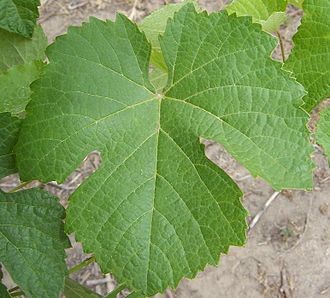
Touriga Nacional is not a vine of abundance. Its visual identity often begins with concentration: medium-sized leaves, compact bunches, and small, dark berries with thick skins. The leaves are generally rounded to slightly pentagonal, usually with three to five lobes and moderately marked sinuses. The blade can feel firm and practical, sometimes slightly textured or blistered, suggesting a vine built for endurance rather than softness.
Read more →
The petiole sinus is often open to moderately open, and the teeth along the margins are regular and fairly pronounced. The underside may show some hairiness, especially along the veins. In the vineyard, the canopy is usually not as wildly vigorous as some more productive varieties, but site, rootstock and water availability still matter. The best vines show balance: enough leaf area to ripen the fruit, but not so much shade that the compact bunches become vulnerable or the aromatics lose clarity.
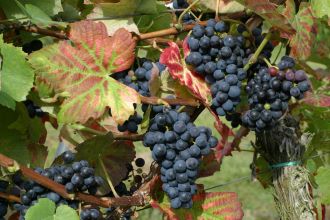
Clusters are typically small to medium-sized, compact and often conical. Berries are small, round, thick-skinned and deeply blue-black. This combination is central to the grape’s style. A high proportion of skin brings color, tannin and aromatic intensity. It also means that extraction in the winery must be handled with intelligence. Touriga Nacional has plenty to give; it does not need to be forced into darkness.
- Leaf: medium-sized, rounded to slightly pentagonal, usually three- to five-lobed
- Petiole sinus: open to moderately open
- Bunch: small to medium, compact, often conical
- Berry: small, blue-black, thick-skinned and intensely pigmented
- Impression: compact, concentrated, floral, structured and deeply Portuguese
Viticulture
Low-yielding, heat-aware, and best with balance
Touriga Nacional is valued precisely because it does not behave like a high-yielding workhorse. It tends toward modest yields, small berries and naturally concentrated fruit. That low productivity can be a disadvantage economically, but it is part of the reason the grape became associated with quality. The viticultural task is not simply to reduce crop. It is to achieve even ripening, healthy bunches and enough aromatic lift to keep all that density alive.
Read more →
The grape generally performs well in warm to moderate climates with enough sunlight for full phenolic ripeness. It can handle heat and dryness better than many imported varieties, which makes it increasingly interesting in a changing climate. But resilience does not mean indifference. If water stress becomes too severe, berries may shut down, shrivel or lose aromatic nuance. If the site is too fertile or too hot without relief, the wine can become blunt: dark and strong, but lacking shape.
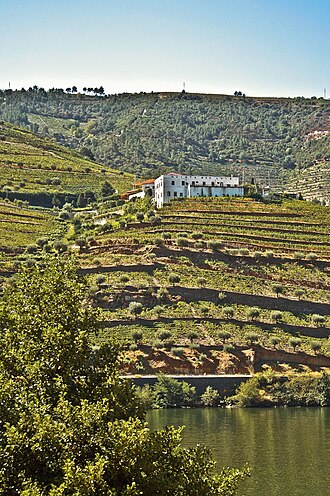
In the Douro, slope, exposure and schist play a major role. Old terraces and dry hillsides can give fruit of great intensity, but picking decisions are crucial. In the Dão, higher elevations and granite soils often slow the rhythm, helping preserve perfume and structural freshness. Across regions, canopy management is about airflow, light and moderation. Compact bunches need protection from rot, but berries also need enough exposure to develop the grape’s floral and dark-fruited signature.
Disease pressure depends strongly on site and season. In dry inland regions, fungal pressure may be moderate, but compact clusters can still be vulnerable in humid years. In wetter areas, mildew and rot require careful canopy work and timely vineyard decisions. Touriga Nacional rewards growers who understand that power must be shaped early, in the vineyard, long before the fruit reaches the cellar.
Wine styles
From Port backbone to profound dry reds
Touriga Nacional is central to two of Portugal’s great wine stories: Port and modern dry red wine. In Port, it contributes color, tannin, black fruit and floral intensity, giving fortified blends depth and age-worthy structure. In dry reds, whether blended or varietal, it offers a similarly serious profile: blackberry, blueberry, violet, bergamot, rockrose, dark spice and a firm, often polished frame. Its wines can be powerful, but the best examples are never only about muscle.
Read more →
In blends, Touriga Nacional is often used for its ability to lift and deepen at the same time. It brings perfume, but also skeleton. It can support softer grapes, add aromatic class to darker blends, and give tannic longevity to wines intended for ageing. In varietal bottlings, it reveals itself more directly: floral, dense, sometimes almost inky, but with an aromatic brightness that keeps the wine from feeling closed or heavy.
Winemaking varies widely. Traditional lagares, open-top fermenters, stainless steel, concrete and oak vessels may all appear. Extraction needs judgment because the grape already has thick skins and strong tannic potential. Oak can suit premium dry reds, especially when it frames the wine rather than sweetens it. Too much new oak can cover the violet, bergamot and wild-herb side that makes Touriga Nacional distinctive.
The finest wines age beautifully. With time, their black fruit can soften into dried flowers, cedar, tobacco, cocoa, leather, forest floor and warm spice, while the floral core often remains. This ageing capacity is central to the grape’s reputation. Touriga Nacional is not a simple dark red. It is a structured, aromatic variety built for patience.
Terroir
Schist, granite, heat, height, and aromatic lift
Touriga Nacional is strongly shaped by terroir. It may always carry its basic signature of color, tannin and perfume, but the form of that signature changes with soil, altitude and climate. In the Douro, schist slopes can give power, dark mineral depth, muscular tannin and intense fruit. In the Dão, granite and higher elevations often bring more floral tension, cooler fruit and a firmer but less massive frame. These differences are not subtle decoration; they shape the whole personality of the wine.
Read more →
Altitude can be especially important. Touriga Nacional needs ripeness, but it also benefits from cool nights and slower development. Without freshness, its density can feel heavy. With diurnal range, its flowers stay alive above the fruit. This is one of the most beautiful things about the grape: the best wines do not taste as if they are escaping power, but as if power has been given vertical lift.
Microclimate also matters in drought-prone regions. Slope angle, exposure, soil depth, wind movement and water availability all influence whether the fruit ripens steadily or suffers from stress. Schist can store and radiate heat, intensifying ripeness. Granite can give a different kind of discipline. In both cases, the best sites create balance between warmth and shape.
This is why Touriga Nacional should not be reduced to darkness or intensity. It is a grape of architecture. The vineyard decides whether the wine is a wall, a column, or a cathedral of scent and structure.
History
From traditional blends to modern Portuguese icon
Touriga Nacional’s modern story follows Portugal’s wider shift from hidden treasure to confident wine culture. For generations, many Portuguese wines were understood mainly through blends, regions and Port houses rather than single grape names. Touriga Nacional changed that conversation. It became one of the native varieties through which Portugal could speak to the world with a clear varietal voice, while still honoring its blending traditions.
Read more →
As dry red wines from the Douro, Dão, Alentejo and other regions became more visible internationally, Touriga Nacional often appeared as a marker of seriousness. Some producers used it as a varietal wine. Others used it in blends where its contribution was more structural than obvious. Either way, its name became associated with quality, depth and Portuguese identity.
The grape has also attracted attention abroad. Australia, South Africa, the United States and other warm-climate regions have explored it because of its color, drought tolerance, structure and distinctive aroma. These plantings remain limited compared with Portugal, but they suggest a broader future. Touriga Nacional may become increasingly useful where growers need red varieties that can handle heat while still offering freshness and personality.
Modern experiments include single-vineyard bottlings, amphora reds, fresher extraction, lighter-touch oak, rosé, and earlier-picked versions that emphasize perfume over sheer force. Yet the grape’s classical role remains intact. It is still one of the great structural pillars of Portuguese wine, from fortified depth to dry red elegance.
Pairing
A red for roasted depth, herbs, and slow food
Touriga Nacional belongs naturally with food that can meet its structure: roast lamb, grilled beef, game, braised meats, mushrooms, hard cheeses, smoky dishes and stews with herbs. It also works beautifully with Portuguese cooking, where garlic, olive oil, bay leaf, paprika, pork, lamb, sausages and slow-cooked textures all give the wine something to hold. The floral side of the grape means it can feel surprisingly elegant with rich dishes, not just powerful.
Read more →
Aromas and flavors: blackberry, blueberry, black plum, violet, bergamot, lavender, rockrose, cocoa, dark spice, cedar, tobacco, leather and warm stone. Structure: usually medium- to full-bodied, with deep color, firm tannins, moderate to fresh acidity, and a concentrated mouthfeel that can still feel lifted when the wine is well balanced.
Food pairings: roast lamb, grilled steak, venison, wild boar, duck, beef stew, mushrooms, charred aubergine, hard sheep’s cheese, aged cheese, chouriço, smoked paprika dishes and richly seasoned Mediterranean cooking. Younger wines can handle char and spice; mature bottles often prefer slower, earthier dishes.
The key is structure. Touriga Nacional does not need the heaviest food on the table, but it does need food with depth. Herbs, smoke, slow cooking and dark savory flavors bring out the grape’s best side. The violet note then becomes more than perfume; it becomes contrast, a lift above the richness.
Where it grows
Portugal first, with a selective life beyond
Portugal remains the true home of Touriga Nacional. The Douro Valley and Dão are its reference regions, but the grape is also grown in Alentejo, Lisboa, Tejo, Bairrada and other quality-focused areas. In the Douro it often shows depth, tannin, schist and dark fruit. In the Dão it can bring more floral line, granite structure and cooler elegance. In warmer southern regions, it may become richer and broader if freshness is carefully protected.
Read more →
Outside Portugal, plantings remain smaller but meaningful. Australia, South Africa and the United States have all explored Touriga Nacional, often in warm regions where its structure, color and drought resilience are attractive. These wines can be promising, but the grape is not automatically easy. It needs thoughtful farming and sensitive winemaking if its perfume is to survive its concentration.
- Portugal: Douro Valley, Dão, Alentejo, Lisboa, Tejo, Bairrada and other regions
- Classic soils: schist in the Douro, granite in the Dão, plus well-drained stony sites elsewhere
- International plantings: Australia, South Africa, the United States and selected warm-climate vineyards
- Best sites: warm to moderate climates with full ripening, drainage, and enough freshness to preserve aroma
Why it matters
Why Touriga Nacional matters on Ampelique
Touriga Nacional matters on Ampelique because it shows the strength of native grape culture. It is not important because it resembles famous international varieties. It is important because it gives Portugal a voice that is unmistakably its own: dark fruit, violet perfume, firm tannin, dry hills, old terraces, fortified history and modern dry red ambition. It proves that a grape can be deeply local and still speak clearly to the wider wine world.
Read more →
It also matters because it helps readers understand the difference between power and heaviness. Touriga Nacional can be powerful, yes, but its finest wines are lifted by flowers, bergamot, rockrose and acidity. That combination is educational. It teaches that structure does not have to crush aroma, and concentration does not have to erase detail.
For a grape library, it is especially valuable because it connects morphology, place and culture. Small berries explain color. Compact bunches explain both risk and concentration. Schist and granite explain style. Port explains history. Dry reds explain the modern future. Few grapes hold so many parts of a national wine story in one name.
On Ampelique, Touriga Nacional stands for depth with perfume. It is a reminder that some grapes do not reveal themselves by softness or ease. They ask for time, food, attention and patience — and then return all of it with interest.
Quick facts
- Color: red
- Parentage: historic Portuguese variety; older lineage remains part of Portugal’s native vine heritage
- Origin: Portugal, especially linked to the Douro and Dão
- Climate: warm to moderate climates with enough freshness, altitude or diurnal range
- Soils: schist, granite, stony well-drained slopes and dry inland sites
- Styles: Port, dry red blends, varietal reds, occasional rosé and experimental styles
- Signature: deep color, violet, bergamot, black fruit, firm tannin and long ageing potential
- Synonyms: Tourigo Antigo in some historical references
Closing note
A great Touriga Nacional is never only dark. It is violet over stone, fruit over structure, perfume over force. It carries the heat of Portugal’s hillsides, but also the cool lift of altitude, granite and evening air. It is one of those grapes that makes strength feel articulate — not just powerful, but beautifully spoken.
Image credits
Touriga Nacional leaf image: Wikimedia Commons – Agne27 .
Touriga Nacional vineyard image: Wikimedia Commons – Vitor Oliveira.
Touriga Nacional cluster image: VIVC.de – Doris Schneider, Julius Kühn-Institut (JKI), Federal Research Centre for Cultivated Plants, Institute for Grapevine Breeding Geilweilerhof – 76833 Siebeldingen, GERMANY.
If you like this grape
If you appreciate Touriga Nacional’s deep color, floral perfume and serious structure, you might also enjoy Tinta Roriz for another important Portuguese red voice, Syrah for dark fruit and spice, or Cabernet Sauvignon for tannic power and long ageing potential.
A Portuguese red with darkness in its core and flowers in its breath — powerful, perfumed, structured, and built for patience.
 Ampelique
Leave a comment