Ampelique Grape Profile
Muscat Blanc à Petits Grains
Origin, viticulture, morphology, wine styles, and place.
Muscat Blanc à Petits Grains is one of the ancient perfumes of the vine world: small-berried, intensely aromatic, and deeply connected to Mediterranean wine culture. It belongs to the wider Muscat family, but this form is often considered one of the finest and most historic. It can give dry, sparkling, sweet, fortified and delicately fragrant wines, always marked by a rare ability to smell unmistakably of grape, flower, citrus peel and spice.
Few grapes are as immediately recognizable as Muscat Blanc à Petits Grains. It does not need oak, weight or long ageing to announce itself. Rose petal, orange blossom, fresh grape skin, mandarin, honey and spice can rise from the glass with almost theatrical clarity. Yet behind that perfume sits a serious old variety: adaptable, historic, sometimes fragile, and far more versatile than its sweet-wine reputation suggests.
The ancient perfume.
Muscat Blanc à Petits Grains is floral, lifted and unmistakably aromatic: orange blossom, grape skin, rose, spice and Mediterranean sunlight in vine form.
Warm evening, fragrant table.
Citrus peel, almond pastry, herbs, soft cheese, apricot, honey and a glass that smells like flowers before you even taste it.
Muscat does not whisper its identity.
It opens like orange blossom in warm air, ancient and immediate, as if the vine had learned to turn fragrance itself into fruit.
Contents
Origin & history
An ancient aromatic family with a Mediterranean soul
Muscat Blanc à Petits Grains belongs to one of the oldest and most complex grape families in cultivation. Its exact ancient pathway is difficult to pin down, but its cultural memory is unmistakably Mediterranean: warm slopes, island vineyards, perfumed fruit, sweet wines, dry wines, table grapes, religious feasts, market gardens and trade routes. The Muscat name does not point to one simple modern grape, but to a family of aromatic varieties whose shared gift is fragrance.
Read more →
Within that family, Muscat Blanc à Petits Grains is one of the most important and refined forms. The French name means “Muscat with small berries,” and that detail matters. It helps distinguish this variety from broader Muscat types such as Muscat of Alexandria, which tends to have larger berries and a different viticultural personality. Muscat Blanc à Petits Grains is prized for aromatic intensity, small-berry concentration and its ability to produce wines that feel floral, citrus-led, grapey, spicy and vivid.
The grape spread widely through southern Europe and became deeply embedded in France, Italy, Greece, Spain and Portugal. In Italy it appears as Moscato Bianco and is central to Moscato d’Asti and Asti. In France it contributes to wines from Alsace and to sweet or fortified traditions in the south, including Muscat de Beaumes-de-Venise, Frontignan, Lunel and other historic names. In Greece and the wider Mediterranean, Muscat has long formed part of a sunlit culture of fragrant wines, often sweet, sometimes fortified, and frequently tied to local identity.
What makes Muscat Blanc à Petits Grains historically special is not only age. Many grapes are old; fewer still taste so directly ancient. Its fragrance seems to connect the modern glass with something older than modern wine language: blossom, fruit skin, spice, honey, sun and the immediate pleasure of ripe grapes.
Ampelography
Small berries with a very large perfume
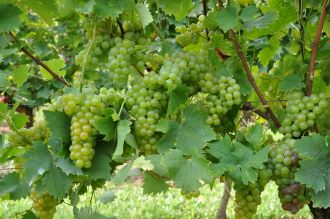
Muscat Blanc à Petits Grains is named for its small berries, and those berries are central to its identity. The clusters are usually small to medium, often cylindrical to conical, sometimes winged and often fairly compact. The berries can be white, pinkish or reddish-brown depending on colour form or mutation, though the white form is the best known for classic wine production. The field impression is one of compact aromatic concentration rather than large-bunched abundance.
Read more →
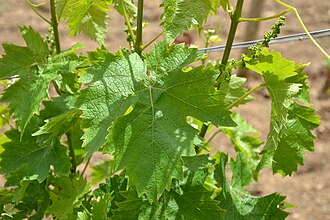
Leaves are generally medium-sized and rounded, often with three to five lobes. They can appear lightly textured or somewhat blistered, with regular teeth and an open to moderately open petiole sinus. The foliage is not usually the most dramatic feature of the vine; the fruit is. When ripe, the berries carry an aromatic charge that is unusual even among expressive white grapes. The scent of the grape itself can be present before fermentation has even fully transformed it.
This is due in part to the grape’s naturally high aromatic compounds, especially those associated with floral and grapey aromas. Muscat is one of the rare varieties whose wines often smell recognizably of fresh grapes. In many fine wine grapes, fermentation transforms the fruit away from its raw identity. Muscat keeps a more direct line between berry and glass. That is why it can feel so immediate, even when the wine itself is technically serious.
- Leaf: medium-sized, rounded, often 3–5 lobes, lightly textured
- Bunch: small to medium, cylindrical to conical, often fairly compact
- Berry: small, highly aromatic, white to pinkish or reddish depending on form
- Impression: ancient, compact, perfumed, expressive and delicate
Viticulture
Fragrant, sensitive, and dependent on balance
Muscat Blanc à Petits Grains is often described through aroma, but its vineyard behaviour is just as important. It generally prefers warm to moderate climates where it can build full aromatic ripeness, yet it still needs freshness if the wine is to remain lifted rather than heavy. The goal is not simply to produce perfume. Muscat produces perfume easily. The real work is giving that perfume shape, clarity and balance.
Read more →
The vine can show moderate vigour, and yields need attention. If cropped too heavily, the fruit may remain aromatic but become less precise, less textured and less convincing. This is an important distinction. Muscat can smell attractive even when it lacks depth. For serious wines, whether dry or sweet, growers need balanced bunches, healthy fruit, appropriate exposure and a picking moment that keeps both aroma and structure alive.
Because bunches can be compact, rot can become a concern in humid conditions. Mildew pressure may also matter depending on region and canopy density. Good airflow is therefore essential. In warmer Mediterranean sites, growers may also need to protect fruit from excessive sunburn or rapid sugar accumulation. In cooler or elevated places, the challenge may be full ripeness without losing aromatic finesse. Muscat is adaptable, but not indifferent.
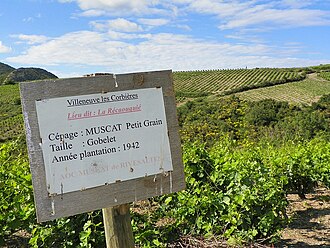
Training varies widely. In Mediterranean settings, bush vines and traditional low-trained systems can be found. In modern vineyards, vertical shoot positioning and other systems help manage canopy and fruit exposure. What matters most is that the grape reaches aromatic ripeness without losing its nerve. Muscat is at its best when fragrance feels fresh, not tired.
Wine styles
From dry blossom to sweet golden perfume
Muscat Blanc à Petits Grains is one of the most stylistically flexible aromatic grapes. It can make dry wines that feel floral, citrus-led and precise. It can make lightly sparkling wines of charming sweetness and lift. It can make fortified wines with honey, raisin, tea and orange peel. It can make late-harvest or naturally sweet wines that feel lush, perfumed and generous. Across all these styles, the Muscat signature remains unusually clear.
Read more →
Dry Muscat is sometimes underestimated because people expect sweetness. When handled well, it can be beautifully transparent: orange blossom, lemon peel, white flowers, fresh grape, herbs and a crisp aperitif quality. Alsace offers one of the important dry traditions, while other regions produce dry or nearly dry examples that show the grape’s more savoury side. These wines can be striking because they carry enormous perfume without much weight.
Moscato d’Asti and Asti show another face: lightly sparkling or sparkling, lower in alcohol, sweet or semi-sweet, playful but also technically delicate when well made. Here the grape’s floral and grapey aromatics are preserved in a style built for brightness and immediate pleasure. It may not be solemn wine, but it is not trivial. It is one of the clearest examples of a grape style designed around fragrance, freshness and ease.
Sweet and fortified Muscat styles deepen the grape’s personality. In southern France and Australia, especially Rutherglen for darker fortified Muscat traditions, the grape can move toward raisin, caramel, tea, dried orange peel, spice, toffee and treacle-like richness. Even then, the finest examples keep a thread of aromatic lift. Muscat’s great gift is that it can be opulent without becoming anonymous.
Terroir
A grape that keeps its perfume but changes its frame
Muscat Blanc à Petits Grains does not express terroir by losing its identity. It nearly always remains recognizably Muscat. What changes is the frame around the perfume: freshness, sweetness, spice, texture, bitterness, acidity and weight. In cooler or elevated sites, the grape can feel brighter, more citrus-led and more delicately floral. In warmer places, it may become richer, more honeyed, more apricot-toned and more openly generous.
Read more →
Soils can contribute more through vine balance than through a simple flavour stamp. Limestone and well-drained clay-limestone sites may support shape and freshness. Sandy or rocky Mediterranean soils can help limit vigour and preserve aromatic clarity. Schist, gravel and dry hillside soils may create more concentrated, savoury or spicy profiles, especially in sweet and fortified styles. The grape remains aromatic, but the best sites make that aroma feel anchored.
Microclimate matters greatly. Cool nights, altitude, sea breezes and careful exposure can protect the grape from becoming heavy or over-sweet in impression. In hot climates, Muscat can achieve sugar easily, but sugar alone is not enough. The best wines need aromatic purity and a structural counterweight. That may come from acidity, phenolic bite, bitterness, spice, fortification or simply careful harvesting.
This is why Muscat is not just a grape of perfume. It is a grape of balance. Perfume is the beginning. Place, climate and farming decide whether that perfume becomes charming, serious, fragile, lush or profound.
History
Ancient fame, modern misunderstanding, renewed range
Muscat has been famous for so long that it has also been simplified many times. Some drinkers think of it mainly as sweet. Others think of it as light, grapey and easy. Both can be true, but neither is complete. Muscat Blanc à Petits Grains has supported serious sweet wines, elegant dry wines, joyful sparkling wines, fortified classics and intensely local traditions. Its history is not a straight line. It is a constellation of regional uses.
Read more →
In Piedmont, Moscato Bianco became central to a style of sparkling and gently sweet wine that is beloved for charm, freshness and low alcohol ease. In southern France, Muscat traditions often leaned toward sweet or fortified wines, built around sun, concentration and fragrant richness. In Alsace, the grape could appear in dry form, revealing an entirely different personality: floral, crisp, aperitif-like and surprisingly gastronomic. In Greece, Spain, Portugal and Mediterranean islands, Muscat has long been woven into sweet wine, table culture and local identity.
Modern experimentation has reopened the grape’s possibilities. Producers now explore dry Muscat, skin-contact Muscat, pétillant styles, low-intervention versions and site-specific expressions. These wines are not always mainstream, but they remind us that the grape is not confined to dessert. Its perfume can be handled in many ways: protected, framed, fermented on skins, left bright, made sweet, made dry, made sparkling or made oxidative and fortified.
That renewed range matters. Muscat Blanc à Petits Grains is ancient, but not finished. It still has room to surprise modern drinkers, especially those willing to look beyond the stereotype of sweet perfume.
Pairing
A natural with fragrance, spice, fruit and contrast
Muscat Blanc à Petits Grains can be wonderful at the table, but the pairing depends on style. Dry Muscat works as an aperitif and with herbs, delicate spice, fresh cheeses and aromatic salads. Lightly sweet Muscat loves fruit, almond pastry and soft desserts. Richer sweet or fortified Muscat can handle blue cheese, foie gras, dried fruit, caramel, nuts and powerful salty-sweet contrasts. It is a grape that understands perfume and pleasure.
Read more →
Aromas and flavors: orange blossom, rose petal, jasmine, fresh grape, mandarin, lemon peel, apricot, peach, honey, spice, tea, raisin and dried citrus depending on style. Structure: light and fresh in dry or sparkling versions, richer and more viscous in sweet or fortified forms, with perfume almost always at the centre.
Food pairings: almond tart, fruit desserts, orange cake, panna cotta, blue cheese, soft goat cheese, foie gras, tagines, cardamom-scented dishes, Middle Eastern pastries, spicy Asian cuisine, citrus salads, fresh herbs and salty nuts. Dry styles can also work with aperitif snacks, green herbs and lightly aromatic vegetables.
The best pairings recognise that Muscat is not shy. It brings fragrance to the table, so it needs food that can echo, contrast or absorb that perfume. When matched well, it can make a meal feel warmer, more generous and more aromatic.
Where it grows
A grape family spread across the sunlit wine world
Muscat Blanc à Petits Grains and its close relatives are found across a wide range of wine cultures. France, Italy, Greece, Spain, Portugal and Australia are especially important, while other Mediterranean and warm-climate regions also maintain Muscat traditions. The grape’s spread reflects its age, its usefulness and its immediate appeal. Few varieties can be so regional and so globally recognisable at the same time.
Read more →
- France: Alsace, Beaumes-de-Venise, Frontignan, Lunel, Rivesaltes and other southern regions
- Italy: Piedmont as Moscato Bianco, especially in Moscato d’Asti and Asti traditions
- Greece: important island and mainland Muscat traditions, including sweet styles
- Spain & Portugal: Moscatel traditions, often sweet, fortified or aromatic
- Australia: especially Rutherglen for fortified Muscat, plus other regions
- Elsewhere: South Africa, California, Mediterranean islands and additional warm-climate regions
The name changes with language and region — Muscat, Moscato, Moscatel — but the aromatic family resemblance remains clear. That is one of the reasons the grape is so valuable for Ampelique: it shows how one ancient aromatic idea can travel through many cultures.
Why it matters
Why Muscat matters on Ampelique
Muscat matters on Ampelique because it reminds us that grapes are not only about structure, tannin, acidity or prestige. They are also about scent, recognition and the ancient pleasure of fruit. Muscat Blanc à Petits Grains is one of the clearest aromatic teaching grapes in the world. It helps readers understand what a variety can carry before the cellar has done very much at all.
Read more →
It also matters because it complicates the idea of a single grape profile. Muscat is a family name, a cultural name, a sensory name and a set of regional traditions. Muscat Blanc à Petits Grains is one of its finest members, but understanding it means understanding the wider Muscat world: Moscato in Italy, Moscatel in Spain and Portugal, Muscat in France, fortified Muscat in Australia, and many local versions across Mediterranean wine culture.
For a grape library, this is important. Some varieties are narrow, local and precise. Others are broad, ancient and many-named. Muscat belongs to the second group. It asks us to think not only like tasters, but like historians and ampelographers. The grape is fragrant, but its story is deeper than fragrance.
For Ampelique, Muscat is therefore essential. It shows the sensual side of grape identity: perfume, sweetness, blossom, fruit skin and cultural memory. It is one of the oldest reminders that wine begins not with technique, but with a vine capable of astonishing scent.
Quick facts
- Color: usually white; pink, reddish and brownish colour forms also exist
- Parentage / family: ancient member of the Muscat family; exact parentage is complex and not usually treated as a simple modern crossing
- Main names: Muscat Blanc à Petits Grains, Muscat à Petits Grains, Moscato Bianco, Muscat Frontignan
- Origin: ancient Mediterranean grape family, with long cultivation across southern Europe
- Most common regions: France, Italy, Greece, Spain, Portugal, Australia, South Africa, California and Mediterranean islands
- Climate: warm to moderate; best when ripeness is balanced by freshness
- Soils: limestone, clay-limestone, sandy soils, schist, rocky Mediterranean sites and well-drained slopes
- Styles: dry, lightly sparkling, sparkling, sweet, late-harvest, fortified and occasionally skin-contact
- Signature: intense perfume, fresh grape aroma, orange blossom, rose, citrus peel and spice
- Classic markers: orange blossom, rose petal, grape skin, mandarin, apricot, honey, spice and tea-like floral notes
Closing note
A great Muscat Blanc à Petits Grains is never only sweet, and never only fragrant. It is the memory of blossom in grape form, the scent of orange peel and warm stone, the old Mediterranean idea that wine can begin with perfume. It is immediate, but ancient; charming, but serious when given balance. Few grapes show so clearly that aroma itself can be a form of history.
Image credits
Leaf/detail image: Wikimedia Commons – Marianne Casamance.
Vineyard landscape image: Wikimedia Commons – www.zoqy.net
Muscat cluster image: VIVC.de – Doris Schneider, Julius Kühn-Institut (JKI), Federal Research Centre for Cultivated Plants, Institute for Grapevine Breeding Geilweilerhof – 76833 Siebeldingen, GERMANY
If you like this grape
If you appreciate Muscat Blanc à Petits Grains for its perfume, blossom and ancient aromatic identity, you might also enjoy Gewürztraminer for its rose and spice, Riesling for a more mineral aromatic white with great acidity, or Viognier for apricot, flower and textural richness.
An ancient aromatic grape family, and one of the clearest reminders that perfume can be a serious language of wine.
 Ampelique
Leave a comment