Ampelique Grape Profile
Viognier
Origin, viticulture, morphology, wine styles, and place.
A world classic white grape of Rhône origin, celebrated for fragrance, texture, and one of the most sensuous aromatic signatures in wine: Viognier can be floral and apricot-rich, silky and generous, bright with stone-fruit lift or deeper and more textural, but at its best it is never merely perfumed. It is a grape of shape, ripeness, and radiant detail — one capable of turning aroma into architecture.
Viognier is one of the most immediately seductive grapes in the white-wine world, yet its finest expressions are more than lush aroma and softness. Great Viognier holds perfume inside form. It can be opulent without becoming heavy, floral without becoming vague, and textural without losing direction. In the right hands, it is one of white wine’s most memorable voices.
Viognier rarely whispers. It arrives in apricot, blossom, spice, and light, yet the finest examples carry that radiance with remarkable discipline.
Contents
Origin & history
A northern Rhône survivor that almost vanished before the world rediscovered it
Viognier is one of wine’s great recovery stories. Historically associated above all with Condrieu and Château-Grillet in the northern Rhône, it came dangerously close to disappearing in the twentieth century. By the late 1960s, only a tiny number of hectares remained. It would have been entirely plausible for Viognier to survive only as a footnote in wine history: a fragrant Rhône grape remembered fondly, then lost to economics, disease pressure, and the hard reality of farming steep, difficult slopes.
Read more →
Instead, it returned. Growers in the Rhône preserved and reasserted its value, and later the wider wine world recognized something special in the grape’s combination of aroma, body, and sensuality. Viognier was never a quiet success. Its rebirth was driven by the realization that almost no other white grape smells and feels quite like it. In a global world of increasingly recognizable varieties, Viognier offered something unmistakable: apricot, blossom, spice, and a rich but not inherently heavy textural identity.
Its precise earlier origins remain somewhat more obscure than those of some other classical grapes, but its cultural home is unmistakably the northern Rhône. That matters because Condrieu, more than almost any other appellation, proved what Viognier could do when grown in the right place: produce wines of perfume, extract, and radiance without needing the support of oak-dominated styling or blending to announce themselves. Château-Grillet, even more singular and rare, added another layer to the grape’s mystique.
As plantings spread to California, Australia, South Africa, South America, and elsewhere, Viognier became a modern international grape. Yet unlike some varieties that turn diffuse when they globalize, Viognier kept a distinct personality. The challenge was never whether it could be recognized. The challenge was whether it could be handled with enough discipline to remain beautiful rather than simply lush.
Ampelography
A compact, golden-berried vine with a naturally generous expression
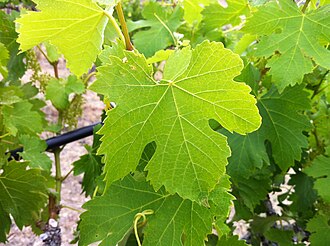
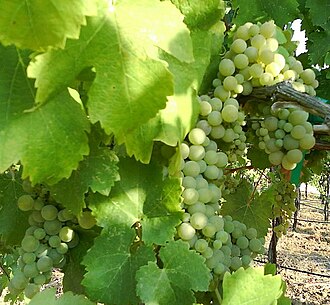
Viognier tends to produce relatively small clusters and berries, often with a golden cast at full ripeness. The bunches can be compact, and the grape’s skins are not especially thick. Leaves are medium-sized and structured, giving the vine a neat but not austere appearance. The vineyard impression is not one of dramatic force, but of concentration and delicacy held together. That fits the wines, which often combine intense aroma with a surprisingly exact internal form when well made.
Read more →
The compactness of the fruit matters. It contributes to concentration, but it also creates viticultural sensitivity, especially where humidity or rot pressure are concerns. Viognier’s aromatic exuberance can sometimes make people forget that it is not an especially easy grape to grow. Morphology and style are linked here: the same fruit that can produce apricot-rich intensity also requires care to remain healthy and balanced.
Its visual character also hints at texture. Viognier is not typically a high-acid, razor-cut grape in the mold of Riesling or Sauvignon Blanc. Its morphology and ripening behavior tend toward a more expansive mouthfeel, more glycerol presence, and a softer, rounder palate shape. That does not mean it must be heavy. It means its natural mode is breadth rather than blade.
- Leaf: medium-sized, orderly, structured
- Bunch: relatively small, often compact
- Berry: small, golden at full ripeness
- Impression: concentrated, aromatic, textural by nature
Viticulture
A low-acid, aromatic grape that demands exact ripeness and control
Viognier is one of those grapes that can become glorious or clumsy depending on timing. It does not have the naturally high acidity that rescues many white wines from excess. That means the grower must seek a very specific kind of ripeness: enough to unlock the grape’s apricot, blossom, and spice profile, but not so much that the wine becomes heavy, low in definition, or overtly alcoholic. This narrow corridor is central to Viognier’s identity.
Read more →
Warmth is important, but so is moderation. Viognier often performs best where full ripening is possible without the fruit becoming broad and diffuse. That is one reason the northern Rhône remains such an eloquent reference: steep slopes, sunlight, and a climate that can ripen the grape without always pushing it into softness. In warmer climates, altitude, cooler nights, or restrained sites become essential if the goal is elegance rather than simple aromatic volume.
The variety can be difficult in the vineyard. Yield needs careful management, and bunch compactness increases sensitivity to rot. Because acidity can drop quickly, harvest timing is unusually consequential. Viognier often tempts growers toward one extra moment of aromatic abundance — but that extra moment can sometimes cost freshness. The best wines are usually the result of restraint as much as ripeness.
This is why Viognier is a more exacting grape than its lush personality suggests. It is easy to make obvious Viognier. It is much harder to make profound Viognier. Great examples prove that generosity and precision do not have to be opposites.
Wine styles
From apricot and blossom to spice, silk, and sunlit depth
Viognier is among the most aromatically expressive of the world’s major white grapes. Apricot, peach, honeysuckle, orange blossom, tangerine peel, ripe pear, jasmine, ginger, and soft spice all belong to its classic range. What makes the best wines memorable, however, is not merely the intensity of those aromas but the way they are held inside the palate. Great Viognier does not collapse after the nose. It carries perfume into texture and finish.
Read more →
In Condrieu, Viognier can be simultaneously broad and vivid, with layers of stone fruit, floral complexity, and a kind of polished textural glow. In warmer New World settings, it may become more overtly ripe, tropical, or honeyed, sometimes moving toward mango, guava, and deeper peach. The best versions in those climates still preserve line and bitterness at the edges, often through site choice or restrained picking. Without that line, Viognier can become merely soft.
Winemaking choices can either frame or flatten the grape. Stainless steel can preserve freshness and aromatic clarity. Lees ageing can deepen texture. Controlled oak use may add spice and breadth, though too much wood can blur the floral brilliance that makes Viognier distinctive. Because the grape is naturally low in acidity and textural by nature, its finest versions usually rely less on cellar dramatics and more on calibration. It needs proportion more than spectacle.
Viognier also plays a subtle but important role in red wine through its permitted co-fermentation with Syrah in Côte-Rôtie, where small amounts can lift aroma and stabilize color. That detail reveals something essential: even when used in tiny proportion, Viognier can bring fragrance and brightness. It is a grape whose identity is vivid enough to matter almost immediately.
Terroir
A grape whose perfume changes shape with site
Viognier is sometimes treated as though it were all aroma and therefore less capable of expressing place than more restrained varieties. That is a mistake. It may be less transparent than Riesling or Chardonnay in a strict sense, but site matters profoundly. Climate, soil, slope, and harvest timing all alter how the perfume presents itself — whether floral and lifted, ripe and expansive, spicy and tense, or broad and almost honeyed.
Read more →
On the granite-influenced slopes of Condrieu, Viognier often finds a kind of poise that can be difficult to replicate elsewhere. The wines may feel rich, but they also carry mineral contour and a quiet bitterness that prevents them from becoming too soft. In warmer, more fertile, or flatter sites, the grape can drift toward volume without enough internal shape. This is why terroir with Viognier often announces itself not by obvious mineral flavor, but by the degree of tension preserved inside a naturally generous grape.
Cooler nights, slope exposure, and soils with enough restraint can all help Viognier stay articulate. In warmer climates the best examples often come from elevated or moderated sites that keep the fruit from becoming heavy and the acids from collapsing too quickly. The grape does not need cold. It needs control.
This is why Viognier remains so revealing in the hands of thoughtful growers. It can show not only whether a site ripens fruit, but whether it does so beautifully. That is a subtler and more difficult question — and one that Viognier answers with unusual honesty.
History
From near-extinction to global fascination
Viognier’s modern history is remarkable because it moved from fragility to fashion in a relatively short time. Once plantings were revived in the Rhône, the wider wine world quickly became fascinated by the grape’s perfume and sensuality. California embraced it. Australia explored it seriously. South Africa, Argentina, Chile, and other regions added their own interpretations. For a time, Viognier seemed to promise a glamorous alternative to more familiar white varieties.
Read more →
As often happens, expansion produced both success and simplification. Some wines emphasized sheer aromatic ripeness and weight, which made Viognier easy to recognize but not always serious to drink. In those versions the grape could seem almost too much of itself — all blossom and apricot, without enough acidity, bitterness, or mineral grip to hold the experience together. That phase risked reducing Viognier to a perfume bottle rather than a fine-wine grape.
But serious growers learned quickly that Viognier’s real greatness depends on restraint. Better site selection, earlier picking, cooler zones, larger neutral vessels, less obvious oak, and more thoughtful texture work all helped restore the grape’s credibility at the high end. The modern best versions of Viognier are not simply richer. They are more composed. They use perfume as part of a larger structure rather than as the whole argument.
That correction has been healthy for the grape. Viognier is now understood not just as a fragrant novelty, but as a white variety capable of genuine distinction when grown in the right places and handled with enough care. Its survival story has become, in the best sense, a maturation story as well.
Pairing
A white for spice, perfume, and textural richness
Viognier is one of the most useful white wines for dishes that combine perfume, spice, and softness. Because it often carries stone-fruit richness and a silky palate, it pairs beautifully with cuisines that might overwhelm leaner whites but do not require the oak and weight of a large Chardonnay. Its affinity for ginger, apricot-like sweetness, floral aromatics, and subtle exotic spice makes it especially interesting at the table.
Read more →
Aromas and flavors: apricot, peach, honeysuckle, orange blossom, ripe pear, tangerine peel, ginger, soft spice, and sometimes a faint savory or almond-like bitterness at the edge. Structure: medium to full body, modest acidity, often notable texture and glycerol richness, with the best examples maintaining freshness through phenolic grip and balance rather than sharp acid alone.
Food pairings: roast chicken, pork with fruit or spice elements, Moroccan and Levantine-inspired dishes, dishes with saffron, apricot, or ginger accents, richer seafood, lobster, monkfish, and aromatic vegetarian preparations. Viognier can also work very well with mildly spiced Asian dishes, provided the heat remains moderate and the wine retains enough freshness.
Its most successful pairings usually respect the grape’s perfume rather than fight it. Viognier is at its best with dishes that echo its floral and stone-fruit tendencies, or that benefit from its soft, enveloping texture. It is a grape that likes atmosphere at the table, not confrontation.
Where it grows
A global white with an unmistakable Rhône memory
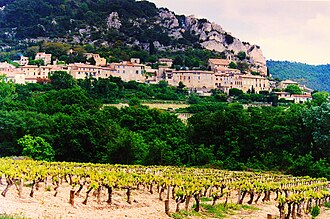
Viognier is now planted far beyond the Rhône, but the greatest reference points remain Condrieu and Château-Grillet. Outside France, California played a key role in modernizing the grape’s reputation, while Australia explored both richer and more restrained versions. South Africa, Argentina, Chile, and other regions have shown that Viognier can thrive wherever full ripeness is achievable without sacrificing balance.
Read more →
- France: northern Rhône above all, especially Condrieu and Château-Grillet
- United States: California and other selected warm-but-balanced sites
- Australia: important for both lush and more precise modern expressions
- South Africa: increasingly important for serious, structured Viognier
- Elsewhere: Argentina, Chile, and smaller plantings in additional regions
Its distribution across the world reflects both its charm and its difficulty. Many growers are tempted by its perfume. Fewer sites can make it profound. That distinction keeps the grape interesting and prevents it from becoming generic.
Why it matters
Why Viognier matters on Ampelique
Viognier matters on Ampelique because it proves that aromatic generosity can still belong to serious wine. In a world where crispness is often equated with quality and overt perfume is sometimes treated with suspicion, Viognier stands apart. It reminds us that fragrance, softness, and sensuality are not lesser virtues. They are simply more difficult to hold together beautifully.
Read more →
It also offers a useful lesson in recovery and reinterpretation. Here is a grape that nearly disappeared, then returned so forcefully that the world had to learn how to understand it all over again. Some of those interpretations were shallow. Others were profound. That arc makes Viognier especially suitable for a grape library concerned not only with identification, but with cultural meaning and changing taste.
For Ampelique, Viognier is a valuable counterpoint to varieties such as Riesling, Sauvignon Blanc, or Chardonnay. It broadens the reader’s understanding of what great white wine can be. Not every classic speaks in acid and restraint. Some speak in perfume, silk, and inner warmth — provided they are guided well. Viognier is one of the clearest examples of that truth.
It deserves the label world classic not because it is everywhere, but because it remains singular. There is still no substitute for Viognier’s best form. That uniqueness is part of what makes it indispensable.
Quick facts
- Color: white
- Origin: northern Rhône, France
- Climate: warm to moderate, with strong need for balance
- Soils: granitic and other well-drained restrained sites
- Styles: aromatic, textural, dry, sometimes lightly oak-shaped
- Signature: apricot, blossom, silk, perfume, soft spice
- Classic markers: peach, honeysuckle, orange blossom, ginger, ripe pear
- Great challenge: achieving perfume without heaviness
Closing note
A great Viognier is never only fragrant. It is fragrance given form apricot and blossom steadied by bitterness, texture, and the quiet discipline of a well-chosen site.
Image credits
Leaf/detail image: Wikimedia Commons – Agne27
Vineyard landscape image: Wikikedia Commons – Phillip Capper
Nebbiolo cluster image: Wikimedia – Anachronist
A world classic, and one of white wine’s clearest reminders that perfume can still be profound.
 Ampelique
Leave a comment