Category: Ampelography

  • VERDEJO

    Understanding Verdejo: Origin, Viticulture, Styles, and Tasting Profile

    A cool night breeze: Spain’s bright white of plateau light and cold nights, bringing citrus, herbs, texture, and a clean, slightly bitter finish.


    Verdejo carries both sun and night within it. The days may be bright and dry, but the evenings cool the fruit and keep the wine awake. Lime, fennel, green almond, and soft herbs often rise first, followed by a faint bitterness that gives the finish its shape. It is not a loud grape, but it is alert, fresh, and often more textured than people expect.

    Origin & history

    Verdejo is one of Spain’s most important white grapes and the defining variety of Rueda, where it found its modern identity. Its deeper history is older and likely shaped by movement across central Spain over many centuries, but it is in the high plateau landscapes of Castilla y León that the grape truly became itself. There, under hot summer days and much cooler nights, Verdejo learned to ripen with both flavor and freshness.

    For much of its past, Verdejo was used in oxidatively styled or fortified wines, especially before modern temperature-controlled winemaking made fresher styles more possible. In the late twentieth century, the grape was effectively rediscovered. New vineyard work, better harvest timing, and more careful cellar techniques revealed a very different side of Verdejo: vivid, aromatic, herb-scented, and cleanly structured.

    That transformation helped turn Rueda into one of Spain’s most successful white wine regions. Verdejo became central not only because it was local, but because it was well adapted to the place. It handled drought, benefited from the region’s large day-night shifts, and gave wines that felt modern without becoming anonymous. The grape offered freshness, but not in a neutral way. It kept its own accent.

    Today Verdejo is still most closely tied to Rueda, though it appears elsewhere in Spain and in small experimental plantings abroad. Even so, its strongest voice remains Castilian: dry, bright, slightly herbal, and carried by that quiet tension between heat and altitude.


    Ampelography: leaf & cluster

    Leaf

    Verdejo leaves are medium-sized and generally round to slightly pentagonal. They commonly show three to five lobes, often with moderate sinuses and a petiole sinus that is open and U-shaped to lyre-shaped. The upper surface is smooth to lightly textured, and the margins are regular with moderate teeth.

    The underside may show fine hairs along the veins. Young leaves can have a pale green tone with slight bronze hints in spring. In balanced vineyards, the canopy often remains neat and open enough to support good air movement, which suits the variety well in dry continental conditions.

    Cluster & berry

    Clusters are small to medium, usually conical to cylindrical-conical, and moderately compact. Berries are medium-sized, round, and green-yellow to golden at ripeness. The skins are of moderate thickness, and the variety is well suited to the dry conditions of its home region.

    Verdejo fruit tends to give wines with both aromatic lift and a lightly textural feel. The berries rarely produce heavy wines, but they do often carry more weight and grip than very neutral white grapes. That subtle structure is part of Verdejo’s identity.

    Leaf ID notes

    • Lobes: usually 3–5; moderate and fairly clear.
    • Petiole sinus: open, often U-shaped to lyre-shaped.
    • Teeth: regular and moderate.
    • Underside: fine hairs may appear along veins.
    • General aspect: balanced leaf with a clean, open outline.
    • Clusters: small to medium, moderately compact.
    • Berries: medium-sized, green-yellow, with a lightly textural character.

    Viticulture notes

    Growth & training

    Verdejo is well adapted to dry continental conditions and usually shows moderate vigor. In poorer, stonier soils it often remains balanced quite naturally, while deeper or more fertile sites may require closer canopy control. VSP is common in modern vineyards, though bush-trained older vines can still be found in traditional plantings.

    The grape usually ripens in the middle part of the season and benefits strongly from the high day-night contrast found in Rueda. Warm days allow flavor to build, while cool nights help preserve acidity and aromatic detail. Yield control matters because Verdejo can lose intensity if pushed too far. Balanced crops usually bring more citrus, more herb detail, and a more convincing finish.

    Harvest timing is especially important. Pick too early and the wine may feel sharp and underdeveloped. Pick too late and it can become broader, softer, and less vivid. The best Verdejo is usually harvested at a point where freshness, fruit, and that characteristic faint bitterness all feel aligned.

    Climate & site

    Best fit: dry, moderate to warm continental climates with high daytime sunlight, cool nights, and enough elevation to preserve freshness. Verdejo performs especially well where the season is sunny but not humid, and where nights give the grape a chance to hold its line.

    Soils: gravelly alluvial terraces, stony plateaus, sandy-loam soils, and well-drained calcareous sites all suit the grape. In Rueda, stony soils and altitude help create the conditions for clean ripening and bright acidity. Excessively fertile soils are less ideal, as they can soften the grape’s natural precision.

    Verdejo generally likes dry air, open space, and enough light to ripen steadily. It is not a grape that needs dramatic mountain slopes, but it does benefit from a clear, healthy environment where freshness can survive the heat.

    Diseases & pests

    Because Verdejo is often grown in dry regions, disease pressure is usually lower than for many Atlantic or humid-climate white grapes. Even so, powdery mildew and other vineyard problems can still appear if the canopy becomes too dense or if weather patterns shift unusually. Good airflow and moderate vigor remain important.

    The variety’s real challenges are more often about balance than disease. Overcropping, loss of acidity, and picking at the wrong moment can do more damage to style than mildew pressure in many years. Verdejo usually rewards clean, precise vineyard timing more than heavy intervention.


    Wine styles & vinification

    Verdejo is best known for dry white wines that emphasize freshness, citrus, herbs, and a gently textured palate. Stainless steel is common and suits the grape well, especially when the aim is to preserve its bright aromatics and clean finish. In those styles, notes of lime, grapefruit, fennel, green almond, and soft meadow herbs often appear clearly.

    Some producers use lees contact, larger neutral vessels, or brief oak influence to build more body. These approaches can work if handled lightly, since Verdejo can support more texture than many simple aromatic whites. Still, the best wines usually keep a clear sense of brightness and line. The grape’s charm depends on freshness carried by a little grip, not on weight alone.

    Oxidative or older styles still exist, though they are much less common than the modern fresh style. In blends, Verdejo may appear with Sauvignon Blanc or local partners, but varietal bottlings are usually where its distinct character shows most clearly.


    Terroir & microclimate

    Verdejo responds clearly to climate and site, especially through the balance between fruit, herbal tone, bitterness, and acidity. In slightly cooler or higher places it may feel more linear and citrus-led. In warmer or richer sites it can become broader, softer, and more stone-fruited. Soil and vine age also matter, with older vines often giving more depth and less simple fruitiness.

    Microclimate is especially important because Verdejo depends on strong day-night contrast. That swing helps it keep freshness even under bright plateau sunlight. Without it, the wines can lose their characteristic tension. The best sites give Verdejo both ripeness and a little edge.


    Historical spread & modern experiments

    Verdejo’s modern rise is closely tied to the transformation of Rueda. Once better known for older oxidative styles, the region reinvented itself around fresher, cleaner expressions of the grape. Better temperature control, night harvesting, careful vineyard work, and a clearer sense of varietal identity all helped make Verdejo one of Spain’s most successful modern white wines.

    Modern experiments often focus on old vines, lees aging, larger neutral vessels, wild fermentation, and single-vineyard expressions. These approaches work best when they preserve rather than obscure the grape’s natural brightness. Verdejo does not need to become something else to be interesting. Its own dry, herbal precision is already enough.


    Tasting profile & food pairing

    Aromas: lime, grapefruit, green apple, fennel, fresh herbs, green almond, white flowers, and sometimes a faint anise or hay note. Palate: light to medium body, bright acidity, a lightly textured mid-palate, and a clean finish with a subtle bitter edge. The best wines feel fresh, alert, and dry without being thin.

    Food pairing: grilled fish, shellfish, tapas, salads, asparagus, herb-led dishes, goat’s cheese, sushi, and light Mediterranean food. Verdejo’s freshness and faint bitterness also make it a good match for dishes with herbs, olive oil, and green vegetables.


    Where it grows

    • Spain – Rueda and nearby parts of Castilla y León
    • Other parts of Spain – smaller plantings
    • Limited experimental plantings outside Spain

    Quick facts for grape geeks

    Field Details
    Color White
    Pronunciation Ver-DAY-ho
    Parentage / Family Native Spanish variety; exact parentage remains unresolved
    Primary regions Spain, especially Rueda
    Ripening & climate Mid ripening; best in dry continental climates with cool nights
    Vigor & yield Moderate vigor; balanced yields important for detail and freshness
    Disease sensitivity Generally moderate; mildew can appear if canopy is too dense
    Leaf ID notes 3–5 lobes; open sinus; medium clusters; lightly textured, fresh fruit
    Synonyms Usually labeled as Verdejo; modern synonyms are limited in use
  • MOURVÈDRE

    Understanding Mourvèdre: Origin, Viticulture, Styles, and Tasting Profile

    A dusk-dark murmur: Late-ripening Mediterranean red of heat, stone, and sea air, bringing dark fruit, earth, spice, and a deep, steady structure.


    Mourvèdre gathers the day slowly. It seems to hold onto warmth long after the sun has moved on, building dark fruit, herbs, and earth with a kind of patient gravity. There is often something serious about it from the first moment—blackberry, dried thyme, leather, dust, and stone. Yet the best examples are never merely heavy. They carry depth with rhythm, and structure with calm.

    Origin & history

    Mourvèdre is one of the great late-ripening red grapes of the Mediterranean world. Its most likely historic origin lies in Spain, where it is widely known as Monastrell. From there it spread along the eastern coast and across the Mediterranean basin, later becoming an important grape in southern France as well. In Provence, especially in Bandol, it found one of its most famous French homes, while in Spain it became deeply rooted in regions such as Jumilla, Yecla, Alicante, and Valencia.

    The French name Mourvèdre is often linked to Morvedre, the old name for Sagunto near Valencia. That connection reflects the grape’s Iberian roots and its long movement between Spain and southern France. In both countries it became known for structure, dark fruit, and a savory, earthy depth that made it valuable both on its own and in blends.

    In France, Mourvèdre became an essential part of many southern blends, especially alongside Grenache and Syrah. It brought backbone, tannin, dark fruit, and a game-like complexity that helped give these wines shape and longevity. In Spain, Monastrell often appeared as a varietal wine, especially in hot inland regions where it could ripen fully and develop a powerful but honest style.

    Later the grape spread to Australia, California, South Africa, and smaller warm-climate regions elsewhere, sometimes under the synonym Mataro. Yet wherever it goes, Mourvèdre remains a grape that asks for heat, patience, and the right site. It is not usually immediate, but in the right conditions it can be one of the most characterful reds in the vineyard.


    Ampelography: leaf & cluster

    Leaf

    Mourvèdre leaves are medium to large and generally round to slightly pentagonal. They usually show three to five lobes, with moderate sinuses and a petiole sinus that is often open and U-shaped to lyre-shaped. The upper surface is dark green, smooth, and sometimes lightly glossy, while the margins are regular and moderately toothed.

    The underside may show light hairs along the main veins. Young leaves can carry pale green with bronze or reddish hints in spring. In healthy vineyards, the foliage often looks firm and robust, especially on warmer sites where the vine feels fully at home. On richer soils, however, the canopy can become denser than ideal and needs careful management.

    Cluster & berry

    Clusters are medium to large, conical to cylindrical-conical, and often quite compact. Berries are medium-sized, round, and thick-skinned, with a deep blue-black color. These thick skins help explain the grape’s dark color, strong tannin, and slow-building structure in the wine.

    Because bunches are compact and ripening comes late, the grape needs a stable season to bring both fruit and tannin into full harmony. When that happens, Mourvèdre can produce wines of impressive depth. When it does not, the grape may remain more severe, dry, or rustic. It is very much a variety that needs the right place.

    Leaf ID notes

    • Lobes: usually 3–5; moderate lobing.
    • Petiole sinus: open, often U-shaped to lyre-shaped.
    • Teeth: regular and moderate.
    • Underside: light hairs may appear along veins.
    • General aspect: dark green, robust leaf with a firm outline.
    • Clusters: medium to large, compact, conical.
    • Berries: medium-sized, thick-skinned, dark blue-black.

    Viticulture notes

    Growth & training

    Mourvèdre is a grape of heat and patience. It tends to bud relatively late and ripen late, which can help it avoid spring frost in some places, but it also means the end of the season matters enormously. The grape needs enough autumn warmth and dryness to bring skins, seeds, and tannins into full maturity. Without that, it can feel strict, herbal, and incomplete.

    Vigor is usually moderate, though site and water availability affect this strongly. On fertile soils the vine can become too vegetative and shade its own fruit. On poor, dry, rocky ground it usually finds better balance and gives smaller, more concentrated berries. Bush-vine training remains common in traditional Mediterranean regions, while VSP is used where row structure and mechanization matter more.

    Yield control is important. If cropped too generously, Mourvèdre may struggle even more to reach full ripeness. Lower to moderate yields usually bring better concentration, more convincing tannins, and clearer site expression. The grape rewards growers who are willing to wait, but only if the vineyard has been set up for that patience from the beginning.

    Climate & site

    Best fit: warm to hot climates with long, dry ripening seasons, plenty of light, and ideally some coastal or evening moderation. Mourvèdre performs best where autumn remains stable and where ripening can continue without interruption into the later part of the season.

    Soils: stony, well-drained, low-fertility soils are ideal. Limestone, schist, gravel, clay-limestone, and sandy Mediterranean soils can all suit the grape well if water does not sit too heavily in the root zone. In Bandol, sunlit limestone terraces near the sea help shape one of the grape’s most famous expressions. In Spain, dry inland soils often give deeper and more powerful versions.

    Cool, damp sites are usually less suitable, because Mourvèdre’s late ripening becomes a real disadvantage there. It needs enough heat not only for sugar, but for full phenolic maturity. The best vineyards give it time, drainage, and light.

    Diseases & pests

    Mourvèdre’s compact bunches can create disease pressure in humid conditions, especially from botrytis near harvest. Powdery mildew and downy mildew can also be issues where airflow is poor or the canopy grows too thick. Thick skins help, but they do not remove the need for good vineyard balance.

    In dry climates, disease pressure is often lower, though drought stress and fruit exposure can still shape the final result. As with many warm-climate grapes, site choice matters more than rescue work later. Mourvèdre usually rewards vineyards that are naturally right for it.


    Wine styles & vinification

    Mourvèdre can make deeply serious wines, but it often shows its best side either in blends or in varietal wines from very well-suited sites. On its own, it tends to give dark fruit, firm tannin, earthy depth, and notes of leather, dried herbs, and game. In a blend, it adds backbone, color, and savory depth, especially alongside Grenache and Syrah.

    In the cellar, extraction needs care because the grape already has plenty of tannic material. Too much force can make the wine hard and dry. Gentle but complete fermentation, enough time on skins when fruit is ripe, and careful oak use are usually better than overbuilding the wine. Mourvèdre can age very well, especially in Bandol and in top Monastrell wines from Spain.

    With time, the grape often moves from dark fruit into leather, dried herbs, tobacco, meat, and earthy complexity. Its appeal is rarely immediate in a simple sense. It is usually a wine of depth, patience, and savory detail.


    Terroir & microclimate

    Mourvèdre responds strongly to warmth, air movement, and the pace of late-season ripening. In coastal Mediterranean sites, sea breezes can give shape and freshness to what might otherwise become a very dark and heavy wine. In hotter inland regions, it often becomes fuller, richer, and more rustic in style. Both expressions can work, but the balance shifts clearly.

    Soil matters as well. Limestone can bring lift and line, while schist and stones often deepen the grape’s earthy and spicy side. Sandy soils may soften tannins and make the fruit more open. Old vines are especially important for Mourvèdre, often giving more nuance, less rusticity, and a calmer, more complete structure.


    Historical spread & modern experiments

    From its Spanish roots as Monastrell, Mourvèdre spread into southern France and later into Australia, California, and South Africa. In Bandol it found one of its noblest expressions, producing long-lived wines of structure and coastal depth. In Spain, modern Monastrell has moved beyond rustic power toward more site-specific, balanced examples, especially in higher inland zones.

    Modern experiments often focus on earlier picking for freshness, gentler extraction, amphora, and more transparent élevage. These choices have helped show that Mourvèdre can be more than a stern blending grape. In the right hands, it can be layered, savory, and quietly beautiful without losing its natural depth.


    Tasting profile & food pairing

    Aromas: blackberry, black plum, dark cherry, dried herbs, thyme, pepper, leather, tobacco, game, and earth. Palate: medium to full body, moderate acidity, firm tannins, and a deep, savory finish. Mourvèdre often feels darker and more grounded than bright.

    Food pairing: lamb, roast duck, venison, beef stew, grilled sausages, braised dishes, olives, rosemary, garlic, and earthy Mediterranean cooking. Older wines pair especially well with game, mushrooms, and more autumnal dishes where their savory depth has room to show.


    Where it grows

    • Spain – Jumilla, Yecla, Alicante, Valencia and other Monastrell zones
    • France – Bandol, Southern Rhône, Languedoc, Roussillon
    • Australia – Barossa, McLaren Vale and other warm regions
    • USA – California
    • South Africa and other warm-climate regions

    Quick facts for grape geeks

    Field Details
    Color Red
    Pronunciation Moor-VEDR
    Parentage / Family Ancient Iberian variety, widely known as Monastrell in Spain and Mataro in Australia
    Primary regions Spain, France, Australia, USA, South Africa
    Ripening & climate Late ripening; best in warm to hot, dry climates with long seasons
    Vigor & yield Moderate vigor; low to moderate yields preferred for full ripeness
    Disease sensitivity Botrytis in humid sites, powdery mildew, downy mildew if canopy is dense
    Leaf ID notes 3–5 lobes; open petiole sinus; dark green leaf; compact clusters; thick-skinned berries
    Synonyms Monastrell, Mataro
  • PINOT NOIR

    Understanding Pinot Noir: Origin, Viticulture, Styles, and Tasting Profile

    A twilight whisper: Thin-skinned, cool-climate red of perfume, finesse, and quiet detail, carrying red fruit, earth, and a strong sense of place.


    Pinot Noir rarely arrives with force. It opens slowly, often in layers—red cherry, wild strawberry, forest floor, rose, damp stone, a little smoke. There is something fragile and exact about it, as if too much heat or too much handling would disturb the whole shape. In the best wines, nothing feels exaggerated. Everything seems to rest on balance, detail, and the quiet movement between fruit, earth, and air.

    Origin & history

    Pinot Noir is one of the world’s oldest and most admired red grapes. Its historic heart lies in Burgundy, where it has been cultivated for centuries and where it became one of the clearest examples of how a grape can reflect place. In that region, the variety developed an unusually close connection to slope, soil, exposure, and farming detail. Few grapes show small differences in site as clearly as Pinot Noir does.

    The name “Pinot” comes from the French word for pine cone, a reference to the small, compact shape of the bunches. “Noir” refers simply to the dark color of the berries. Over time, the grape also gave rise to an important family of related varieties and mutations, including Pinot Gris, Pinot Blanc, and Pinot Meunier. That instability is part of the variety’s history and part of what makes it so fascinating.

    From Burgundy, Pinot Noir spread into Champagne, where it became one of the great grapes for sparkling wine, and into Germany, where it is known as Spätburgunder. In the modern era, it found important homes in Oregon, California, New Zealand, Australia, Switzerland, Austria, Chile, and England. Yet even with this wider spread, the grape remains difficult. It is not easy to grow and not easy to guide in the cellar.

    That difficulty is part of its appeal. Pinot Noir is capable of wines that are fragrant, transparent, and deeply moving, but it does not give them away cheaply. It asks for the right site, careful farming, and restraint. When those things come together, it can be one of the most complete red grapes in the vineyard.


    Ampelography: leaf & cluster

    Leaf

    Pinot Noir leaves are medium-sized and generally round to slightly pentagonal. They usually show three to five lobes, though the lobing is often gentle rather than strongly cut. The petiole sinus is commonly open and U-shaped to lyre-shaped. Margins are neat and regular, and the upper surface may appear smooth to lightly bullate.

    The underside can show fine hairs along the veins. Young leaves may carry pale green, bronze, or reddish tones early in spring. In balanced vineyards, the canopy often looks tidy and even, especially where vigor is moderate and the site allows calm, steady growth.

    Cluster & berry

    Clusters are small to medium, cylindrical to cylindrical-conical, and often fairly compact. Their pine-cone shape is one of the visual clues behind the variety’s name. Berries are small, round, and thin-skinned, with a dark blue to blue-black color and a delicate bloom.

    These thin skins help explain much of Pinot Noir’s character. They give wines of transparency, fragrance, and fine tannin rather than massive structure. At the same time, they make the grape more vulnerable to rot, splitting, and sunburn. In the vineyard, that delicacy means timing and balance matter almost constantly.

    Leaf ID notes

    • Lobes: usually 3–5; gentle to moderate lobing.
    • Petiole sinus: open, often U-shaped to lyre-shaped.
    • Teeth: regular and fairly fine.
    • Underside: light hairs may appear along veins.
    • General aspect: rounded, balanced leaf with a neat outline.
    • Clusters: small to medium, compact, pine-cone shaped.
    • Berries: small, dark, and thin-skinned.

    Viticulture notes

    Growth & training

    Pinot Noir is one of the most site-sensitive and demanding grapes in viticulture. It usually ripens early to mid-season, and it tends to bud relatively early as well, which makes spring frost one of its recurring risks. In the wrong conditions, it can become lean, herbal, or fragile. In the right place, it ripens with precision and remarkable detail.

    Vigor is generally moderate, though fertile soils can push it toward too much canopy growth. VSP is common because the grape benefits from clean fruit-zone airflow and careful exposure control. Too much shading can mute aroma and slow ripening. Too much exposure can burn thin skins and make the wine coarse. Pinot Noir needs a middle path more than most varieties do.

    Crop balance is also important. When yields are too high, the grape quickly loses concentration and site expression. Lower or moderate yields usually bring better detail, finer tannin, and more complete fruit. Pinot Noir rarely rewards excess. It is usually most convincing when everything feels measured.

    Climate & site

    Best fit: cool to moderate climates with long, gentle ripening seasons, cool nights, and enough sunlight to bring flavor without heat stress. Pinot Noir performs best where freshness can be preserved and the season unfolds slowly rather than violently.

    Soils: limestone, marl, chalk, clay-limestone, and some gravelly or volcanic sites can all suit the grape. In Burgundy, the relationship with limestone and marl is especially important. In other regions, drainage, slope, and exposure often matter just as much as soil type itself.

    Very hot valley floors or overly fertile soils often make Pinot Noir less convincing. It usually prefers sites with airflow, some elevation or maritime influence, and enough restraint to keep fruit, earth, and acidity in balance. The best vineyards give the variety time to speak quietly.

    Diseases & pests

    Pinot Noir’s compact clusters and thin skins make it vulnerable to botrytis in wet conditions, especially near harvest. Powdery mildew and downy mildew can also become serious where the canopy is too dense or the site too humid. Berry splitting after rain is another recurring risk.

    Birds are often a problem as harvest approaches, since the berries are delicate and attractive. Good vineyard balance, open fruit zones, precise spray timing, and close observation late in the season are all essential. Pinot Noir rewards growers who pay attention every week, not just at harvest.


    Wine styles & vinification

    Pinot Noir is one of the most sensitive red grapes in the cellar. Its best wines are not built through force, but through careful handling that protects perfume and fine texture. Extraction is usually moderate, since too much can quickly turn the wine hard or bitter. The grape already carries enough detail; the task is to preserve it.

    Whole-cluster use varies widely and can add spice, floral lift, and structure when fruit is ripe enough. Oak is often used, especially French oak, but it usually works best when it frames rather than dominates. Pinot Noir has enough subtlety that heavy wood can easily overwhelm it.

    The grape also plays a major role in sparkling wine, especially in Champagne and other cool-climate regions. There it contributes structure, red-fruited depth, and body to traditional-method wines. In still wine, however, its central beauty lies in the balance between fragrance, delicacy, and length.


    Terroir & microclimate

    Pinot Noir is one of the clearest terroir grapes in the world. Small differences in slope, drainage, soil depth, exposure, and airflow can change the wine noticeably. A little more clay may deepen texture; a little more limestone may sharpen line; a small wind corridor may be the difference between clean fruit and rot.

    This is why Pinot Noir became so central to the idea of site expression. In Burgundy, Oregon, Central Otago, Tasmania, Baden, and elsewhere, it continues to show that place matters. The grape does not hide site. It tends to reveal it, sometimes with unusual honesty.


    Historical spread & modern experiments

    Pinot Noir’s modern spread beyond Burgundy has shaped some of the most exciting wine stories of the last decades. Germany gave it a more serious fine-wine voice under the name Spätburgunder. Oregon showed how naturally it could thrive in the Willamette Valley. New Zealand, especially Central Otago and Martinborough, developed brighter, more vivid versions. Cooler California regions also found their own voice through fog, wind, and coastal influence.

    Modern experiments often focus on altitude, whole-cluster fermentation, amphora, larger oak, lower intervention, and more site-specific bottlings. Yet Pinot Noir keeps resisting simplification. It remains a grape that asks not for one winning formula, but for a sensitive response to each vineyard and season.


    Tasting profile & food pairing

    Aromas: red cherry, wild strawberry, raspberry, cranberry, rose petal, violet, forest floor, mushroom, tea leaf, spice, and sometimes smoke or truffle with age. Palate: light to medium body, bright acidity, fine tannins, and a silky, flowing texture. The best wines feel transparent rather than heavy.

    Food pairing: duck, roast chicken, quail, pork, salmon, tuna, mushroom dishes, lentils, and earthy vegetable preparations. Pinot Noir is one of the most flexible red food wines because it carries enough freshness for lighter dishes and enough depth for more savory ones.


    Where it grows

    • France – Burgundy, Champagne
    • Germany – Baden, Ahr, Pfalz and elsewhere
    • USA – Oregon, California
    • New Zealand – Central Otago, Martinborough, Marlborough
    • Australia – Yarra Valley, Tasmania, Mornington Peninsula
    • Switzerland, Austria, Chile, England and other cooler regions

    Quick facts for grape geeks

    Field Details
    Color Red
    Pronunciation Pee-no Nwar
    Parentage / Family Ancient member of the Pinot family; parent or ancestor of several major varieties
    Primary regions France, Germany, USA, New Zealand, Australia and other cool regions
    Ripening & climate Early to mid ripening; best in cool to moderate climates
    Vigor & yield Moderate vigor; low to moderate yields preferred for quality
    Disease sensitivity Botrytis, powdery mildew, downy mildew, sunburn, berry splitting
    Leaf ID notes 3–5 lobes; open petiole sinus; rounded leaf shape; compact pine-cone clusters
    Synonyms Spätburgunder, Blauburgunder, Pinot Nero
  • Monks and Medieval Vineyards

    How quiet devotion shaped the landscapes of wine.

    When we think of wine today, we picture châteaux, polished tasting rooms, and maybe a glass of Pinot or Riesling catching late-afternoon light. Yet the deep roots of European viticulture reach back to a very different world. In the Middle Ages, long before modern estates and Michelin-starred restaurants, the stewards of vineyards were often not merchants or nobles but monks.

    Between the 9th and 15th centuries, monastic communities across Burgundy, the Rhine, and the wider winegrowing world dedicated themselves to vines with a patience and purpose that still echo through the bottles we open today. They were not merely tending crops; they were building an agricultural and cultural knowledge base that defines terroir to this day.

    Faith in the Vine: Why Monks Grew Grapes

    Wine occupied a sacred place in medieval Europe. The Eucharist required wine for Mass, making a steady supply essential for spiritual life. Monasteries, with their stability and access to land, were perfectly positioned to meet this need.

    But wine was more than a sacrament. It was safer to drink than much of the water available at the time, and it provided nourishment and comfort in a harsh era. From table wine for daily meals to stronger, longer-aged cuvées for feast days, grapes became a staple of monastic economy and community life.

    By growing and vinifying their own grapes, monasteries could sustain themselves economically and spiritually. Vineyards became as integral to a cloister as the chapel or refectory. And because monks took vows of stability and careful stewardship, they could think in generations rather than harvests.

    The First Terroir Scientists

    Monks were not simply farmers. Their life revolved around rhythm, repetition, and contemplation — perfect conditions for close observation.

    Imagine a Cistercian brother in 12th-century Burgundy noticing that grapes on a gentle east-facing slope ripen earlier than those on a windy plateau. Over decades he writes notes, compares harvest dates, and gently adjusts pruning methods. His patient records would eventually inform the modern concept of terroir: the subtle interplay of soil, climate, and human care that gives each wine its unique character.

    In effect, these monastic viticulturists became the first terroir experts. They mapped vineyards by microclimate long before “climat” and “cru” became wine vocabulary. Their work laid the groundwork for some of today’s most celebrated appellations, from the Côte d’Or to the Rheingau.

    Burgundy: The Silent Laboratory

    Few places illustrate this story better than Burgundy. The Benedictine monks of Cluny and the Cistercians of Cîteaux carved a patchwork of vineyards that still reads like a living textbook of terroir.

    They learned which parcels thrived with Pinot Noir and which favored the early-ripening Chardonnay. They terraced hillsides, improved drainage, and carefully documented their findings. Parcels such as Clos de Vougeot, walled vineyards dating back to these centuries, remain iconic wine sites. When you sip a glass of Grand Cru Burgundy, you taste centuries of monastic experiment and devotion.

    Along the Rhine: From Abbey to Riesling

    Further north, monasteries along the Rhine pursued a similar mission. The Benedictine Abbey of Saint Hildegard near Rüdesheim, the Eberbach Monastery in the Rheingau, and countless others developed vineyards that still shape Germany’s Riesling heartland.

    Here monks discovered how steep, slate-rich slopes could channel sunlight and hold warmth, producing wines of striking freshness and longevity. They perfected cellar techniques — from gentle pressing to cool fermentation — that remain hallmarks of fine German winemaking.

    Knowledge as Legacy

    The monastic approach went beyond practical viticulture. Copying and preserving manuscripts, monks recorded their viticultural observations alongside theology and natural philosophy. Their careful Latin notes on pruning, soil, and fermentation became early textbooks of agricultural science.

    In many monasteries, the wine cellar doubled as a laboratory. Experiments in fermentation temperatures, barrel aging, and blending were written down with a rigor that would inspire later generations of vintners and botanists.

    Community, Ritual, and the Human Thread

    What makes this history so rich is the fusion of science and spirituality. For medieval monks, tending vines was an act of devotion. Labor in the vineyard mirrored spiritual discipline: pruning for renewal, waiting patiently for ripeness, and celebrating harvest as a gift of creation.

    Wine also fostered community. Monasteries welcomed travelers, pilgrims, and the poor with food and drink. The shared table, where monastic wine was poured, became a space of connection and hospitality. Viticulture thus nourished both body and spirit.

    Lessons for Today’s Vineyards

    Centuries later, the monastic imprint still shapes how we think about wine. Many of the world’s most coveted vineyards, from Clos de Vougeot in Burgundy to the steep slopes of the Mosel and Rheingau, owe their precise boundaries to medieval monks.

    Their methods also resonate with contemporary values. The focus on observation over quick fixes, the respect for natural rhythms, and the view of wine as part of a larger cultural ecosystem all speak to today’s sustainable and regenerative viticulture.

    At Ampelique, these stories remind us that viticulture is more than farming. It’s about patience, observation, and heritage carried forward. Understanding this lineage deepens our appreciation of every vineyard we map and every grape variety we profile.

    Who Will Shape the Vineyards of the Future?

    If monks shaped the vineyards of the past, who will shape those of the future? Perhaps today’s innovators, scientists working on climate-resilient grapes, growers reviving forgotten varieties, and communities re-wilding landscapes, are the new stewards of terroir.

    They, too, will need patience and devotion. Changing weather patterns and shifting consumer tastes demand long-term thinking. Just as medieval monks recorded their findings for generations to come, today’s viticulturists are writing a new chapter in the story of the vine.

    A Living Heritage

    Walk through an old walled vineyard in Burgundy or a terraced slope along the Rhine and you can still sense the quiet persistence of those early growers. Their fingerprints remain in the stone walls, the drainage channels, and the centuries-old rootstocks that continue to bear fruit.

    Wine is often described as bottled time. In the case of monastic vineyards, it is also bottled memory, a link between devotion and discovery, between medieval patience and modern pleasure.

    As we explore and celebrate grape varieties at Ampelique, we honor this lineage. The monks of medieval Europe remind us that every vineyard is more than soil and vine. It is a conversation across centuries, a dialogue between the human spirit and the enduring rhythms of nature.

    If monks shaped the vineyards of the past, who will shape the vineyards of the future?

    This question is not just rhetorical. It invites all of us — growers, drinkers, and storytellers — to consider how our own choices will echo centuries from now, just as those of the quiet vineyard keepers of medieval Europe still echo in every glass we raise.

  • The three classical Proles of Grapes: Mapping the ancient families of Vitis Vinifera.

    The three classical Proles of Grapes: Mapping the ancient families of Vitis Vinifera.

    Ampelography – the study of grapevines – has always been a science of observation, classification, and storytelling. Long before the arrival of DNA sequencing and genetic databases, ampelographers sought to understand the dazzling diversity of Vitis vinifera, the common grapevine. They looked at the shape of leaves, the thickness of skins, the ripening cycles, and the flavors locked inside berries. Out of centuries of careful observation emerged one of the earliest and most influential systems of classification: the division of grapevines into three great families, or Proles.

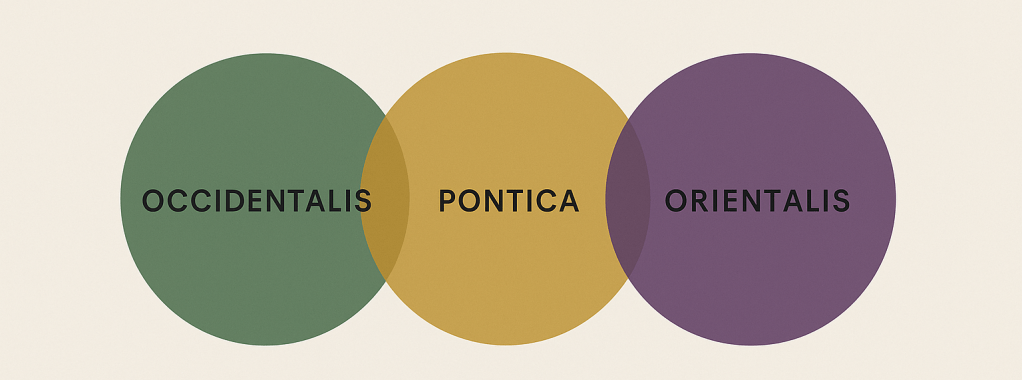
    These three groups – Occidentalis, Pontica, and Orientalis – formed a map of the grape world as people understood it in the nineteenth and early twentieth centuries. They were not precise in the way modern genetics is, but they captured something essential: that grapevines carry within them the memory of migration, the echoes of trade routes, and the imprint of ancient civilizations.

    Today, these “classical Proles” may seem like an old-fashioned framework, yet they remain powerful symbols. They remind us that grapes are more than agricultural commodities; they are living witnesses of history. At Ampelique, we believe these roots deserve to be revisited and retold – because every grape belongs not just to a family, but to a global story.

    A Historical Framework

    The idea of dividing Vitis vinifera into three Proles originated in the late 19th century, when ampelographers such as A. Negrul attempted to bring order to the chaos of grape diversity. With thousands of varieties cultivated across Europe, the Caucasus, and the Middle East, there was a need for structure.

    Negrul’s framework became the standard reference:

    Proles Occidentalis – the grapes of Western Europe. Proles Pontica – grapes associated with the Black Sea basin and Central Europe. Proles Orientalis – the vines of the East, especially the Caucasus, the Near East, and parts of Central Asia.

    Each Proles was not just a geographic label but also a cluster of shared traits – from berry size to climatic adaptation. For over half a century, this classification shaped both scientific research and viticultural practice. Even though DNA research has since redrawn the family tree, the three Proles remain part of ampelographic heritage.

    Proles Occidentalis – The Western Grapes

    The Occidentalis group covers grapes of Western and Central Europe, stretching from Iberia to Burgundy, the Rhine, and northern Italy. These varieties are often associated with cooler climates and wines of finesse, freshness, and longevity.

    Signature Varieties

    Pinot family – perhaps the most ancient and influential, with Pinot Noir, Pinot Gris, and Pinot Blanc. Chardonnay – a global traveler that originated in Burgundy. Riesling – the jewel of the Rhine and Mosel. Cabernet Sauvignon and Merlot – Bordeaux’s classic pair, with worldwide fame.

    Traits

    Occidentalis grapes tend to have smaller berries, thicker skins, and higher acidity. They are well suited to temperate, cooler regions where balance and aromatic complexity are prized.

    A Cultural Story

    Occidentalis grapes reflect the long history of viticulture in medieval and Renaissance Europe. Monks carried cuttings from monastery to monastery, kings demanded wines from their favorite crus, and merchants spread varieties across borders. The Pinot family, for instance, is over a thousand years old and may predate even Charlemagne’s reign. Chardonnay, once confined to a corner of Burgundy, now grows in nearly every wine country in the world.

    In Occidentalis, we see the story of refinement: the shaping of grapevines through centuries of selection for elegance, precision, and age-worthiness.

    Proles Pontica – The Black Sea and Central European Grapes

    The second group, Pontica, derives its name from the ancient “Pontus Euxinus” – the Black Sea. This region, encompassing modern-day Georgia, Romania, Hungary, and parts of the Balkans, has been a cradle of viticulture since antiquity.

    Signature Varieties

    Rkatsiteli – one of the oldest known cultivated grapes, native to Georgia. Furmint – the backbone of Hungary’s Tokaji, prized for its acidity and ability to produce both dry and sweet wines. Kadarka – once widespread in the Balkans, known for light, spicy reds. Plavac Mali – a descendant of ancient crossings, now the pride of Croatia.

    Traits

    Pontica grapes often combine adaptability with distinct character. Many thrive in continental climates with warm summers and cold winters. They can be high-yielding but also capable of remarkable depth when carefully managed.

    A Cultural Story

    The Pontica region has always been a crossroads. Greek colonists established vineyards along the Black Sea coast; Roman legions brought cuttings inland; Ottoman rule both suppressed and preserved local traditions. Grapes here are marked by resilience. They endured centuries of political upheaval, invasions, and shifting borders, yet they survived in family vineyards and village plots.

    Rkatsiteli, with its amber wines in Georgia’s qvevri tradition, embodies this endurance. Furmint, reborn after the devastations of phylloxera and communism, now stands again as a symbol of Hungary’s wine culture. Pontica grapes are not just varieties – they are cultural survivors.

    Proles Orientalis – The Eastern Grapes

    The third group, Orientalis, reaches back to the very cradle of viticulture: the Caucasus, the Fertile Crescent, and the Middle East. Archaeological evidence suggests that domesticated grapevines originated here around 8,000 years ago. To this day, the region is a treasure trove of genetic diversity.

    Signature Varieties

    Muscat family – ancient and aromatic, found in countless forms across East and West. Saperavi – a Georgian teinturier grape, producing deeply colored wines. Shiraz/Syrah (with debated origins) – historically linked to the East before spreading westward. Assyrtiko – native to Greece, though sometimes associated with Orientalis for its Eastern Mediterranean roots.

    Traits

    Orientalis grapes often have larger berries, bold aromatics, and high sugar potential. They thrive in warmer, sunnier climates and are often linked to wines of generosity, spice, and opulence.

    A Cultural Story

    Orientalis tells the tale of origins. The first winemakers of Mesopotamia, Armenia, and Georgia discovered fermentation here. Amphorae filled with wine residue, dating back 6,000–8,000 years, bear witness to humanity’s earliest relationship with the vine.

    This region also gave rise to the Muscat family, whose aromatic signature shaped the wines of ancient courts and trade networks. The Silk Road carried these grapes eastward into Central Asia and westward into Europe. In every Muscat berry lies a memory of ancient caravans and spice markets.

    Beyond Geography – A Living DNA of Trade and Migration

    What makes the three Proles fascinating is not only their geography but their symbolism. Grapes do not respect borders; they travel with people. A cutting in a shepherd’s bag, a vine planted by soldiers in a new province, a merchant carrying grafts across seas – this is how diversity spread.

    Occidentalis, Pontica, and Orientalis are less about strict scientific categories today and more about human history. They remind us that grapevines are living records of cultural exchange. Just as languages carry traces of migration, so do vines.

    The Modern View – Genetics Redraws the Map

    Since the late 20th century, DNA analysis has transformed our understanding of grape origins. We now know that many Occidentalis stars, such as Cabernet Sauvignon, are relatively recent crossings, while Pontica and Orientalis harbor some of the deepest genetic roots. The neat division into three Proles has given way to a more complex web of parentage and kinship.

    Yet the classical system still matters. It gave us a framework for thinking about grape diversity before the age of genomics. And it continues to inspire curiosity: to ask where a variety comes from, how it traveled, and what cultural threads it carries with it.

    Why the Three Proles Still Matter Today

    At Ampelique, we believe the three Proles remain powerful storytelling tools. They connect viticulture with history, geography, and identity. They offer a way to talk about grapes not just as technical varieties, but as part of humanity’s shared heritage.

    Occidentalis shows refinement and tradition. Pontica embodies resilience and crossroads. Orientalis speaks of origins and ancient abundance.

    Together, they remind us that wine is not only about terroir and taste – it is about continuity, survival, and memory.

    Conclusion – Every Grape Belongs to a Global Story

    Standing in a vineyard today, it is easy to see only the immediate: rows of vines, clusters of fruit, the harvest to come. Yet behind every grape is a story that stretches across millennia. The three classical Proles – Occidentalis, Pontica, Orientalis – may no longer be scientifically precise, but they remain symbols of that timeless truth: grapes are migrants, companions of humankind, and bearers of culture.

    As we trace their paths from Burgundy to Georgia, from the Caucasus to the Rhine, we realize that the vine is one of humanity’s greatest storytellers.

    At Ampelique, we celebrate these stories, old and new. Because every grape belongs not just to a family – but to a global narrative still unfolding.