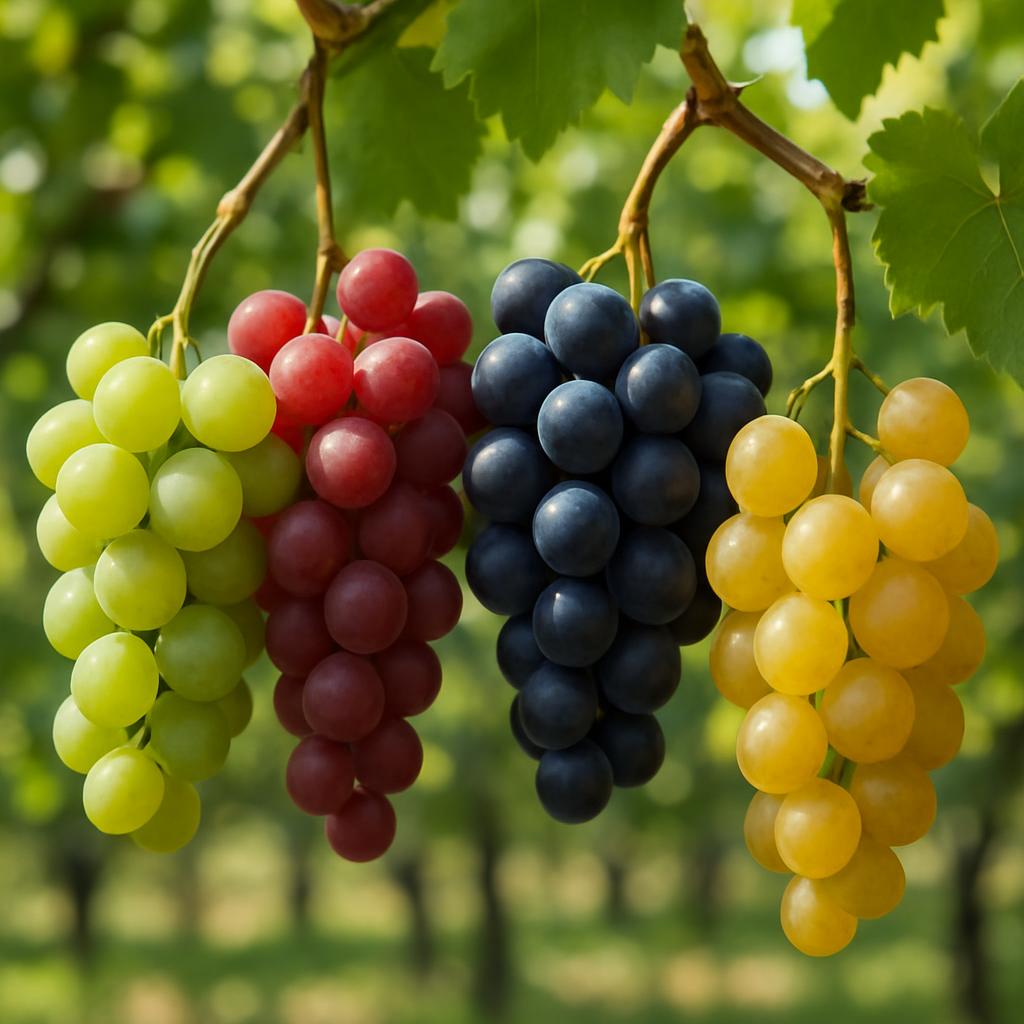
Ampelography – the study of grapevines – has always been a science of observation, classification, and storytelling. Long before the arrival of DNA sequencing and genetic databases, ampelographers sought to understand the dazzling diversity of Vitis vinifera, the common grapevine. They looked at the shape of leaves, the thickness of skins, the ripening cycles, and the flavors locked inside berries. Out of centuries of careful observation emerged one of the earliest and most influential systems of classification: the division of grapevines into three great families, or Proles.
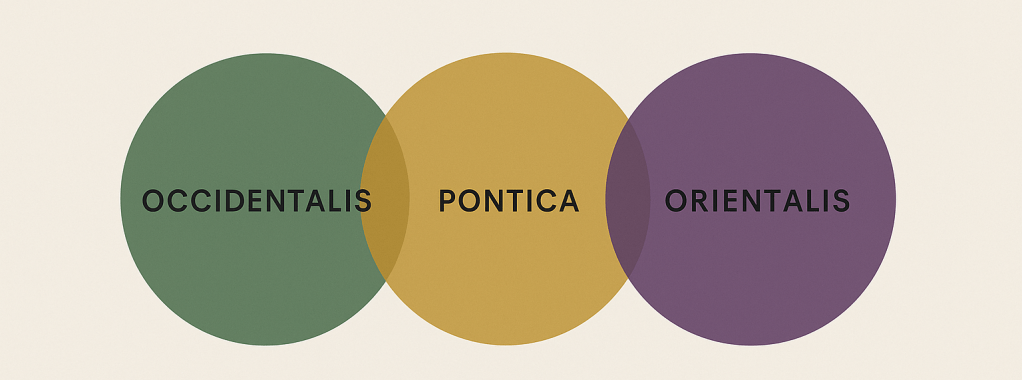
These three groups – Occidentalis, Pontica, and Orientalis – formed a map of the grape world as people understood it in the nineteenth and early twentieth centuries. They were not precise in the way modern genetics is, but they captured something essential: that grapevines carry within them the memory of migration, the echoes of trade routes, and the imprint of ancient civilizations.
Today, these “classical Proles” may seem like an old-fashioned framework, yet they remain powerful symbols. They remind us that grapes are more than agricultural commodities; they are living witnesses of history. At Ampelique, we believe these roots deserve to be revisited and retold – because every grape belongs not just to a family, but to a global story.
A Historical Framework
The idea of dividing Vitis vinifera into three Proles originated in the late 19th century, when ampelographers such as A. Negrul attempted to bring order to the chaos of grape diversity. With thousands of varieties cultivated across Europe, the Caucasus, and the Middle East, there was a need for structure.
Negrul’s framework became the standard reference:
Proles Occidentalis – the grapes of Western Europe. Proles Pontica – grapes associated with the Black Sea basin and Central Europe. Proles Orientalis – the vines of the East, especially the Caucasus, the Near East, and parts of Central Asia.
Each Proles was not just a geographic label but also a cluster of shared traits – from berry size to climatic adaptation. For over half a century, this classification shaped both scientific research and viticultural practice. Even though DNA research has since redrawn the family tree, the three Proles remain part of ampelographic heritage.
Proles Occidentalis – The Western Grapes
The Occidentalis group covers grapes of Western and Central Europe, stretching from Iberia to Burgundy, the Rhine, and northern Italy. These varieties are often associated with cooler climates and wines of finesse, freshness, and longevity.
Signature Varieties
Pinot family – perhaps the most ancient and influential, with Pinot Noir, Pinot Gris, and Pinot Blanc. Chardonnay – a global traveler that originated in Burgundy. Riesling – the jewel of the Rhine and Mosel. Cabernet Sauvignon and Merlot – Bordeaux’s classic pair, with worldwide fame.
Traits
Occidentalis grapes tend to have smaller berries, thicker skins, and higher acidity. They are well suited to temperate, cooler regions where balance and aromatic complexity are prized.
A Cultural Story
Occidentalis grapes reflect the long history of viticulture in medieval and Renaissance Europe. Monks carried cuttings from monastery to monastery, kings demanded wines from their favorite crus, and merchants spread varieties across borders. The Pinot family, for instance, is over a thousand years old and may predate even Charlemagne’s reign. Chardonnay, once confined to a corner of Burgundy, now grows in nearly every wine country in the world.
In Occidentalis, we see the story of refinement: the shaping of grapevines through centuries of selection for elegance, precision, and age-worthiness.
Proles Pontica – The Black Sea and Central European Grapes
The second group, Pontica, derives its name from the ancient “Pontus Euxinus” – the Black Sea. This region, encompassing modern-day Georgia, Romania, Hungary, and parts of the Balkans, has been a cradle of viticulture since antiquity.
Signature Varieties
Rkatsiteli – one of the oldest known cultivated grapes, native to Georgia. Furmint – the backbone of Hungary’s Tokaji, prized for its acidity and ability to produce both dry and sweet wines. Kadarka – once widespread in the Balkans, known for light, spicy reds. Plavac Mali – a descendant of ancient crossings, now the pride of Croatia.
Traits
Pontica grapes often combine adaptability with distinct character. Many thrive in continental climates with warm summers and cold winters. They can be high-yielding but also capable of remarkable depth when carefully managed.
A Cultural Story
The Pontica region has always been a crossroads. Greek colonists established vineyards along the Black Sea coast; Roman legions brought cuttings inland; Ottoman rule both suppressed and preserved local traditions. Grapes here are marked by resilience. They endured centuries of political upheaval, invasions, and shifting borders, yet they survived in family vineyards and village plots.
Rkatsiteli, with its amber wines in Georgia’s qvevri tradition, embodies this endurance. Furmint, reborn after the devastations of phylloxera and communism, now stands again as a symbol of Hungary’s wine culture. Pontica grapes are not just varieties – they are cultural survivors.
Proles Orientalis – The Eastern Grapes
The third group, Orientalis, reaches back to the very cradle of viticulture: the Caucasus, the Fertile Crescent, and the Middle East. Archaeological evidence suggests that domesticated grapevines originated here around 8,000 years ago. To this day, the region is a treasure trove of genetic diversity.
Signature Varieties
Muscat family – ancient and aromatic, found in countless forms across East and West. Saperavi – a Georgian teinturier grape, producing deeply colored wines. Shiraz/Syrah (with debated origins) – historically linked to the East before spreading westward. Assyrtiko – native to Greece, though sometimes associated with Orientalis for its Eastern Mediterranean roots.
Traits
Orientalis grapes often have larger berries, bold aromatics, and high sugar potential. They thrive in warmer, sunnier climates and are often linked to wines of generosity, spice, and opulence.
A Cultural Story
Orientalis tells the tale of origins. The first winemakers of Mesopotamia, Armenia, and Georgia discovered fermentation here. Amphorae filled with wine residue, dating back 6,000–8,000 years, bear witness to humanity’s earliest relationship with the vine.
This region also gave rise to the Muscat family, whose aromatic signature shaped the wines of ancient courts and trade networks. The Silk Road carried these grapes eastward into Central Asia and westward into Europe. In every Muscat berry lies a memory of ancient caravans and spice markets.
Beyond Geography – A Living DNA of Trade and Migration
What makes the three Proles fascinating is not only their geography but their symbolism. Grapes do not respect borders; they travel with people. A cutting in a shepherd’s bag, a vine planted by soldiers in a new province, a merchant carrying grafts across seas – this is how diversity spread.
Occidentalis, Pontica, and Orientalis are less about strict scientific categories today and more about human history. They remind us that grapevines are living records of cultural exchange. Just as languages carry traces of migration, so do vines.
The Modern View – Genetics Redraws the Map
Since the late 20th century, DNA analysis has transformed our understanding of grape origins. We now know that many Occidentalis stars, such as Cabernet Sauvignon, are relatively recent crossings, while Pontica and Orientalis harbor some of the deepest genetic roots. The neat division into three Proles has given way to a more complex web of parentage and kinship.
Yet the classical system still matters. It gave us a framework for thinking about grape diversity before the age of genomics. And it continues to inspire curiosity: to ask where a variety comes from, how it traveled, and what cultural threads it carries with it.
Why the Three Proles Still Matter Today
At Ampelique, we believe the three Proles remain powerful storytelling tools. They connect viticulture with history, geography, and identity. They offer a way to talk about grapes not just as technical varieties, but as part of humanity’s shared heritage.
Occidentalis shows refinement and tradition. Pontica embodies resilience and crossroads. Orientalis speaks of origins and ancient abundance.
Together, they remind us that wine is not only about terroir and taste – it is about continuity, survival, and memory.
Conclusion – Every Grape Belongs to a Global Story
Standing in a vineyard today, it is easy to see only the immediate: rows of vines, clusters of fruit, the harvest to come. Yet behind every grape is a story that stretches across millennia. The three classical Proles – Occidentalis, Pontica, Orientalis – may no longer be scientifically precise, but they remain symbols of that timeless truth: grapes are migrants, companions of humankind, and bearers of culture.
As we trace their paths from Burgundy to Georgia, from the Caucasus to the Rhine, we realize that the vine is one of humanity’s greatest storytellers.
At Ampelique, we celebrate these stories, old and new. Because every grape belongs not just to a family – but to a global narrative still unfolding.
 Ampelique
Leave a comment