Understanding Spain: Wine Heritage, Native Grapes, Regions, and Viticultural Identity
A country where wine is shaped by altitude, dryness, old vines, and a powerful sense of regional identity: Spain is one of Europe’s great vineyard countries, marked by high plateaus, Atlantic coasts, Mediterranean shores, mountain systems, slate hills, limestone valleys, and an extraordinary range of native grapes. From Rioja and Ribera del Duero to Galicia, Priorat, Jerez, and the islands, it offers a wine culture built not on one single national style, but on a deep and varied conversation between climate, place, and local varieties.
Spain speaks through sun and stone, through Atlantic rain and inland austerity, through old bush vines, pergolas by the sea, and grapes that seem to remember the landscapes that raised them.
Overview
Spain is one of the great vineyard countries of Europe, yet it rarely presents itself through a single, unified wine identity. Its landscapes are too varied, its climates too contrasting, and its grape heritage too broad for that. The green Atlantic northwest, the high inland meseta, the Mediterranean east, the Andalusian south, the volcanic islands, and the steep slate hills of Catalonia all produce different viticultural answers to the same underlying question: how does the vine belong to this place?
That question matters especially in Spain because regional identity remains so strong. Rioja, Ribera del Duero, Rías Baixas, Priorat, Jerez, Ribeira Sacra, Bierzo, Rueda, Toro, Montsant, Mallorca, Tenerife, and many other regions speak with distinct local accents. Some are shaped by altitude and drought, others by Atlantic humidity, others by chalk, albariza, granite, or slate. Spain therefore does not offer one model of wine, but a series of regional worlds bound together by agricultural resilience, local grapes, and long cultural continuity.
For Ampelique, Spain matters because it combines historical depth with an extraordinary living diversity. It is a country of famous grapes and lesser-known ones, of large classic regions and marginal heroic vineyards, of old bush-trained vines and Atlantic pergolas, of oxidative traditions and mineral mountain reds. It is one of the most rewarding countries to explore through grapes rather than through labels alone.
Climate & Geography
Spain’s geography is one of contrast. Much of the country is elevated, and that altitude matters. The inland plateau moderates heat in some areas while still retaining a dry, continental severity. Elsewhere, mountain ranges create barriers, rain shadows, and dramatic changes in exposure. Along the Atlantic coast, the climate becomes greener, cooler, and more humid, especially in Galicia and nearby zones. Along the Mediterranean, light and warmth are stronger, though altitude and sea influence can still preserve freshness. In Andalusia, sunlight and chalky soils help define one of the world’s most distinctive fortified wine cultures.
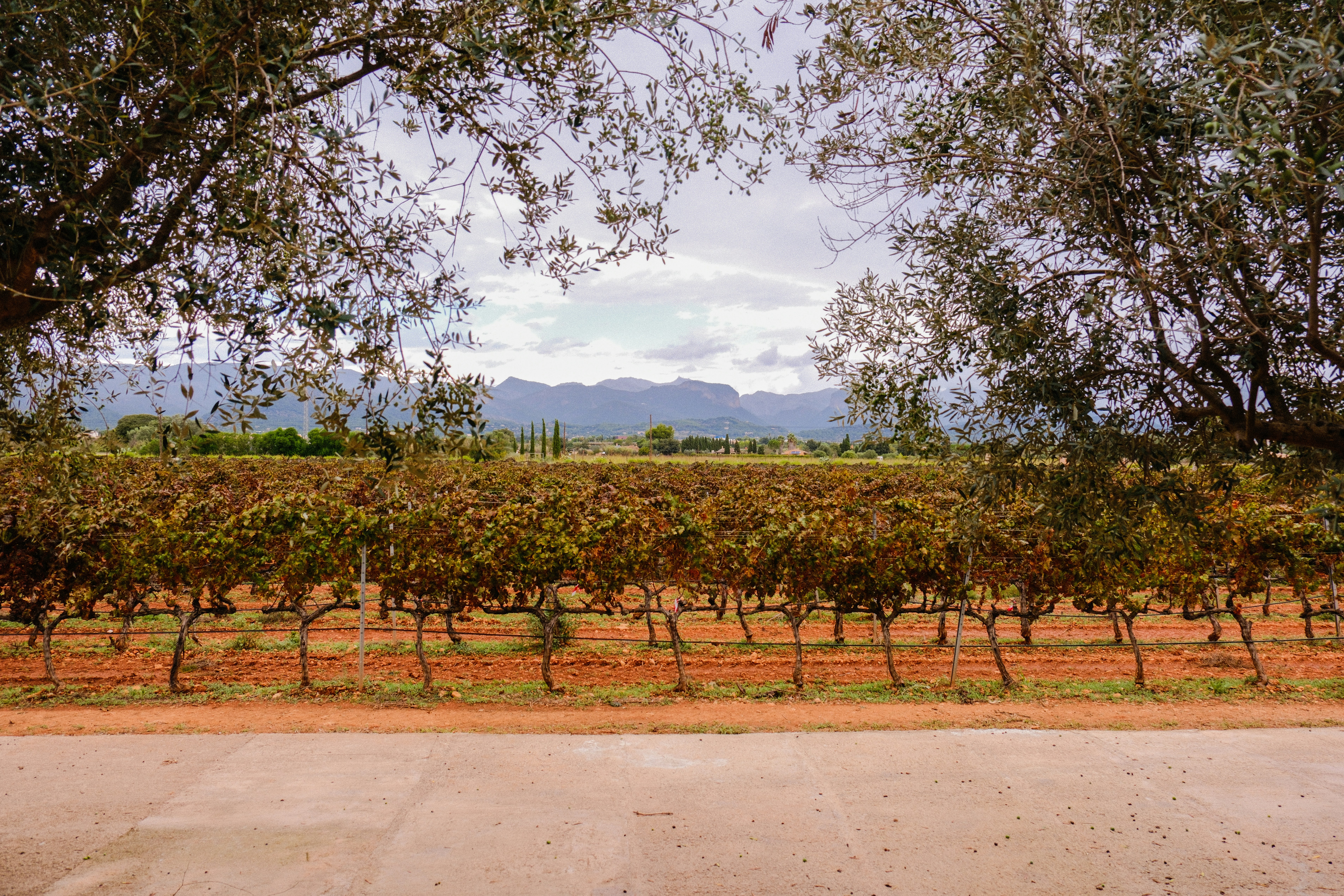
Spain is also a country of very different vineyard architectures. In dry regions, old bush vines remain essential, especially where water is scarce and shade within the canopy becomes a survival tool. In Rías Baixas, pergola-trained Albariño responds to rain, airflow, and Atlantic conditions. In Priorat, steep slopes and slate soils push the vine toward concentration and struggle. In Jerez, the brilliant white albariza soils store winter rain and help sustain vines through the long dry season. These are not merely scenic differences. They are working landscapes that shape the behavior of the grape itself.
This is why Spain rewards geographic reading. The country’s wine culture becomes clearer when you understand how inland austerity differs from Atlantic freshness, how volcanic island viticulture differs from Rioja’s river valleys, and how the language of soil changes from llicorella slate to chalk, granite, sand, or limestone. Spain is not one vineyard condition repeated many times. It is a mosaic of agricultural climates.
Grape Heritage
Spain’s grape heritage is both famous and deeper than its fame. Tempranillo is the country’s great red reference point, but it appears under regional names and different local expressions, from Rioja to Ribera del Duero and beyond. Garnacha has enormous historical importance, Monastrell defines parts of the southeast, and Mencía, Bobal, Cariñena, Graciano, Sumoll, Trepat, Listán Negro, and many other grapes widen the picture. The whites are equally compelling: Albariño, Verdejo, Godello, Xarel·lo, Viura, Palomino, Pedro Ximénez, Airén, and many local cultivars each belong to different climates and cultural settings.
One of the most interesting things about Spain is that regional identity often takes precedence over varietal branding. In many contexts, people first think of Rioja, Ribera, Jerez, Rías Baixas, or Priorat, and only then of the grapes inside those names. This can make Spain especially rewarding for a grape library, because it encourages deeper reading. The variety is there, but it often arrives through place, tradition, and denomination rather than through isolated varietal fame.
That said, native grapes remain central to Spain’s character. Albariño is inseparable from Atlantic Galicia. Verdejo remains closely tied to Rueda. Tempranillo defines some of the country’s best-known reds. Palomino, Pedro Ximénez, and Moscatel are crucial to the singular world of Jerez. Garnacha and Cariñena continue to matter deeply in old-vine Mediterranean and northeastern contexts. Spain’s strength lies not only in preserving these grapes, but in allowing them to keep speaking in local dialects.
Important Regions
- Rioja: Spain’s most famous historic region, strongly associated with Tempranillo, blending traditions, and an internal landscape of subzones.
- Ribera del Duero: a high inland region where Tempranillo, locally called Tinto Fino or Tinta del País, takes on depth, structure, and altitude-driven intensity.
- Rías Baixas: Atlantic Galicia, home to Albariño and one of Spain’s clearest expressions of coastal freshness.
- Priorat: a steep Catalan landscape of slate soils, old vines, Garnacha, Cariñena, and concentrated mountain-Mediterranean reds.
- Jerez / Marco de Jerez: Andalusia’s singular world of albariza soils, Palomino, Pedro Ximénez, Moscatel, and the culture of Sherry.
These five give a strong first map of Spain, but they are only part of the picture. Rueda is essential for Verdejo, Bierzo for Mencía, Toro for powerful inland Tempranillo, Montilla-Moriles for Pedro Ximénez and oxidative traditions, Ribeira Sacra for steep Atlantic-influenced viticulture, and the Canary Islands for volcanic, wind-shaped, often ungrafted old-vine cultures. Spain’s richness lies in how widely the vineyard story continues beyond the best-known names.
Wine Styles
Spain produces a remarkably broad range of wine styles: structured oak-aged reds, Atlantic whites of brightness and salinity, mountain reds, sparkling wines, Mediterranean rosados, oxidative and biologically aged wines, naturally sweet wines, island wines shaped by wind and lava, and many local styles that remain closely tied to regional habits of eating and farming. This breadth is not accidental. It grows out of climate contrast, old vines, and the persistence of local grapes.
Rioja can move from fresh and fruit-led to long-aged and architectural. Ribera del Duero often brings darker fruit, depth, and inland tension. Rías Baixas offers a brighter Atlantic register. Priorat can be mineral, dense, and sternly beautiful. Jerez exists almost outside ordinary table-wine categories, with a language of biological ageing, oxidative ageing, fortification, flor, and sun-dried sweetness that gives Spain one of the most singular wine cultures in the world. Even within a single country, style moves from luminous and saline to deep, warm, savoury, oxidative, or mountain-sharp.
This is what makes Spain so rewarding to study. It shows how the vine adapts to scarcity, wind, altitude, humidity, chalk, slate, and maritime pressure, and how cultures of vinification emerge around those conditions. Spain is not merely diverse. It is structurally diverse, with each style grounded in a particular agricultural logic.
Signature Grapes
- Tempranillo: Spain’s great red reference grape, central to Rioja, Ribera del Duero, and many inland regions.
- Albariño: one of Spain’s defining white grapes, especially associated with Atlantic Galicia and Rías Baixas.
- Garnacha: A historically important red grape with broad Spanish roots and many regional expressions.
- Verdejo: A major white grape of Rueda, valued for freshness, aromatics, and regional identity.
- Monastrell: An important Mediterranean red grape, especially in the southeast.
- Palomino: The key grape of the drier styles of Sherry and one of Spain’s most culturally distinctive white varieties.
Other names deserve equal attention: Godello, Mencía, Cariñena, Graciano, Pedro Ximénez, Xarel·lo, Viura, Bobal, Treixadura, Listán Blanco, Listán Negro, and many regional cultivars that still shape local identities. But these six form a strong first route into Spain as a country of both famous and deeply rooted grapes.
Why Spain matters on Ampelique
Spain matters because it shows how vines adapt to scarcity, altitude, and strong local conditions without losing identity. It is one of the countries where old viticultural forms still remain legible in the landscape: bush vines in dry inland zones, pergolas in rainy Atlantic regions, old terraces, volcanic parcels, and chalk-based systems of survival in the south. These are not only aesthetic details. They are clues to the deeper agricultural intelligence of place.
For Ampelique, Spain is essential because it demonstrates the full meeting point of grape, landscape, and regional memory. The country’s best-known wines are only part of the story. The larger story lies in the way native grapes continue to hold ground, how local names still matter, and how very different vineyard worlds coexist within one national border. Spain is one of the clearest places to see that a grape library is also a map of adaptation.
Where to start exploring
If you want to begin exploring Spain, start with contrast. Read Rioja beside Rías Baixas, Ribera del Duero beside Jerez, Priorat beside the Canary Islands, inland plateau regions beside the Atlantic fringe. Compare Tempranillo with Albariño, Palomino with Garnacha, and Verdejo with Godello. Spain becomes much clearer when you see it not as one warm-country stereotype, but as a sequence of regional environments.
You can also begin through grapes and let them lead you into their home territories. Follow Tempranillo into Rioja and Ribera, Albariño into Galicia, Verdejo into Rueda, Garnacha into old Mediterranean and northeastern landscapes, Monastrell into the southeast, and Palomino into Jerez. In Spain, the grape often opens the door, but the land explains the rest.
Quick facts for grape geeks
| Field | Details |
|---|---|
| Country | Spain |
| Continent | Europe |
| Main climate influences | Atlantic, continental, Mediterranean, mountain, volcanic, and inland high-plateau influences |
| Key vineyard landscapes | High plateaus, river valleys, slate hills, Atlantic coasts, Mediterranean slopes, chalky southern soils, volcanic islands |
| Known for | Strong regional identities, native grape diversity, old vines, Tempranillo-based reds, Atlantic whites, and the singular traditions of Sherry |
| Important grape colors | Both white and red, with major regional specialization in each |
| Notable native grapes | Tempranillo, Albariño, Garnacha, Verdejo, Monastrell, Godello, Mencía, Cariñena, Palomino, Pedro Ximénez, Xarel·lo, Bobal |
| International grapes present | Cabernet Sauvignon, Merlot, Syrah, Chardonnay, Sauvignon Blanc, Pinot Noir, and others in selected regions |
| Best starting point | Begin with Rioja, Ribera del Duero, Rías Baixas, Priorat, and Jerez, then move outward to Rueda, Bierzo, Toro, the Canary Islands, and Mediterranean southeast regions |
 Ampelique