Understanding Italy: Wine Heritage, Native Grapes, Regions, and Viticultural Identity
A country where the vine feels less like a crop than a cultural language: Italy is one of the richest grape landscapes in the world, shaped by mountains, coastlines, islands, volcanic soils, old rural knowledge, and an astonishing diversity of native varieties. From Alpine valleys to Mediterranean terraces, it offers not one wine identity but many, each rooted in place, tradition, and the long memory of cultivation.
In Italy, grapes do not belong to one climate or one style. They belong to hills, islands, dialects, kitchens, stones, winds, and the patience of places that have cultivated vines for centuries.
Overview
Italy is one of the natural centers of the wine world, but its importance is not only a matter of fame or scale. What makes the country so compelling is its internal diversity. Viticulture exists across all of Italy’s twenty regions, and each of those regions carries its own rhythm of climate, topography, grape material, and historical identity. To speak of “Italian wine” as though it were one coherent style is to miss the point. Italy is a mosaic.
That mosaic is held together by remarkable grape biodiversity. Modern Italian wine culture rests not only on celebrated names such as Barolo, Chianti Classico, Brunello, Etna, Soave, or Taurasi, but also on a deep reserve of local and regional cultivars. Some are internationally known, many remain local, and together they form one of the richest ampelographic landscapes anywhere. For Ampelique, this is exactly what makes Italy essential: it is a country where grape identity still feels connected to lived geography.
Italy is also a country where old and new coexist without entirely cancelling one another. Ancient training systems, heroic terraces, volcanic vineyards, mountain routes, and island traditions continue to exist alongside modern cellar practice, clonal work, and renewed curiosity about indigenous material. The result is not a neat national model, but a layered culture in which vine and place remain closely linked.
Climate & geography
Few countries offer such a wide range of vineyard conditions. Italy stretches from Alpine foothills and cool northern valleys to warmer inland plains, Mediterranean coasts, and island landscapes shaped by sea light and drought. The Apennines run like a backbone through the peninsula, influencing exposure, altitude, water balance, and regional weather patterns. Around them lie river basins, limestone ridges, volcanic slopes, marine terraces, and hills that have been under vine for generations.
This variety of terrain creates multiple viticultural Italies at once. In the north, altitude and continental conditions can preserve freshness and detail. In central Italy, hills and mixed exposures often give structure without sacrificing balance. In the south and on the islands, warmth becomes more pronounced, yet elevation, sea influence, and volcanic or calcareous soils can still bring lift and definition. Italy is therefore not simply warm, nor simply Mediterranean. It is transitional, layered, and full of local exceptions.
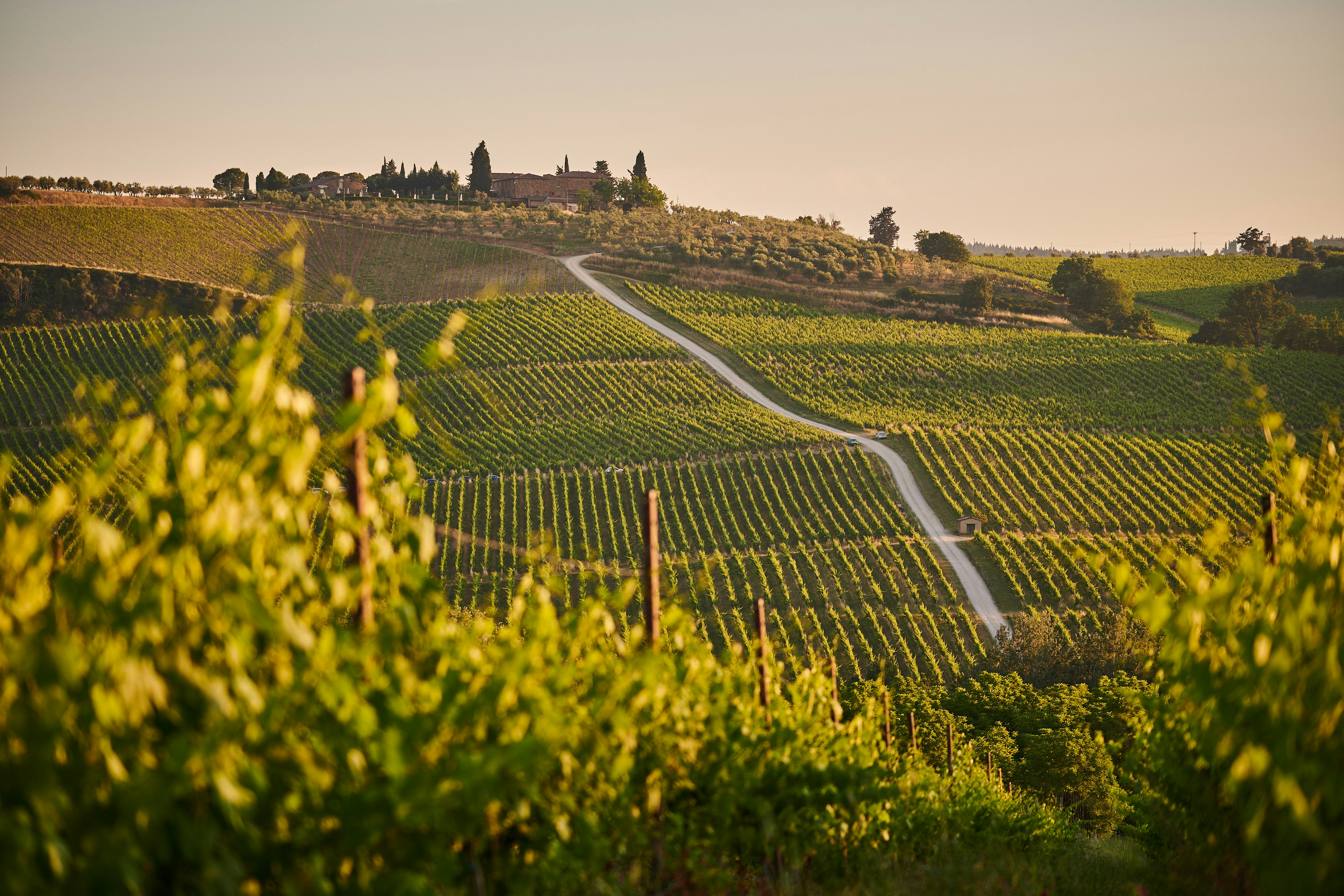
Some of the country’s most memorable vineyard images come directly from this geography: the Langhe’s ordered hills, Liguria’s terraces above the sea, the volcanic slopes of Etna, the inland heights of Irpinia, the chalky ridges of central regions, and the head-trained vines of Pantelleria. Together they show that Italy is not one vineyard landscape repeated twenty times, but a succession of distinct environments, each asking different things from the vine.
Grape heritage
Italy’s greatest gift to the grape world may be its biodiversity. More than five hundred officially recognized native wine grape varieties are currently cited in Italian wine education and trade material, and that number alone suggests the scale of the country’s inherited vine culture. Yet the real meaning of this diversity is not numerical. It lies in the fact that so many varieties still feel embedded in local identity: grapes tied to one province, one hillside, one coastline, one dialect, or one culinary tradition.
Sangiovese remains a vast and many-sided presence in central Italy. Nebbiolo gives some of the north’s most structured and site-sensitive reds. Aglianico carries depth and age-worthiness in the south. Fiano, Verdicchio, Carricante, Garganega, Vermentino, Greco, Nero d’Avola, Nerello Mascalese, Corvina, Montepulciano, Negroamaro, and hundreds of lesser-known cultivars all expand the picture. What matters is that Italy never reduced itself to a handful of international standards. Local grapes still matter here, and often they matter most.
That makes Italy especially meaningful on Ampelique. It is one of the clearest places to see how a grape can be more than a variety name. It can be a vessel of memory, a response to terrain, a marker of continuity, and sometimes the key to understanding a whole region more deeply than any appellation map alone can do.
Important regions
- Piedmont – hill country of Nebbiolo, Barbera, and Dolcetto, with the UNESCO vineyard landscapes of Langhe, Roero, and Monferrato.
- Tuscany – the spiritual homeland of Sangiovese in many forms, from Chianti Classico to Brunello di Montalcino and beyond.
- Veneto – one of the country’s most influential wine regions, spanning sparkling hills, lake zones, and important historic appellations.
- Sicily – an island of Mediterranean breadth, native grapes, and dramatic contrast, from southeastern DOC areas to the volcanic precision of Etna.
- Campania – a region where altitude, volcanic soils, and ancient vine culture shape Aglianico, Fiano, Greco, and coastal expressions.
Many other regions deserve equal attention: Friuli-Venezia Giulia for white precision, Marche for Verdicchio and recovered native grapes, Abruzzo for Montepulciano and mountain-to-sea transitions, Liguria for narrow terraces above the water, Sardinia for island distinctiveness, and Trentino-Alto Adige for Alpine clarity. But these five offer a strong first route into the country’s larger story.
Wine styles
Italy produces an extraordinary breadth of wine styles: mineral mountain whites, age-worthy tannic reds, savoury coastal reds, sparkling wines, sweet passiti, oxidative traditions, volcanic whites, rosati, amphora-informed experiments, and wines of great local specificity that resist easy export categories. This diversity is not accidental. It grows from the meeting of native material with varied terrain and long regional habits of cultivation and vinification.
In some places, freshness and verticality dominate. In others, warmth and texture. Piedmont can be structured and aromatic, Tuscany firm and savoury, Campania both volcanic and lifted, Sicily bright with sea and sun yet surprisingly mineral at altitude, and Veneto capable of everything from tension to softness depending on zone and grape. Italian wine is therefore best approached not through one national stereotype, but through families of local expression.
Even within one grape, style can fragment beautifully. Sangiovese alone shifts from one region or denomination to another. Fiano changes voice inland and by the sea. Aglianico can become stern, volcanic, floral, or deeply structured depending on altitude and origin. This is why Italy remains so compelling to readers of a grape library: it shows how style emerges from context, not only from variety names.
Signature grapes
- Sangiovese – the central red thread of Italy, especially powerful in Tuscany.
- Nebbiolo – noble northern red of perfume, tannin, and site sensitivity.
- Aglianico – deep, structured southern red with volcanic affinity and ageing power.
- Fiano – one of Italy’s most compelling white grapes, especially vivid in Campania.
- Verdicchio – a distinctive central Italian white capable of freshness, texture, and longevity.
- Nerello Mascalese – a key grape of Etna, shaped by altitude, lava, and mountain light.
Other names could easily stand beside them: Garganega, Carricante, Vermentino, Nero d’Avola, Corvina, Montepulciano, Greco, Negroamaro, and many more. But these six form a strong first constellation for understanding Italy through grape identity rather than through labels alone.
Why Italy matters on Ampelique
Italy matters because it demonstrates, perhaps more clearly than almost any other country, that grape culture is inseparable from place. Here the vine is not merely an agricultural raw material for finished wine styles. It is part of a local ecosystem of food, naming, landscape, memory, and regional pride. The grape often remains close to its soil.
For Ampelique, that makes Italy more than a major wine country. It makes it a living archive of viticultural belonging. It shows how diversity survives, how old cultivars remain relevant, and how geography leaves marks not only on flavour but on the identity of the vine itself. Italy is one of the places where a grape library can truly become a cultural map.
Where to start exploring
If you want to begin exploring Italy, start with contrast. Read Piedmont beside Sicily, Tuscany beside Campania, Liguria beside Marche. Compare a mountain-influenced white with a volcanic white, a structured inland red with a coastal red, a famous grape with a nearly forgotten one. Italy becomes clearer when it is read relationally rather than all at once.
A second good route is to begin with the native grapes. Follow Sangiovese, Nebbiolo, Fiano, Aglianico, Verdicchio, Carricante, Vermentino, Nero d’Avola, or Corvina into their home landscapes. The country opens through the varieties themselves.
Quick facts for grape geeks
| Field | Details |
|---|---|
| Country | Italy |
| Continent | Europe |
| Main climate influences | Alpine, continental, Mediterranean, maritime, and volcanic influences |
| Key vineyard landscapes | Mountain valleys, limestone hills, volcanic slopes, coastal terraces, inland plateaus, islands |
| Known for | Native grape diversity, regional wine identity, strong food-and-wine culture, and deep historical continuity |
| Important grape colors | Both white and red, with major native diversity in each |
| Notable native grapes | Sangiovese, Nebbiolo, Aglianico, Fiano, Verdicchio, Nerello Mascalese, Garganega, Vermentino, Carricante, Nero d’Avola |
| International grapes present | Chardonnay, Merlot, Cabernet Sauvignon, Pinot Noir, Sauvignon Blanc, Syrah, and others |
| Best starting point | Begin with Piedmont, Tuscany, Sicily, Campania, and one lesser-known region such as Marche or Liguria |
| Tag / archive link | italy |
 Ampelique