Mammolo
Mammolo is an old Tuscan red grape, remembered for the violet scent it can bring to wine. Once grown alongside Sangiovese in traditional vineyards, it survives today in small plantings and collections. Its history is complicated: several distinct vines have carried the Mammolo name, including forms associated with Valdarno, making its identity as interesting as its delicate, fragrant red wines.

Mammolo has a gentle, approachable character, favouring freshness over weight. Its soft tannins and lively acidity give the wine an easy charm, while subtle red fruit and spice add interest. It feels expressive without demanding too much attention.
A relaxed evening around the dinner table offers the perfect setting for this approachable red. Enjoy it slightly chilled with homemade pasta, grilled vegetables or Tuscan cured meats. Its gentle structure makes it especially enjoyable when food and conversation take their time.
A trace of violet, a taste of Tuscany’s past
About Mammolo
A grape from Tuscany’s older vineyards
For centuries, Tuscany’s vineyards contained far more than Sangiovese. Mammolo was one of the many local grapes grown alongside it, valued for the floral fragrance it could bring to red wine. Its name is thought to come from viola mammola, the Italian name for the sweet violet.
Mammolo also has a place in the Valdarno, the valley running through Tuscany near Arezzo. When researchers began looking for neglected grape varieties in old vineyards here, they found Mammolo among the vines worth preserving. Their work helped document a part of Tuscan wine history that was gradually disappearing from cultivation.
More than one vine called Mammolo
The name may be familiar, but the grape’s identity is surprisingly complicated. Tuscan writers described different kinds of Mammolo centuries ago, and modern research has shown that the same name has been used for genetically distinct vines. They cannot all be treated as one variety.
That is also why Mammolo should not automatically be considered identical to Sciaccarello, the red grape grown in Corsica. Some plants once called Mammolo have matched Sciaccarello, but researchers have also identified Mammolo plants that are genetically different. Older growers often relied on local names, making it difficult to know exactly which vines historical descriptions referred to.
A generous vine with a late harvest
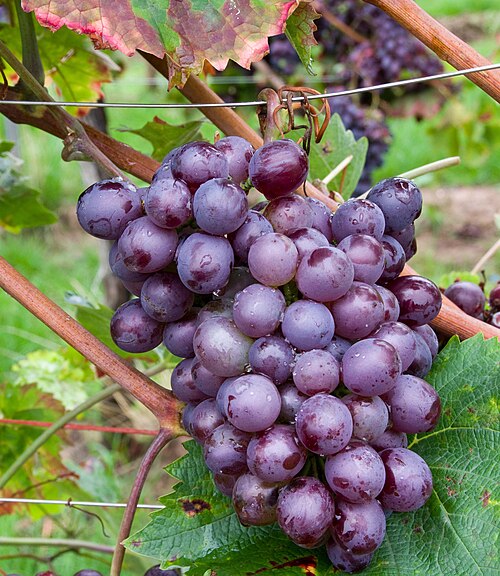
The Mammolo studied around Arezzo can produce substantial crops. It has relatively large bunches and berries with purplish skins. Researchers also found that it develops and ripens comparatively late, making the final part of the growing season important. It is moderately sensitive to fungal diseases, so careful vineyard management remains necessary.
These characteristics are useful, but they are not necessarily shared by every vine historically called Mammolo. Different local forms have their own growing habits. This is one reason the work of identifying and preserving old plants matters. It allows growers to understand what they actually have in their vineyards.
A floral note in Tuscan red wine
Mammolo is best known for its association with violets. In traditional Tuscan blends, particularly those built around Sangiovese, it could contribute fragrance without dominating the wine. Wines made entirely from Mammolo remain unusual, although some producers now give it a bottle of its own.
These wines can be fresh and fragrant, with red fruit, gentle tannins and a fairly light feel. Styles differ between producers, and no single tasting description fits every plant carrying the name. Still, Mammolo offers an appealing alternative to the fuller, more powerful reds often associated with Tuscany.
Its future is unlikely to depend on large vineyard plantings. Preserving old vines, understanding their differences and making small quantities of wine may prove just as valuable. Without those efforts, some of Tuscany’s lesser known grape varieties could disappear before their full potential is understood.
Quick Facts
A compact technical view, showing only the information entered for this grape.
Identity & Place
Vineyard & Vine
Image cluster: Ursula Brühl, Julius Kühn-Institut (JKI) Bundesforschungsinstitut für Kulturpflanzen Institut für Rebenzüchtung Geilweilerhof – 76833 Siebeldingen – GERMANY, CC BY-SA 4.0, via Wikimedia Commons
Some of Tuscany’s most interesting stories still grow on forgotten vines
Sources & further reading
- CRA Viticulture Research Unit, Arezzo – Mammolo: Valdarno Heritage, Historical Distribution, Local Grape Recovery, Vineyard Conservation, Grape Diversity and Experimental Winemaking
- Vivai Rauscedo – Mammolo: Tuscan Origin, Growing Regions, Leaf, Cluster, Berry, Skin Colour, Yield, Violet Aromas, Wine Style and Traditional Blending
- Storchi et al. (2016), University of Pisa – Mammolo: Genetic Diversity, Historical Synonyms, Distinct Genotypes, Clonal Identity and Grape Classification
- Plantgrape (INRAE and IFV) – Sciaccarello: Corsican Cultivation, Mammolo Synonym, Sciaccarellu Name, Genetic Identity, Parentage, Berry, Climate, Disease Sensitivity and Wine Style
- Piandaccoli – Mammolo: Tuscan Wine Heritage, Historical References, Leaf, Cluster, Yield, Violet and Cherry Aromas, Light Wine Colour and Gentle Tannins
Learn more about our research and editorial approach.