Understanding Georgia: Wine heritage, native grapes, regions, and viticultural identity
A country where wine is inseparable from deep time, native grapes, and a living bond between vine and vessel: Georgia is one of the foundational countries of the vine, with a wine culture shaped by millennia of cultivation, mountain edges, river valleys, village traditions, qvevri winemaking, and an extraordinary wealth of indigenous grape varieties. From Kakheti and Kartli to Imereti, Racha-Lechkhumi, and the humid western regions, Georgia offers not one model of wine, but a constellation of places where grape, landscape, and inherited practice still speak in unusually direct ways.
Georgia does not tell the story of wine through fashion or export categories. It tells it through buried clay vessels, old village knowledge, mountain geography, and grapes that still belong unmistakably to the places that raised them.
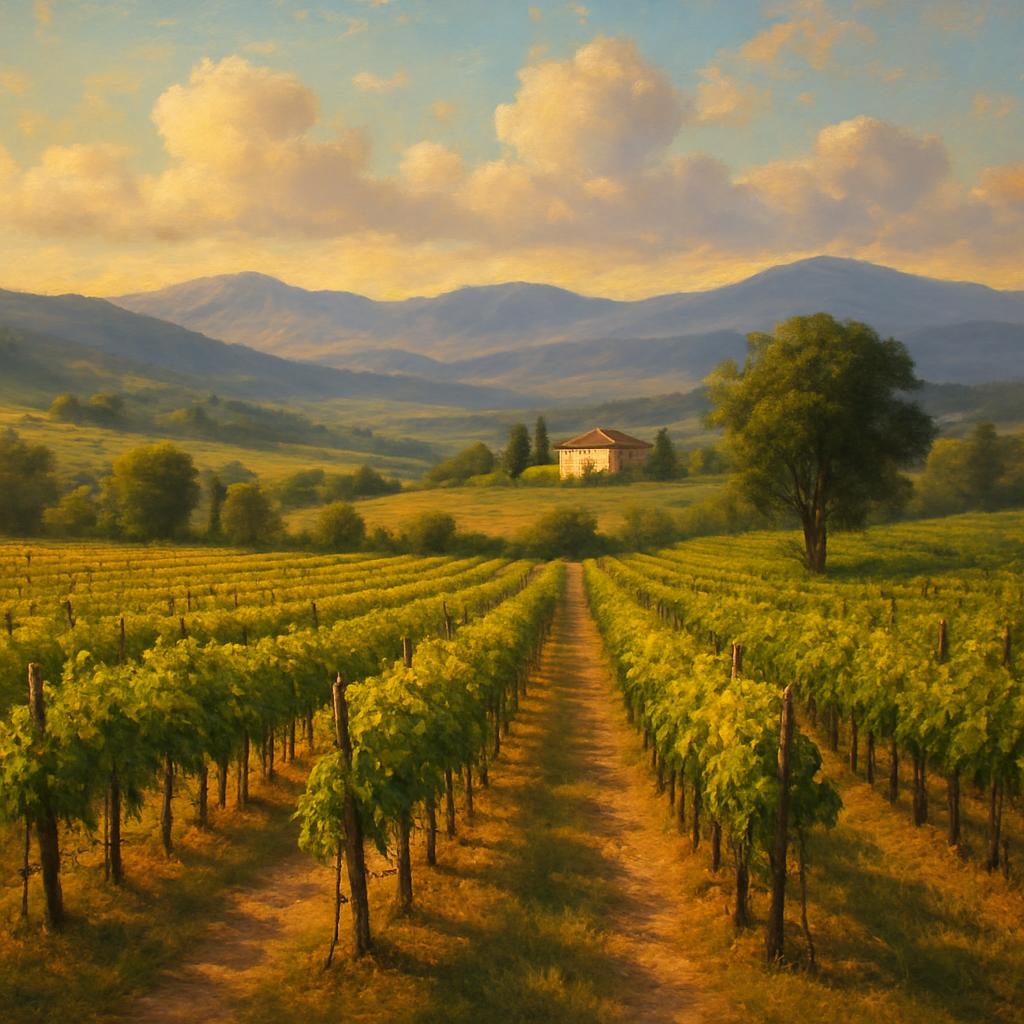
Replace this image with a vineyard landscape from Georgia when ready.
Overview
Georgia remains one of the most essential reference points in the wine world, but its importance lies in more than prestige or romantic antiquity. What makes the country so compelling is the way wine still feels rooted in native grapes, village practice, and distinct regional landscapes. Kakheti does not think like Imereti. Kartli does not move like Racha-Lechkhumi. The humid western zones are not the same as the drier east. Georgia is less a single wine nation than a collection of historical vineyard worlds, each with its own climate logic, grape traditions, and inherited methods.
This internal diversity is one of Georgia’s defining strengths. Some regions are closely associated with qvevri traditions and amber wines, others with fresher western styles, naturally semi-sweet reds, or mountain-framed local identities. In one part of the country, altitude and continental influence are central; in another, humidity, river valleys, or limestone and alluvial soils. The Georgian vineyard is therefore not simply ancient. It is alive, differentiated, and still deeply attached to local grape languages.
For Ampelique, Georgia matters because it helps explain how grape identity, place, and inherited practice can remain tightly interwoven across millennia. It is one of the clearest places on earth where the grape still feels inseparable from regional culture and historical continuity.
Climate & geography
Georgia’s vineyard geography is remarkably varied for a relatively small country. The Greater Caucasus helps shield parts of the country from colder northern influences, while valleys, foothills, and river systems create a complex pattern of exposures and mesoclimates. Eastern Georgia is generally drier and more continental in feel, especially in Kakheti, while western Georgia is more humid, greener, and often more rain-affected. Altitude matters profoundly in many zones, as do local wind patterns and the relationship between mountains and valley floors.
Rivers matter deeply here. The Alazani and Iori valleys are central to the eastern wine landscape, while western regions are shaped by different river systems, rainfall patterns, and topographies. So too do soils. Alluvial deposits, limestone, clay, sand, marl, and stonier mountain-influenced formations all play a role in determining which grapes thrive and how they speak. In some places this means freshness and acidity; in others, deeper colour, texture, phenolic grip, or aromatic lift.
Georgia is therefore best understood through its vineyard landscapes rather than through one national climate label. Kakheti does different work from Imereti. Kartli does not produce the same viticultural rhythm as Guria or Samegrelo. Each zone asks something different of the vine, and this is part of what gives Georgian wine its extraordinary depth.
Grape heritage
Georgia is one of the great grape heritage countries of the world. It is home to an extraordinary reserve of indigenous vine material and remains internationally associated with hundreds of native grape varieties, even if only a smaller number are central to commercial production today. This alone would make Georgia essential to a grape-focused project. But what matters just as much is the way those grapes still remain tied to living regional traditions rather than surviving only as botanical memory.
Saperavi and Rkatsiteli are the best-known ambassadors of Georgian grape culture, but they sit within a much broader native landscape that includes varieties such as Mtsvane, Kisi, Khikhvi, Chinuri, Goruli Mtsvane, Tsitska, Tsolikouri, Krakhuna, Aleksandrouli, Mujuretuli, Ojaleshi, Chkhaveri, and many others. Some are strongly identified with specific regions. Others move across broader areas. Together they form one of the richest indigenous grape archives in the wine world.
That archive includes both widely planted grapes and highly local ones, both white and red, both qvevri-associated and more modernly styled expressions. In this way Georgia shows multiple models of grape identity coexisting within one country, each valid, each deeply rooted.
Important regions
- Kakheti – the country’s most important and internationally visible wine region, strongly associated with qvevri traditions, Rkatsiteli, and Saperavi.
- Kartli – historically significant and often associated with fresher whites, sparkling potential, and grapes such as Chinuri and Goruli Mtsvane.
- Imereti – a major western region with distinct white grape traditions including Tsitska, Tsolikouri, and Krakhuna, and a different relationship to climate and extraction.
- Racha-Lechkhumi – a mountainous region best known for naturally semi-sweet red traditions and grapes such as Aleksandrouli and Mujuretuli.
- Guria and Samegrelo – humid western regions with important local grapes such as Chkhaveri and Ojaleshi and highly distinctive regional character.
Many other regions and microzones are equally important to the full picture, especially as Georgia’s PDO and appellation culture becomes better understood internationally. But these five offer a strong first map of Georgia as a country of diverse vineyard identities rather than one national style.
Wine styles
Georgia produces a remarkable range of wine styles: fresh whites, textured skin-contact whites, deep reds, perfumed reds, naturally semi-sweet wines, sparkling wines in some regions, and above all qvevri wines that remain one of the country’s most distinctive contributions to world wine culture. The point is not only stylistic variety, but continuity. In Georgia, style often feels tied not just to grape and climate, but to inherited methods of fermentation, extraction, and vessel choice.
Kakheti may be associated with fuller qvevri whites and structured Saperavi-based reds. Imereti often shows a lighter relationship to skin contact and a fresher western logic. Kartli can bring lift and tension. Racha-Lechkhumi may move toward aromatic mountain-framed red wines and semi-sweet traditions. The country does not impose one taste; it allows multiple regional answers to emerge, often with a stronger sense of historical method than in many more globally standardised wine cultures.
This diversity is one of the reasons Georgia remains such a powerful educational landscape. It shows how style can arise from grape, place, vessel, and inherited practice in different proportions. It is not simply a catalogue of ancient wines. It is a living study in continuity and difference.
Signature grapes
- Saperavi – Georgia’s defining red grape, valued for deep colour, structure, and aging potential.
- Rkatsiteli – one of Georgia’s most important white grapes and central to both classical and qvevri styles.
- Kisi – an increasingly celebrated white grape with aromatic complexity and strong relevance in amber and dry styles.
- Mtsvane – a significant Georgian white grape often associated with freshness, florality, and regional nuance.
- Aleksandrouli – a key red grape of western Georgia, especially important in Racha-Lechkhumi.
- Tsolikouri – one of western Georgia’s important white grapes, especially associated with Imereti and adjacent regions.
Many other grapes could stand here as well: Khikhvi, Chinuri, Goruli Mtsvane, Tsitska, Krakhuna, Mujuretuli, Ojaleshi, Chkhaveri, Usakhelouri, and a long list of regionally important cultivars. But these six create a strong first path into Georgia as a country of both varietal importance and regional specificity.
Why Georgia matters on Ampelique
Georgia matters because it remains one of the clearest places to study how vines become cultural memory. Here, the grape is often inseparable from the village, the qvevri, the mountain margin, the feast table, and the language used to describe inheritance itself. It is one of the countries where indigenous grape identity and traditional method remain unusually close to one another.
For Ampelique, Georgia is not just a source of ancient prestige or distinctive wine styles. It is a country that helps explain how wine can become a map of relationships: between grape and vessel, between region and ritual, between botanical diversity and cultural continuity. It is one of the places where the vine has been observed, preserved, and lived with for so long that the landscape itself seems to have entered the grammar of the wine.
Where to start exploring
If you want to begin exploring Georgia, start with contrast. Read Kakheti beside Imereti, Kartli beside Racha-Lechkhumi, qvevri whites beside fresher western expressions, Saperavi beside Aleksandrouli, Rkatsiteli beside Tsolikouri. Compare eastern dryness with western humidity, deeper skin contact with lighter extraction, and broad historical prestige with intensely local grape cultures. Georgia becomes clearer when you see it as a set of regional logics rather than as one romantic idea.
You can also begin through grapes. Follow Saperavi, Rkatsiteli, Kisi, Mtsvane, Aleksandrouli, or Tsolikouri into their home territories and let the landscapes explain the rest. In Georgia, the grape is often the doorway, but the place and the vessel complete the sentence.
Quick facts for grape geeks
| Field | Details |
|---|---|
| Country | Georgia |
| Continent | Europe / Caucasus |
| Main climate influences | Continental, mountain, river-valley, humid western, and drier eastern influences |
| Key vineyard landscapes | River valleys, foothills, mountain-framed zones, loamy and alluvial plains, limestone and mixed western hills |
| Known for | Qvevri winemaking, deep native grape heritage, Saperavi, Rkatsiteli, amber wines, and strong regional identity |
| Important grape colors | Both white and red, with major indigenous diversity in each |
| Notable native grapes | Saperavi, Rkatsiteli, Kisi, Mtsvane, Aleksandrouli, Tsolikouri, Chinuri, Khikhvi, Ojaleshi, Chkhaveri, and many others |
| International grapes present | Yes, but Georgia’s identity remains overwhelmingly rooted in indigenous varieties |
| Best starting point | Begin with Kakheti, Kartli, Imereti, and Racha-Lechkhumi, then follow the grapes outward from there |
 Ampelique