FRANCE: Wine Heritage, Native Grapes, Regions, and Viticultural Identity
A country where wine is inseparable from land, memory, and agricultural precision: France is one of the foundational countries of the vine, with a wine culture shaped by centuries of regional practice, limestone hills, river valleys, mountain edges, Atlantic weather, Mediterranean light, and an extraordinary range of grapes and terroirs. From Burgundy and Champagne to the Loire, Bordeaux, Alsace, the Rhône, and beyond, France offers not one model of wine, but a constellation of places where grape and landscape have learned to speak together.
On this page
France does not tell the story of wine through one grape or one climate. It tells it through villages, slopes, rivers, chalk, wind, patience, and the quiet authority of places that have shaped vines for generations.
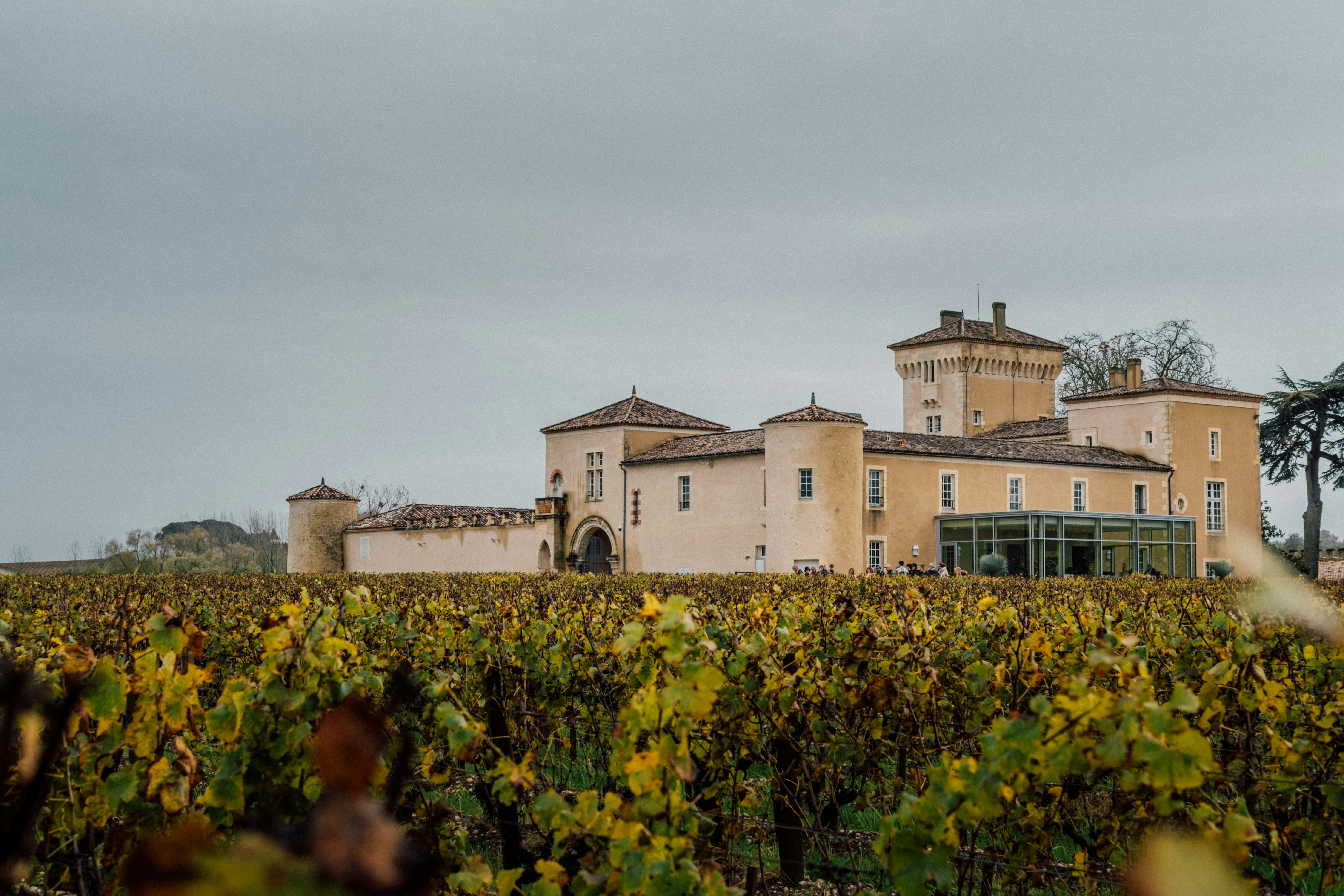
French Wine Domaine
Overview
France remains one of the great reference points of the wine world, but its importance lies in more than reputation. What makes the country so compelling is the way wine still feels rooted in distinct landscapes and local languages of cultivation. Burgundy does not think like Bordeaux. Champagne does not move like the Rhône. Alsace is not the Loire, and Provence is not Jura. France is less a single wine nation than a collection of historical vineyard worlds, each with its own climate logic, grape traditions, and sense of proportion.
This internal diversity is one of France’s defining strengths. Some regions are built around blends, others around a narrow range of varieties, and some around the expressive precision of single grapes tied to highly specific sites. In one part of the country, the river is central; in another, limestone; in another, altitude, granite, schist, or Mediterranean dryness. The French vineyard is therefore not simply old. It is articulated. It has been named, subdivided, argued over, and observed for centuries, and that long habit of attention still shapes the way French wine is understood today.
For Ampelique, France matters because it helps explain how grape identity, terroir, and regional culture became so tightly interwoven in the history of viticulture. It is one of the places where the grape stops being generic and becomes inseparable from site, exposure, geology, and inherited practice.
Climate & geography
France’s vineyard geography is remarkably varied. Atlantic influence shapes the west, bringing humidity, moderation, and shifting weather patterns. Continental conditions become more pronounced inland and to the northeast, where colder winters and a sharper seasonal rhythm help define certain styles. Mediterranean warmth influences the south, while mountains, foothills, and elevated inland zones introduce complexity through altitude, ventilation, and slope. The result is not a smooth climatic gradient but a patchwork of viticultural possibilities.
Rivers matter profoundly here. The Loire, Rhône, Garonne, Dordogne, Marne, and Saône have all helped shape vineyard development, transport, settlement, and the broader identity of French wine regions. So too do soils. Chalk and limestone, marl, granite, schist, gravel, sand, clay, and volcanic formations each play a role in determining which grapes thrive and how they speak. In some places this means tension and stony restraint; in others, breadth, softness, perfume, or density.
France is therefore best understood through its vineyard landscapes rather than through one national climate label. Chalk slopes in Champagne do different work from gravel in Bordeaux. Limestone in Burgundy does not produce the same results as the warm stones and garrigue-scented hills of the south. Each zone asks something different of the vine, and this is part of what gives French wine its enduring authority.
Grape heritage
France has given the wine world many of its most influential grapes, but just as important is the way those grapes remain tied to specific regions and traditions. Chardonnay and Pinot Noir reach one of their most complete expressions in Burgundy. Cabernet Franc and Chenin Blanc remain deeply associated with the Loire. Merlot, Cabernet Sauvignon, and Sauvignon Blanc are central to Bordeaux. Syrah is inseparable from the northern Rhône, Grenache from southern warmth and blending culture, and the aromatic white grapes of Alsace carry a voice of their own. Even within this famous set, regional identity still matters more than generic varietal fame.
France is also home to an important reserve of older, local, or regionally embedded varieties that sit beyond the global spotlight. Jura, Savoie, the southwest, Corsica, Provence, and parts of the Loire all preserve grapes that matter deeply in their own landscapes, even if they are less internationally circulated. This is one of the reasons France remains essential to a grape-focused project. It is not only a source of famous cultivars; it is a living archive of regional vine culture.
That archive includes both single-variety traditions and blending traditions. Burgundy often emphasizes varietal clarity and the expression of place through a narrow palette. Bordeaux builds complexity through blending. Champagne, too, relies on regional logic and the interaction of key grapes. In this way France shows multiple models of grape identity coexisting within one country, each valid, each deeply rooted.
Important regions
- Burgundy – a region of limestone, climats, and extraordinary site expression, especially through Chardonnay and Pinot Noir.
- Bordeaux – Atlantic-influenced and historically central, with a strong culture of blending and a broad range of appellations.
- Champagne – chalk-rich and cool, defined by sparkling wine, hand harvest, and a small set of key grapes.
- Loire Valley – one of France’s most varied regions, stretching across many climates and terroirs with major white, red, rosé, and sparkling traditions.
- Alsace – a distinctive northeastern region known for aromatic whites, strong varietal identity, and a marked rain-shadow climate.
Many other regions are equally important to the full picture: the Rhône for Syrah and Grenache-based traditions, Provence for rosé and Mediterranean viticulture, Jura for singular mountain-edge wines, Languedoc and Roussillon for scale and complexity, and the southwest for a wealth of older local grapes. But these five offer a strong first map of France as a country of diverse vineyard identities rather than one national style.
Wine styles
France produces nearly every major wine style: taut mineral whites, long-lived barrel-aged whites, structured reds, silky perfumed reds, sparkling wines, rosés, sweet wines, oxidative wines, fortified traditions in some southern contexts, and many quieter local styles that sit outside the broad export vocabulary. The point is not abundance alone, but fit. French wine styles often feel closely adapted to their landscapes.
Burgundy can be chiselled, layered, and site-specific. Bordeaux may be structured, blended, and architecture-like in form. Champagne is built on precision, acidity, chalk, and blending skill. The Loire can be fluid and many-sided, from saline whites to Cabernet Franc to sparkling wines. Alsace gives aromatic clarity and dry or textured whites with strong varietal signatures. The Rhône spans freshness in the north and warmth, spice, and blend culture in the south. The country does not impose one taste; it allows many coherent local answers to emerge.
This diversity is one of the reasons France remains such a powerful educational landscape. It shows how style can arise from grape, site, climate, and human choice in different proportions. It is not simply a catalogue of famous wines. It is a study in how wine cultures differentiate themselves over time.
Signature grapes
- Chardonnay – one of France’s defining white grapes, especially associated with Burgundy and Champagne.
- Pinot Noir – a major red grape of Burgundy and Champagne, capable of precision, perfume, and subtle site expression.
- Cabernet Franc – a key Loire red with freshness, structure, and historical depth.
- Chenin Blanc – one of France’s most versatile whites, central to the Loire and capable of many forms.
- Syrah – the great red grape of the northern Rhône, later influential far beyond France.
- Grenache – a major southern grape that helps define warm-climate blending traditions.
Many other grapes could stand here as well: Merlot, Cabernet Sauvignon, Sauvignon Blanc, Melon de Bourgogne, Gamay, Gewurztraminer, Riesling, Viognier, Mourvèdre, Carignan, Tannat, and a long list of regional cultivars. But these six create a strong first path into France as a country of both varietal importance and regional specificity.
Why France matters on Ampelique
France matters because it remains one of the clearest places to study how vines become cultural geography. Here, the grape is often inseparable from the village, the slope, the cellar tradition, the cuisine, and the language used to describe land itself. It is one of the countries where ampelography, terroir, and historical classification developed with unusual force, shaping how much of the wine world still thinks and speaks.
For Ampelique, France is not just a source of famous labels or benchmark varieties. It is a country that helps explain how wine can become a map of relationships: between grape and geology, between climate and gesture, between inherited practice and evolving understanding. It is one of the places where the vine has been observed so closely for so long that the landscape itself seems to have entered the language of wine.
Where to start exploring
If you want to begin exploring France, start with contrast. Read Burgundy beside Bordeaux, Champagne beside the Loire, Alsace beside the Rhône. Compare a blending region with a region built around a narrow varietal palette. Compare chalk with gravel, limestone with granite, Atlantic influence with continental freshness or Mediterranean light. France becomes clearer when you see it as a set of regional logics rather than as one national model.
You can also begin through grapes. Follow Chardonnay, Pinot Noir, Chenin Blanc, Cabernet Franc, Syrah, or Grenache into their home territories and let the landscapes explain the rest. In France, the grape is often the doorway, but the place is the full sentence.
Quick facts for grape geeks
| Field | Details |
|---|---|
| Country | France |
| Continent | Europe |
| Main climate influences | Atlantic, continental, Mediterranean, mountain, and river-moderated influences |
| Key vineyard landscapes | Limestone slopes, chalk hills, gravel terraces, river valleys, granite zones, Mediterranean hills, mountain edges |
| Known for | Terroir-driven wine culture, historic regional identities, benchmark grape varieties, sparkling wine, blending traditions, and site expression |
| Important grape colors | Both white and red, with major regional specialization in each |
| Notable native grapes | Chardonnay, Pinot Noir, Cabernet Franc, Chenin Blanc, Syrah, Grenache, Melon de Bourgogne, Gamay, Savagnin, and many regional varieties |
| International grapes present | France is itself the historic source of many globally planted classic wine grapes |
| Best starting point | Begin with Burgundy, Bordeaux, Champagne, the Loire, and Alsace, then move outward to Rhône, Jura, Provence, and the southwest |
 Ampelique