Category: History

  • Heunisch: The Humble Grape with Royal Descendants

    Understanding Heunisch Weiß (Gouais Blanc): Origin, Viticulture, Styles, and Tasting Profile

    An old vineyard echo: Ancient high-acid white of modest wines but immense historical importance, carrying freshness, simplicity, and a remarkable genetic legacy.


    Heunisch does not enter the room like a noble grape. It comes more quietly, almost anonymously, with light fruit, fresh acidity, and little need for drama. Yet behind that modest face stands one of the great hidden stories of European viticulture. This is a grape that may not have made the grandest wines itself, but helped give birth to many that did.

    Origin & history

    Heunisch Weiß, better known in French as Gouais Blanc, is one of the most historically important white grapes in Europe. Today it is rarely seen in commercial vineyards, but in the past it was planted much more widely, especially in central Europe and northeastern France. It was often associated with simpler wines and with peasant cultivation rather than noble estates, and for that reason it carried a lower social status than more admired grapes such as Pinot.

    That humble position is part of what makes its story so striking. Modern genetic work showed that Heunisch Weiß was one of the great founding parents of European viticulture. When grown near Pinot and other important varieties, it crossed naturally and helped produce a remarkable number of descendants. Chardonnay is the most famous of these, but far from the only one. In that sense, Heunisch is one of the hidden ancestors of classical wine Europe.

    Its exact geographic origin remains uncertain. Some researchers point toward central Europe, while others suggest a broader eastern or Balkan background. What is clearer is that the grape was already well established in medieval viticulture and that it spread widely enough to leave a deep genetic mark on later vineyard history.

    Today Heunisch survives more as a historical and genetic reference point than as a mainstream wine grape. Yet for a grape library, it deserves special attention. Some varieties matter because of the wines they make. Heunisch matters because of the vines it helped create.


    Ampelography: leaf & cluster

    Leaf

    Heunisch Weiß leaves are medium to large and generally round to slightly pentagonal. They usually show three to five lobes, often with a fairly open structure and a petiole sinus that can appear open and U-shaped to lyre-shaped. Margins are regular and moderate, and the blade surface is smooth to lightly textured.

    The underside may show light hairs along the veins. In older descriptions, the variety is often associated with vigorous growth and fairly open, practical-looking foliage rather than especially refined or delicate leaf form. The leaf overall gives the impression of a productive, serviceable vine rather than a highly specialized fine-wine cultivar.

    Cluster & berry

    Clusters are often medium to large and can be fairly full. Berries are medium-sized, round, and pale green to yellow-green at ripeness. The grape has historically been associated with relatively generous cropping and a fresh acid profile rather than concentrated flavor.

    This helps explain both its old reputation and its usefulness. Heunisch was not especially prized for making deep, noble wines, but it was capable of giving productive crops and lively acidity. Those qualities likely helped it survive for so long in practical viticulture and also helped shape its value as a parent.

    Leaf ID notes

    • Lobes: usually 3–5; moderate, often fairly open.
    • Petiole sinus: open, often U-shaped to lyre-shaped.
    • Teeth: regular and moderate.
    • Underside: light hairs may appear along veins.
    • General aspect: practical, vigorous leaf form rather than especially refined.
    • Clusters: medium to large, often fairly full.
    • Berries: medium-sized, pale green to yellow-green, with naturally fresh acidity.

    Viticulture notes

    Growth & training

    Historically, Heunisch Weiß was known as a productive grape. It was not cherished for low yields or concentration, but for usefulness, acidity, and volume. In older viticultural systems that mattered a great deal. A vine that cropped reliably and gave fresh wine had real practical value, even if it lacked aristocratic reputation.

    Descriptions of the variety often emphasize vigor and fertility. In modern quality-focused viticulture, these would require careful control, but in older mixed farming systems they may have been seen as strengths. The grape’s historical role suggests a vine that could perform in ordinary agricultural conditions rather than only in elite parcels.

    If grown today with serious intent, crop regulation and balanced canopy management would be essential. The aim would not be to chase weight or richness, but to preserve freshness and avoid dilution. Heunisch is not naturally a grape of concentration. Its interest lies elsewhere.

    Climate & site

    Best fit: historically, the grape appears to have been suited to cooler to moderate European climates where acidity was valuable and where a reliable crop mattered. It is not a variety now strongly associated with one single modern fine-wine environment.

    Soils: there is no single classic terroir in the modern sense, because the grape’s reputation is more historical than contemporary. Still, as with many older central European varieties, balanced, well-drained soils and moderate fertility would likely be important if the aim were to make the cleanest and most precise wines possible.

    Because Heunisch was historically grown widely and often in less prestigious conditions, it seems to have been valued more for adaptability than for any highly specific site expression. That practicality is part of its story.

    Diseases & pests

    Detailed modern vineyard observations are limited because the grape is now rare, but as a productive older variety it would likely need attentive canopy management to keep fruit healthy and well aired. In any vigorous white grape, dense canopies can raise pressure from mildew and rot if left unchecked.

    The broader point is that Heunisch was never famous for aristocratic finesse in the vineyard. It was historically a useful, productive grape. In today’s terms, that means its health and fruit quality would need to be guided carefully if the goal were serious wine rather than volume.


    Wine styles & vinification

    Historically, Heunisch Weiß was not celebrated for making profound or aristocratic wines. It was associated more with simple, fresh, acidic whites that served everyday purposes. That old reputation is one reason the grape was often dismissed socially, especially when compared with noble varieties such as Pinot.

    Yet simplicity should not be confused with irrelevance. Fresh, useful wines have always had a place in wine culture, and in older agricultural settings a reliable acidic grape could be extremely valuable. If vinified today, Heunisch would likely produce a light, high-acid, straightforward white unless yields were controlled very carefully.

    Its real importance, however, lies not in a famous style of wine but in its role as a parent. Heunisch’s lasting legacy is genetic rather than commercial. It is one of the quiet foundations beneath a large part of European grape history.


    Terroir & microclimate

    Because Heunisch Weiß is now rarely cultivated for serious modern wine production, its terroir expression is less documented than that of the great classical varieties that descended from it. Still, its history suggests a vine that functioned across a broad range of central European conditions and was valued for adaptability more than for one sharply defined terroir signature.

    If grown seriously today, site would likely influence acidity, crop size, and the balance between neutrality and freshness more than it would produce strongly dramatic aromatic differences. In that sense, Heunisch feels more like a foundational vine than a modern site-transmitting icon.


    Historical spread & modern experiments

    The modern rediscovery of Heunisch Weiß has come mainly through genetics and ampelographic history rather than through a revival as a major commercial grape. Once researchers established how many important varieties trace back to it, the grape gained a new kind of respect. It became clear that one of the so-called humble grapes of medieval Europe had quietly shaped the future of fine wine.

    Today, small holdings, collections, and historically minded growers keep the variety alive. Its importance now is educational, genetic, and cultural. Heunisch reminds us that vineyard history is not made only by glamorous grapes. Sometimes the overlooked vine is the one that changed everything.


    Tasting profile & food pairing

    Aromas: likely light orchard fruit, citrus, and subtle floral or herbal tones rather than deep aromatic concentration. Palate: light body, high acidity, and a simple, fresh structural line. Heunisch is historically more about usefulness and freshness than richness or perfume.

    Food pairing: if vinified dry in a modern setting, it would likely suit light seafood, salads, simple cheeses, and straightforward farm-table dishes where brightness matters more than weight.


    Where it grows

    • Historically across central Europe and northeastern France
    • Today only in very small plantings, collections, and specialist historical vineyards
    • Known in French contexts as Gouais Blanc and in German as Heunisch Weiß

    Quick facts for grape geeks

    Field Details
    Color White
    Pronunciation HOY-nish VICE
    Parentage / Family Ancient European variety; exact origin uncertain, but hugely important as a parent grape
    Primary regions Historically central Europe and northeastern France; now very rare
    Ripening & climate Historically suited to cooler to moderate European climates
    Vigor & yield Generally vigorous and productive; quality depends on control
    Disease sensitivity Likely mildew and rot pressure if canopies are too dense
    Leaf ID notes 3–5 lobes; open sinus; productive bunches; fresh, lightly flavored fruit
    Synonyms Gouais Blanc, Heunisch Weiss, Weisser Heunisch
  • Monks and Medieval Vineyards

    How quiet devotion shaped the landscapes of wine.

    When we think of wine today, we picture châteaux, polished tasting rooms, and maybe a glass of Pinot or Riesling catching late-afternoon light. Yet the deep roots of European viticulture reach back to a very different world. In the Middle Ages, long before modern estates and Michelin-starred restaurants, the stewards of vineyards were often not merchants or nobles but monks.

    Between the 9th and 15th centuries, monastic communities across Burgundy, the Rhine, and the wider winegrowing world dedicated themselves to vines with a patience and purpose that still echo through the bottles we open today. They were not merely tending crops; they were building an agricultural and cultural knowledge base that defines terroir to this day.

    Faith in the Vine: Why Monks Grew Grapes

    Wine occupied a sacred place in medieval Europe. The Eucharist required wine for Mass, making a steady supply essential for spiritual life. Monasteries, with their stability and access to land, were perfectly positioned to meet this need.

    But wine was more than a sacrament. It was safer to drink than much of the water available at the time, and it provided nourishment and comfort in a harsh era. From table wine for daily meals to stronger, longer-aged cuvées for feast days, grapes became a staple of monastic economy and community life.

    By growing and vinifying their own grapes, monasteries could sustain themselves economically and spiritually. Vineyards became as integral to a cloister as the chapel or refectory. And because monks took vows of stability and careful stewardship, they could think in generations rather than harvests.

    The First Terroir Scientists

    Monks were not simply farmers. Their life revolved around rhythm, repetition, and contemplation — perfect conditions for close observation.

    Imagine a Cistercian brother in 12th-century Burgundy noticing that grapes on a gentle east-facing slope ripen earlier than those on a windy plateau. Over decades he writes notes, compares harvest dates, and gently adjusts pruning methods. His patient records would eventually inform the modern concept of terroir: the subtle interplay of soil, climate, and human care that gives each wine its unique character.

    In effect, these monastic viticulturists became the first terroir experts. They mapped vineyards by microclimate long before “climat” and “cru” became wine vocabulary. Their work laid the groundwork for some of today’s most celebrated appellations, from the Côte d’Or to the Rheingau.

    Burgundy: The Silent Laboratory

    Few places illustrate this story better than Burgundy. The Benedictine monks of Cluny and the Cistercians of Cîteaux carved a patchwork of vineyards that still reads like a living textbook of terroir.

    They learned which parcels thrived with Pinot Noir and which favored the early-ripening Chardonnay. They terraced hillsides, improved drainage, and carefully documented their findings. Parcels such as Clos de Vougeot, walled vineyards dating back to these centuries, remain iconic wine sites. When you sip a glass of Grand Cru Burgundy, you taste centuries of monastic experiment and devotion.

    Along the Rhine: From Abbey to Riesling

    Further north, monasteries along the Rhine pursued a similar mission. The Benedictine Abbey of Saint Hildegard near Rüdesheim, the Eberbach Monastery in the Rheingau, and countless others developed vineyards that still shape Germany’s Riesling heartland.

    Here monks discovered how steep, slate-rich slopes could channel sunlight and hold warmth, producing wines of striking freshness and longevity. They perfected cellar techniques — from gentle pressing to cool fermentation — that remain hallmarks of fine German winemaking.

    Knowledge as Legacy

    The monastic approach went beyond practical viticulture. Copying and preserving manuscripts, monks recorded their viticultural observations alongside theology and natural philosophy. Their careful Latin notes on pruning, soil, and fermentation became early textbooks of agricultural science.

    In many monasteries, the wine cellar doubled as a laboratory. Experiments in fermentation temperatures, barrel aging, and blending were written down with a rigor that would inspire later generations of vintners and botanists.

    Community, Ritual, and the Human Thread

    What makes this history so rich is the fusion of science and spirituality. For medieval monks, tending vines was an act of devotion. Labor in the vineyard mirrored spiritual discipline: pruning for renewal, waiting patiently for ripeness, and celebrating harvest as a gift of creation.

    Wine also fostered community. Monasteries welcomed travelers, pilgrims, and the poor with food and drink. The shared table, where monastic wine was poured, became a space of connection and hospitality. Viticulture thus nourished both body and spirit.

    Lessons for Today’s Vineyards

    Centuries later, the monastic imprint still shapes how we think about wine. Many of the world’s most coveted vineyards, from Clos de Vougeot in Burgundy to the steep slopes of the Mosel and Rheingau, owe their precise boundaries to medieval monks.

    Their methods also resonate with contemporary values. The focus on observation over quick fixes, the respect for natural rhythms, and the view of wine as part of a larger cultural ecosystem all speak to today’s sustainable and regenerative viticulture.

    At Ampelique, these stories remind us that viticulture is more than farming. It’s about patience, observation, and heritage carried forward. Understanding this lineage deepens our appreciation of every vineyard we map and every grape variety we profile.

    Who Will Shape the Vineyards of the Future?

    If monks shaped the vineyards of the past, who will shape those of the future? Perhaps today’s innovators, scientists working on climate-resilient grapes, growers reviving forgotten varieties, and communities re-wilding landscapes, are the new stewards of terroir.

    They, too, will need patience and devotion. Changing weather patterns and shifting consumer tastes demand long-term thinking. Just as medieval monks recorded their findings for generations to come, today’s viticulturists are writing a new chapter in the story of the vine.

    A Living Heritage

    Walk through an old walled vineyard in Burgundy or a terraced slope along the Rhine and you can still sense the quiet persistence of those early growers. Their fingerprints remain in the stone walls, the drainage channels, and the centuries-old rootstocks that continue to bear fruit.

    Wine is often described as bottled time. In the case of monastic vineyards, it is also bottled memory, a link between devotion and discovery, between medieval patience and modern pleasure.

    As we explore and celebrate grape varieties at Ampelique, we honor this lineage. The monks of medieval Europe remind us that every vineyard is more than soil and vine. It is a conversation across centuries, a dialogue between the human spirit and the enduring rhythms of nature.

    If monks shaped the vineyards of the past, who will shape the vineyards of the future?

    This question is not just rhetorical. It invites all of us — growers, drinkers, and storytellers — to consider how our own choices will echo centuries from now, just as those of the quiet vineyard keepers of medieval Europe still echo in every glass we raise.

  • The three classical Proles of Grapes: Mapping the ancient families of Vitis Vinifera.

    The three classical Proles of Grapes: Mapping the ancient families of Vitis Vinifera.

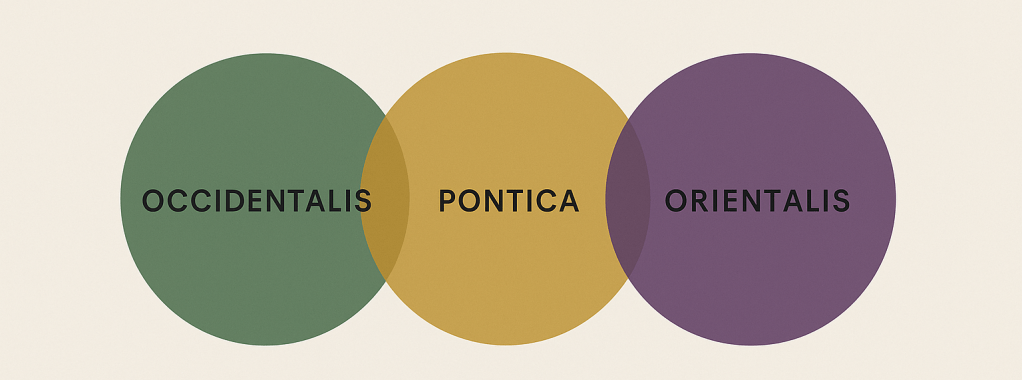
    Ampelography – the study of grapevines – has always been a science of observation, classification, and storytelling. Long before the arrival of DNA sequencing and genetic databases, ampelographers sought to understand the dazzling diversity of Vitis vinifera, the common grapevine. They looked at the shape of leaves, the thickness of skins, the ripening cycles, and the flavors locked inside berries. Out of centuries of careful observation emerged one of the earliest and most influential systems of classification: the division of grapevines into three great families, or Proles.

    These three groups – Occidentalis, Pontica, and Orientalis – formed a map of the grape world as people understood it in the nineteenth and early twentieth centuries. They were not precise in the way modern genetics is, but they captured something essential: that grapevines carry within them the memory of migration, the echoes of trade routes, and the imprint of ancient civilizations.

    Today, these “classical Proles” may seem like an old-fashioned framework, yet they remain powerful symbols. They remind us that grapes are more than agricultural commodities; they are living witnesses of history. At Ampelique, we believe these roots deserve to be revisited and retold – because every grape belongs not just to a family, but to a global story.

    A Historical Framework

    The idea of dividing Vitis vinifera into three Proles originated in the late 19th century, when ampelographers such as A. Negrul attempted to bring order to the chaos of grape diversity. With thousands of varieties cultivated across Europe, the Caucasus, and the Middle East, there was a need for structure.

    Negrul’s framework became the standard reference:

    Proles Occidentalis – the grapes of Western Europe. Proles Pontica – grapes associated with the Black Sea basin and Central Europe. Proles Orientalis – the vines of the East, especially the Caucasus, the Near East, and parts of Central Asia.

    Each Proles was not just a geographic label but also a cluster of shared traits – from berry size to climatic adaptation. For over half a century, this classification shaped both scientific research and viticultural practice. Even though DNA research has since redrawn the family tree, the three Proles remain part of ampelographic heritage.

    Proles Occidentalis – The Western Grapes

    The Occidentalis group covers grapes of Western and Central Europe, stretching from Iberia to Burgundy, the Rhine, and northern Italy. These varieties are often associated with cooler climates and wines of finesse, freshness, and longevity.

    Signature Varieties

    Pinot family – perhaps the most ancient and influential, with Pinot Noir, Pinot Gris, and Pinot Blanc. Chardonnay – a global traveler that originated in Burgundy. Riesling – the jewel of the Rhine and Mosel. Cabernet Sauvignon and Merlot – Bordeaux’s classic pair, with worldwide fame.

    Traits

    Occidentalis grapes tend to have smaller berries, thicker skins, and higher acidity. They are well suited to temperate, cooler regions where balance and aromatic complexity are prized.

    A Cultural Story

    Occidentalis grapes reflect the long history of viticulture in medieval and Renaissance Europe. Monks carried cuttings from monastery to monastery, kings demanded wines from their favorite crus, and merchants spread varieties across borders. The Pinot family, for instance, is over a thousand years old and may predate even Charlemagne’s reign. Chardonnay, once confined to a corner of Burgundy, now grows in nearly every wine country in the world.

    In Occidentalis, we see the story of refinement: the shaping of grapevines through centuries of selection for elegance, precision, and age-worthiness.

    Proles Pontica – The Black Sea and Central European Grapes

    The second group, Pontica, derives its name from the ancient “Pontus Euxinus” – the Black Sea. This region, encompassing modern-day Georgia, Romania, Hungary, and parts of the Balkans, has been a cradle of viticulture since antiquity.

    Signature Varieties

    Rkatsiteli – one of the oldest known cultivated grapes, native to Georgia. Furmint – the backbone of Hungary’s Tokaji, prized for its acidity and ability to produce both dry and sweet wines. Kadarka – once widespread in the Balkans, known for light, spicy reds. Plavac Mali – a descendant of ancient crossings, now the pride of Croatia.

    Traits

    Pontica grapes often combine adaptability with distinct character. Many thrive in continental climates with warm summers and cold winters. They can be high-yielding but also capable of remarkable depth when carefully managed.

    A Cultural Story

    The Pontica region has always been a crossroads. Greek colonists established vineyards along the Black Sea coast; Roman legions brought cuttings inland; Ottoman rule both suppressed and preserved local traditions. Grapes here are marked by resilience. They endured centuries of political upheaval, invasions, and shifting borders, yet they survived in family vineyards and village plots.

    Rkatsiteli, with its amber wines in Georgia’s qvevri tradition, embodies this endurance. Furmint, reborn after the devastations of phylloxera and communism, now stands again as a symbol of Hungary’s wine culture. Pontica grapes are not just varieties – they are cultural survivors.

    Proles Orientalis – The Eastern Grapes

    The third group, Orientalis, reaches back to the very cradle of viticulture: the Caucasus, the Fertile Crescent, and the Middle East. Archaeological evidence suggests that domesticated grapevines originated here around 8,000 years ago. To this day, the region is a treasure trove of genetic diversity.

    Signature Varieties

    Muscat family – ancient and aromatic, found in countless forms across East and West. Saperavi – a Georgian teinturier grape, producing deeply colored wines. Shiraz/Syrah (with debated origins) – historically linked to the East before spreading westward. Assyrtiko – native to Greece, though sometimes associated with Orientalis for its Eastern Mediterranean roots.

    Traits

    Orientalis grapes often have larger berries, bold aromatics, and high sugar potential. They thrive in warmer, sunnier climates and are often linked to wines of generosity, spice, and opulence.

    A Cultural Story

    Orientalis tells the tale of origins. The first winemakers of Mesopotamia, Armenia, and Georgia discovered fermentation here. Amphorae filled with wine residue, dating back 6,000–8,000 years, bear witness to humanity’s earliest relationship with the vine.

    This region also gave rise to the Muscat family, whose aromatic signature shaped the wines of ancient courts and trade networks. The Silk Road carried these grapes eastward into Central Asia and westward into Europe. In every Muscat berry lies a memory of ancient caravans and spice markets.

    Beyond Geography – A Living DNA of Trade and Migration

    What makes the three Proles fascinating is not only their geography but their symbolism. Grapes do not respect borders; they travel with people. A cutting in a shepherd’s bag, a vine planted by soldiers in a new province, a merchant carrying grafts across seas – this is how diversity spread.

    Occidentalis, Pontica, and Orientalis are less about strict scientific categories today and more about human history. They remind us that grapevines are living records of cultural exchange. Just as languages carry traces of migration, so do vines.

    The Modern View – Genetics Redraws the Map

    Since the late 20th century, DNA analysis has transformed our understanding of grape origins. We now know that many Occidentalis stars, such as Cabernet Sauvignon, are relatively recent crossings, while Pontica and Orientalis harbor some of the deepest genetic roots. The neat division into three Proles has given way to a more complex web of parentage and kinship.

    Yet the classical system still matters. It gave us a framework for thinking about grape diversity before the age of genomics. And it continues to inspire curiosity: to ask where a variety comes from, how it traveled, and what cultural threads it carries with it.

    Why the Three Proles Still Matter Today

    At Ampelique, we believe the three Proles remain powerful storytelling tools. They connect viticulture with history, geography, and identity. They offer a way to talk about grapes not just as technical varieties, but as part of humanity’s shared heritage.

    Occidentalis shows refinement and tradition. Pontica embodies resilience and crossroads. Orientalis speaks of origins and ancient abundance.

    Together, they remind us that wine is not only about terroir and taste – it is about continuity, survival, and memory.

    Conclusion – Every Grape Belongs to a Global Story

    Standing in a vineyard today, it is easy to see only the immediate: rows of vines, clusters of fruit, the harvest to come. Yet behind every grape is a story that stretches across millennia. The three classical Proles – Occidentalis, Pontica, Orientalis – may no longer be scientifically precise, but they remain symbols of that timeless truth: grapes are migrants, companions of humankind, and bearers of culture.

    As we trace their paths from Burgundy to Georgia, from the Caucasus to the Rhine, we realize that the vine is one of humanity’s greatest storytellers.

    At Ampelique, we celebrate these stories, old and new. Because every grape belongs not just to a family – but to a global narrative still unfolding.