Austria: Native Grapes, Regions, and Viticultural Identity
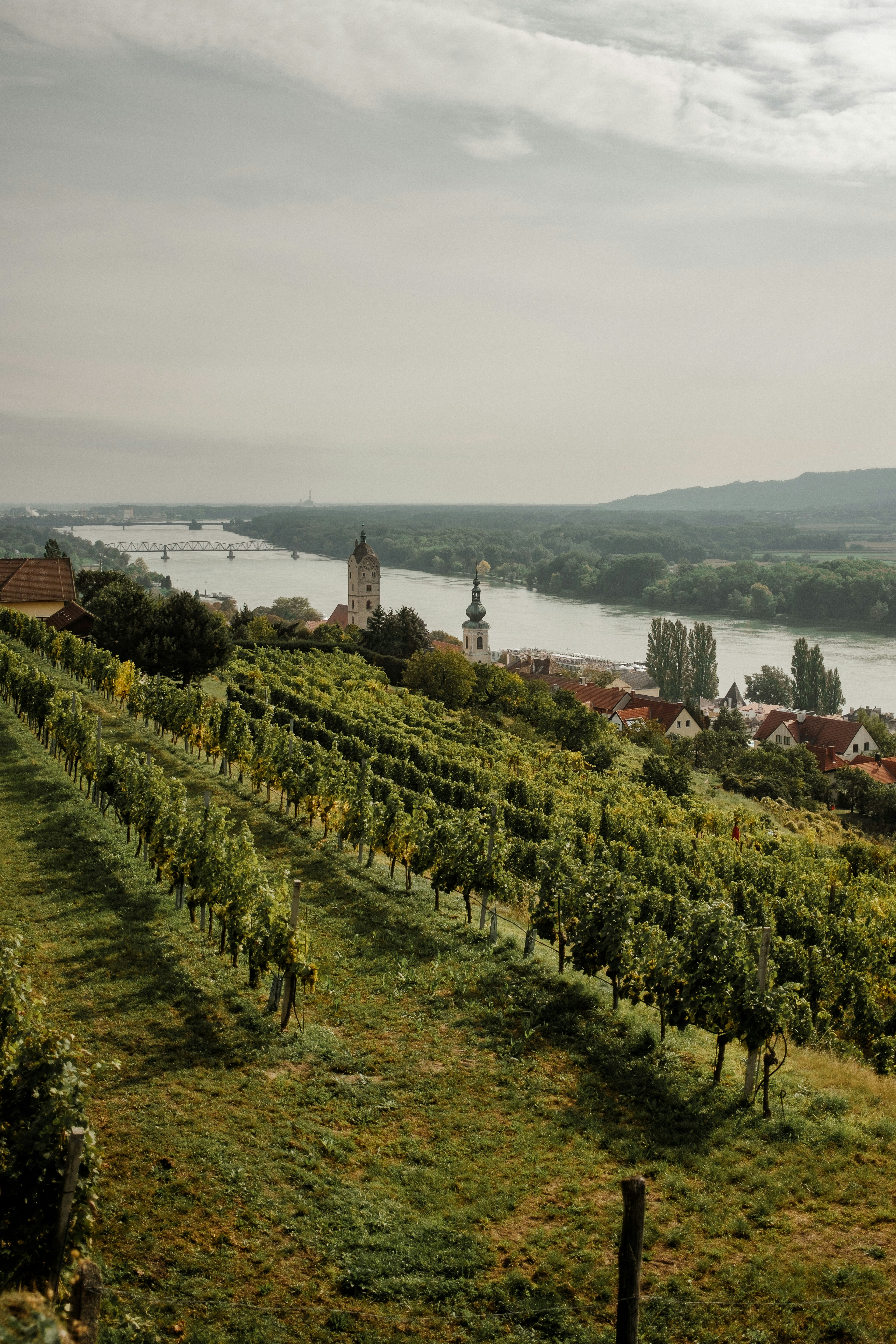
A country where wine is inseparable from freshness, structure, and regional precision: Austria is one of Europe’s most finely tuned wine countries, with a vineyard culture shaped by Danube valleys, loess terraces, limestone slopes, Pannonian warmth, Alpine influence, cool nights, and a remarkably strong sense of grape identity. From Niederösterreich and Burgenland to Steiermark and Vienna, Austria offers not one model of wine, but a constellation of places where clarity, site, and viticultural character remain vividly connected.
Austria does not tell the story of wine through size or spectacle. It tells it through terraces, rivers, wind, soil, cool precision, and the quiet authority of places where grape and landscape still seem to understand one another intimately.
Overview
Austria remains one of the most articulate wine countries in Europe, but its importance lies in more than its reputation for precision whites. What makes the country so compelling is the way wine still feels rooted in distinct landscapes and clear regional logics. Niederösterreich does not think like Burgenland. Steiermark does not move like Vienna. Carnuntum is not Wachau, and Wachau is not Neusiedlersee. Austria is less a single wine nation than a collection of finely tuned vineyard worlds, each with its own climatic rhythm, grape traditions, and sense of proportion.
This internal diversity is one of Austria’s defining strengths. Some regions are built around structured dry whites, others around red wine depth, others around aromatic lift, freshness, or sweet wine potential. In one part of the country, the river is central; in another, loess; in another, limestone, lake influence, or elevation. The Austrian vineyard is therefore not simply disciplined. It is articulated. It has been shaped by close observation, regional continuity, and a persistent belief that grape and place should remain legible within the finished wine.
For Ampelique, Austria matters because it helps explain how grape identity, freshness, and regional culture can remain tightly interwoven in a modern wine country. It is one of the places where the grape does not become generic, but stays connected to site, climate, exposure, and inherited practice.
Climate & Geography
Austria’s vineyard geography is remarkably varied. Pannonian influence shapes the east, bringing warmth, dryness, and fuller ripening conditions in places such as Burgenland and Carnuntum. Cooler Alpine influence becomes more pronounced through elevation, night-time temperature shifts, and moving air, helping to preserve acidity and aromatic precision. River valleys, foothills, forest edges, terraces, and exposed slopes all contribute to a vineyard landscape that feels unusually calibrated rather than climatically blunt. The result is not a smooth national pattern but a patchwork of viticultural possibilities.
Rivers matter profoundly here. The Danube and its tributaries help shape vineyard development, settlement, exposure, and transport, especially in Niederösterreich. So too do soils. Loess, limestone, gravel, gneiss, schist, clay, sand, and weathered primary rock each play a role in determining which grapes thrive and how they speak. In some places this means stony tension and linearity; in others, broader texture, spice, darker fruit, or aromatic lift.
Austria is therefore best understood through its vineyard landscapes rather than through one national climate label. Terraced sites along the Danube do different work from the warmer open spaces around Neusiedlersee. Limestone and loess do not produce the same results as slate, gravel, or mixed hill soils. Each zone asks something different of the vine, and this is part of what gives Austrian wine its enduring clarity.
Grape Heritage
Austria has given the wine world fewer globally dominant grapes than France, but what makes the country so important is the way its key varieties remain vividly tied to specific regions and traditions. Grüner Veltliner reaches some of its most complete expressions in Niederösterreich. Blaufränkisch is deeply associated with Burgenland. Zweigelt has become one of the country’s defining reds. Riesling, Sauvignon Blanc, Welschriesling, Muskateller, and Gemischter Satz each occupy meaningful places within the Austrian vineyard map. Even within this relatively compact set, regional identity still matters more than generic varietal fame.
Austria is also home to an important reserve of local, traditional, or regionally embedded grapes that sit beyond the most internationally visible names. Some remain highly significant within particular regions even if they travel less widely abroad. This is one of the reasons Austria matters so much to a grape-focused project. It is not only a source of well-known cultivars; it is a living archive of central European vine culture, still ordered by place and still shaped by local memory.
That archive includes both varietal clarity and mixed traditions. Some Austrian regions are strongly associated with one or two grapes, while Vienna preserves a field-blend culture through Gemischter Satz. In this way Austria shows multiple models of grape identity coexisting within one country, each valid, each deeply rooted.
Important Regions
- Niederösterreich: Austria’s largest wine region, defined by Danube landscapes, terraces, loess, and some of the country’s most important white wines.
- Burgenland: Warmer and often broader in feel, historically central for Blaufränkisch, Zweigelt, Welschriesling, and sweet-wine traditions near Neusiedlersee.
- Steiermark: A greener, hillier region known for freshness, aromatic lift, Sauvignon Blanc, and distinctly cool-framed viticulture.
- Wien: A distinctive urban wine region where vineyards still form part of the city’s agricultural identity and Gemischter Satz remains culturally significant.
- Carnuntum: An increasingly important eastern region, combining warmth, structure, and a growing reputation for both white and red wines.
Many other regions are equally important to the full picture: Wachau for stony, structured whites, Kamptal and Kremstal for precision and tension, Wagram for loess-driven breadth, Thermenregion for older grape traditions, and the Neusiedlersee area for sweet wines and eastern ripeness. But these five offer a strong first map of Austria as a country of diverse vineyard identities rather than one national style.
Wine Styles
Austria produces a remarkably coherent but varied range of wine styles: taut mineral whites, peppery and textural whites, aromatic hillside whites, structured reds, brighter fruit-led reds, noble sweet wines, sparkling wines, and a range of local expressions that sit outside simplified export categories. The point is not abundance alone, but fit. Austrian wine styles often feel closely adapted to their landscapes.
Wachau and related Danube regions can be chiselled, layered, and site-specific. Burgenland may be broader, darker, and more structured in red wine terms, while still capable of finesse. Steiermark gives freshness, aromatics, and lifted acidity. Vienna preserves a more unusual city-vineyard identity. Sweet wines near Neusiedlersee show another face again. The country does not impose one taste; it allows several local answers to emerge with discipline and clarity.
This diversity is one of the reasons Austria remains such a powerful educational landscape. It shows how style can arise from grape, site, climate, and human choice without losing line or proportion. It is not merely a catalogue of precise wines. It is a study in how smaller wine cultures can differentiate themselves with great force.
Signature Grapes
- Grüner Veltliner: Austria’s defining white grape, especially associated with Niederösterreich and the Danube regions.
- Blaufränkisc: A major red grape of Burgenland, capable of structure, tension, and strong site expression.
- Zweigelt: One of Austria’s most important red grapes, valued for fruit, accessibility, and regional flexibility.
- Riesling: A key white in some of Austria’s stonier, more mineral regions, where it can show great precision.
- Welschriesling: An important grape in both dry and sweet-wine traditions, especially in eastern Austria.
- Sauvignon Blanc: A significant white grape in Steiermark, where it achieves one of its most distinctive regional forms.
Many other grapes could stand here as well: Muskateller, Chardonnay, Pinot Blanc, Saint Laurent, Traminer, Neuburger, Rotgipfler, Zierfandler, and a number of smaller regional cultivars. But these six create a strong first path into Austria as a country of both varietal clarity and regional specificity.
Why Austria matters on Ampelique
Austria matters because it remains one of the clearest places to study how vines become regional language. Here, the grape is often inseparable from the river valley, the terrace, the eastern plain, the hill slope, the field-blend tradition, and the vocabulary of freshness and structure used to describe place itself. It is one of the countries where origin, grape identity, and modern precision have been brought into unusually close alignment.
For Ampelique, Austria is not just a source of benchmark whites or increasingly admired reds. It is a country that helps explain how wine can become a map of relationships: between grape and soil, between climate and line, between regional inheritance and contemporary clarity. It is one of the places where the vineyard has been read carefully enough that the landscape itself seems to have entered the grammar of the wine.
Where to start exploring
If you want to begin exploring Austria, start with contrast. Read Wachau beside Burgenland, Steiermark beside Vienna, Grüner Veltliner beside Blaufränkisch, Riesling beside Sauvignon Blanc. Compare a Danube terrace with an eastern lake-influenced zone. Compare loess with limestone, gravel with primary rock, river moderation with warmer Pannonian exposure. Austria becomes clearer when you see it as a set of regional logics rather than as one national model.
You can also begin through grapes. Follow Grüner Veltliner, Blaufränkisch, Zweigelt, Riesling, Welschriesling, or Sauvignon Blanc into their home territories and let the landscapes explain the rest. In Austria, the grape is often the doorway, but the place is the full sentence.
Quick facts for grape geeks
| Field | Details |
|---|---|
| Country | Austria |
| Continent | Europe |
| Main climate influences | Pannonian, Alpine, continental, river-moderated, and elevation-driven influences |
| Key vineyard landscapes | Danube terraces, loess slopes, limestone hills, gravel sites, eastern plains, lake-influenced vineyards, and cool green hill country |
| Known for | Precision white wines, Grüner Veltliner, Blaufränkisch, regional clarity, sweet wines, and strong site expression |
| Important grape colors | Both white and red, with white grapes especially central to national identity |
| Notable native or signature grapes | Grüner Veltliner, Blaufränkisch, Zweigelt, Welschriesling, Riesling, Sauvignon Blanc, and Gemischter Satz traditions |
| International grapes present | Yes, including Chardonnay, Pinot Blanc, Pinot Noir, and others alongside more regionally rooted varieties |
| Best starting point | Begin with Niederösterreich, Burgenland, Steiermark, Vienna, and Wachau, then move outward through the broader Austrian vineyard map |
 Ampelique